3.536 Ergebnisse
1833Best.-Nr. 25934Paris/Lpz., Heideloff und Campe, 1833. 2 Bände in einem Buch (alles). 16,9/10,5 cm. 4,VI,144/VIII,186 S. Leinen der Zeit mit Rückenvergoldung. Recht schön.
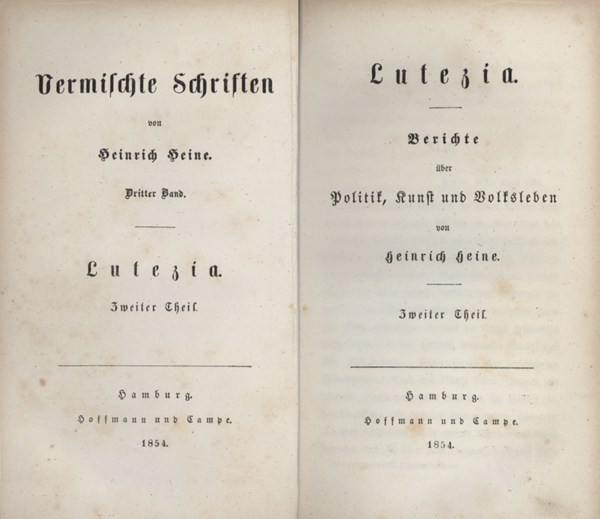
1854Best.-Nr. 13404CBHamburg, Hoffmann und Campe, 1854. 8°. 1 Bl. 322; XVIII, 319; 2 Bl. 310 S. Blindgeprägtes Leinen der Zeit mit Rückenprägung, Initialen 'J.B.', 1 3 Bände.
1891Best.-Nr. 32335ABLondon, Osgood, McIlvaine & Co. 1891. 1. Edition. 2 Bände. (2 vols.) gr.8°. XV/409, X/574 S. mit zahlreichen zum Teil ganzseitigen Illustrationen im Text und a. Tafeln. OLeinen mit leichter ornamentler Verzierung in Farbe und Wappen in Gold a. Deckel, Goldaufschrift a. Deckel und Rü., leichte Rü. Vergoldung, Kopf Goldschnitt, Einband etwas fleckig und leicht bestoßen, Vorsätzte erneuert, innen ganz sauber, gut erhalten. 1
1937Best.-Nr. 25807Paris, Èditions Sociales Internationales, 1937. Poèmes de Altolaguirre, Varela, Aleixandre, Logrono, Herrera Petre, Pérez Infante, Férnandez, Garfias, Bergamin, Alberti, Dieste, Garcia Luque, Pla y Beltran, Prados, Hernandez, Boda, Aparicio, Chacel, Serrano Plaja, Gaya, Beltran Logrono, Ruanova, Morales Casas, QuirogaPla, Novas Calvo, Gonzales Tunon, Gil Albert. Traduits par Gabriel Audisio, Louis Parrot, Georges Pillement, Rolland-Simon et Yvonne Vauder. Préface de Jean Cassou. 8°. 147,5 S. OBroschur. Unbeschnitten, Papier etwas vergilbt, minimal gebraucht.
1948Best.-Nr. R3864-95A'dam,Querido 1948. 235 S. Oln., etw. bestoßen, Rückenln. etw. wellig. - Mit eh. Widmung d. Verf. a.d. Vortitel.
1777Best.-Nr. PHO-2433Londres, Chez Paul Vaillant, 1777, 6 volumes in-12 (18,5x11cm), (4) xxiv, 429pp., (4) 439pp., (4) 424pp., (4) 366pp., (4) 360pp., (4) 372pp., brochage d’attente, non rogné, papier corné, peu de rousseurs. Illustré de 6 gravures en frontispice par Desrais, tel que paru
1938Best.-Nr. 38291New York, Toronto, Longmans, Green & Co., 1938. 324 S., 2 Bll., OLwd. m. OU. des Europa-Verlages (dieser m. kl. Fehlstellen)
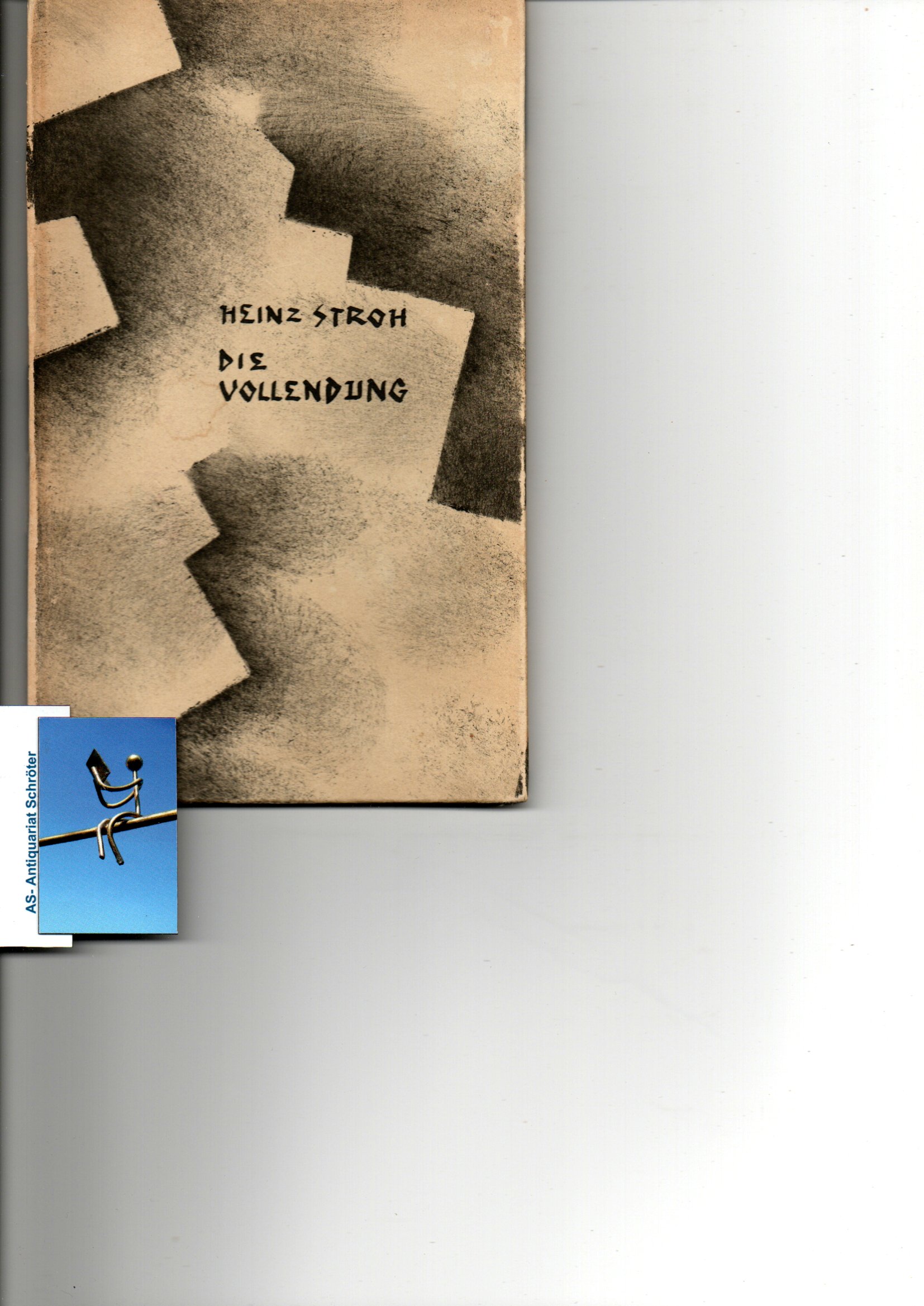
1926Best.-Nr. 14864Siegfried Alweiss, Berlin, 1926. 16nn Seiten, 18,5x11,5cm, OPappband. Vom Autor signiert, datiert und gewidmet ("Für Alexander Granach(?) mit bestem Gruß Berlin Juli 1926 Heinz Stroh"). Äußerst selten. Ordentliches Exemplar. Der Druck durch Siegfried Alweiss auf VanGelder Bütten. Die Einbandkanten etwas berieben. Signed and dedicated by the author. Very rare. Auszug aus Wikipedia: "Heinz Stroh war zwischen 1924 und 1933 Literatur- und Theaterkritiker bei der Berliner Börsenzeitung, und Thomas Mann revanchierte sich 1926 für freundliche Rezensionen bei ihm mit einer signierten Porträtphotographie. Stroh floh nach der Machtergreifung 1933 zunächst nach Prag, wo er in der Zeitschrift Selbstwehr, in der Jüdischen Revue und im Jüdischen Almanach (1937)[1] veröffentlichte. Thomas Mann setzte sich für ihn als einen fähigen, sorgsamen und vielseitigen Schriftsteller ein und gab ihm 1934 bei seinem Prag-Aufenthalt ein Interview, war allerdings mit dessen Wiedergabe nicht einverstanden, weil das Interview bei Manns Ausbürgerungsverfahren gegen ihn verwendet wurde.... Heinz Stroh hat außer seinen Veröffentlichungen nur wenige Spuren hinterlassen. Die Deutsche Nationalbibliothek verfügt über einen sogenannten ?Splitternachlass? im Deutschen Exilarchiv."
1943Original Wraps. 8vo. 19 pages. 22 cm. First edition. Some Hebrew throughout. Torah va'avodah library, no. 2. Dedicated to Moshe Zvi Weinstock. Contains a discussion of the holiday, with poems, selections from the Bible, Midrash, and Talmud detailing Chamishah Asar Bi'Shevat (Jewish arbor day celebrated on the fifteenth of Shevat) . The mother of the Jew is Eretz Israel. The heart of every Jewish child is tied to his holy motherland [ ] And when this day comes, the fifteenth of Shevat, the day on which the yemot Ha'Geshamim, the period of heavy rainfall is over in Eretz Israel, and the sap begins to rise in its trees, awaking them to a new spring and new life - pg 5. Bachad was a religious Zionist youth movement in pre-war Germany called Brit Chalutzim Datiim which shortened its name to its initial letters Bachad. Its members prepared themselves for Aliya. A group of them came over to England among the refugees who were permitted to enter this country in the years immediately before the war. They were accommodated in a castle in Wales [Gwrych Castle] and set up Hachshara centres in Bromsgrove and other places, as well as a Merkaz Limmud in Manchester to which members came from the Hachsharah centres for periods of three or six months for intensive Jewish studies. Later on a farm was bought at Thaxted in Essex which became not only a model Hachsharah centre but very quickly a successful agricultural venture which at one time won first prize for having the best milk yielding cow in Essex! (bauk, 2013) . Subjects: Tu bi-Shevat. OCLC lists 8 copies. Wraps previously folded, light soiling to outer margins, internally clean and fresh. Very good condition. (SPEC-40-14)
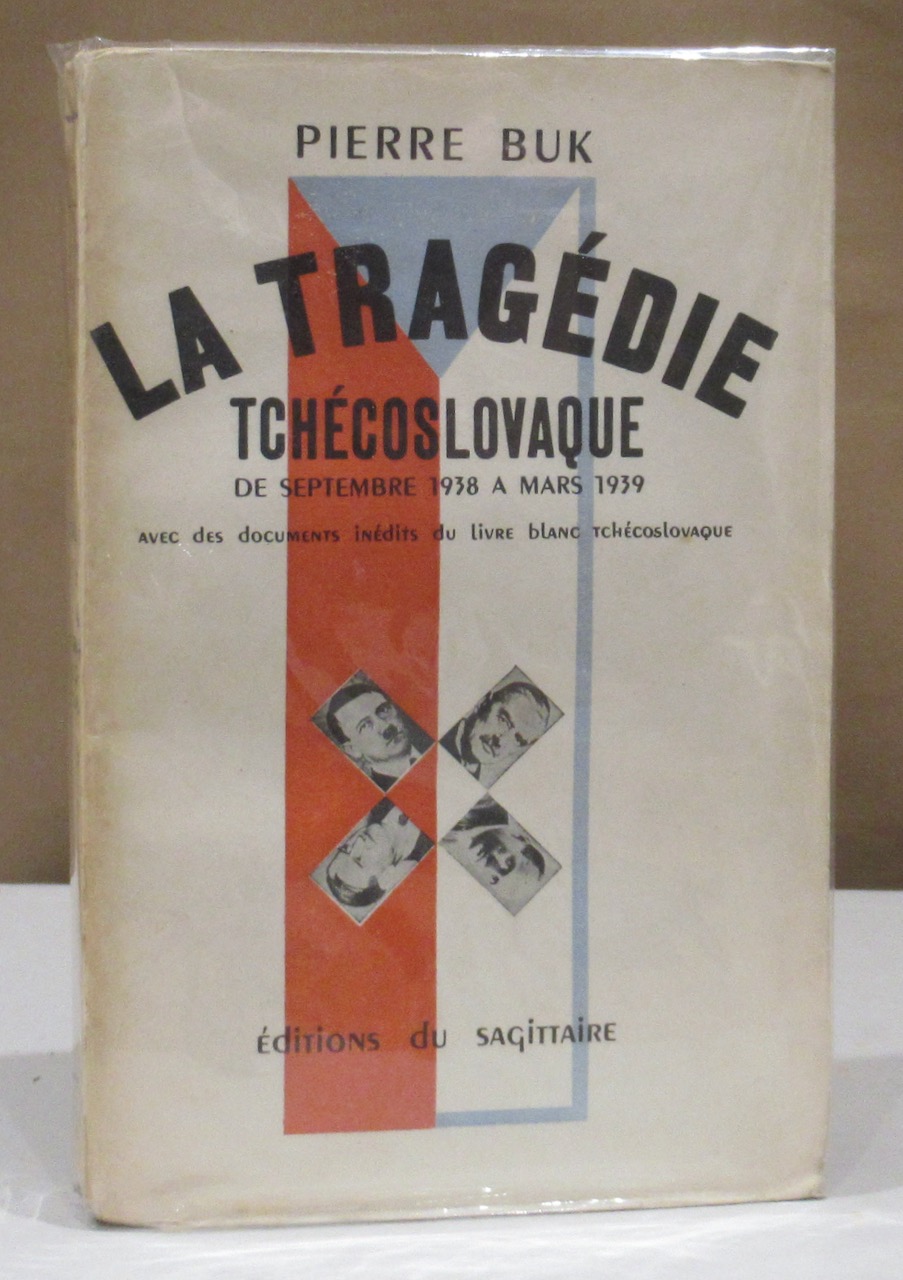
1939Best.-Nr. 99749Paris, Editions du Sagittaire 1939. 1939. 207 S. Illustr. OKart.
Best.-Nr. 01231015.exp2FNew. unknown
1917Best.-Nr. 64488Melbourne: Critchley Parker 1917. 1st edition. Very Good. small octavo. chipped wrappers 141pp. Ôpublished in aid of the work of the Overseas Committee of the British Institute of Journalists in seeking help throughout the world for the exiled Journalists of Belgium their wives and children.Õ Some chipping to wrappers & toning to paper o/w a very good complete & tight copy of a very scarce item Critchley Parker unknown
1949Very Good Armenian Original half bound leather bdg. Large demy8vo. (22 x 15,5 cm). In Armenian. 675 p. Prior to Soviet rule, the Dashnaksutiun had governed the First Republic of Armenia. The Socialist Soviet Republic of Armenia was founded in 1920. Diaspora Armenians were divided about this: supporters of the nationalist Dashnaksutiun did not support the Soviet state, while supporters of the Armenian General Benevolent Union (AGBU) were more positive about the newly founded Soviet state. From 1828 with the Treaty of Turkmenchay to the October Revolution in 1917, Eastern Armenia had been part of the Russian Empire and partly confined to the borders of the Erivan Governorate. After the October Revolution, Bolshevik leader Vladimir Lenin's government announced that minorities in the empire could pursue a course of self-determination. Following the collapse of the empire, in May 1918 Armenia, and its neighbors Azerbaijan and Georgia, declared their independence from Russian rule and each established their respective republics. After the near-annihilation of the Armenians during the Armenian Genocide and the subsequent Turkish-Armenian War, the historic Armenian area in the Ottoman Empire was overrun with despair and devastation. A number of Armenians joined the advancing 11th Soviet Red Army. Afterward, Turkey and the newly proclaimed Soviet republics in the Caucasus negotiated the Treaty of Kars, in which Turkey resigned from its claims to Batumi to Georgia in exchange for the Kars territory, corresponding to the modern-day Turkish provinces of Kars, Igdir, and Ardahan. The medieval Armenian capital of Ani, as well as the cultural icon of the Armenian people Mount Ararat, were located in the ceded area. Additionally, Joseph Stalin, then acting Commissar for Nationalities, granted the areas of Nakhchivan and Nagorno-Karabakh (both of which were promised to Armenia by the Bolsheviks in 1920) to Azerbaijan. From 12 March 1922 to 5 December 1936, Armenia was a part of the Transcaucasian SFSR (TSFSR) together with the Georgian SSR and the Azerbaijan SSR. The policies of the first Soviet Armenian government, the Revolutionary Committee (Revkom), headed by young, inexperienced, and militant communists such as Sarkis Kasyan and Avis Nurijanyan, were implemented in a highhanded manner and did not take into consideration the poor conditions of the republic and the general weariness of the people after years of conflict and civil strife. Such was the degree and scale of the requisitioning and terror imposed by the local Cheka that in February 1921 the Armenians, led by former leaders of the republic, rose up in revolt and briefly unseated the communists in Yerevan. The Red Army, which was campaigning in Georgia at the time, returned to suppress the revolt and drove its leaders out of Armenia. Convinced that these heavy-handed tactics were the source of the alienation of the native population to Soviet rule, in 1921 Moscow appointed an experienced administrator, Alexander Miasnikian, to carry out a more moderate policy and one better attuned to Armenian sensibilities. With the introduction of the New Economic Policy (NEP), Armenians began to enjoy a period of relative stability. Life under the Soviet rule proved to be a soothing balm in contrast to the turbulent final years of the Ottoman Empire. The Armenians received medicine, food, as well as other provisions from the central government and extensive literacy reforms were carried [.] Only one copy is located in OCLC: 782028953 (National Library of Israel - Jewish National Library).
Best.-Nr. 24743‘18bre sic 1855’ Wimbledon London. An interesting letter indicating the networks of sympathisers who assisted those fleeing to England in the years following the revolutions of 1848. In the July 1895 edition of the Atlantic the subject of this letter the Christian Socialist J. M. Ludlow in reviewing Nadaud’s memoirs described him as ‘a friend of my own of many years’ standing’. The present item was written in the seventh of the eighteen years of Nadaud’s English exile part of which was spent as a teacher in Wimbledon under the name ‘Henri Geo. Nadaud’. The identity of the recipient is not known. 4pp 16mo. Bifolium on grey paper. Worn and with a small part of one corner torn away but in fair overall condition. Folded once for postage. Sixty-six lines of text addressed to ‘Cher Mons Delabussière’ and signed ‘Martin’. He begins by explaining why he has not been able to return in person the ‘numéro’ of a periodical that Delabussière has sent him and that he has read with great pleasure. He had previously made arrangements about altered worktimes with a colleague. He goes on to ask whether Delabussière would like to dine with him the following Wednesday and whether he would like him to invite ‘Boura’ and another man as well. He states that he does not recall talking to Boura on the subject of a letter ‘écrite par le monsieur ou je suis à celui que je venais de quitter. / Le fait de votre réussite parle assez haut en lui même pour que aucun on dit ne puisse atteindre votre amore propre. Si on n’avait pas eu confiance en vous je n’y pourais pas été appele’ He hopes that Delabussière's ‘association’ brings him money as friends are rare and a man is placed in the scales of wealth rather than of honour. He has distributed Delabussière's prospectuses along with his own calling card and bids him visit ‘un de mes bons amis Mr Ludlow avocat anglais 3 Old Square Lincom-inn sic’ and tell him that he is ‘le professeur de Mechanics institution’ and ‘il aura peut être un collège à vous offrir’. It will be worth his while ‘car ces messieurs font des sacrifices énormes pour l’education du peuple anglais’. He gives a few further instructions regarding how to approach Ludlow ending ‘Il sait toute mon affaire je ne lui cache rien!’ ‘18bre [sic] 1855’ [Wimbledon, London]. unknown
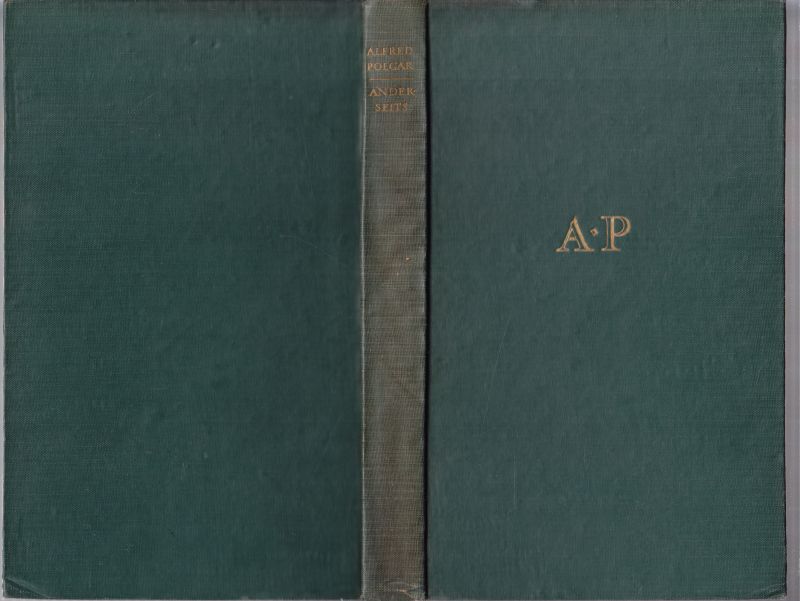
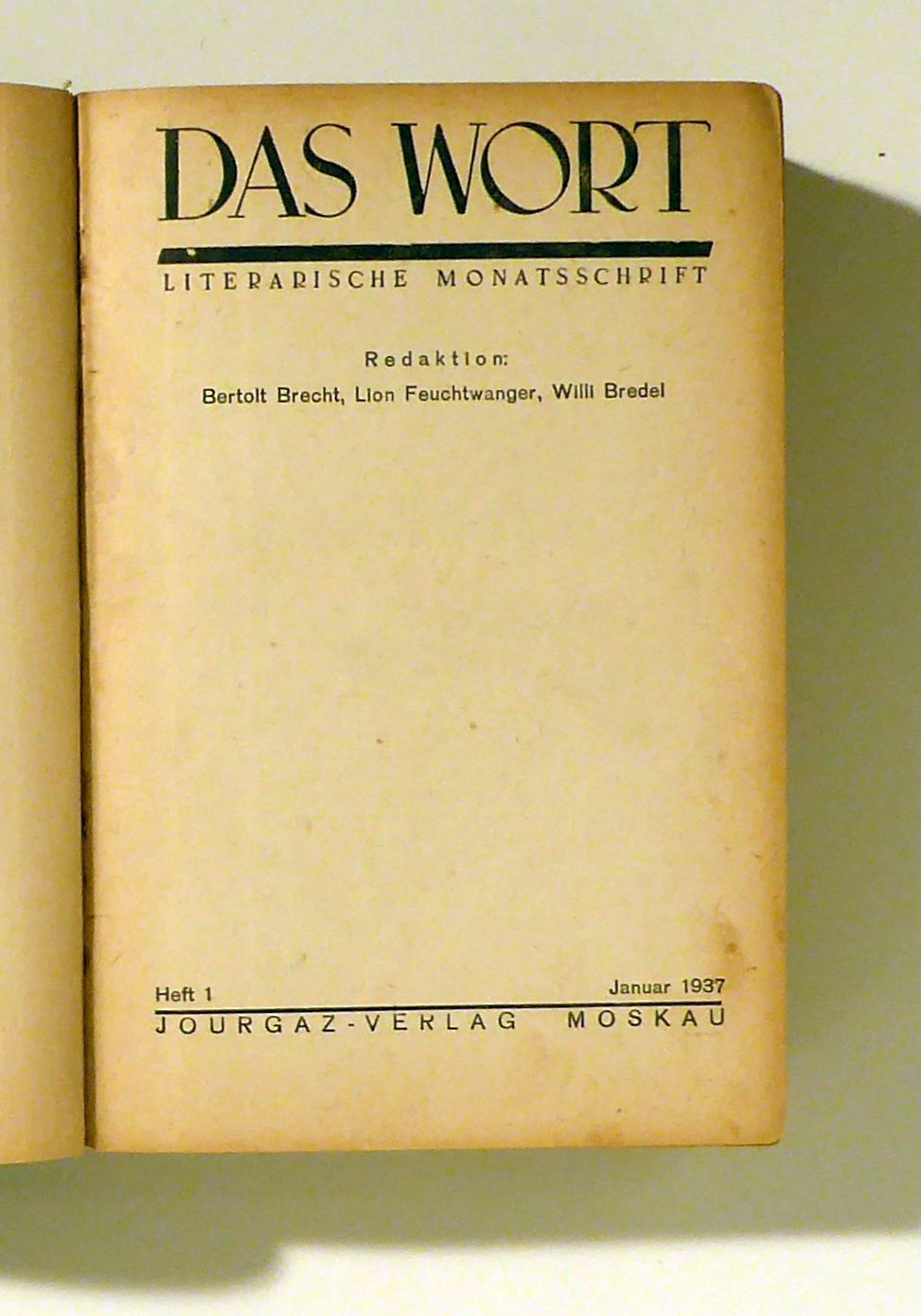
1937Best.-Nr. 166991Moskau, Jourgaz, 1937. 2 Bände, je 6 Hefte, jedes Heft ca. 112 S., Halbleinwand, 8°. Maas 2, 614; 4, 197. - Seidel. 1936. Der zweite Jahrgang dieser wichiutgen Literaturzeitschrift des Exils. Sie erschien zwischen 1936 und 1939 in Moskau und stand sowohl kommunistischen als auch nichtkommunistischen Autoren offen. Mit Beiträgen von Georg Lukacs, Thomas Mann, Klaus Mann, Oskar Maria Graf, F. C. Weiskopf, Bodo Uhse, Lion Feuchtwanger, Egon Erwin Kisch, Arnold Zweig, Ernst Weiss und zahlreichen anderen. [2 Warenabbildungen] Hardcover Privater Einband mit Pappdeckeln und grünem Leinwandrücken. Die Umschläge wurden nicht mitgebunden. Einbände berieben, Kanten und Ecken bestossen. Leinwandrücken abgewetzt. Seiten vereinzelt etwas fleckig, Schnitt angestaubt. Das Wort, 2. Jahr 1937, Heft 1-12
1940Best.-Nr. 148612Zch., Rascher, 1940. 64 S., it zahlreichen teils farbigen Abbildungen nach Zeichnungen sowie mit einigen Liedern mit zweistimmig gesetzten Noten. Original-Halbleinwand, 4°. Hatri 241. - Deutsches Exilarchiv 3709. Hardcover Einband minim angestaubt, davon abgesehen schönes Exemplar.
1934Best.-Nr. 39051BBKopenhagen, Prag, Zürich, Verlag für Sexualpolitik, 1934. 8°. 300 S., 1 w. Bl., Rote bedruckte Originalbroschur.
1943Best.-Nr. 147547Los Angeles, Pazifische Presse, 1943. 53 S. 22*17 cm. OHalblederband
1941Best.-Nr. 38972New York, Modern Age Books, 1941. 376 S., OLwd.
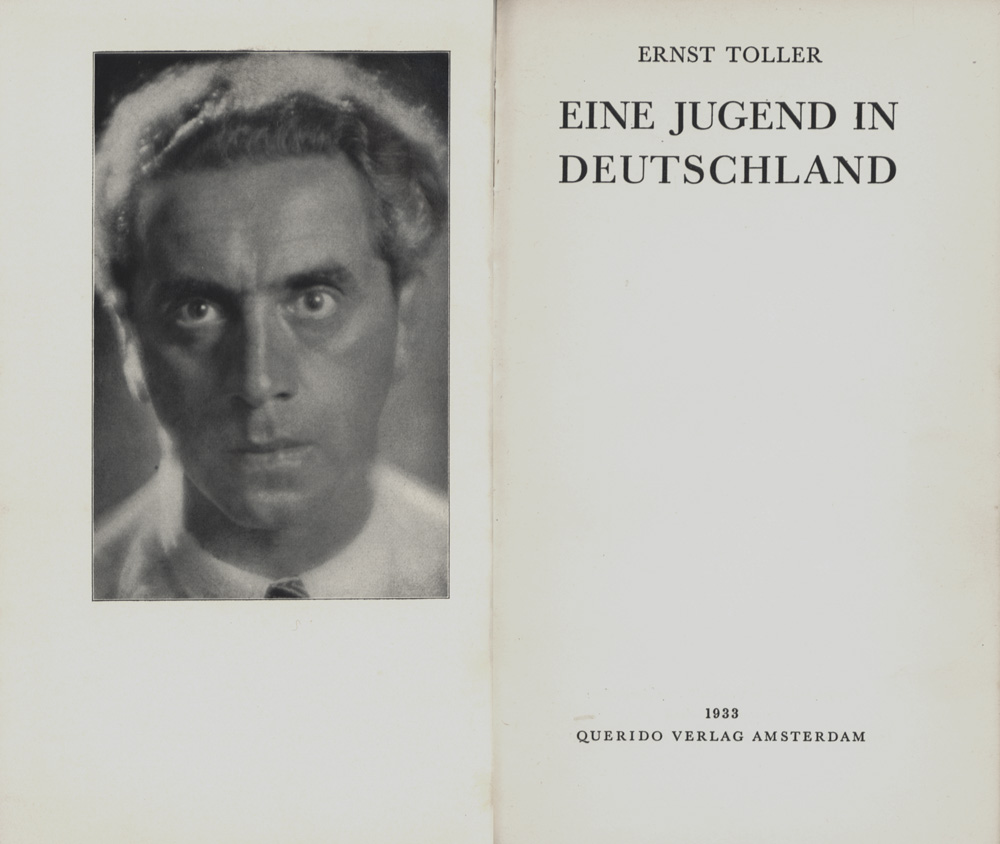
1933Best.-Nr. 14821ABAmsterdam, Querido, 1933. 8°. Titelportrait, XV, 287 (1) S. OLn. Kopffarbschnitt., 1
1906Best.-Nr. 43217London: "Arbayter fraynd 1906. First Yiddish edition. Period boards 8vo xiii 426 pages 19 cm. In Yiddish. Title translates as “Words from a Revolutionary.” Translation of “Paroles d'un re´volte´.” Includes translation of the forewords by the author and Elise´e Reclus. Includes bibliographical references. “During his long exile Kropotkin wrote a series of influential works the most important being ‘Paroles d’un révolté’ 1885; “Words of a Rebel”.Kropotkin’s aim as he often remarked was to provide anarchism with a scientific basis. In Mutual Aid which is widely regarded as his masterpiece he argued that despite the Darwinian concept of the survival of the fittest cooperation rather than conflict is the chief factor in the evolution of species. Providing abundant examples he showed that sociability is a dominant feature at every level of the animal world. Among humans too he found that mutual aid has been the rule rather than the exception. He traced the evolution of voluntary cooperation from the primitive tribe peasant village and medieval commune to a variety of modern associations—trade unions learned societies the Red Cross—that have continued to practice mutual support despite the rise of the coercive bureaucratic state. The trend of modern history he believed was pointing back toward decentralized nonpolitical cooperative societies in which people could develop their creative faculties without interference from rulers clerics or soldiers.” SUBJECTS: Anarchism. OCLC: 19303211. Ex-library with early 19th Century left-wing library markings see photos. Good- Condition YID-48-41-LXCCGG-’e. London: "Arbayter fraynd unknown
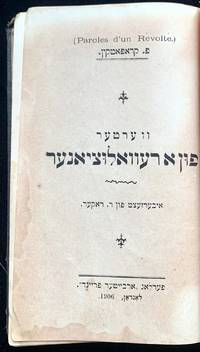
1906Best.-Nr. 43219London: "Arbayter fraynd 1906. First Yiddish edition. Period boards 8vo xiii 426 pages 19 cm. In Yiddish. Title translates as “Words from a Revolutionary.” Translation of “Paroles d'un re´volte´.” Includes translation of the forewords by the author and Elise´e Reclus. Includes bibliographical references. “During his long exile Kropotkin wrote a series of influential works the most important being ‘Paroles d’un révolté’ 1885; “Words of a Rebel”.Kropotkin’s aim as he often remarked was to provide anarchism with a scientific basis. In Mutual Aid which is widely regarded as his masterpiece he argued that despite the Darwinian concept of the survival of the fittest cooperation rather than conflict is the chief factor in the evolution of species. Providing abundant examples he showed that sociability is a dominant feature at every level of the animal world. Among humans too he found that mutual aid has been the rule rather than the exception. He traced the evolution of voluntary cooperation from the primitive tribe peasant village and medieval commune to a variety of modern associations—trade unions learned societies the Red Cross—that have continued to practice mutual support despite the rise of the coercive bureaucratic state. The trend of modern history he believed was pointing back toward decentralized nonpolitical cooperative societies in which people could develop their creative faculties without interference from rulers clerics or soldiers.” SUBJECTS: Anarchism. OCLC: 19303211. Spine is taped.Tight binding but text block is clean and intact. Good Condition YID-48-40-LXCCGG-’e. London: "Arbayter fraynd unknown
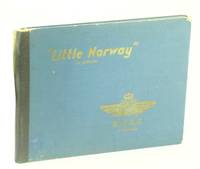
1943Best.-Nr. 811h1965Toronto: S. J. Reginald Saunders Publishers. Poor. 1943. First Edition. Hardcover. The first 32 pages serve as an introduction to the Norway of today and yesterday accompanied by many black and white photos. The remaining 92 pages describe the history of "Little Norway" established in Canada around the Toronto Island Airport shortly after Germany occupied Norway in WWII. Profusely illustrated with black and white photos we see and read how Norwegian military forces were trained and lived in Canada. Includes names and photos of the Norwegian leaders of this project four photos of the Muskoka aerodrome opened by Crown Prince Olav on May 4th 1942 photos of V.I.P. visitors headshot photos of dozens of unidentified headquarters staff members and an aerial photo of "Little Norway" a completely modern military camp. Undated but appears to be circa 1943. Text in English. Very heavily worn with many military library markings and binding issues. Spine taped. Oblong 12" x 9.25". Not pretty but a worthy reference copy of this important facet of Norwegian and Canadian WWII history. Cooke 3rd Edn p.343. ; 8vo . S. J. Reginald Saunders Publishers hardcover
1940Best.-Nr. ZEIT1297[Paris], s.l. 1940. 14x9,7 cm. 64 S., OBrosch., Umschlagtitel. Papierbedingt gebräunt, Titelbl. mit kl. Einriss, ansonsten gut erhalten, ohne Stempel od. Anstreichungen Klandestine französische Propagandaausgabe mit Teilen des Aufsehen erregenden Buches von Rauschning. Gespräche zwischen Rauschning und H. hatten in dieser Form niemals stattgefunden, doch war das Werk lange Zeit Bestandteil der antifaschistischen Propaganda. Die vorliegende Broschüre, bisweilen irrig als Tarnbroschüre kategorisiert, enthält u.a. Teile des Kapitels "Hitler privat" (= Kapitel 18 d. engl. u. Kapitel 43 d. franz. Übers.), die in der deutschsprachigen Ausgabe nicht enthalten waren. - Exilarchiv 4705. Kirchner III, Seite 143 ff.
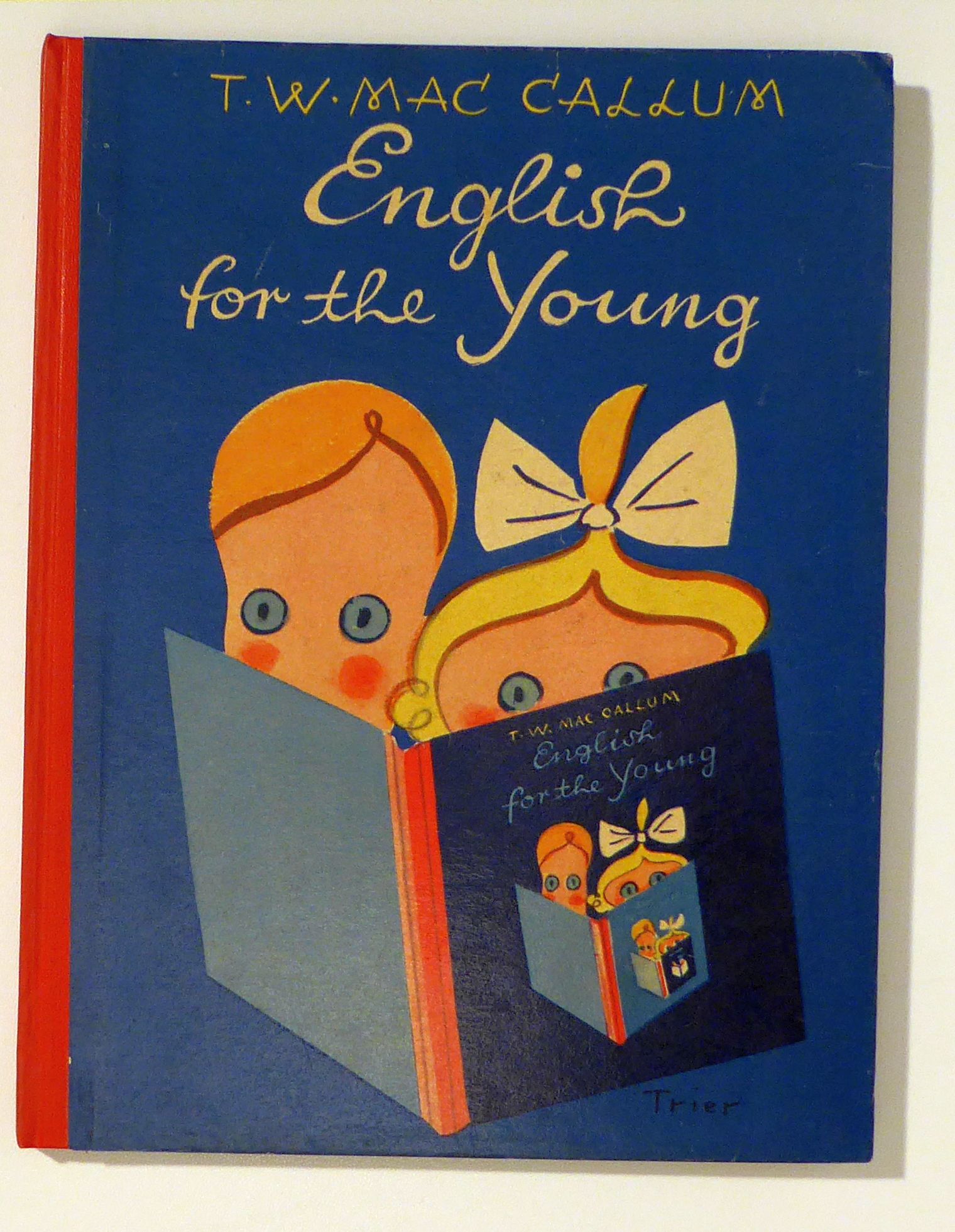
1946Best.-Nr. FSKB0300London, Faber and Faber [1946]. 19 x 25 cm. 16 nn. Bll. (einschl. Tit.). Durchgehend ill., 16 S. in Farbe, Einband angestaubt, abgegriffen, Hinterdeckel m. Kritzeleien; innen stellenweise fingerfleckig. Lang 62.