3.537 Ergebnisse
Mit zahlreichen Abbildungen.
2014New English Paperback. Pbo. Large demy 8vo. (21 x 16 cm). In Turkish and Greek. 67, [6], 71 p., color and b/w ills. 20 dolar 20 kilo. Cumhuriyet tarihinin en büyük sürgün hikayelerinden biri.= 20 dolarya 20 kila. Mia ap tis megaliteres istories eksorias stin istoria tis Turkikis dimokratias. [Exhibition catalogue]. Catalogue of the exhibition covering the 1964 expulsion of Greeks nationals living in Turkey to Greece. SOCIAL HISTORY Greek Non-Muslim minority Exile Turkish nationalism Greeks of Turkey Karaman Istanbul Constantinople. First Edition.
1995Best.-Nr. 1143571Berlin : Verein Aktives Museum, 1995. 354 S. Mit zahlr. Abb. Originalbroschur.
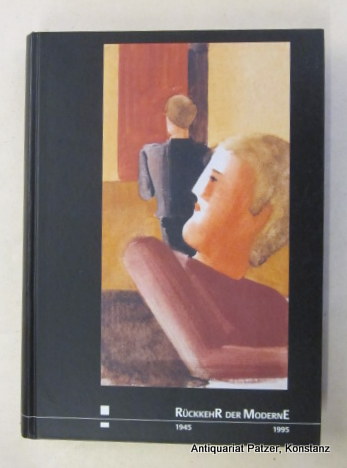
1995Best.-Nr. 211174Die erste Nachkriegs-Ausstellung verfemter deutscher Kunst (in) Überlingen. Konzeption von Hans-Dieter Mück. Überlingen 1995. Kl.-fol. Mit zahlreichen, teils farbigen Abbildungen. 359 S., 8 Bl. Or.-Pp. [5 Warenabbildungen]
1950Best.-Nr. 3419BBStuttgart Wien St. Gallen, Verkauf, 1950. 8°. 95 S. OLn., 1Hakel, 1938 - 1945
1980Best.-Nr. 37333Bln., LitPol, 1980. 222 S. m. Abb., OKart. (=LitPol - Lesebücher 3),
1969Best.-Nr. 132101[Ohne Verlag], 1969. 7, 98 S. ; 21 x 15 cm ; broschiert.
1966Best.-Nr. 36070Ffm., Deutsche Bibliothek, 1966. 324 S. u. 40 Taf., ill. OKart. (=Sonderveröffentl. d. Dt.Bibliothek Nr.1),
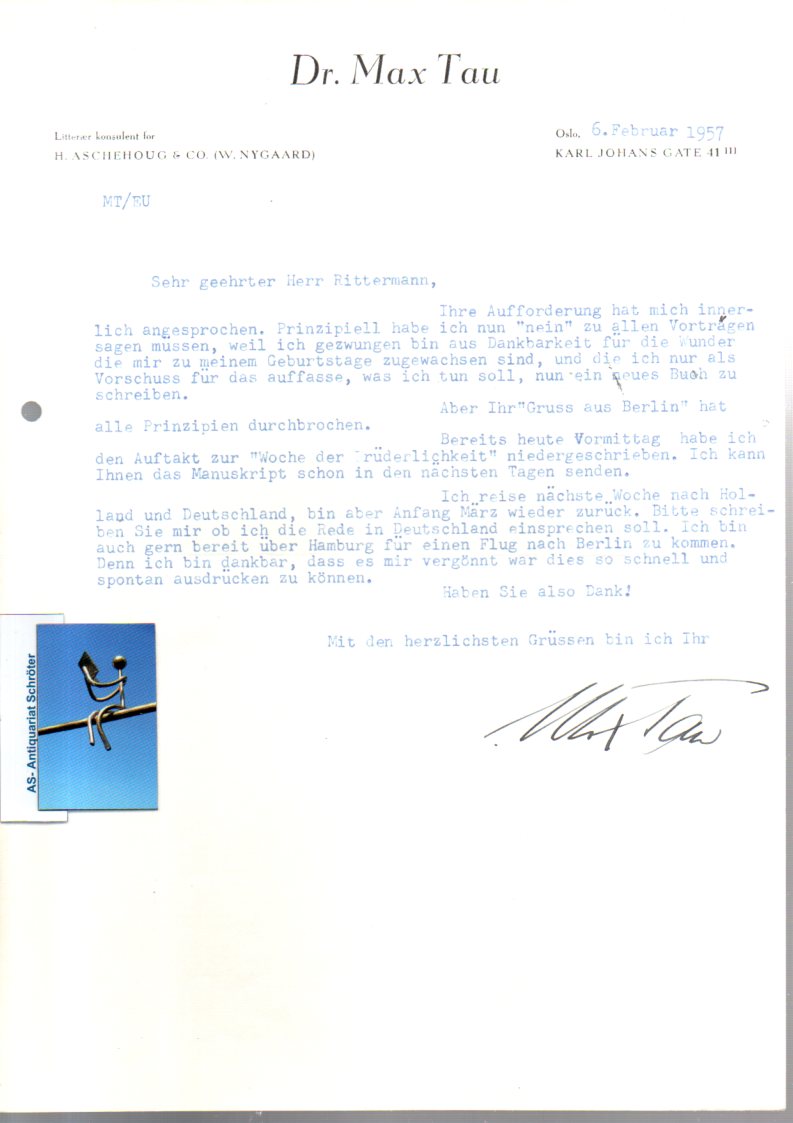
Best.-Nr. 125946. Februar 1957, Oslo, Von DIN A4 zweimal gefaltet auf Postkartenformat. An einen Herrn Rittermann einen Vortrag für den Rundfunk betreffend. Am Rand gelocht. Gutes Exemplar. Good copy. Hand signed by Tau.
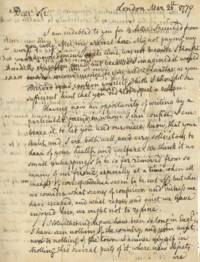
1779Best.-Nr. List3711London 1779. Autograph letter signed Joseph Green to Boston merchant Samuel Eliot. Folded letter datelined "London Mar. 26th 1779" with "Rec'd 22nd Decr. 1779" docket on top flap. 7 x 9 ¼ inches 3pp. Some repairs with archival tape folded small tears at some folds. Excellent. A thoughtful Revolutionary-era letter written by Joseph Green the Boston clergyman poet satirist and wit whose verses made him one of the best-known literary figures in colonial New England. A graduate of Harvard College and member of Boston's mercantile elite Green maintained friendships with figures including Mather Byles and Benjamin Church. He is known for his satirical poetry and as a signer of the 1773 attestation supporting Phillis Wheatley's authorship of Poems on Various Subjects Religious and Moral. A Loyalist during the American Revolution and named in the 1778 Massachusetts Banishment Act Green departed Boston in 1775 and spent the remainder of his life in England. The present letter was written only a year before his death in London in 1780. Written during the period of British blockade and privateering that turned the Atlantic into a contested military space the letter survives as a rare example of communication successfully passing between a Loyalist exiled in London and a Boston merchant. Green repeatedly returns to the difficulty of maintaining contact noting that "all means of correspondence seem to be cut off" and explaining that he is able to write only because he has found "a particular friend in whom I can confide." The letter itself written in March and not received until December 1779 provides tangible evidence of the obstacles confronting transatlantic correspondence during the Revolution. Green writes: "Having now an opportunity of writing by a particular friend in whom I can confide I embrace it to let you and our niece know that your Aunt and I are both well and very solicitous to hear of your health and welfare. We think it no small unhappiness to be so far removed from so many of our friends especially at a time when all means of correspondence seem to be cut off; but when we consider what scenes of confusion and distress we have escaped and what repose and quiet we have enjoyed here we ought not to repine. "Notwithstanding we have been so long in Engl'd I have seen nothing of the country and your Aunt next to nothing of the town. I amuse myself in trolling thro' several parts of it where new objects are perpetually presenting themselves; and I am the fonder of this exercise as it contributes to health as well as amusement. "The climate here agrees well with my constitution. I enjoy better health than I did at home & my friends tell me I am younger. But I know better than to believe them in this because I think if I was to go about it I could prove I am near four years older than when I left Boston." Green's remarks describe the reality of transatlantic communication during the Revolutionary War when Loyalists abroad and their friends in America frequently depended upon trusted private carriers rather than regular postal channels. The letter's journey from London to Boston-requiring months to arrive and bearing Eliot's receipt docket of December 22 1779-illustrates precisely the obstacles Green describes. Green continues with observations on one of the great public controversies of wartime Britain the celebrated court martial of Admiral Augustus Keppel following his engagement with the French fleet off Brest. Green describes the intense public reaction and the partisan passions surrounding the affair: "We have had a forced and ostentatious display of joy on acct. of Admiral Keppel's acquittal. He has been try'd by a court martial on a charge brought against him by Admiral Palliser for misconduct in the engagement he had the last summer with the French fleet off Brest. This has been made a party affair and has been carry'd to a most extravagant height. The whole city has been illuminated three or four nights and there have been great rejoicings thro' the Kingdom. But the matter is now pretty well over and Palliser has ruin'd himself by it." Most affecting however is Green's reflection on the increasingly remote prospect of ever returning to Boston. He seems to realize that his exile may be permanent writing that "At the time I left Boston it was uncertain when I should return or whether I should return at all. But the improbability was not so great then as it is now. The door was then shut now it is bolted." Green's letter offers a moving account of Loyalist exile-separation from friends and family with hope for return fading. We find no other records of letters written by Green during this period in commerce or at auction.
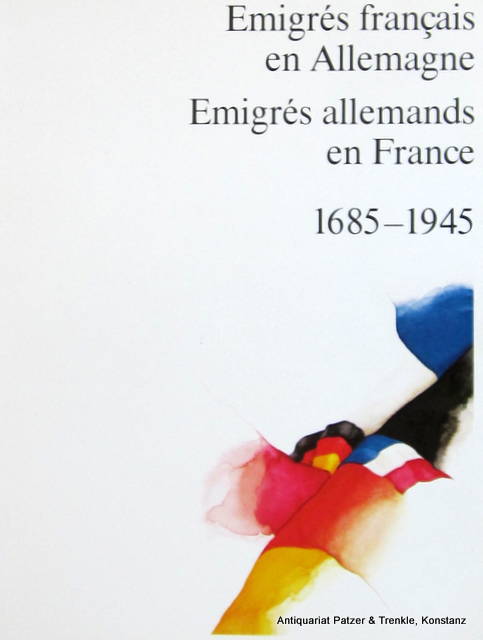
1983Best.-Nr. 135375Une exposition réalisée par L'Institut Goethe et le Ministère des Relations Extérieures. Paris 1983. 4to. Mit zahlreichen, teils farbigen Abbildungen. 171 S. Or.-Kart. [4 Warenabbildungen]
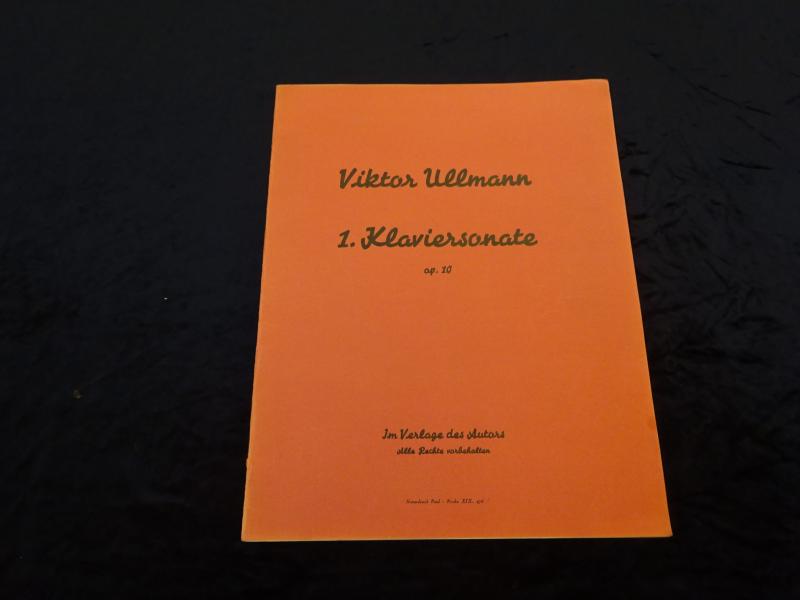
1936Best.-Nr. NOTE0544Prag, im Eigenvlg. o.J. [1936] (Notendruck: Paul, Prag). 27 x 34 cm. Tit., 15(1) S. OBrosch. Aus dem Nachlass des Dirigenten Ernst Latzko, mit einigen Bleistift-Einztragungen von dessen Hand im Satz. Vgl. OEM V, 2472. Der österreichische Komponist, Dirigent und Pianist Viktor Ullmann (1898-1944) besuchte ab 1909 ein Gymnasium in Wien. Seine musikalischen Neigungen und Begabungen verschafften ihm früh Zugang zu Arnold Schönberg und seinem Schülerkreis und 1918 wurde er auch in Schönbergs Kompositions-Seminar aufgenommen. 1919 ging er nach Prag, wo Alexander von Zemlinsky sein Mentor wurde und ihn als Chordirektor und Korrepetitor am Neuen Deutschen Theater verpflichtete. Es folgten weiter Engagements in Aussig und Zürich. Von 1931-33 betrieb er eine anthroposophische Buchhandlung in Stuttgart. Nach der Machtergreifung der Nationalsozialisten floh er nach Prag, wo er sich als selbstständiger Komponist und Pädagoge etablieren konnte. 1942 wurde er in das Konzentrationslager Theresienstadt eingeliefert. Hier war er bis zu seiner Ermordung in Ausschwitz kompositorisch tätig und organisierte musikalische Aufführungen. - Bis zur Deportation erreichte seine Werkliste die Opuszahl 41. Der größere Teil dieser Werke gilt als verschollen. Erhalten blieben 15 Drucke seiner zwischen 1936 und 1942 entstandenen Kompositionen, die Ullmann im Selbstverlag herausgegeben und einem Freund zur Aufbewahrung anvertraut hatte. [2 Warenabbildungen]
2005New Turkish Paperback. Cr. 8vo. (20 x 14 cm). In Turkish. 35, [1] p. 1. Dünya Savasinda Kuzey Kafkasyalilar. Genel bir tarihi özet. Translated by Ayten Berzeg. First Edition (In French) 1918. North Caucasians in the World War 1.
1953Best.-Nr. EEZZ7567Graz, Leykam [1953]. 195 S., 20 mont. Tafeln, OLn. mit zweifarb. OUmschlag, dieser mit Randrissen Beigabe: W Thöny : 1888 - 1949 ; Neue Galerie am Landesmuseum Joanneum ; Gemälde und Graphik ; Gedächtnisausstellung aus Anlaß der 80. Wiederkehr seines Geburtstages ; 10. Februar bis 24. März 1968 . Mit einem Textbeitrag von Wilfried Skreiner.
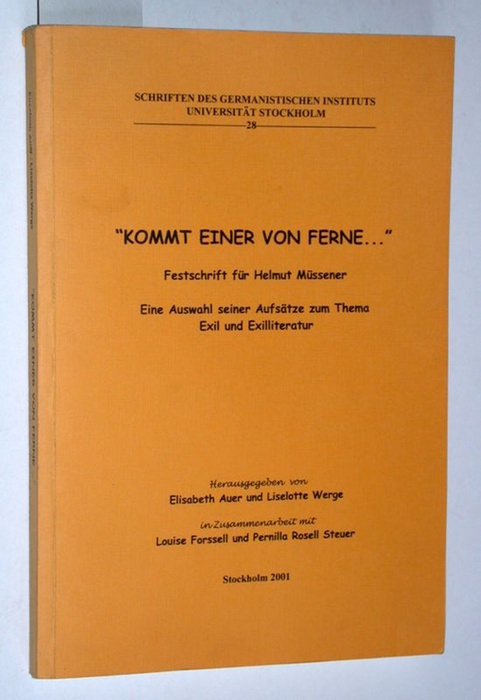
2001Best.-Nr. 60953Stockholm: Selbstverlag. 2001. 226 Seiten. Widmung von Helmut Müssner auf Vorsatz. Insgesamt ein gut erhaltenes Exemplar. flexibler Pappeinband, 24,5 x 17 cm.
1982Best.-Nr. 2768Freibg., Heidelberg, Kerle, 1982. 378 S. m. Abb., OPp. m. OU.
1935Best.-Nr. 31491Zürich, Europa-Verlag, 1935. 246 S., 1 Bl., OLwd.
1991Best.-Nr. 1253741Pfaffenweiler, Centaurus-Vlgsges. 1991. 8, 303, (1) S. (Forum Frauengeschichte 8). OKart. (am Schluß einige Lagen am unteren Rand etwas feuchtwellig).
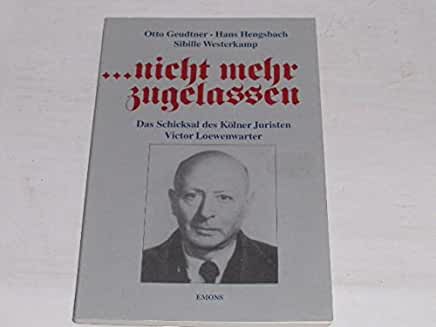
1995Best.-Nr. 124509Köln, Emons 1995. XII, 131 S. Mit zahlreichen meist faks. Abbildungen. Ill. Originalbroschur. (Geringe Gebrauchsspuren). 21x15 cm
1943Best.-Nr. 100129London, Lofox 1943. 1943. 68 S. Illustr. Orig.-Karton.
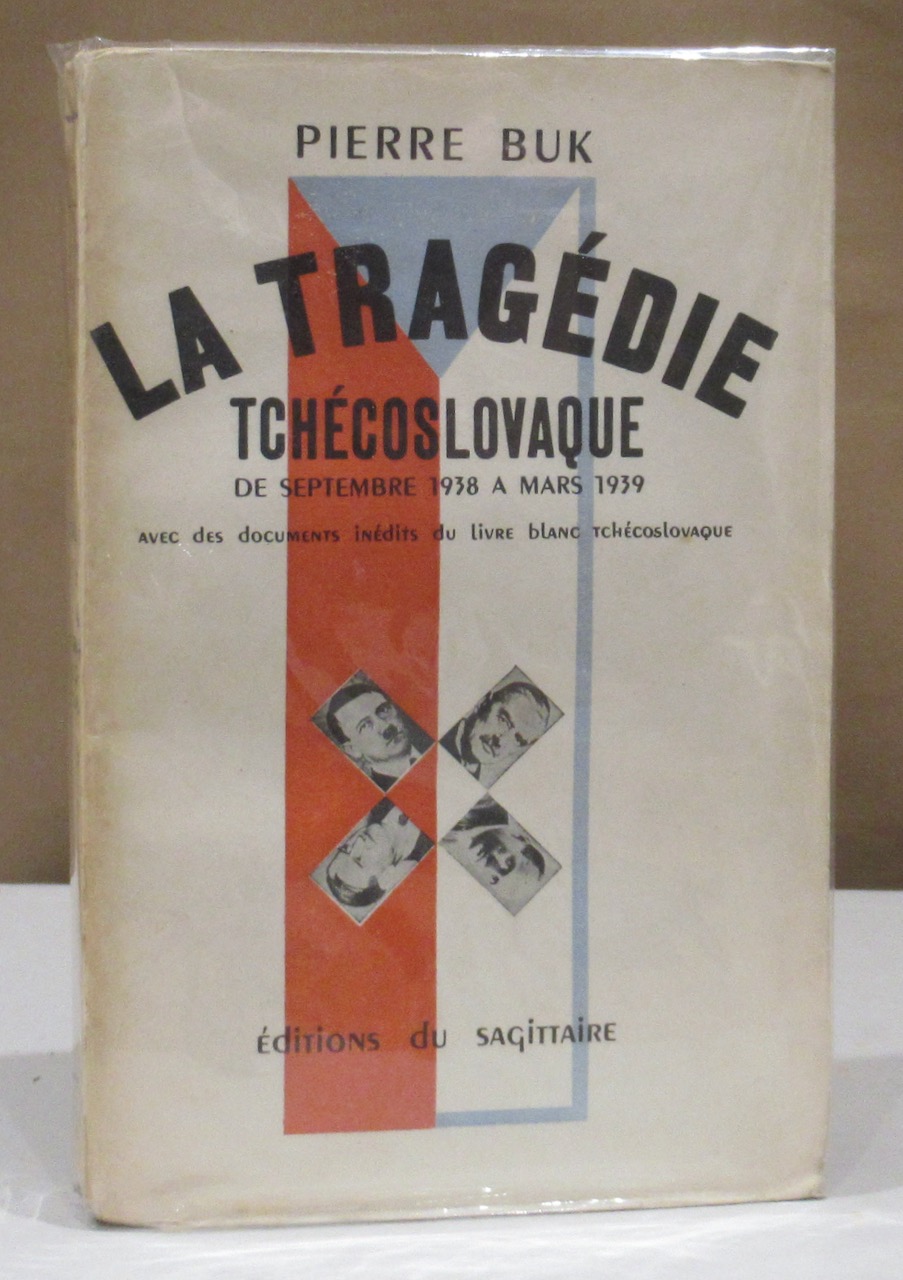
1939Best.-Nr. 99749Paris, Editions du Sagittaire 1939. 1939. 207 S. Illustr. OKart.
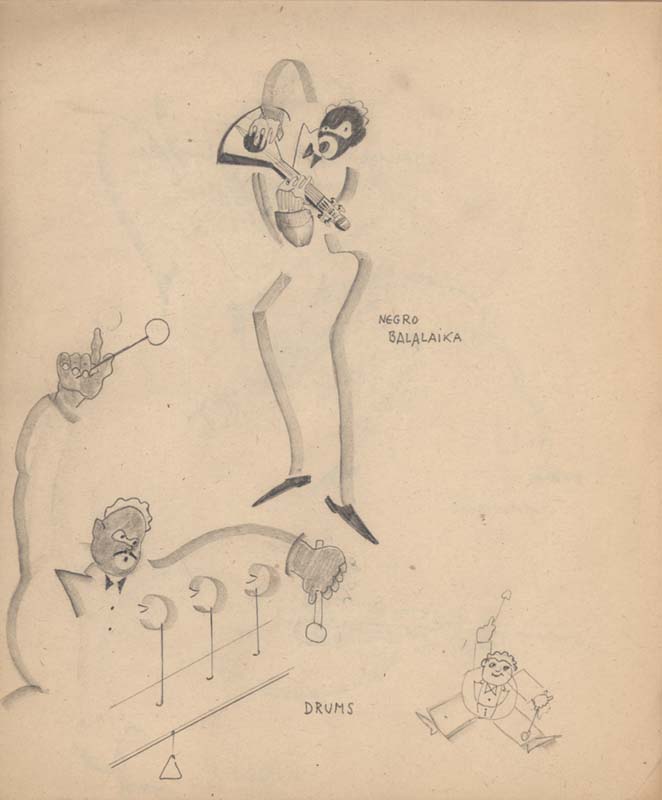
Best.-Nr. 10143BBo.J. 8°., 1
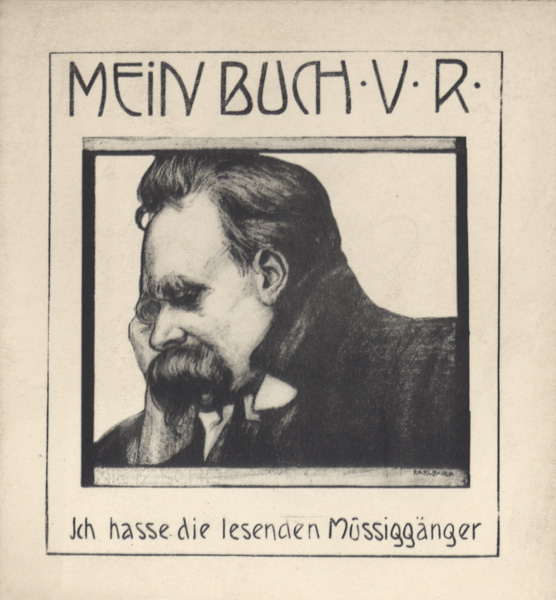
1910Best.-Nr. 5140BB(Wien, um 1910). 9,5 x 8,7 cm., Rosenfeld Ex libris Ich hasse die lesenden Müssiggänger
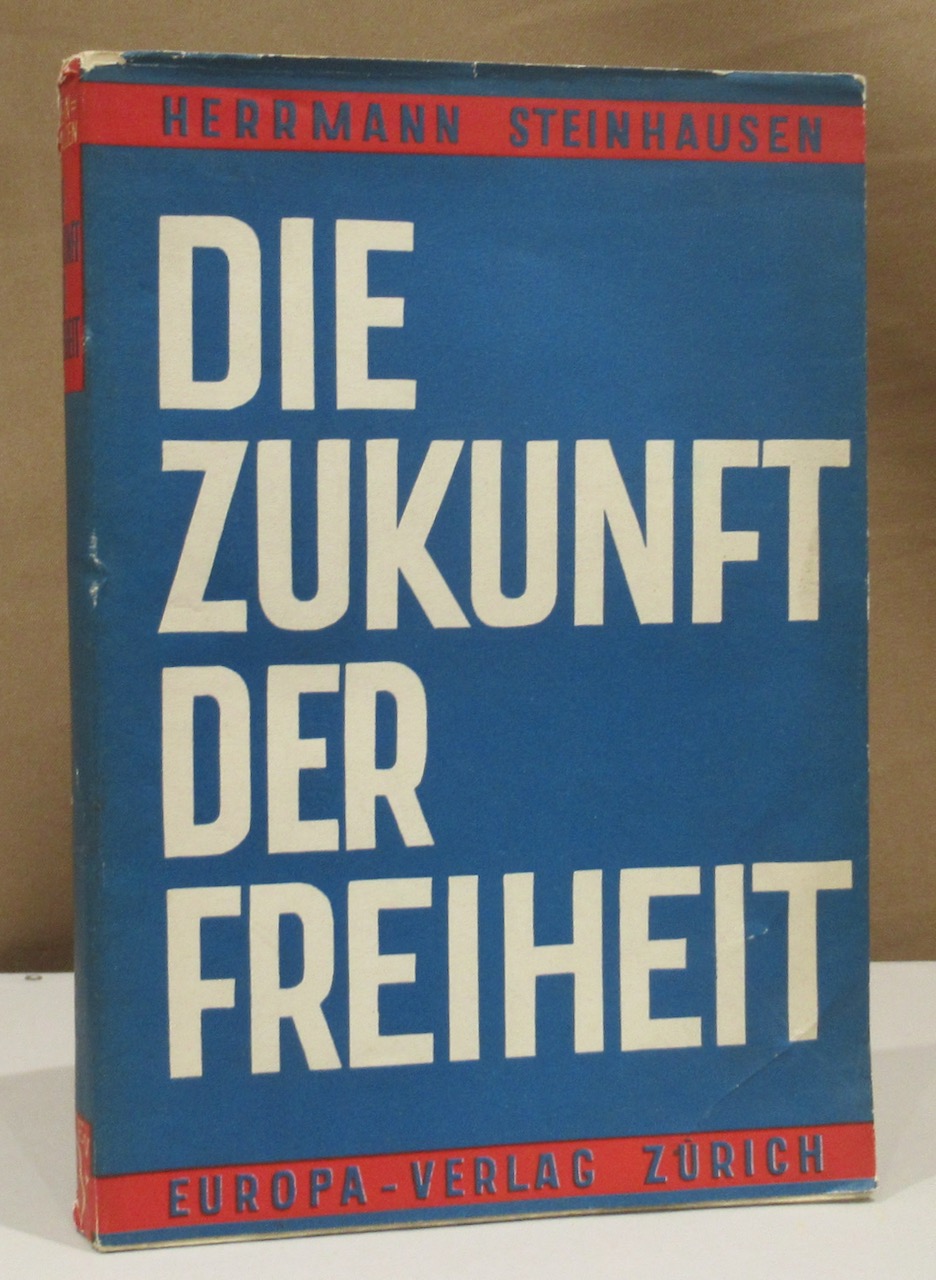
1938Best.-Nr. 12449Zürich, Europa 1938. 1938. 237 S. OKart. m. OU.
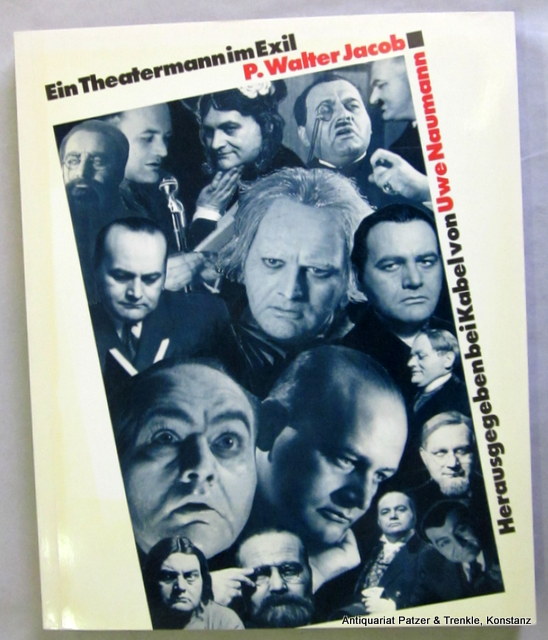
1985Best.-Nr. 91968Herausgegeben von Uwe Naumann u.a. Hamburg, Kabel, 1985. Kl.-4to. Mit zahlreichen Abbildungen. 240 S. Or.-Kart.; tlw. etw. gebräunt.