3.536 resultados
1793ref. R43126s.l., s.d. [1793] [vi +] 212pp.+ [iii] pp. de tables, reliure cart.d'époque, dos en cuir (titre et fleuron doré), 19cm., bel état, [l'avant-propos par A.J., Ev. Comte de Chaalons, finit par: "Donné à Gémert en Hollande, où la persécution contre l'Eglise de France & son Clergé nous a forcés de nous retirer. Ce 6 Juillet 1793"]
1793[vi +] 212pp.+ [iii] pp. de tables, reliure cart.d'époque, dos en cuir (titre et fleuron doré), 19cm., bel état, [l'avant-propos par A.J., Ev. Comte de Chaalons, finit par: "Donné à Gémert en Hollande, où la persécution contre l'Eglise de France & son Clergé nous a forcés de nous retirer. Ce 6 Juillet 1793"]
1942ref. 005575Buenos Aires Editions de l'Aigle 1942 In-4 Broché, couverture rempliée Edition originale
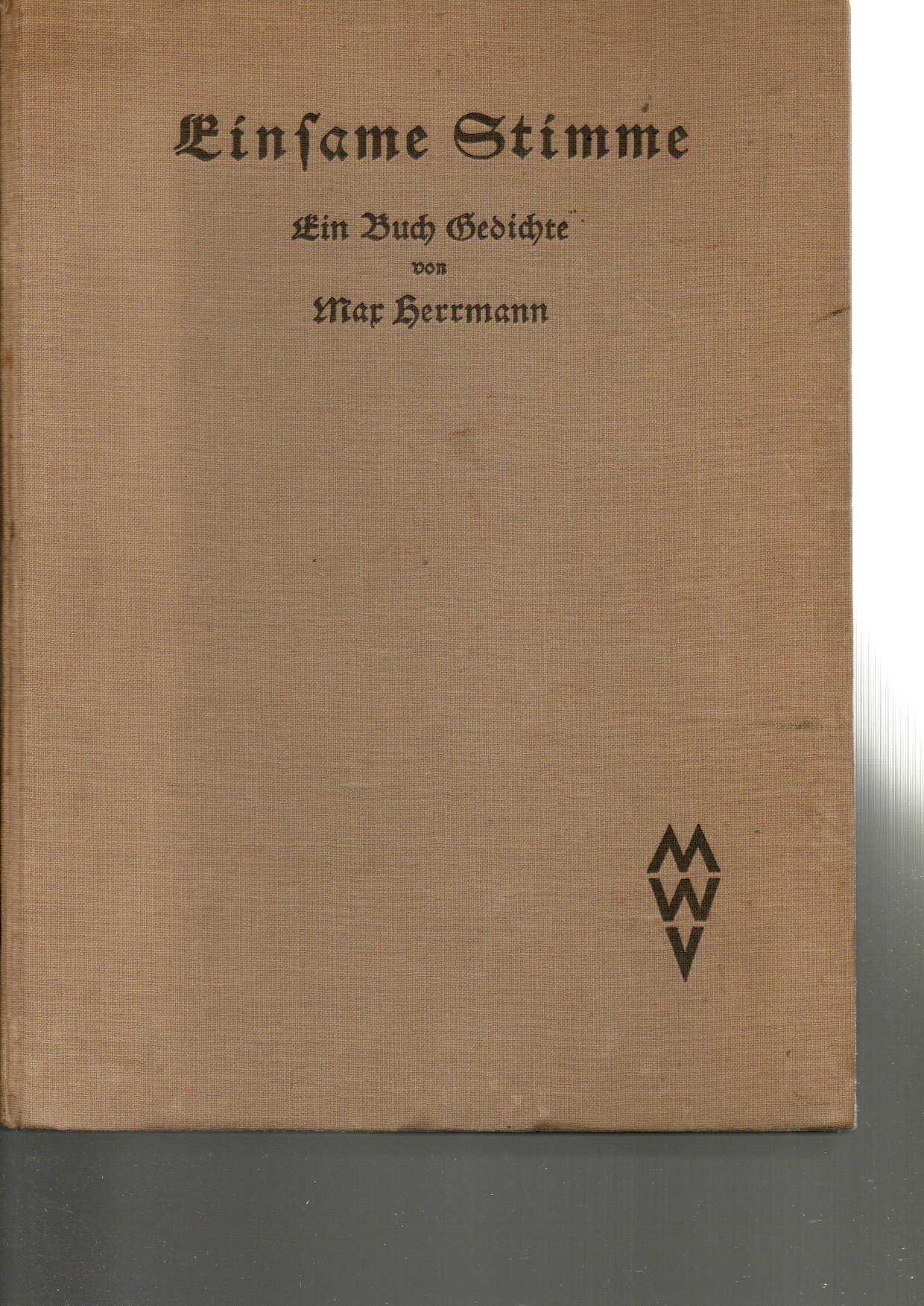
1927ref. 15023Martin Wasservogel Verlag, Berlin, 1927. [4]173(5) Seiten, OLeinen m. Farbkopfschnitt. Widmung auf dem Vorsatzblatt: "Für Alfred Döblin mit freundlichen Grüßen Max Herrmann Berlin, Dezember 27". Limitierte Auflage von 900 nummerierten Exemplaren. Das vorliegende Exemplar ohne Nummer. Der Leineneinband ist leicht verschmutzt. Das Leinen mit kleinen Aufreibungen am Rücken. Gutes Exemplar. In dieser Form ein Unikat. With a dedication by Herrmann to the writer Alfred Döblin. Unicat. Wikipediaauszug über Döblin (1878-1957): "Sein weitaus am stärksten rezipierter Roman ist Berlin Alexanderplatz.... 1933 floh der Jude und Sozialist Döblin aus Deutschland und kehrte nach Ende des Zweiten Weltkrieges zurück, um Deutschland 1953 erneut zu verlassen. Große Teile seines literarischen Schaffens, darunter die Amazonas-Trilogie, die Novembertetralogie und der letzte Roman Hamlet oder Die lange Nacht nimmt ein Ende werden der Exil-Literatur zugeordnet. 1941 konvertierte er zum katholischen Glauben, bereits 1936 hatte Döblin die französische Staatsbürgerschaft angenommen." [2 Warenabbildungen]
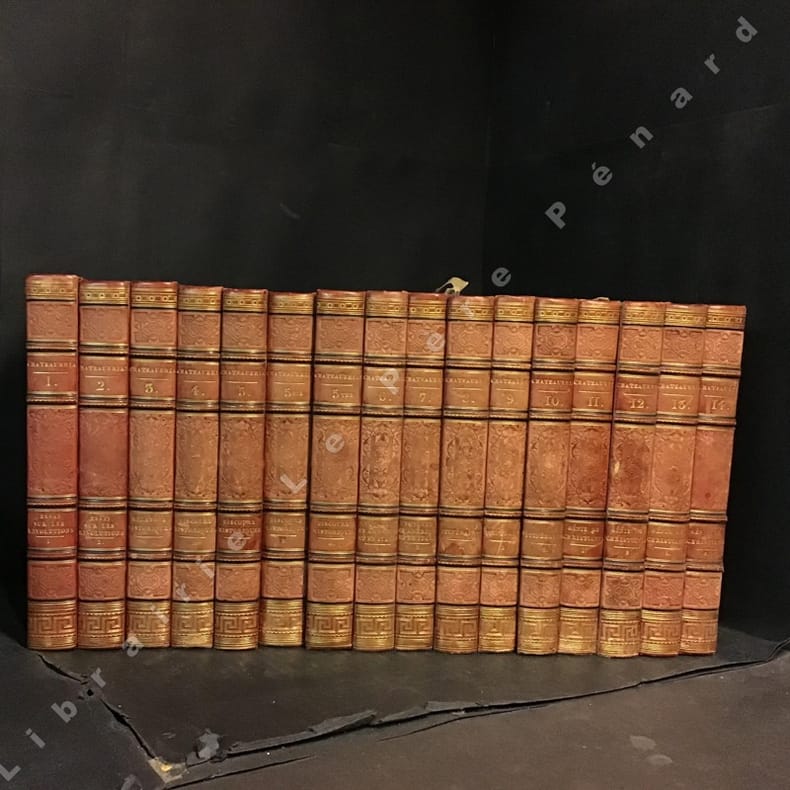
1826ref. 1247121826 30 Volumes - A Paris, Ladvocat Libraires - 1826-1828 - Demi basane rouge du temps, 4 nerfs sautés, ornementation à froid mais bandeaux dorés sur les coiffes, titre et auteur sur fond rouge uni. 350 à 400 pages par volume - Très bel ex-libris sur chacun des volumes
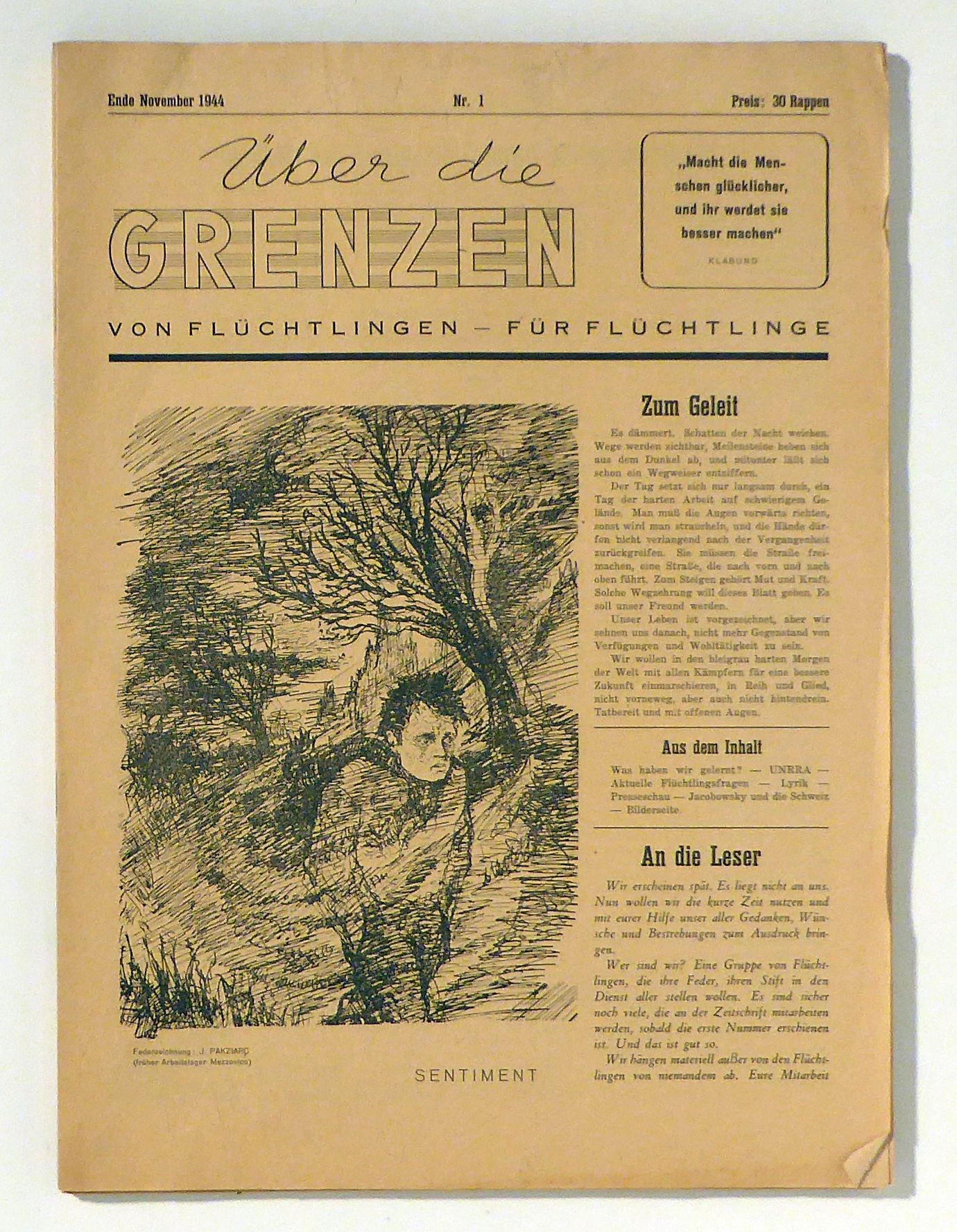
1944ref. 125810(Wallisellen-Zch.); Affoltern, Schul- und Werkstätten-Lager; Aehren-Verlag, 1944-1945. 14 Nummern, je 12 S.; 5 Hefte, mit zahlreichen Abbildungen nach Zeichnungen und Fotografien. Original-Broschur, 4°. Alles was erschienen. Deutsches Exilarchiv I, S. 578. Die in der Schweiz erscheinende Exilzeitschrift "Über die Grenzen" wurde von einer Redaktionskommission von in schweizerischen Lagern lebenden Flüchtlingen und Emigranten unter Aufsicht der "Zentralleitung der Arbeitslager" und genehmigt von der schweizerischen Regierung (Bundesrat) herausgegeben. Neben "Internierten", arbeiteten daran auch zahlreiche Schweizer und nicht in Lagern lebende Flüchtlinge mit.Anschliessend an die in unregelmässigen Abständen erscheinenden Nummern der Zeitschrift erschienen ab 1945 auch noch 5 Hefte einer Schriftenreihe "Über die Grenzen". Heft 1: Gesang auf dem Wege, Gedichte (Anthologie); Heft 2: Wilhelm Frank, Studenten und Universitäten nach dem Kriege; Heft 3: Bruno Kaiser, Der Maler Disteli und die Flüchtlinge; Heft 4: Theater, Meinungen und Erfahrungen; Heft 5: Hans Mayer, Von der Dritten zur Vierten Republik. Geistige Strömungen in Frankreich 1939-1945. - Zu den Mitarbeitern gehörten Jo Mihaly, Hans Mayer, Karl Ackermann, Hermann Adler, Else Lasker-Schüler, Jakob Haringer, Stephan Hermlin, Felix Kohn, Therese Giehse, Lisa Tetzner, Ernst Ginsberg, Wolfgang Heinz, Kurt Horwitz, Kurt Hirschfeld, Leopold Lindtberg, Teo Otto, Karl Paryla, Leonard Steckel, Oskar Wälterlin, Bruno Kaiser, Wilhelm Frank, Hans Erni, Jakob Pakziarc, Rudolf Engel, Otto Bachmann, Max Hunziker, Fritz Wotruba und zahlreiche andere. Gestaltet wurden die Hefte von Werner Saul, der auch zahlreiche, oft ganzseitige Karikaturen und Bildgeschichten zeichnete. Vgl. Mittenzwei, Exil in der Schweiz, S. 325-335. Vollständig äusserst selten. Beigelegt: Lesezeichen, auf der einen Seite mit Werbung für die im Aehren Verlag Affoltern erschienenen Schriftenreihe, auf der anderen mit Pressestimmen für die Monatsschrift. Für die Schriftenreihe waren offenbar weitere Hefte geplant. Auf dem Lesezeichen werden unter "In Vorbereitung" neben dem erschienenen Heft von Hans Mayer über Frankreich und dem Sammelheft "Theater Meinungen und Erfahrungen", hier noch mit dem Titel "Das Theater von Morgen", auch aufgeführt "Werner Saul und Michel Tschesno, 1001 Tag, Zeichnungen" und "Malerei und Plastik. Beiträge von Fritz Wotruba, Ferdinands Springer, Teo Otto, Marino Marini". Softcover Etwas gebräunt und fingerfleckig, vereinzelt eselsohrig und unwesentliche Markierungen. Über die Grenzen. Von Flüchtlingen - für Flüchtlinge
ref. 2081502111903345Chinese social sciences N.A. Soft Cover. Fine. The book is in fine condition. Chinese social sciences paperback
1939ref. 42437ABLeipzig, Hirschfeld, 1932; Paris, Alcan, 1933-39; New York, Institute of Social Reseach, 1939-41. Orig.-Broschuren.
1989ref. 278792Bern , Francke, 1989. Originalpappbände. Zwei Bände Originalbroschur. 25 cm
1779ref. List3711London 1779. Autograph letter signed Joseph Green to Boston merchant Samuel Eliot. Folded letter datelined "London Mar. 26th 1779" with "Rec'd 22nd Decr. 1779" docket on top flap. 7 x 9 ¼ inches 3pp. Some repairs with archival tape folded small tears at some folds. Excellent. A thoughtful Revolutionary-era letter written by Joseph Green the Boston clergyman poet satirist and wit whose verses made him one of the best-known literary figures in colonial New England. A graduate of Harvard College and member of Boston's mercantile elite Green maintained friendships with figures including Mather Byles and Benjamin Church. He is known for his satirical poetry and as a signer of the 1773 attestation supporting Phillis Wheatley's authorship of Poems on Various Subjects Religious and Moral. A Loyalist during the American Revolution and named in the 1778 Massachusetts Banishment Act Green departed Boston in 1775 and spent the remainder of his life in England. The present letter was written only a year before his death in London in 1780. Written during the period of British blockade and privateering that turned the Atlantic into a contested military space the letter survives as a rare example of communication successfully passing between a Loyalist exiled in London and a Boston merchant. Green repeatedly returns to the difficulty of maintaining contact noting that "all means of correspondence seem to be cut off" and explaining that he is able to write only because he has found "a particular friend in whom I can confide." The letter itself written in March and not received until December 1779 provides tangible evidence of the obstacles confronting transatlantic correspondence during the Revolution. Green writes: "Having now an opportunity of writing by a particular friend in whom I can confide I embrace it to let you and our niece know that your Aunt and I are both well and very solicitous to hear of your health and welfare. We think it no small unhappiness to be so far removed from so many of our friends especially at a time when all means of correspondence seem to be cut off; but when we consider what scenes of confusion and distress we have escaped and what repose and quiet we have enjoyed here we ought not to repine. "Notwithstanding we have been so long in Engl'd I have seen nothing of the country and your Aunt next to nothing of the town. I amuse myself in trolling thro' several parts of it where new objects are perpetually presenting themselves; and I am the fonder of this exercise as it contributes to health as well as amusement. "The climate here agrees well with my constitution. I enjoy better health than I did at home & my friends tell me I am younger. But I know better than to believe them in this because I think if I was to go about it I could prove I am near four years older than when I left Boston." Green's remarks describe the reality of transatlantic communication during the Revolutionary War when Loyalists abroad and their friends in America frequently depended upon trusted private carriers rather than regular postal channels. The letter's journey from London to Boston-requiring months to arrive and bearing Eliot's receipt docket of December 22 1779-illustrates precisely the obstacles Green describes. Green continues with observations on one of the great public controversies of wartime Britain the celebrated court martial of Admiral Augustus Keppel following his engagement with the French fleet off Brest. Green describes the intense public reaction and the partisan passions surrounding the affair: "We have had a forced and ostentatious display of joy on acct. of Admiral Keppel's acquittal. He has been try'd by a court martial on a charge brought against him by Admiral Palliser for misconduct in the engagement he had the last summer with the French fleet off Brest. This has been made a party affair and has been carry'd to a most extravagant height. The whole city has been illuminated three or four nights and there have been great rejoicings thro' the Kingdom. But the matter is now pretty well over and Palliser has ruin'd himself by it." Most affecting however is Green's reflection on the increasingly remote prospect of ever returning to Boston. He seems to realize that his exile may be permanent writing that "At the time I left Boston it was uncertain when I should return or whether I should return at all. But the improbability was not so great then as it is now. The door was then shut now it is bolted." Green's letter offers a moving account of Loyalist exile-separation from friends and family with hope for return fading. We find no other records of letters written by Green during this period in commerce or at auction.