52 648 résultats
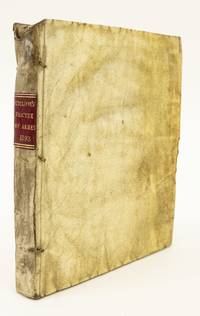
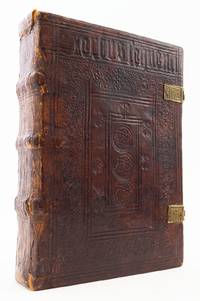
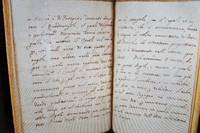
réf. 1441Italy 17th Century. 127 x 98 mm. 5 x 3 ¾ inches. 16 p. including final blank. Italy 17th century. A handwritten guide to the drawing of the human head the most important element of any figure drawing and frequently the starting point for early modern drawing manuals. The manuscript appears to be unpublished and we have been unable to trace the text anywhere in the vast digitized corpus. The content is divided into five brief sections the first explaining how to draw a head in profile. Our scribe focuses on the triangle method in which the profile is anchored by three primary points: the top of the forehead cima della fronte beneath the nostrils sotto le narici and the well of the chin and the beard pozzetta del mento ò barbuccio. The author then explains how to connect these points how to form the nose place the mouth and lips draw the eye etc. Our scribe closes this section with the kind of aspirational promise endemic to manuals of this time namely that if you simple follow my instructions you’ll be able to do this easily. “without much confusion and effort” senza tante confusion et fatiche. The second section explains how to draw the head “in majesty” Della testa in scurcio by which the author appears to mean ‘head-on’ in such a way to convey power and authority he elsewhere refer to this position as prospetto e.g. on p. 9. Here the author likewise focuses on a simple method of drawing lines between different features of the face. The third section covers drawing the head in shadow Della testa in scurcio which the author admits is alquanto più difficle than the first two exercise and so he won’t be sticking to such geometrical rules. But then he goes on to provide a single very simple rule una regola facile assai namely to start with drawing rounded oval l’ovato cirolare and continues with guidelines that sound awfully geometric to us. The fourth section is on drawing a child’s head in profile la testa del fanciullo in profilo where he again starts with the triangle method adding other geometric principles and referencing the point of a compass. The fifth and final section is on drawing a child’s head in maestà wherein the author cites earlier discussion and further expounds on geometric advice. The author then closes with a general comment on the excellence and nobility of the art of drawing. The focus throughout is on lines and contours and proportions always guided by geometric rules for producing an accurate but relatively basic sketch. There is only brief passing reference to elements like “hair or other ornament according to the need and what is most pleasing” pelli or altro ornamento secondo che porfarà il bisogno e che più in piacerà. Despite the brief section on drawing the head in shadow there is nothing on rendering value or otherwise on capturing the subtleties that give a drawing depth and feeling. Like its spine title the Fairfax Murry catalogue calls this 17th-century and we tend to agree based on the script. While we haven’t traced our particular “bird” watermark Heathwood records a few similar marks used in the 17th century and Briquet finds many in the 16th especially in Italy. No less absorbing than the manuscript is a pair of 16th century Italian binding covers here preserved as doublures both heavily decorate in blind. The front doublure carries an arabesque motif and center Alexander the Great in profile. The rear appears to have been impressed with a single panel stamp also arabesque both doublures betraying the Islamic influence that characterized many Italian bindings of the period. Provenance: Lot 237 in the second Fairfax Murray sale his label on the inside rear board and perhaps then to Robert Tunstill his bookplate on the front fly-leaf. To us from a fellow ABAA bookseller who purchased it from a UK dealer in the 1990’s. Condition: Written in a cursive hand in dark brown ink on laid paper watermarked with a bird within a circle. Rebound in the late 19th century or early 20th century in cream pigskin tooled in black preserving as doublures the decorated covers of a 16h-century Italian binding described above title in gilt on spine Del disegno. Ms. Saec XVII. Following the manuscript are four additional blank leaves saved for scanning old pen trials early but the paper is different than the manuscript proper. Additionally six more modern fly leaves have been added at both front and back presumably at the time of rebind. A little loss since filled to the upper outer corner of the manuscript leaves and the four earlier blank leaves affecting just a word or two on each page; a few old pen trials over the text though it remains legible. Binding extremities lightly worn. References: Catalogue of the Second Portion of the Library of C. Fairfax Murray 1918 p. 42 no. 237 “Manuscript on paper Italian hand 16 pp. repaired white morocco extra the cover of an old stamped vellum binding used as a double. 12mo. Saec. xvii”. Alexandra Arvilla Greist Learning to Draw Drawing to Learn: Theory and Practice in Italian Printed Drawing Books 1600-1700 PhD Dissertation UPenn 2011 p. vii “Italian printed drawing books libri da disegnare comprise an important body of evidence for our knowledge of artistic training in Italy during the early modern period. . . Intended for both professional and amateur audiences these printed sources were soon copied throughout Europe where they influenced drawing education for the next 400 years”. C. M. Briquet. Les Filigranes v. 3 # 12202- 12232 similar watermarks mostly 16th century. Edward Heawood Watermarks Mainly of the 17th and 18th Centuries 1950 # 179 183 similar watermarks 17th century. Anthony Hobson Humanists and Bookbinders 1989 p. 220-21 recording a few 16th century Italian bindings with Alexander the Great plaquettes. Thanks to Patrick Olson for help with this description. unknown books
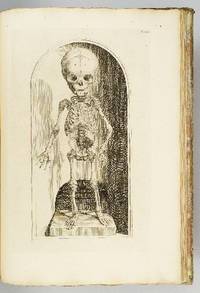
1739réf. ST12883Leyden: Johann Arnold Langerak 1739. First Edition in Latin. 540 x 380 mm. 21 1/4 x 15". 70 leaves of text.Translated by William Dundass. Original red quarter vellum over marbled boards raised bands UNTRIMMED EDGES. Engraved printer's device on title large decorative initials and tailpieces EXTRA ENGRAVED TITLE AND 114 STRIKING PLATES OF ANATOMICAL FIGURES three folding. Wellcome II 401; Heirs of Hippocrates 468; Choulant-Frank pp. 252-3; Russell 213. ◆Vellum on spine rather worn with three one-and-one-half-inch pieces broken away revealing structure underneath paper boards quite chafed other minor problems externally but an entirely solid unrestored binding. A couple of plates with short closed marginal tears one folding plate with one-inch closed tear into image no loss untrimmed edges a little browned and brittle with isolated small chips occasional minor foxing or insignificant stains three plates lightly browned but still AN UNUSUALLY ATTRACTIVE COPY INTERNALLY with the broadest of margins with especially clean and fresh leaves and with rich impressions of the plates. With plates of notable visual impressiveness this was the finest anatomy book in England during the first half of the 18th century; it also was largely a plagiarism borrowing most of its engraved content from a work by the Dutch physician Govert Bidloo published in 1685. Bidloo's work was the first large-scale anatomical atlas to appear after Vesalius' epoch-making "De Humani Corporis Fabrica" and the plates which are highly praised by Norman and Garrison-Morton are characterized by startlingly detailed life-size depictions of the human body both adult and infant with figures flayed to reveal muscles opened to show organs and unfleshed to exhibit bones. According to Choulant-Frank Bidloo's publishers sold 300 impressions of these plates to Cowper probably to recoup some of their money after disappointing sales. Cowper took Bidloo's original 105 plates added nine of his own and produced an English translation of the original Latin text to accompany them. Discussing the original plates produced by Gerard de Lairesse 1641-1711 Norman says that the figures are displayed "in an emotional almost tender manner contrasting the raw dissected parts with the full soft surfaces of uncut flesh placing flayed bound figures in ordinary nightclothes or bedding setting ordinary household objects such as books jars or cabinets in the same scene as cut-up torsos or limbs. His illustrations brought the qualities of Dutch still-life painting into anatomical illustration and gave a new darker spiritual expression to the significance of the act of dissection." When Cowper's version of the atlas first appeared as "The Anatomy of Humane Bodies" in London in 1698 there was also a 1737 Leyden printing in English before our more scholarly Latin edition Bidloo complained to the Royal Society and accused Cowper of plagiarism and fraud resulting in much acrimony and heated pamphleteering between the two physicians. Notwithstanding this scandal Cowper's achievements and discoveries--including the pair of glands that bear his name--were considerable and his text improved significantly upon the original work. Unfortunately as the DNB notes "the notoriety of this case has served to obscure a true appreciation of Cowper and of his many original contributions to anatomical illustration." The atlases of Bidloo and Cowper appear on the market regularly but at 540 x 380 mm. the present copy is distinguished by its size which is significantly larger than what is typically seen with this edition--we have not been able to trace a copy larger than ours from marketplace or institutional records. Johann Arnold Langerak unknown
1739réf. ST12883Leyden: Johann Arnold Langerak 1739. First Edition in Latin. 540 x 380 mm. 21 1/4 x 15". 70 leaves of text.Translated by William Dundass. Original red quarter vellum over marbled boards raised bands UNTRIMMED EDGES. Engraved printer's device on title large decorative initials and tailpieces EXTRA ENGRAVED TITLE AND 114 STRIKING PLATES OF ANATOMICAL FIGURES three folding. Wellcome II 401; Heirs of Hippocrates 468; Choulant-Frank pp. 252-3; Russell 213. ◆Vellum on spine rather worn with three one-and-one-half-inch pieces broken away revealing structure underneath paper boards quite chafed other minor problems externally but an entirely solid unrestored binding. A couple of plates with short closed marginal tears one folding plate with one-inch closed tear into image no loss untrimmed edges a little browned and brittle with isolated small chips occasional minor foxing or insignificant stains three plates lightly browned but still AN UNUSUALLY ATTRACTIVE COPY INTERNALLY with the broadest of margins with especially clean and fresh leaves and with rich impressions of the plates. With plates of notable visual impressiveness this was the finest anatomy book in England during the first half of the 18th century; it also was largely a plagiarism borrowing most of its engraved content from a work by the Dutch physician Govert Bidloo published in 1685. Bidloo's work was the first large-scale anatomical atlas to appear after Vesalius' epoch-making "De Humani Corporis Fabrica" and the plates which are highly praised by Norman and Garrison-Morton are characterized by startlingly detailed life-size depictions of the human body both adult and infant with figures flayed to reveal muscles opened to show organs and unfleshed to exhibit bones. According to Choulant-Frank Bidloo's publishers sold 300 impressions of these plates to Cowper probably to recoup some of their money after disappointing sales. Cowper took Bidloo's original 105 plates added nine of his own and produced an English translation of the original Latin text to accompany them. Discussing the original plates produced by Gerard de Lairesse 1641-1711 Norman says that the figures are displayed "in an emotional almost tender manner contrasting the raw dissected parts with the full soft surfaces of uncut flesh placing flayed bound figures in ordinary nightclothes or bedding setting ordinary household objects such as books jars or cabinets in the same scene as cut-up torsos or limbs. His illustrations brought the qualities of Dutch still-life painting into anatomical illustration and gave a new darker spiritual expression to the significance of the act of dissection." When Cowper's version of the atlas first appeared as "The Anatomy of Humane Bodies" in London in 1698 there was also a 1737 Leyden printing in English before our more scholarly Latin edition Bidloo complained to the Royal Society and accused Cowper of plagiarism and fraud resulting in much acrimony and heated pamphleteering between the two physicians. Notwithstanding this scandal Cowper's achievements and discoveries--including the pair of glands that bear his name--were considerable and his text improved significantly upon the original work. Unfortunately as the DNB notes "the notoriety of this case has served to obscure a true appreciation of Cowper and of his many original contributions to anatomical illustration." The atlases of Bidloo and Cowper appear on the market regularly but at 540 x 380 mm. the present copy is distinguished by its size which is significantly larger than what is typically seen with this edition--we have not been able to trace a copy larger than ours from marketplace or institutional records. Johann Arnold Langerak unknown books
1593réf. ST15853London: Deputies of Christopher Barker 1593. FIRST EDITION. 185 x 140 mm. 7 1/4 x 5 1/2". 12 p.l. 328 327-342 pp. Contemporary limp vellum yapp edges flat spine with later red morocco label. Inside front cover with ink owner's inscription of George Wilson dated November 1 1854; front flyleaf with engraved armorial bookplate of Thomas Francis Fremantle; early pen trials to title page old mathematical calculations on rear endpaper. Cockle 57; STC 23468; ESTC S117986; Heuser Beatrice "Strategy Before Clausewitz: Linking Warfare and Statecraft 1400-1830" 2017 chapter 5: "A National Security Strategy for England: Matthew Sutcliffe the Earl of Essex and the Cadiz Expedition of 1596." ◆Vellum a bit soiled half-inch chip to head of spine two-inch crack to fore edge of front cover title page with small ink stain and light soiling other trivial imperfections in the text but still an excellent copy clean and fresh internally and in a sound binding. This rare treatise addressing all aspects of war has been cited by military historian Beatrice Heuser as perhaps a unique example of a case "in which a civilian an 'armchair strategist' published a book containing a comprehensive concept for how to conduct a war with a specific enemy that was applied in practice." According to Heuser Sutcliffe penned "a national security strategy for England" and one that Robert Devereux Earl of Essex to whom the work is dedicated put into practice in the country's ongoing conflicts with Spain leading to the operation that resulted in the successful capture of Cadiz in 1596. Sutcliffe had met Essex at Trinity College Cambridge where he had likely served as one of the young earl's tutors. DNB observes that Sutcliffe who studied law before becoming a doctor of divinity applied his legal training to this work in which he examines not only fortifications aggressive and defensive tactics and the practical considerations of recruiting paying feeding and housing armed forces but also discusses laws and regulations governing the military. Cockle notes that the work "was well known both at home and abroad" and that it "urged the importance of military studies." Following this consequential work Sutcliffe restricted his writings to theological subjects and enjoyed a 40-year career as dean of Exeter Cathedral. This work is rare in the marketplace: ABPC and RBH find just three other copies at auction in the past 40 years. Deputies of Christopher Barker unknown
1593réf. ST15853London: Deputies of Christopher Barker 1593. FIRST EDITION. 185 x 140 mm. 7 1/4 x 5 1/2". 12 p.l. 328 327-342 pp. Contemporary limp vellum yapp edges flat spine with later red morocco label. Inside front cover with ink owner's inscription of George Wilson dated November 1 1854; front flyleaf with engraved armorial bookplate of Thomas Francis Fremantle; early pen trials to title page old mathematical calculations on rear endpaper. Cockle 57; STC 23468; ESTC S117986; Heuser Beatrice "Strategy Before Clausewitz: Linking Warfare and Statecraft 1400-1830" 2017 chapter 5: "A National Security Strategy for England: Matthew Sutcliffe the Earl of Essex and the Cadiz Expedition of 1596." ◆Vellum a bit soiled half-inch chip to head of spine two-inch crack to fore edge of front cover title page with small ink stain and light soiling other trivial imperfections in the text but still an excellent copy clean and fresh internally and in a sound binding. This rare treatise addressing all aspects of war has been cited by military historian Beatrice Heuser as perhaps a unique example of a case "in which a civilian an 'armchair strategist' published a book containing a comprehensive concept for how to conduct a war with a specific enemy that was applied in practice." According to Heuser Sutcliffe penned "a national security strategy for England" and one that Robert Devereux Earl of Essex to whom the work is dedicated put into practice in the country's ongoing conflicts with Spain leading to the operation that resulted in the successful capture of Cadiz in 1596. Sutcliffe had met Essex at Trinity College Cambridge where he had likely served as one of the young earl's tutors. DNB observes that Sutcliffe who studied law before becoming a doctor of divinity applied his legal training to this work in which he examines not only fortifications aggressive and defensive tactics and the practical considerations of recruiting paying feeding and housing armed forces but also discusses laws and regulations governing the military. Cockle notes that the work "was well known both at home and abroad" and that it "urged the importance of military studies." Following this consequential work Sutcliffe restricted his writings to theological subjects and enjoyed a 40-year career as dean of Exeter Cathedral. This work is rare in the marketplace: ABPC and RBH find just three other copies at auction in the past 40 years. Deputies of Christopher Barker unknown books
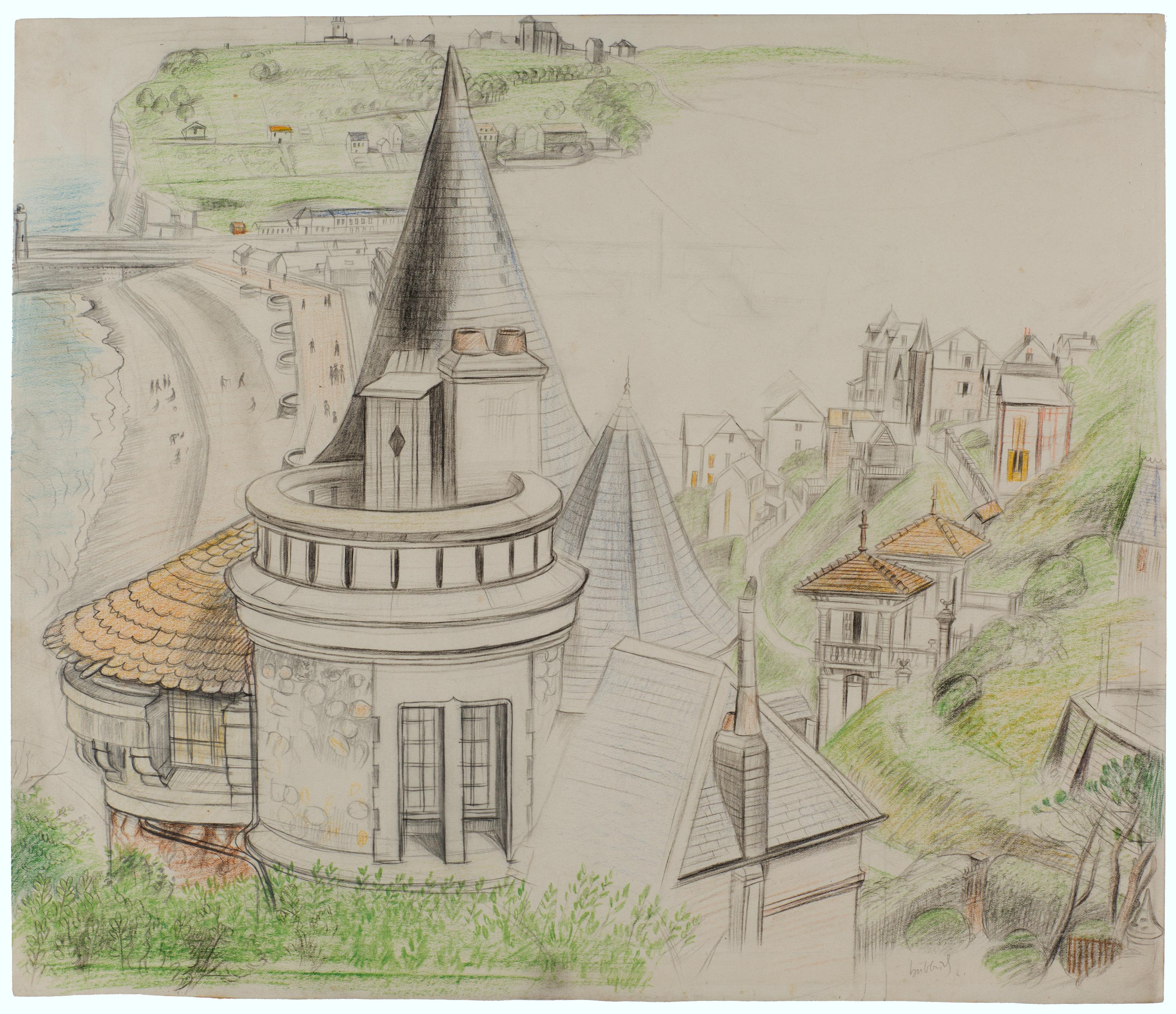
réf. EN-148o.J. Lithokreide, farbige Kreide, auf chamoisfarbenem Velin, mit Wasserzeichen: Importe d. A. Jonson, mit Bleistift signiert ?Hubbuch?. 41,2:48,5 cm. - Literatur: Ausstellungskatalog: Karl Hubbuch 1891-1979. Karlsruhe, Badischer Kunstverein 1981, Nr. 168 mit ganzs. Abb. S. 189 (dort fälschlich mit Titel einer anderen Zeichnung); Ausstellungskatalog Karl Hubbuch. Retrospektive. Städtische Galerie im Prinz-Max-Palais, Karlsruhe, 1993/94, Kat.-Nr. 41 mit ganzs. Abb. S. 294. - Karl Hubbuchs erste Begegnung mit Frankreich findet als Soldat während des 1. Weltkrieges statt, bleibt jedoch künstlerisch ohne Folgen. Der nächste Aufenthalt im Jahr 1926 ist der Beginn einer lebenslangen, intensiven Auseinandersetzung mit dem Land und seinen Menschen. Im Gegensatz zu vielen anderen Künstlern seiner Zeit will er sich nicht an der so häufig postulierten, vermeintlichen Überlegenheit der französischen Kunst bilden, sondern ist von der Atmosphäre der Städte und Landschaften angezogen. Dieser Aufenthalt, bei dem er Paris und Nordfrankreich bereist, zeigen u. a. auch Zeichnungen und Studien mit Ansichten der Küstenstädte Trouville, Fécamp oder Deauville; die Darstellung von Menschen, wie in den späteren Jahren, findet noch keinen Eingang in sein Werk.
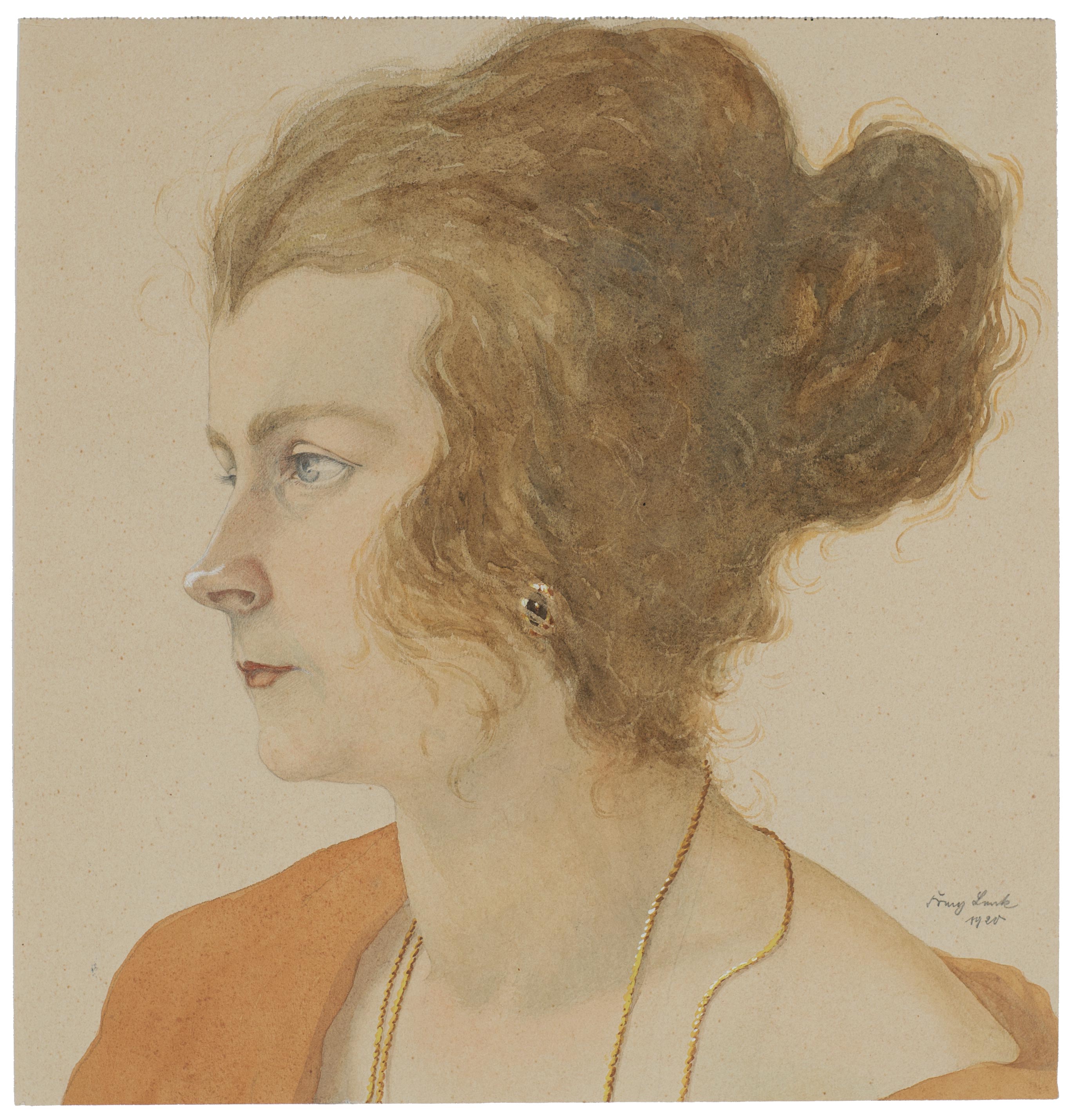
réf. EN-158o.J. Aquarell und Deckweiß, über Bleistift, auf cremefarbenem Velin, mit Bleistift signiert und datiert ?Franz Lenk / 1920?. Blattgröße 30,5:29,3 cm. Das Blatt stammt aus einem Zeichenblock, der Oberrand ist perforiert. - Lenk zeigt sich hier als ein vorzüglicher Porträtist, der die Züge der jungen Frau mit großer Sensibilität und beeindruckendem zeichnerischen Können formuliert.
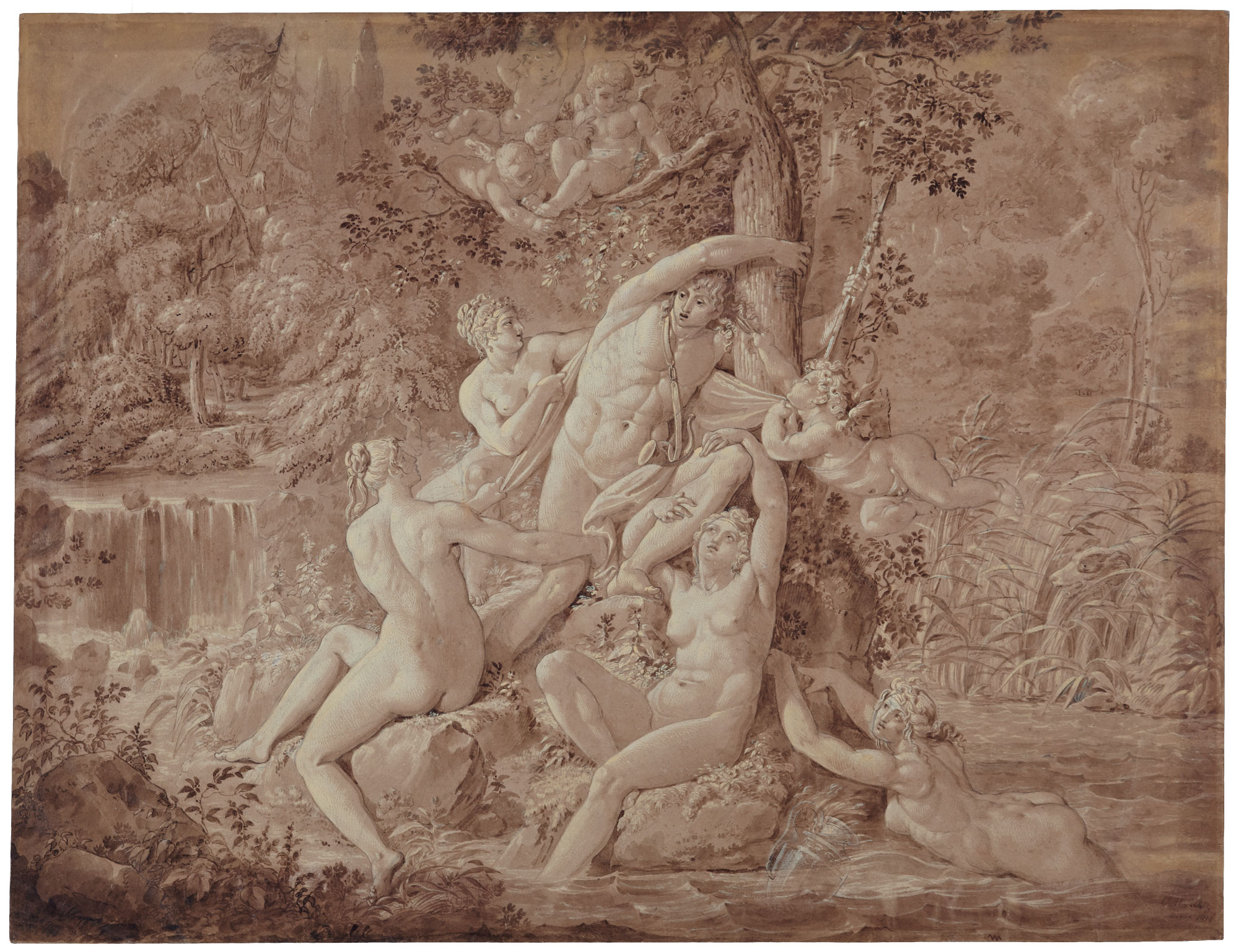
réf. 762-Eo.J. Feder und Pinsel in Braun, mit reicher Deckweißhöhung, über Bleistift, auf bräunlichem Velin, rechts unten signiert ?C. M. Metz Roma 1813?, verso mit brauner Feder nummeriert ?No 3? zweite Nummerierung durchgestrichen. 41,3:54,2 cm. Mit leichtem Lichtrand rundum, einige winzige Läsuren sorgfältig restauriert, Knickfalte in der linken unteren Ecke geglättet und recto nahezu unsichtbar. Provenienz: Lucien Goldschmidt, New York. Hylas ist eine Figur der griechischen Mythologie Er war der jugendliche und sehr schöne Freund des Herakles, den er beständig begleitete. Hylas blieb als Waffenträger bei Herakles, als dieser sich den Argonauten anschloss. Gemeinsam suchten sie nach dem Goldenen Vlies.
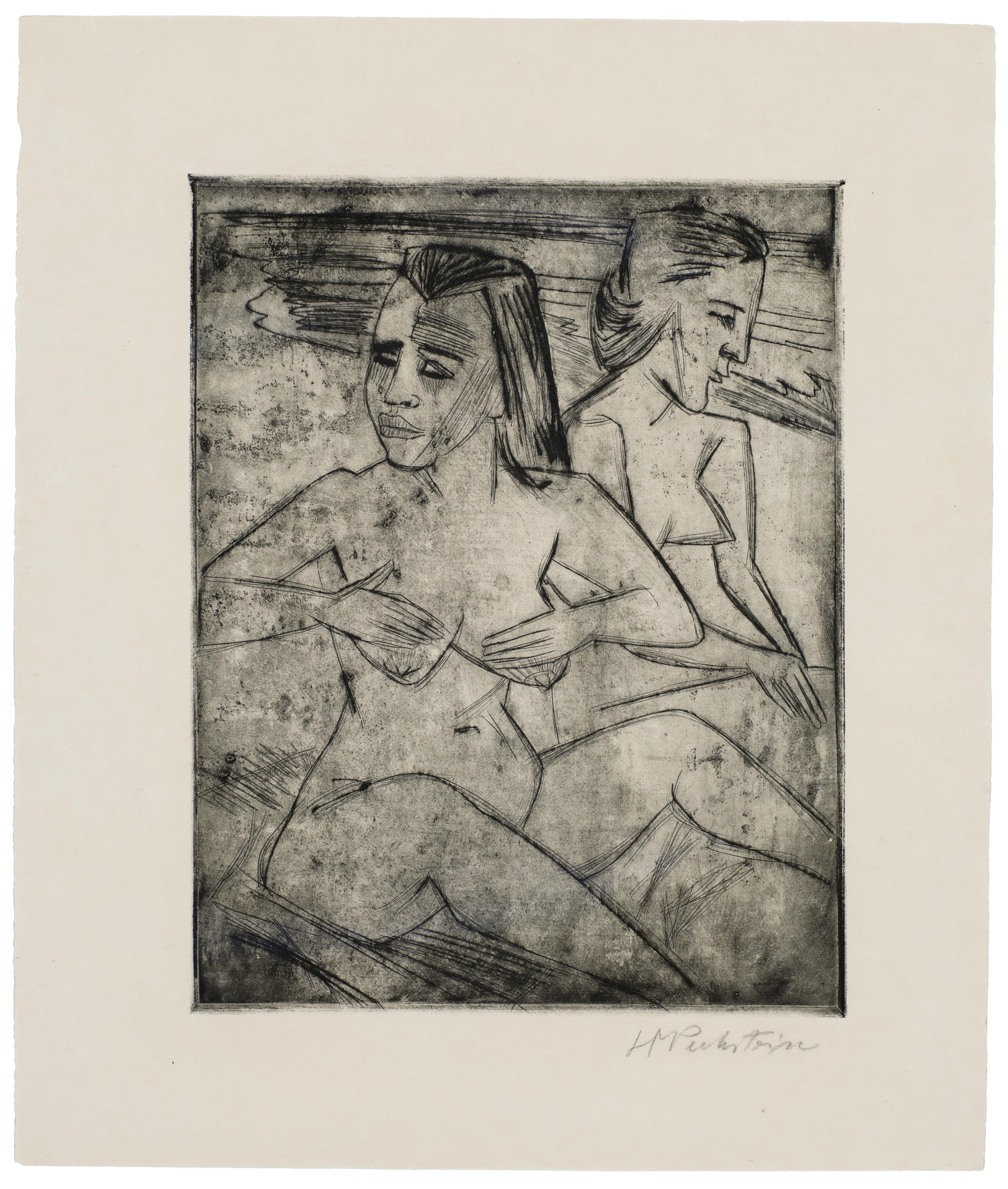
réf. EN-171o.J. Kaltnadelradierung mit Riffelfeile und Pinselätzung, 1920, auf festem Japan, mit Bleistift signiert ?HMPechstein?. Darstellungsgröße 26,5:20,7 cm, Blattgröße 36,6:30,9 cm. - Eines von 25 Exemplaren der Vorzugsausgabe auf Japanpapier. - Provenienz: Privatsammlung Berlin. - Literatur: Krüger R 118; Söhn HDO 72709-8. Erschienen in: ?Die Schaffenden?, 3. Jahrgang, 1. Mappe. Hrsg. von Paul Westheim, Berlin, Euphorion-Verlag, 1921. [2 Warenabbildungen]
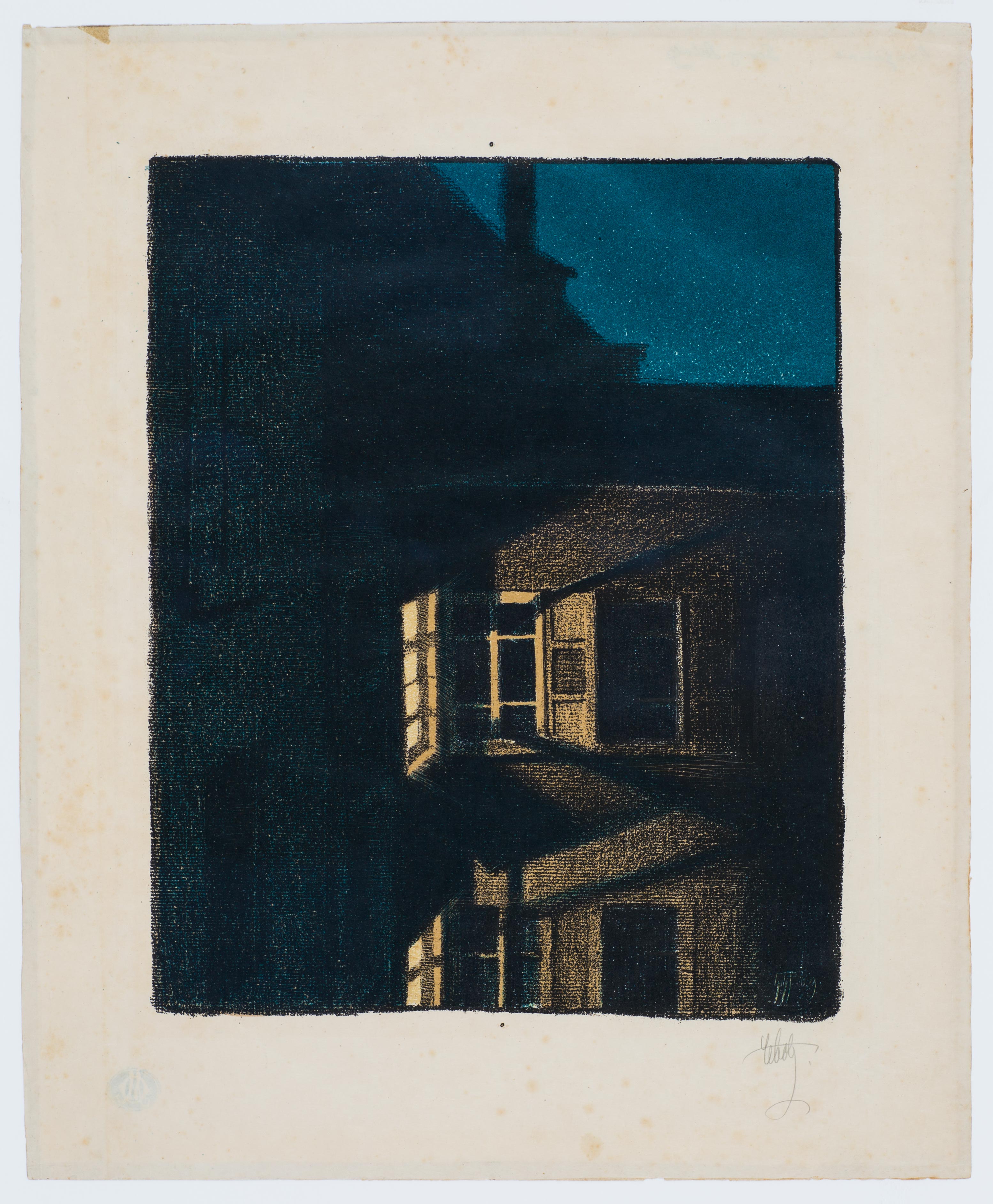
réf. EN-104o.J. Farblithographie, 1909, auf cremefarbenem Japan, mit Bleistift signiert. Darstellungsgröße 34,7:28,2 cm, Blattgröße 47:38,5 cm. ? In den breiten Rändern etwas stockfleckig, verso an den Rändern Reste einer alten Montierung. Provenienz: Verso unbekannter Sammlerstempel. Literatur: Georg Scholz, Das druckgraphische Werk. Karlsruhe, Künstlerhaus Galerie, 1982, Nr. 11, Abb. S. 57; Hans-Dieter Mück (Hrsg.), Georg Scholz. Stuttgart, 1991, S. 20 f.
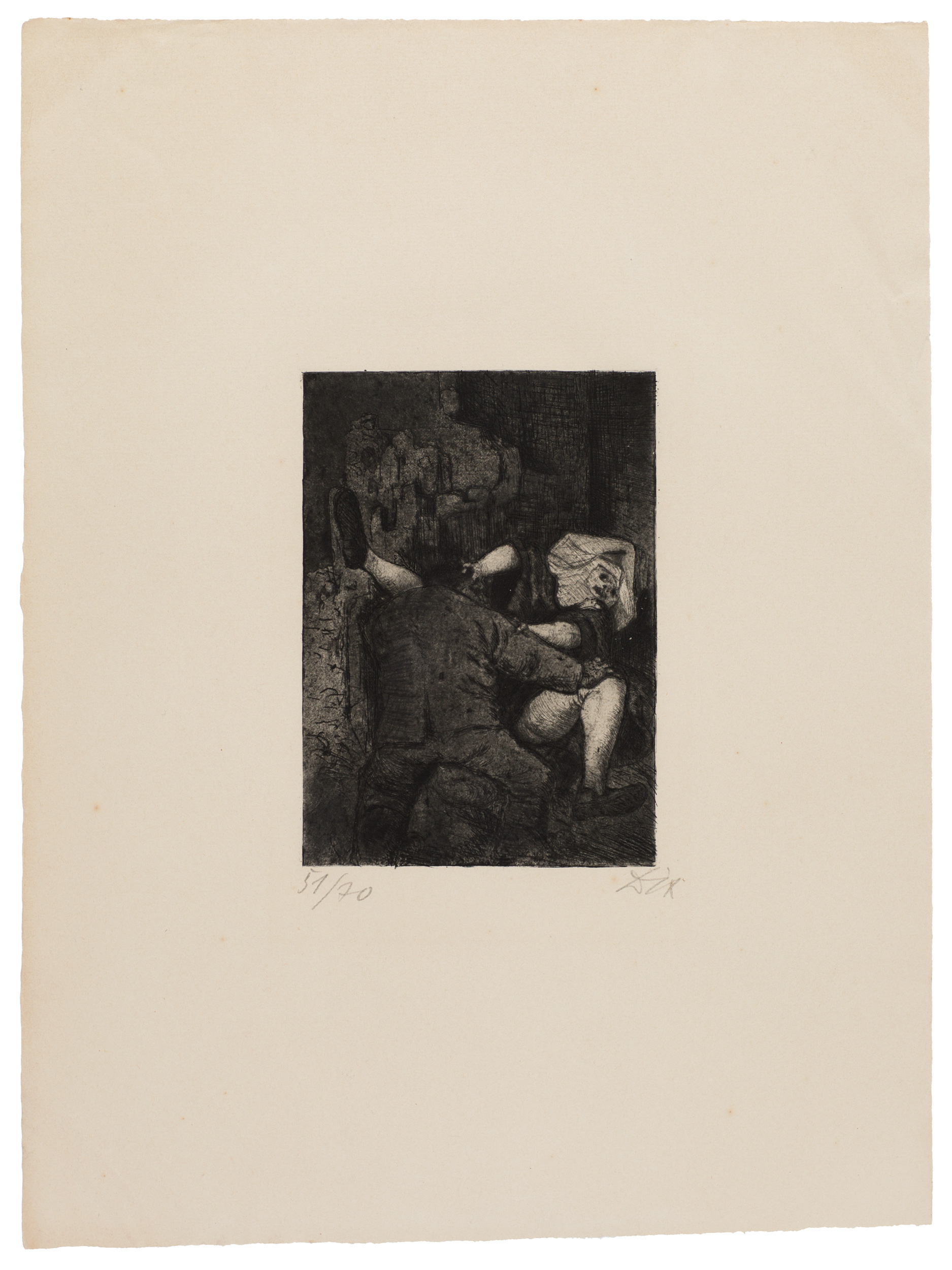
réf. EN-012o.J. Radierung, 1924, auf Velin mit Wasserzeichen: BSB, mit Bleistift signiert und nummeriert. Darstellungsgröße 19,3:13,8 cm, Blattgröße 48:35,7 cm. Nr. 51 von 70 Exemplaren. Vorzüglicher, vollrandiger Abdruck! Literatur: Karsch 120.
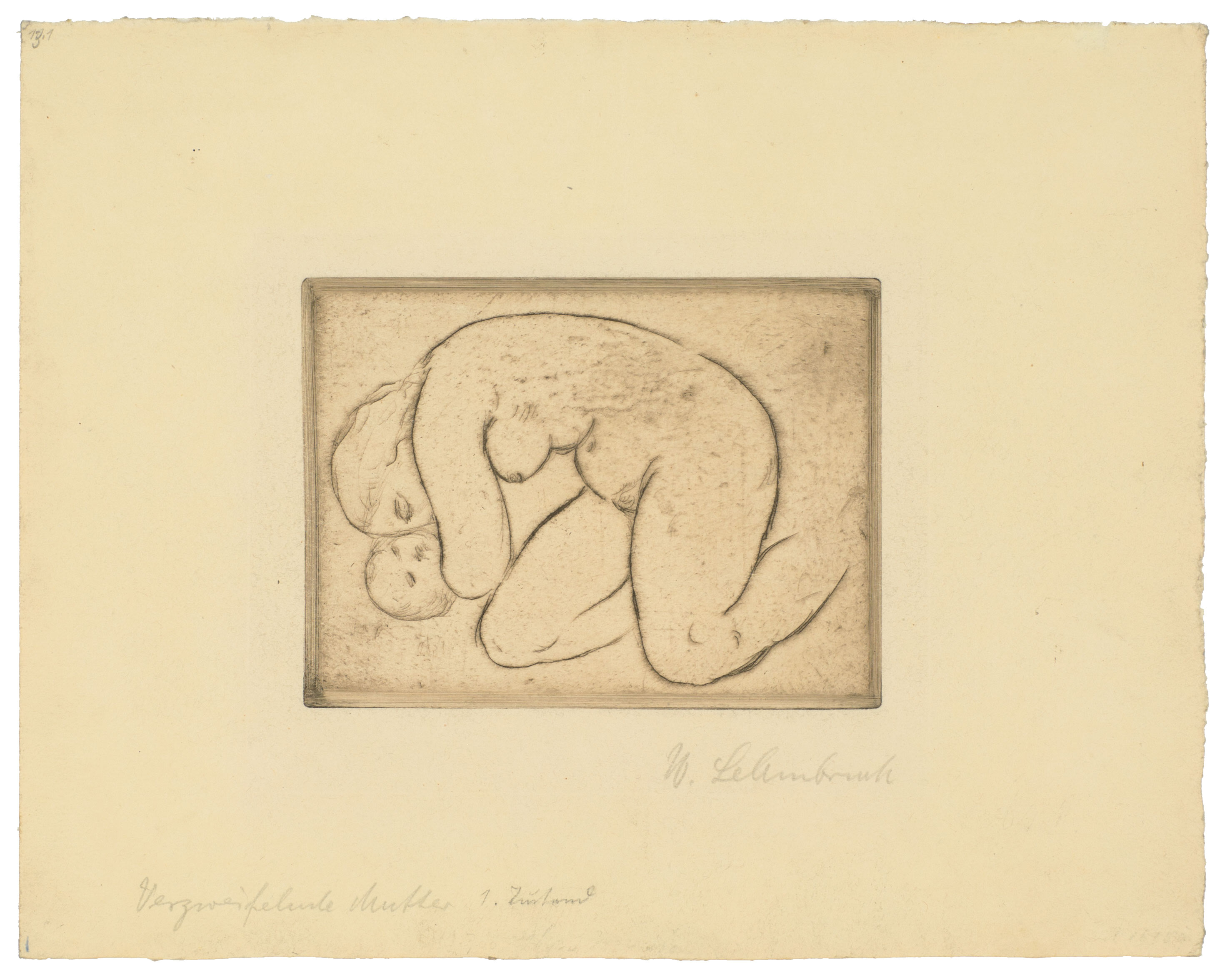
réf. EN-118o.J. Radierung in Braundruck, 1910, auf festem, chamoisfarbenem Japan, mit Bleistift signiert ?W. Lehmbruck?, sowie eigenhändig betitelt ?Verzweifelnde Mutter? und als ?1. Zustand? bezeichnet. Darstellungsgröße 11,8:15,9 cm, Blattgröße 25,8:32,6 cm. Verso mit der Cassirer-Verzeichnis Nummer ?25? und am Oberrand vom Ablösen einer alten Montierung entstandene dünne Stelle im Papier. - Ganz ausgezeichneter, mit reichem Ton effektvoll gesteigerter Druck mit breitem Rand. - Als signierter Frühdruck von allergrößter Seltenheit! - Literatur: Wilhelm Lehmbruck?s Graphisches Werk, Paul Cassirer Verlag, Berlin 1913 (57 Nrn.), Nr. 25; Wilhelm Lehmbruck. Paul Cassirer Verlag, Berlin 1920 (Radierungen 138 Nrn., Lithographien 16 Nrn.), Nr. 25; Petermann 5 I (von III).
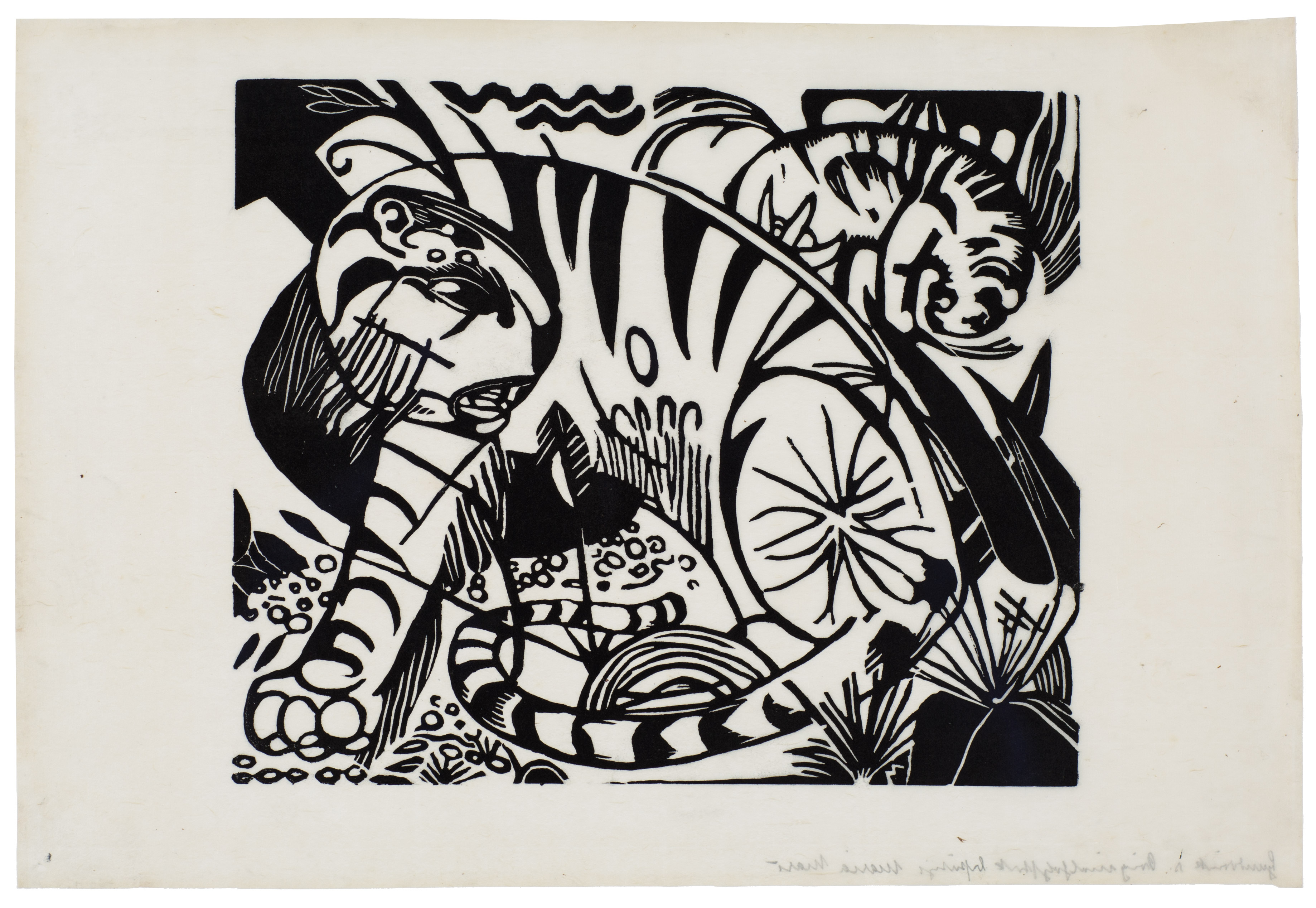
réf. EN-163o.J. Holzschnitt, 1912, auf feinem Japan. Darstellungsgröße 19,8 x 24 cm, Blattgröße 25: 36,7 cm. Verso mit Bleistift bezeichnet ?Handdruck vom Originalholzstock bestätigt Maria Marc?. Der Holzschnitt von Franz Marc wurde für die Nrn. 1-25 der Vorzugsausgabe durch Heinrich Campendonk mit der Hand vom Originalholzstock auf Japanpapier abgezogen. - Provenienz: Lempertz, Köln, Auktion 1234, Lot 129; Hessische Privatsammlung. - Literatur: Hoberg/Jansen Bd. III, Nr. 27, vgl. 3. Auflage; Söhn HDO 507-1; nicht bei Schardt; nicht bei Lankheit. Erschienen in: Buch Der Toten. Hrsg. Wolf Pryzgode. Erster Sonderdruck der Dichtung, München, Roland-Verlag, 1919. [2 Warenabbildungen]
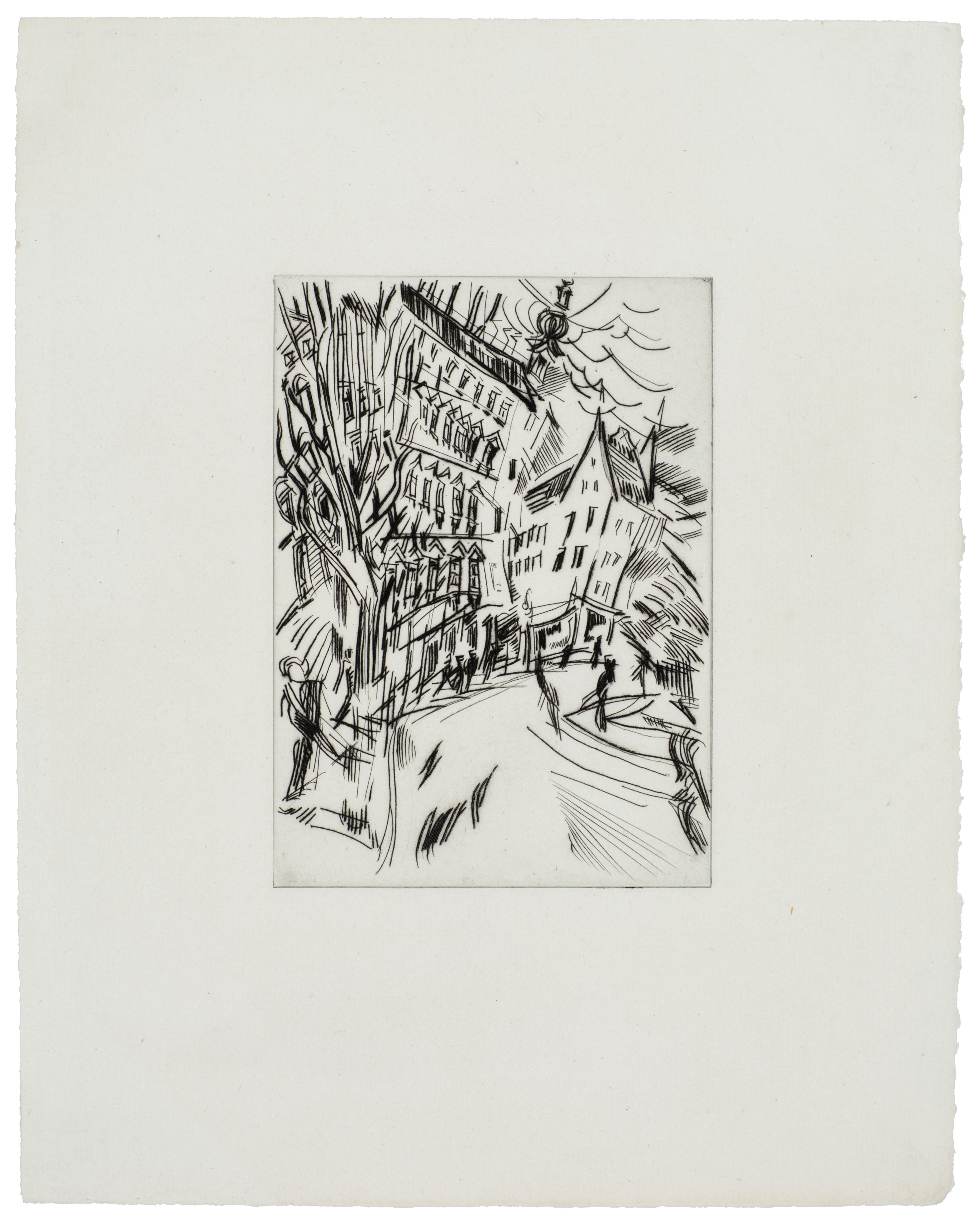
réf. EN-164o.J. Kaltnadelradierung, 1913, auf Van Gelder Zonen Bütten, unsigniert. Darstellungsgröße 16,7:12 cm, Blattgröße 32,5:26 cm. - Von größter Seltenheit! - Provenienz: Hessische Privatsammlung. - Literatur: Ausstellungskatalog: W. Flammann, Ludwig Meidner, Das druckgraphische Werk / Ein Überblick, Stadt Hofheim/Taunus, 1991, Kat. Nr. 3 mit Abb. S 24. [2 Warenabbildungen]
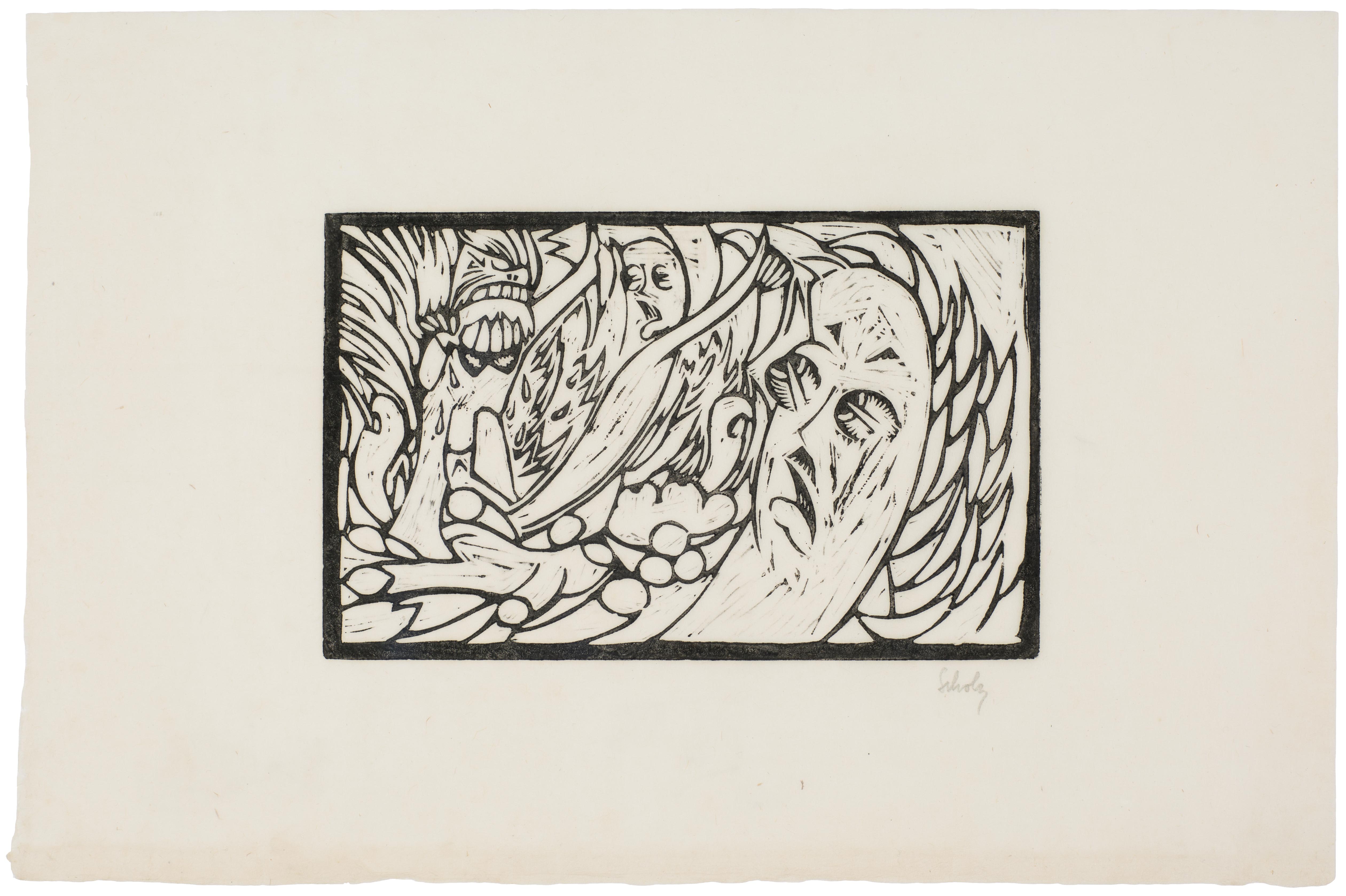
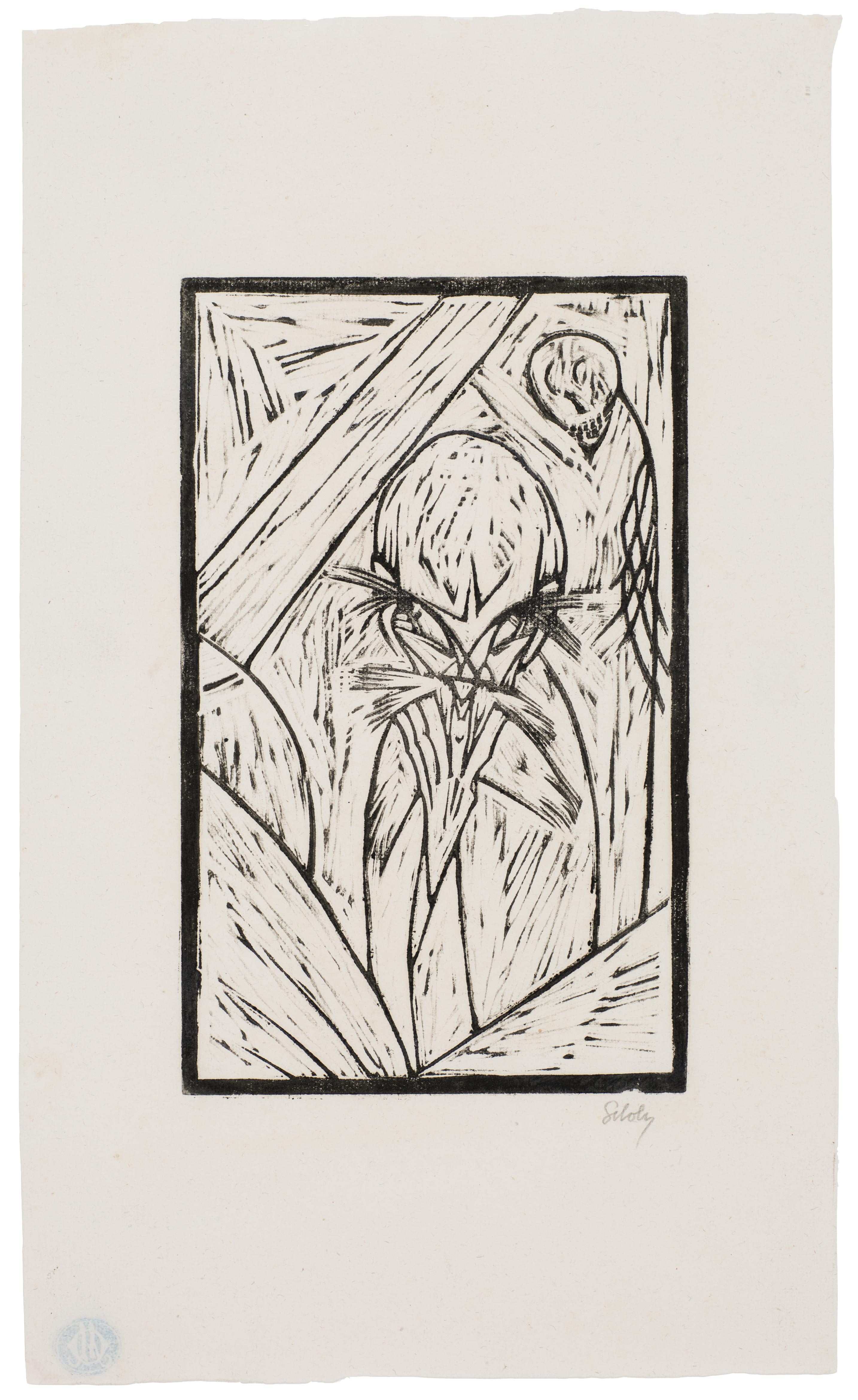
réf. EN-175o.J. Holzschnitt, 1919, auf chamoisfarbenem Japan-Bütten, mit Bleistift signiert ?Scholz?. Darstellungsgröße 15,6:25 cm, Blattgröße 30,6:46 cm. - Tiefschwarzer, sehr breitrandiger Druck und von vorzüglicher Erhaltung. - Äußerst selten! - Provenienz: Privatsammlung, Karlsruhe; Privatsammlung, Hessen. - Literatur: Georg Scholz. Das druckgraphische Werk. Karlsruhe, Künstlerhaus Galerie, 1982, Nr. 40, Abb. S. 85; nicht im Katalog 1975. [2 Warenabbildungen]
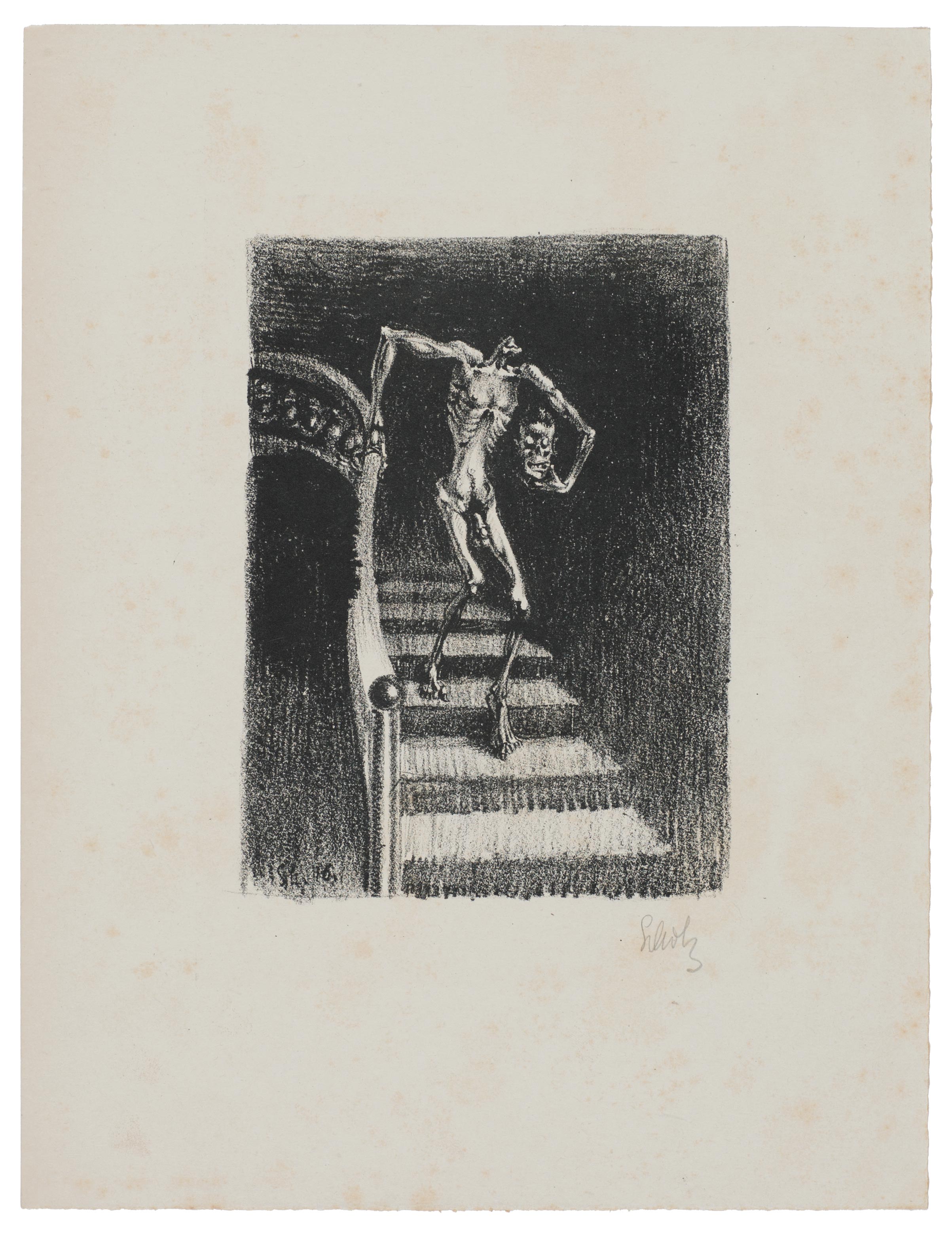
réf. EN-174o.J. Lithographie, 1916, auf chamoisfarbenem Papier, im Stein monogrammiert und datiert ?Sch. 16?, mit Bleistift signiert ?Scholz?. Darstellungsgröße 18:13,3 cm, Blattgröße 32,5:25 cm. Fleckig. - Äußerst selten! - Provenienz: Blauer Stempel einer unbekannten Sammlung verso; Privatsammlung, Karlsruhe. - Literatur: Ausstellungskatalog: Ein Beitrag zur Diskussion realistischer Kunst. Karlsruhe, Badischer Kunstverein e. V., 1975, Nr. 21, Abb. S. 41; Georg Scholz. Das druckgraphische Werk. Karlsruhe, Künstlerhaus Galerie, 1982, Nr. 31, Abb. S. 77; H.-D. Mück, Georg Scholz. Malerei Zeichnung Druckgraphik. Stuttgart, 1991, Abb. S. 32. ?Zu diesem Thema existiert im Nachlaß eine bereits 1914 entstandene (datierte) Federzeichnung, auf der der Titel ?Mann ohne Kopf? eingetragen ist.? [2 Warenabbildungen]
réf. EN-176o.J. Holzschnitt, 1919, auf chamoisfarbenem Bütten, mit Bleistift signiert ?Scholz?. Darstellungsgröße 25,3:15,8 cm, Blattgröße 42,4:25,3 cm. - Tiefschwarzer, sehr breitrandiger Druck und von vorzüglicher Erhaltung. - Äußerst selten! - Provenienz: Privatsammlung, Karlsruhe; Privatsammlung, Hessen. - Literatur: Georg Scholz. Das druckgraphische Werk. Karlsruhe, Künstlerhaus Galerie, 1982, Nr. 41, Abb. S. 86; nicht im Katalog 1975. [2 Warenabbildungen]
1873réf. 41043Paris: Rothschild 1873. Large folio. 17 1/8 x 12 5/8 inches. Two volumes comprising 200 collotypes printed by G. Arosa et Cie. each approx. 9¼ x 7¼ in. or the reverse printed titles with publishers' and printers' credits on mounts with letterpress titles and text. Contemporary half black morocco One of the first books illustrated with collotypes rather than photolithography or photogravure. The present work stands out as one of the few publications that unequivocally attribute the collotype plates to the exceptionally rare Motay and Maréchal process. Cyprien Tessié du Motay and Charles-Raphaël Maréchal pioneers in the field are widely recognized as the trailblazers behind the practical implementation of the collotype process in 1865. By adopting what was then a new process De Gayffier's project holds a unique position as one of the early examples of works featuring illustrations created through the innovative collotype process setting it apart from the prevalent techniques of photolithography and photogravure of the time. The Motay and Maréchal process played a pivotal role in advancing the art of photography. The process involved the meticulous transfer of an image onto a sensitized lithographic stone using a multi-step process that allowed for the creation of detailed and high-quality prints. Collotype's distinct characteristic was its exceptional ability to reproduce fine tonal gradations and intricate details making it particularly well-suited for capturing the nuances of forest foliage as is evident in the beautifully detailed plates in this work. De Gayffier's project is also notable for its pioneering approach to documenting true forest foliage a departure from the more conventional choice at the time of documenting large parks. This endeavor represented a significant shift in the subject matter of early photography focusing on the richness of natural environments and their botanical diversity. Léon de Gayffier who was appointed by the Minister of Agriculture for the specific purpose of undertaking "special photographic operations" in 1867. Complete copy of this rare work. The Musée français de la Photographie has an album of only 54 plates. Voignier Répertoire des Photographes de France au Dix-Neuvième Siècle p.113; Eder Josef M and Edward Epstean translator History of Photography by Josef Maria Eder. p. 617; Hanson David Checklist of photomechanical processes and printing 1825-1910 p. 133. Rothschild unknown
1873réf. 41043Paris: Rothschild 1873. Large folio. 17 1/8 x 12 5/8 inches. Two volumes comprising 200 collotypes printed by G. Arosa et Cie. each approx. 9¼ x 7¼ in. or the reverse printed titles with publishers' and printers' credits on mounts with letterpress titles and text. Contemporary half black morocco One of the first books illustrated with collotypes rather than photolithography or photogravure. The present work stands out as one of the few publications that unequivocally attribute the collotype plates to the exceptionally rare Motay and Maréchal process. Cyprien Tessié du Motay and Charles-Raphaël Maréchal pioneers in the field are widely recognized as the trailblazers behind the practical implementation of the collotype process in 1865. By adopting what was then a new process De Gayffier's project holds a unique position as one of the early examples of works featuring illustrations created through the innovative collotype process setting it apart from the prevalent techniques of photolithography and photogravure of the time. The Motay and Maréchal process played a pivotal role in advancing the art of photography. The process involved the meticulous transfer of an image onto a sensitized lithographic stone using a multi-step process that allowed for the creation of detailed and high-quality prints. Collotype's distinct characteristic was its exceptional ability to reproduce fine tonal gradations and intricate details making it particularly well-suited for capturing the nuances of forest foliage as is evident in the beautifully detailed plates in this work. De Gayffier's project is also notable for its pioneering approach to documenting true forest foliage a departure from the more conventional choice at the time of documenting large parks. This endeavor represented a significant shift in the subject matter of early photography focusing on the richness of natural environments and their botanical diversity. Léon de Gayffier who was appointed by the Minister of Agriculture for the specific purpose of undertaking "special photographic operations" in 1867. Complete copy of this rare work. The Musée français de la Photographie has an album of only 54 plates. Voignier Répertoire des Photographes de France au Dix-Neuvième Siècle p.113; Eder Josef M and Edward Epstean translator History of Photography by Josef Maria Eder. p. 617; Hanson David Checklist of photomechanical processes and printing 1825-1910 p. 133. Rothschild unknown books
1722réf. ST21075Rome: Giorgio Plancho and Gettatore de' Caratteri 1722. FIRST EDITION. 250 x 180 mm. 9 7/8 x 7 1/4". 8 p.l. 170 pp. Contemporary stiff vellum raised bands burgundy morocco label lettered in gilt all edges sprinkled. Engraved title page frontispiece and 151 PLATES DEPICTING MUSICAL INSTRUMENTS. Front pastedown with bookplates of John Smith Esquire Arthur & Charlotte Vershbow Cia Fornaroli and David R. Godine. Cicognara 1596 citing 148 plates; Brunet I 1086 citing 136 plates; Graesse I 480. A long thin red ruled line to upper cover a few small cuts at edge of front board O1 with insignificant hole trivial loss of text a few light stains isolated faint browning to plates but quite AN EXCELLENT COPY--the leaves extremely fresh and clean and the binding entirely sound and perfectly inoffensive. This is an excellent copy of a sumptuously illustrated Baroque compendium of musical instruments which has been owned by three eminent collectors. A student of Athanasias Kircher the Jesuit scholar Filippo Bonanni also Buonanni 1638-1723 produced works on wide-ranging subjects including anatomy shell-collecting and porcelain lacquer. "Gabinetto Armonico" attempts to catalogue all known musical instruments including a broad range of horns as well as other wind percussion stringed and keyboard instruments not infrequently exotic in appearance and operation from all regions including Florida and the world of Islam. Many of the instruments included here were held in the collection of the Jesuit Collegio Romano where Bonanni was teaching at the time he composed the book; other information was gleaned from various authors and ethnographical reports. The book is organized based on the use for which the music is intended e.g. for festivals funerals battle worship hunting and even navigation. The very attractive illustrations by Flemish-born painter and publisher Arnold van Westerhout 1651-1725 depict the instruments in the hands of their players in their native costumes and environs. While some of the depictions of the ancient and foreign musicians are fanciful the majority of these engravings provide genuine invaluable information on music and musical instruments up to the early 18th century. The musicians are as interesting as the instruments dressed in keeping with the original homeland of the instrument ranging from King David with his harp to fashionable rococo ladies at the keyboards of spinet and cimbalo. Our copy is from the library of Italian ballerina Cia Fornaroli 1888-1954 and her husband Walter Toscanini 1898-1971 a bookseller and choreographer. The couple whose distinguished careers were split between New York and Italy assembled a large collection of works documenting the history of dance in Italy from the Renaissance until the 20th century. The bulk of their library now resides in the Jerome Robbins Dance Division of the New York Public Library for the Performing Arts. Our next notable owners were Arthur 1922-2012 and Charlotte Vershbow 1924-2000 who together built a large collection of prints illuminated manuscripts and printed books. Their collection sold at Christie's New York in a series of four auctions in 2013 the present volume was lot 771. Most recently our copy belonged to American publisher David R. Godine who trained as a printer at Leonard Baskin's Gehenna Press before founding his own publishing firm in 1970. His interest in the art of the book led him to build an extensive library of early printed books with a particular focus on antiquarian illustrated works. Two portions of his collection sold for more than $950000 at Bonham's New York in May 2026. The book is not particularly rare at auction but copies in desirable condition even without the distinguished provenance seen here command substantial prices. Giorgio Plancho and Gettatore de' Caratteri unknown
1722réf. ST21075Rome: Giorgio Plancho and Gettatore de' Caratteri 1722. FIRST EDITION. 250 x 180 mm. 9 7/8 x 7 1/4". 8 p.l. 170 pp. Contemporary stiff vellum raised bands burgundy morocco label lettered in gilt all edges sprinkled. Engraved title page frontispiece and 151 PLATES DEPICTING MUSICAL INSTRUMENTS. Front pastedown with bookplates of John Smith Esquire Arthur & Charlotte Vershbow Cia Fornaroli and David R. Godine. Cicognara 1596 citing 148 plates; Brunet I 1086 citing 136 plates; Graesse I 480. A long thin red ruled line to upper cover a few small cuts at edge of front board O1 with insignificant hole trivial loss of text a few light stains isolated faint browning to plates but quite AN EXCELLENT COPY--the leaves extremely fresh and clean and the binding entirely sound and perfectly inoffensive. This is an excellent copy of a sumptuously illustrated Baroque compendium of musical instruments which has been owned by three eminent collectors. A student of Athanasias Kircher the Jesuit scholar Filippo Bonanni also Buonanni 1638-1723 produced works on wide-ranging subjects including anatomy shell-collecting and porcelain lacquer. "Gabinetto Armonico" attempts to catalogue all known musical instruments including a broad range of horns as well as other wind percussion stringed and keyboard instruments not infrequently exotic in appearance and operation from all regions including Florida and the world of Islam. Many of the instruments included here were held in the collection of the Jesuit Collegio Romano where Bonanni was teaching at the time he composed the book; other information was gleaned from various authors and ethnographical reports. The book is organized based on the use for which the music is intended e.g. for festivals funerals battle worship hunting and even navigation. The very attractive illustrations by Flemish-born painter and publisher Arnold van Westerhout 1651-1725 depict the instruments in the hands of their players in their native costumes and environs. While some of the depictions of the ancient and foreign musicians are fanciful the majority of these engravings provide genuine invaluable information on music and musical instruments up to the early 18th century. The musicians are as interesting as the instruments dressed in keeping with the original homeland of the instrument ranging from King David with his harp to fashionable rococo ladies at the keyboards of spinet and cimbalo. Our copy is from the library of Italian ballerina Cia Fornaroli 1888-1954 and her husband Walter Toscanini 1898-1971 a bookseller and choreographer. The couple whose distinguished careers were split between New York and Italy assembled a large collection of works documenting the history of dance in Italy from the Renaissance until the 20th century. The bulk of their library now resides in the Jerome Robbins Dance Division of the New York Public Library for the Performing Arts. Our next notable owners were Arthur 1922-2012 and Charlotte Vershbow 1924-2000 who together built a large collection of prints illuminated manuscripts and printed books. Their collection sold at Christie's New York in a series of four auctions in 2013 the present volume was lot 771. Most recently our copy belonged to American publisher David R. Godine who trained as a printer at Leonard Baskin's Gehenna Press before founding his own publishing firm in 1970. His interest in the art of the book led him to build an extensive library of early printed books with a particular focus on antiquarian illustrated works. Two portions of his collection sold for more than $950000 at Bonham's New York in May 2026. The book is not particularly rare at auction but copies in desirable condition even without the distinguished provenance seen here command substantial prices. Giorgio Plancho and Gettatore de' Caratteri unknown books
réf. FH-341o.J. 4 Folgen á 10 Blatt Farbholzschnitte, auf Japan bzw. Bütten, bis auf 1 Blatt sämtlich mit Bleistift signiert. Darstellungsgrößen: 7,6:9,2 cm bis 12:13,4 cm. Werknummern: 91, 99, 163, 164, 165, 166, 167, 168, 169, 170, 171, 172, 173, 174, 175, 176, 177, 178, 179, 180, 181, 182, 183, 184, 185, 186, 187, 188, 189, 190, 191, 192, 193, 194, 195, 196, 197, 198, 199 und 200. Literatur: Ausst. Katalog: Fürstenfeldbruck, 1999.
1597réf. ST15850London: Printed by the Widow Orwin for Thomas Man 1597. FIRST EDITION. PRESENTATION COPY. 187 x 130 mm. 7 3/8 x 5 1/8". 5 p.l. 93 pp. 20th century gray paper boards. Printer's device on title page. Title page inscribed "Gyven to name inked through but perhaps "Thomas Langham" by the aucthor Jo. Norden"; tail margin of title inscribed "Constantin Adyn his booke"; 19th century ink signature of Benjamin Hynam on recto and verso of title. Front pastedown with early 20th century bookseller's description pasted on. STC 18614; ESTC S113322. ◆Boards a bit soiled but otherwise unworn minor dust-soiling or browning to head margins one quire a little browned occasional trivial smudges or tiny rust spots but an excellent copy generally clean and fresh. Written during a fallow period in the author's regular career as a cartographer this work emphasizing the importance of service to God for all leaders and common soldiers in the sovereign's army was inscribed by the author to a friend or patron. One of several works Norden dedicated to the earl of Essex it got our author into professional difficulties when Essex's enemy Robert Cecil rose to power and was in a position to impede Norden's career as a mapmaker. Norden quickly tried to push responsibility onto a "false Norden" from Kent he was from Somerset but biographer Frank Kitchen has established that the shared "interests backgrounds written expression everyday circumstances and style" indicate there was but one author. Though best known for his surveys and maps--including the first county maps of England to include roads--the pious Norden ca. 1547-1625 also produced numerous works of devotion and prayer among them the enormously popular "A Pensive Mans Practice" which went to 40 editions in his lifetime. While his sincere religious sentiments are not to be doubted it must be acknowledged that Norden was most moved to write these manuals when he was between surveying jobs and short of money. Aimed at soldiers of every rank the present work urges the "necessity of the fear and service of God" and "the use of all divine virtues both in commanding and obeying practicing and proceeding in the most honorable affairs of war." Norden also encourages civilians to support and respect the military and to pray for men-at-arms. This is an especially rare work: OCLC and ESTC find five copies in U.S. libraries and except for the two copies in the Cottesloe Library there seems to have been only one other--defective--copy at auction listed by RBH and ABPC. The present item is even more desirable as an extremely uncommon presentation copy signed by a 16th century English author. The Constantin Adyn who owned our copy is likely the early seventeenth-century schoolmaster otherwise known as Constantine or Constantinus Adyn fl. 1605-25 whose school was situated in Brighton according to Church of England records. The latest owner is likely the Anglo-Russian writer bibliophile and watchmaker Benjamin Hynam 1769-1859 a prominent figure in the distinguished Hynam family imperial watchmakers to Russian royalty. In the late eighteenth century the Hynams maintained a presence in both St Petersburg and London. Printed by the Widow Orwin for Thomas Man unknown
1597réf. ST15850London: Printed by the Widow Orwin for Thomas Man 1597. FIRST EDITION. PRESENTATION COPY. 187 x 130 mm. 7 3/8 x 5 1/8". 5 p.l. 93 pp. 20th century gray paper boards. Printer's device on title page. Title page inscribed "Gyven to name inked through but perhaps "Thomas Langham" by the aucthor Jo. Norden"; tail margin of title inscribed "Constantin Adyn his booke"; 19th century ink signature of Benjamin Hynam on recto and verso of title. Front pastedown with early 20th century bookseller's description pasted on. STC 18614; ESTC S113322. ◆Boards a bit soiled but otherwise unworn minor dust-soiling or browning to head margins one quire a little browned occasional trivial smudges or tiny rust spots but an excellent copy generally clean and fresh. Written during a fallow period in the author's regular career as a cartographer this work emphasizing the importance of service to God for all leaders and common soldiers in the sovereign's army was inscribed by the author to a friend or patron. One of several works Norden dedicated to the earl of Essex it got our author into professional difficulties when Essex's enemy Robert Cecil rose to power and was in a position to impede Norden's career as a mapmaker. Norden quickly tried to push responsibility onto a "false Norden" from Kent he was from Somerset but biographer Frank Kitchen has established that the shared "interests backgrounds written expression everyday circumstances and style" indicate there was but one author. Though best known for his surveys and maps--including the first county maps of England to include roads--the pious Norden ca. 1547-1625 also produced numerous works of devotion and prayer among them the enormously popular "A Pensive Mans Practice" which went to 40 editions in his lifetime. While his sincere religious sentiments are not to be doubted it must be acknowledged that Norden was most moved to write these manuals when he was between surveying jobs and short of money. Aimed at soldiers of every rank the present work urges the "necessity of the fear and service of God" and "the use of all divine virtues both in commanding and obeying practicing and proceeding in the most honorable affairs of war." Norden also encourages civilians to support and respect the military and to pray for men-at-arms. This is an especially rare work: OCLC and ESTC find five copies in U.S. libraries and except for the two copies in the Cottesloe Library there seems to have been only one other--defective--copy at auction listed by RBH and ABPC. The present item is even more desirable as an extremely uncommon presentation copy signed by a 16th century English author. The Constantin Adyn who owned our copy is likely the early seventeenth-century schoolmaster otherwise known as Constantine or Constantinus Adyn fl. 1605-25 whose school was situated in Brighton according to Church of England records. The latest owner is likely the Anglo-Russian writer bibliophile and watchmaker Benjamin Hynam 1769-1859 a prominent figure in the distinguished Hynam family imperial watchmakers to Russian royalty. In the late eighteenth century the Hynams maintained a presence in both St Petersburg and London. Printed by the Widow Orwin for Thomas Man unknown books
1504réf. ST18751Basel: Michael Furter 1504. 220 x 138 mm. 8 x 5 1/2". CXXII 10 LXX 1 leaves. EXCELLENT CONTEMPORARY BLIND-TOOLED CALF covers panelled in blind title stamped in gothic letters at head of upper cover central panel with vertical row of three large rosettes EBDB tool s013635 this enclosed by a frame with eight carnation stamps EBDB tool s013643 then by a roll-tooled frame filled with circles containing flowers fruit and stars EBDB tool r000675; Kyriss 84 Roll 6 lower cover similarly framed but with central panel divided by diagonal blind rules into four compartments each containing a large rosette raised bands spine panels with one or two floral medallion stamps upper cover with original brass catches stamped "IVIII" newer clasps and leather straps probably newer pastedowns fore edge with the number "75" in ink subtle repairs to head and tail of spine as well as lower corner on back cover. Title and opening page with decorative woodcut initials main title and sectional title each with woodcut vignette and full-page woodcut on verso. VD16 T-653; VD16 H-6510; Adams L-1124 L-1123. For the binding: Kyriss 84 Tafel 171 Rolle 6; EinbandDatenbank EBDB tools s013635 and r000675 workshop w002075. An ink stain touching text on one leaf and slightly affecting four adjacent leaves but the vast majority of the contents clean fresh and in fine condition. Quarter-inch crack at top of each joint with leather across the spine consequently becoming a small flap light signs of wear to leather hinges mostly open--but the binding entirely sound with almost no wear at all to the joints. An extremely attractive volume THE REMARKABLY WELL-PRESERVED BINDING FEATURING FINE DEEP IMPRESSIONS OF ITS STAMPS. This is a rare early compilation of Medieval liturgical chants in an appealing binding by an Augsburg workshop. Kyriss dubbed this bindery Hirsch-Rolle I for its distinctive deer i.e. "hirsch" roll tool and noted it was active 1483-1532. EBDB the bindings database of the Berlin State Library has identified 26 bindings in German libraries from this workshop. The wide attractive floral roll here is most unusual among the binding's wide array of design elements from flowers and plants to stars all contained in tightly packed circles that bring bubbles to mind. Our two texts contain "sequences"--words sung between the Gradual and the Gospel on festival occasions--written by among others Gregory the Great the fourth century bishops Hilarius of Poitiers and Ambrose of Milan and fifth century Latin Christian poet Coelius Sedulius. They were printed by Michael Furter d. ca. 1516-17 who operated a press in Basel from 1489 into the second decade of the 16th century. He was especially known for the decorative nature of his volumes. Haebler's "Typenrepertorium" counted 12 sets of embellished woodcut initials Furter employed; examples from two of these sets may be seen here on the title page of the first work and at the opening of the text in both. The woodcut illustrations here are also notable. The title woodcut Schramm XXII 1263 on the first work is a depiction of the Magi presenting gifts to the Christ Child and his mother done early in the career of Albrecht Dürer 1471-1528. It was one of the "Basel Prayer Book Woodcuts" 25 illustrations likely meant for a "Hortulus Animae" Johann Bergmann von Olpe intended to print in 1494 but never issued. A large striking woodcut depicting the Christ Child at the center of a sunburst surrounded by medallions with the devices of the four Evangelists appears on the verso of the title in the first work and on the title page of the second. On the verso of the second title page is a woodcut of the Crucifixion from the "Postilla" by Guillelmus Parisiensis Basel 1491 Schramm XXII 336. This is an especially affecting and detailed scene: Mary Magdalene clings to the foot of the cross while Jesus looks serenely down at the Virgin Mary who is collapsing in the arms of another woman as several soldiers jeer. On either side of Christ the souls of the thieves crucified with him are being taken one--who had asked to be remembered when Jesus came into his Kingdom--by angels the other by demons. A banner marked with the SPQR of the Roman Empire flutters in the background. All in all this is a very pleasing exemplar of post-incunabular book-making. Michael Furter unknown