50 506 résultats
1813réf. 18016Somerset PA: Friedrich Goeb 1813. First Edition. Original blind ruled calf over oak boards. Good; joints & hinges cracked; front oak board has a vertical split; front cover nearly loose; some peripheral marginal water stains; straps missing. Large 4to 4 527 66 2 169 3 pp. Accompanied by three 18th century printed hymns and a large inserted color Fraktur bookplate signed by the scribe. A unique copy of this bible from the Yaukey Yocky family.The Goeb printing of Luther's bible in Somerset is historic in itself; especially so given the generous format Goeb chose for his work. What makes this copy unique is the laid-in copies of three printed hymns; two from "Sisters" of the Ephrata Cloister but all originating at Snow Hill. Catherine Redelsberger and Barbara Schneeberger for whose family farm the Snow Hill sanctuary was named were among the earliest American women converts to Beissel's Seventh-Day Baptists. Andreas Schneeberger is represented here by a hymn printed at the Cloister on laid paper clearly watermarked CB in a "fluttering heart" Gravell #198. It is most likely that the Redelsberger hymn was also printed at the Cloister but there is no watermark. The three broadside printings are: 1 Der Schw. Catharina Redelsberger Glaubens-Lied. Unlocated. 2 Geistliches Trauer-Lied gestellt von Schw. Barbara Schneeberger. Unlocated 3 Wurde abgesungen den 31ten August 1793: Bey B. A. S. auf dem jährlichen Fest an der Antitum. Printed at the Cloister. Attributed to Andreas Schneeberger. Shipton & Mooney #26144 with the entry taken from Seidensticker and no location provided. There apparently is one copy at HSP. These ephemeral publications were sold through western Pennsylvania by itinerant peddlers or after meetings see Yoder pp. 42 - 44 barely noting any from the 18th century. Few survive. The three offered here must have been acquired by the Yaukey family 20 years before the Goeb bible was printed and retained for generations within the family. They are spotted and toned and irregularly trimmed. The Fraktur bookplate in the bible is large 285 x 230 mm. It is a geometric lettered design in four colors green yellow red brown that is signed and dated: Samuel Jackson Sept. 14 1827. In all an outstanding survival. S & S #27883; Gravell #198. Friedrich Goeb hardcover books
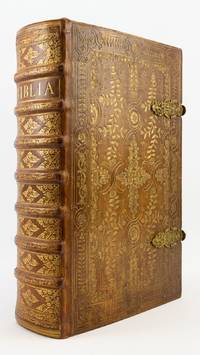
1752réf. ST19424Stockholm: Tryckt af Henrick Christoph Merckell 1724-28; Peter Jöranson Nyström 1752. 422 x 275 mm. 16 5/8 x 11". 30 p.l. 1 leaf section title 234 2 section title 235-604 2 section title 605-908 2 section title 909-1387 1 pp.; 4 p.l. 300 4 301-666 pp. STATELY CONTEMPORARY CALF INTRICATELY GILT IN THE FANFARE STYLE over bevelled wooden boards covers with strapwork frame containing lilies and floral garlands central panel with strapwork rows of floral crosses the spaces between with floral sprays emerging from urns very expertly rebacked preserving original backstrip raised bands spine compartments with flowers-and-pomegranate centerpieces floral cornerpieces gilt lettering two decorative brass clasps catch plates and original straps turn-ins with lattices and floral ornaments marbled endpapers edges gilt and delicately gauffered. Five section titles with engraved vignettes. With ink presentation inscription celebrating the baptism of Claës Georg Listromer on 20th November 1604 and expressing the hope the Book will bring him wisdom as he grows signed by Claës Lindman dated 17th September 1605. A 20th century Swedish inscription below tracing the book's descent through generations of the Listromer family into the 1920s. Darlow and Moule 8821 8826. Slight variations in color of the leather Ffff8 with lower corner torn away not affecting engraving occasional faint offsetting but AN EXTREMELY CLEAN FRESH COPY in a binding bright with gilt. This impressively bound Swedish Bible was a baptism gift that clearly would have outweighed its recipient as Swedish law at the time required an infant be baptized within the first eight days of life. Although hardly practical for personal devotion and study the majestic tome was a treasured heirloom passed down in the same family for 200 years. The beautiful fanfare style seen here emerged in France in the 16th century but remained very popular in Northern Europe into the 18th century particularly for large "lectern" Bibles like the present item. The text here is an extensively annotated edition of the 1618 Gustave II Adolf Bible prepared by a father and son both named Johannes Gezelius who served successively as Bishop of Åbo. The New Testament was first printed in that city in 1711-13 the Old Testament in Stockholm in 1724-28. In our copy the New Testament is a 1752 reprinting. Tryckt af Henrick Christoph Merckell, 1724-28; Peter Jöranson Nyström unknown
1752réf. ST19424Stockholm: Tryckt af Henrick Christoph Merckell 1724-28; Peter Jöranson Nyström 1752. 422 x 275 mm. 16 5/8 x 11". 30 p.l. 1 leaf section title 234 2 section title 235-604 2 section title 605-908 2 section title 909-1387 1 pp.; 4 p.l. 300 4 301-666 pp. STATELY CONTEMPORARY CALF INTRICATELY GILT IN THE FANFARE STYLE over bevelled wooden boards covers with strapwork frame containing lilies and floral garlands central panel with strapwork rows of floral crosses the spaces between with floral sprays emerging from urns very expertly rebacked preserving original backstrip raised bands spine compartments with flowers-and-pomegranate centerpieces floral cornerpieces gilt lettering two decorative brass clasps catch plates and original straps turn-ins with lattices and floral ornaments marbled endpapers edges gilt and delicately gauffered. Five section titles with engraved vignettes. With ink presentation inscription celebrating the baptism of Claës Georg Listromer on 20th November 1604 and expressing the hope the Book will bring him wisdom as he grows signed by Claës Lindman dated 17th September 1605. A 20th century Swedish inscription below tracing the book's descent through generations of the Listromer family into the 1920s. Darlow and Moule 8821 8826. Slight variations in color of the leather Ffff8 with lower corner torn away not affecting engraving occasional faint offsetting but AN EXTREMELY CLEAN FRESH COPY in a binding bright with gilt. This impressively bound Swedish Bible was a baptism gift that clearly would have outweighed its recipient as Swedish law at the time required an infant be baptized within the first eight days of life. Although hardly practical for personal devotion and study the majestic tome was a treasured heirloom passed down in the same family for 200 years. The beautiful fanfare style seen here emerged in France in the 16th century but remained very popular in Northern Europe into the 18th century particularly for large "lectern" Bibles like the present item. The text here is an extensively annotated edition of the 1618 Gustave II Adolf Bible prepared by a father and son both named Johannes Gezelius who served successively as Bishop of Åbo. The New Testament was first printed in that city in 1711-13 the Old Testament in Stockholm in 1724-28. In our copy the New Testament is a 1752 reprinting. Tryckt af Henrick Christoph Merckell, 1724-28; Peter Jöranson Nyström unknown books
1524In-folio; ff. (392), in caratteri romani; il titolo, tranne le prime due righe, è in caratteri gotici; pelle marrone ottocentesca firmata Bedford, con decorazione dorata ai piatti entro doppia cornice, titolo in oro al dorso, fregi, nervature, tagli dorati. Ex libris John Fairfax Crowder. Al frontespizio sotto al titolo una xilografia raffigura "Petrus Delphinus Generalis" inginocchiato di fronte a A. Romualdo; la pagina è inquadrata in una cornice a grottesche su legno che reca il monogramma "I C", che era stata impiegata nel 1521 per Sallustio, e poi per l'edizione delle Vite de SS. Padri del 1532. Raro epistolario del generale dei camaldolesi, fonte ricchissima per la vita storica e artistica fiorentina del XV secolo. PIETRO DELFIN, (Venezia 1444-1525), venne eletto generale dei camaldolesi nel 1480, e coltivò costantemente le lettere e la teologia, tenendosi in relazione con gli uomini più illustri del suo tempo, soprattutto con gli umanisti. Irriducibile avversario del Savonarola, nel suo Dialogus in Ieronymum Ferrariensem arrivò a chiedere la condanna al rogo del frate. Prima edizione del suo epistolario, una ricchissima fonte per la dottrina teologica ma anche per i dettagli storici di cui le sue lettere sono corredate. L'argomento principale che è al centro degli scritti di Delfin è certamente la disputa teologica o comunque religiosa, oggetto di fitti scambi epistolari con i rappresentanti del clero e gli umanisti di tutta Italia; tra gli altri argomenti vi rientra anche una disquisizione piuttosto lunga (l. II ep.LXXVII) circa l'azione corruttrice delle rappresentazioni teatrali, in particolare delle commedie, con un richiamo ai ludi scaenici degli antichi romani. Ma dati i rapporti con gli umanisti del tempo, la raccolta contiene anche scambi epistolari con questi ultimi: Ugolino Verino, Ermolao Barbaro, Francesco Guicciardini ecc. Ad esempio proprio in una di queste missive si esprime l'augurio che si ponga mano ad una edizione completa delle opere di Leon Battista Alberti. In folio; ff. (392), in Roman characters; the title, except for the first two lines, is in gothic characters; 19th century brown calf binding signed Bedford, with gilt decoration on the plates within a double frame, gilt title on the spine, friezes, bands, gilt edges. Ex libris John Fairfax Crowder. On the title page, under the title, a wood plate depicts "Petrus Delphinus Generalis" kneeling in front of A. Romualdo; the page is framed in a grotesque frame on wood bearing the monogram "I C", which had been used in 1521 for Sallustio, and then for the edition of the Vite dei SS. Padri 1532. Rare epistolary of the general of the Camaldolese order, a very rich source for the historical and artistic life of Florence in the 15th century. PIETRO DELFIN, (Venice 1444-1525), was elected general of the Camaldolese order in 1480, and constantly cultivated literature and theology, keeping in touch with the most illustrious men of his time, above all with the humanists. Irreducible opponent of Savonarola, in his Dialogus in Ieronymum Ferrariensem he came to ask for the friar to be condemned to the stake. First edition of his epistolary, a very rich source for theological doctrine but also for the historical details with which his letters are accompanied. The main topic that is at the center of Delfin's writings is certainly the theological or religious dispute, the subject of dense exchanges of letters with representatives of the clergy and humanists from all over Italy; among the other topics there is also a rather long disquisition (l. II ep.LXXVII) about the corrupting action of theatrical representations, in particular of comedies, with a reference to the ludi scaenici of the ancient Romans. Given the relationships with the humanists of the time, the collection also contains correspondence with the latter: Ugolino Verino, Ermolao Barbaro, Francesco Guicciardini etc. For example, precisely in one of these letters the wish is expressed that a complete edition of the works of Leon Battista Alberti be put to work.
réf. 204-Do.J. 4 Federzeichnungen in Braun, braun laviert, mit einzelner Federlinie umrandet, unterhalb der Darstellungen jeweils bezeichnet, auf Bütten (Der Geruchssinn mit WZ). 13,1:9,2 cm, 13,6:9,5 cm, 13,3:8,1 cm, 13,2:8,3 cm. Provenienz: Sammlung Giorgio Dalla Bella (geb. 1923), Venedig, Lugt 3774. Literatur: Ugo Ruggeri. Disegni Veneti e Lombardi dal XVI al XVIII secolo. Katalog des Istituto Nazionale per la Grafica Gabinetto dei Disegni e delle Stampe. Rom 1989, S.15 u. 16, Abb. 4-7.
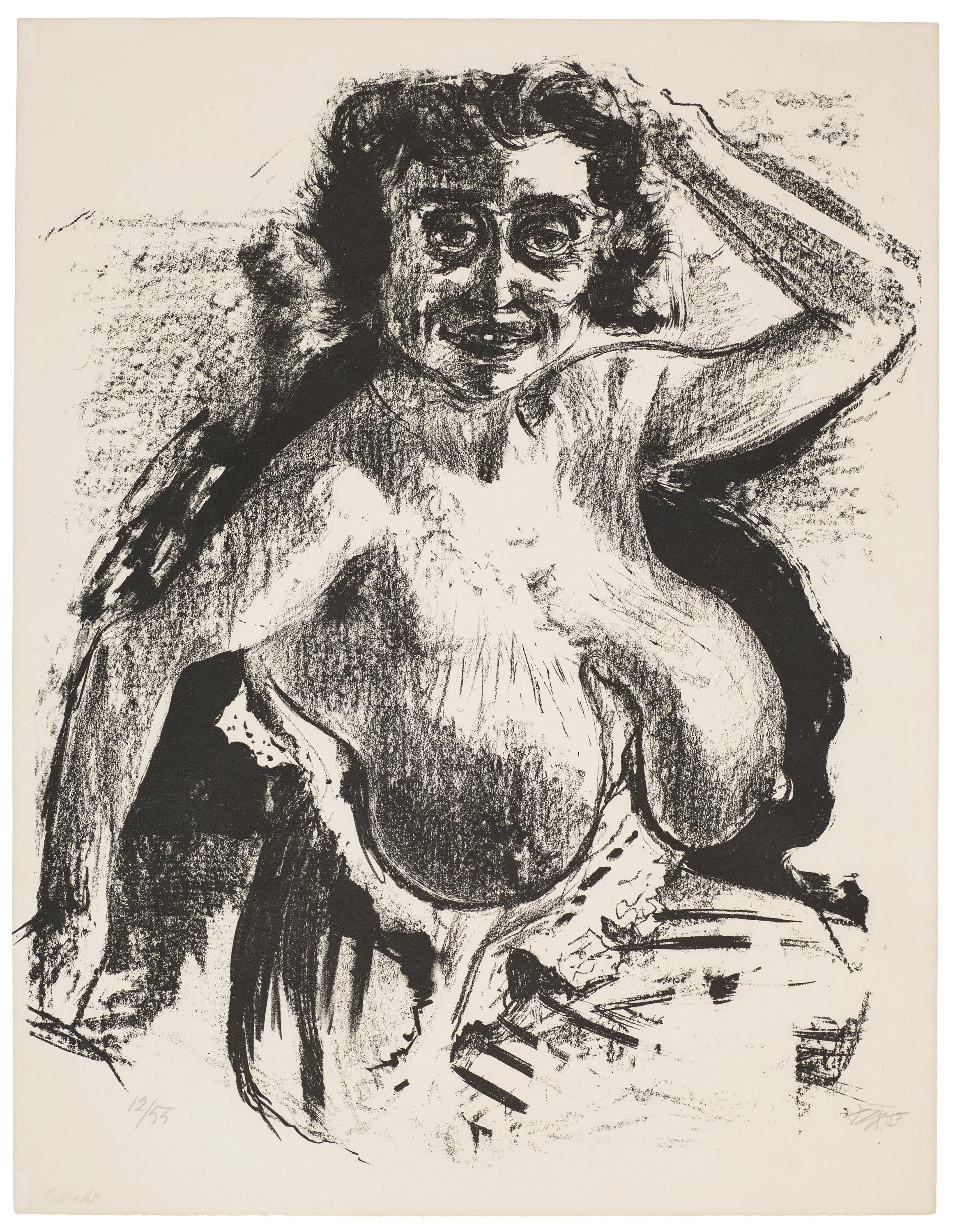
réf. EN-138o.J. Lithographie, 1923/24, auf Johann Wilhelm Bütten, mit Bleistift nummeriert, signiert und datiert ?Dix 23?. Darstellungsgröße 60,5:49 cm, Blattgröße 65:50 cm. Vorzüglicher und vollrandiger Druck! - Nr. 12 von 55 Exemplaren. - Literatur: Karsch 125. Möglicherweise ist die Lithographie schon 1923 entstanden und wurde jedoch erst 1924 von Karl Nierendorf verlegt.
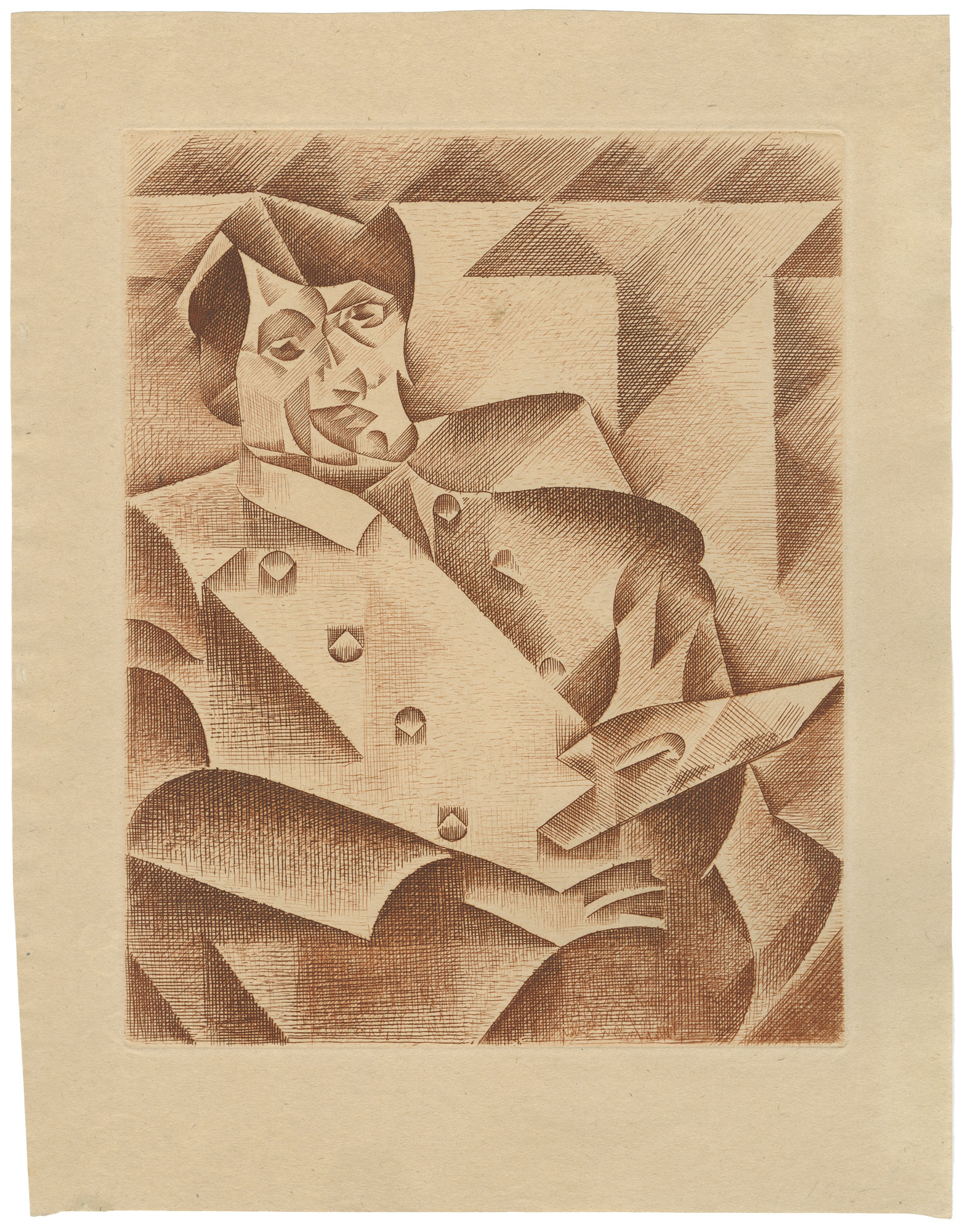
réf. 0856-Co.J. Kaltnadelradierung in Rotbraun, um 1912, auf gelblichem Velin mit Wasserzeichen. 17,6:13,9 cm, Blattmaß: 23,1:18,1 cm. Sehr schöner Abdruck nach dem berühmten Gemälde, das sich im Art Institute Chicago befindet.
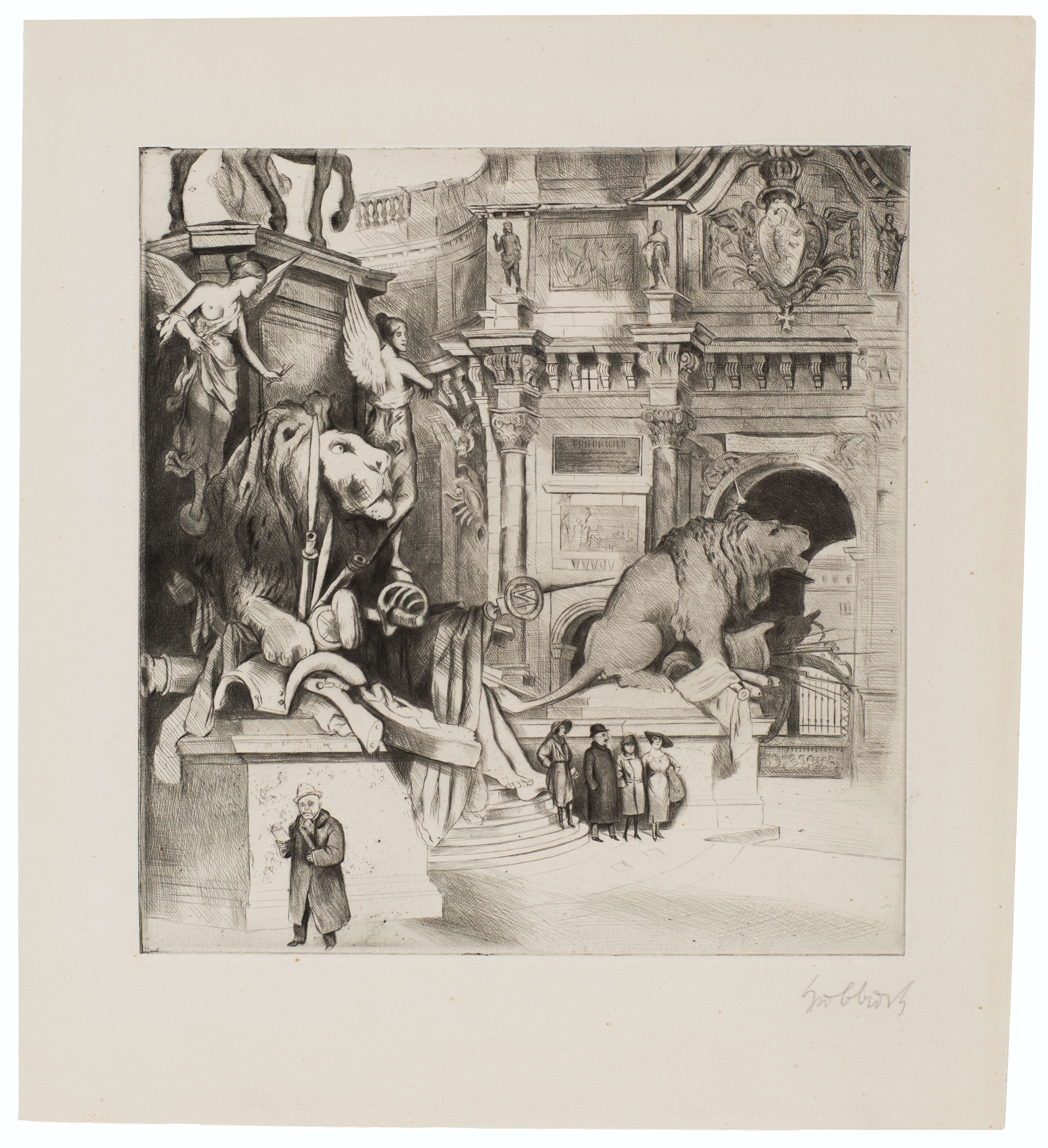
réf. EN-029o.J. Radierung, 1922, auf Kupferdruckpapier, mit Bleistift signiert. Darstellungsgröße 22,7:21,6 cm, Blattgröße 31,2:28,2 cm. Sehr selten! Literatur: Riester 65, Abb. S. 38; Ausst. Katalog: Karl Hubbuch. Das Gesamtwerk in zwei Ausstellungen. München, 1967, Nr. 56; Ausst. Katalog: Die Stadt. Bild, Gestalt, Vision. Europäische Stadtbilder im 19. und 20. Jahrhundert. Bremen, 1972/73, Nr. 88; Ausst. Katalog: Karl Hubbuch, 1891-1979. Karlsruhe/Berlin/Hamburg, 1981/82, Nr. 81, Abb. S. 140.
réf. 092-Do.J. Aquarell, über schwarzer Kreide, auf festem Bütten, verso mit brauner Feder monogrammiert und mit Nummer versehen ?J C. H.? sowie ?N. 235?; auf Albumblatt montiert. 40,2:30,5 cm.HH.? Provenienz: Sammlung K.E. Hasse (1810-1902), Leipzig Lugt 860, vererbt an Tochter und Schwiegersohn, Göthingen.
réf. 595-Eo.J. Aquarell,über Bleistift, auf Bütten. Ca. 27,5:51,8 cm. Ränder ungleich geschnitten, vertikale Mittelfalte geglättet. Provenienz: Privatbesitz München. Literatur: Ausst. Katalog: Handzeichnungen deutscher Meister des 19. Jahrhunderts, Spezialsammlung von Zeichnungen und Radierungen Wilhelm von Kobells, C. G. Boerner, Leipzig, 1928, Liste XLI, S. 3; Wichmann, Wilhelm von Kobell. Monographie und kritisches Werkverzeichnis der Werke. München 1970, Nr. 64 mit Abb. Wichmann datiert die Zeichnung um ?1787?. Mit der Datierung ?um 1787? irrt Wichmann, denn die Zeichnung zeigt Schloß Ehrenburg nach der Vollendung der neugotischen Umgestaltung der Eckpavillons (ursprünglich nach Plänen Schinkels) ab 1817, aber vor der Vollendung des neugotisch gestalteten Turmes über dem Mitteltrakt, also noch in der Gestalt der Zeit vor 1834. Als mögliche Zeit der Entstehung dieser Zeichnung ist also ?um 1818-1834? anzunehmen. (Diese Hinweise danken wir Dr. Klaus Weschenfelder, Veste Coburg, Email vom 3.11.2015). Ein Beleg für einen Aufenthalt Kobells in Coburg in diesen Jahren fehlt bislang.
réf. 618-Eo.J. Feder in Grau, über Bleistift, grau laviert, mit gezeichneter Umrandung, auf cremefarbenem Velin. 20,1:24,1 cm. - Mit leichten Altersspuren. Provenienz: Sammlung Fürst Leopold I. von Anhalt-Dessau, Lugt 1708b; Sammlung Elsa Hauser, erworben 26.6.56 (Notiz auf alter Unterlage). Bildhaft ausgeführte Zeichnung! Obgleich nicht signiert, zeigt die Darstellung unzweifelhaft den frühen, stark nazarenisch geprägten Stil des Zeichners. In Form eines dreiteiligen Flügelaltars mit sparsamen gotischen Zierformen angelegt, ist die Komposition der Szenen sehr sorgfältig gestaltet und zeichnerisch fein ausgeführt. Die Ikonographie ist indessen sehr selten und gerade für einen Altar völlig unüblich, wird hier doch der junge Jesus bei der Ausführung mehrerer unterschiedlicher Arbeiten gezeigt, natürlich immer in symbolischer Überhöhung- profane Tätigkeiten, denen eine heilsgeschichtliche Sinnhaftigkeit unterlegt ist. In der Mitte Christus als Gärtner beim Blumengießen (das Gedeihen der geistlichen Saat), links, mit seinem Ziehvater Joseph, beim Tragen von Brettern (die Kreuzigung vorwegnehmend), rechts beim Wasserschöpfen, während seine Mutter Maria in einem Buch liest (wohl das Wasser des Lebens im Paradies andeutend).
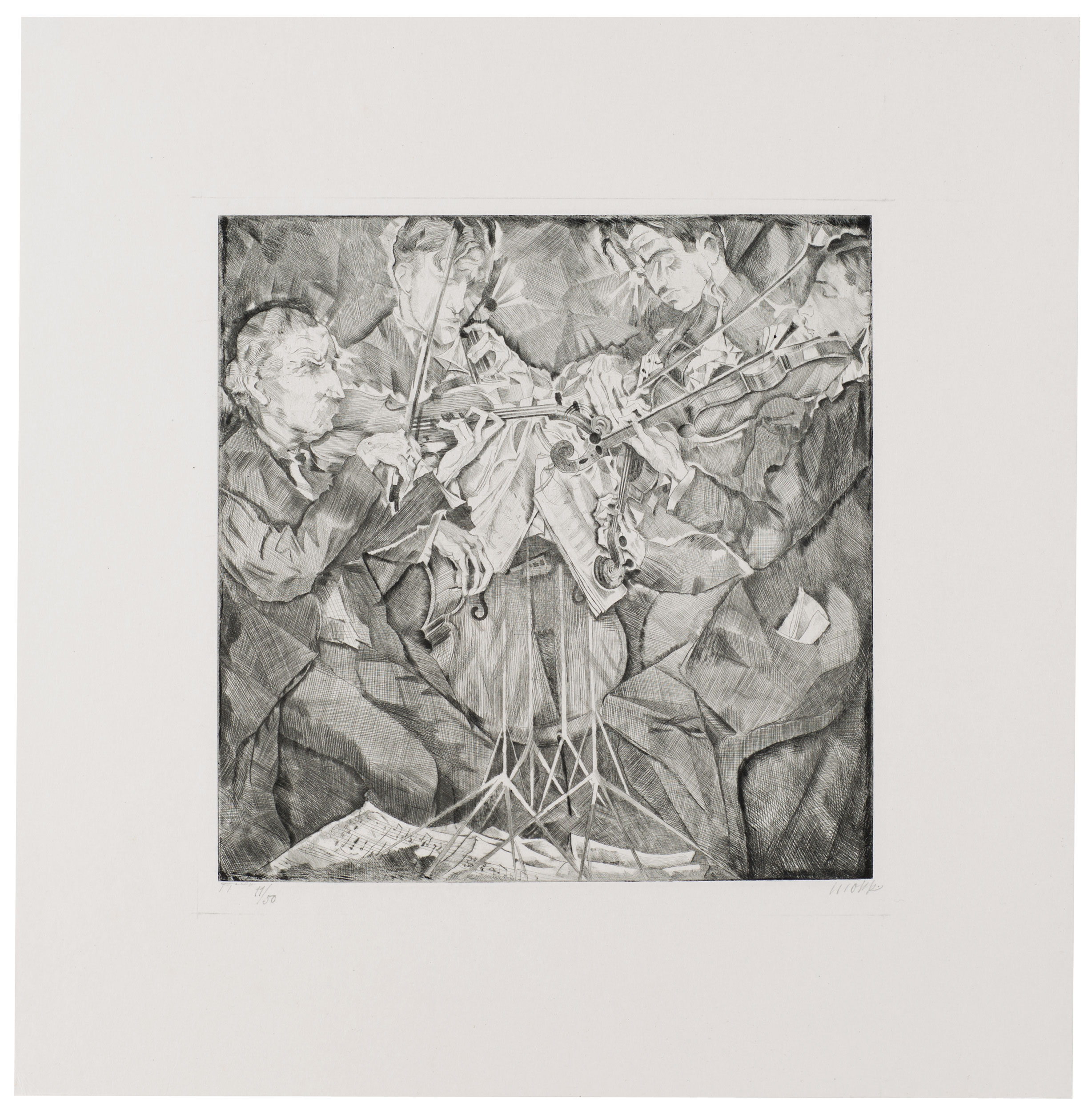
réf. EN-051o.J. Kaltnadelradierung, 1915, auf cremefarbenem Japan, mit Bleistift nummeriert und signiert. Darstellungsgröße 24,7:24,3 cm, Blattgröße 40,4:39,6 cm. Erschienen im Verlag Amsler & Ruthardt, Berlin. Nr. 11 von 50 Exx. Erschienen bei Amsler & Ruthardt, Berlin. Literatur: Stix/Osborn R 35; Papst 36. Bereits 1914 hatte Oppenheimer das Heßquartett in einem Gemälde festgehalten, vgl.: M.-A. von Putkamer, Max Oppenheimer 1885-1954. Leben und malerisches Werk. Wien/Köln/Weimar, 1999, Nr. 93, Abb. S. 112.
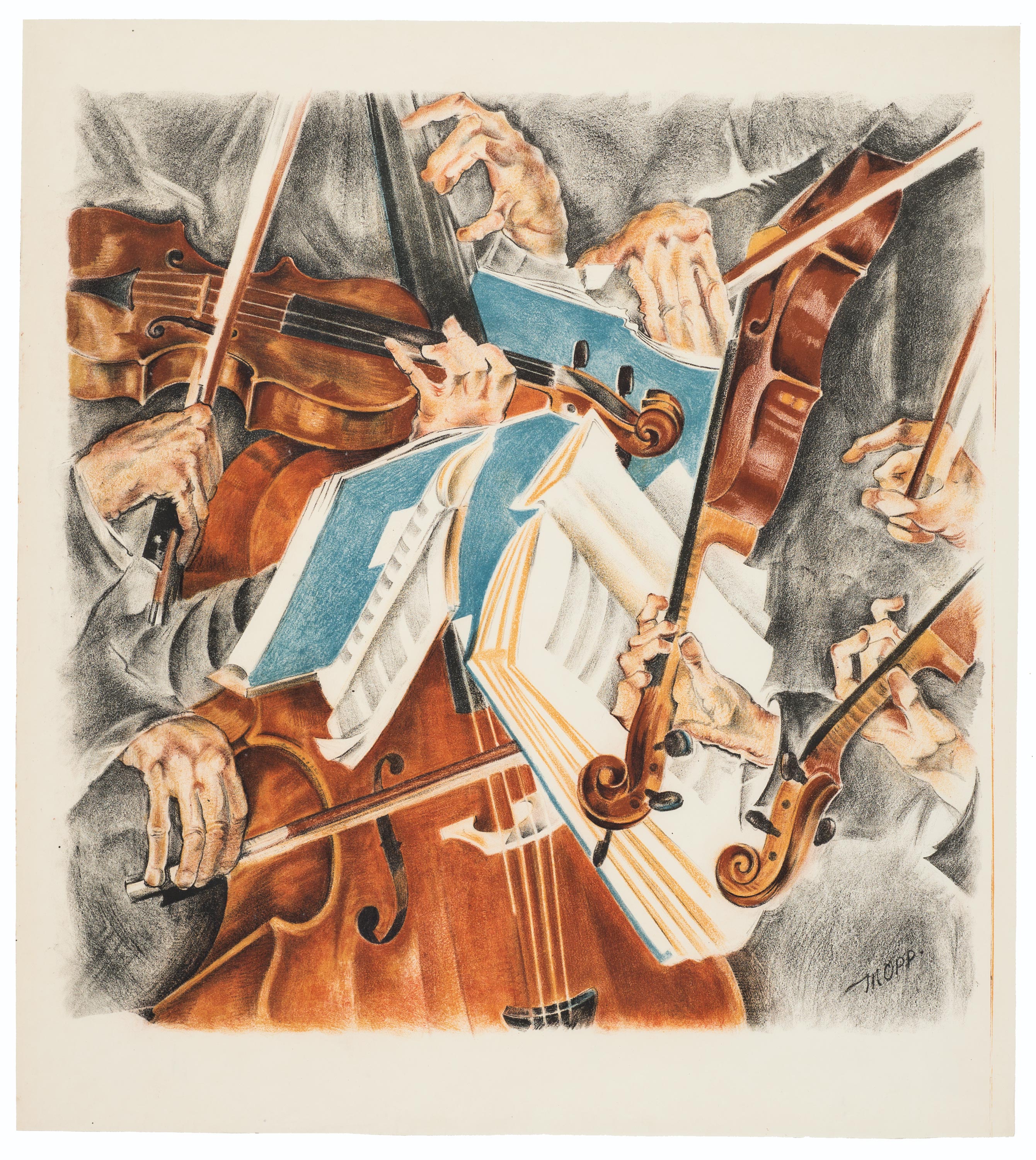
réf. EN-170o.J. Farblithographie, um 1920, auf Velin, im Stein monogrammiert. Darstellungsgröße 66:65 cm, Blattgröße 78,2:70,2 cm. - Literatur: Papst L 15; nicht bei Stix Lithographien; Ausstellungskatalog: Bernhard Echte (Hrsg.), Max Oppenheimer (MOPP) 1885-1954, Gemälde und Graphiken, Stiftung Langmatt Sidney und Jenny Brown, Baden, 1995 und Bayerische Staatsgemäldesammlungen, Staatsgalerie moderner Kunst, München, 1995/96, Kat.-Nr. 57. - Der Lithographie liegt das Motiv des Gemäldes von Max Oppenheimer ?Klinglerquartett (Streichquartett)? von 1917 zugrunde, das sich heute im Oberen Belvedere in Wien befindet (Inv. Nr. 2493). - Das Rosé-Quartett setzte sich in dieser Zeit zusammen aus: Arnold Rosé (1882-1945) Violine; Paul Fischer (1905- 1938) Violine; Anton Walter (1883-1950) Violincello; Anton Rusitzka (1901-1929) Viola. - Musik und Musiker waren für Oppenheimer eine ständige Quelle der Inspiration. Das hier vorliegende Blatt ist wohl das bekannteste Motiv des Künstlers.
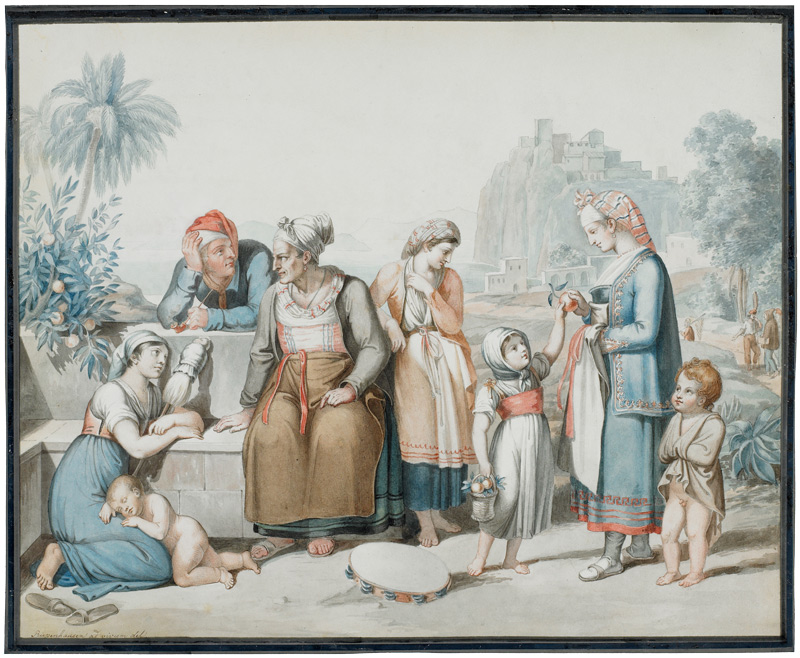
réf. 007-Io.J. Aquarell, über Bleistift, dreifach umrandet, auf chamoisfarbenem Velin, links unten signiert ?Riepenhausen ad vivum del.?. 30,5:31,7 cm.
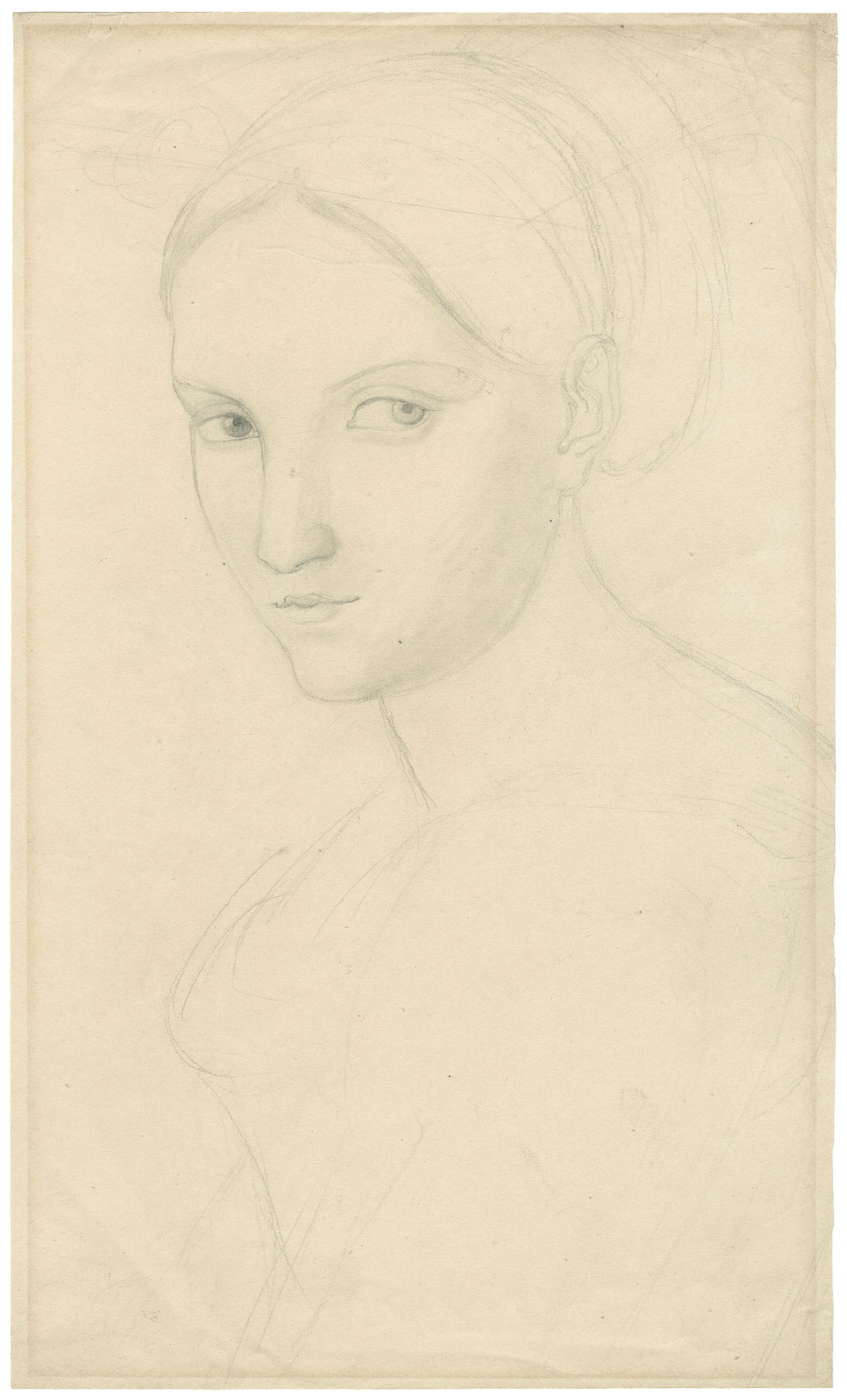
réf. 628-Eo.J. Bleistift, 1820, auf cremefarbenem Velin. 29,5:17,7 cm. - Mit leichtem Lichtrand rundum und etwas knitterfaltig. Provenienz: Englischer Privatbesitz, bis 1972. Entwurf zur ausgeführten Zeichnung. Vergleichsliteratur: Galerie Joseph Fach, Frankfurt a.M., Kat. 11, 1976, Nr. 157; Amrei Gold, Der Modellkult um Sarah Siddons, Emma Hamilton, Vittoria Caldoni und Jane Morris. Diss. Westfälische Wilhelms-Universität, Münster/New York, 2009, S. 152 mit Abb.; Ausst. Katalog: Die Nazarener - Vom Tiber an den Rhein. Drei Malerschulen des 19. Jahrhunderts. Bearbeitet von N. Suhr und N. Kirchberger. Mainz, 2012, S. 65-68, Farbabb. S. 67, 182, 183, 185-187 und 189; Ausst. Katalog: Nanna. Entrückt, überhöht, unerreichbar. Anselm Feuerbachs Elixier einer Leidenschaft. Wiesbaden/Hamburg, 2013/14, S. 42, Kat.-Nr. 15, Abb. S. 43; Auktion 294, Villa Grisebach, Berlin, 25.10.2018, Sammlung Bernd Schultz I, Kat.-Nr. 29 mit Farbabb.
réf. FH-338o.J. Folge von 14 (von 16 Blatt) Farbholzschnitten auf Japan, 2 Radierungen auf Kupferdruckpapier, 2 Lithographien auf Japan, mit Bleistift signiert. Darstellungsgrößen 6,8:9 cm bis 21:30 cm. Werknummern: 40, 63, 103, 117, 152, 155, 202, 203, 204, 208, 275, 276, 277, 278, R27, R28, L12, L43.
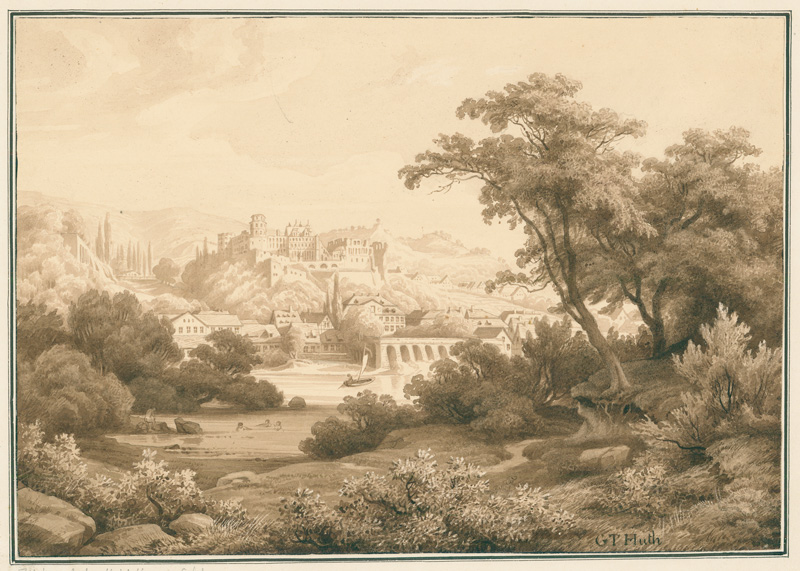
réf. 328-Eo.J. Pinsel in Braun, braun laviert, auf cremefarbenem Zeichenkarton, rechts unten signiert ?GT Huth?. 17,3:24,8 cm. Auf Albumblatt montiert und mit doppelter schwarzer Tuschlinie umrandet. Vergleichsliteratur: A. Wiederspahn/H. Bode, Die Kronberger Malerkolonie. Ein Beitrag zur Frankfurter Kunstgeschichte des 19. Jahrhunderts. 3. Aufl. Ffm., W. Kramer, 1982, Abb. S. 616 sowie S. 693.
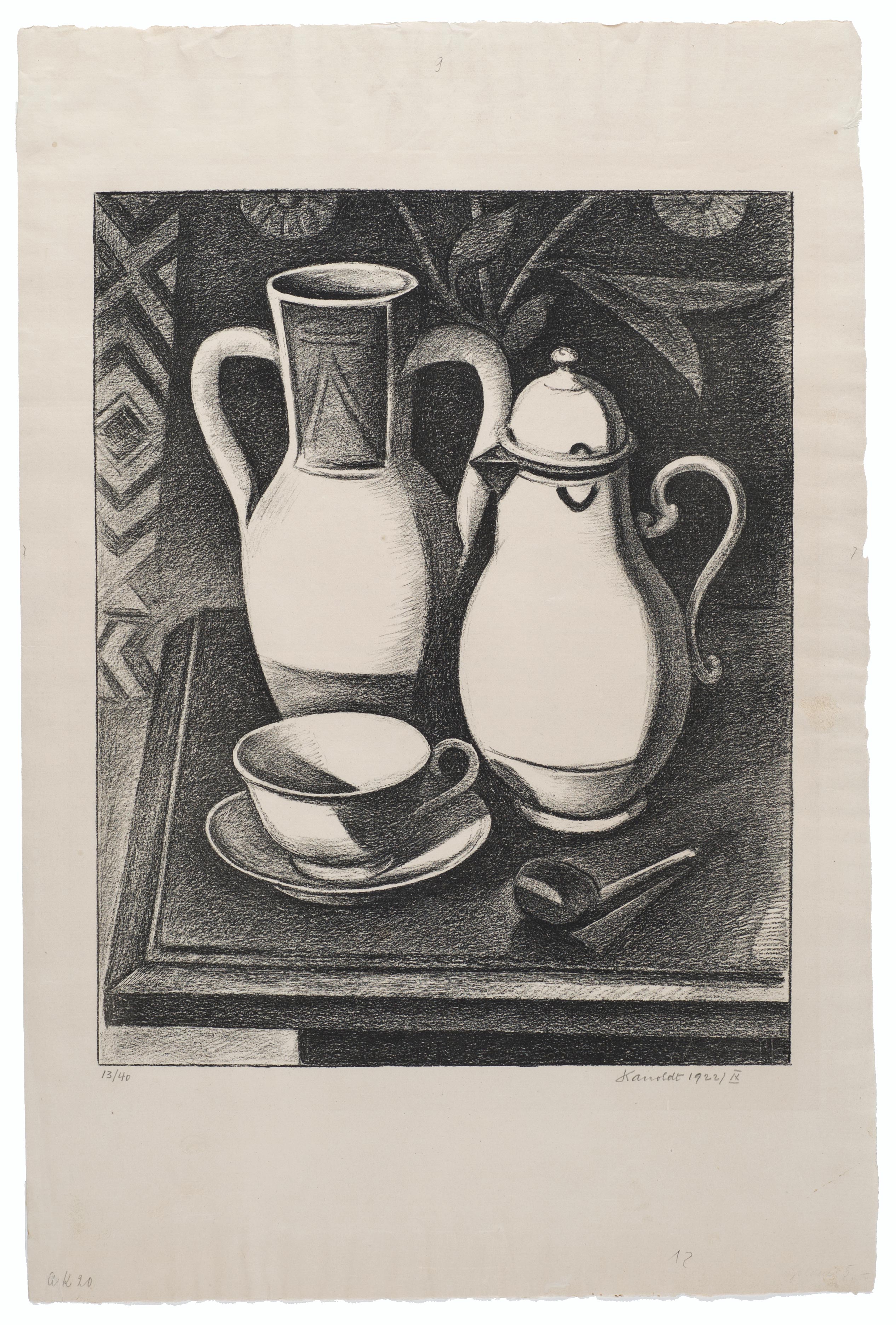
réf. EN-152o.J. Lithographie, 1922, auf JW Zanders-Bütten, mit Bleistift nummeriert ?13/40?, signiert, datiert und mit der Werknummer bezeichnet ?Kanoldt 1922 / IX?. Darstellungsgröße 39,8:31,8 cm, Blattgröße 58:38,7 cm. Prachtvoller Druck mit breitem Rand. - Literatur: Amman L 9. Nr. 13 von 40 Exemplaren der Gesamtauflage, wovon 10 Exemplare auf Japan gedruckt sind. [2 Warenabbildungen]
1585réf. ST20050Leipzig: Georgius Desner 1585. FIRST EDITION. 170 x 110 mm. 6 3/4 x 4 1/4". 28 p.l. 494 pp. 1 leaf blank; 3 p.l. 463 pp. FINE CONTEMPORARY BLIND-STAMPED PIGSKIN over bevelled wooden boards covers framed by decorative lattice roll upper cover with central panel depicting Judith a sword in her right hand the head of Holofernes in her left signed "M R" above the caption; lower cover with a panel showing Jael in the act of killing Sisera her left hand holding a chisel to his temple her right hand holding a hammer raised to strike a blow the plate signed "M R" at the end of the caption raised bands ink titling at head of spine and on fore edge edges stained red two original brass clasps. Title page with 17th century ownership inscription of Georg Laurence Seydenbecher; verso of title with round blue ink armorial stamp; occasional neat ink marginalia in an early hand. VD16 N 413; USTC 684027. For the binding: Haebler I 381-82. ◆Text slightly and uniformly toned because of paper quality half a dozen quires a bit more browned isolated small ink stains or foxing pigskin with minor soiling to edges just a hint of wear to lower corners but A FINE COPY the contents thoroughly fresh and the unsophisticated binding with beautifully distinct stamps. This is a very rarely seen copy of an outline of the essentials elements for a humanist education written by a noted German pedagogue and offered here in a wonderful blind-stamped binding featuring two fierce biblical heroines. Symbols of courage embraced by the Reformation Jael and Judith appeared on front and back covers of a number of 16th century bindings and both are shown here in elegant Renaissance garb clutching the weapons they used against enemies of Israel. Jael offered the Canaanite general Sisera refuge in her tent following a battle and having lulled him to sleep with warm milk is shown on the rear cover here in the act of striking a stake through his temple. Beneath the image is the text "Sic pereant omnes inimici tui Domine" "So perish all of your enemies Lord" Judges 5:31. Judith pretended to seduce the Assyrian Holofernes then got him drunk and cut his head off; here on our front cover she triumphantly displays his head brandishing his sword. Below her is a verse from Psalms: "Voluntatem timentium es faciet dominus" "He will do the will of them that fear him" Psalm 144. We did not find these plates in EBDB or any of the usual reference works but they are likely the work of bookbinder Matthias Radmann who became a master binder in Leipzig in 1546 and who signed his work "M R" often at the end of a caption as on the Jael plate. A student of Melanchthon Michael Neander 1525-95 became director of the college of Ilefeld where he developed an influential curriculum with a heavy emphasis on Latin and Greek classics rhetoric philosophy history theology physical science and geography; the school attracted students from all over Europe. In our volume he collects excerpts of important authors on these and associated subjects beginning with the Greek Fathers on theology and continuing through philosophy mathematics medicine chemistry history natural sciences geography rhetoric poetry and grammar. Our 1585 edition seems to be the sole printing and is very rare. Bindings of this sort are almost never found now so clean and with their elaborate blind decoration so extraordinarily sharp. Georgius Desner unknown
1585réf. ST20050Leipzig: Georgius Desner 1585. FIRST EDITION. 170 x 110 mm. 6 3/4 x 4 1/4". 28 p.l. 494 pp. 1 leaf blank; 3 p.l. 463 pp. FINE CONTEMPORARY BLIND-STAMPED PIGSKIN over bevelled wooden boards covers framed by decorative lattice roll upper cover with central panel depicting Judith a sword in her right hand the head of Holofernes in her left signed "M R" above the caption; lower cover with a panel showing Jael in the act of killing Sisera her left hand holding a chisel to his temple her right hand holding a hammer raised to strike a blow the plate signed "M R" at the end of the caption raised bands ink titling at head of spine and on fore edge edges stained red two original brass clasps. Title page with 17th century ownership inscription of Georg Laurence Seydenbecher; verso of title with round blue ink armorial stamp; occasional neat ink marginalia in an early hand. VD16 N 413; USTC 684027. For the binding: Haebler I 381-82. ◆Text slightly and uniformly toned because of paper quality half a dozen quires a bit more browned isolated small ink stains or foxing pigskin with minor soiling to edges just a hint of wear to lower corners but A FINE COPY the contents thoroughly fresh and the unsophisticated binding with beautifully distinct stamps. This is a very rarely seen copy of an outline of the essentials elements for a humanist education written by a noted German pedagogue and offered here in a wonderful blind-stamped binding featuring two fierce biblical heroines. Symbols of courage embraced by the Reformation Jael and Judith appeared on front and back covers of a number of 16th century bindings and both are shown here in elegant Renaissance garb clutching the weapons they used against enemies of Israel. Jael offered the Canaanite general Sisera refuge in her tent following a battle and having lulled him to sleep with warm milk is shown on the rear cover here in the act of striking a stake through his temple. Beneath the image is the text "Sic pereant omnes inimici tui Domine" "So perish all of your enemies Lord" Judges 5:31. Judith pretended to seduce the Assyrian Holofernes then got him drunk and cut his head off; here on our front cover she triumphantly displays his head brandishing his sword. Below her is a verse from Psalms: "Voluntatem timentium es faciet dominus" "He will do the will of them that fear him" Psalm 144. We did not find these plates in EBDB or any of the usual reference works but they are likely the work of bookbinder Matthias Radmann who became a master binder in Leipzig in 1546 and who signed his work "M R" often at the end of a caption as on the Jael plate. A student of Melanchthon Michael Neander 1525-95 became director of the college of Ilefeld where he developed an influential curriculum with a heavy emphasis on Latin and Greek classics rhetoric philosophy history theology physical science and geography; the school attracted students from all over Europe. In our volume he collects excerpts of important authors on these and associated subjects beginning with the Greek Fathers on theology and continuing through philosophy mathematics medicine chemistry history natural sciences geography rhetoric poetry and grammar. Our 1585 edition seems to be the sole printing and is very rare. Bindings of this sort are almost never found now so clean and with their elaborate blind decoration so extraordinarily sharp. Georgius Desner unknown books
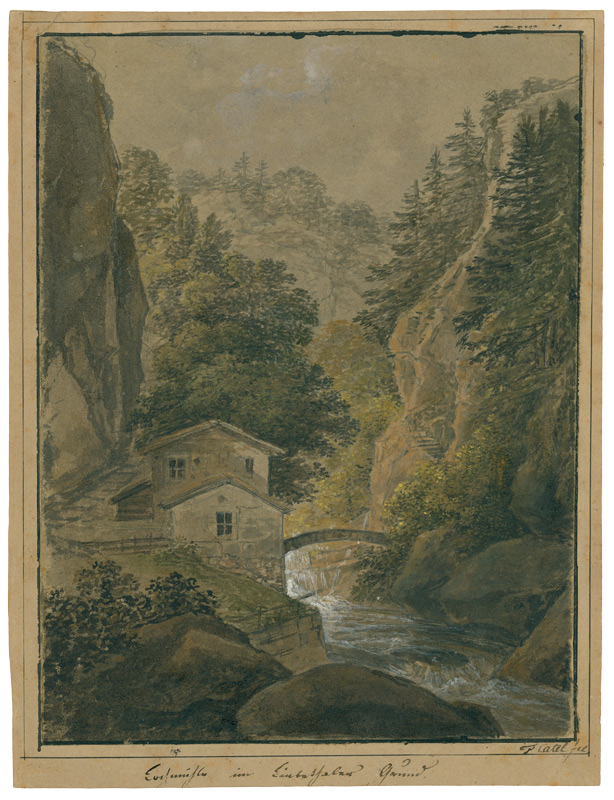
réf. 319-Eo.J. Aquarell, mit Deckweiß gehöht, über Bleistift, mit Eiweiß lasiert, auf bräunlichem Papier, auf Untersatz montiert und mit zwei Tuschlinien etwas unregelmäßig umrandet, hier rechts unten signiert ?F Catel fec?, mittig betitelt ?Lochmühle im Liebethaler Grund?. 22,8:17,2 cm. Provenienz: Sammlung Hans Geller, verso auf dem Untersatz mit dem Stempel des Kupferstichkabinetts Dresden mit dem Vermerk: ausgeschieden am 13.11.1991; Katalog: Sammlung Hans Geller, S. Billesberger, Mosinning/München 1992, Kat. Nr. 24; Süddeutscher Privatbesitz. Literatur: Ausst. Katalog: A. Stolzenburg: Der Landschafts- und Genremaler Franz Ludwig Catel (1778-1856), Rom, Casa di Goethe, 2007, S. 16 (hier wird unsere Zeichnung erwähnt), Anmerkungen 38.
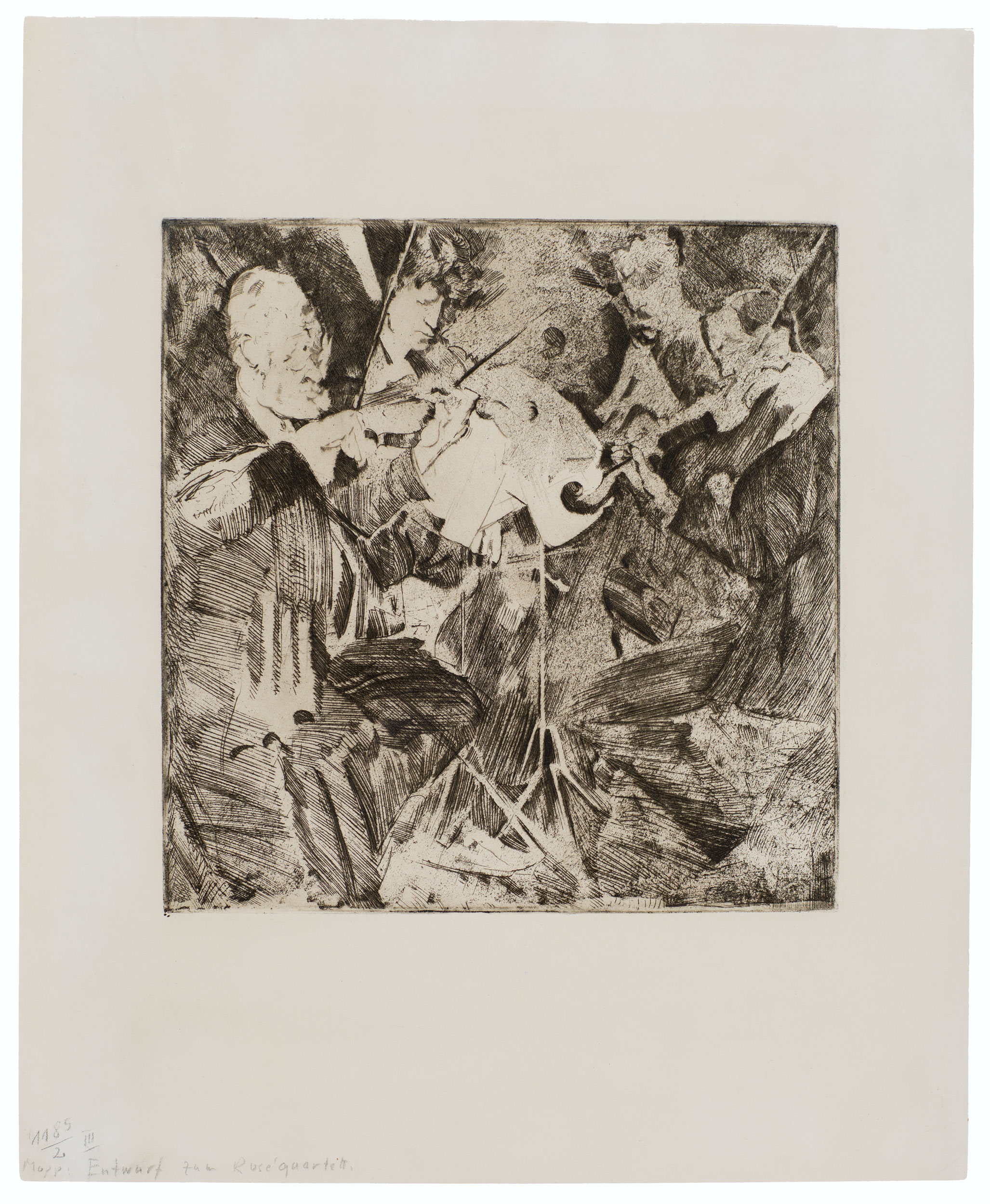
réf. EN-054o.J. Kaltnadelradierung, 1932, auf festem Velin. Darstellungsgröße 23,7:23,1 cm, Blattgröße 40:32,7 cm. Probedruck, vor zahlreichen Ergänzungen, der größeren, unsignierten Auflage des Blattes, die mit typographischem Aufdruck der ?Graphische Künste, Wien? erschien. Literatur: Nicht mehr bei Stix/Osborn; vgl. Papst 69. Das Rosé-Quartett setzte sich in dieser Zeit zusammen aus: Arnold Rosé (1882-1945) Violine; Paul Fischer (1905-1938) Violine; Anton Walter (1883-1950) Violincello; Anton Rusitzka (1901-1929) Viola. Musik und Musiker waren für Oppenheimer eine ständige Quelle der Inspiration. Er verbindet in dieser Radierung kubistische Technik mit expressionistischer Kraft.
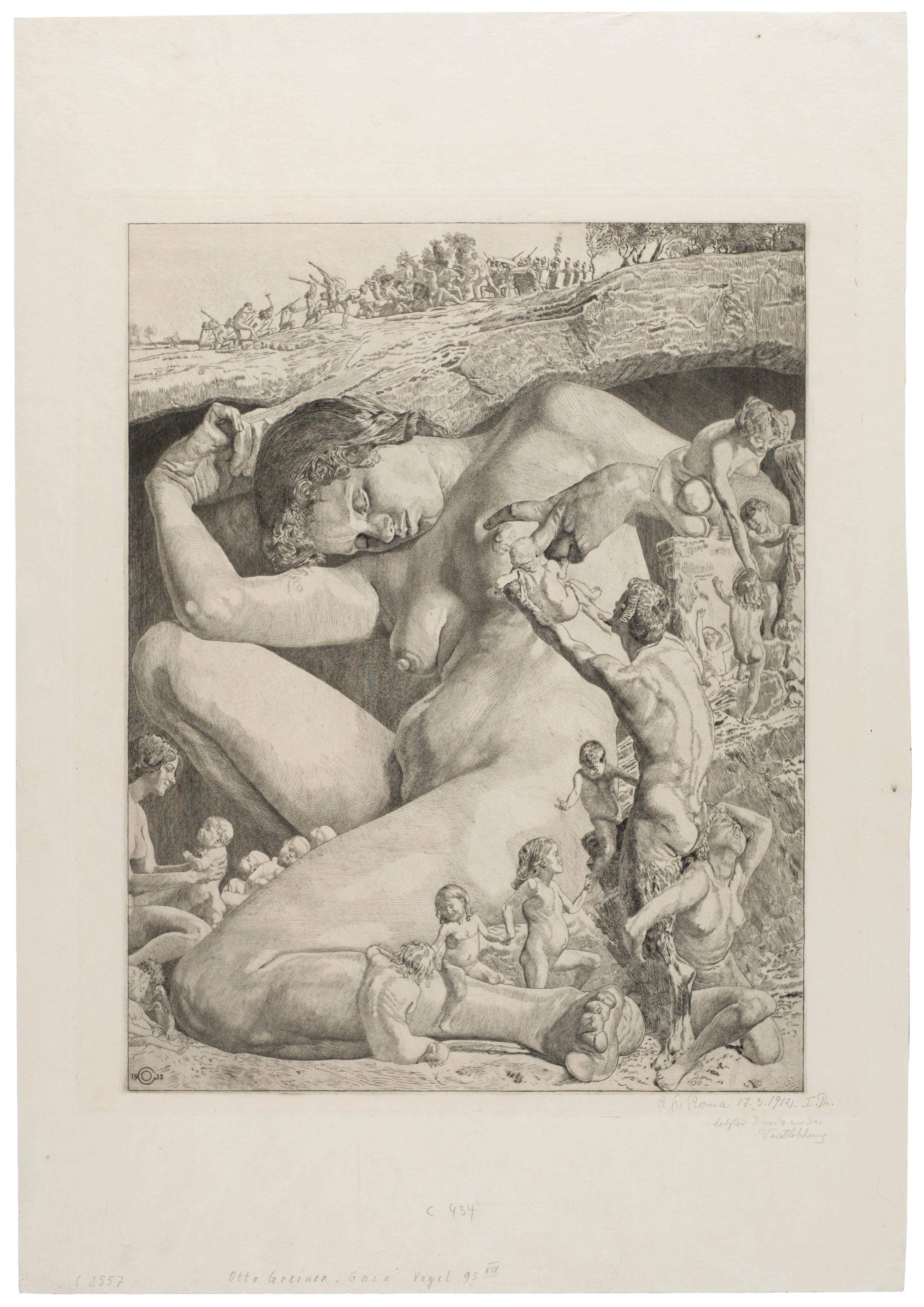
réf. 0937-Co.J. Radierung und Kupferstich, 1912, auf chamoisfarbenem Japan, mit Bleistift monogrammiert, bezeichnet und datiert ?O. Gr. Roma 17.3.1912. I. Dr. / letzter Druck vor der Verstählung?. Plattengröße 41,68:35,5 cm, Blattgröße 57,7:40,1 cm. Literatur: Vogel 93 B XIX. ? Abdruck des vollendeten Zustandes mit der Jahreszahl 1912.- Hauptblatt des Künstlers! Für die Frucht fünfjähriger Arbeit wurde schon bei Erscheinen 1.000.-- Mark ausgegeben (vgl. H.W. Singer, Moderne Graphik. 2. Aufl. Leipzig 1920, S. 160). [2 Warenabbildungen]
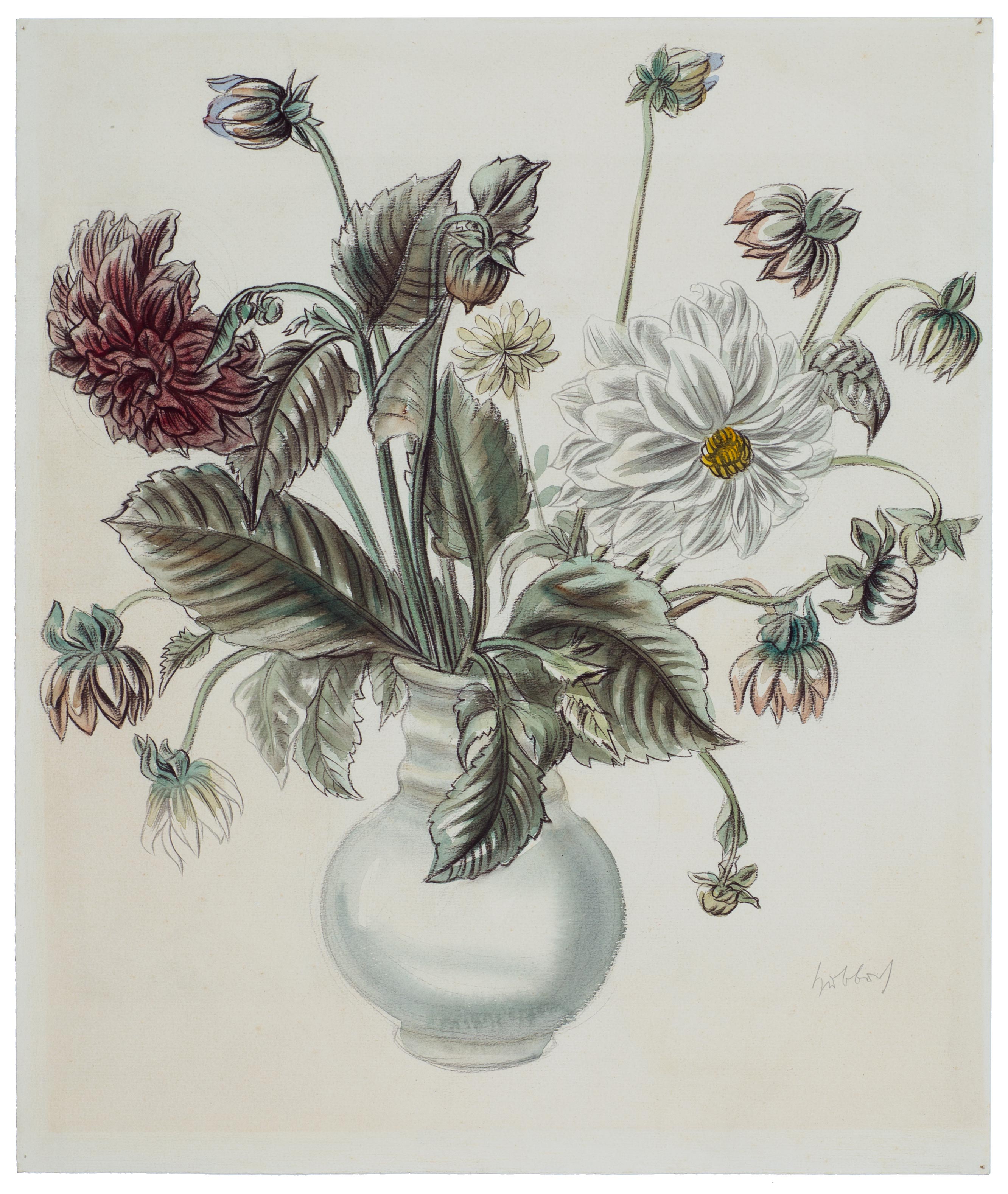
réf. EN-149o.J. Aquarell über Bleistift, auf festem strukturiertem Papier, mit Bleistift signiert ?Hubbuch?. 50,5:42,5 cm. Im Passepartoutausschnitt minimal gebräunt, sowie Nadelspuren in den Ecken. - Literatur: vgl. Ausstellungskatalog: Karl Hubbuch 1891-1979. Karlsruhe, Badischer Kunstverein, 1981, Abb. S. 30 oben (dort Zeichnung in farbiger Kreide ?Margeriten und Löwenmaul? von 1941/45; 59,5 x 40 cm).
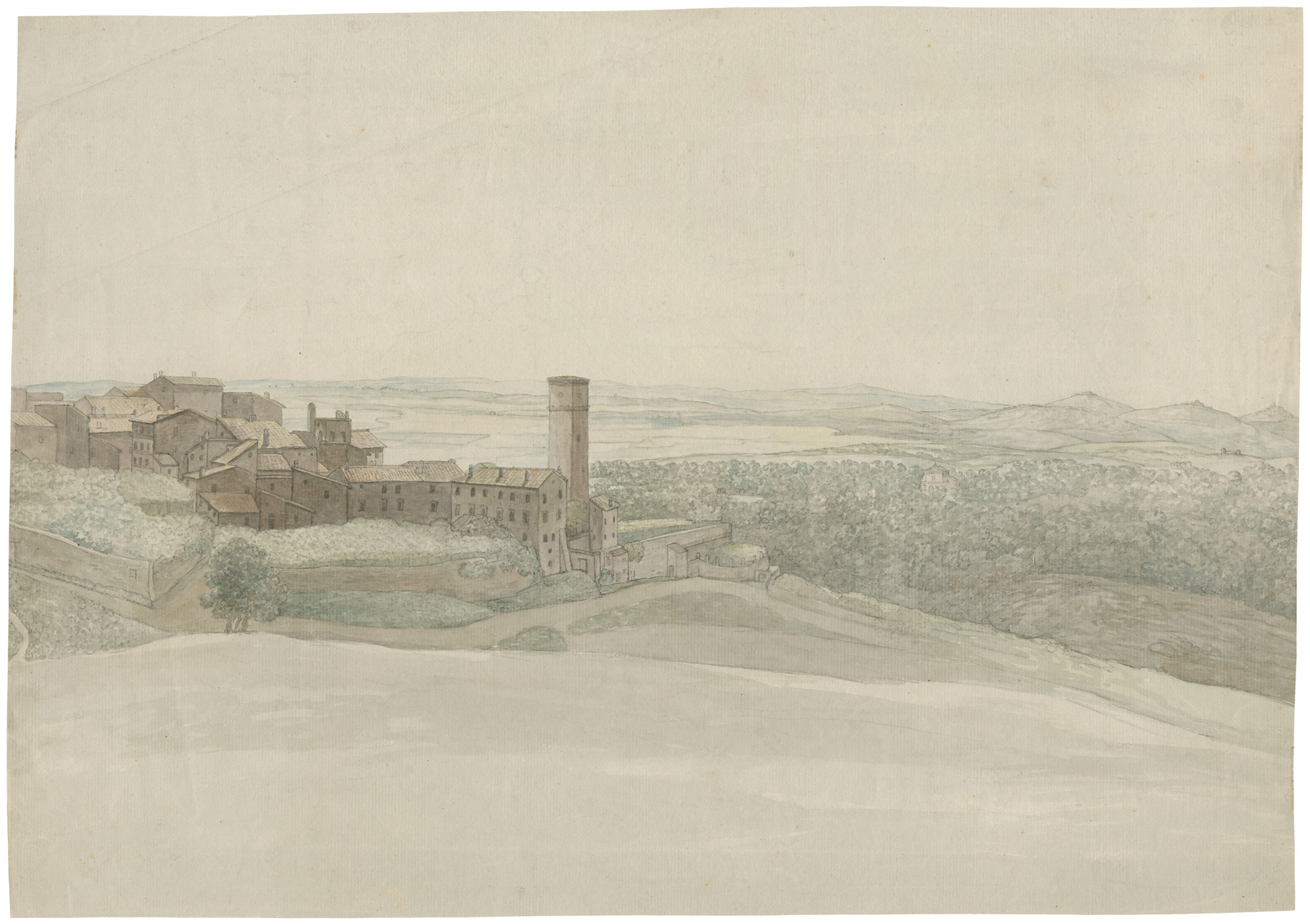
réf. 123-Io.J. Aquarellierte Bleistiftzeichnung, auf Bütten mit Wasserzeichen: J Honig & Zoonen, verso mit Bleistift bezeichnet ?Franz Horny?. 42,7:60,3 cm. ? Zwei Knickfalten in der linken oberen Ecke geglättet, oben mittig leichter brauner Fleck schwach sichtbar (abgelöster Tesafilm). Mit seiner 1796-1799 entstandenen Ölstudie (Größe 28:41 cm), hat der Maler einen nahezu identischen Landschaftsausschnitt gewählt, wobei der gewählte Standpunkt weiter links war und dadurch einige Häuser von Olevano sichtbar werden, wogegen die Mauer und der angeschnittene Baum rechts fehlen. Dafür reicht der Blick in die Campagna weiter. (Vgl. Ausst. Katalog: Johann Martin von Rohden 1778-1868. Hrsg. von M. Heinz. Kassel/Wuppertal, 2000/2001, Nr. 6 mit farb. Abb. S. 51). Wie bei von Rohden öfter zu beobachten, fehlt auch bei unserer Zeichnung die Vordergrundausführung. Die Behandlung der Bäume entspricht ganz und gar seinem Zeichenstil, wie man ihn in den Landschafts- und Baumstudien findet.