506 risultati
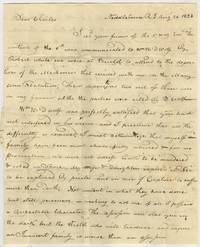
1823rif. BK0184Middletown Rhode Island 1823. Autograph letter signed three pages on a folded sheet with integral address panel to Charles E. Dudley in Albany and Newport postal markings. 7 ¾ x 9 ¾ inches. Old folds scattered staining and some marginal losses a few affecting text. Good to very good. A letter from Newport mariner John Wood concerning his acrimonious departure from the DeWolf family's Mary Ann plantation in Cuba and the ensuing legal dispute with James DeWolf and Charles Collins. Wood was almost certainly the same John Wood whose signature appears on an 1806 Newport agreement for an illegal voyage transporting enslaved Africans from Cape Coast to Havana now held by the Smithsonian's National Museum of African American History and Culture.1 By 1823 he was residing on the Mary Ann plantation one of several Cuban estates belonging to the DeWolfs among the most prominent families involved in the American slave trade. His relationship with DeWolf and Collins had evidently collapsed over his obligations on the estate resulting in what he describes as his forced departure from Cuba under apparently dangerous conditions with his family and a contentious effort to settle their accounts. Writing to his friend Charles E. Dudley then mayor of Albany and a New York state senator Wood reports that three mechanics who had resided with him on the plantation had recently given depositions in Bristol Rhode Island. Two of the three had testified in his favor though all had been called by DeWolf. Wood was particularly incensed by the circumstances surrounding his family's departure from Cuba writing: "I must acknowledge that myself & family have been most shamefully abused & for no provocation we were set adrift liable to be murdered & robbed on Shore My Wife & Daughter exposed at Sea to be captured By pirates and in case of Capture to suffer more than Death; Not content in what they have done but still persevere in wishing to rob me of all I possess a Respectable Character. The assassin will stab you in the dark but the Wretch who will traduce and injure an Innocent family is worse than an assassin." Wood goes on to describe receiving two writs from DeWolf and Collins and transcribes an August 8 letter from James DeWolf explaining his decision to pursue legal action despite their previous discussions of an amicable settlement: "Lest you should think me inconsistent in causing an action to be brought after the last conversation we had I take leave to explain my wishes to come to an amicable settlement by referring to men as we talked remains the same my object is to put the business in a legal and proper train for bringing it to a close . & to enable me to avail of the testimony of the people who were on the Estate with you." Wood expected the Rhode Island Supreme Court meeting at Bristol the following month to appoint referees to settle the accounts. The precise origin of the disagreement is not stated though the depositions of the mechanics and the references to outstanding accounts suggest a dispute over Wood's contractual obligations or activities on the plantation. Wood 1770-1826 was a Newport merchant and captain with longstanding connections to Atlantic commerce. He died at Cape Coast West Africa in 1826 three years after writing the present letter. James DeWolf 1764-1837 then serving in the United States Senate had amassed a substantial fortune through the slave trade and his Cuban plantation interests. Charles Collins his brother-in-law had served as collector of customs at Bristol from 1804 to 1820 an appointment closely connected to the family's slave-trading operations. The Mary Ann plantation is documented in the DeWolf Papers at the Rhode Island Historical Society which include inventories from 1818 and 1820 and contemporary plans of the plantation grounds. The present letter preserves Wood's account of his treatment by the DeWolf family together with his transcription of DeWolf's explanation for pursuing legal action. 1 "Agreement facilitating illegal trade of enslaved Africans" National Museum of African American History & Culture accessed October 12 2026 https://nmaahc.si.edu/object/nmaahc_2019.28.1. . unknown books
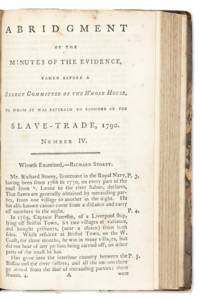
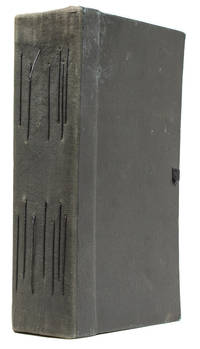
1789rif. 187101789. Committee of the Whole House of the British Parliament investigation into the Atlantic slave trade recorded in Abridgment of the Minutes of the Evidence Taken Before a Committee of the Whole House to Whom It Was Referred to Consider of the Slave Trade published 1789 to 1791 presenting one of the earliest parliamentary documentary compilations addressing the operation and human consequences of the transatlantic slave trade. The volumes preserve testimony gathered during parliamentary inquiries that examined the practices of British slave traders and the treatment of enslaved Africans transported across the Atlantic. These proceedings formed part of the political campaign in Britain that eventually culminated in the abolition of the British slave trade in 1807. The collected evidence includes statements from ship surgeons naval officers merchants and other witnesses whose accounts describe the conditions experienced by enslaved Africans during capture transport and plantation labor. Abridgment of the Minutes of the Evidence Taken Before a Committee of the Whole House To Whom It Was Referred to Consider of the Slave Trade. London: 1789-1791. First edition first printing. Four volumes bound in two books. The compilation reproduces testimony presented before Parliament concerning the organization and operation of the slave trade and includes firsthand statements describing the physical suffering and resistance of enslaved Africans during transport. Surgeon Alexander Falcon-Bridge who had firsthand experience aboard slave ships described acts of despair among captives: he "Has known several enslaved persons to refuse sustenance with a design to starve themselves. refusing to take medicines when sick because they wished to die. Many other slaves expressed the same." Another witness Royal Navy surgeon Thomas Trotter recorded the emotional trauma experienced by captives during embarkation noting that "Slaves on being brought on board showed signs of extreme distress and despair from a feeling of their situation and regret at being torn from friends and connections." The volumes therefore preserve testimony that exposed the violence and human suffering embedded within the Atlantic slave trading system. During the eighteenth century European and American traders transported millions of Africans across the Atlantic through a commercial system that relied on maritime networks linking West Africa the Caribbean and the Americas. Parliamentary investigations of the slave trade in the late eighteenth century were fueled in part by abolitionist activism and public campaigns demanding government inquiry into the practice. Publications of witness testimony such as this abridged parliamentary record circulated evidence used by reformers advocating the end of the trade. Four volumes bound in two books with folding table in the fourth volume. Octavo format. Contemporary marbled quarter calf bindings with modern bookplates on the front past down. Wear present with most spine titles lacking and foxing primarily affecting the title pages; text remains clear. Overall condition very good. unknown books
1915rif. 10258Various places 1915. Twenty-six trade cards all illustrated with portraits of the proprietors some with real photo illustrations. Various sizes largest 16.5 x 15.5 cm. some printed both sides. The businesses include restaurants cafes a grocer an oyster house a fruit house lunch counter confectionery & ice cream fish and canned goods a hotel with fishing parties a "Schlitz Forum & Cafe" a beer bottler a nurseryman wine & liquor shop a saloon a buffet and short order lunch counter a chop house a summer garden dining hall and candy shop. Boston Mass. Brooklyn N.Y. Iowa New Orleans Vermont Providence Rhode Island Springfield Ill. New Bedford Mass. Bainbridge Bradford & Walnutport Penn. Iowa Rochester Rensselaer & Syracuse N.Y. Philadelphia Two Rivers Wisc. Lake Mills Wisc. Metamora Ill. Toledo Ohio and others. Condition varies but most are very good or better. unknown books
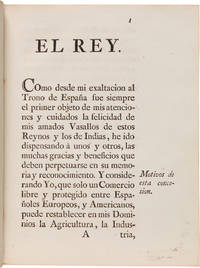
1778rif. 37240Madrid: Pedro Marin 1778. Commercial Policy in Spanish America Detailed rules and regulations governing Spain's late 18th-century commercial policy in Latin America with a preliminary section of nineteen pages providing a summary of the articles and tariffs documented in the main portion of the text. With this REGLAMENTO. the Crown terminated Cadiz and Seville's monopoly of trade with Spanish America allowing other cities of the realm to participate. In addition to much information on commerce and numerous tariffs on a large variety of Spanish and American goods several sections discuss shipping ports and other maritime activities directly related to commercial activity. The work also includes the text of concessions granted to Louisiana. Quarto. Contemporary mottled calf spine gilt extra. Light shelf wear corners rubbed. Contemporary ownership inscription on titlepage modern bookplate on front pastedown clipped booksellers' descriptions pasted to front free endpaper. Text quite clean. Very good plus. PALAU 255843. SABIN 68890. MEDINA BHA 4845. unknown books
1801rif. 56123Great Britain. ca. 1801-1807. British Essay on the Importance of American Trade During the Napoleonic Wars An interesting but unattributed and apparently unpublished manuscript essay with a caption title reading: "Loose Memo. Respectg. American Commerce." The gist of the memo is set forth in the first sentence: "The Americans are at all times the best customers of G.B. - in peace they take 1/3 of her manufactured exports - in War much more." In addition to the eager American market for British goods the author notes that British goods are often trans-shipped via America to other markets where Great Britain would not normally have access thanks to America's neutral status: ".you have only to change the name of the manufacturer & the wants of the Colonists will shut their eyes on the origin of the fabric. I have known Liverpool ware ornamented with the Portrait of Geo. III passed as German manufactures." The author notes that while the understandable economic downturn during the Revolution and for several years after the "peace of '83" resulted in some problematic credit relations between the U.S. and the British market much has changed. "The industry & the enterprise of our countrymen aided no doubt by the enjoyment of a neutral position has enabled them to throw off their dependence on the British merchant or manufacturer. They now have a sufficient capital of their own and a very important proportion of their imports are now paid for in ready money or in bills at short sight." The author explains that American merchants are able to export their surpluses of their own production and surplus British goods to the Continental market and transfer that money directly to creditors in Great Britain with an added perk: "The result of this species of trade must be ruinous to France. She is drained of her wealth to enrich & invigorate her enemy." Finally the author provides a specific example of this favored trading relationship with regard cotton. At this time the author estimates that Great Britain imports three-fifths of all cotton from the United States - some 150000 bags of cotton annually weighing 250lbs. each. The U.S. buys back nearly one-third of all cotton goods manufactured in Great Britain yielding a net profit of over £2.5 million to Great Britain. The author adds that this ratio holds for almost all raw materials produced in the United States. This essay was almost certainly written during the earlier part of the Napoleonic Wars; the author cites an 1801 speech by Lord Grenville which helps narrow the date range and it seems unlikely the Embargo Act of 1807 had been passed yet. Regardless the essay promotes Anglo-American trade and cooperation at least insofar as it enriches Britain and cripples France at a time when other forces were driving the two countries toward war. Light tanning and soiling occasional ink smudges. Very good. unknown books
1762rif. 2191Cadiz: Don Manuel Esoinosa de los Monteros 1762. Hardcover. Very Good. 4to - over 9¾ - 12" tall. 4to. 20.5 x 14 cm 158 pp. 1 f. index. With woodcut head- and tail-pieces blazon of Charles III and two Spanish galleons. Bound in mottled calf over boards spine gilt in six decorative compartments. Somewhat worn at extremities. Generally very good. First enlarged edition of an illustrated merchant's guide to the duties and tariffs levied by the Spanish crown on exports from the Americas chiefly gold and silver but also concerning timber textiles furs coffee spices and foodstuffs.After first offering a general overview of Spanish colonial commerce with Western Europe Garcia de Prado provides a wide range of practical instructions for traders negotiating the hazardous waters of colonial finance giving sample calculations for the volume of shipping containers converting currency and-crucially-providing a comprehensive alphabetical list of the royal tariffs on exports from America and the West Indies printed as a table for quick reference in terms of maravedis de plata silver coins of account and quintales approx. 46 kg. The second half of the work is concerned with trade in gold and silver explaining the six classes of government tariffs and their application to quintales of the metals in their various states acuñada labrada grana fina etc. Printed at the Royal Navy Office in Cadiz where Spanish shipping vessels would have arrived from the Americas the present work anticipates later efforts by the Spanish Bourbons-particularly Charles III and the Marquis de Esquilache-to reform the fiscal administration of its colonial properties. Garcia de Prado remarks in his introduction that a much smaller work un Quaderno with the same title was printed in 1745 and that the present work aims to augment and update the information contained therein. JCB.III.1320; Medina 3999; Palau 58415; Sabin 15037 Don Manuel Esoinosa de los Monteros hardcover books
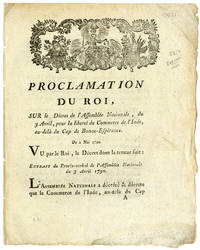
1790rif. 51521Rouen: L. Oursel 1790. With a Partially-Printed Letter Transmitting the French Revolutionary Proclamation Proclamation by the Revolutionary government of France abolishing the monopoly of the French East India Company on trade beyond the Cape of Good Hope and declaring it open to all Frenchmen. The Compagnie des Indes Orientales was established in 1664 to compete with the British and Dutch East India companies. It had considerable difficulty maintaining itself financially through its long history and it was finally liquidated in 1769. In 1785 it was reconstituted and granted a seven-year monopoly on trade beyond the Cape of Good Hope but the French Revolution and the democratic zeal that accompanied it put an end to that with the present decree. The brief proclamation is accompanied by a transmittal form from the Bureau Intermediane du Departement de Montivilliers indicating that one copy of the proclamation was sent to the recipient. Quarto on a folded folio sheet. Light wear and soiling. Very good. unknown books
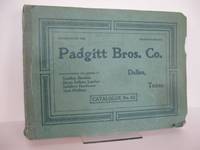
1917rif. 57734Dallas TX: printed by Egan Printing Co. for the company 1917. Trade catalogue. Oblong 4to. 526 pp. Frontispiece trademark illustration and numerous other illustrations from line drawings and photographs. Padgitt Brothers Company was established in 1869 and incorporated in 1900; the company's success "in supplying the needs of the saddlery trade of the Southwest gave them first-hand knowledge of materials and design that were recognized as standard wherever good goods are sold." Their catalogues were "a veritable encyclopedia of saddlery facts classified for your convenience . there is no reason why this book should not prove a 'silent partner' in the success of every dealer who will utilize its pages freely." The profusely illustrated catalogue with pricing information is organized into sections for saddles and varieties of tack down to spurs buckles hobbles canvas wagon covers buggy tops blankets and feedbags. The Padgitt "Bronco Brand" saddle and accessories were widely known throughout the Southwest. OCLC locates two copies of this number National Cowboy & Western Heritage Museum San Jacinto Museum of History. Owner's name on front wrapper a very good copy. Printed green wrappers original printed cloth tape spine some soiling and chipping to wrappers tape repair to verso of rear wrapper chipping to margin of final blank. #6216. (printed by Egan Printing Co., for the company) unknown books
1900rif. 263502Lyon France: J. Bouvard & Cie 20 Rue Lafont 1900. 14 thick card sheets with samples centrally mounted vertically to recto and verso some sheets quite thick to accommodate larger epaulets each with manuscript notations of name size etc. 11-3/4 x 6-3/4 inches. Black cloth album with the printed label of "J. Bouvard et Cie Fabrique de Dorures Soireries Ornaments d'Eglise" to front paste-down. Some wear commensurate with age and use spotting and thumbsoiling apparently complete with all samples backing possibly restored at an early date. 14 thick card sheets with samples centrally mounted vertically to recto and verso some sheets quite thick to accommodate larger epaulets each with manuscript notations of name size etc. 11-3/4 x 6-3/4 inches. This very unusual French sample book contains a large range of epaulets and sequin samples with a few lettering and star samples. J. Bouvard & Cie 20, Rue Lafont unknown books
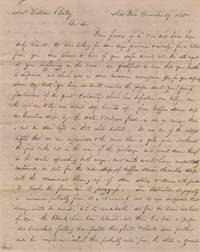
1835rif. BK0025New York City 1835. Autograph letter signed by the merchant firm Baker & Moore 4 pp. addressed to General William Battey care of Dr. Charles Luzenberg at the Franklin Infirmary on the Pontchartrain Railroad New Orleans. Stampless folded letter with red circular "NEW-YORK" December 31 datestamp and manuscript "25" rate. Appx. 1000 words. File folds; otherwise very good. A lengthy commercial letter written thirteen days after the Great Fire of New York describing the destruction of the city's mercantile district and tracing its immediate effects through insurance capital banking commodity prices and trade with New Orleans. Written by the New York firm of Baker & Moore to their associate William Battey the letter provides a near-contemporary account of the fire an assessment of the city's financial resilience and instructions for exploiting the resulting fluctuations in the markets for brandy wine raisins tobacco iron and copper. The fire began on the evening of December 16 during an extraordinary cold spell and northwest gale. Frozen hydrants wells cisterns and hoses left the city's volunteer fire companies largely unable to contain it. By the following day the fire had destroyed much of the commercial district between Wall Street and the East River including the Merchants' Exchange and hundreds of stores and warehouses. Buildings were eventually demolished with gunpowder to create firebreaks at Exchange Place and Coenties Slip. Contemporary estimates varied but approximately 674 buildings were destroyed with losses eventually placed at twenty million dollars or more.1 Baker & Moore begin by describing the extent of the burned district the severe weather and the use of explosives to arrest the flames: "Since my last you have no doubt received the paper sent you giving particulars of the great calamity which has befallen our City. On the 16th our City was about half burned up. From Coffee House Slip to Coenties Slip by the water & William Street is all in ruins. There is but one store left in that whole district. It was one of the coldest nights that we ever experienced & the wind blew a gale from Northwest. The fire broke out in the rear of the Exchange and went down through to the water spreading both ways and would have undoubtedly continued on but for the wide slips of Coffee House & Coenties Slip with the occasional blowing up of some stores & houses with powder to check the flame in its progress" The account quickly turns from the physical destruction to the distribution of its financial losses: "The destruction of property is immense probably from 10 to 15000000$ and it was supposed that many would be ruined but tis remarkable so far we have not heard of one. The Banks have been liberal and there has been a proper and benevolent feeling manifested throughout & should some further aid be brought in which probably will from the State or general government we think there may be no failures. The Insurance companies most of them are ruined and the principal loss is in Insurance capital. The loss will in some instances fall upon those who cannot well afford it. Many widows & orphans have had their all taken from them. The loss is large and New York has met with a great calamity but she is made of such materials & her facilities are so large & varied that the mercantile community will bear up under more than any other place in the Union & we think in one year's time it will be almost forgotten." The confidence expressed here correctly anticipated the city's rapid commercial recovery. Banks and government agencies extended credit and payment terms rebuilding began almost immediately and the burned district was reconstructed with new countinghouses and warehouses. The disaster also exposed the inadequacy of New York's water supply and firefighting arrangements contributing to later infrastructure and institutional reforms. Baker & Moore then apply the disaster to their own trade with New Orleans. Hundreds of warehouses and their contents had been destroyed increasing prices of imported foods wines and spirits. The firm instructs Battey to use the New York price current to obtain higher prices for their consignments: "This fire has advanced most all kinds of goods. Raisins are worth here $3-$3½. Wines such as Mess. Eastman's have advanced with us 4-6 cents. So many hundred casks destroyed must advance it and make it higher through the season. More than one half the Brandy was consumed tis now selling at $1.75 and some are asking $2. We wish what we sent you sold & this will be a favorable time to sell-show N.Y. price current-and get as good a price as you can. There will we think be no want of Brandy. Those raisins we think you had better dispose of at once. We think from N.O. current must pay something handsome for us. In regard to old Iron we find good old iron will always sell for the money for 112½ gross hundred equal to 1c per lb. Cast & wrought are same price. If you can come across a lot to do you may make it answer & pay us well. Copper if you can buy low enough may pay something. We thought hay might pay out but tis so high we cannot buy to send. We are of opinion that goods generally will be higher in consequence of this fire yet when we consign goods we wish them sold when they can to pay and we wish Eastman & Co. to sell and close up our affairs in their hands." The concluding paragraph briefly introduces events in Florida. The Second Seminole War had begun that month following mounting resistance to the forced removal of the Seminole people from Florida. Baker & Moore believed that the conflict might affect the movements of a brig expected in New Orleans: "We observe that trouble is anticipated with the Indians in Florida & if so our Brig may not get a load of them & be in N. Orleans earlier than we anticipated tis uncertain what will be the result they may detain her longer until they can get them on board." The wording appears to indicate that the vessel was expected to transport a group of Native people although the letter does not identify the brig its owners or the precise circumstances of the contemplated voyage. The recipient General William Battey was then in New Orleans apparently acting as Baker & Moore's commercial representative while also attending to his health at the Franklin Infirmary. The firm gave him considerable discretion to supervise consignments collect funds purchase goods when opportunities arose and forward current market information to New York. The address places him in the care of Dr. Charles Aloysius Luzenberg who founded the Franklin Infirmary with municipal support in 1835 and subsequently helped establish the Medical College of Louisiana the forerunner of Tulane's medical school.2 Baker & Moore appear to have been commission or importing merchants whose own affairs escaped direct damage but whose trade was immediately altered by the destruction of competing inventories. The letter thus follows the fire from the burned commercial district into the decisions of a New York firm and its representative in New Orleans. A substantial contemporary account of the Great Fire of 1835 documenting the destruction of New York's commercial center and the disaster's immediate movement through insurance banking commodity markets interregional credit and trade with New Orleans. We find no similar examples on the secondary market or in auction records. 1 Herbert Asbury "The Great Fire of 1835" The New Yorker July 26 1930. 2 Louisiana Historical Association "Luzenberg Charles Aloysius" in Dictionary of Louisiana Biography accessed August 2 2026 https://www.lahistory.org/resources/dictionary-louisiana-biography/dictionary-of-louisiana-biography-l/. . unknown books
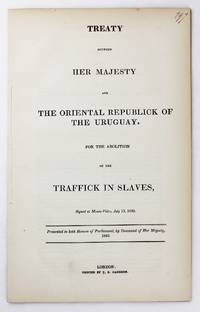
1842rif. 6316London: T.R. Harrison 1842. Near fine. 38pp. stitched. Very minor bumps to top edge of first leaf light dust-soiling to outer leaves. A very rare treaty between Queen Victoria’s Britain and the “Oriental Republick of the Uruguay” printed in both English and Spanish in two parallel columns throughout. According to the text the parties were “mutually animated by a sincere desire to co-operate for the utter extinction of the barbarous Traffick in Slaves.for the special purpose of immediately attaining this object so far as relates to the total and final abolition of the Slave Trade of the Oriental Republick of the Uruguay.” The treaty is comprised of fourteen original articles plus three annexes totaling forty-six additional articles and four additional articles at the end covering a host of issues pertaining to the suppression of the slave trade. These issues included enforcement procedures the establishment of “Mixed Courts of Justice” “Regulations in respect to treatments of liberated negroes” and much more. With regard to slaves found on international vessels the two nations hoped for “permanent good treatment and a full and complete emancipation according to the humane intentions of the Parties of the Treaty.” The present treaty was part of a larger effort by the British Crown to put an end to the transatlantic slave trade in the first half of the 19th century; at this same time Britain had reached terms on a similar treaty with the Republic of Texas and other nations. The document is signed at the end in type by J.H. Mandeville and Jose Ellauri representatives of the two countries who originally signed the treaty at Montevideo on July 13 1839; the present work was “Presented to both Houses of Parliament by Command of Her Majesty” in 1842 likely due to bureaucratic delays. Uruguay would have been an important ally for Great Britain in monitoring the seas against the transatlantic slave trade given its position opposite the South Atlantic Ocean from West Africa. OCLC records just a single physical copy of this treaty at the University of Arizona. Cundall 2854. T.R. Harrison unknown books
1920rif. 18053Frankfort NY ca1920. Leatherette string tied albums. . Very good; some wear to the leatherette bindings. Oblong 4to appx. 200 8 x 10 inch photographs. One volume with brief type written text descriptions of the machines on the verso of each photograph. A superb road construction machinery catalog illustrated with original 8 x 10 inch photographs. The catalog includes many different types of exotic equipment not normally depicted in such catalogs e.g. belt-hoists conveyors crushers roller screens scrapers etc. There are also occasional pencil notes on the verso with prices. Also included in the notes are some of the American locations where Acme equipment was in use. hardcover books
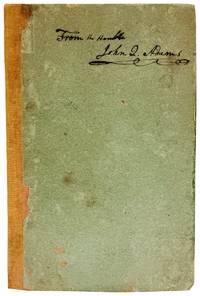
1826rif. 47522Washington DC: Gales & Seaton 1826. Very Good. Washington DC: Gales & Seaton 1826. First Edition. Octavo 22cm; original publisher's cloth over blue paper-covered boards; 77pp.; one fold-out plate. Collated complete. Boards rubbed with some spotting and dampstains; cloth on spine fraying. Front cloth joint splitting but holding; pages foxed; endpapers dampstained. Unidentified numerical ex-library stamp on top of p. 3 else free of institutional markings. Overall a Very Good copy. Inscribed on front cover: "From the Honble. John Q. Adams" who served as U.S. President at the time of publication and contributed the introductory comment published on p. 3. This inscription written on behalf of the President whose hand suffered from a tremor later in his career. Volume documenting the challenges the U.S. government faced trying to enforce an 1808 ban on the international slave trade which involved a complicated six-year-long case in which three American slave ships the Constitution the Louisa and the Merino were seized for transporting enslaved people between Havana Cuba Pensacola Florida and Mobile Alabama. More than 100 enslaved people were seized in the capture of the ships. At the conclusion of the case in 1825 only 65 of them were accounted for the others died escaped or were simply lost in the broader institution of slavery. The 65 remaining humans were sold at auction and the slave traders were not punished other than the financial loss of their ships and cargo. While the enforcement of the 1808 ban may have been a deterrent for some slave traders the National Archives estimates that 1.2 million slaves were brought into the U.S. illegally during the first half of the 19th century. Provenance: We have been unable to establish which library this came out of though we have checked each copy-specific description of the examples listed in OCLC none of which are described as being inscribed by or for Adams. The previous owner states that he purchased this copy from a Parisian dealer in the 1980s. References: "Traveling the Beaten Trail: Charles Tait's Charges to Federal Grand Juries 1822-1825" published in the Occasional Publications of the Bounds Law Library No. 8. Alabama Law Scholarly Commons 2013. National Archives and Records Administration Southeast Region Atlanta Shoemaker 27399. Gales & Seaton unknown books
1875rif. 20118New York: J L Mott Iron Works 1875 / 1877. First Editions. The catalog of 1875 is in its original printed limp black cloth gilt stamped publisher's binding; the Supplement is as issued - a printed title wrapper. Both contained within a custom made portfolio with cloth ties. Very good; neatly rebacked; occasional marginal tears; one endpaper with modest chipping at the fore-edge. Folio. 2 132 pp.; Supplement - 8 pp. The catalogs measure appx. 54 x 38 cm. Both are lavishly illustrated throughout; printed on glazed paper. A stunning large format catalog for all kinds of garden ornaments - for public and private use. There are also several pages for stable equipment lamps aquariums garden seating planters etc. Mott was a manufacturer of all kinds of metal goods and plumbing supplies. McKinstry citing only much later printings of smaller catalogs; Romaine p. 258 - citing a much later printing of this garden ornament catalog in the same large format as a "masterpiece". J L Mott Iron Works hardcover books
1875rif. 21027New York City: Rogers Brothers ca1875. Edition unknown. Original publisher's stamped three-quarter leather and green cloth. Very good; contemporary annotations throughout; one leaf cut down. 4to 40 thick card-stock leaves on linen stubs meas. appx. 260 x 204 mm. Photographs are deep robust albumen prints mounted both recto and verso. The volume bears the ink stamp of Koch & Bergfeld Bremen Germany on the corner of the front pastedown. Apparently a unique first iteration of an extensive inter-business trade catalog. The Rogers Company catalog are located in OCLC in one 16 page price list without illustration. Romaine adds to this but shows nothing that approaches the kind of catalog offered here. McKinstry offers nothing from the Winterthur collection. This elaborate photographically illustrated catalog was expensive and time consuming to produce and most likely had a limited distribution to jobbers for the Rogers Co. products. Each item in this catalog has a penned or printed in the photo stock number with pricing information in dollars. The company produced all manner of "electro-silver-plated" tableware; depicted in the photographs. In addition to daily utensils and serving dishes of all kinds e.g. cut glass cruits for every form of entertainment there are elaborate decorative centerpieces for table decoration. Rogers Brothers hardcover books
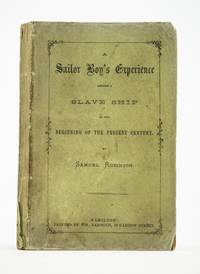
1867rif. ST20572Hamilton Scotland: W. Naismith 1867. FIRST EDITION. 168 x 106 mm. 6 1/2 x 4 1/4". vii 183 pp. In the very rare original green paper wrappers. Spine cocked wrappers somewhat soiled spine with paper beginning to lift along the bottom inch of the rear joint other minor exterior defects but the volume solid and internally in excellent condition. QUITE A GOOD COPY of a fragile inexpensively produced volume one would expect to find in shambles. Told in the form of letters drawn from the author's actual correspondence as well as his contemporary journals this first-hand account by a young sailor of the transatlantic slave trade in the years 1800-04 brings those horrific voyages vividly to life. At the same time the author writing in direct unvarnished prose makes it clear he is at least as much an observer of difficult sea life in general as he is concerned with the abolition of a great evil. In the preface Robinson 1786-1875 explains his reasons for publishing this record of his time aboard a slave ship: "I have heard so many gross misstatements respecting West Indian slavery and the horrors of the 'Middle Passage' that I formed the resolution should time be allowed me to give the result of my own experience . . . in order to disabuse the minds of many well-meaning people." He is rightly aware that some readers may be offended by unconvincing apology in an account encumbered with naïveté : "It is doubtless the opinion of many that I put myself into a wrong position and incurred blame and obloquy by entering into this obnoxious trade at all. It may be so; I will not dispute the matter. I certainly did not feel myself comfortable or at home in the service. But let it be remembered in my favour that the trade was then a lawful one; whilst at the same time I was induced to enter it by what is called an accidental circumstance . . . and an irresistible desire for a seafaring life so completely carried me away that it became a matter of perfect indifference to me where the ship went if not to the bottom provided I was aboard of her--or in what trade engaged if not a pirate." As indicated the letters originating in various ports in England West Africa and the West Indies depict a harsh life at sea for all involved but most especially for the wretches who made up the ship's cargo. An accident on board nearly cost Robinson his foot and ended his career at sea just a year before in his words "the united voice of a generous and philanthropic people" passed the Emancipation Bill into law ending British participation in the slave trade. The phrasing here makes it clear our narrator had his heart mostly in the right place. This is a very rare book which is not surprising for a pocket-sized work from a provincial press near Glasgow issued in insubstantial paper wrappers. OCLC records just two copies in libraries both in the UK while RBH and ABSA seem to list no copies at auction except the present one. W. Naismith unknown books
1930rif. 42850Leicester UK: Cascelloid 1930. Very good . Beautifully-produced trade catalogue from the Cascelloid "Palitoy" company displaying a wide range of baby dolls and other toys. Several uncomfortable designs of black children with pitch-dark skin date this catalogue at roughly the 1930s when the Cascelloid company was dubbed the "House of Constant Progress" by the industry press for its material innovations with the plastics Bexoid and Plastex. One page features a celluoid model by the noted designer Mary Lucie Attwell a doll named "Diddums." The catalogue also displays the company's offerings of animal dolls die-cast trucks pool toys golf and ping-pong sets rattles pinwheels and more. Needless to say color photography was not the norm at this time and this catalogue comprises a beautiful set of vivid and sharp photographic prints. A truly exceptional example unlike anything we've seen: simultaneously surreal and nostalgic. Oblong 4to. album. Blue leather-covered boards. Contains 29 color photographs all 9" by 6.5" approx. mounted on rectos one each of light-gray cardboard leaves. About very good plus overall. Moderate rubbing and edgewear to boards. Several pages display mild soiling and offsetting from photos. Prints just a bit yellowed but remain sharp vivid and clean. [Cascelloid] unknown books
1930rif. 42850Leicester UK: Cascelloid 1930. Very good . Beautifully-produced trade catalogue from the Cascelloid "Palitoy" company displaying a wide range of baby dolls and other toys. Several uncomfortable designs of black children with pitch-dark skin date this catalogue at roughly the 1930s when the Cascelloid company was dubbed the "House of Constant Progress" by the industry press for its material innovations with the plastics Bexoid and Plastex. One page features a celluoid model by the noted designer Mary Lucie Attwell a doll named "Diddums." The catalogue also displays the company's offerings of animal dolls die-cast trucks pool toys golf and ping-pong sets rattles pinwheels and more. Needless to say color photography was not the norm at this time and this catalogue comprises a beautiful set of vivid and sharp photographic prints. A truly exceptional example unlike anything we've seen: simultaneously surreal and nostalgic. Oblong 4to. album. Blue leather-covered boards. Contains 29 color photographs all 9" by 6.5" approx. mounted on rectos one each of light-gray cardboard leaves. About very good plus overall. Moderate rubbing and edgewear to boards. Several pages display mild soiling and offsetting from photos. Prints just a bit yellowed but remain sharp vivid and clean. [Cascelloid] hardcover books
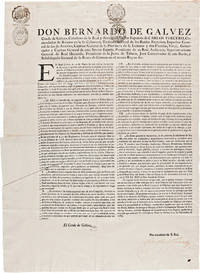
1785rif. 57874Mexico. November 22 1785. Announcing the Compañia Real de Filipinas Regulating Trade with the Philippines A very rare Mexico City printing of the announcement of the creation of the Royal Company of the Philippines by Spanish royal decree in 1785 which regulated and effectively monopolized trade with the Philippines. This copy bears the manuscript rubric of Don Bernardo de Gálvez and signature of his secretary Joseph de Gorraes. Gálvez then Viceroy of New Spain ordered this broadside printed for the reason that "An Establishment so important and of such general interest should be understood and known by all" our translation. The creation of the Royal Company would be particularly relevant to residents of Mexico as most if not all of the trade with the Philippines would come through New Spain. Accompanying the announcement this broadside also prints Articles 1 2 14 21 and 100 of the royal decree which were considered to effectively summarize the purpose and mechanics of the new Company. The articles printed here proclaim that the Company is to enjoy the protection of the Crown for at least twenty-five years establish a fund to back its shares describe how shares and subscriptions could be purchased and organize a general meeting of shareholders. Notably absent from this broadside is the important article of the decree which closed Manila's ports to foreign vessels giving the Company an effective monopoly on all trade between Asia and the Americas. The Royal Company of the Philippines quickly gained vast wealth from this lucrative deal transporting commodities such as indigo coffee sugar spices and cotton across the Pacific. Regardless of its initial success the Company did not endure - the wave of rebellions against Spanish rule in Central and South America in the early 19th century quickly rendered it obsolete and the company was officially dissolved in 1834. A rare broadside announcing this important Royal Decree to the people of the Western Hemisphere; OCLC records only one copy at the Bancroft Library. Broadside printed on two joined sheets of sealed paper 23½ x 17 inches in total. Old folds and light creases a few small worm holes. Very good. OCLC 21747301. unknown books
1939rif. 1729691939. INK TRADE CATALOGUE. Kraski. Trest 'Poligraf'. 173 unnumbered leaves of text and illustrations. Vertical 4to 265 x 175 mm publisher's cloth fastened with string. Moscow: Nauchno-issledovatel'skii institut poligraficheskoi i izdatel'skoi tekhniki 1939. The State Trust of the All-Union Economic Council of National Economy "Poligraf" existed since 1924 and produced movable types. They also produced printing inks. In this sample book they are divided by the techniques they were intended for: movable-type printing lithography offset lithography mezzotint. The samples are on different kinds of papers to show the differences for printing. At the end is an overview of complementary mixtures and drying oils including fatty printing pastes to increase the capacity of printed forms. One of 300 copies only. Of the greatest rarity and not listed on OCLC. hardcover books
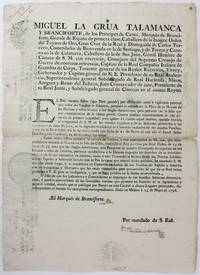
1796rif. 5074Mexico City: May 13 1796. About very good. Broadside 17 x 12.25 inches. Old fold lines. Slight separation and loss at center fold slightly affecting a few letters. Minor wear else. Proclamation made by the Viceroy of New Spain authorizing trade between Cuba and the United States. The Caribbean was in tumult in the 1790s with Toussaint L'Ouverture overthrowing the French colonial government and outlawing slavery. Likewise in Cuba there was a similar revolt against slavery demanding abolition and equality -- both revolutions were of substantial concern to slaveholders in the American South. Specifically the present decree mentions flour and other vital foodstuffs as a measure against shortages in Cuba intended to prevent further trouble. "Para precaver la escasez de viveres y con especialidad de harinas que verosimilmente causaria la guerra concedio El Rey Permiso por Real Orden de 25 Junio de 93. para que los Anglo-Americanos.pudiesen conducirlos a la Havana pagando los derechos los puertos habilitados de España." The Viceroy at the time was Don Miguel de la Grua Talamanca de Carini y Branciforte First Marques de Branciforte. The Marques was notoriously corrupt even for colonial Spain having gained position through marriage to the Prime Minister's sister. He made sure to make some profit on everything that passed through his hands including taking advantage of the war in Cuba to remove the French from their lands and sell them to his benefit. A rare and interesting decree. We locate a single copy in OCLC at the University of Minnesota. May 13 unknown books
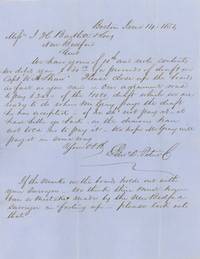
1855rif. List3333Massachusetts New York Maine Pennsylvania and others 1855. Fifty letters with four empty envelopes or covers. Forty-four letters addressed to I.H. Bartlett & Sons: two from the 1830s eight from the 1840s and thirty-four from the 1850s. With five letters addressed to Capt. John C. Blanchard 1838 1839 1844 and 1849 and one to Cumston & Hatch N.d. Overall excellent to Near Fine. Ivory Hovey Bartlett 1794–1871 was a merchant and whale oil seller based in New Bedford Massachusetts. Bartlett moved to New Bedford from Plymouth in 1819 first dealing in grain and later transitioning to general merchandise and whaling.1 Whale oil and spermaceti were widely used in lamps and as lubricant and whalebone baleen was used for structure in items like umbrellas and corsets. In the nineteenth century whaling was the basis of New Bedford’s economy—supporting shipbuilding refineries toolworks and more—making it the wealthiest city in North America at the peak of the industry in the midcentury. Whaling declined in the 1860s with the rise of petroleum which could be both used as a lubricant and distilled into kerosene for lighting. Offered here is a collection of letters mainly to Bartlett’s company I.H. Bartlett & Sons with five to Captain John C. Blanchard of Searsport Maine and one to Cumston & Hatch. The latter is unknown; Blanchard was in the cotton and sugar trades sailing between the US Europe and West Indies. Letters to Bartlett are mainly from other mercantile firms; they pay bills make purchases discuss oil prices and occasionally complain. For instance Robert Robinson of Portland Maine writes: “I have just got 4 Casks of my oil 3 of the last and 1 of the invoice of 30th ult. I cannot understand why my oil should be keep back in this way. Hyde had seven casks by yesterdays Boat the same boat which mine came by it seem’s as if the fates where against this Oil as yesterday boat did not arrive untill late yesterday afternoon and this mornings boat has arrived without the balance there must be something wrong somewhere . I must say I think such neglect should be made known but perhaps it would be better to suffer for fear of the future. I shall not be able to get off any oil untill tomorrow as the oil was not out of the boat untill this morning. it is not thirteen days since that one cask left New Bedford .”. October 13 1852 Most of Bartlett’s customers buy whale oil though beef molasses and coal are also discussed but some are interested in whalebone; as are Wright Bros & Co a Philadelphian umbrella manufacturer who write to complain about market speculation: “The fact appears to us that speculation and the calculation of holders put the price kept it so high that it considerably lessened consumption – so much so of late that some have been disposed to slide it off below New Bedford rates very quietly.” October 23 1852 The letters to all parties are generally all business except for two of the five to John Blanchard: one from his wife Caroline Houston and one from fellow Searsport captain David Nickels Jr. 1823–1888 who writes from Bangor: “I see by to day’s Mercantile gazette that you are in trouble I can sympathize with you God knows I have had a good share of it since I left the land of Gospel light and liberty as the good people say in their prayers I have been in this place fifteen days you doubtless knew I was chartered by Capt Pendleton to go from Leith to Bangor for a cargo of slates and from here to Boston I sailed from Leith on the 27th of November last for this place I got as far as the Orkney Islands on the 30th of November the wind blowing heavy from the westward and having a pilot belonging to the Orkneys on board I concluded to take the harbour of Longhope and lay till a shift of wind or till it moderated . in spite of all our endeavouring we were driven on shore broke the keel out of her filled as high as the lower deck which was on the 3d of December and on the 22d of March we left the Orkney Islands after having been near four months there When I got here I found the man who was to freight the Barque from here to Boston had neglected to place funds in the hands of the slate agent of this place consequently he refuses to put slates on board of the vessel till he receives funds from Boston .”. May 13 1849 Overall a look at the dealings of maritime merchants in the mid-nineteenth century particularly in the critical east coast whaling industry. 1 “Death of a Well-Known Merchant” The Standard-Times February 6 1871 2. unknown books
1843rif. 24188St. Louis: John B. Sarpy 1843. Folio. 2 pp. 12 1/2 x 7 1/2 inches. Docketed on verso fold lines with some separation a few repaired. A manuscript affidavit written by fur magnate John Baptiste Sarpy of Pierre Chouteau & Co. that gives one a granular sense of the difficulities of running a frontier business dependent on mountain men like Jim Bridger and Frapp. A remarkable window onto the business dealings of famed mountain man Jim Bridger this signed manuscript affidavit of John B. Sarpy testifies to his actions on behalf of the estate of fellow fur trader Henry Fraeb also known as Frapp who was killed by Indians in the Rocky Mountains. Sarpy who was a partner in the major fur firm Pierre Chouteau &. Co. had worked closely with Frapp and knew him well. In his affidavit he writes about the Chouteau Company's concerns about Jim Bridger Frapp's partner at the time of his demise and the difficulty of getting Bridger to pay his debts. Written in St. Louis Sarpy's affidavit states: "On the 8th day of August last he was appointed . . . administrator of the estate of Henry Fraeb then lately deceased. Said Fraeb had been a trader in the mountains & was at the time of his death in partnership with a man of the name of James Bridger & said Bridger & Fraeb were indebted to the firm of Pierre Chouteau Jr. & Co. & it was feared by the members of said firm that unless some one became the administrator of the said Fraeb the said Bridger might interpose difficulties in the settlement of the accounts existing between them & Bridger & Fraeb & for the purpose of doing justice to themselves as well as to the said Fraeb the said Sarpy applied for letters of administration which were granted to him as above mentioned. The said Bridger has however since this time been here & has settled in full the accounts existing between the firm of Pierre Chouteau Jr. & Co. & the said Bridger & Fraeb. And the said Sarpy says that no property has come into his hands as the administrator of the said Fraeb although it may be that the said Fraeb has property in the mountain country or in the hands of James Bridger his former partner." Though he may have been one of the greatest and most beloved mountain men of all time Jim Bridger was not the best debtor in the world nor did Pierre Chouteau & Co. forget business. John B. Sarpy unknown books
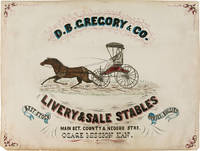
1870rif. 55334Osage Mission Ks. N.d. ca. 1870s. Hand-Painted Trade Sign for a Kansas Livery Stable A remarkable and very attractive handmade sign for D.B. Gregory's livery stable in Osage Mission Kansas. Undated the style of the sign suggests a date of the 1870s. The center of the sign shows a lovely illustration in profile of a horse pulling a single-rider four-wheeled carriage along a dirt road. The text above the illustration reads "D.B. Gregory & Co." and below: "Livery & Sale Stables / Best Stock / Horse & Buggies / Main Bet. County & Neosho Strs. / Osage Mission Kan." The lettering is in black with blue and purple shadowing and "Osage Mission Kan." is drawn in a very ornate style. The entire sign is decorated with purple watercolor ornamentation. On the verso is a pencil sketch of the horse and the lower half of the carriage likely a preliminary sketch for the finished illustration. David B. Gregory born in 1846 in Iowa established his livery business with his brother in Osage Mission now St. Paul Neosho County Kansas by the early 1870s. An advertisement in the March 23 1873 issue of the OSAGE MISSION TRANSCRIPT describes Gregory's livery as having a "fine and well selected stock of horses and carriages.the best matched teams for style and speed in the city. Saddle horses for ladies and gents a specialty that defy competition." Settlers came to the region around Osage Mission in the 1840s following the founding of nearby Fort Scott in 1842. Osage Mission itself was founded in 1847 by Father John Schoenmakers as a mission to local Indian tribes and then grew into a town in its own right serving as a trading post and gateway for commerce and westward exploration. By the late 1860s it had grown to nearly 900 people with a hotel boarding house saloon stables general store hardware store and blacksmith. A rare significant and informative survival from the American frontier. Hand-drawn and hand-painted watercolor sign on a 14 x 18¾-inch sheet of cardstock. Pencil sketch for the same sign on the verso. Small chips at lower corners some light soiling. Very good. unknown books
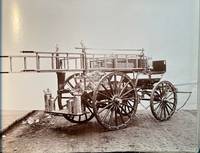
1890rif. 24064Chicago: Unique. ca1890. Bolted stainless steel clamp needed to support the weight of the contents. Overall very good; some of the photographs are faded to various degrees otherwise rich crisp images most likely contact prints from a view camera negative. Oblong folio. Album 2.5" x 15.5" x 11.5"; photographs 13.75" x 11"; containing 129 albumen or early silver bromide original photographs mounted on to cloth backing along with several blueprints; a handful of additional photographs are laid in with a paper wrap. Most of the images are uncredited though about six have the photographer's stamps on the back. Album cover stamped in gilt with the name of the firm. Small silver plaque affixed to the center of the cover with the name E F Steck engraved upon it. Steck was the superintendent of the company. The inside front cover is marked #1. Exhaustive catalog documenting firefighting equipment used during the waning days of the horse-drawn fire truck era with photographs of various fire pumps hook and ladder trucks fire extinguishers fire grenades water nozzles etc. and two blueprints showing the inner workings of a carbonic acid chemical engine pump and extinguisher. Probably a unique prototype to hold all of the original photographs taken of the company's inventory. Photographs depict an array of trucks and apparatus including several views of the same product used by fire companies from across the country including Massachusetts Pennsylvania New York Chicago Los Angeles and Oregon. While the majority of the images show unmanned trucks and apparatus against a white canvas background there are some photographs taken on the street in front of fire stations or with firefighters to show scale or in action shots notably one image depicting nine men on a ladder reaching to the top of a five-story building and firefighters shooting water at smoldering buildings. A few images capture civilians usually on the periphery or looking out windows. The first 80 photographs in the album have red and white number labels on the reverse. The following 27 photographs are not numbered but are titled and listed by the manufacturer's style type; there are 13 styles and between one and three photographs of each style. The next 20 photographs feature a variety of apparatus and the last two depict fire extinguisher products. Unique. unknown books