G. DebienLivre Rare Book

1.828 Ergebnisse
1969Best.-Nr. 1000742581969. 463 pages. Fort-de-France Société d'Histoire de la Martinique 1969. Broché 17 cm x 25 5 cm 463 pages 1 photo hors-texte. Texte présenté et annoté par G. Debien photo du conseiller en frontispice table des noms. Rousseurs sur la couverture et les tranches sinon très bon état intérieur
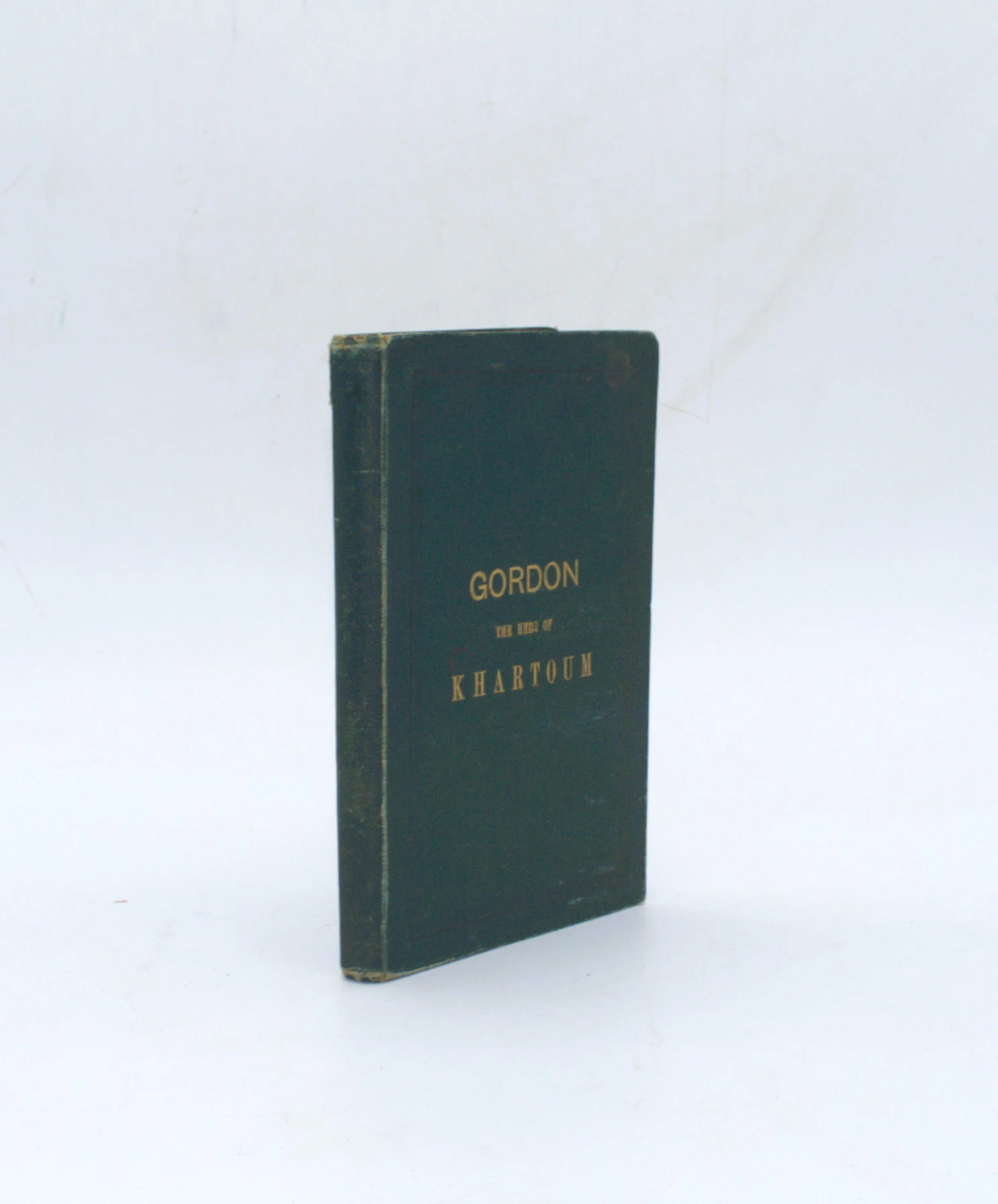
1885Best.-Nr. PHO-2552Christchurch, Printed And Published By James Willis, 1885, 234pp, original wrappers with gilt lettering and the first board, slightly rubbed, few marginal tears to three leaves, without loss or affecting the text, little foxing, little marks. illustrated including frontispiece portrait of Gordon, folding linen backed map, 7 portraits and illustrations in the text
1742Best.-Nr. PHO-12401742 , chez Théodore Le Gras , Paris , un volume in-12 ,de VI-516pp , titre en rouge et noir, illustré de 4 planches , dont une carte dépliante, relié plein veau marbré époque, dos à nerfs ornés avec pièces de titre et tomaison , tranches rouges , manque aux coupes , coins et coiffes usés , débuts de fentes .
Best.-Nr. 1667Paris, Bossange, Masson et Besson, an III - 1795, 3 tomes reliés en 2 volumes grands in-16, cartonnage d'époque, pièce de titre de maroquin vert.Titre et faux-titre manquants (2ff).
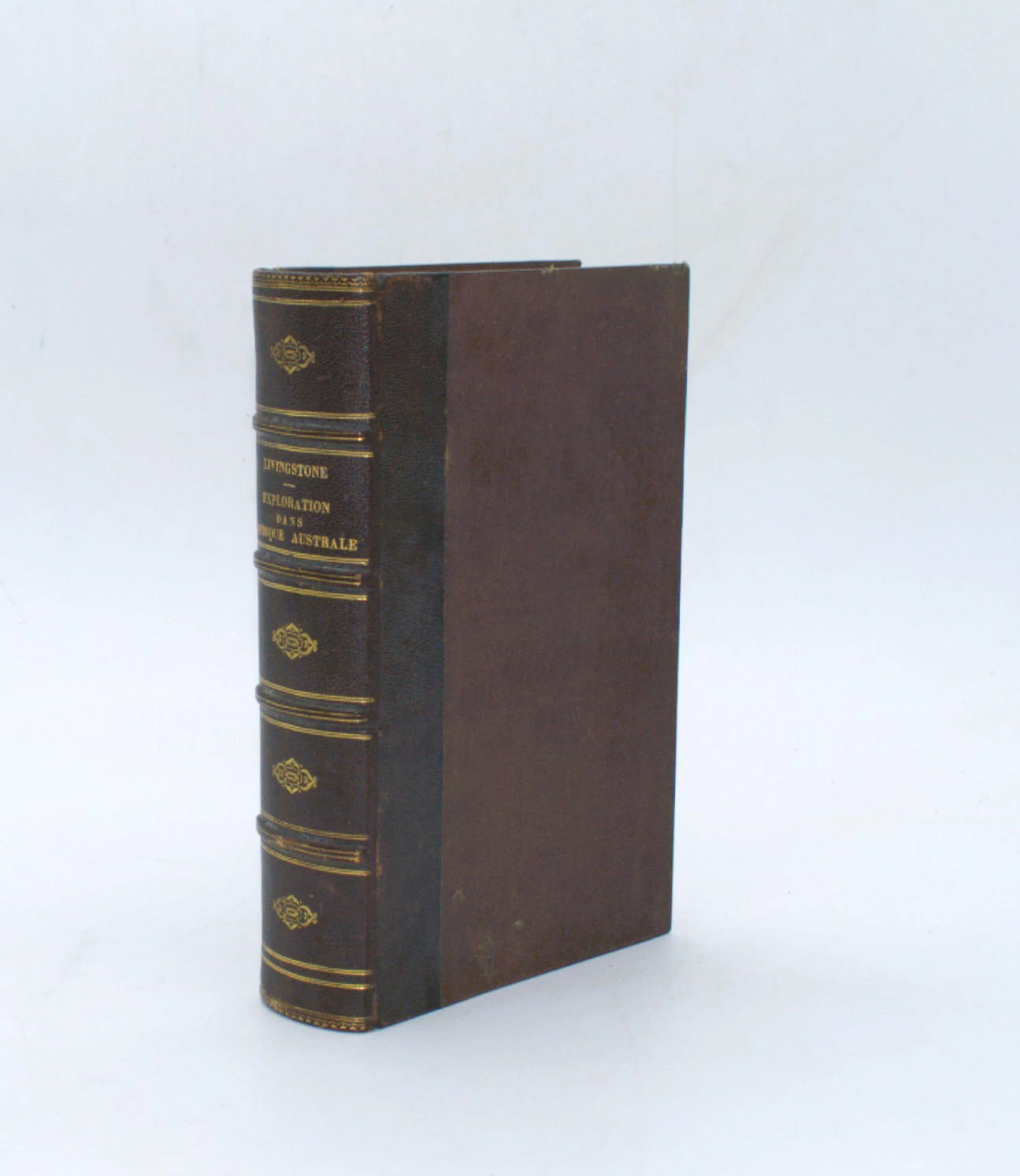
1859Best.-Nr. PHO-2670Paris, Librairie de L. Hachette et Cie, 1859. Fort volume in-8 (25x16cm), 3 ff. -759 pp., demi chagrin époque, auteur et titre au dos, cartes mal pliées avec déchirures.
Best.-Nr. 237863Paris, Pillet Ainé, 1824 in-8, 155 pp., 2 portr., 1 fac-similé, dérelié, tranches marbrées.
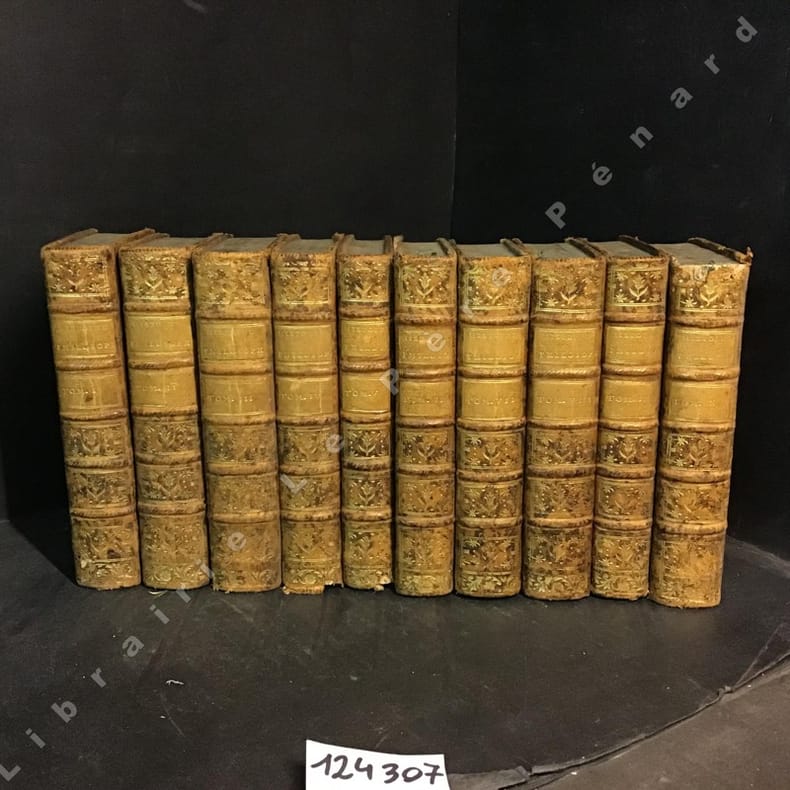
1780Best.-Nr. 1243071780 A Genève, Chez Jean-Léonard Pellet, Imprimeur de la Ville & de l'Académie - M. DCC. LXXX. (1780) - Dix volumes In-12, reliures pleine peau marbrée d'époque, dos à 5 nerfs avec pièce de titre et de tomaison sur fond marron clair, caissons ornés de fleurons en doré, toutes tranches marbrées, signet vert - xij-571 + 624 + 608 + 500 + 425 + 511 + 589 + 599 + 431 + 564 pages - Sans le volume d'Atlas
Best.-Nr. 13974600Paris; Bruxelles; Nantes: Lib. A. Vanelsche; Les Editions Atlas; Gernoux, 1938 in-8, 351 pages, 4 cartes, 69 illustrations. Reliure toile, bon état. Un des 700 ex. sur papier satiné. L'ouvrage comprend 3 parties: Les débuts du marin gantois dans la traite des noirs (1733-1763). Le trafic négrier sur la Côte d'Angole. Les expéditions négrières de Nantes (1748-1792).
Best.-Nr. 7153P., Imprimerie Nationale, 1791. In 8 [219 x 128 mm] de 8 pp. en feuilles, tel que paru.
1847Best.-Nr. 448051847. Paris, Pagnerre, 1847. Format 13x21 cm, broche, 32 pages. La couverture imprimee sert de page de titre. Une signature a l'encre sur la premiere page. Tres bon etat.
Best.-Nr. 224488Paris, A. Marescq aîné, 1880 in-8, [2] ff. n. ch., VII pp., 320 pp., demi-chagrin marine, dos à nerfs, tranches peigne jaspées (reliure de l'époque).
3 volumes in-8, demi-basane de l'époque, étiquettes de bibliothèque, (4), cviij, 294 p.; (4), 334 p. et (4), iv, 336 p. Première et unique édition posthume des oeuvres du fils de Madame de Staël et petit fils de Necker. Le premier volume est précédé d'une biographie de l'auteur par sa soeur Albertine de Staël-Holstein, duchesse de Broglie. Il contient différentes pièces, dont celles qui accompagnèrent sa candidature à la Chambre, ses notices et préfaces aux éditions des oeuvres de Madame de Staël, plusieurs pièces de "propagande protestante" et ses interventions, pétitions et documents visant à l’abolition de l'esclavage accompagnés de gravures dans le texte (vue de navire négrier en coupe, chaines et garrots). Le deuxième volume contient la "Notice sur Necker"; le troisième les "Lettres sur l'Angleterre". (France littéraire, IX, 254-255. Dictionnaire historique et biographique de la Suisse, VI, p. 312).
1829Best.-Nr. 344053 volumes in-8, demi-basane de l'époque, étiquettes de bibliothèque, (4), cviij, 294 p.; (4), 334 p. et (4), iv, 336 p. Paris, Treuttel et Würtz, 1829.
Best.-Nr. GMF-1015WALLON (Henri). Histoire de l'esclavage dans l'Antiquité. Précédé de l'Esclavage dans les colonies. Tomes I-III. Paris: Imprimerie Impériale & Dezobry, E. Magdeleine et cie (1847). 3 volumes, CLXXVI+487 pages, 493 pages et 578 pages, reliure en veau, dos lisse orné, fers de collège sur les plats. Dos insolés, coiffes frottées, mors supérieur du volume 1 fendu en tête, mors supérieur et inférieur du volume 2 fendus, dos du volume 2 fendu et restauré. Intérieurs frais. Première édition. Elle précéda de peu le vote abolitionniste de 1848. Envoi par Mondial Relay
Best.-Nr. 237736Paris, Hachette et Cie, 1879 3 vol. in-8, CLXVII-487 pp., 517 pp. et 559 pp., demi-chagrin vert, dos à nerfs orné de fleurons dorés (reliure de l'époque). Quelques rousseurs.
1822Best.-Nr. PHO-913Paris, Béchet et Arthus Bertrand, 1822. 2 vol. 8°. XIV, 351 p.; VI, 359 p. Reliure demi cuir époque , dos lisse orné avec titre et tomaison, uniformément bruni , plats et charnières légèrement frottés
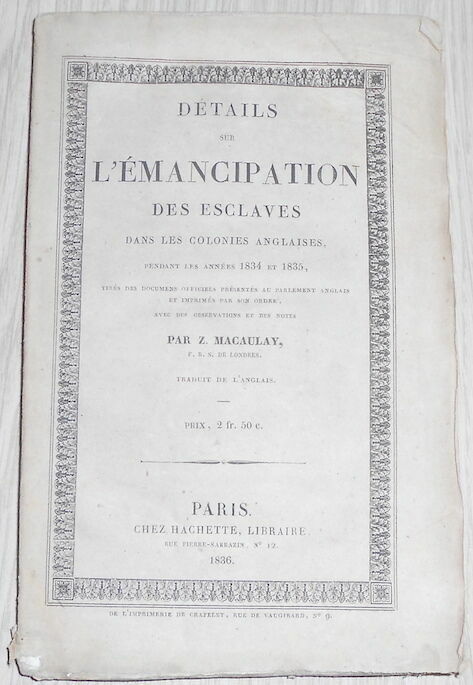
1836Best.-Nr. 188661836. Paris chez Hachette Librairie 1836 - Broché 14 cm x 21 5 cm XIV+ 128 pages - Texte de Z. Macaulay - Bon état
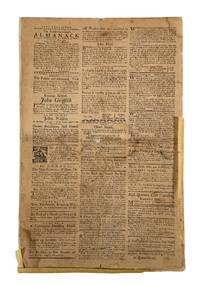
1771Best.-Nr. 143781771. The Almanack 1771 contains an advertisement offering a fourteen-year-old enslaved Black boy for sale in Boston documenting the commercial trafficking of enslaved children in colonial Massachusetts only five years before the Declaration of Independence. The notice states: "To be sold for want of employment a likely Negro Boy that won't drink rum he is about 14 years old." Its language reduces the unnamed child to age perceived suitability and drinking habits before offering him for sale preserving direct evidence of how slavery entered the ordinary commercial language and newspaper economy of eighteenth-century Boston. A second advertisement relating to slavery appears in the same issue. The Almanack. Boston 1771. Folio newspaper approximately 15 x 10 inches. The sale notice was printed among the newspaper's advertisements rather than as a report or editorial discussion of slavery placing the transaction within the periodical's routine marketplace of property labor and services. Particularly revealing is the seller's stated reason "for want of employment" which explicitly connects the proposed sale of the fourteen-year-old boy to the enslaver's assessment of his economic utility. Slavery remained legal in Massachusetts in 1771 even as the political disputes that would culminate in the American Revolution intensified in Boston. The advertisement predates the 1780 Massachusetts Constitution and the early 1780s freedom suits associated with the effective end of slavery in the Commonwealth. As a Boston notice offering an enslaved child for sale it provides specific evidence that human bondage and its newspaper marketplace formed part of New England life during the generation that articulated revolutionary claims concerning liberty. Overall foxing scattered soiling and several small edge tears; otherwise very good condition. unknown
Best.-Nr. DADAX0199660468New unknown
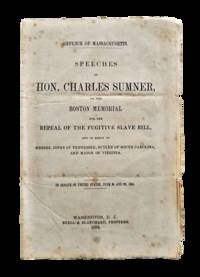
1854Best.-Nr. 176351854. Abolition African Americana SUMNER Charles. Defence of Massachusetts. Speeches of Hon. Charles Sumner on the Boston Memorial for the Repeal of the Fugitive Slave Bill and in Reply To Messrs. Jones of Tennessee Butler of South Carolina And Mason of Virginia in the Senate of the United States June 26 and 28 1854. Washington D.C.: Buell & Blanchard Printers 1854. At the time that this description is being written just three copies are recorded in American institutions. OCLC search results are at best an estimate and can vary over time. The Memorial referred to in the title was a request by 2900 undersigners chiefly men of Boston Mass. to repeal the Fugitive Slave Bill of 1850. What follows is a transcription of Massachusetts Senator and famous abolitionist Charles Sumner's speeches in the ensuing debate: "Mr Jones. asks 'Can anyone suppose that if the Fugitive Slave Act be repealed this Union can exist' To which I reply at once that if the Union in any way be dependent on an Act-- I cannot call it a law-- so revolting in every regard as to that which he refers then it ought not to exist." Sumner goes on to argue amongst other things that the Fugitive Slave Act is parallel to the hated Stamp Act that sparked the Revolutionary War as well as to make spirited rebukes against the pro-slavery Senators Butler Mason and Jones: "The veteran Senator from Virginia Mr. Mason complained that I had characterized one of his "constituents" a person who went all the way from Virginia to Boston in pursuit of a slave as a Slave-Hunter. Sire I choose to call things by their right names. White I call white and black I call black. And where a person degrades himself to the work of chasing a fellow man who under the guidance of the north star has saught a freeman's home far away from the cofle and the chain that person whomsoever he may be I call a Slave-Hunter." Eight sheets folded to make one sixteen-page signature which is stitched along the left edge. Foxing throguhout pages chipped along margins. Dampstaining along two page edges. Delicate but in good condition. Charles Sumner January 6 1811 - March 11 1874 was an American statesman and United States Senator from Massachusetts. As an academic lawyer and a powerful orator Sumner was the leader of the anti-slavery forces in the state and a leader of the Radical Republicans in the U.S. Senate during the American Civil War. During Reconstruction he fought to minimize the power of the ex-Confederates and guarantee equal rights to the freedmen. During the war he was a leader of the Radical Republican faction that criticized President Lincoln for being too moderate on the South. Sumner specialized in foreign affairs and worked closely with Lincoln to ensure the British and the French refrained from intervening on the side of the Confederacy during the Civil War. As the chief Radical leader in the Senate during Reconstruction Sumner fought hard to provide equal civil and voting rights for the freedmen on the grounds that "consent of the governed" was a basic principle of American republicanism and to block ex-Confederates from power so they would not reverse the gains made from the Union's victory in the Civil War. unknown books
1854Best.-Nr. 176351854. Abolition African Americana SUMNER Charles. Defence of Massachusetts. Speeches of Hon. Charles Sumner on the Boston Memorial for the Repeal of the Fugitive Slave Bill and in Reply To Messrs. Jones of Tennessee Butler of South Carolina And Mason of Virginia in the Senate of the United States June 26 and 28 1854. Washington D.C.: Buell & Blanchard Printers 1854. At the time that this description is being written just three copies are recorded in American institutions. OCLC search results are at best an estimate and can vary over time. The Memorial referred to in the title was a request by 2900 undersigners chiefly men of Boston Mass. to repeal the Fugitive Slave Bill of 1850. What follows is a transcription of Massachusetts Senator and famous abolitionist Charles Sumner's speeches in the ensuing debate: "Mr Jones. asks 'Can anyone suppose that if the Fugitive Slave Act be repealed this Union can exist' To which I reply at once that if the Union in any way be dependent on an Act-- I cannot call it a law-- so revolting in every regard as to that which he refers then it ought not to exist." Sumner goes on to argue amongst other things that the Fugitive Slave Act is parallel to the hated Stamp Act that sparked the Revolutionary War as well as to make spirited rebukes against the pro-slavery Senators Butler Mason and Jones: "The veteran Senator from Virginia Mr. Mason complained that I had characterized one of his "constituents" a person who went all the way from Virginia to Boston in pursuit of a slave as a Slave-Hunter. Sire I choose to call things by their right names. White I call white and black I call black. And where a person degrades himself to the work of chasing a fellow man who under the guidance of the north star has saught a freeman's home far away from the cofle and the chain that person whomsoever he may be I call a Slave-Hunter." Eight sheets folded to make one sixteen-page signature which is stitched along the left edge. Foxing throguhout pages chipped along margins. Dampstaining along two page edges. Delicate but in good condition. Charles Sumner January 6 1811 - March 11 1874 was an American statesman and United States Senator from Massachusetts. As an academic lawyer and a powerful orator Sumner was the leader of the anti-slavery forces in the state and a leader of the Radical Republicans in the U.S. Senate during the American Civil War. During Reconstruction he fought to minimize the power of the ex-Confederates and guarantee equal rights to the freedmen. During the war he was a leader of the Radical Republican faction that criticized President Lincoln for being too moderate on the South. Sumner specialized in foreign affairs and worked closely with Lincoln to ensure the British and the French refrained from intervening on the side of the Confederacy during the Civil War. As the chief Radical leader in the Senate during Reconstruction Sumner fought hard to provide equal civil and voting rights for the freedmen on the grounds that "consent of the governed" was a basic principle of American republicanism and to block ex-Confederates from power so they would not reverse the gains made from the Union's victory in the Civil War. unknown
Best.-Nr. DADAX0199238995New unknown
Best.-Nr. DADAX0198704054New unknown
2004Paperback Like New. Ships directly from publishers being a new release book . Pls. allow a minimum of 25 business days delivery time.
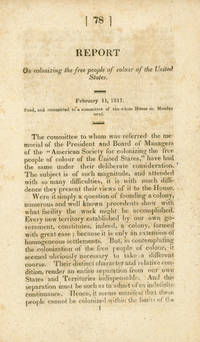
1817Best.-Nr. 9350Washington City 1817. First Edition. 5 pp. 1 vols. 8vo. Disbound. Some foxing. First Edition. 5 pp. 1 vols. 8vo. First edition of the government's reply to the request of a group of Virginia planters for a "colony" to essentially rid them of the problem of "free coloured people." In December of 1816 a group of Virginia planters approached the government with a request asking for a location where freed blacks might be sent. In January this "memorial" was presented and in February it was answered with this "Report." This reply discusses location etc. In the end the government officially refused to have anything to do with the plan - thus the American Colonization Society was born. For a detailed account of these events see Dumond Anti-Slavery pp. 126-127. S&S 42738 2 copies unknown books