SLAVERY - BOLINGBROKE, HenryBiblio.com
1 532 résultats
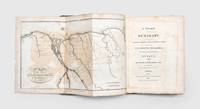
1807réf. 177680London: Richard Phillips 1807. First edition of this account of the British colonies within modern-day Guyana. Bolingbroke was a staunch supporter of the Transatlantic slave trade which he discusses in Chapter Five and dedicated this work to the colonial secretary William Windham. Henry Bolingbroke 1785-1855 was a Norfolk merchant who first visited Demerara in 1798. This region had been under the control of the French and Dutch until it was captured by the British in 1796. Bolingbroke remained in the colony until 1805; he then travelled to Surinam in Dutch Guiana to become Deputy Vendue Master in 1807 responsible for public sales and auctions including those of enslaved people. He was one of the 16 MPs who voted against the abolition of slavery in March 1807. In Chapter Five Bolingbroke writes about slavery and what he viewed as its economic importance. In his dedication to Windham 1750-1810 he praised him for relaxing monopoly restrictions and "resisting the abolition of a liberty essential at new settlements of importing additional labourers" p. iii. Quarto pp. xii 400. Folding engraved map. Original green paper-covered boards rebacked modern spine label edges untrimmed. Signature of one George Atkinson on front pastedown a few pencil notes internally. Spine head stabilized boards marked foxing and toning to map and contents two small closed tears to map repaired offsetting to title page: a very good copy. Sabin 6182. hardcover
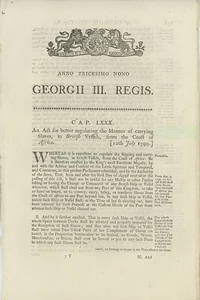
1799réf. 28145London: Printed by George Eyre and Andrew Strahan Printers to the King's most Excellent Majesty 1799 1799. ESTC N60288 Lincoln's Inn Library and Wellcome Institute. Fine. 4to disbound paginated 637-652 untrimmed. An act passed by Parliament in the summer of 1799 delineated in 39 paragraphs that regulated the slave trade beginning in August 1800 - an act no doubt intended to placate the growing voices of opposition to the English slave trade. The act stipulates how many slaves could be stowed in a ship by mathematical formula according to the size of the ship but never more than 400; that slaves must be separated from other cargo; and that the space for the slaves "be full and complete perpendicular height of five feet." Nothing is said about their treatment other than that the ship's surgeon was required keep a log of illnesses and deaths of both slaves and crew. Much of the act is taken up with its enforcement and the penalties and fines for violations; it also regulates the conditions and treatment of the crew. The acts of Parliament were usually published separately and later issued in collections of the Public General Statutes; this one was issued as part of the collection of statues Passed in the Thirty-Ninth Year of the Reign of His Majesty King George the Third: Being the Third Session of the Eighteenth Parliament of Great Britain. This copy is disbound from such a volume. (London: Printed by George Eyre and Andrew Strahan, Printers to the King's most Excellent Majesty, 1799) unknown
1842réf. 313227Philadelphia: stereotyped by L. Johnson 1842. First edition. 140 pp. 1 vols. 8vo. Original brown ribbed cloth rebacked with original spine laid down titled in gilt. Marginal dampstaining throughout scattered foxing some wear to boards good. First edition. 140 pp. 1 vols. 8vo. First edition of this report of this monumental Supreme Court decision regarding escaped slaves preceding by 15 years and rivaling in importance the Dred Scott case of 1857. "In Prigg the Court identified slavery as a core constitutional commitment with which states could not interfere. In this case the Court struck down northern states' 'personal liberty laws' established to protect alleged fugitive slaves from recapture without due process of law. When the professional 'slave catcher' Edward Prigg tried to remove Margaret Moran an alleged runaway he was unable to meet the burden of proof set out by Pennsylvania's 1826 Personal Liberty Law and failed to obtain the legal certificate permitting him to remove her. When Prigg proceeded to ignore this and removed Moran illegally to Maryland Pennsylvania convicted him of kidnapping. The US Supreme Court however overwhelmingly overturned Prigg's conviction 8-1 and pronounced state laws interfering with the return of alleged runaways a violation of the Fugitive Slave Clause." Beaumont The Civic Constitution 2014 p. 128. Blockson 9905; Dummond p. 140; Sabin 61207 stereotyped by L. Johnson unknown
1842réf. 313227Philadelphia: stereotyped by L. Johnson 1842. First edition. 140 pp. 1 vols. 8vo. Original brown ribbed cloth rebacked with original spine laid down titled in gilt. Marginal dampstaining throughout scattered foxing some wear to boards good. First edition. 140 pp. 1 vols. 8vo. First edition of this report of this monumental Supreme Court decision regarding escaped slaves preceding by 15 years and rivaling in importance the Dred Scott case of 1857. "In Prigg the Court identified slavery as a core constitutional commitment with which states could not interfere. In this case the Court struck down northern states' 'personal liberty laws' established to protect alleged fugitive slaves from recapture without due process of law. When the professional 'slave catcher' Edward Prigg tried to remove Margaret Moran an alleged runaway he was unable to meet the burden of proof set out by Pennsylvania's 1826 Personal Liberty Law and failed to obtain the legal certificate permitting him to remove her. When Prigg proceeded to ignore this and removed Moran illegally to Maryland Pennsylvania convicted him of kidnapping. The US Supreme Court however overwhelmingly overturned Prigg's conviction 8-1 and pronounced state laws interfering with the return of alleged runaways a violation of the Fugitive Slave Clause." Beaumont The Civic Constitution 2014 p. 128. Blockson 9905; Dummond p. 140; Sabin 61207 stereotyped by L. Johnson unknown books
1862réf. 13270Moulton AL: June 7 1862. 4pp. on a single folded sheet. Old folds moderate staining rubbing and toning edges worn and a bit chipped a few small holes in the body of the text. A well-worn newspaper in good condition. A notable issue of a very rare newspaper from Confederate Alabama with many interesting historical aspects. Most noteworthy is the runaway slave advertisement printed on the last page relating the story of "a black boy who calls himself John" currently held at the jail in Lawrence County Alabama. John claims that his owner Jack Mason of Limestone County "was killed at Corinth on the day of the battle there and that he was endeavoring to return home when arrested." A physical description of John follows and concludes with a notice that "The owner will please come forward pay charges and take him away or he will be disposed of according to law." Other advertisements document various sheriff sales and the dissolution of a local law partnership. The paper also includes informative content on the Civil War including a substantial proclamation by Alabama Governor John Gill Shorter encouraging Alabama men to take the war seriously gather arms to the front and participate as part of the "State Guard." The paper also prints part of a notice from the Charleston Courier arguing that if Confederate currency is not worth real value "then the whole cotton crop of the South will be seized by the invader then Lincoln's recommendation to his Congress will be adopted and enforced and all the lands of the Southern people will be parcelled out among Northern soldiers." There is also a dispatch from Corinth encouraging southerners to identify and send back soldiers absent from duty and other wartime content. The only physical issue we could locate dated April 17 1863 is held at Samford; the remainder of the OCLC records we consulted reported microfilm or digital forms. June 7 unknown
1862réf. 13270Moulton AL: June 7 1862. 4pp. on a single folded sheet. Old folds moderate staining rubbing and toning edges worn and a bit chipped a few small holes in the body of the text. A well-worn newspaper in good condition. A notable issue of a very rare newspaper from Confederate Alabama with many interesting historical aspects. Most noteworthy is the runaway slave advertisement printed on the last page relating the story of "a black boy who calls himself John" currently held at the jail in Lawrence County Alabama. John claims that his owner Jack Mason of Limestone County "was killed at Corinth on the day of the battle there and that he was endeavoring to return home when arrested." A physical description of John follows and concludes with a notice that "The owner will please come forward pay charges and take him away or he will be disposed of according to law." Other advertisements document various sheriff sales and the dissolution of a local law partnership. The paper also includes informative content on the Civil War including a substantial proclamation by Alabama Governor John Gill Shorter encouraging Alabama men to take the war seriously gather arms to the front and participate as part of the "State Guard." The paper also prints part of a notice from the Charleston Courier arguing that if Confederate currency is not worth real value "then the whole cotton crop of the South will be seized by the invader then Lincoln's recommendation to his Congress will be adopted and enforced and all the lands of the Southern people will be parcelled out among Northern soldiers." There is also a dispatch from Corinth encouraging southerners to identify and send back soldiers absent from duty and other wartime content. The only physical issue we could locate dated April 17 1863 is held at Samford; the remainder of the OCLC records we consulted reported microfilm or digital forms. June 7 unknown books
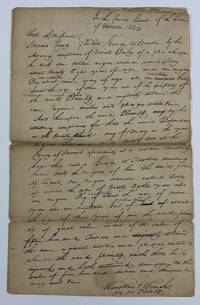
1822réf. 4276Howard County Mo 1822. Good. Three documents totaling 3pp. folio the two earliest documents written on each side of the same leaf with an integral blank and attached to the third document with sealing wax each document docketed on verso. Some short separations along folds minor spotting two short tape repairs. A series of three documents recording a case of slave theft in Missouri. The plaintiff in the case George W. Hardin sues a man named Urial Bailey for stealing three slaves from the Hardin estate in Howard County Missouri. The first document is a sworn oath dated May 23 1822 by George Hardin stating that "He was lawfully possessed of the negroes.and that the same were unlawfully taken by Urial Bailey.from his properties and with out his consent within one year last past and that he is now lawfully entitled to the possession of the said negroes." The document is attested by the clerk and signed by Hardin. The second document is executed by Hardin's lawyers on the verso of his oath dated the same day and constitutes an order from the court to the Sheriff of Howard County informing him that "George W. Hardin hath come into the Circuit Court held in the town of Franklin and found sufficient sureties as well as his clamour to prosecute for a certain woman called Dolly about the age of twenty eight years also one negro boy of about the age of nine years named Nathan also one negro girl called Eliza about the age of three years all the property of the said Plaintiff.which a certain Uriel Bailey.hath taken and unjustly detains. You are hereby commanded that the said goods.be delivered to the said George W. Hardin and that.Uriel Bailey appear before the said Circuit Court to be held at the town of Franklin." The third document is executed by Hardin's lawyers on the verso of his oath dated September 1822 and lays out the facts of the case. It reads in part: "George W. Hardin by his Attorney Tompkins & French complains of Urial Bailey that he took the previously named slaves of great value. To wit of the value of fifteen hundred dollars.where fore the said Plaintiff saith that he is injured and hath sustained damages to the value of five hundred dollars and therefore he brings suit." Interestingly in this document Hardin's lawyers refer to the youngest slave Eliza as a "mulatto girl." Docketing on the integral blank attached to the oath and lawyer's document dated May 23 1822 indicate that Hardin was seeking "Replevin Damages" of $500 which the court seems to grant. The motive behind Urial or Uriel Bailey's thefts are not recorded here but the issue of slave stealing was not uncommon and had been going on in the American colonies and the fledgling United States for a long time. According to Timothy F. Reilly in "Slave Stealing in the Early Domestic Trade as Revealed by a Loyal Manservant" published in Louisiana History: The Journal of the Louisiana Historical Association Vol. 55 No. 1 Winter 2004 pp.5-39: "Slave stealing plagued domestic slaveholders as far back as the colonial period when those who would unlawfully deprive a property owner of human chattel were detested as 'Negro jockeys.' Whether operating in the northern or southern colonies a 'man-stealer' lurking about either as a piratical thief or as a high-minded abolitionist was guilty of one of the worst crimes against the sanctity of property. By the 1830s man stealing reached epidemic levels in parts of the South." Despite the seeming prevalence of slave theft for a long period of time in the United States primary source records of court cases are very scarce. unknown
1822réf. 4276Howard County Mo 1822. Good. Three documents totaling 3pp. folio the two earliest documents written on each side of the same leaf with an integral blank and attached to the third document with sealing wax each document docketed on verso. Some short separations along folds minor spotting two short tape repairs. A series of three documents recording a case of slave theft in Missouri. The plaintiff in the case George W. Hardin sues a man named Urial Bailey for stealing three slaves from the Hardin estate in Howard County Missouri. The first document is a sworn oath dated May 23 1822 by George Hardin stating that "He was lawfully possessed of the negroes.and that the same were unlawfully taken by Urial Bailey.from his properties and with out his consent within one year last past and that he is now lawfully entitled to the possession of the said negroes." The document is attested by the clerk and signed by Hardin. The second document is executed by Hardin's lawyers on the verso of his oath dated the same day and constitutes an order from the court to the Sheriff of Howard County informing him that "George W. Hardin hath come into the Circuit Court held in the town of Franklin and found sufficient sureties as well as his clamour to prosecute for a certain woman called Dolly about the age of twenty eight years also one negro boy of about the age of nine years named Nathan also one negro girl called Eliza about the age of three years all the property of the said Plaintiff.which a certain Uriel Bailey.hath taken and unjustly detains. You are hereby commanded that the said goods.be delivered to the said George W. Hardin and that.Uriel Bailey appear before the said Circuit Court to be held at the town of Franklin." The third document is executed by Hardin's lawyers on the verso of his oath dated September 1822 and lays out the facts of the case. It reads in part: "George W. Hardin by his Attorney Tompkins & French complains of Urial Bailey that he took the previously named slaves of great value. To wit of the value of fifteen hundred dollars.where fore the said Plaintiff saith that he is injured and hath sustained damages to the value of five hundred dollars and therefore he brings suit." Interestingly in this document Hardin's lawyers refer to the youngest slave Eliza as a "mulatto girl." Docketing on the integral blank attached to the oath and lawyer's document dated May 23 1822 indicate that Hardin was seeking "Replevin Damages" of $500 which the court seems to grant. The motive behind Urial or Uriel Bailey's thefts are not recorded here but the issue of slave stealing was not uncommon and had been going on in the American colonies and the fledgling United States for a long time. According to Timothy F. Reilly in "Slave Stealing in the Early Domestic Trade as Revealed by a Loyal Manservant" published in Louisiana History: The Journal of the Louisiana Historical Association Vol. 55 No. 1 Winter 2004 pp.5-39: "Slave stealing plagued domestic slaveholders as far back as the colonial period when those who would unlawfully deprive a property owner of human chattel were detested as 'Negro jockeys.' Whether operating in the northern or southern colonies a 'man-stealer' lurking about either as a piratical thief or as a high-minded abolitionist was guilty of one of the worst crimes against the sanctity of property. By the 1830s man stealing reached epidemic levels in parts of the South." Despite the seeming prevalence of slave theft for a long period of time in the United States primary source records of court cases are very scarce. unknown books
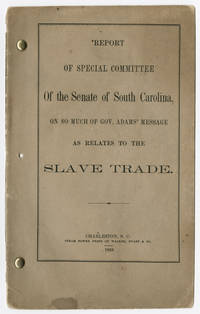
1858réf. 53597Charleston. 1858. Report submitted to the South Carolina Senate which concludes that slavery is essential to the agricultural production of the South. Additionally the committee felt that the slave trade helped relieve Africa from "the pressure of a redundant population as might be afforded by emigration in the only form in which its benefits can be extended to them." Original printed wrappers. Spine perished held together with brass tacks; light chipping and soiling. Paper lightly and evenly toned. Good. unknown
1858réf. 53597Charleston. 1858. Report submitted to the South Carolina Senate which concludes that slavery is essential to the agricultural production of the South. Additionally the committee felt that the slave trade helped relieve Africa from "the pressure of a redundant population as might be afforded by emigration in the only form in which its benefits can be extended to them." Original printed wrappers. Spine perished held together with brass tacks; light chipping and soiling. Paper lightly and evenly toned. Good. unknown books
1870réf. 231221870. Slavery Cuba Spanish colonial slave sale manuscript recording the transfer of four enslaved individuals in Cuba in 1870. Produced within the official bureaucratic framework of Spanish colonial governance the document reflects the legal normalization of slavery in Cuba even as abolitionist pressures mounted across the Atlantic world. The document records the sale of four enslaved people described as "criollos" and African-born individuals situating the transaction within a labor system that combined locally born and imported enslaved populations. Created at a time when Spain had formally restricted the transatlantic slave trade but continued to permit slavery itself the manuscript demonstrates the persistence of legalized human commodification and the integration of enslaved labor into the island's economic structure sixteen years prior to abolition in 1886. Official Cuban slave contract documenting the sale of four enslaved individuals to Don Pedro Catasús by Don Enfemia Ochoa for the sum of 1100 pesos on November 29 1870. Single manuscript leaf written in Spanish cursive in black ink measuring 8.25" x 12". A green "50 cs de escudo" revenue stamp is affixed at the top center with a blind embossed Spanish crest at the upper left and a circular black ink government seal impressed at the lower left. Large vertical docketing appears on the verso. A stylized watermark is visible within the paper. The text organizes the enslaved individuals within a standardized transactional structure while the signatures of Enfemia Ochoa Pedro Catasús and A. Díaz de Rada authenticate the exchange and identify participants within the slaveholding economy. By 1870 Cuba remained a central node in the late Atlantic slave system with plantation agriculture especially sugar dependent on enslaved labor despite mounting abolitionist pressure. Although Spain had curtailed official slave imports earlier in the century illegal trafficking persisted into the 1860s and other coerced labor systems including the importation of Chinese indentured workers overlapped with slavery into the 1870s. The presence of both Creole and African individuals in this document reflects the layered composition of the enslaved population during this period. Light toning scattered foxing and edge wear visible. A closed wormhole extends from the upper right margin approximately five inches into the sheet resulting in partial loss of text. Evidence of prior tape reinforcement visible on the verso along with offsetting from previously adjacent material. Overall in very good condition. This document provides named transactional evidence of late-period slavery in Cuba offering concrete material for examining race labor and legal practice within Spanish colonial society. unknown
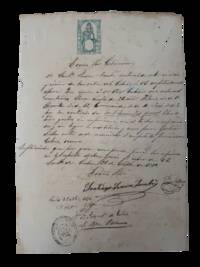
1870réf. 231191870. Slavery Cuba Spanish colonial manuscript documenting the late persistence of slavery in Cuba recording the sale of five enslaved Creole individuals including women and children 1870. Produced within the official bureaucratic framework of Spanish colonial governance the document reflects the legal normalization of slavery in Cuba even as abolitionist pressures mounted across the Atlantic world. The presence of multiple children within the transaction underscores the hereditary nature of enslavement and the commodification of family units offering direct material evidence of how slavery functioned socially and economically in its final decades on the island. Although Spain had formally ended the transatlantic slave trade earlier in the century illegal trafficking and internal slave markets persisted and slavery itself would not be abolished in Cuba until 1886 placing this document within a crucial transitional period marked by reform debates gradual emancipation laws and continued exploitation. Official Cuban slave contract recording the sale of five enslaved individuals identified as "criollos" including one adult woman and four children from Santiago Simón Fambi to Don Pedro Catasús for the sum of 1200 pesos on November 21 1870. Single page manuscript leaf measuring 8.25" x 12". The manuscript is written in Spanish cursive hand in black ink. The upper left bears a blind embossed crest of Spain while a circular black ink government seal is impressed at the lower left partially overlapping the text. The text enumerates the enslaved individuals with ages and names embedding human lives within the formulaic language of sale and valuation while the bold signatures of both seller Santiago Simón Fambi and buyer Pedro Catasús anchor the transaction in identifiable actors within the colonial economy. By 1870 slavery in Spanish Cuba remained central to the island's plantation economy particularly in sugar production which had expanded rapidly in the mid-19th century with industrialized mills and global demand. Enslaved people were primarily forced into agricultural labor under highly regimented and brutal conditions though others were used in urban domestic service skilled trades or as hired laborers generating income for their owners. This document exhibits light toning edge wear and scattered foxing throughout. A closed wormhole extends approximately two inches from the upper right margin inward not affecting legibility of the text. Minor losses and small tears along the edges. Overall in very good condition. Given that this document records a woman and four children the family was likely intended for a combination of field labor and domestic or auxiliary work with the children gradually incorporated into plantation labor as they aged reflecting the system's reliance on both immediate exploitation and the reproduction of enslaved labor over time. unknown
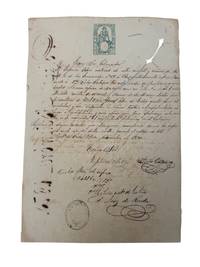
1870réf. 231221870. Slavery Cuba Spanish colonial slave sale manuscript recording the transfer of four enslaved individuals in Cuba in 1870. Produced within the official bureaucratic framework of Spanish colonial governance the document reflects the legal normalization of slavery in Cuba even as abolitionist pressures mounted across the Atlantic world. The document records the sale of four enslaved people described as "criollos" and African-born individuals situating the transaction within a labor system that combined locally born and imported enslaved populations. Created at a time when Spain had formally restricted the transatlantic slave trade but continued to permit slavery itself the manuscript demonstrates the persistence of legalized human commodification and the integration of enslaved labor into the island's economic structure sixteen years prior to abolition in 1886. Official Cuban slave contract documenting the sale of four enslaved individuals to Don Pedro Catasús by Don Enfemia Ochoa for the sum of 1100 pesos on November 29 1870. Single manuscript leaf written in Spanish cursive in black ink measuring 8.25" x 12". A green "50 cs de escudo" revenue stamp is affixed at the top center with a blind embossed Spanish crest at the upper left and a circular black ink government seal impressed at the lower left. Large vertical docketing appears on the verso. A stylized watermark is visible within the paper. The text organizes the enslaved individuals within a standardized transactional structure while the signatures of Enfemia Ochoa Pedro Catasús and A. Díaz de Rada authenticate the exchange and identify participants within the slaveholding economy. By 1870 Cuba remained a central node in the late Atlantic slave system with plantation agriculture especially sugar dependent on enslaved labor despite mounting abolitionist pressure. Although Spain had curtailed official slave imports earlier in the century illegal trafficking persisted into the 1860s and other coerced labor systems including the importation of Chinese indentured workers overlapped with slavery into the 1870s. The presence of both Creole and African individuals in this document reflects the layered composition of the enslaved population during this period. Light toning scattered foxing and edge wear visible. A closed wormhole extends from the upper right margin approximately five inches into the sheet resulting in partial loss of text. Evidence of prior tape reinforcement visible on the verso along with offsetting from previously adjacent material. Overall in very good condition. This document provides named transactional evidence of late-period slavery in Cuba offering concrete material for examining race labor and legal practice within Spanish colonial society. unknown books
1870réf. 231191870. Slavery Cuba Spanish colonial manuscript documenting the late persistence of slavery in Cuba recording the sale of five enslaved Creole individuals including women and children 1870. Produced within the official bureaucratic framework of Spanish colonial governance the document reflects the legal normalization of slavery in Cuba even as abolitionist pressures mounted across the Atlantic world. The presence of multiple children within the transaction underscores the hereditary nature of enslavement and the commodification of family units offering direct material evidence of how slavery functioned socially and economically in its final decades on the island. Although Spain had formally ended the transatlantic slave trade earlier in the century illegal trafficking and internal slave markets persisted and slavery itself would not be abolished in Cuba until 1886 placing this document within a crucial transitional period marked by reform debates gradual emancipation laws and continued exploitation. Official Cuban slave contract recording the sale of five enslaved individuals identified as "criollos" including one adult woman and four children from Santiago Simón Fambi to Don Pedro Catasús for the sum of 1200 pesos on November 21 1870. Single page manuscript leaf measuring 8.25" x 12". The manuscript is written in Spanish cursive hand in black ink. The upper left bears a blind embossed crest of Spain while a circular black ink government seal is impressed at the lower left partially overlapping the text. The text enumerates the enslaved individuals with ages and names embedding human lives within the formulaic language of sale and valuation while the bold signatures of both seller Santiago Simón Fambi and buyer Pedro Catasús anchor the transaction in identifiable actors within the colonial economy. By 1870 slavery in Spanish Cuba remained central to the island's plantation economy particularly in sugar production which had expanded rapidly in the mid-19th century with industrialized mills and global demand. Enslaved people were primarily forced into agricultural labor under highly regimented and brutal conditions though others were used in urban domestic service skilled trades or as hired laborers generating income for their owners. This document exhibits light toning edge wear and scattered foxing throughout. A closed wormhole extends approximately two inches from the upper right margin inward not affecting legibility of the text. Minor losses and small tears along the edges. Overall in very good condition. Given that this document records a woman and four children the family was likely intended for a combination of field labor and domestic or auxiliary work with the children gradually incorporated into plantation labor as they aged reflecting the system's reliance on both immediate exploitation and the reproduction of enslaved labor over time. unknown books
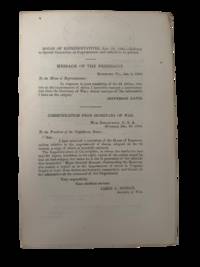
1865réf. 231171865. Civil War Black Military Slavery Virginia Confederate government pamphlet on the impressment of enslaved men for military labor January 1865 one of the clearest bureaucratic efforts to formalize the use of enslaved labor in support of the Confederate war effort. The document responds to a congressional inquiry into the impressment of enslaved people explicitly acknowledging state-directed seizure of enslaved men for military labor. Within the text the Confederate state attempts to regulate this extraction noting limits such as "no more than one out of five male slaves between the ages specified. from any one owner" while simultaneously confirming large-scale requisitions including "5000 slaves from the State of Virginia for service with the army of Northern Virginia." The language reveals both the administrative reach of the Confederate state and its dependence on enslaved labor as a logistical backbone in the war's final phase. Octavo pamphlet measuring 9.5" x 6" 5 pages printed in Richmond Virginia January 1865. Printed for the Confederate House of Representatives and comprising the titled sections "Message of the President" "Communication from Secretary of War" "Resolution of House of Representatives" and "Response of Superintendent of Conscription" with official correspondence dated from December 1864 through January 1865. The exchange includes communications from Brig. Gen. Jno. S. Preston and Major Gen. J. L. Kemper concerning the mechanics of requisition the proportional distribution of impressed labor among slaveholders and errors in previous impressments including the improper inclusion of enslaved people outside the categories prescribed by Confederate authority. While the Confederacy had long resisted arming or formally incorporating enslaved people fearing empowering Black men with weapons and military responsibility would destabilize slavery this document demonstrates a late-war shift toward coercive mobilization framed as "employment" to "increase the efficiency of the army." Additional correspondence from Brig. Gen. Jno. S. Preston and Major Gen. J. L. Kemper details the mechanics of requisition emphasizing proportional seizure across slaveholders and acknowledging prior errors in impressment including the improper inclusion of enslaved people outside prescribed categories. Condition shows light toning minor spotting and edge wear consistent with age; paper remains stable with clear legible text throughout; faint institutional stamp present on front. Overall very good condition. This document underscores how the Confederate war effort relied on systems of exploitation applied to enslaved African American men. unknown
1865réf. 231171865. Civil War Black Military Slavery Virginia Confederate government pamphlet on the impressment of enslaved men for military labor January 1865 one of the clearest bureaucratic efforts to formalize the use of enslaved labor in support of the Confederate war effort. The document responds to a congressional inquiry into the impressment of enslaved people explicitly acknowledging state-directed seizure of enslaved men for military labor. Within the text the Confederate state attempts to regulate this extraction noting limits such as "no more than one out of five male slaves between the ages specified. from any one owner" while simultaneously confirming large-scale requisitions including "5000 slaves from the State of Virginia for service with the army of Northern Virginia." The language reveals both the administrative reach of the Confederate state and its dependence on enslaved labor as a logistical backbone in the war's final phase. Octavo pamphlet measuring 9.5" x 6" 5 pages printed in Richmond Virginia January 1865. Printed for the Confederate House of Representatives and comprising the titled sections "Message of the President" "Communication from Secretary of War" "Resolution of House of Representatives" and "Response of Superintendent of Conscription" with official correspondence dated from December 1864 through January 1865. The exchange includes communications from Brig. Gen. Jno. S. Preston and Major Gen. J. L. Kemper concerning the mechanics of requisition the proportional distribution of impressed labor among slaveholders and errors in previous impressments including the improper inclusion of enslaved people outside the categories prescribed by Confederate authority. While the Confederacy had long resisted arming or formally incorporating enslaved people fearing empowering Black men with weapons and military responsibility would destabilize slavery this document demonstrates a late-war shift toward coercive mobilization framed as "employment" to "increase the efficiency of the army." Additional correspondence from Brig. Gen. Jno. S. Preston and Major Gen. J. L. Kemper details the mechanics of requisition emphasizing proportional seizure across slaveholders and acknowledging prior errors in impressment including the improper inclusion of enslaved people outside prescribed categories. Condition shows light toning minor spotting and edge wear consistent with age; paper remains stable with clear legible text throughout; faint institutional stamp present on front. Overall very good condition. This document underscores how the Confederate war effort relied on systems of exploitation applied to enslaved African American men. unknown books
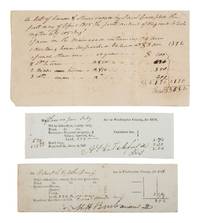
1815réf. 201561815. Manuscript fiscal records from antebellum Virginia documenting the taxation and valuation of enslaved African Americans as property within the legal and economic system of slavery. Dating from 1815 to 1854 the records span nearly four decades and demonstrate the routine bureaucratic mechanisms through which enslaved people were enumerated assigned monetary value and incorporated into county and state taxation alongside land horses clocks and other forms of personal property. The documents provide direct evidence of the administrative infrastructure underlying slavery in Virginia during the decades preceding the Civil War. The earliest record dated April 1 1815 concerns the property of Jacob Campbell and is headed "A list of land & slaves owned by Jacob Campbell the first day of April 1815." An associated receipt provides a particularly stark example of the economic treatment of enslaved people enumerating eight individuals according to gender and age categories and assigning them monetary values totaling $2170. Rather than identifying the individuals as members of families or communities the fiscal record reduces them to demographic classifications and assessed financial values for purposes of property accounting. A later tax receipt for Robert L. Berry and John Berry of Washington County Virginia dated 1848 similarly includes "Slaves" among taxable "Revenue" categories alongside horses clocks and land. The juxtaposition illustrates the legal status imposed upon enslaved African Americans: human beings were entered into the same fiscal accounting system used for other forms of privately held property. The final record a Washington County tax receipt issued to Miss Francis Jane Irby in 1854 includes "Black" titheables among taxable categories together with personal property salary land and a road levy. Virginia's system of tithables had long provided a mechanism for counting certain members of the population for taxation including enslaved African Americans. The terminology and structure of the receipt demonstrate how racial classification was embedded directly within ordinary local fiscal administration. Taken together the records trace the persistence of this system from the aftermath of the War of 1812 through the decade immediately preceding the Civil War. They document slavery not through political argument or retrospective testimony but through the ordinary paperwork of government and property ownership: lists valuations assessments and receipts. Particularly significant is the 1815 valuation of eight enslaved people at a combined $2170 providing direct evidence of the conversion of individual human lives into quantified financial assets. Virginia was central to the development and expansion of slavery in British North America and the early United States. The arrival of Africans at Point Comfort in Virginia in 1619 marked an early and consequential moment in the history of Africans in English North America while slavery subsequently became deeply embedded in the colony and state's economic and legal institutions. By the 1860 federal census more than one-third of Virginia's population was enslaved. Records such as these reveal the administrative dimension of that system: local authorities and property owners routinely recorded enslaved African Americans as taxable economic assets making racial slavery part of the ordinary machinery of government. Group of manuscript fiscal records from Washington County Virginia 1815-1854 ranging in size from approximately 6.75 x 2 inches to standard letter size. Includes the 1815 Jacob Campbell list and associated valuation receipt the 1848 Robert L. and John Berry tax receipt and the 1854 Francis Jane Irby tax receipt. Original folds and creasing minor foxing and a small chip to the lower left corner of one document; docketing on versos. Text remains clear and legible. Overall very good condition. unknown
1815réf. 201561815. Manuscript fiscal records from antebellum Virginia documenting the taxation and valuation of enslaved African Americans as property within the legal and economic system of slavery. Dating from 1815 to 1854 the records span nearly four decades and demonstrate the routine bureaucratic mechanisms through which enslaved people were enumerated assigned monetary value and incorporated into county and state taxation alongside land horses clocks and other forms of personal property. The documents provide direct evidence of the administrative infrastructure underlying slavery in Virginia during the decades preceding the Civil War. The earliest record dated April 1 1815 concerns the property of Jacob Campbell and is headed "A list of land & slaves owned by Jacob Campbell the first day of April 1815." An associated receipt provides a particularly stark example of the economic treatment of enslaved people enumerating eight individuals according to gender and age categories and assigning them monetary values totaling $2170. Rather than identifying the individuals as members of families or communities the fiscal record reduces them to demographic classifications and assessed financial values for purposes of property accounting. A later tax receipt for Robert L. Berry and John Berry of Washington County Virginia dated 1848 similarly includes "Slaves" among taxable "Revenue" categories alongside horses clocks and land. The juxtaposition illustrates the legal status imposed upon enslaved African Americans: human beings were entered into the same fiscal accounting system used for other forms of privately held property. The final record a Washington County tax receipt issued to Miss Francis Jane Irby in 1854 includes "Black" titheables among taxable categories together with personal property salary land and a road levy. Virginia's system of tithables had long provided a mechanism for counting certain members of the population for taxation including enslaved African Americans. The terminology and structure of the receipt demonstrate how racial classification was embedded directly within ordinary local fiscal administration. Taken together the records trace the persistence of this system from the aftermath of the War of 1812 through the decade immediately preceding the Civil War. They document slavery not through political argument or retrospective testimony but through the ordinary paperwork of government and property ownership: lists valuations assessments and receipts. Particularly significant is the 1815 valuation of eight enslaved people at a combined $2170 providing direct evidence of the conversion of individual human lives into quantified financial assets. Virginia was central to the development and expansion of slavery in British North America and the early United States. The arrival of Africans at Point Comfort in Virginia in 1619 marked an early and consequential moment in the history of Africans in English North America while slavery subsequently became deeply embedded in the colony and state's economic and legal institutions. By the 1860 federal census more than one-third of Virginia's population was enslaved. Records such as these reveal the administrative dimension of that system: local authorities and property owners routinely recorded enslaved African Americans as taxable economic assets making racial slavery part of the ordinary machinery of government. Group of manuscript fiscal records from Washington County Virginia 1815-1854 ranging in size from approximately 6.75 x 2 inches to standard letter size. Includes the 1815 Jacob Campbell list and associated valuation receipt the 1848 Robert L. and John Berry tax receipt and the 1854 Francis Jane Irby tax receipt. Original folds and creasing minor foxing and a small chip to the lower left corner of one document; docketing on versos. Text remains clear and legible. Overall very good condition. unknown books
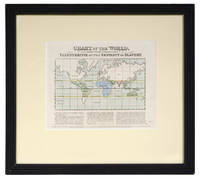
réf. 94420London Joseph Cross n.d. but c. 1825. . Hand coloured engraved map. The map shows the extent 30° north and south of the Equator in which sugar is grown. Australia is still shown as New Holland. 29.8 cm x 23.7 cm 11¾" x 9¼". Framed and glazed. Scarce colour-coded map concerning the sugar trade and its link to slavery. The section shaded yellow is the appropriate climate for the growing of sugar. The section shaded red is the area from which Britain may obtain sugar cheaply parts of South America and the West Indies under British rule. The blue section shows where Britain is unable to obtain sugar due to the devastating effects of the slave trade. The pink and green areas are those from which the sugar trade is limited by high duties and restrictions. The argument is that the duties and restrictions are there to protect the slave trade and ultimately damage the British economy. James Cropper was a successful and wealthy Quaker merchant philanthropist and disciple of Adam Smith. A major force in the anti-slavery movement he believed that eliminating tariff protections would lead to the end of slave labour in the West Indies. Cropper himself had interests in East Indian sugar and therefore stood to benefit from the reduction of tariffs which colored his role in the abolition movement. Nevertheless 'in Cropper's mind the intensity of Quaker Quietism had fused with the economic optimism of Adam Smith. Anti-slavery confirmed this union endowing laissez-faire with an immediate moral and spiritual purpose and enriching his faith in the inevitability of human progress' Davis James Cropper and the British Anti-Slavery Movement 1961. London, Joseph Cross, n.d. [but c. 1825]. unknown
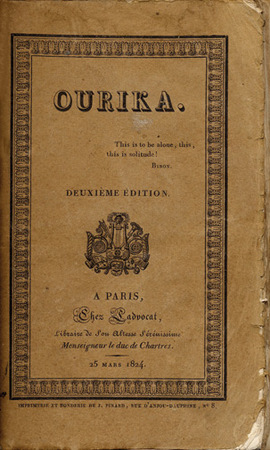
1824réf. 9443Paris, Ladvocat, 25 mars 1824 (Imprimerie de J. Pinard) ; in-12 ; demi-chagrin bleu-marine, dos à nerfs orné de roulettes décoratives de style romantique, fleurons à froid, filet doré sur les plats, plats de couverture marron illustrés conservés, non rogné (reliure fin XIXe-début XXe) ; 172 pp. y compris le faux-titre et le titre ; au verso du faux-titre on lit "Publié au profit d'un établissement de charité".
réf. 219851Paris, Grangé, 1776-1777 2 vol. in-8, XVI-327 pp. et [4]-IV-368 pp., tableau dépliant, demi-chagrin vert, tranches marbrées (reliure fin XIXe). Coiffes et nerfs frottés, coupes et coins usés. Rousseurs et mouillures au tome II.
réf. 13258Paris Joubert, Libraire-éditeur 1838 in 8 (20x13) 1 volume reliure demi veau fauve de l'époque, dos lisse orné de filets dorés, XVI et 261 pages [1]. Edition originale. Relié à la suite (du même): De l'affranchissement des esclaves et de ses rapports avec la politique actuelle; pour faire suite à Esclavage et Traite, (Paris, Joubert 1839) 74 pages. Première édition. Toute petite trace claire d'humidité sur l'extrémité de la marge supérieure du début de l'ouvrage, quelques feuillets jaunis, quelques rousseurs éparses. Agénor de Gasparin, 1810-1871, Homme politique français, maître des requêtes au Conseil d'État et député de la Corse en 1842, fils du Comte Adrien de Gasparin. Rare réunion en reliure d'époque. Bel exemplaire ( Photographies sur demande / We can send pictures of this book on simple request )
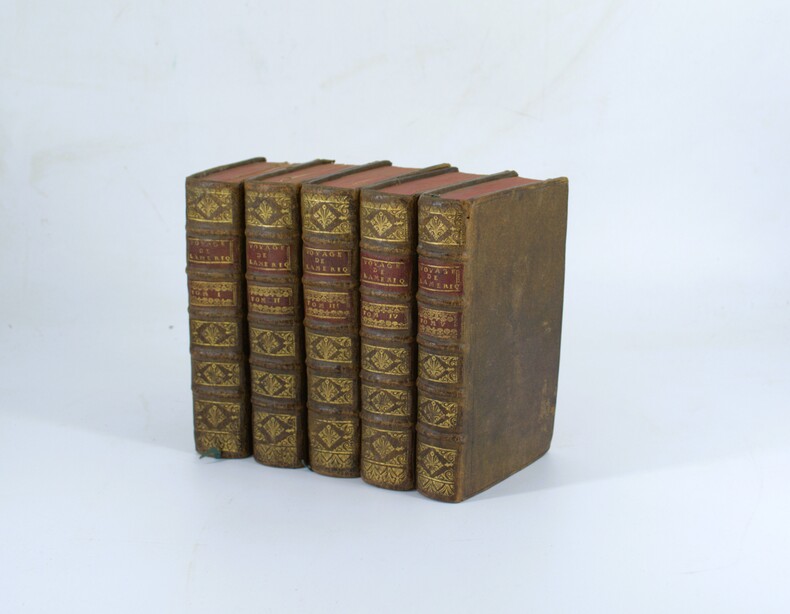
1722réf. PHO-2275Guillaume Cavelier, Paris, 1722, 5 volumes (6) in-12 (17x10cm), T1 ; xxxvi-5ff.-522pp., 21 planches, T2 ; 3ff.-598pp., 20 planches, T3 ; iv-549pp., 31 planches, T4 ; vi-558pp., 14 planches, T5 ; vi-524pp., 6 planches, 90 planches et cartes. Veau époque, dos à nerfs orné avec pièces de titre et tomaison en maroquin rouge, filets aux coupes. Frottements, 3 planches avec manques au tome 1, déchirure sans manque carte de la Martinique Édition Originale.
1788réf. 25143Bordeaux Imprimerie de Michel Racle 1788 in-8 dérelié, tranches rouges, couverture papier marbré moderne
1798réf. PHO-1492Paris, chez Buisson, an VII (1798),4 volumes ; Texte 3 volumes in-8 demi percale et un Atlas in-4, demi cuir époque, dos lisse avec auteur et titre ,44 planches, certaines en double page ou dépliantes, gravées par Antoine-François Tardieu d'après John Gabriel Stedman, la planche 25 détachée, mouillure claire en marge sur 4 planches, frottements coins et coupes usés, exlibris Aldo Maffey, journaliste et écrivain italien.