1 566 résultats
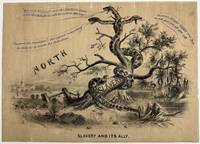
1864réf. 12816N.p. 1864. Lithograph 14.5 x 20.5 inches. Noticeable toning small areas of light discoloration along top margin short closed tear to left edge minor dust-soiling numerous creases and wrinkles. About very good. A dramatic political cartoon issued during the Civil War and satirizing the dangerous influence of those who argue a compromise on slavery or an easy solution to the war. The work was likely issued in the midst of the 1860 but more likely the 1864 presidential election campaign. The central image of the lithograph involves a three-headed snake -- labeled "The People's Party" and emerging from the American "South" personified by a moss-covered swamp -- which is wrapped around the length of a large tree labeled "Slavery." Each snake vocalizes a different misleading message about the issue of slavery and compromise seemingly aligned with political entities such as the Peace Party and the Copperheads. The messages from each snake head read respectively "Extend Slavery over the Northern States and the Rebellion will be over in 60 days;" "Persevere till after election and then we will give you all you ask;" and "'Support the President' - but oppose everything he may do to crush the Rebellion." This latter message indicates the author of the work supported President Lincoln. The North is personified in the background at left by a depiction of the U.S. Capitol Building. The central image of the lithograph carries echoes of the story of the Book of Genesis with the involvement of a deceptive serpent amid the tree of life. The lithograph is signed in the stone at bottom right reading simply "Brooks." Though the work came to us proposing the identify of the artist as Reuben Brooks 1794-1870 we were ultimately unable to confirm this authorship. The lack of an imprint in the lithograph also precludes easy research and identification. In fact the rarity of the lithograph makes it difficult to expound much more about it at all. OCLC reports just a single copy at the Peabody Essex Museum and it is not listed in Weitenkampf or Reilly. Given its rarity and content the present lithograph offers an outstanding opportunity for further research and contextualization. unknown
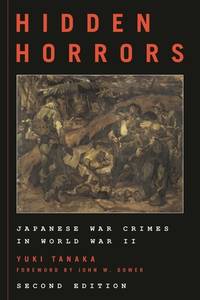
réf. DADAX1538102692Rowman & Littlefield Publishers 2017-10-06. Second. paperback. New. 5.86x0.79x9.07. Buy with confidence. Excellent Customer Service & Return policy. Rowman & Littlefield Publishers paperback
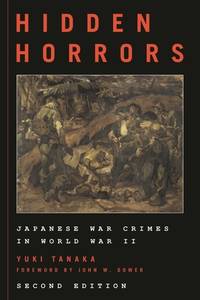
réf. DADAX1538102684Rowman & Littlefield Publishers 2017-10-06. Second. hardcover. New. 6.21x0.95x9.34. Buy with confidence. Excellent Customer Service & Return policy. Rowman & Littlefield Publishers hardcover
1817réf. 378683Philadelphia: Printed for the Convention 1817. 38 2pp. Errata in the rear. 8vo. Disbound. Foxing. Library blindstamp. 38 2pp. Errata in the rear. 8vo. With much on the kidnapping of free persons of color to enslave them in the south. Also of note is a report on the printing of an edition of Clarkson's History for distribution in the south. Printed for the Convention unknown
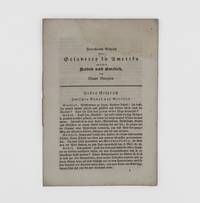
1845réf. 332998United States 1845. 16pp. 8vo. Self-wrappers dampstaining. 16pp. 8vo. An anti-slavery work in German written in the form of a dialogue between Gottlieb who argues that the slave trade is a sin and Nabob who begins by arguing in defense of slavery but is swayed by Gottlieb's arguments. unknown
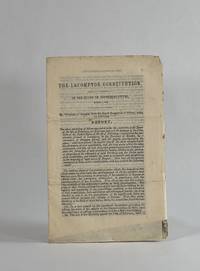
1858réf. 9866Washington 1858. Unbound. near Very Good binding. Octavo. 16 pp. First edition. Unbound folded sheet forming 8 leaves. Old folds with some closed tears/silverfishing along a couple the creases; staining to the bottom margin of a a few leaves not touching text; otherwise generally a very good copy. Circumstances surrounding Kansas's Lecompton Constitution brought the tension surrounding the confluence of statehood and slavery to a new level. A pro-slavery document the Lecompton Constitution and subsequent votes on it were a fraught and dishonest affair complete with subterfuge false choices boycotted votes and more all in service of establishing a pro-slavery constitution in a state that's populace had a clear and before the end demonstrable antislavery majority. This report before the House by Georgia's Alexander Stephens soon to be Vice President of the Confederate State of America defends a December election that was widely boycotted by antislavery voters because the options presented to the electorate both allowed for slavery to persist in Kansas despite the misleading language of the referendum. By August of this same year 1858 a new vote would be held to keep or toss out the Lecompton Constitution. In a vote that demonstrated the antislavery sentiment of Kansas residents the Constitution would be thrown out by a 7 to 1 margin. Leaving space for a constitution to be drafted and ratified prohibiting slavery in Kansas. Krdlicka James F. Colonists Citizens Constitutions: Creating the American Republic. Sabin 91261. unknown
1805réf. 369319London 1805. 4 46pp. Folio. Disbound. 4 46pp. Folio. A British Parliamentary paper on the slave trade issued in the midst of the debates for its abolition. The paper includes the correspondence between the British government and their West India colonies from 1804-1805 with statistical information on the enslaved populations of various islands and plantation owners. unknown
1805réf. 369285London 1805. 309; 4 46pp. Uncut. 2 vols. Folio. Disbound. 309; 4 46pp. Uncut. 2 vols. Folio. Two British Parliamentary papers on the slave trade issued in the midst of the debates for its abolition. The first paper organized by West Indian island includes the correspondence between the British government and their West India colonies regarding slavery from the period 1797 to 1800 and includes the text of the Leeward Island Amelioration Act of 1798. The paper includes a wealth of statistical information on the enslaved populations of each island as well as the names of plantation owners and their holdings. The second paper continues the correspondence from 1804-1805 with updated statistics. unknown
1836réf. 346520Washington D.C. 1836. 24th Congress 1st Session House Rep. No. 691. 24pp. 8vo. Disbound. 24th Congress 1st Session House Rep. No. 691. 24pp. 8vo. Many of the early anti-slavery efforts focussed on the abolition of slavery in the District of Columbia as Congress had full control over the laws within the District thus obviating any argument over state's rights. Until "retroceded" back to Virginia in 1846 the city of Alexandria and its notorious slave market was considered part of the District of Columbia making slavery in the District of particular importance. Inundated with petitions calling for the abolition of slavery in the District in 1836 Congress passed the so-called Pinckney Resolution which asserted that Congress "ought not" to consider slavery in the District and created a gag rule whereby all petitions memorials or other resolutions on the subject would be automatically tabled. unknown
1846réf. 319747Boston: Eastburn's Press 1846. 20pp. 8vo. Removed. Staining lower text. 20pp. 8vo. Eastburn's Press unknown
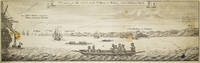
1745réf. 316296London: Thomas Astley 1745. Engraving. 4 x 13-1/4 inches. Creased from prior folding a few wormholes soiling and foxing. Engraving. 4 x 13-1/4 inches. Engraving showing "Negro Canoas carying Slaves aboard at Mansrow" extracted from A New Collection of Voyages and Travels 4 vols London: Thomas Astley 1745-7. Thomas Astley unknown
1842réf. 313227Philadelphia: stereotyped by L. Johnson 1842. First edition. 140 pp. 1 vols. 8vo. Original brown ribbed cloth rebacked with original spine laid down titled in gilt. Marginal dampstaining throughout scattered foxing some wear to boards good. First edition. 140 pp. 1 vols. 8vo. First edition of this report of this monumental Supreme Court decision regarding escaped slaves preceding by 15 years and rivaling in importance the Dred Scott case of 1857. "In Prigg the Court identified slavery as a core constitutional commitment with which states could not interfere. In this case the Court struck down northern states' 'personal liberty laws' established to protect alleged fugitive slaves from recapture without due process of law. When the professional 'slave catcher' Edward Prigg tried to remove Margaret Moran an alleged runaway he was unable to meet the burden of proof set out by Pennsylvania's 1826 Personal Liberty Law and failed to obtain the legal certificate permitting him to remove her. When Prigg proceeded to ignore this and removed Moran illegally to Maryland Pennsylvania convicted him of kidnapping. The US Supreme Court however overwhelmingly overturned Prigg's conviction 8-1 and pronounced state laws interfering with the return of alleged runaways a violation of the Fugitive Slave Clause." Beaumont The Civic Constitution 2014 p. 128. Blockson 9905; Dummond p. 140; Sabin 61207 stereotyped by L. Johnson unknown
1860réf. 62260Atlanta: Printed at the Daily Locomotive Job Office 1860. 47 pp. 1 vols. 8vo. Original blue printed wrappers. Wrapper a bit chipped else Fine. 47 pp. 1 vols. 8vo. Printed at the Daily Locomotive Job Office unknown
1826réf. 34337Washington: Printed by Gales & Seaton 1826. 181 pp. 1 vols. 8vo. Disbound some browning to title page else a good tightly sewn copy. 181 pp. 1 vols. 8vo. John Quincy Adams' brief memorandum transmits Secretary of State H. Clay's report; a detailed list of slave owners and the names of their slaves comprises the bulk of this document. Printed by Gales & Seaton unknown
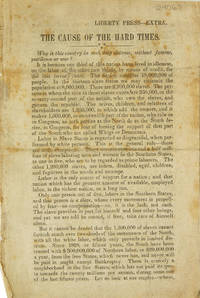
1843réf. 24068Utica 1843. 4pp. 1 vols. 8vo. Disbound spotted and soiled separated along spine else a good copy of this rare piece. 4pp. 1 vols. 8vo. Rare. An "Extra" to the "Liberty Press" relating to slavery and the "deep distress" and idleness caused by slavery. The author signed "Truth-Teller" attributes most of the labor problems and many of the economic ones to the instution of slavery. He recommends allowing Florida a place in the Union as a free state and Congress guaranteeing each state a republican form of government which he feels would bring about the end of slavery. unknown
1856réf. 257105Washington D.C.: Globe Office 1856. Signed by Kelsey ordering 2500 and by James Livingston for 100 and another. Old folds. Blind embossed " Platner & Porter Cobngress" staionary. Signed by Kelsey ordering 2500 and by James Livingston for 100 and another. Globe Office unknown
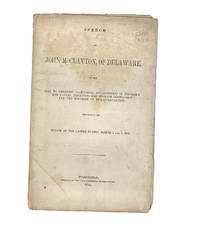
1854réf. 26154Washington: Printed at the Congressional Glove Office 1854. First edition. pp. 22. 1 vols. 8vo. Self wrappers unsewn as issued. Some browning and spotting wear along spine and edges but a very good copy. First edition. pp. 22. 1 vols. 8vo. Primarily concerning the issue of slavery in the territories this speech was part of the debates for the Kansas-Nebraska Act. The act initiated by Douglas ultimately repealed the Missouri Compromise allowed the local residents to determine whether the area was free or slave territory allowed for "the doctrine of popular sovereignty of the two territories" and laid the way for a transcontental railroad. The Kansas-Nebraska Act was passed in the Senate on the 3rd of March. Clayton was a lawyer noted agriculturist and long-time member of Congress who was Secretary of State under President Taylor. As Secretary of State he is best remembered for having negotiated the Clayton-Bulwer treaty with Great Britain which provided for a neutral international canal across Central America and "contained pledges which ultimately forced Great Britain to withdraw from large tracts of territory which.it had been occupying on the Isthmus." DAB. Sabin 13576n Printed at the Congressional Glove Office unknown
1827réf. 213910London: John Hatchard and Son 1827. Illustrated by 9 etchings. viii 464 pp. 1 vols. 8vo. Full calf spine gilt. Upper board missing 8 leaves damp-stained else Near Fine. Illustrated by 9 etchings. viii 464 pp. 1 vols. 8vo. John Hatchard and Son unknown
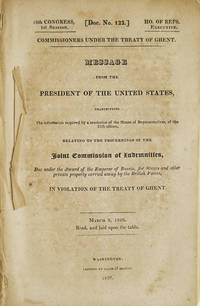
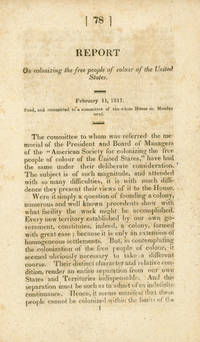
1817réf. 9350Washington City 1817. First Edition. 5 pp. 1 vols. 8vo. Disbound. Some foxing. First Edition. 5 pp. 1 vols. 8vo. First edition of the government's reply to the request of a group of Virginia planters for a "colony" to essentially rid them of the problem of "free coloured people." In December of 1816 a group of Virginia planters approached the government with a request asking for a location where freed blacks might be sent. In January this "memorial" was presented and in February it was answered with this "Report." This reply discusses location etc. In the end the government officially refused to have anything to do with the plan - thus the American Colonization Society was born. For a detailed account of these events see Dumond Anti-Slavery pp. 126-127. S&S 42738 2 copies unknown
1855réf. 62372Boston: Bela Marsh 1855. Second printing. Frontispiece portrait. 122 pp. 1 vols. Small 8vo. Brown cloth stamped in blind and gilt. Upper half of spine shaky else a nice tight copy. Second printing. Frontispiece portrait. 122 pp. 1 vols. Small 8vo. The author was convicted of aiding slaves to escape from Washinton D.C.--Blockson. Sabin 20912 Blockson 9838 for first ed. Bela Marsh unknown
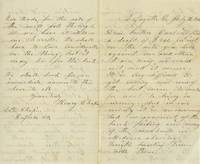
1861réf. Cat338Lafayette Ohio 1861. Autograph letter signed 2 pp. Addressed to D. T. Chapin of Enfield Connecticut. Good condition with normal folds and light wear. A concise but revealing early Civil War letter combining financial anxiety agricultural reporting and clear-eyed political commentary on slavery and the future course of the conflict. Writing amid the first months of the American Civil War Chapin opens with the immediate purpose of the letter—forwarding “a draft of $240 for int. on the note”—before situating the payment within a deteriorating economic landscape: “It is very difficult to get money now even of the best men.” He describes a local economy under strain noting “no market for wool to bring in money” compounded by regional instability “on account of the bank failing and many of the merchants in Medina closing” concluding bluntly: “Terrible bursting times with them.” Even the act of sending funds carries uncertainty as he cautions that “in these times I consider there is a risk in the best of banks.” Alongside these concerns Chapin provides a snapshot of agricultural conditions: “Corn is very backward and short wheat nearly middling grass rather below middling” summing up the situation as “rather tight times as well as troubled times.” The most significant portion of the letter however turns to the war itself and the unresolved question of slavery. He writes: “We hope the end will be well but our nation will have to be humbled. It is well to put down rebellion but it is rather queer that the cause of the trouble must be let entirely alone. The nation will get their eyes open after a while. The President possesses the war power to abolish slavery and Congress possess the power also in my humble opinion and the time will come when they will have to do it unless the south run their heads so hard against the rock as to do it themselves.” The letter closes with a brief note on a failed business transaction—“our trade for the sale of the mill fell through”—underscoring the economic uncertainty of the moment before returning to family matters. Overall an evocative early Civil War letter by a merchant expressing fears and anxiety for the pending conflict. unknown
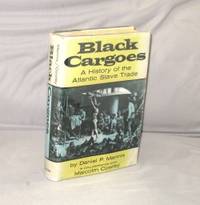
1962réf. 29404New York:: Viking Press 1962. Second Printing of the First Edition. A Very Good copy in a Very Good plus unclipped dust jacket with light edge wear to the extremities. The African slave trade in the Americas officially began in 1518 with the landing in the West Indies of the first black cargo direct from Africa and was offically suppressed in the United States in 1865. It is estimated that approximately 15 million Africans had crossed the Atlantic during this period. This book attempts to tell where the slaves came from how they were enslaved in Africa how they were purchased by sea captains how they wre transported and how the trip survivors were sold in West Indian and American markets. Viking Press, unknown
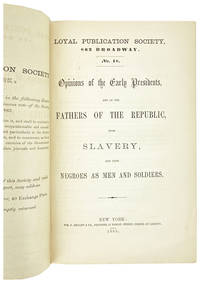
1863réf. 30221New York: Wm. Bryant & Co. Printers 41 Nassau Street Corner of Liberty 1863. Very Good. New York: Wm. Bryant & Co. Printers 41 Nassau Street Corner of Liberty 1863. First Edition. Octavo. 19 pp. Printed wraps. Housed in more recent marbled paper wraps with brown backstrip staples noticeable beneath. Abrasions and glue remnants to front wraps with loss to text; light creasing to edges; a few smudges. Binding sound and interior unmarked; Very Good. Includes excerpts from Presidents Washington to Jackson as well as quotations from Benjamin Franklin John Jay and Alexander Hamilton. Sabin 57406. Wm. Bryant & Co., Printers, 41 Nassau Street, Corner of Liberty unknown
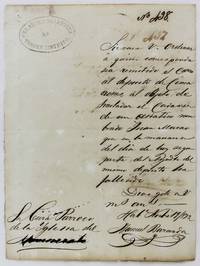
1872réf. 3066Havana 1872. Very good. Manuscript form approximately 8.5 x 6.25 inches. Minor wear at edges; a few small worm holes. Contemporary ink stamp. Light tanning and offsetting. This 1872 manuscript form from a Havana jail the Celaduria de la Punta notes the death there of an "Asiatico" a Chinese indentured servant with the given name of Juan Macao and orders the transfer of the body to the mortuary for cremation. Indentured servants found themselves jailed for several reasons including suspicion of theft and other crimes recapture following runaway or mere suspicion of abandoning a contract. unknown
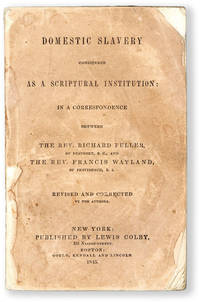
1845réf. 54623New York: Lewis Colby 1845. First Edition. Wrappered Issue. 18mo. 15cm; original peach wrappers with titles printed in black on front cover; viii2541pp. Modest wear front wrapper split along lower half of front joint with shallow loss to right corners of same; old faint tide-mark along lower edge of textblock with creasing to upper and lower corners of first and last few pages; terminal blank present though lacking rear wrapper; Good. Uncommon wrappered issue of this significant debate between two 19th century Baptist leaders over the Bible's teachings on slavery which went through at least four subsequent editions between 1847-1860. "The chapters were originally letters published in a Baptist newspaper in Boston Massachusetts. Southern pastor Richard Fuller and Northern educator Francis Wayland were each able defenders of their respective positions. These men were also good friends who believed that a difference of opinion about slavery should not necessiatate a breaking of Christian fellowship. Unfortunately these two Baptist leaders proved naive in this regard. Just weeks after the publication of the correspondence in book form Fuller's Southern Baptist Convention broke away from the larger Baptist denomination and formed a new ecclesiastical body. A number of issues factored into the division though the slavery debate was what ultimately led to the creation of a separate Baptist denomination in the South" from the Mercer University Press edition 2008. SABIN 26170; LCP AFRO-AMERICANA 3944. Lewis Colby unknown