2 034 résultats
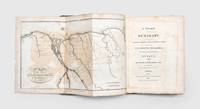
18208vo [22 x 14 cm]; [iv], 106 pp, complete with map and 6 engraved aquatint plates, includes the advertisement leaf sometimes removed. later brown cloth with printed title label on spine, leaning a bit, map has very light stain in corner, slightly foxed on few margins, interior is clean, unmarked and near fine. A picture of this book is available upon request by email. A narrative of the author's travels in Barbados, Surinam, Santa Cruz, and other islands in West Indies with comments on life their, condition of slaves, etc. Ragatz, Guide For The Study Of British Caribbean History 1763-1834, p. 235: 'The author was a surgeon assigned to the naval hospital in Barbados in 1807 and later to a war vessel cruising through the islands. He spent about four years in Caribbean service and became thoroughly familiar with colonial society. His book presents an interesting picture of the rushing business conducted by the slave traders in Barbados on the eve of abolition and gives accounts of encounters with the Spanish and French during the course of the Napoleonic wars. The author . . . was greatly shocked by the general prevalence of immorality'. Cundall 2150. Sabin 101114. The map is of the Caribbee or Leeward Islands, with South America shown at bottom. The detailed and attractive plates include: Carlisle Bay and Bridge Town Baradoes, showing harbour, boats, buildings; Slaves in Barbadoes; A Spanish Planter of Porto Rico; City of Paramarino, Surinam, showing fort, boats, etc; Indian Implements, showing 14 items including spears, musical instruments, etc; A Chief of the Bosjesmans or Bush Negroes on a Visti to the Governor of Paramaribo.
1807réf. 177680London: Richard Phillips 1807. First edition of this account of the British colonies within modern-day Guyana. Bolingbroke was a staunch supporter of the Transatlantic slave trade which he discusses in Chapter Five and dedicated this work to the colonial secretary William Windham. Henry Bolingbroke 1785-1855 was a Norfolk merchant who first visited Demerara in 1798. This region had been under the control of the French and Dutch until it was captured by the British in 1796. Bolingbroke remained in the colony until 1805; he then travelled to Surinam in Dutch Guiana to become Deputy Vendue Master in 1807 responsible for public sales and auctions including those of enslaved people. He was one of the 16 MPs who voted against the abolition of slavery in March 1807. In Chapter Five Bolingbroke writes about slavery and what he viewed as its economic importance. In his dedication to Windham 1750-1810 he praised him for relaxing monopoly restrictions and "resisting the abolition of a liberty essential at new settlements of importing additional labourers" p. iii. Quarto pp. xii 400. Folding engraved map. Original green paper-covered boards rebacked modern spine label edges untrimmed. Signature of one George Atkinson on front pastedown a few pencil notes internally. Spine head stabilized boards marked foxing and toning to map and contents two small closed tears to map repaired offsetting to title page: a very good copy. Sabin 6182. hardcover
Second Edition, with additions, 12mo, [5], 6-100pp., folding engraved map of the town of Leicester, 5 nineteenth-century mounted actual photographs tipped-in, and 6 engraved plates tipped, modern cloth, uncut, spine faded. Susanna Watts was born in Leicester and was dedicated to bringing about the immediate abolition of slavery. She started one of the first fair trade campaigns, wrote hymns and pamphlets and even locked horns with William Wilberforce. When her father died, her wealthy family's finances became tight and she had to find a way to support herself and her mother. At the age of 15 or 16 she began writing to earn money, and as well as penning the first guide to Leicester, she wrote poetry to promote the emancipation of slaves. To be a young woman and a published author in the late 18th Century would not have been an easy task, so the fact that she prevailed shows how passionate Susanna was in her desire to make her antislavery views known. "They dared to stand up in front of all these men and say what they thought was right ? two women from the provincial town of Leicester." According to Shirley Aucott, a local historian and author, Susanna worked on a periodical called 'The Hummingbird', which brought together different ideas on the antislavery moment, and she organised what must have been one of the first fair trade campaigns! She visited local households and shops to persuade them not to use sugar produced in the Caribbean, claiming that, "abstinence from sugar would sign the death warrant of West Indian slavery."
1998réf. cg243Conseil Général de la Réunion Dos carré collé 1998 In-4° dos carré collé, couverture illustrée, 110 pages, nombreuses illustrations en couleurs, mise en page originale, rencontre internationale de mail art pour célébrer l'anniversaire de l'abolition de l'esclavage, catalogue de l'exposition organisée à l'Artothèque du département de la Réunion de décembre 1998 à janvier 1999 ; couverture très légèrement frottée, très bon état Livraison a domicile (La Poste) ou en Mondial Relay sur simple demande.
réf. IDE200C190Albin Michel, Idées, Paris, 2001. In-8, broché, 229 pages. Couverture illustrée. Quelques frottements. Intérieur très frais. Quasi neuf. Étiquette magnétique en fin de livre.
2007réf. 207841Couverture souple. Broché. 254 pages. Passages surligné.
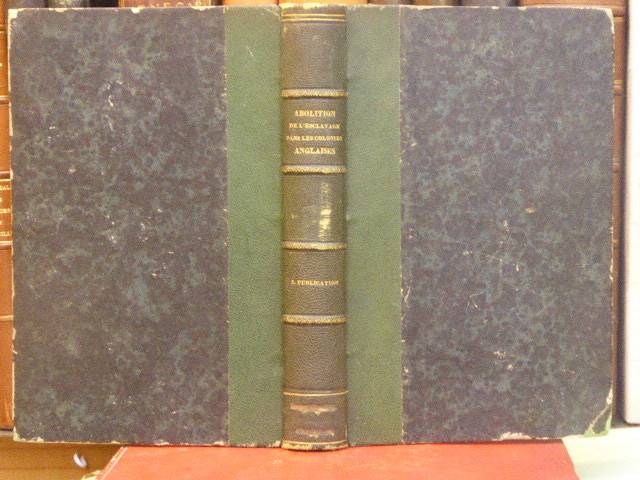
réf. ORD-19740Cinquième publication. Suite des rapports recueillis par le Département de la Marine et des enquêtes du Parlement anglais. Paris. Imprimerie Royale. 1843. Tome V et dernier de cette publication. Fort in-8 (155 x 230mm) dos lisse veau brun, frises or, pièce de titre veau rouge, plats mouchetés (reliure de l'époque), 2ff., 576 pages. Coiffes grignotées, 1er plat presue complètement détaché, traces de mouillures essentiellement sur les tranches sinon bon exemplaire, sans rousseurs. Provient de la Bibliothèque de Saint-Pierre-et-Miquelon (cachet). Rare. Sabin 12222 pour les 2 premiers volumes.
réf. 733216Imprimerie Royale Paris 1841 In-8 ( 230 X 155 mm ) de XVI-546 pages, demi-chagrin vert sapin, dos à nerfs orné de chaînettes dorées. EDITION ORIGINALE très rare. Usures minimes aux coupes, bel exemplaire, très pur imprimé sur beau papier vergé.
1847réf. 448051847. Paris, Pagnerre, 1847. Format 13x21 cm, broche, 32 pages. La couverture imprimee sert de page de titre. Une signature a l'encre sur la premiere page. Tres bon etat.
réf. 1689Comité des fêtes du 5ème arrondissement, avec le concours du Centre culturel du Panthéon, Paris, 1998.
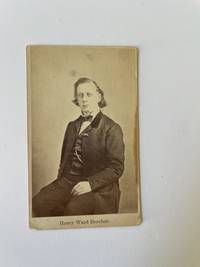
1861réf. 156211861. Beecher Henry Ward circa 1860s carte-de-visite portrait depicts the Congregationalist minister and abolitionist during the decade in which the national conflict over slavery culminated in the Civil War and emancipation. The Library of Congress identifies Beecher as an abolitionist author and Congregationalist clergyman with the bulk of his surviving papers dating from 1840 to 1865. As pastor of Plymouth Church in Brooklyn Beecher opposed the Fugitive Slave Law encouraged resistance to slavery supported Free-State settlers in Kansas and used his pulpit to raise money to purchase enslaved people from bondage. His association with antislavery rifles sent to Kansas also produced the widely used term "Beecher's Bibles." Albumen print carte de visite circa 1860s. 2½ x 4 inches. Sepia-toned image showing Beecher formally dressed and seated presented as a head-and-shoulders portrait. The small photographic format dates from a period when Beecher was nationally prominent as a clergyman and antislavery speaker. His abolitionist activity immediately preceding the Civil War included opposition to the Compromise of 1850 and Fugitive Slave Law and support for antislavery settlement in Kansas; in February 1860 he used Plymouth Church to raise the purchase price required to free a ten-year-old enslaved girl known as Pinky. The portrait dates to the decade in which Beecher's antislavery advocacy became connected to the Civil War itself. At the April 1865 flag-raising ceremony at Fort Sumter following the Union victory Beecher delivered an address condemning slavery after Robert Anderson raised the United States flag over the fort. The carte de visite is in excellent condition. A contemporary photographic portrait of one of the nineteenth century's prominent abolitionist clergymen dating from the period encompassing the Civil War and the abolition of slavery in the United States. unknown
1861réf. 156211861. Beecher Henry Ward circa 1860s carte-de-visite portrait depicts the Congregationalist minister and abolitionist during the decade in which the national conflict over slavery culminated in the Civil War and emancipation. The Library of Congress identifies Beecher as an abolitionist author and Congregationalist clergyman with the bulk of his surviving papers dating from 1840 to 1865. As pastor of Plymouth Church in Brooklyn Beecher opposed the Fugitive Slave Law encouraged resistance to slavery supported Free-State settlers in Kansas and used his pulpit to raise money to purchase enslaved people from bondage. His association with antislavery rifles sent to Kansas also produced the widely used term "Beecher's Bibles." Albumen print carte de visite circa 1860s. 2½ x 4 inches. Sepia-toned image showing Beecher formally dressed and seated presented as a head-and-shoulders portrait. The small photographic format dates from a period when Beecher was nationally prominent as a clergyman and antislavery speaker. His abolitionist activity immediately preceding the Civil War included opposition to the Compromise of 1850 and Fugitive Slave Law and support for antislavery settlement in Kansas; in February 1860 he used Plymouth Church to raise the purchase price required to free a ten-year-old enslaved girl known as Pinky. The portrait dates to the decade in which Beecher's antislavery advocacy became connected to the Civil War itself. At the April 1865 flag-raising ceremony at Fort Sumter following the Union victory Beecher delivered an address condemning slavery after Robert Anderson raised the United States flag over the fort. The carte de visite is in excellent condition. A contemporary photographic portrait of one of the nineteenth century's prominent abolitionist clergymen dating from the period encompassing the Civil War and the abolition of slavery in the United States. unknown books
1875réf. 56706Hachette, 1875, in-12, 256 pp, un portrait gravé en frontispice, reliure demi-basane verte, dos à 4 nerfs soulignés à froid, auteur, titre et fleurons dorés (rel. de l'époque), dos lég. frotté, bon état. Bon exemplaire sans rousseurs. Edition originale (Lincoln Bibliography, 3833)
1880réf. 771641880 Paris, Hachette, 1875, in 12 broché, 256 pages ; portrait en frontispicecouverture fanée.
In-8, 256p. Avec un portrait gravé de Lincoln en frontispice. Tampon de possesseur sur page de garde, sinon bel exemplaire.
réf. 34079Librairie Hachette Et Cie Paris 1875 In-12 ( 180 X 115 mm ) de 253 pages, demi-basane aubergine, dos lisse orné de filets dorés. Portrait en frontispice. Edition originale. Rousseurs claires, agréable exemplaire.
réf. 15584Edition DAPPER , 2007 - In-4° ( format petit cahier ), br, coverture ill, 165 pages, très belles ill in text, index et notes, cartes, éléments et tableaux, exhaustif et superbe exemplaire.
réf. QWA-6318Annales littéraires de l'Université de Besançon / Les Belles Lettres, 1974, in-4 br. (19,5 x 24), 393 p., "Annales littéraires de l'Université de Besançon - Centre de recherches d'histoire ancienne, vol. 11", 18 tableaux, 10 indices, un plan et 6 cartes, très bon état.
réf. QWA-7199Annales littéraires de l'Université de Besançon / Les Belles Lettres, 1976, in-4 rel. pleine toile (19 x 24), 462 p.,"Annales littéraires de l'Université de Besançon - Centre de recherches d'histoire ancienne, vol. 18", couvertures ill. conservées, marque de bibliothèque, très bon état.
1982réf. ROD0031744Fayard. 1982. In-4. Cartonné. Bon état, Couv. convenable, Dos satisfaisant, Intérieur bon état. 96p. Nombreuses illustrations en couleurs in et hors texte.. . . . Classification Dewey : 326-Esclavage
1883réf. 1255001883. First Edition. Signed. PILLSBURY Parker. Acts of the Anti-Slavery Apostles. Concord N.H.: Clague Wegman Schlicht 1883. Octavo original gilt-lettered brown cloth floral endpapers; pp. 503. $1500.First edition of the fearless abolitionist's memoir a distinctive presentation copy inscribed by Pillsbury to ""To Mr. & Mrs. F. M. CÑ With sincere regards and best wishes of their friend Parker Pillsbury. Concord New Hampshire 1894."" Hailed as a ""fighting book"" it documents the bold tactics of this notorious radical who early warned America was ""hastening toÉ a baptism of blood"" and was praised by Emerson as a ""tough oak stock of a man not to be silenced or insulted or intimidated"" a splendid copy in original cloth.Born in Massachusetts in 1809 the son of a blacksmith Pillsbury became a Congregational minister but was soon famed as one of the era's most radical abolitionists. Having once witnessed a slave auction he recorded its advertisement of: ""'two mules a horse andÉ 27 Negroes'É Does any mortal man or woman"" he asked ""comprehend all the tremendous meaning of those words"" Infamous for his apocalyptic style and confrontational tactics Pillsbury early declared the nation was ""hastening to its baptism. It is a baptism of blood."" He was resolute in denying any possible ""union with slave-holders""and also insisted ""women must be given their due rights."" Emerson admired him as a ""tough oak stock of a man not to be silenced or insulted or intimidated by a mob because he is more mob than they. He mobs the mob."" He was ""in Susan B. Anthony's eyes the Jeremiah of the anti-slavery movement"" Filler Parker Pillsbury 315 328-37.Fiercely anticlerical in his writings and in action Pillsbury would dramatically interrupt ""religious servicesÉ calling on audiences to 'come out' from their proslavery churches."" He linked most clergy to timid politicians and cautious abolitionists proclaiming them a ""brotherhood of thieves"" Robertson Hard Cold Stern Life 189. Pillsbury's 1883 memoir Acts of the Anti-Slavery Apostles was above all ""a fighting book."" In it he writes of his esteem for his fellow white radical Stephen S. Foster and leading Black abolitionists such as David Ruggles as well as his disdain for Lincoln; Pillsbury ""never forgot that the idolized Lincoln meant to save the Union and not necessarily to free the slaves"" Filler 336. First edition first printing: issued in brown cloth this copy and in green cloth no priority determined. Blockson 9099. See Work 304 1884 edition. This copy is inscribed to ""To Mr. & Mrs. F. M. Crosby."" It is notable that while there was a Crosby family of abolitionists in New Hampshire the identity of this copy's recipients could not be confirmed.Text pristine; tiniest bit of soiling to cloth. An especially handsome copy in fine condition. hardcover
1883réf. 1255001883. First Edition. Signed. PILLSBURY Parker. Acts of the Anti-Slavery Apostles. Concord N.H.: Clague Wegman Schlicht 1883. Octavo original gilt-lettered brown cloth floral endpapers; pp. 503. $1500.First edition of the fearless abolitionist's memoir a distinctive presentation copy inscribed by Pillsbury to ""To Mr. & Mrs. F. M. CÑ With sincere regards and best wishes of their friend Parker Pillsbury. Concord New Hampshire 1894."" Hailed as a ""fighting book"" it documents the bold tactics of this notorious radical who early warned America was ""hastening toÉ a baptism of blood"" and was praised by Emerson as a ""tough oak stock of a man not to be silenced or insulted or intimidated"" a splendid copy in original cloth.Born in Massachusetts in 1809 the son of a blacksmith Pillsbury became a Congregational minister but was soon famed as one of the era's most radical abolitionists. Having once witnessed a slave auction he recorded its advertisement of: ""'two mules a horse andÉ 27 Negroes'É Does any mortal man or woman"" he asked ""comprehend all the tremendous meaning of those words"" Infamous for his apocalyptic style and confrontational tactics Pillsbury early declared the nation was ""hastening to its baptism. It is a baptism of blood."" He was resolute in denying any possible ""union with slave-holders""and also insisted ""women must be given their due rights."" Emerson admired him as a ""tough oak stock of a man not to be silenced or insulted or intimidated by a mob because he is more mob than they. He mobs the mob."" He was ""in Susan B. Anthony's eyes the Jeremiah of the anti-slavery movement"" Filler Parker Pillsbury 315 328-37.Fiercely anticlerical in his writings and in action Pillsbury would dramatically interrupt ""religious servicesÉ calling on audiences to 'come out' from their proslavery churches."" He linked most clergy to timid politicians and cautious abolitionists proclaiming them a ""brotherhood of thieves"" Robertson Hard Cold Stern Life 189. Pillsbury's 1883 memoir Acts of the Anti-Slavery Apostles was above all ""a fighting book."" In it he writes of his esteem for his fellow white radical Stephen S. Foster and leading Black abolitionists such as David Ruggles as well as his disdain for Lincoln; Pillsbury ""never forgot that the idolized Lincoln meant to save the Union and not necessarily to free the slaves"" Filler 336. First edition first printing: issued in brown cloth this copy and in green cloth no priority determined. Blockson 9099. See Work 304 1884 edition. This copy is inscribed to ""To Mr. & Mrs. F. M. Crosby."" It is notable that while there was a Crosby family of abolitionists in New Hampshire the identity of this copy's recipients could not be confirmed.Text pristine; tiniest bit of soiling to cloth. An especially handsome copy in fine condition. hardcover books
1837réf. 101441Pamphlet small 8vo removed dbd 11 pp. Removed some minor foxing normal aging and browning; otherwise very good. This pamphlet was prepared for the New York chapter of the Religious Society of Friends Quakers for their annual meeting to oppose slavery. Not surprisingly this tract encourages people to help end "this stain upon our national character." While there are religious sentiments in this work much of the discussion relates to social injustice and morality. Mahlon Day (and New York Quakers),
1837réf. 101441Pamphlet small 8vo removed dbd 11 pp. Removed some minor foxing normal aging and browning; otherwise very good. This pamphlet was prepared for the New York chapter of the Religious Society of Friends Quakers for their annual meeting to oppose slavery. Not surprisingly this tract encourages people to help end "this stain upon our national character." While there are religious sentiments in this work much of the discussion relates to social injustice and morality. Mahlon Day (and New York Quakers), books
In-8 (220 x143 mm), broché sous couture, 32 p., non rogné. Edition grenobloise à la date de l’originale parisienne. Important texte théorique lu le 26 septembre 1791, par l’abbé Grégoire, devant la Société des amis de la Constitution qu’il présidait et qui deviendra le club des Jacobins. Alors que l’Assemblée constituante se séparait pour faire place à la Législative, Grégoire analyse avec sévérité les travaux de l’Assemblée durant sa session de vingt-neuf mois et en appelle à un nouvel élan révolutionnaire. Il revient sur la question de l’inviolabilité du roi et s’interroge sur la validité des institutions, notamment le régime monarchique. D’importantes pages sont consacrées à la question de l’esclavage dans lesquels Grégoire constate l’échec de ses tentatives abolitionnistes et attaque violemment le lobby pro esclavagiste ainsi que les colons blancs des îles. WorldCat ne recense qu’un unique exemplaire de cette édition grenobloise dans le monde. Quelques piqûres éparses. Bon exemplaire, non rogné, tel que paru.