COLLECTIFMareMagnum

678 Ergebnisse
Hommes & Migrations. 1983-1995. In-4 Carré. Broché. Bon état. Couv. convenable. Dos satisfaisant. Intérieur frais. 130 numéros de 40-60 pages chacun. Tampons de bibliothèque sur les 1ers plats. Avec le n° 1239, sept.-oct. 2002, et 4 suppléments: Tables 1983, 1984, 1985, 1990 1983: n° 1044 à 1061 (moins n° 1056); 1984: n°1062-1076 (moins n° 1069, 1075); 1985: n° 1077-1087; 1986: n° 1088-1098; 1987: n° 1099-1108; 1988: n° 1109-1117; 1989: n° 1118-1127; 1990: n° 1128-1138; 1991: n° 1139-1149; 1992: n° 1150-1160; 1993: n° 1161-1171; 1994: n° 1172-1182 (moins n° 1174-1176, 1179); 1995: n° 1183, 1187. 2002: n° 1239. Sommaire du n° 1044, 34e année, 1983: Les étudiants étrangers dans les Grandes Ecoles. Les mouvements migratoires en Europe, Le lutte pour la seconde génération de migrants, Danilo Slivnik. Le néo-racisme, Augustin Barbara, la France et les enfants d'émigrés nés après 1963, Farida B. Sommaire du n° 1187, mai 1995: Après les O.S., Où sont passés les travailleurs immigrés. Discriminations en tout genre, Maryse Tripier, Véronique De Rudder, François Vourc'h, Catherine Grangeard, Danièle Lochak. Travail illégal, extrême précarité, Alain Morice, Patricia Pardo.
Best.-Nr. 227729Paris, Ollendorff, 1901 2 vol. in-8, XIX-410 pp. et 419 pp., index, demi-maroquin rouge à la Bradel, couv. cons. (reliure de l'époque).
Best.-Nr. 228340A Londres, et se trouve à Bruxelles, chez Emm. Flon, 1793 in-8, (III)-VIII-79-(1) pp., papier bleu à la Bradel (Ateliers Laurenchet).
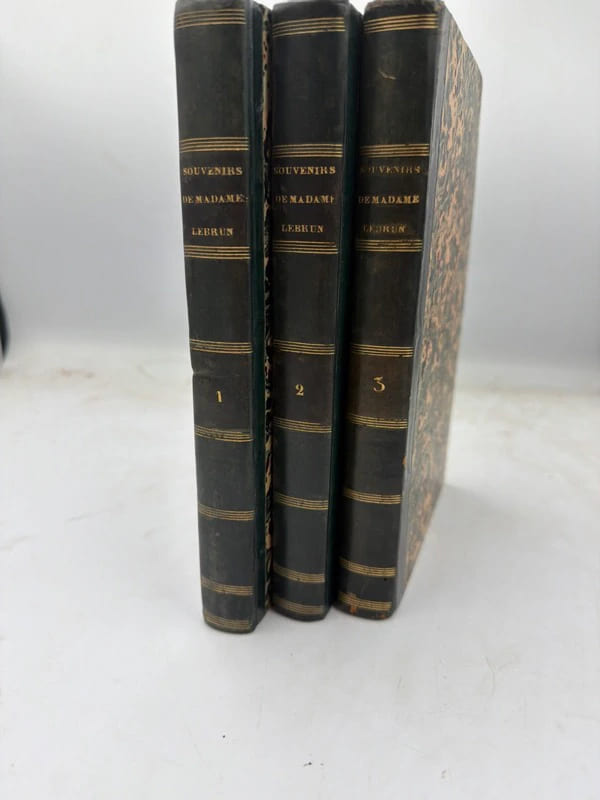
Best.-Nr. 235869Paris, C. J. Trouvé, 1824 in-8, XVII-414 pp., demi-maroquin vert sapin à la Bradel, couverture conservée (Carayon).
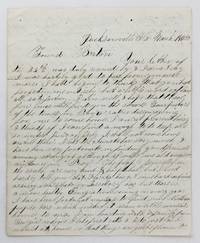
1858Best.-Nr. 4106Jacksonville Fl: March 15 1858. Very good plus. 4pp. on a single folded sheet. Old mailing folds. An informative dispatch from antebellum Florida from A.C Scranton to "Friend Barton" in 1858. In his letter Scranton reports that despite some problems he is enjoying southern people and general life in Florida: "The people generally in the south are very kind & hospitibal but I need hardly to tell you that Florida has got some hard times as every new state or Territory has but thare is a more healthy Emigration coming in every year I have been fortunate anough to find some Northern people here which makes it seam a little more like home to me. I am boarding with a family from Georgia whome I like first rate & I do just as I would at home so that things are quite pleasant here considering I am amongst strangers." He then provides information on Jacksonville and then two disasters that hit his adopted hometown: "Jacksonville is the largest place in Florida & had at one time about 3000 inhabitants it is not as large as it was once some three years ago it was visited by a very destructive fire & burned nearly half of the town. Last summer there was some kind of Fever here that almost prostrated the place some called it the Yellow Fever & some the African but none could tell for certin.about a hundred & fifteen or twenty that died here in 3 months & a grate many left the town nearly all the stors wer closed not a sound of a hammer was to be heard. When cold weather came it stoped the sickness and it seams quite lively now. It has been for many years a grate resort in the winter season for invaleds but on account of the sickness last summer thare are but few this winter if it continus healthy this summer the place will revive but if not it will kill it entirely." Scranton also discusses the transportation system that served Jacksonville and the recent winding down of the Seminole Wars: "It is situated on the Johns River about 23 miles from the mouth and is connected with Charleston & Savana by a regular line of steamers that runs up the river a hundred miles to a place called Platka whare Emigrants land & then travel by land to the interior to settle the country thare is a railroad building from this place to Tallahasse the capital of the state a distance of a hundred & eighty miles which wen completed will be a little help to this place. There is also another in progress from Fernandina a new town that lays in the North East corner of the state to a place called cedar keys on the gulf side whare they intend to carry the US mail direct from New Orleans to New York insted of going round by Key west & will shorten the time considerable. Florida has cost Uncle Sam a large some of money.the government.will make a treaty with them & send them into the Indian Territory & then close the Indian war in Florida." Almost all of the Seminoles remaining in Florida relocated to Indian Territory in the year this letter was written. A wonderfully-detailed firsthand account of Jacksonville and its development and challenges during the late 1850s. A printed transcription accompanies the letter. March 15 unknown
1858Best.-Nr. 4106Jacksonville Fl: March 15 1858. Very good plus. 4pp. on a single folded sheet. Old mailing folds. An informative dispatch from antebellum Florida from A.C Scranton to "Friend Barton" in 1858. In his letter Scranton reports that despite some problems he is enjoying southern people and general life in Florida: "The people generally in the south are very kind & hospitibal but I need hardly to tell you that Florida has got some hard times as every new state or Territory has but thare is a more healthy Emigration coming in every year I have been fortunate anough to find some Northern people here which makes it seam a little more like home to me. I am boarding with a family from Georgia whome I like first rate & I do just as I would at home so that things are quite pleasant here considering I am amongst strangers." He then provides information on Jacksonville and then two disasters that hit his adopted hometown: "Jacksonville is the largest place in Florida & had at one time about 3000 inhabitants it is not as large as it was once some three years ago it was visited by a very destructive fire & burned nearly half of the town. Last summer there was some kind of Fever here that almost prostrated the place some called it the Yellow Fever & some the African but none could tell for certin.about a hundred & fifteen or twenty that died here in 3 months & a grate many left the town nearly all the stors wer closed not a sound of a hammer was to be heard. When cold weather came it stoped the sickness and it seams quite lively now. It has been for many years a grate resort in the winter season for invaleds but on account of the sickness last summer thare are but few this winter if it continus healthy this summer the place will revive but if not it will kill it entirely." Scranton also discusses the transportation system that served Jacksonville and the recent winding down of the Seminole Wars: "It is situated on the Johns River about 23 miles from the mouth and is connected with Charleston & Savana by a regular line of steamers that runs up the river a hundred miles to a place called Platka whare Emigrants land & then travel by land to the interior to settle the country thare is a railroad building from this place to Tallahasse the capital of the state a distance of a hundred & eighty miles which wen completed will be a little help to this place. There is also another in progress from Fernandina a new town that lays in the North East corner of the state to a place called cedar keys on the gulf side whare they intend to carry the US mail direct from New Orleans to New York insted of going round by Key west & will shorten the time considerable. Florida has cost Uncle Sam a large some of money.the government.will make a treaty with them & send them into the Indian Territory & then close the Indian war in Florida." Almost all of the Seminoles remaining in Florida relocated to Indian Territory in the year this letter was written. A wonderfully-detailed firsthand account of Jacksonville and its development and challenges during the late 1850s. A printed transcription accompanies the letter. March 15 unknown books
Best.-Nr. 182062Paris, Hubert, 1825 2 vol. in-8, XVIII-432 pp. et 416 pp., basane fauve, dos lisse orné, filets dorés en encadrement sur les plats, tranches marbrées (reliure de l'époque). Bon exemplaire.
2010Best.-Nr. SBS-9780754676102ASHGATE 2010. Hardcover. New. ASHGATE hardcover
2010Best.-Nr. SBS-9780754676102ASHGATE 2010. Hardcover. New. ASHGATE hardcover
Best.-Nr. 15565Paris, Germer Baillière (Tomes 1 à 3), puis Félix Alcan (Tomes 4 à 6), 1869-1888 ; 6 tomes in-8 (21,8 x 14 cm) ; demi-chagrin vert-empire, dos à nerfs soulignés de pointillés et filets dorés, titre et tomaison dorés (reliure de l'époque) ; VIII, 604 ; 512 ; 532 ; 502 ; 461, (1) errata ; 458, (2) pp. catalogue.
18928vo; 1st edition. Original paper wrappers, 21 pages ; 23 cm. Singerman Nr. 4396.Martin Morris (December 3, 1834 September 12, 1909) was an American lawyer and federal judge. In 1863, he began the practice of law in Baltimore, Maryland, and in 1867 moved to Washington to enter into partnership with Richard T. Merrick. He continued a member of the firm Merrick and Morris until the death of Merrick (1885), when he formed a partnership with George E. Hamilton, and continued actively to practice his profession, being connected with important litigation both in the local courts and in the Supreme Court. He was appointed by President Grover Cleveland an associate Justice of the United States Court of Appeals for the District of Columbia Circuit upon the establishment of that Court in 1893. OCLC lists 15 copies worldwide. Light vertical crease, light toning, Very Good Condition. (KH-8-41)
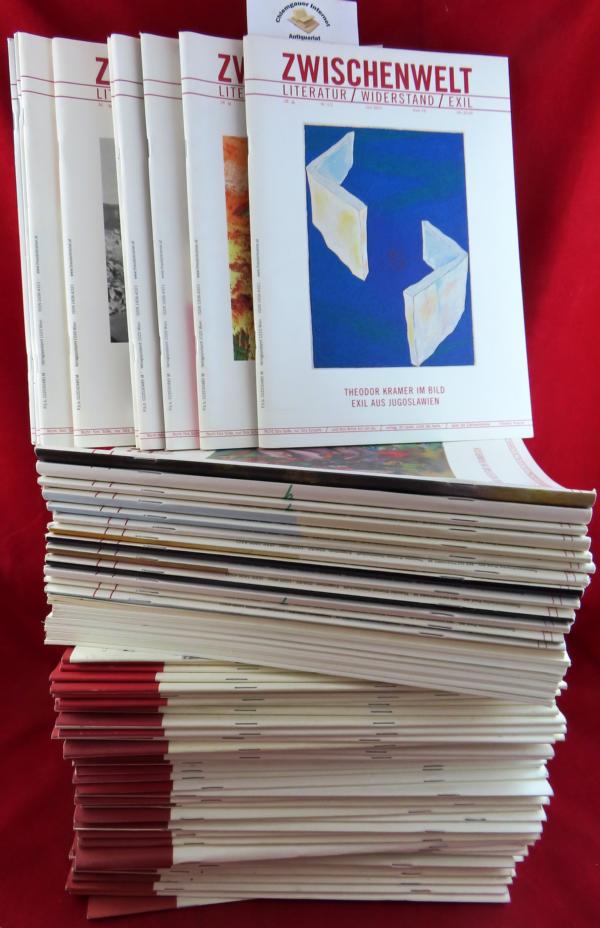
1994Best.-Nr. 306662Wien, Zwischenwelt, 1994. Mit zahlreichen dokumentarischen Abbildungen. Originalbroschur. 28cm
1946Best.-Nr. 6505Mexico: Secretaria del Trabajo y Prevision Social 1946. Very good. 120pp. Quarto. Illustrated. Original cream printed wrappers. Light wear heavier to extremities. Text toned. One of the first official studies on the subject of braceros. The study was carried out by Luis Fernández del Campo Director of Social Security for the Mexican Ministry of Labor. Fernández del Campo focuses on the characteristics that typify the Mexican migrant laborers who have emigrated to the North exploring the reasons that have prompted them to emigrate and the changes that the foreign environment in the United States has had on them. The introduction points put that "The southern region of the United States especially Texas has been for many years a market for Mexican labor cheap labor subject to multiple arbitrariness and even used to depress the salaries of North American workers and to displace them from their occupations. Cotton picking in the State of Texas was the activity that attracted the largest number of Mexican emigrant workers." The text also points out the disparities in wages for these workers depending on the region in which they work. The work contains chapters on international arrangements for migrant workers a statistical analysis of survey data gathered from braceros including their salaries and the mental disorders suffered by some migrant workers. Interspersed throughout the work are numerous photographs featuring groups of migrant workers in the application process and in the fields. A detailed informative and scarce work that is absolutely essential for the study of migrant labor in the southwestern United States. Secretaria del Trabajo y Prevision Social unknown
1946Best.-Nr. 6505Mexico: Secretaria del Trabajo y Prevision Social 1946. Very good. 120pp. Quarto. Illustrated. Original cream printed wrappers. Light wear heavier to extremities. Text toned. One of the first official studies on the subject of braceros. The study was carried out by Luis Fernández del Campo Director of Social Security for the Mexican Ministry of Labor. Fernández del Campo focuses on the characteristics that typify the Mexican migrant laborers who have emigrated to the North exploring the reasons that have prompted them to emigrate and the changes that the foreign environment in the United States has had on them. The introduction points put that "The southern region of the United States especially Texas has been for many years a market for Mexican labor cheap labor subject to multiple arbitrariness and even used to depress the salaries of North American workers and to displace them from their occupations. Cotton picking in the State of Texas was the activity that attracted the largest number of Mexican emigrant workers." The text also points out the disparities in wages for these workers depending on the region in which they work. The work contains chapters on international arrangements for migrant workers a statistical analysis of survey data gathered from braceros including their salaries and the mental disorders suffered by some migrant workers. Interspersed throughout the work are numerous photographs featuring groups of migrant workers in the application process and in the fields. A detailed informative and scarce work that is absolutely essential for the study of migrant labor in the southwestern United States. Secretaria del Trabajo y Prevision Social unknown books
1878Best.-Nr. 46954Red Cloud: Argus Steam Print n. d. ca 1878. 1878. First edition. First edition. 8vo. 13 1/2" x 12" illustrated map on one side plus pictures of the Farmers and Merchants Bank and the home of J. L. Miner Red Cloud and front and rear cover panels. The other side promotes Webster County and Red Cloud plus views of homes of prominent residents as well as businesses. A promotional booklet with plat map produced by the real estate firm of Warner & Warren of Republican Valley. Touted here are both Webster County and the city of Red Cloud including the businesses public schools street-car lines factories creamery real estate railroads and more. Advertisements for the Burlington & Missouri River Railway as well as the Chicago Burlington and Quincy R. R. both of which ran from Chicago to Red Cloud are included as well. The map of Webster County Nebraska shows the town of Red Cloud and sixteen of its neighboring counties as well as railroad lines rivers and property divisions. This map was produced by Fort Abstract Co. of Red Cloud said here to keep a complete set of books and plats of all towns and sub-divisions. Illustrations depict buildings in Red Cloud various residences of town citizens and appealing views of the town. Red Cloud was founded on homestead land in 1871 by a group of men including Silas Garber 1833-1905 who would go on to serve as Nebraska's Governor from 1875 to 1879. The town was named by Garber and local businessmen in honor of the chief of the Olgalala tribe of the Teton-Lakota Sioux. When Webster County was organized Red Cloud was designated as the county seat. In 1879 the Burlington & Missouri River Railway reached Red Cloud -- stimulating immigration from America's eastern seaboard and bringing a variety of cultural heritages to town including those of Germany Scandinavia Great Britain and Canada Austro-Hungary aka Bohemians and so forth. The town's cultural melting pot was marvelously depicted in the literary works of Willa Cather who lived in Red Cloud for several years with her family beginning in 1883 at the age of nine. Cather would use the town as the basis for such fictional towns as "Black Hawk" in My Antonia 1918. We could find no copies recorded in OCLC. A few small old water stains to the rear cover short separations and small punctures along old folds. Argus Steam Print, n. d. (ca 1878). unknown
Best.-Nr. 188306Paris, Victor Thiercelin, [Imprimerie de H. Balzac], 1828 in-8, (4)-319 pp., frontispice, demi-veau bleu nuit, dos lisse, filets dorés (Boichot). Fortes rousseurs au frontispice. Bon exemplaire.
Best.-Nr. 223262Paris, Au Bureau de la Mode, 1844 2 vol. in-8, XV-436 pp. et 423 pp., front. au tome 1, ill., fac-similé, carte dépl., demi-chagrin vert, dos à nerfs, filets dorés et à froid (reliure de l'époque). Qqs rousseurs, un coin un peu choqué, mouillure angulaire sur la page de faux-titre.
Best.-Nr. 210120Paris, A. J. Kilian, Paris, Ch. Picquet, 1826 in-8, 10-XX-381 pp., fac-similé dépl., basane brune cailloutée, dos lisse orné, tranches marbrées (reliure de l'époque).
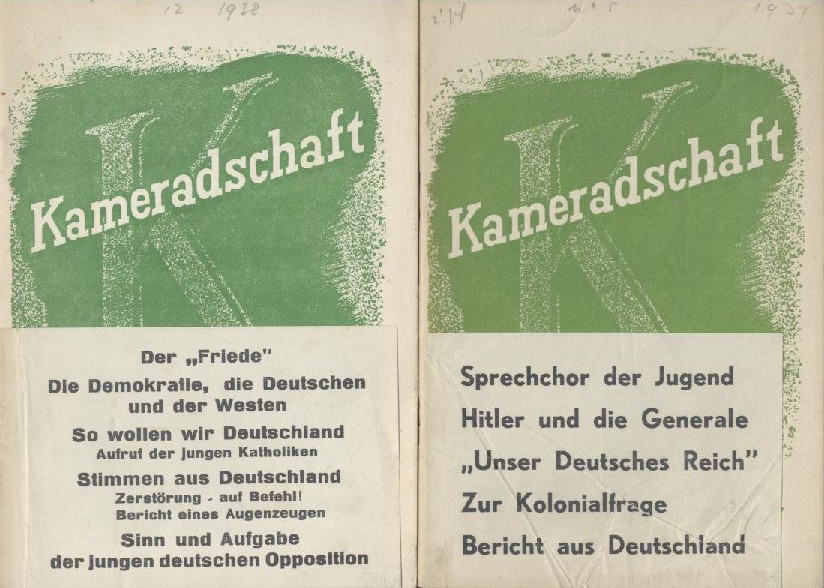
1939Best.-Nr. 9608Amsterdam 1938-1939. Je ca. 24 Seiten. Kart. Geringe Gebrsp. Klammerheftung etwas angerostet. Teils etwas gebräunt u. fleckig. Insgesamt gut erhalten. 4 Hefte mit einseitig montierter Inhaltsangabe auf dem vorderen Umschlag. Wichtige Widerstandszeitschrift aus der Bündischen und Jugendbewegung, die 1937 auf der Brüsseler AKBJ-Konferenz für die Deutsche Jugendfront, einer bündischen Alternative zur Hitlerjugend, gegründet wurde. Ab September 1938 in Deutschland verboten.
Best.-Nr. 246663Paris, H. Fournier, 1835 3 vol. in-8, portrait lithographié en frontispice de chaque vol., fac-simil., demi-veau vert, dos lisse, filets dorés (reliure de l'époque).
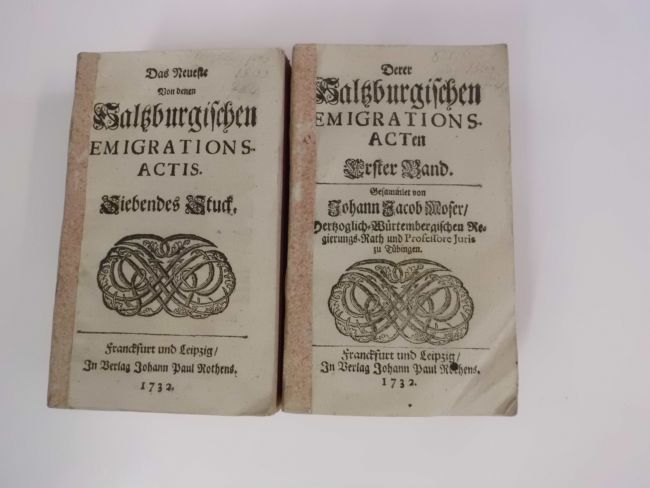
1733Best.-Nr. 64613Frankfurt-Leipzig, Johann Paul Roth, 1732-1733. 8°. Mit gest. Frontispiz. 3 Bll., 864 S., 4 Bll.; 2 Bll., 596 S., 3 Bll. (+ ca. 20 zwischengeb. Bll. [Zwischentiteln u. Register zu den einzelnen Teilen]), HPgmt.-Bde. d. Zt. m. handschriftl. Rückentiteln u. dreiseitigem Rotschnitt.
1815Best.-Nr. 003065Paris, L.G. Michaud, Delaunay et Dentu, février, 1815
1732Best.-Nr. 204732CBFrankfurt/Leipzig, Johann Paul Roth, 1732. 8°. (4) (1) 864 S. (4) Register; (2) 596 S. (3) Register. Kein Einband. Feste Papierstreifen-Bindung. 1. Band (weiter Bände nicht bezeichnet) 1. - 12. Stuck (so komplett) in 2 Bde. (Etwas eselsohrig, einige Seiten gebräunt, sehr guter Druck).
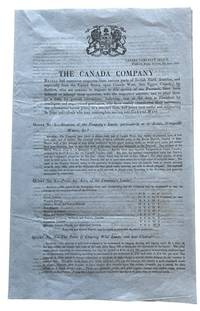
1843Best.-Nr. 44013Toronto 5th of June: Canada Company Office Frederick Street 1843. folio. 31cm 4 pages folded on light weir tinted blue paper in mint condition very rare. mint. Being Twenty-One numerated questions with detailed paragraph answers concerning emigration. Subjects include costs wages crops climate society etc. taxes transportation . T.P.L. 2571 "The memorandum describes the land of the district facilities for settlement and cultivations also costs". In 1843 the Canada Company led by commissioner Frederick Widder issued publications to address numerous inquiries from British North America and the United States regarding settlement in Canada West formerly Upper Canada. These documents often featuring memos from local agents provided information on land in the Huron Tract and assisted in advising prospective emigrants on farming opportunities. Key details about the Canada Company around 1843: Active Promotion: The company was actively answering questions to boost immigration to the Huron District which contained about one million acres of land. Frederick Widder was a key figure having been appointed co-commissioner in 1839 leading to improved efficiency in the company's operations. By 1843 the company was operating more effectively following the Act of Union 1841 and was in the process of paying off its debt to the British. Various documents from 1843 and 1845 were published to promote the thriving towns such as Guelph and the surrounding Wellington District. Canada Company Office, Frederick Street unknown
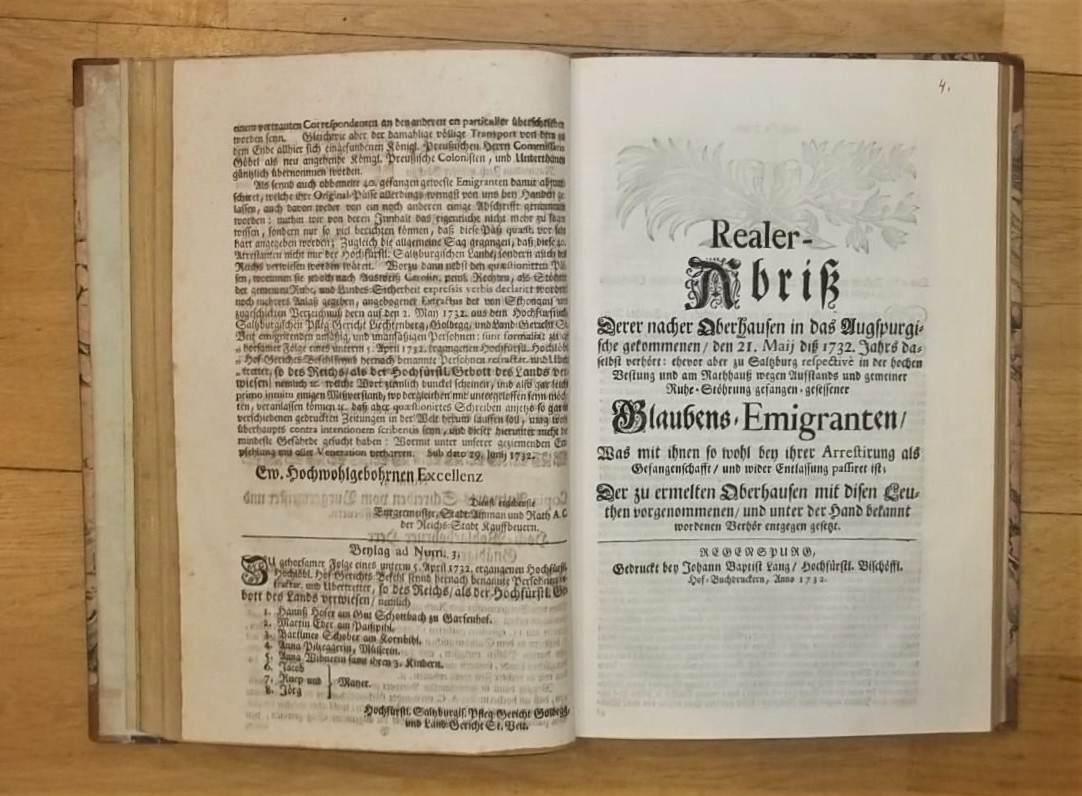
1732Best.-Nr. 19081Regensburg (bzw. Stadt am Hof) bzw. Augsburg, diverse Drucker, 1731 - 1732. 4°. HLdr. der Zeit mit Rückenschild (berieben und etw. bestoßen). [4 Warenabbildungen]