560 résultats
2015New English Original bdg. 4to. (34 x 24 cm). In English and Turkish. 130 p., fully ills. Captured throughout a five years working process, the Istanbul artist Efe Isildaksoy photographed numerous ancient sites and monuments across Turkey in a unique three-dimensional photo technique. A collection of his photographs is now self-published and offers a stunning visual exploration of the rich Anatolian cultural heritage. Reflecting attributes of Lycian, Classical, Persian, Hellenistic, Roman, Byzantine and Ottoman settlements. The 3D photo book Heritage of Anatolia provides a new perspective on the greatest places of antiquity: the thousands of years old remains and the historical importance of past civilizations in this region are visualized in exceptional three-dimensional photographs, among them famous international tourist attractions and UNESCO World Heritage Sites such as Ephesus, Pergamon, Troy, Cappadocia, and Mount Nemrut. Located foremost in the context of Lycian, Classical, Persian, Hellenistic, Roman, and Byzantine eras, the archaeological finds at the photographed sites are dated back to a time scale ranging from approx. 7th Millennium BC to 5th century AD. Based on a selection of 56 remarkable archaeological complexes, the book contains 128 full-page color prints, a map and an index of the sites. More than 1300 additional 3D photos on DVD and a set of two 3D glasses are attached inside the book to guarantee full reading enjoyment. Focusing exclusively on the visual exploration of these outstanding ruins and archeological excavations, the three-dimensional photographs allow a wealth of detail not often found in other sources. The remains of monumental temples, colossal theatres, extensive city walls and fortifications, public houses and baths, tombs and sarcophagi, elaborate sculptures, ornamentations and inscriptions can be perceived in an exceptional vivid way. The 3D photographs generate a spatial depth that practically draws the viewer into the atmosphere of past times, and instantly captures the reader's fascination. Presented in such an impressive way, the visualized information can be studied with greater accuracy and leaves a thrilling impact on the viewer's comprehension. For those passionate for the ancient, for those looking for inspiration, for those curious about evolution, for students or the layman, as well as for advanced readers with a background in archaeology, architecture, cultural studies, history, Asia Minor, Middle East or other fields of study, Heritage of Anatolia is an ideal source for getting involved with the past and acquiring knowledge about these exceptional sites, artefacts and civilizations.
1968réf. 2090502113709354Not Available 1968. Soft Cover. Fine. The book is in fine condition. Not Available paperback
réf. 3116Acta Archéologia Tiré à part de cette revue,in 4 broché 24 pages sur papier couché(paginées pages 117 à 139)16 illustrations photographiques,dans le texte et IV planches en fin de volume Copenhague Ejnar Munksgaard éditeur 1947.
1989réf. 50823New York: Alfred A. Knopf 1989. First Edition. First Printing. good. Quarto 541 wraps illus. notes review copy covers somewhat worn and soiled. This was to accompany the PBS series "War and Peace in the Nuclear Age. " This was an Annenberg/CPB Project. Alfred A. Knopf paperback
2003réf. 2080502106915381Not Available 2003. Soft Cover. Fine. The book is in fine condition. Not Available paperback
1841réf. 002830Paris et Nancy, Tresse, et Chez Lauteur, 1841
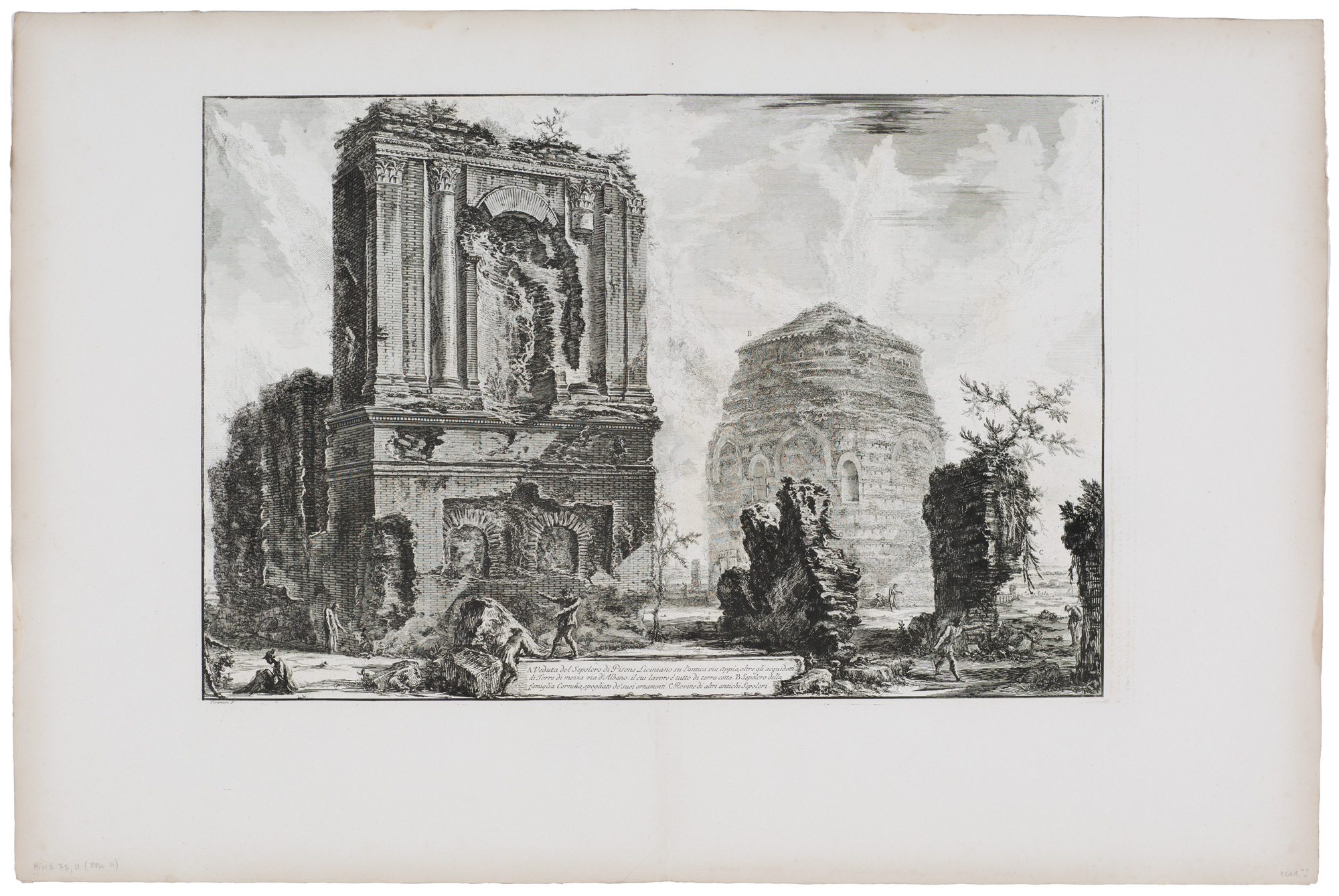
réf. 0825-Bo.J. Radierung, 1764, auf Bütten. 41,3:61,2 cm, Blattgröße 58,4:88 cm.- Unten mittig auf einer Kartusche bezeichnet, links unten signiert ?Piranesi F.?. Literatur: Focillon 777; Hind 72, II (v.III); Ficacci 943; Wilton-Ely 205. ? Kräftiger Abdruck mit dem vollen Rand, die Ränder nach außen leicht gebräunt.
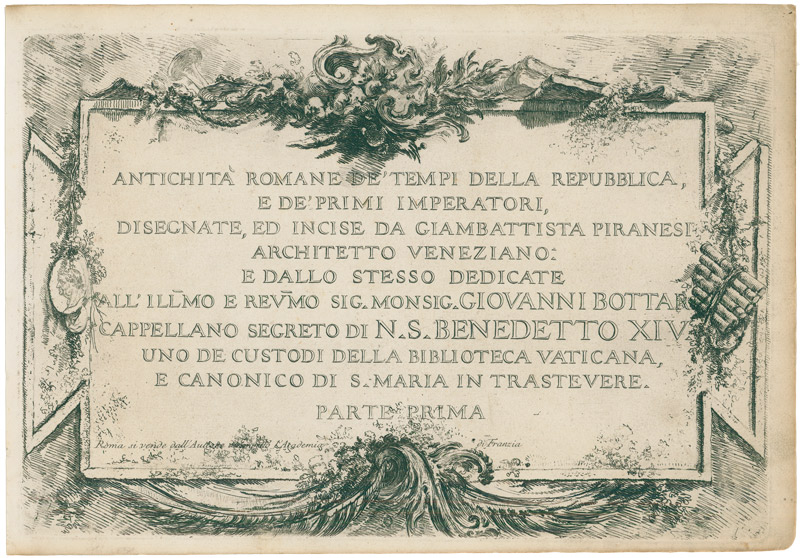
1784réf. 0313-B1784. Radierung, 1748, auf Bütten mit Wasserzeichen: Lilie im Doppelkreis (Hind 3). 24:35,7 cm. Titelblatt, der ?Antichità romane de?tempi della Republica??. Abdruck der römischen Ausgabe, o.J., 1748. Literatur: Focillon 41; Hind 1; Taschen 81; Wilton-Ely 103. - Sehr kräftiger Abdruck mit vollem Rand, die Ränder leicht gebräunt.
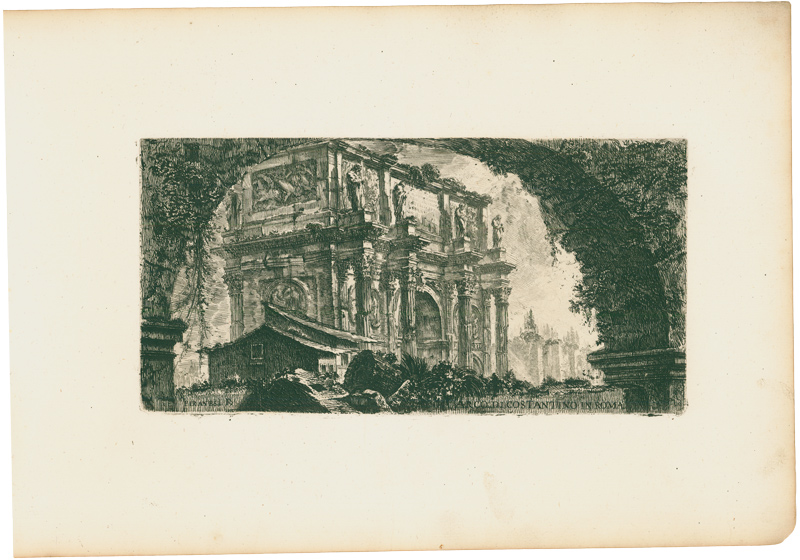
réf. 0326-Bo.J. Radierung, 1748, auf Bütten mit Wasserzeichen: Lilie im Kreis (Hind 1). 13,2:26,2 cm. Blatt 9, der ?Antichità romane de?tempi della Republica??. Abdruck der römischen Ausgabe, o.J., 1748. Literatur: Focillon 50; Hind 9; Taschen 83; Wilton-Ely 112. - Sehr kräftiger Abdruck mit vollem Rand, die Ränder leicht gebräunt.
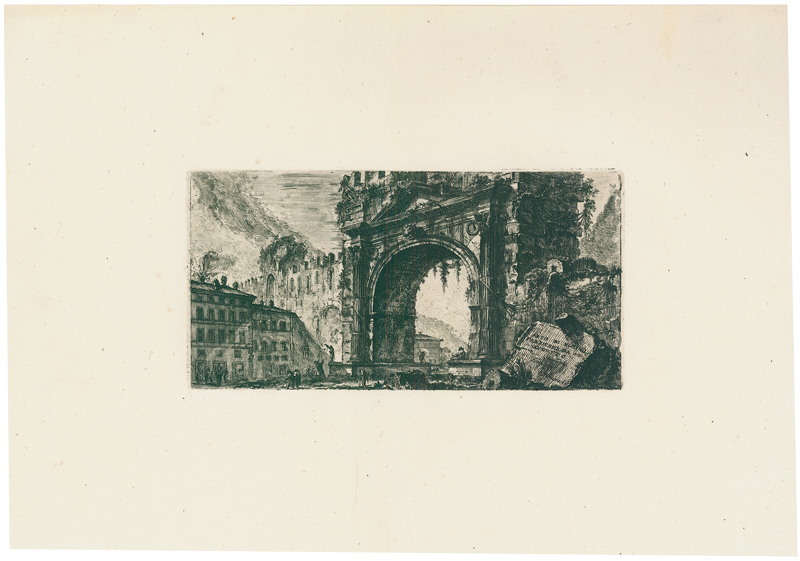
réf. 0329-Bo.J. Radierung, 1748, auf Bütten mit Wasserzeichen: Lilie im Kreis (ähnlich Robison 18). 13,6:26,9 cm. Blatt 20, der ?Antichità romane de?tempi della Republica??. Abdruck der römischen Ausgabe, o.J., 1748. Vor den Numerierungen oben rechts. Literatur: Focillon 59; Hind 20; Taschen 92; Wilton-Ely 121. - Sehr kräftiger Abdruck mit vollem Rand, die Ränder leicht gebräunt.
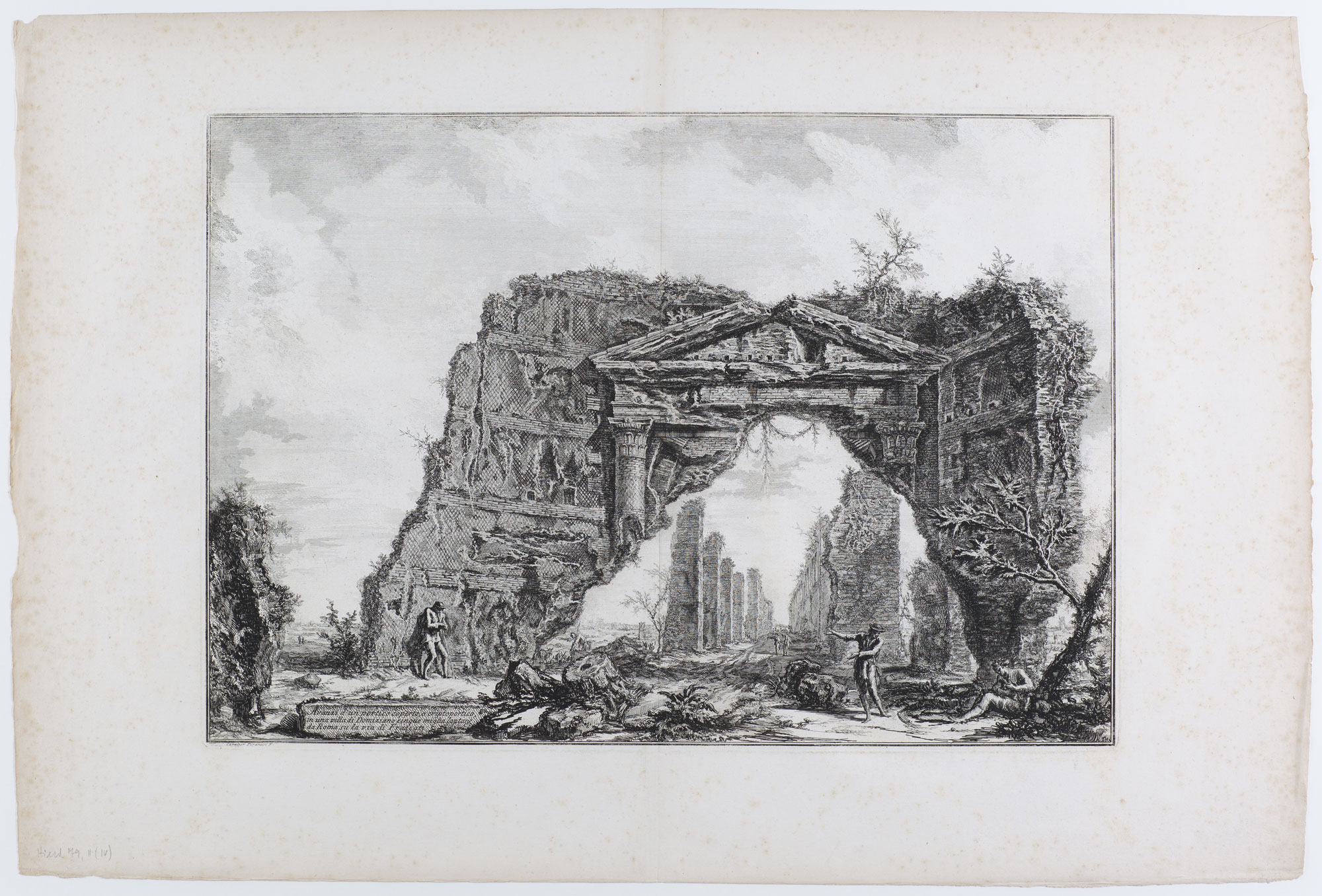
réf. 0714-Bo.J. Radierung, 1766, auf Bütten mit Wasserzeichen. 42,8:61,3 cm.- Links unten in der Platte signiert: "Cavalier Piranesi F." Literatur: Focillon 781; Hind 79, II (v.IV); Taschen 950; Wilton-Ely 212. - Kräftiger Abdruck mit vollem Rand, die Ränder fleckig, vertikale Mittelfalte geglättet.
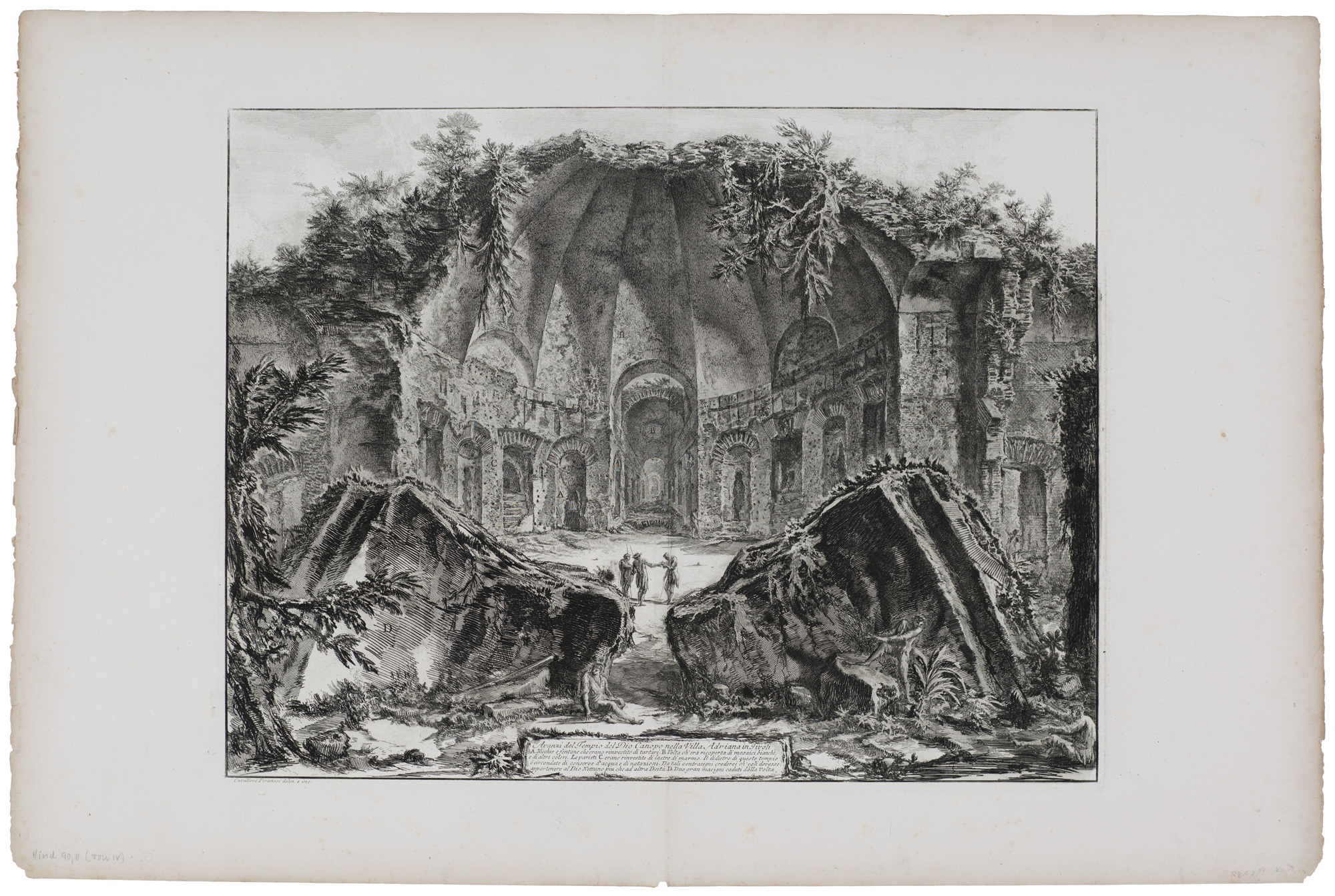
réf. 0829-Bo.J. Radierung, 1768, auf Bütten. 46:59 cm, Blattgröße 58,3:87,8 cm.- Unten mittig auf einer Kartusche bezeichnet, links unten signiert ?Cavaliere Piranesi delin. E inc.?. Literatur: Focillon 844; Hind 90, II (v.IV); Ficacci 961; Wilton-Ely 223. ? Sehr kräftiger Abdruck mit dem vollen Rand, die Ränder stockfleckig und mit kleineren Einrissen.
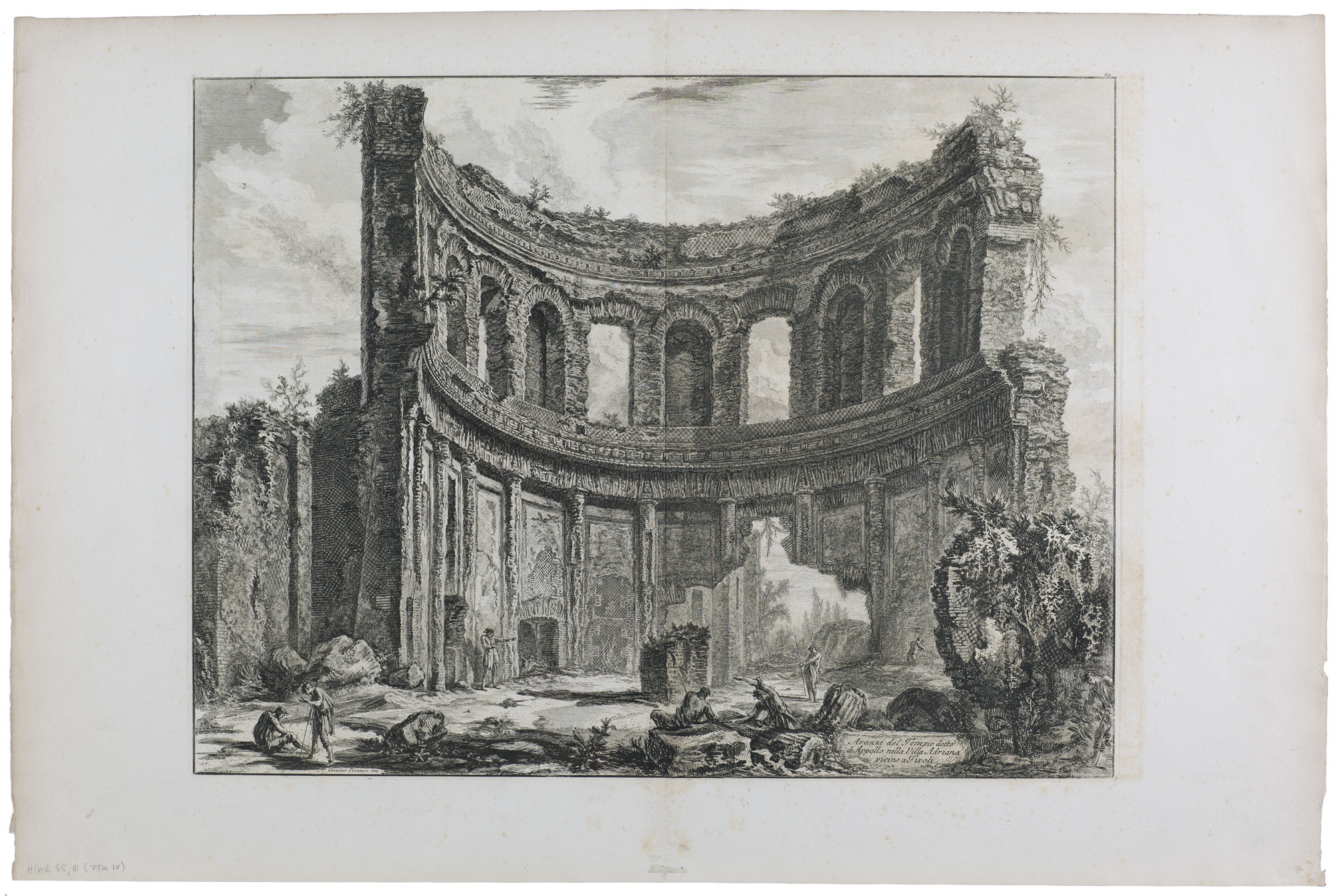
réf. 0725-Bo.J. Radierung, 1768, auf Bütten. 47,5:62,3 cm. Innerhalb der Darstellung links unten in der Platte signiert ?Cavalier Piranesi inc.?.- Kräftiger Abdruck mit breitem Rand, fleckig und gebräunt, vertikale Mittelfalte geglättet. Literatur: Focillon 771; Hind 85, III (v. IV); Taschen 956; Wilton-Ely 218. - Kräftiger Abdruck mit dem vollen Rand, vertikale Bugfalte geglättet.
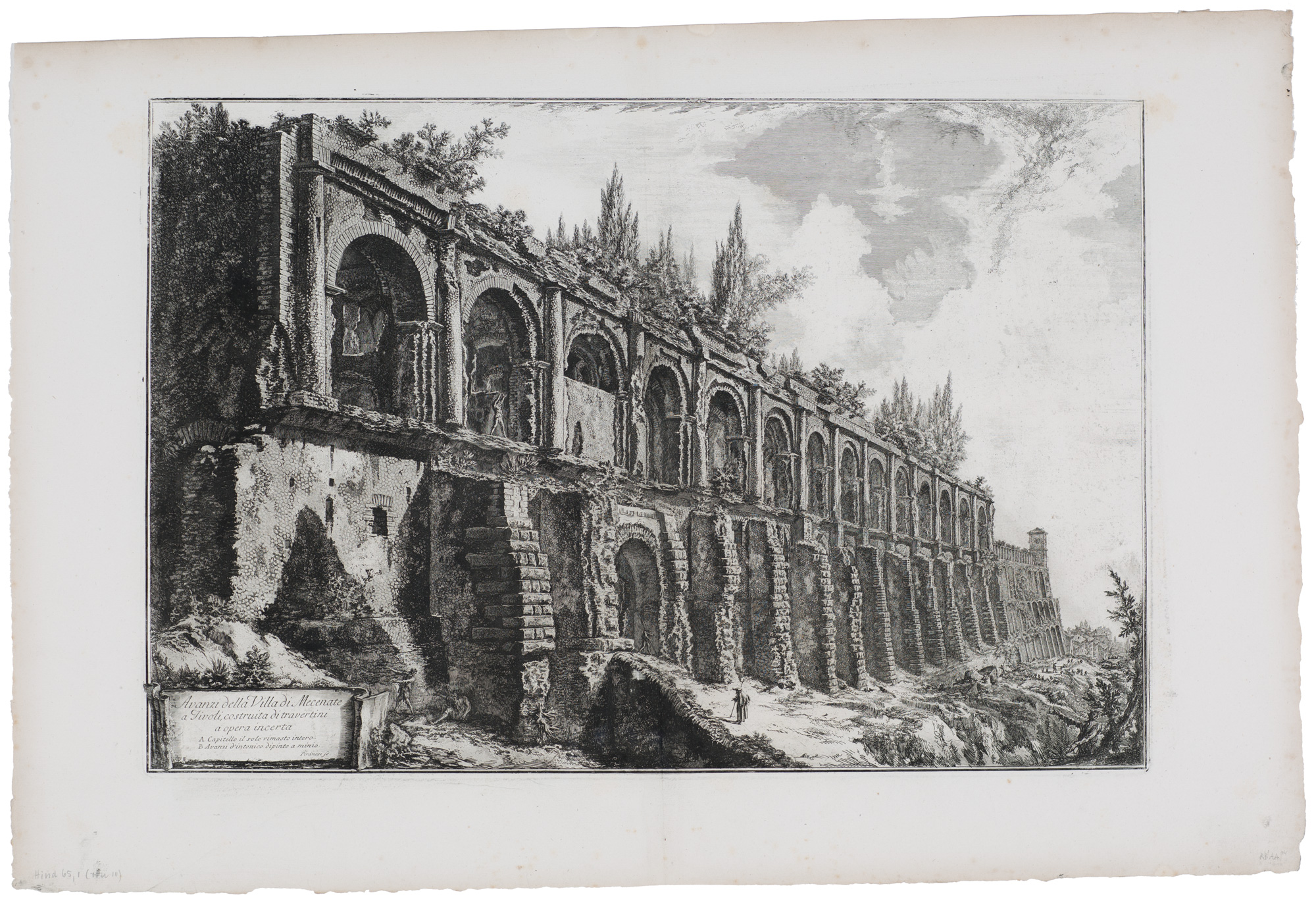
réf. 0822-Bo.J. Radierung, 1763, auf Bütten. 45,5:67,3 cm, Blattgröße 57,8:86,2 cm.- Unten links auf einer Kartusche bezeichnet und signiert ?Piranesi sc.?. Literatur: Focillon 768; Hind 65, I (v.III); Ficacci 936; Wilton-Ely 198. ? Kräftiger Abdruck mit dem vollen Rand, die Ränder mit Stockflecken.
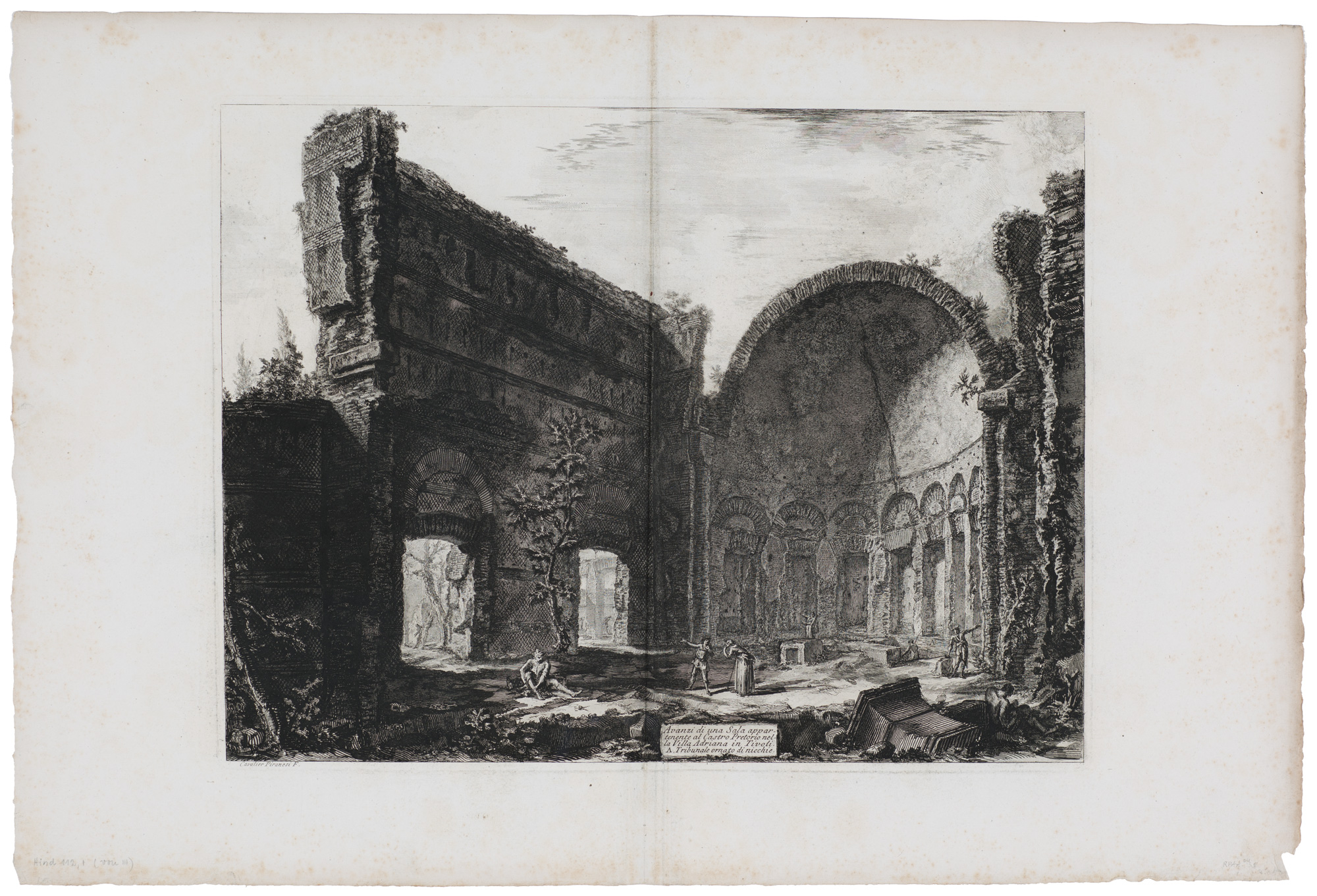
réf. 0831-Bo.J. Radierung, 1774, auf Bütten. 44,6:58,5 cm, Blattgröße 57,7:86,5 cm.- Unten auf einer Kartusche bezeichnet, links unten signiert ?Cavalier Piranesi F.?. Literatur: Focillon 831; Hind 112, I (v.III); Ficacci 983; Wilton-Ely 245. ? Kräftiger Abdruck mit dem vollen Rand, die Ränder mit Stockflecken.
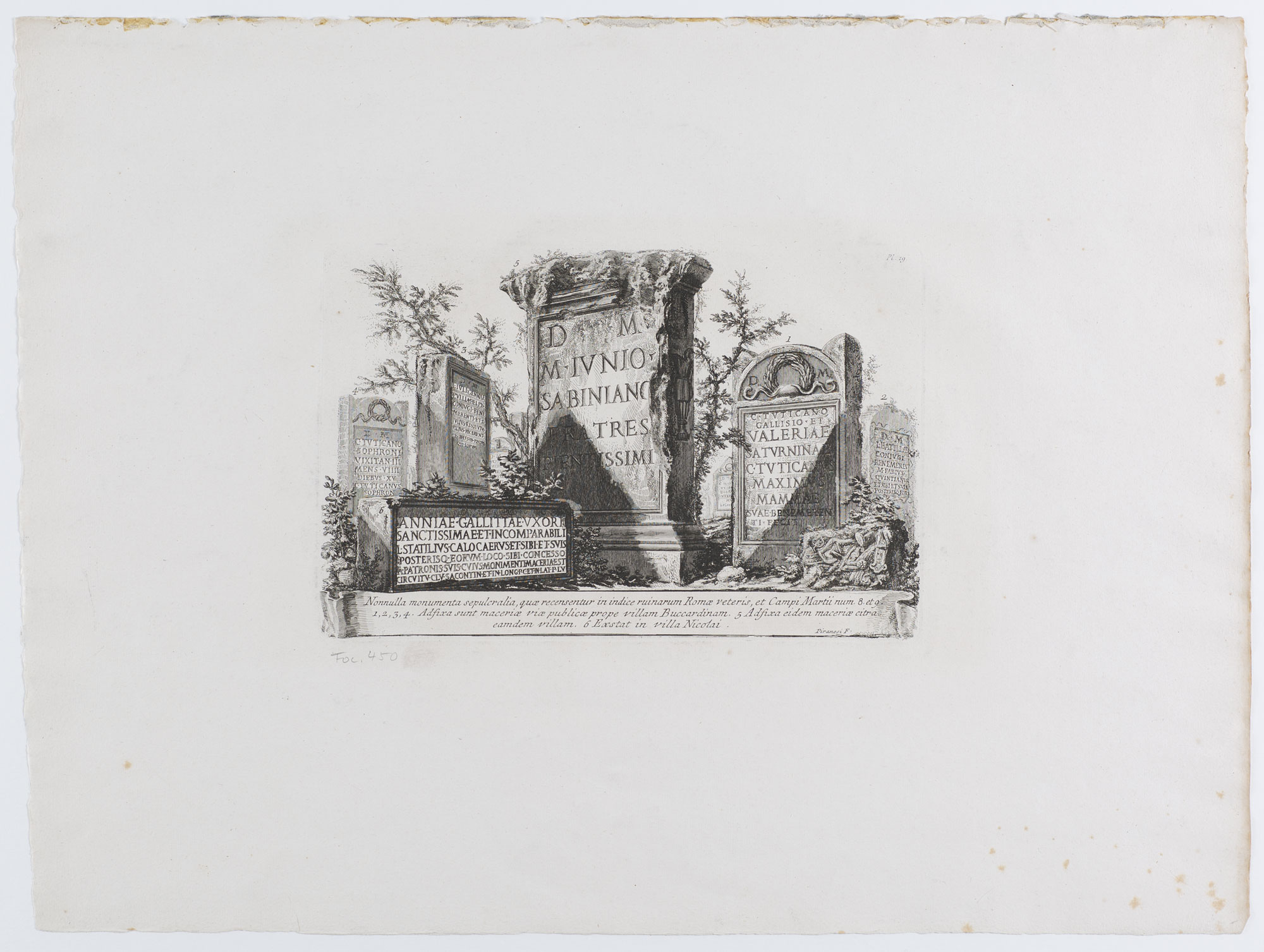
réf. 0719-Bo.J. Radierung, auf Bütten. 19,3:29,3 cm.- Unten auf einem Schriftband bezeichnet: "Nonnulla monumenta sepulcralia, quæ recensentur in indice ruinarum Romæ veteris, et Campi Martii num. 8. et 9. / 1, 2, 3, 4. Adfixa sunt maceriæ viæ publicæ prope villam Buccardinam. 5 Adfixa eidem maceriæ citra / eamdem villam. 6 Exstat in villa Nicolai."; unterhalb davon rechts signiert: "Piranesi F." Literatur: Focillon 434; Taschen 487; Wilton-Ely 565. - Kräftiger Abdruck mit dem vollen Rand, fleckig.- Die Erstausgabe wurde 1762 in Rom publiziert. "Il Campo Marzio" gilt mit seinen 48 Platten als Ergänzung der "Antichità Romane" und demonstriert einen visionären Plan des antiken Marsfeldes, d. h. eine phantasievolle Rekonstruktion, die sich jedoch auf archäologische Untersuchungen stützt. Piranesi geht hierbei von den Fragmenten des "Marmorplans" aus, welcher bereits in Band 1 der "Antichità Romane" erscheint, und schafft somit eine fiktive Erneuerung des antiken Rom.
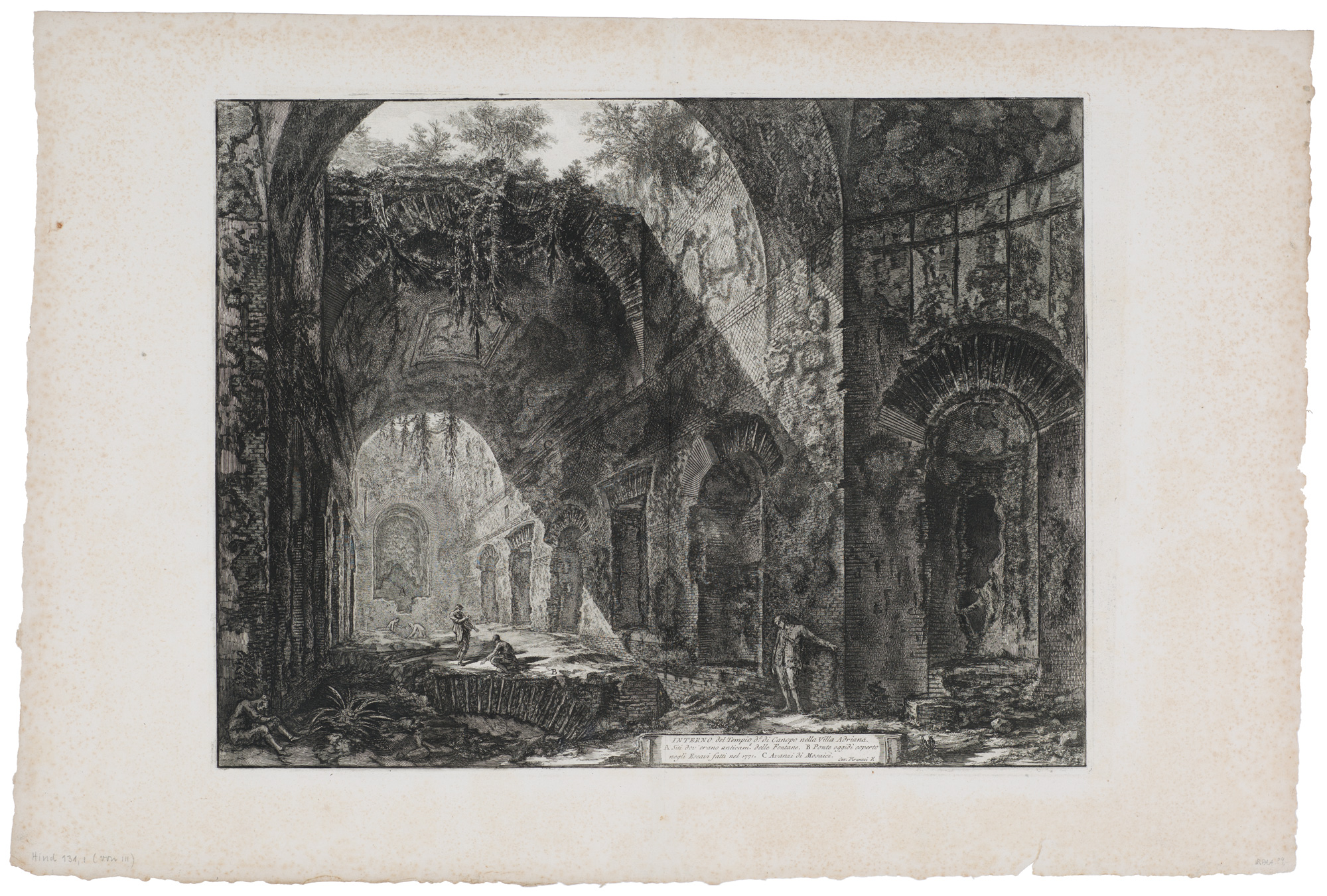
réf. 0833-Bo.J. Radierung, 1776, auf Bütten. 45,7:58,3 cm, Blattgröße 57,2:86 cm.- Unten auf einer Kartusche bezeichnet und signiert ?Cav. Piranesi F.?. Literatur: Focillon 845; Hind 131, I (v.III); Ficacci 1002; Wilton-Ely 264. ? Kräftiger Abdruck mit dem vollen Rand, die Ränder mit Stockflecken, im Unterrand ein Einriß (ca. 3 cm).
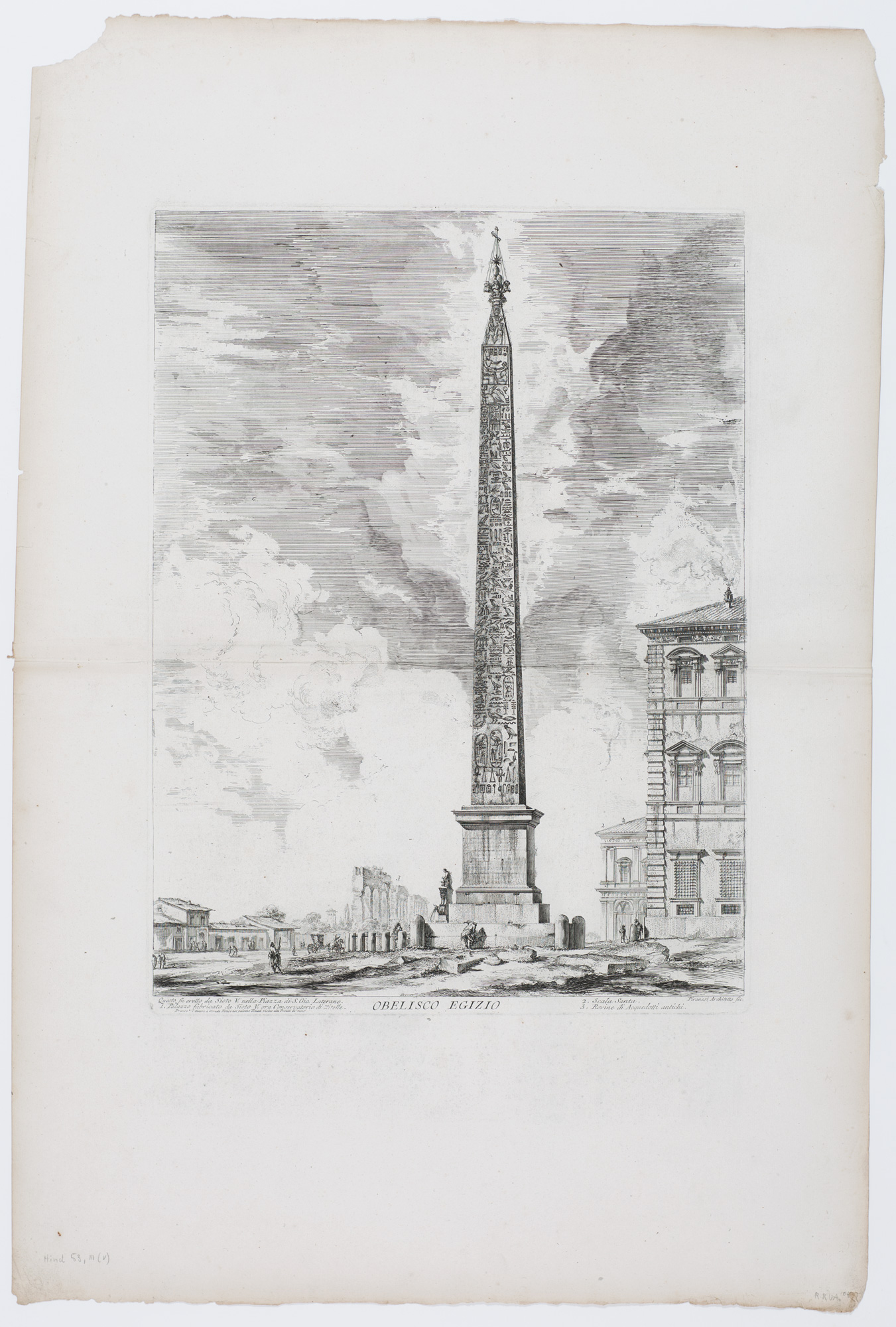
réf. 0821-Bo.J. Radierung, 1759, auf Bütten. 54,6:40,6 cm, Blattgröße 87,2:58,2 cm.- Im Unterrand bezeichnet, rechts signiert: "Piranesi Architetto fec.". Literatur: Focillon 800; Hind 53, III (v.V); Ficacci 902; Wilton-Ely 164. ? Schöner Abdruck mit vollem Rand, die Ränder leicht gebräunt und mit vereinzelten Einrissen.
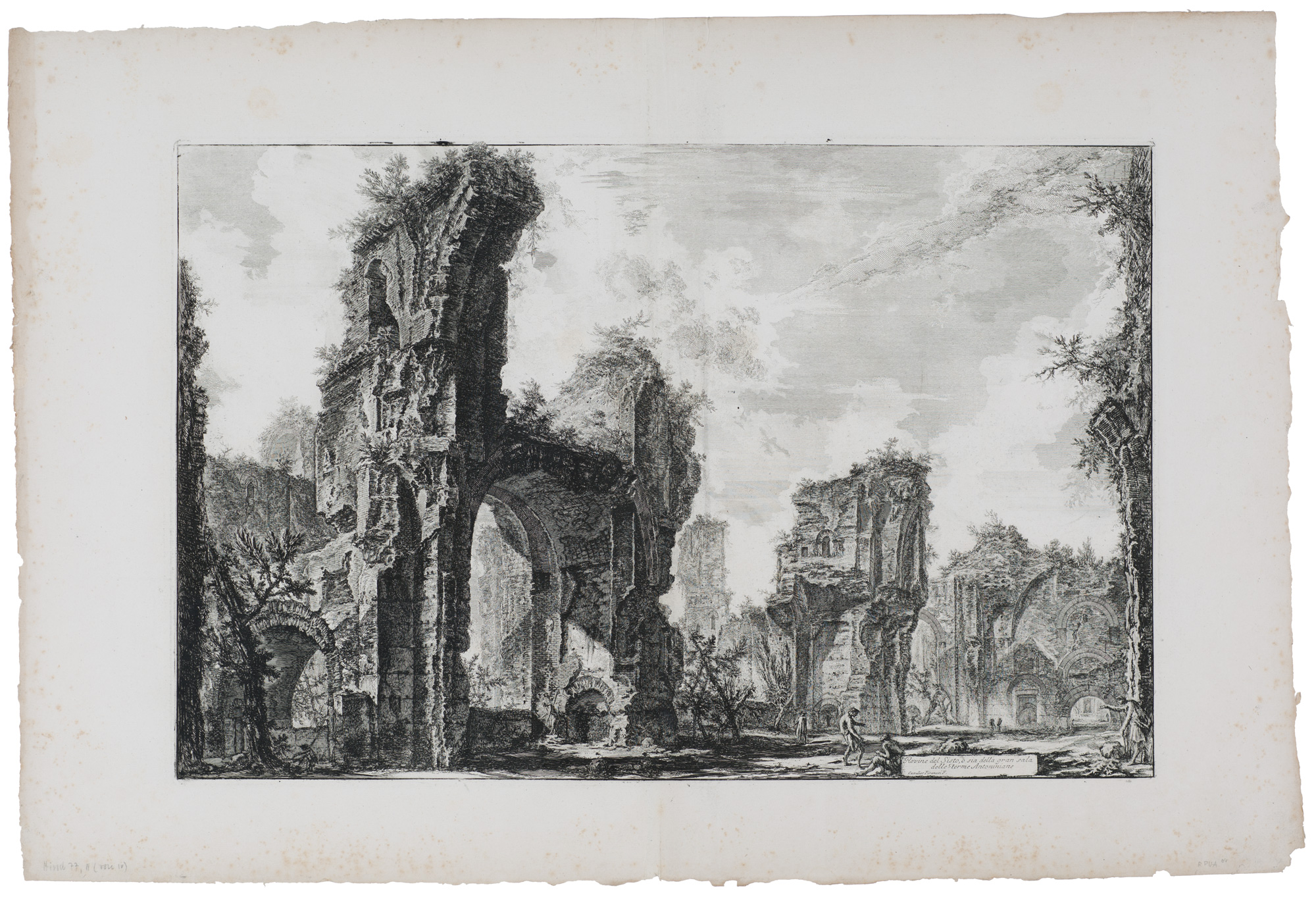
réf. 0827-Bo.J. Radierung, 1765, auf Bütten. 43,2:66,3 cm, Blattgröße 58,3:86 cm.- Unten rechts auf einer Kartusche bezeichnet und signiert ?Cavalier Piranesi F.?. Literatur: Focillon 851; Hind 77, II (v.IV); Ficacci 948; Wilton-Ely 210. ? Sehr kräftiger Abdruck mit dem vollen Rand, die Ränder stockfleckig und mit kleineren Einrissen.
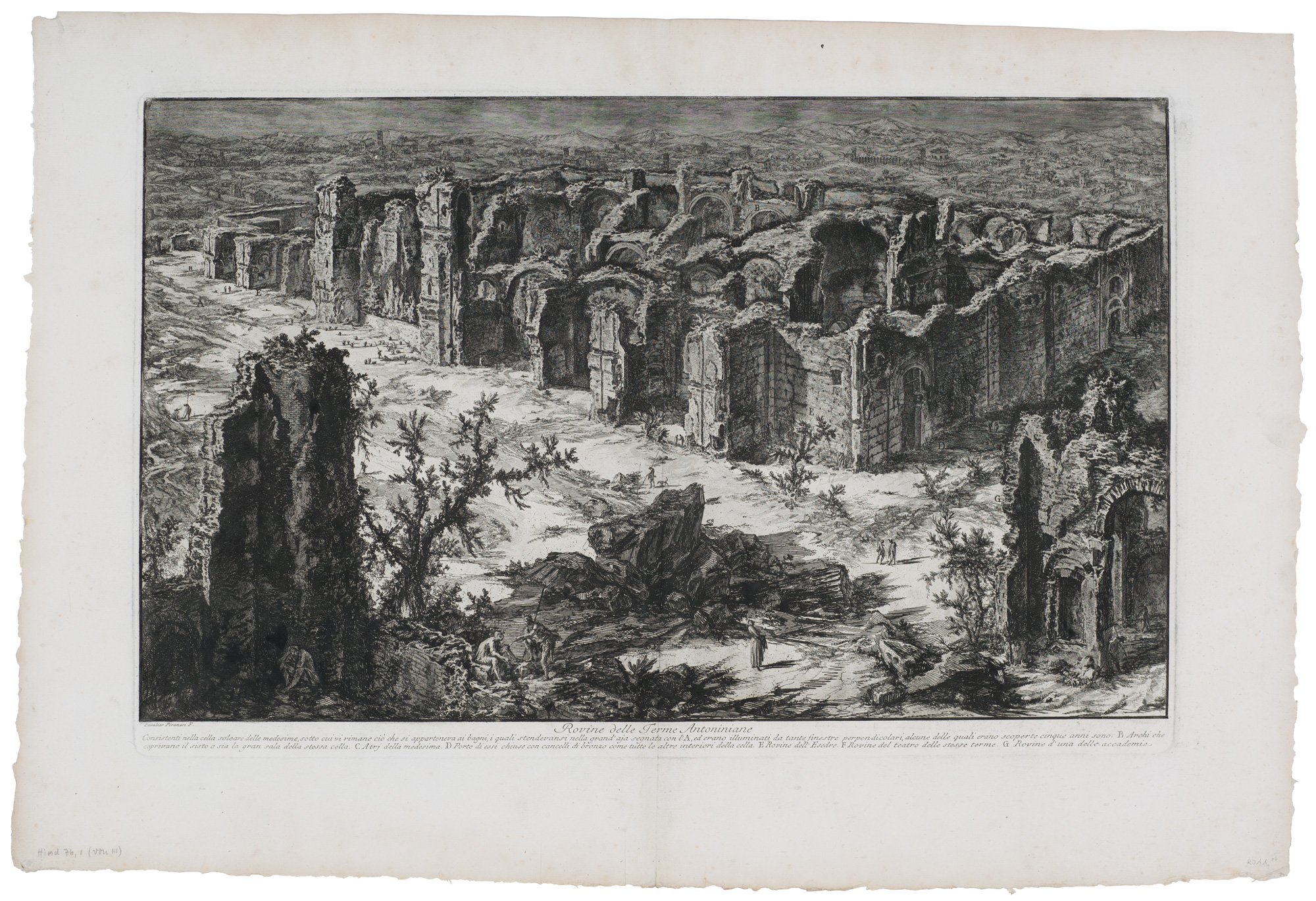
réf. 0826-Bo.J. Radierung, 1765, auf Bütten. 44,5:69,5 cm, Blattgröße 58:86 cm. Im Unterrand bezeichnet, links unten signiert ?Cavalier Piranesi F.?. Literatur: Hind 76, I (von III); Focillon 852; Ficacci 947; Wilton-Ely 202. Kräftiger Abdruck mit dem vollen Rand, die Ränder nach außen leicht gebräunt.
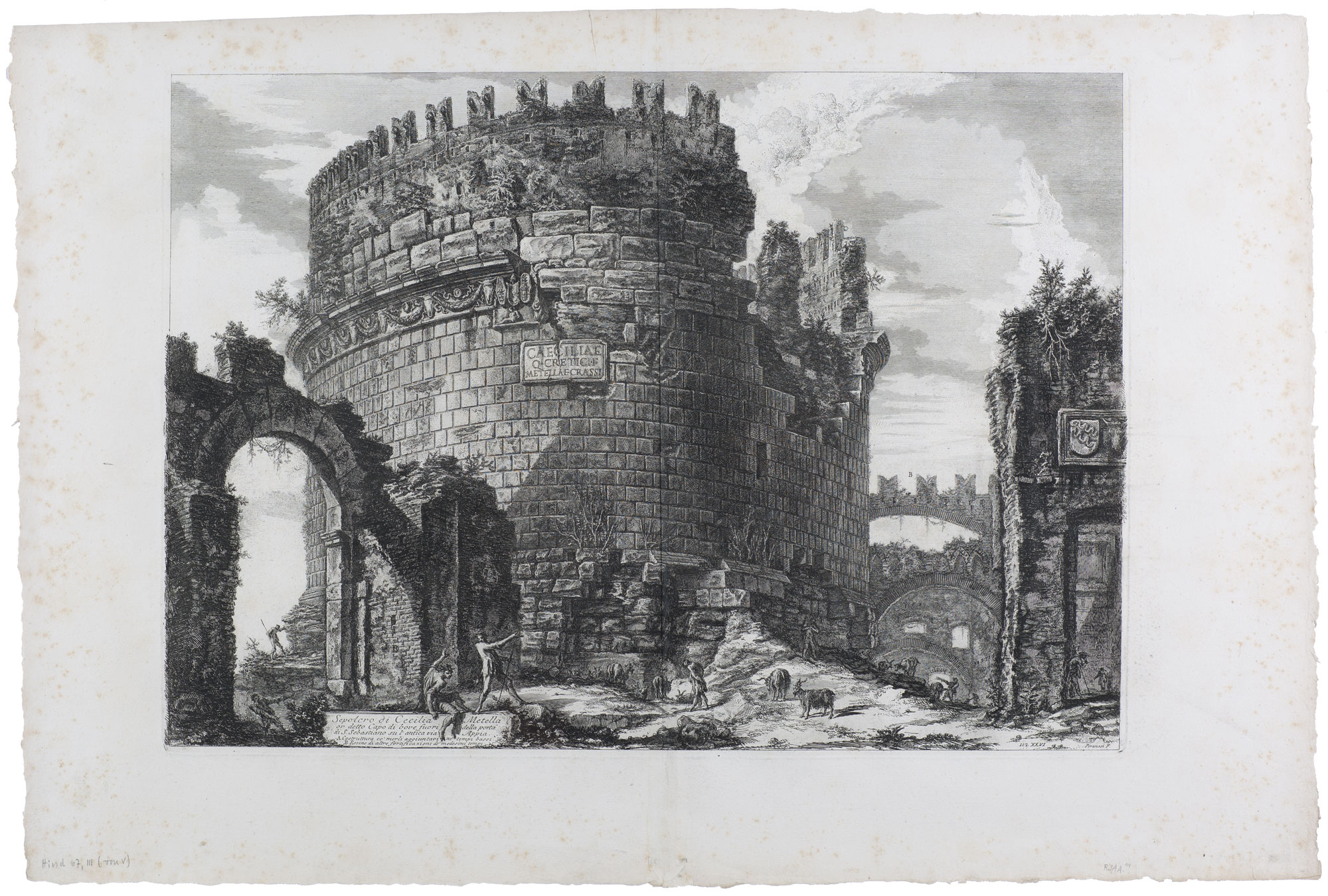
réf. 0728-Bo.J. Radierung 1762, aus Vedute di Roma, auf Bütten. 46:64,2 cm.- Unten links auf einer Tafel bezeichnet: "Sepolcro di Cecilia Metella / or detto Capo di bove, fuori della porta / di S. Sebastiano su l' antica via Appia. / A. Costruttura co' merli aggiuntavi ne' tempi bassi. / B. Rovine di altre fortificazioni de' medesimi tempi."; unten rechts nummeriert: "112 XXVI"; rechts daneben signiert: "Piranesi F." - Kräftiger Abdruck mit dem vollen Rand, fleckig, Bugfalte geglättet. Literatur: Hind 67, III (von V); Focillon 772; Wilton-Ely 200; Taschen 938.
réf. 0324-Bo.J. Radierung, 1748, auf Bütten mit Wasserzeichen: Lilie im Kreis (Hind 1). 13,6:27 cm. Blatt 20, der ?Antichità romane de?tempi della Republica??. Abdruck der römischen Ausgabe, o.J., 1748. Literatur: Focillon 62; Hind 21; Taschen 95; Wilton-Ely 124. - Sehr kräftiger Abdruck mit vollem Rand, die Ränder leicht gebräunt.
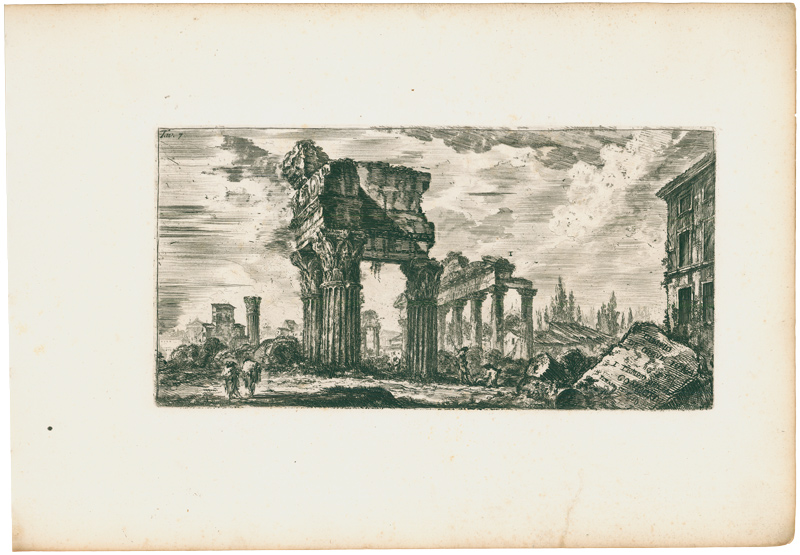
réf. 0325-Bo.J. Radierung, 1748, auf Bütten mit Wasserzeichen: Lilie im Doppelkreis (Hind 3). 13,5:27 cm. Blatt 7, der ?Antichità romane de?tempi della Republica??. Abdruck der römischen Ausgabe, o.J., 1748. Literatur: Focillon 48; Hind 8; Taschen 81; Wilton-Ely 110. - Sehr kräftiger Abdruck mit vollem Rand, die Ränder leicht gebräunt, im Unterrand ein ca. 3 cm langer Einriß.
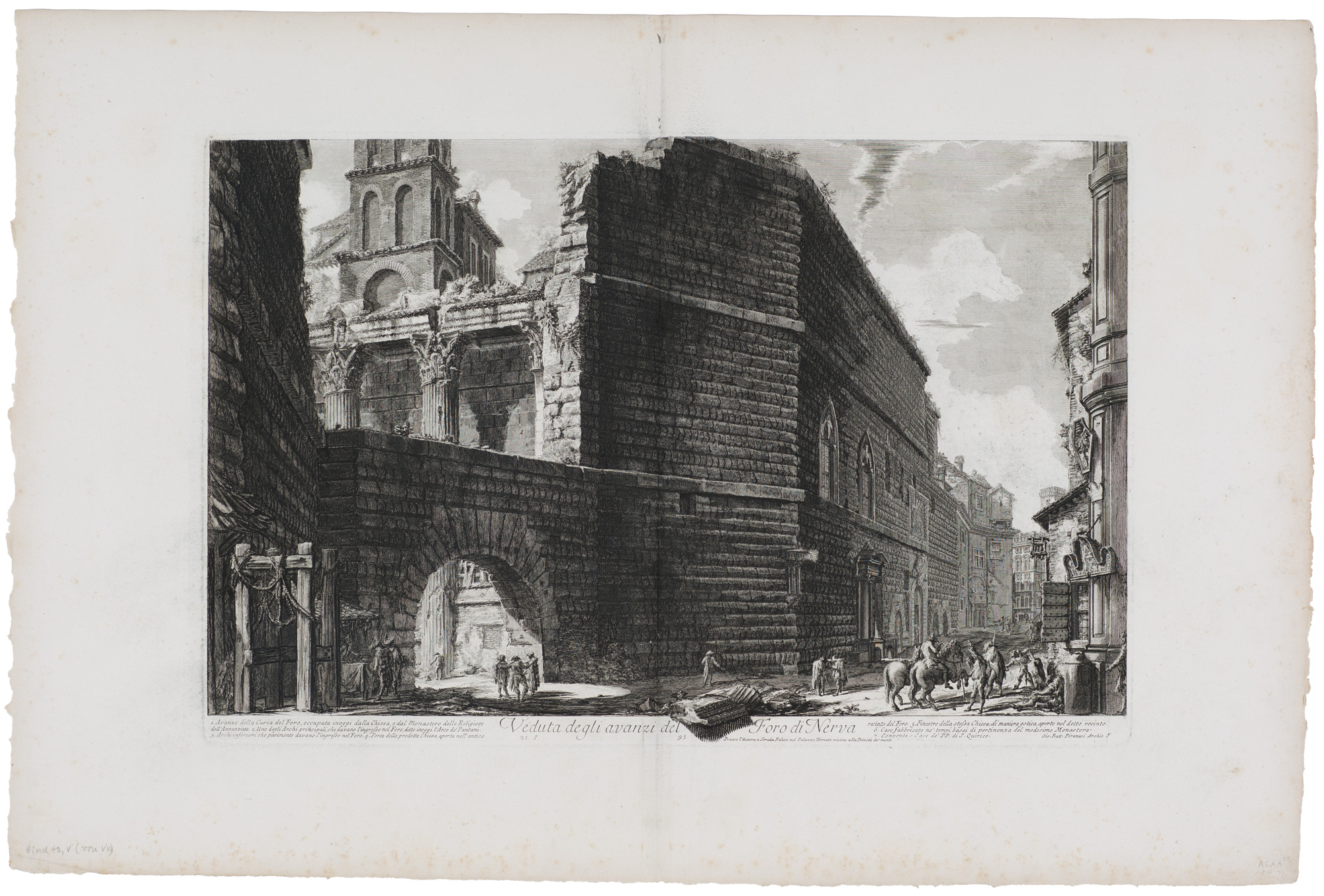
réf. 0817-Bo.J. Radierung, 1757, auf Bütten. 40,8:62 cm, Blattgröße 58,2:87,5 cm.- Im Unterrand bezeichnet, rechts unten signiert ?Gio. Batt. Piranesi Archit. F?. Literatur: Focillon 749; Hind 42, V (v.VII); Ficacci 919; Wilton-Ely 181. ? Schöner Abdruck mit dem vollen Rand, die Ränder nach außen leicht gebräunt und stockfleckig.
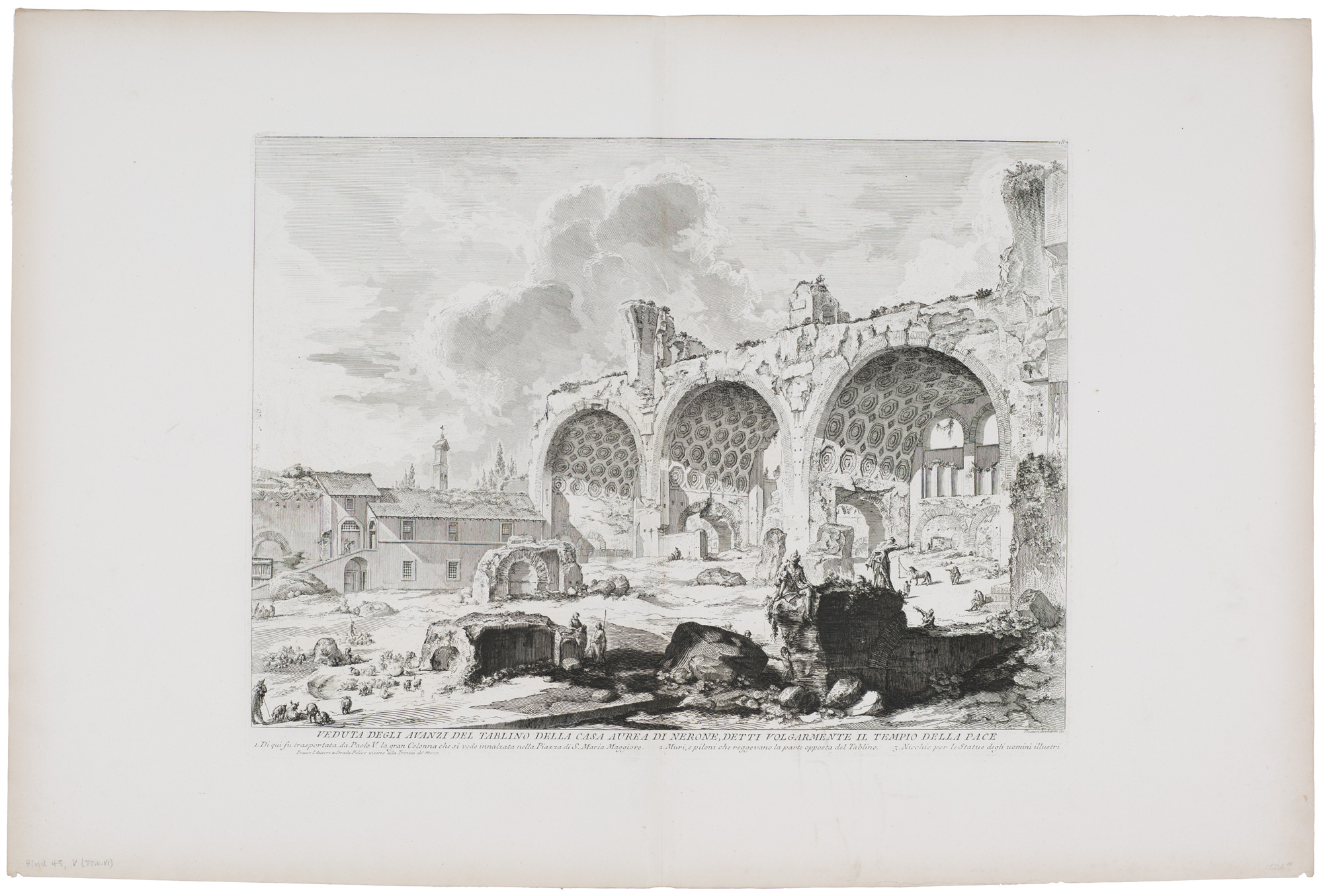
réf. 0819-Bo.J. Radierung, 1757, auf Bütten. 41,8:55,2 cm, Blattgröße 58,2:87,5 cm.- Im Unterrand bezeichnet, rechts unten signiert ?Piranesi Architetto fec.?. Literatur: Focillon 813; Hind 45, V (v.VI); Ficacci 899; Wilton-Ely 161. ? Schöner Abdruck mit dem vollen Rand, die Ränder nach außen leicht gebräunt.