2.133 Ergebnisse
2014New English Original bdg. HC. 4to. (32 x 24 cm). In Turkish. 292 p., color ills. A study on wooden buildings and houses in old Istanbul. Istanbul'un kaybolan ahsap konutlari. ARCHITECTURE Ottoman architecture Istanbul Constantinople Wooden Turkish houses Yali The Bosphorus.
1963Very Good Turkish Paperback. Roy. 8vo. (24 x 17 cm). In Turkish. 2 off-prints set: (191-218 pp.; 141-164 pp.). Rucer Yosip Boskoviç'in 1762 tarihli Istanbul - Lehistan seyahatine ait hatira defteri. 2 separatums set. Prep. by Ismail Eren. Roger Joseph Boscovich was a physicist, astronomer, mathematician, philosopher, diplomat, poet, theologian, Jesuit priest, and a polymath from the Republic of Ragusa. This set, including Boscovich's manuscript diary of travel from Constantinople to Poland, is a translation into Turkish language by Ismail Eren.
2020New English Original bdg. HC. Small 4to. (26 x 18 cm). Edition in English. 342 p., color ills. Istanbul: A bird's eye view. Photos by Halit Bilen. I wanted to tell a tale of Istanbul. And Istanbul gave me the most magnificent of tales. I wanted to draw its picture - and unexpectedly, it unfolded all its colors generously, with ecstasy. It wasn't easy to describe a city so exultant, always surprising, a city that you can't get enough of exploring and that is sassy with its uniqueness. To describe it, I needed to understand it and to understand, I had to chase after my feelings. I faced 8,500 years of history, as well as the 21st century metropolis. I wrote this book to be worthy of Istanbul's name. As you get lost in the pages, you will see a journey through Istanbul from a viewpoint you haven't seen before, the richness of Istanbul with buildings that have never previously appeared in the same frame. I tell you about an Istanbul. An Istanbul that is multicultural, multicoloured, blending the old and the new, keeping differences side by side in its bosom, reconciling resentments with its beauty, amazing with its history. I held onto the wings of a seagull and wandered around my beloved city. I left room for you too. Trail behind me and watch a journey of Istanbul from another perspective. You will be surprised about how much this tale has yet to unveil.
2011As New English Paperback. Pbo. Mint. 4to. (28 x 22 cm). Color photos. 159 p. Photographed by Douchan Novakoviç. Süryaniler. Translator: Ersel Topraltepe.
1977Very Good French Paperback. 4to. (34 x 24 cm). In French and Turkish. 112, [1] p., b/w plts. Le Yali de Köçeoglu à Bebek sur le Bosphore.= Köçeoglu Yalisi, Bebek, Bogaziçi.
2015New English Paperback. Oblong folio. (30 x 42 cm). In Turkish. 24 p., ills. Prinkipo in old maps and street plans. Harita ve sokak planlarinda Büyükada: Eski ve yeni sahipleriyle konutlar, dükkânlar, 1870-1990. Prinkipo (Büyükada) in maps and street plans from the last period of Ottoman Empire to 90s. ISTANBUL Constantinople Prinkipo Princess' Islands Social life.
1982Fine English Paperback. Roy. 8vo. (24 x 17 cm). In Turkish and summary in English. [xiv], 102 p., xc numerous b/w plts. Batililasma sürecinde Istanbul'da tasarim ve dis mekanlarda degisim ve nedenleri. First and Only Edition. Rare.
1935Fine Turkish Original two b/w photos of SS Üsküdar. 9x14 cm. SS Üsküdar was a small passenger ferry built in Germany for the Turkish company Sirket-i Hayriye and launched in 1927. She sank in lodos weather on March 1, 1958 in the Gulf of Izmit. The accident killed 272 people on board including seven crew, 39 survived the incident. SS Üsküdar was built by F. Schichau Shipyard in Elbing, Germany in 1927 with funnel number 72. She was the first of two identical vessels the Turkish urban transportation company Sirket-i Hayriye commissioned in the Republican era. She was 33 m (108 ft) long with a beam of 6.6 m (22 ft) and a draft of 2 m (6.6 ft). Three steam engines of 350 shp (260.99 kW) propelled her initially at 10 knots (19 km/h; 12 mph), which later dropped to 8 knots (15 km/h; 9.2 mph). SS Üsküdar was capable of carrying 344 passengers. 430 lifejackets, 35 lifebuoys and two lifeboats were on board the ferry. SS Üsküdar was on scheduled shuttle trips on the Sea of Marmara between Izmit and Degirmendere, a town on the southern coast of the Gulf of Izmit. On March 1, 1958, "lodos", a heavy SW storm was raising high seas. Mehmet Asçi, captain of SS Üsküdar, departed the ferry three minutes before the scheduled time of 12:30 local time from Izmit Pier, because the vessel was more vulnerable at the pier than at open sea. Shipmate Ali Kaya, who jumped onto the pier and untied the hawser, could not return to the ferry as the ship suddenly left the pier. The ferry had nine crew and 302 passengers aboard including 76 students from a local vocational high school. As the ferry headed to Degirmendere, high waves raised by the storm blowing at 130 km/h (81 mph) rocked the small vessel. The bridge broke off and fell into water, taking the captain and the boatswain with it. The rudder chain broke leaving the ferry uncontrollable. Water filled the engine room and the front passenger department after breaking the window glass. 26 minutes from her departure, SS Üsküdar careened over on the port side and sank at 12:53 local time. 272 people died including 38 students and seven crew. 37 passengers and two crew survived the disaster. Eight days after the incident, the Turkish Navy started a search and rescue operation. The muddy seabed hindered salvage efforts. On March 19, 1958, after eleven days of endeavors, the wreck was lifted with three slings off the 35 m (115 ft) deep seabed. Four corpses were recovered. It was observed that at some places, the steel sheets of the ship's hull were torn. (Wikipedia).
2012New English Original bdg. 4to. (32 x 23 cm). In Turkish. Many b/w and color ills. 296 p. Denizcilerin karargâhi Kasimpasa. [= Sailors' headquarters: Kasimpasha]. "Kasimpasa is one of the oldest residential areas in Istanbul with a strong naval tradition. The ships of Sultan Mehmed II sailed into the Golden Horn from the quarter. After the Fall of Constantinople Kasimpasa flourished. By the 16th century it contained the principal dockyards of the Ottoman Empire, home to 120 ships. As the Empire declined, the yard became neglected. By the 19th century the Ottoman fleet was ineffective as a military power, and much of the neighbourhood was destroyed by fire. Today, the old arsenal is a repair dock serving cargo ships, ferries and a small shipping line. The Turkish Naval High School was founded in 1773 to teach geometry and navigation to naval and civilian merchant captains on board a galleon anchored at Kasimpasa. The Turkish Naval Academy was housed in Kasimpasa from 1838 to 1850. Following the Armistice of Mudanya, the former Ottoman Ministry of the Navy (Bahriye Nazirligi) building in Kasimpasa became the headquarters of the Istanbul Naval Command on 14 November 1922. During the riots of 1955, Greek dwellings in Kasimpasa were attacked and looted. (From Wikipedia)". OTTOMANIA Istanbul Constantinople Military history Navigation Urban history.
1920Very Good Swedish Paperback. Roy. 8vo. (24 x 17 cm). In Swedish. 196-203 pp. Ett Svenskt forskningsinstitut I Konstantinopel. [Separatum -Ur Ymer- Tidskrift Utgiven av Svenska Sallskapet för Antropologi och Geografi Arg. 1920, H. 2-3. A Swedish research institute in Constantinople.
2015New English Original bdg. HC. 4to. (31 x 23 cm). In English. 288 p., color and b/w photos. Colorful Besiktas. [Album of photographs]. Photos by Baris Acarli, Izzet Keribar et alli. "The capital of an empire, the son of republic, the place that religions blend together, the junction that history and today meet, The Bosphorus paradise, the land of gardens, home of palaces, mansions, quarters which are still alive, the place of day and night, Besiktas, Kabaa of black and white.".
1995Fine English Paperback. Pbo. 4to. (29 x 21 cm). In Italian and Turkish. 93 p., color ills. Raimondo d'Aronco in Turchia, (1893-1909). Progetti della Galleria di Arte Moderna di Udine.= Udine Çagdas Sanat Galerisi Koleksiyonundan Raimondo d'Aronco'nun Türkiye yillari, (1893-1909).
1925Very Good French Paperback. Roy. 8vo. (24 x 17 cm). In French. 42, [2] p., 5 unnumbered full paged b/w plates. Universite de Stamboul: Historique, organisation et administration actuelles. University of Istanbul (Darülfünûn): History, current organization and administration. OCLC: 79974791. First and Only Edition.
2004Fine Greek, Modern (post 1453) Paperback. Small. 4to. (26 x 20 cm). In Greek. 171, [2] p., color and b/w ills. [Our trial of Cappadocia. A wandering pilgrimage]. E dikia mas Kappadokia. Ena odoiporiko proskunema. Signed and inscribed by Kekes.
2008Fine Fine English Original binding with original dust wrapper. 4to. (31 x 25.5 cm). Bilingual in Turkish and English. 332 p. Color and b/w ills. Istanbul. Two continents many cultures.= Iki kita birçok kültür. Istanbul.
1993Very Good Very Good English Original bdg. Dust wrapper. Roy. 8vo. (24 x 17 cm). In French. 112 p., color ills. Istanbul vu par Matrakci et les miniaturistes du XVI siecle. Istanbul seen by [Nasuh] Matrakçi miniaturists and the XVI century. TURKISH AND ISLAMIC ART Traditional arts Miniature Nasuh Matrakçi Ottoman art Istanbul Constantinople Social history History of art 16th Century Ottoman court Palace.
2011As New As New English Original bdg. with dust wrapper. DJ. English. 4to. (33 x 25 cm). 459, [9] p. B/w ills. 2000 copies were printed. A heavy volume. Mint. Through foreign eyes: Istanbul in world literature.
2016New English Original bdg. HC. 4to. (34 x 24 cm). In Turkish and English. 271 p., color and b/w ills. Beylükdüzü from past to present.= Geçmisten günümüze Beylikdüzü. [With a CD].
1966Front hinge cracked held only by webbing. Spine a bit sunned. A few faint discolored areas to front board. ; Contents: I THE FORMATION OF THE EAST ROMAN EMPIRE, 330-717 2. THE CHRISTIAN BACKGROUND 3. ICONOCLASM AND IMPERIAL RULE 717-842 4. THE AMORIANS AND MACEDONIANS 842-1025 5. THE LATER MACEDONIANS, THE COMNENI AND THE ANGELI 1025-1204 6. VENICE TO THE EVE OF THE FOURTH CRUSADE 7. THE FOURTH CRUSADE AND THE GREEK AND LATIN EMPIRES, 1204-61 8. THE PALAEOLOGI 9. THE LATINS IN GREECE AND THE AEGEAN FROM THE FOURTH CRUSADE TO THE END OF THE MIDDLE AGES 10. CONSTANTINOPLE AND ROME 11. THE EMPIRE AND ITS NORTHERN NEIGHBOURS 565-1018 12. THE BALKANS, 1018-1499 13. HUNGARY AND BYZANTIUN IN THE MIDDLE AGES 14. ARMENIA AND GEORGIA 15. GOVERNMENT, SOCIETY AND ECONOMIC LIFE UNDER THE ABBASIDS AND FATIMIDS 16. MUSLIM CIVILISATION IN THE ABBASID PERIOD 17. BYZANTIUM AND THE MUSLIM WORLD TO THE MIDDLE OF THE ELEVENTH CENTURY 18. THE TURKS AND THE BYZANTINE EMPIRE TO THE END OF THE THIRTEENTH CENTURY; The Cambridge Medieval History; Vol. 4.1; 1168 pages
2017New French Paperback. Pbo. Roy 8vo. (24 x 17 cm). In French. 421 p. Proces-verbaux des reunions tenues par les hauts-commissaires allies durant l'occupation de Constantinople, 1918-1922. Vol. I: 1918-1919. Minutes of the meetings held by the Allied High Commissioners during the occupation of Constantinople. Préface Introduction Liste cumulative des participants aux réunions de la Commission interalliée Procès-verbaux des réunions des Hauts-Commissaires Table chronologique des procès-verbaux Index analyti-que Index des noms de personnes citées dans les documents.
2012New English Paperback. Pbo. Roy. 8vo. (24 x 17 cm). In French. 428 p. Note Liminaire INTRODUCTION PREMIÈRE PARTIE : LA FORMATION DE LA COMMUNAUTÉ LEVANTINE Chapitre 1 - DES ORIGINES À LA CONQUÊTE DE CONSTANTINOPLE PAR LES TURCS EN 1453 : LA COMMUNAUTÉ LEVANTINE Section I - LES COLONIES ITALIENNES I - Les Amalfitains II - Les Vénitiens A. Saint-Acyndinus B. Saint-Marc de Embulo C. Sainte-Marie de Embulo D. Saint-Nicolas III - Les Pisans A. Saint-Nicolas B. Saint-Pierre-et-Paul IV - Les Génois V - Ordres monastiques à Constantinople A. Franciscains B. Dominicains C. Templiers D. Hospitaliers de Saint-Jean Section II - L'EMPIRE LATIN D'ORIENT (1204-1261) I - Le Patriarcat latin de Constantinople et ses patriarches II - Eglises latines de l'Empire franco-vénitien III - Tentatives d'union et fin de l'Empire latin Section III - LA RESTAURATION BYZANTINE (1261-1453) I - Les Génois à Galata II - Sanctuaires latins à Galata A. Sainte-Anne B. Eglise et hospice Saint-Antoine C. Monastère Sainte-Catherine D. Couvent et église Sainte-Claire E. Couvent et église Saint- François F. Autres sanctuaires G. Saint-Benoît et Sainte-Marie de la Miséricorde de la Citerne H. Saint-Georges III - Autorité ecclésiastique latine Section IV - FAMILLES LEVANTINES I - Eglise Saint-Paul II - Cimetière des Grands-Champs III - Eglise Saint-François Chapitre 2 - DE 1453 AUX RÉFORMES DE 1839 : LA FORMATION DE LA COMMUNAUTÉ LEVANTINE Section I - FORMATION DE LA COMMUNAUTÉ LATINE OTTOMANE I - La conquête de Constantinople en 1453 II - Firman de Mehmet II à la colonie génoise de Galata III - Statut des Latins ottomans A. Droit de capitation B. Droits et devoirs des sujets tributaires IV - La Magnifica Comunità di Pera A. Caractère particulier de la Magnifica Comunità B. Attributions exercées par la Magnifica Comunità V - Protégés ou barataires A. Drogmans B. Abus dans l'attribution des patentes de franchise VI - Etat de la Communauté latine après la conquête de 1453 A. Registres paroissiaux a) Eglise Sainte-Marie Draperis b) Basilique Saint-Antoine c) Eglise Saint-Pierre et Saint-Paul B. Tableau comparatif des baptêmes de 1662 à 1839 Section II - FORMATION DE LA COMMUNAUTÉ LATINE ETRANGÈRE I - Les étrangers européens II - Les immigrés des îles de l'Archipel A. Archives des Latins de Chio B. Familles latines de Chio C. Tableaux des baptêmes annuels des Latins de Chio D. Archives de Tinos III - Les Capitulations IV - Le protectorat A. Loi du 9 décembre 1905 sur la séparation des Eglises et de l'Etat B. Etablissement des relations diplomatiques entre le Vatican et la Turquie V - La colonie française de Constantinople en 1764 Section III - LE REGISTRE DU BAGNE DE CONSTANTINOPLE I - Le registre et les registreurs A. Données historiques B. Indications fournies par le registre même II - Le Bagne et ses esclaves III - La nationalité des affranchis IV - Les affranchis A. En liberté des galères B. En liberté du bagne Section IV - FAMILLES LATINES DU XVIIe ET XVIIIe SIÈCLES I - Archives du Cimetière catholique-latin d'Istanbul II - Epitaphes de l'ancien cimetière des Grands-Champs A. Cimetière des Grands-Champs B. Monument commémoratif des Grands-Champs C. Epitaphes du cimetière des Grands-Champs DEUXIÈME PARTIE : L'APOGÉE DE LA COMMUNAUTÉ LEVANTINE Chapitre 3 - L'APOGÉE DE LA COMMUNAUTÉ LATINE DE CONSTANTINOPLE Section I - FACTEURS DE L'APOGÉE I - Les réformes de 1839 II - Le rescrit impérial de 1856 III - Droit de propriété immobilière accordé aux étrangers IV - Naturalisation Section II - SIGNES QUANTITATIFS DE L'APOGÉE I - Registres paroissiaux II - Cimetière catholique-latin de Feriköy à Istanbul A. Historique et description du Cimetière catholique-latin de Feriköy a) La Chapelle b) Ossuaires c) Vue générale du Cimetière et tombes civiles d) Monuments militaires français e) Monuments militaires italiens B. Concession à perpétuité du Cimetière par le gouvernement C. Statistiques mortuaires du Cimetière a) Espérance de vie b) Tableau par nationalités de la Communauté latine Sec
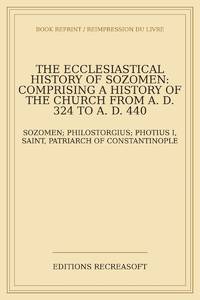
2026Best.-Nr. LRB541438Paris: Editions Recreasoft 2026 Language: English. Approximately 536 pages. English : Print-on-demand reprint. Original edition : 1855. A scholarly English-language volume presenting Sozomen's Ecclesiastical History covering the history of the Church from A.D. 324 to A.D. 440. The work is of considerable interest for the study of early Christianity imperial church history and the development of late antique historiography. The volume also includes related historical material by Philostorgius and Photius with bibliographical references and an index making it useful for researchers and collectors of patristic and ecclesiastical texts. Book images are non-contractual. Editions Recreasoft. Softcover. New. Editions Recreasoft paperback
2008New English Paperback. 4to. (28 x 24 cm). In English and Turkish. 360 p., color ills. The lure of the East: British orientalist painting.= Dogu'nun cazibesi: Britanya oryantalist resmi. [Exhibition catalogue]. This exhibition focused on the paintings made by British artists of the 'Orient', primarily during the nineteenth century. In this context the term 'Orient', to Western Europeans, meant those parts of the eastern Mediterranean world which could be accessed relatively easily such as Egypt, Palestine and Turkey, particularly after the development of steamboat and rail travel in the 1830s. In these places, predominantly Muslim and at least nominally under the control of the Ottoman Empire, British artists, such as David Roberts, David Wilkie, William Holman Hunt, John Frederick Lewis and Frederic Leighton, sought to develop imagery which captured what they believed to be characteristic of the people, cities and landscapes of the region. In the 1970s the Palestinian-American academic Edward Said published his treatise on Orientalism, initiating a global debate over Western representations of the Middle East. For many, such representations now appeared to be a sequence of fictions, serving the West's desire for superiority and control over the East. The argument for and against Said's Orientalism has continued for thirty years. Its resonance for an exhibition such as this one, however, is as strong as ever given that, by the 1920s (the end of the period covered by this exhibition), Britain was in direct control of much of the newly abolished Ottoman Empire, including Egypt, Palestine and Iraq. As Said argued, these images cannot be viewed in isolation from their wider political and cultural context. Keeping the debates around Orientalism in mind, "The Lure of the East" focuses on the range of pictorial options open to British artists, within five major themes: portraits, genre, religious and domestic subjects and landscape. British painters came to the Middle East from a culture steeped in technical and compositional artistic traditions. Such traditions were not easily unlearned, despite the apparent difference of the people and places the artists encountered on their travels. Given this, British Orientalist painters found many challenges in attempting to represent the Middle East, but they also found inspiration and, more importantly, the freedom to rework, reinvent and even discard those conventions that defined picture-making in Britain.
2017New English Paperback. Articles in English and Turkish. [ii], 279 p. Cultural encounters in the Ottoman world and their artistic reflections in honor of Prof. Dr. Filiz Yenisehirlioglu.= Osmanli dünyasinda kültürel karsilasmalar ve sanatsal yansimalari. Prof. Dr. Filiz Yenisehirlioglu'na armagan. Prep. by Ayse Pelin, Sahin Tekinalp, Ünal Araç, Mehmet Fatih Müderrisoglu.
2010New New English Istanbul sifahaneleri. Karsiliksiz hizmetin muhtesem abideleri = The sifahanes of Istanbul. Magnificent structures of philanthropy., prep by: Abdullah Kilic, Istanbul büyüksehir belediyesi, Ist., 2010. Original bdg. Dust wrapper. 4to. (30 x 25 cm). 208 p. In Turkish and English. B/w and color ills. OTTOMANIA Constantinople Istanbul Ottoman culture History of medicine Philanthropy.