2 139 résultats
1996New New English Original bdg. Dust wrapper. 4to. (32 x 24 cm). In Turkish. [viii], 307, [3] p., color and b/w ills. First Edition. Bir zamanlar Istanbul.
1910Very Good French Original sepia-toned photograph printed in a period photograph paper. 19x25 cm. Descriptive text in French. Chipped and tear on margins. Iranian was born in 1890 in Constantinople, Istanbul. It is known that he established his studio in 1891 in Pera district of Constantinople - the center of Armenian cultural and political life. In 1895 he enters into partnership with another photographer by the name of Gugasyan. By 1900s the business seems to have wound down as the images marked with his studio signature don't exhibit any over elements of the new century. Of all the major Armenian studios from Istanbul, Iranian's photographs are the rarest, and less than 300 are known to have survived. Iranian's primary subject was the city of Constantinople, its picturesque landscape, architectural heritage, and the many types of artisans and workers that populated its streets. Using the latest photography techniques, which allowed for very rapid exposures, Iranian captured the bustle of the city streets with remarkable clarity. Teeming with life and movement these images have a remarkable immediacy and documentary veracity quite unlike similar views produced by other photographers of the period. The typical approach for many of Iranian's contemporaries such as Sebah & Joalier or Guillame Berggren was to achieve as clear a picture as possible with perfectly balanced compositions and highly visible details - the hallmark of a 'good' commercial photographer. In contrast, Iranian's street views are full of photographic 'ruptures' - blurred figures in movement, surprised glances of people caught unawares - which give his works the viscerality of snapshots. But above all, Iranian was a master at capturing the mood of a place. Catching the Ottoman capital on the brink of rapid transformation, the photographer aimed to record many of its ancient streets and quarters disappear or change the appearance. Thus, like the Parisian street photography of Atget, Iranian's images are 'nostalgic for the present' that is irrevocably slipping into the past. In his studio, the clientele had the choice of a large range of costumes and props through which the modern urbanite could slip into the role of some long-gone ethnic or street type and become a part of history. It is this sense of melancholy that gives Iranian's photographs their subtle emotional power. This is also perhaps the reason why he was ultimately not as successful as a commercial photographer. Modernity had captured the imagination of the people and the wistful romanticism of Iranian's markedly less spectacular images was fast going out of fashion. The small legacy he has left behind is nevertheless of significance in the history of Near-Easter photography. He was one of the rare Ottoman photographers with an individual and subjective approach, which deserves a proper evaluation.
2015New English Original bdg. HC. 4to. (30 x 24,5 cm). In Turkish. 2 volumes set: (228 p.; 224 p.), color and b/w ills. Eyüplü meshurlar. 2 volumes set. Edited by Seyfettin Ünlü. Famous people from Eyup district of Istanbul in the period of the Ottoman Empire. Musicians, sufis, calligraphers, artists and politicians etc.
2010New English Original cloth bdg. In special box. 4to. (28 x 21 cm). In Turkish. [xxxiii], 644 p., b/w plts. Sultanlar sehri Istanbul. Translated by Banu Büyükkal. Illustrated by W[illiam] H[enry] Bartlett. [In special box]. City of sultans: Istanbul.
2017Fine French Original bdg. HC. 4to. In French and Turkish. 168 p., ills. Pierre Loti et les silhouettes de Hassan: Portraits avant La II. Constitution.= Pierre Loti ve Hasan silüetleri: II. Mesrutiyet öncesi portreler. The novelist Julien Viaud, famous for his nickname Pierre Loti, is a traveling maritime officer. At the end of the 19th century and the beginning of the 20th century, he makes seven trips to Istanbul. In 1903, at the age of 53, Pierre Loti takes over Le Vautour, the first station ship to the French Embassy in Istanbul, during his fifth trip to Turkey. In the same period, Hasan signed cartoons start to circulate in Istanbul.The person who is hiding under Hasan is actually Robert de Guiroye, a naval officer. This person was then assigned to the auxiliary ship "La Mouette" (Seagull) under the command of Pierre Loti. It is thought that this officer made drawings on this ship in the evening after having spent a long time in important social clubs such as Cercle d'Orient, Pera Palas Ballroom, Tepebasi Theater. Who is actually Hasan / Who is the real Hasan? The answer to this problem is in the exhibition and detailed catalog. Let's see if they can help bring Hasan's identity to light. The "Pierre Loti and Hasan Silhouettes" exhibition is made up of documents obtained as a result of years of research by numerous collections and valuable collector Sayen Erol Makzume, who has vast knowledge of Hasan's lithographs in the early 20th century. The exhibition contains texts, cartoons and in-depth information, and sheds light on the transition period of Turkey after the Second Constitutional Monarchy.
2017New Turkish Original bdg. HC. Oblong 4to. (24 x 30 cm). In Turkish. 231, [19 p, color ills. Yavuz Sultan Selim Köprüsü: Istanbul'un yeni simgesi. Edited by Barbara La Rosa.
1953Fine English Paperback. Roy. 8vo. (24 x 17 cm). In Turkish. 3 volumes set: ([xvi], 297, [1] p.; [vi], 155 p.; 508 p.). 1000 copies were printed. Limited Edition. First Edtion. Istanbul Belediye Kütüphanesi alfabetik katalogu. 3 volumes set. Vol. 1: Osman Ergin kitaplari: Arapça ve Farsça basma eserler.Vol. 2: Belediye ve M[uallim] Cevdet kitaplari: Arapça ve Farsça basma eserler. Vol. 3: Osman Ergin kitaplari: Türkçe ve yabanci dil basma eserler. Istanbul Municipalitan Library alphabetical catalogue: Vol. 1: Osmnan Ergin donation: Printed book in Arabic and Persian. Vol. 2: Municipalitan and Muallim Cevdet donations: Printed books in Arabic and Persian. Vol. 3: Osman Ergin donation: Printed books in Ottoman Turkish and foreign languages. REFERENCE Books Collection Ottoman intelligentsia Intelligent Muallim Cevdet Osman Ergin Municipality Istanbul Constantinople Library ctalogue.
1944Very Good Turkish Modern cloth bdg. Roy. 8vo. (23 x 16 cm). In Turkish. 57, [iv], [2] p., 8 b/w plates. Kadiköyüne ünvani verilen Hizir Bey Çelebi. Hayati ve eserleri, 810-863 (1407-1459).
2017New Turkish Original bdg. HC. 4to. In Turkish with Ottoman documents. 1140 p., with CD. Osmanli yer adlari. [= Ottoman names of places]. A study on Ottoman onomastics.
2006New English Paperback. Pbo. In special box. Demy 8vo. (22 x 15 cm). In English. 4 volumes set: (231 p.; 120 p.; 207 p.; 167 p.), color and b/w ills., + 2 folding maps). Architectural guide to Istanbul. Vol. 1: Historic Peninsula. Vol. 2: Galata. Vol. 3: Bosphorus & The Asian Side. Vol. 4: Modern & Contemporary. [and] Map: Historical Peninsula & Bosphorus. (4 volumes set and map). The Architectural Guide to Istanbul, prepared as a set of five volume (5th is a big Map of Historic Peninsula & Bosphorus), was considered an effective method to learn Istanbul. All architectural entities, organizations, structures, big and small buildings embracing history and geography, hard realities as well as the most fantastic myths of Istanbul have been analyzed and explored to create a new type of guidebook, different from any already in print. The Architectural Guide to Istanbul, Volume 1, Historic Peninsula contains information about structures with historical and architectural features built before the 1930s and situated within the old city walls, in Eyup-Silahtaraga, Bakirkoy and Yesilkoy as well as informative texts written by specialists of the period and region. The Architectural Guide of Istanbul, Volume 2, Galata contains information about structures with historical and architectural features built before the 1930s and situated in Karakoy, Galata, Pera, Taksim, Tophane, Findikli, Dolapdere, Kasimpasa, Haskoy, Sutluce, Kurtulus, Sisli, Nisantasi, Tesvikiye, Macka, Besiktas-Yildiz, Mecidiyekoy and Ayazaga-Maslak as well as informative texts written by specialists of the period and region. The Architectural Guide of Istanbul, Volume 3, Bosphorus and The Asian Side contains information about structures on the east and west coast of the Bosphorus starting from Pasalimani and Ortakoy and going up to Anadolu and Rumeli Feneri, Uskudar, Kadikoy, the area from Fenerbahce to Bostanci, Buyukada, Heybeliada, Burgazada and Kinaliada as well as informative texts written by specialists of the period and region. The Architectural Guide of Istanbul, Volume 4, Modern and Contemporary contains information about structures with historical and architectural features built after 1930s and situated in the Historic Peninsula, Galata-Pera, Taksim, Sisli, Mecidiyekoy, Levent, Maslak, Bosphorus, Kadikoy, Princes' Islands, Bakirkoy-Yesilkoy, Merter, Ikitelli regions and peripheris like Kurtkoy as well as informative texts written by specialits of the period and region. The books also has 1:10000 city plans with the selected structures marked, black-and-white, documentary and up-to-date photographs, drawings and short explanatory texts of the relevant works of architecture.
réf. SONG184631836XUsed: Good unknown
réf. 19189Paris P.-V. Stock, Editeur 1901 in 12 (19x13) 1 volume reliure demi basane bleue de l'époque, dos à nerfs orné de fleurons dorés, VI [4] et 222 pages [1], avec 27 gravures hors-texte et le fac-similé d'un autographe du Sultan. Préface de Pierre Quillard. Ex-libris de la bibliothèque A. Lang (avec la devise: Sitôt lu, sitôt vendu, sitôt perdu). Bon exemplaire ( Photographies sur demande / We can send pictures of this book on simple request )
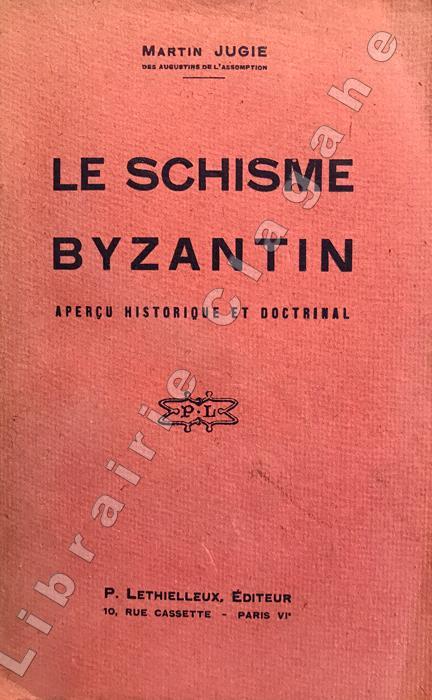
1941réf. 21531Paris, Lethielleux, 1941 (Besançon, Imprimerie de l'Est) ; in-8, broché ; VII, [1], 487 pp., couverture rouge corail.
1910réf. 227991910 Paris 1910 Letouzet et Ané, éditeurs,grand in8 broché,Octavo. XXVIII + 404pp. rare,bon état
1855Paris, Victor Lecou, 1855, gr. in-8°, 26 x 18 cm, xviii p. + 302 p. + 20 gravures sur acier. Reliure demi-chagrin brun de l'époque, dos doré, plats de percaline gaufrée. Reliure fortement usagée, avec de nombreux manques au dos. À l'intérieur quelques. rousseurs, mais encore un exemplaire convenable et complet de ses 20 gravures. Inv. 17498
2020New English Original bdg. HC. 4to. (30 x 24 cm). Edition in English. 325 p., b/w and color ills. The Constantinople years. February 07 - May 10 2020, Istanbul, Mesher. [Exhibition catalogue]. Prep. by Aysenur Güler, Vita Susak. Edited by Nilüfer Sasmazer. Alexis Gritchenko, (1883-1977) was part of the modern art scene and exhibited with avant-garde artists including Kazimir Malevich, Wassily Kandinsky, Vladimir Tatlin and many others. Gritchenko was also an art critic and published articles, books; delivered public lectures, and taught in an art school. He decided to escape the civil war which followed the Russian Revolution of 1917. Leaving Moscow, he arrived in Istanbul in November 1919. Although the two years Gritchenko spent in Istanbul coincided with the occupation of the city, the Ottoman capital provided the artist with a relatively safe refuge until he left in 1921. On his arrival, he was instantly attracted by the colors and dynamism of Istanbul. He recorded his impressions of the vibrant ports, markets, sacred spaces, and majestic monuments while wandering through the streets, notepad, pen and brush in hand. Looking at his vast corpus of Istanbul works, one can retrace the cultural and social imprint of those turbulent years through the eyes of a visitor. Now, 100 years after the visit of Gritchenko to Istanbul, a great part of the works the artist created in the city, a collection of watercolors, gouaches, sketches, and oil paintings have been compiled into the book Alexis Gritchenko - The Constantinople Years. More than 150 works have been included in the publication alongside articles by art historians Vita Susak and Aysenur Gu?ler, detailing the artist's life and technique, as well as the connections and friendships he formed during his stay in Istanbul, including those between him, Ibrahim Çalli, and Namik Ismail.
188620 pages. Contents: Winter Toilettes; Princesses at a Watering-Place; The Household Herald; Women and Men - every one that thirsteth; New York Fashions; Tapestry band for reclining chairs, etc.; background stitches for tapestry cushions ; fans and flowers for evening dress; Mrs. Burkes Pudding; The Woodlanders - continued; Family Living on $500 a Year - par XLVII; Some Christmas Suggestions; Sketches in Constantinople - text with illustrations; The Cocaine Habit - The Worst Slavery Known - New Revelations of Power; Nice centerfold illustration "Going to the Market in the Tropics" whows black man and woman on horseback; full-page illustration of "The Young Scion of the House of Alvarado on a Fiery Half-Broken Mustang; A Millionaire of Rough and Ready - continued; Knitted Chenille cape; Seal-skin wrap with beaver trimming; fur-trimmed mantle; Plain and plaid wool dress; India cashmere dress; A New Phase of Darwinism; humor. Above-average wear. Pattern included. Book
188620 pages. Contents: Cover Illustration "They Carefully Put Their Teeth Into the Lye..."; Thanksgiving; Women and Men - Opressive Leisure; Family Living on $500 a Year - part XLVI - Thanksgiving Dinners; New York Fashions - furs, small girls' and misses' costumes; Personal; Sketches in Constantinople - Bridge of Galata, Palace of Dolma Bagtche Imperial Palace, Mosque of St. Sophia, Turkish Ladies Shopping, etc.; Lyd's Three Thanksgivings - with illustrations; Wonderful vull-page illustrated ad for the opening of the new Grand Street Building of Edward Ridley & Sons of New York - "Ridley's, 309 to 321 Grand St."; Lovely centerfold illustration "Portrait of a Lady" - from the picture byCarolus Duran exhibited in the Royal Academy, 1886; A Millionaire of Rough-and-Ready - first part; Misses' and girls' dresses and cloaks - nice full-page illustration; Corsages for dinner and reception toilettes; laundry basket; afternoon toilettes; some infant schools; a beautiful air-plant; humor. Above-average wear and soiling Book
1910réf. 053167Istanbul: Mihran Iranian. c. 1910 1910. No Binding. Very Good. 8vo - over 7¾ - 9¾" tall. Original sepia-toned photograph printed in a period photograph paper. 19x25 cm. Descriptive text in French. Chipped and tear on margins. Iranian was born in 1890 in Constantinople Istanbul. It is known that he established his studio in 1891 in Pera district of Constantinople - the center of Armenian cultural and political life. In 1895 he enters into partnership with another photographer by the name of Gugasyan. By 1900s the business seems to have wound down as the images marked with his studio signature don't exhibit any over elements of the new century. Of all the major Armenian studios from Istanbul Iranian's photographs are the rarest and less than 300 are known to have survived. Iranian's primary subject was the city of Constantinople its picturesque landscape architectural heritage and the many types of artisans and workers that populated its streets. Using the latest photography techniques which allowed for very rapid exposures Iranian captured the bustle of the city streets with remarkable clarity. Teeming with life and movement these images have a remarkable immediacy and documentary veracity quite unlike similar views produced by other photographers of the period. The typical approach for many of Iranian's contemporaries such as Sebah & Joalier or Guillame Berggren was to achieve as clear a picture as possible with perfectly balanced compositions and highly visible details - the hallmark of a 'good' commercial photographer. In contrast Iranian's street views are full of photographic 'ruptures' - blurred figures in movement surprised glances of people caught unawares - which give his works the viscerality of snapshots. But above all Iranian was a master at capturing the mood of a place. Catching the Ottoman capital on the brink of rapid transformation the photographer aimed to record many of its ancient streets and quarters disappear or change the appearance. Thus like the Parisian street photography of Atget Iranian's images are 'nostalgic for the present' that is irrevocably slipping into the past. In his studio the clientele had the choice of a large range of costumes and props through which the modern urbanite could slip into the role of some long-gone ethnic or street type and become a part of history. It is this sense of melancholy that gives Iranian's photographs their subtle emotional power. This is also perhaps the reason why he was ultimately not as successful as a commercial photographer. Modernity had captured the imagination of the people and the wistful romanticism of Iranian's markedly less spectacular images was fast going out of fashion. The small legacy he has left behind is nevertheless of significance in the history of Near-Easter photography. He was one of the rare Ottoman photographers with an individual and subjective approach which deserves a proper evaluation. Mihran Iranian., [c. 1910] unknown
réf. 19-7848Ixelles-Brussels: Tramways & Electricite de Constantinople 1929. . Folio. Single page. Very good. Includes seven rubber stamps on front. Signed by two administrators. En Francais. Ixelles-Brussels: Tramways & Electricite de Constantinople, [1929]. unknown
réf. 0881410381New. paperback. New. Satisfaction Guaranteed or your money back. paperback
2004As New English Original bdg. In special publisher's box. Mint. Oblong folio. (28 x 40 cm). In English and Turkish. 157 p., color ills. The tughras of vaqfiyya in Ottoman Empire.= Osmanli Imparatorlugu'nda Vakfiye tugralari. A very heavy volume.
réf. SONG0231136684Used: Good unknown
2008New New English Original bdg. Dust wrapper. In publisher's special box. 4to. (33 x 24 cm). In Italian and Turkish. 248 p., color and b/w ills. Presenze Italiane a Istanbul = Istanbul'daki Italyan izi. [With a CD]. Istanbul, una delle città piú belle del mondo; eterna, mistica, malinconica, allegra. ogni qualvolta le si attribuiscono degli aggettivi, questi, pur distanti tra loro appariranno comunque, appropriati per lei. Istanbul in ogni sua fase storica e stata ininterrottamente al centro dell'attenzione del mondo: si tratta di una città che ha inglobato lasciato in questa mistica citta le loro tracce, contribuendo anche con qualcosa della loro fantasia. E'per questo che Istanbul e sempre stata un mosaico di culture e continua ad esserlo. Il motivo sottostante alla realizzazione del presente libro e intimamente connesso alla struttura culturale molto peculiare di wuesta città. La Ferroli, una industria tra le piu consolidate in Italia, ha deciso di sostenere e ha voluta uno studio nel quale venissero evidenziate le tracce della presenza culturale italiana a Istanbul.