2 103 résultats
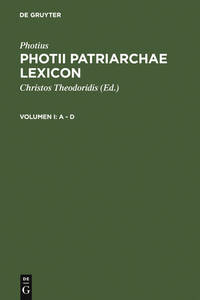
1982réf. 15850Walter De Gruyter & Co. . Very Good with no dust jacket. Hardcover. Scholars' bookplate to inner cover. Slight spine slant. Very minor shelfwear.; Volume 1 Only.; 1; 461 pages . 1982. 3110085305 . Walter De Gruyter & Co. hardcover
1965réf. 13811Adolf M. Hakkert. Very Good with no dust jacket. Hardcover. Spine a little sunned and discolored. Corners a little rounded. Light bump to top of spine. Light shelfwear.; Reprint of the edition Leiden 1864-1865. 459 456 pp; 2 Volumes in 1 COMPLETE; 1-2; 455 pages . 1965. Adolf M. Hakkert hardcover
1897réf. 237507Constantinople 1897. 10 x 7-3/4 inches. Mounted. Slightly faded. 10 x 7-3/4 inches. Photo/Wh/2/up unknown
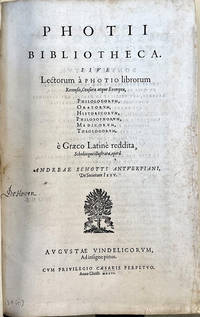
réf. 43456Augsburg: Christoph Mang. Photius I Saint Patriarch of Constantinople ca. 810 - 893. Bibliotheca; sive lectorum a Photio librorum recensio censura atque excerpta. Latin translation with notes by Andreas Schott S.J. 28 555 37 pages including final blank. Augsburg: Christoph Mang 1606. 312 x 201 mm. Vellum ca. 1606 spine ends restored inner hinges cracking vellum over covers wrinkled. Infrequent light marginal dampstaining but very good. Booklabel of Frederic Huidekoper on rear pastedown. First Edition in Latin of the chief work by this 9th-century Byzantine scholar and Eastern Orthodox church leader consisting of a critical account of 280 works read by him many of which are now lost. The Greek original text was first published in 1600. "To Photios we are indebted for almost all we possess of Ctesias Memnon of Heraclea Conon the lost books of Diodorus Siculus and the lost writings of Arrian. Theology and ecclesiastical history are also very fully represented but poetry and ancient philosophy are almost entirely ignored. It seems that he did not think it necessary to deal with those authors with whom every well-educated man would naturally be familiar. The literary criticisms generally distinguished by keen and independent judgment and the excerpts vary considerably in length. The numerous biographical notes are probably taken from the work of Hesychius of Miletus" Wikipedia article on Photius. Hoffmann III 91; Sarton I 594. . Christoph Mang unknown
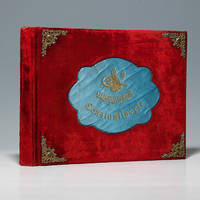
1890réf. 1031341890. PHOTOCHROM ZURICH. Constantinople. Zrich: Photochrom Zrich circa 1890. Oblong folio 16 by 12 inches 30 photochrom images each measuring approximately 9 by 6-1/2 inches and mounted on heavy cardstock; original red velvet blue silk gilt-lettered title centerpiece on front cover brass cornerpieces. $4500.Rare photographic album of Constantinople circa 1890 by the renowned studio of Photochrom Zrich with 30 beautiful mounted vintage photochrom color prints offering exceptional views of majestic mosques palaces and plazas as well as the people of this great city in magnificent velvet binding with brass furniture.This splendid souvenir album of Constantinople contains exquisite color photographic prints of images taken at the turn of the 20th century produced by the revolutionary photochrom process. Photochrom also called the Ac process is ""a very successful form of color photolithography developed in the late 19th century by the Swiss firm of Orell Fssli and used mainly for topographical views; photochroms have almost the appearance of color photographs but through a glass will show a delicate ink pattern which was achieved by a combination of photographic and manual work on grained i.e. lithographic stones being a forerunner therefore of modern screenless offset lithography"" Gascoigne 206. In this process black and white photographic negatives were directly transferred onto lithographic printing plates to produce color prints. These photographs are a high point in late 19th-century photography when albums such as these captivated a world newly spellbound ""by photography's capacity to 'take them there' and bring them directly in contact with the long ago and far away"" Parr & Badger I:18. Each image captioned with a four-digit number followed by ""P.Z."" for Photochrom Zrich and then the title of the scene in French. A few instances of marginal spotting to mounts; photochrom prints clean and fine with vivid colors. Binding splendid. An about-fine copy of this lovely album. unknown
1828réf. 51526Constantinople Matbaa-i Amire 1828 1243 h. Small 4to. 22 x 16 cm. Contemp. full calf. with flap. A tear in the flap. Rebacked. Blindtooling to covers and a medaillon on front and back. Covers a bit rubbed. 34259 pp. A small burnmark in inner margins of the last 8 leaves otherwise internally clean and fine. Printed arabic types in Turkish/ Ottoman Turkish. First edition. Esad Effendi Turkish historian born 1790 dead 1848. The work deals with the armed forces hydrology etc. unknown
1866réf. HALL068301Hardback. 1866. among the Saints John Chrysostom Archbishop of Constantinople Done into English by John Covel John Glen King John Mason Neale and by The Anonymous Translator of 1866. Ed. & notes Stephen G.Hatherly. 128pp 1895. The 4 translations in parallel. VG . hardcover
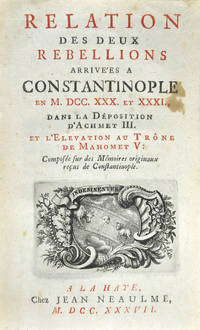
réf. 86461The Hague Jean Neaulme 1737. . First edition first issue; Small 8vo 15.5 x 10.5; iv 164 viiiadspp. title printed in red and black with engraved device small stain to title light waterstain to inner upper margin bound in later green morocco backed marbled boards spine gilt lettered very good. This account describes the two rebellions which broke out during the unsettled period following the victories of Nadir Kuli Khan of Persia against Turkey during September 1730 and which brought to and end the 'Tulip Period'. On the 20th of that month a minor riot developed into a full scale insurrection and Sultan Ahmet III was forced to abdicate in favour of his nephew Mahmoud I. The janissaries were led by one of their own an Albanian by the name of Patrona Halil and for two months the empire was in the hands of the insurgents. They were eventually overthrown by the Grand Vizier the Mufti and Aga of the Janissaries with the help of the Khan of the Crimea and Patrona and 7000 of his supporters were put to death. The first issue has the title printed in red and black as here. Atabey 1026; Blackmer 1407. The Hague, Jean Neaulme, 1737. hardcover
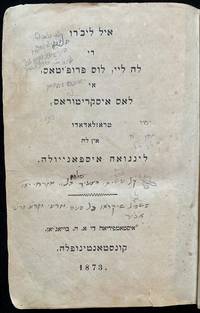
1873réf. 43536Konstantinoplah Constantinople: A. H. Boyagian Boyag'yan 1873. 8vo Original boards 2 volumes bound together 560 630 pages. 22 cm. 23 cm. In Ladino Only. Title translates as "The Book of the Law the Prophets and the Writings Translated into Ladino/Spanish." Ya'ari Reshimat Sifre Ladino no. 3. The publisher also issued a more common parallel Hebrew and Ladino bible the same year; this edition however is the scarcer Ladino only edition. "The translation of the Pentateuch in Hebrew vocalized square characters Constantinople 1547 was the first larger work which the Sephardic Jews of Turkey published in the language 'which the old Jews use. ' Twenty years later the entire Bible was published in several parts the third of which included the Later Prophets. This translation which agreed almost entirely with the one that appeared at Ferrara in Latin letters in 1553 was followed by another in four parts Constantinople 1739-45 in Ladino 'entero bien Ladinado'; seventy years later Israel b. Hayyim of Belgrade issued a translation Vienna 1813-16; the Constantinople edition was reprinted at Smyrna in 1838 et seq and again at Constantinople in 1873 all of these being in Rashi characters." EJ The Ladino Bible was later used by modern scholars and writers such as Holocaust survivor and poet Moshe Ha-Elion as a linguistic reference point to study authentic traditional Salonican and Turkish Ladino vocabulary. "All in all between 1493 and 1940 approximately 260 books and thirty periodicals were printed in Ladino in Istanbul most of them printed after 1730 out of a total of 758 publications in Hebrew type. As we have noted early Ladino publications focused on religion: Biblical commentary and texts religious law ethics and prayer books. These topics continued in the nineteenth century but the majority of publications in the later period were belles lettres history and biography sciences and communal and state laws and regulations. Of special social and cultural importance since the second half of the nineteenth century were Ladino periodicals which also served as publishers of books in Ladino. Having initially aimed to "Judaize" the Jews the objective of Ladino publishing in the later period was to modernize and entertain them while at the same time attempting to spread Judaic knowledge." Rachel Simon The Contribution of Hebrew Printing Houses and Printers in Istanbul to Ladino Culture and Scholarship SUBJECTS: Ladino literature. OCLC:79281753 & 976898012. OCLC locates only 4 sets of this rare Ladino-only edition only 2 in North America Harvard & UToronto. Well bound with some edgewear. Some markings and an inscription on the title page. Good Condition. Rare and important PSB-1-29-CC-'. Konstantinoplah [Constantinople]: A. H. Boyagian [Boyag'yan] unknown
1913réf. 055948Rodosto & Constantinopoli: Manuscript & Typescript 3-9 October 1913. 1913. No Binding. Very Good. 8vo - over 7¾ - 9¾" tall. A one-page typed letter with autograph marginal notes and a two-page manuscript report in black ink. Both are written on bifolia papers with "Renage's Mill" watermark One is "Banknote Paper" the other is "Extra Strong". "Agenzia Consolare d'Italia Rodosto" & "Consolato Generale d'Italia in Constantinopoli" letterheads. 27x21 cm. The letter is in Italian report is in French. 1 p.; 2 p. Signed. Except for the horizontal centre-fold in very clean condition. A letter written by the Italian Consul General in Constantinople to the Italian chargé d'affaires accompanied by a historically significant report from the Consular Agent in Rodosto provides valuable first-hand information about the outbreak of epidemic diseases such as cholera and typhus among humans and anthrax and bubonic plague among animals in the Ottoman Empire in 1913. It also sheds light on the authorities' failure to address these public health crises while offering significant insights into the Muslim immigrants arriving in convoys to the region during the ongoing Balkan Wars. This is an invaluable firsthand account of the Sixth Cholera Pandemic in the Ottoman Empire "a time when the Empire's foundations were shaken by the Balkan War military defeats territorial losses the plight of refugees and immigrants and the dreadful calamity of the cholera epidemic between 1911 and 1913 during which no reliable official records exist regarding the exact number of cholera cases and deaths". Unat. The manuscript report opens by stating the number of direct death cases as rendered in the translation: "I believe it is my duty to inform you that on the 27th a case of cholera followed by death was reported in the town. The day before yesterday there were four other cases two of them fatal; yesterday four new ones two of which were fatal; today another case. So out of ten cases there have been five deaths." The letter goes on: "The other municipality requested a credit of 1000 piastres from Constantinople to take the measures required by the circumstances. Unfortunately no reply has been given and our local officials do not know to which authority they should turn." "Cholera is present in Kirklareli Quarante Églises Baba-Eski Babaeski à Vise Vize à Bounar-Hissar Pinarhisar à Luli Bourgaz Lüleburgaz à Ouzun Keupiru Uzunköprü and aound Krichan Kirikhan. In Tchorlou Çorlu typhus is wreaking havoc and smallpox is present here. Our entire region is devastated by an epizootic outbreak: smallpox and foot-and-mouth disease among the sheep anthrax and bubonic plague among the oxen and buffaloes. Money and serum have been requested from the Ministry of Agriculture but there has been no response. The chief veterinarian I spoke with assured me that it would be impossible to do anything until he has serum to treat the livestock and that if the epidemic disease continues to spread like this the livestock will be completely wiped out in our region." The Royal Consular Agent states that during and after the war between the Turks and Bulgarians also known as the Battle of Kirkkilise which was part of the Balkan Wars Muslim immigrants who continually flocked to Kirklareli and the surrounding areas brought cholera and other epidemic diseases to the region. "Regularly there are convoys of migrants who had left their villages in the surrounding areas of Adrianople Quarante Églises Lüleburgaz etc. before the Turco-Bulgarian War arriving from Anatolia by steamships. They are the ones who brought us cholera and the epidemic disease." He ended his manuscript report by stating there is no way to convince the authorities to have them disembark elsewhere outside the city or to prevent the arrival of these immigrants who are being directed utilizing forced requisitions to areas where cholera is spreading. This report was presented to the Italian chargé d'affaires with this letter additionally as below: "Healt Manuscript & Typescript, 3-9 October 1913. unknown
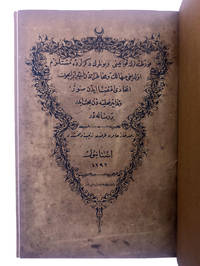
1875réf. 055260Constantinople Istanbul: Neologos Litografyasi - Votîra ve Sürekasi Matbaasi. AH 1292 1875. 1st Edition . Leather. Very Good. 8vo - over 7¾ - 9¾" tall. Contemporary 1/4 leather bdg. with marbled boards. Small 4to. 27 x 19 cm. 23 p. 11 p. in Ottoman script Old Turkish with Arabic letters; 12 p. in French with rare 4 folded maps. A very good copy. First and only edition of this extremely rare bilingual book in French and Ottoman Turkish including the first records on the formation and characteristics of storms to explain how storms and hurricanes occurred which route they followed and how they were conveyed to the regions that need to be warned by telegraph for the vessels sailing in the seas by French expert Coumbary who was founded the Rasathâne-i Âmîre i.e. Ottoman Imperial Observatory. Both the original French and Turkish translations of the work were published together in one volume. The work also included four maps which were drawn for this work only. The first map shows the movement of a storm that occurred on March 8 1865 the second one shows the occurrence between the Tropic Cancer and Capricorn whirlwinds storms in the Atlas and Indian oceans the movements in the Bay of Bengal the storms in different directions in the China Sea the Gulfstream Grönland and Azores. The second observatory in the Ottoman era was established for meteorology. Before this center was established beginning from the Reformation 1839 many meteorological observatories were built by foreigners in various cities such as Istanbul Smyrna Trebizond Tekirdag and Merzifon both as private and public establishments. The very first known temperature readings are the meteorological observations made by the Priest Dalmas at the St. Benôit monastery between 1839-1847. Later William Lane an Englishman who came to Istanbul during the Crimean War made observations at the British Cemetery at Haydarpasa. W. Noe director of the Mekteb-i Fünûn-u Sahane made observations at the house in Kalyoncukulluk where he lived until the Beyoglu Fire in 1848; and finally it is known that French engineer Ritter who was invited by the government for waterworks in Kuruçesme 1856-1860 also conducted meteorological observations. Observations on precipitation and humidity conducted between 1875-1892 by an amateur observer on the Thomson Farm in Erenköy are invaluable on the subject of Istanbul's climate. These observations have been published in Budapest in 1928. Excellent observations on heat pressure and humidity made in the summer residence of the Russian ambassador on Büyükada have also been published in Annales St. Petersburg. In 1858 the French government established the first observatory communicating data over the telegraph and in 1863 by compiling meteorological data in France the French National Meteorological Network started operations. In 1868 upon the recommendation of the French government the Rasathane-i Âmire was founded to convey meteorological forecasts to certain centers by telegraph. Instruments were purchased from leading European factories and operations started on top of a hill 74 meters high on Pera. The first director was Mr. Aristide Coumbray who came to Istanbul to renovate the telegraph network. Instruments commissioned from France were set up at Mr. Coumbary's home which stood at the garden of the Swedish Embassy. The observatory was later moved after its offices were prepared. Coumbary represented Turkey in the first international meteorology congress convened in Wien five years later in 1873. Rasathane-i Âmire worked by the same system as the National Meteorology Center in France. In the observation books of 1868 August-November names of affiliated stations are given to us Soulina Köstence Constantia Varna Burgaz Valona Elbasan Durazzo and Beirut. Later stations in Izmir Diyarbakir Baghdad and Fao were also added. The observatory founded by Aristide Coumbary in 1868 in Istanbul operated until the end of the First World War. Özege 5735.; TBTK 7688 10862.; Not in OCLC. Neologos Litografyasi - Votîra ve Sürekasi Matbaasi., [AH 1292] hardcover
1910réf. 053669Istanbul: ADS. AH 1326 1910. No Binding. Very Good. Original manuscript autograph document sealed by Bosnevî Darülhadis Basmüderrisi i.e. Bosnevî Darülhadis School in Sehzâde Istanbul. Oblong: 12x145 cm. In Ottoman script. 1 p. 4 lines. "Huve. Bâdi-i sehâdetnâme oldur ki; Müderrisi bulundugum Sehzâde civarinda Darülhadis Bosnevî Medresesi'nde mukayyid talebe ilm-i sarf. Mehmed bin Mehmed Efendi'nin. 1326 1910 AD.". ADS., [AH 1326] unknown
1910réf. 053167Istanbul: Mihran Iranian. c. 1910 1910. No Binding. Very Good. 8vo - over 7¾ - 9¾" tall. Original sepia-toned photograph printed in a period photograph paper. 19x25 cm. Descriptive text in French. Chipped and tear on margins. Iranian was born in 1890 in Constantinople Istanbul. It is known that he established his studio in 1891 in Pera district of Constantinople - the center of Armenian cultural and political life. In 1895 he enters into partnership with another photographer by the name of Gugasyan. By 1900s the business seems to have wound down as the images marked with his studio signature don't exhibit any over elements of the new century. Of all the major Armenian studios from Istanbul Iranian's photographs are the rarest and less than 300 are known to have survived. Iranian's primary subject was the city of Constantinople its picturesque landscape architectural heritage and the many types of artisans and workers that populated its streets. Using the latest photography techniques which allowed for very rapid exposures Iranian captured the bustle of the city streets with remarkable clarity. Teeming with life and movement these images have a remarkable immediacy and documentary veracity quite unlike similar views produced by other photographers of the period. The typical approach for many of Iranian's contemporaries such as Sebah & Joalier or Guillame Berggren was to achieve as clear a picture as possible with perfectly balanced compositions and highly visible details - the hallmark of a 'good' commercial photographer. In contrast Iranian's street views are full of photographic 'ruptures' - blurred figures in movement surprised glances of people caught unawares - which give his works the viscerality of snapshots. But above all Iranian was a master at capturing the mood of a place. Catching the Ottoman capital on the brink of rapid transformation the photographer aimed to record many of its ancient streets and quarters disappear or change the appearance. Thus like the Parisian street photography of Atget Iranian's images are 'nostalgic for the present' that is irrevocably slipping into the past. In his studio the clientele had the choice of a large range of costumes and props through which the modern urbanite could slip into the role of some long-gone ethnic or street type and become a part of history. It is this sense of melancholy that gives Iranian's photographs their subtle emotional power. This is also perhaps the reason why he was ultimately not as successful as a commercial photographer. Modernity had captured the imagination of the people and the wistful romanticism of Iranian's markedly less spectacular images was fast going out of fashion. The small legacy he has left behind is nevertheless of significance in the history of Near-Easter photography. He was one of the rare Ottoman photographers with an individual and subjective approach which deserves a proper evaluation. Mihran Iranian., [c. 1910] unknown
réf. 026454Constantinople: Imp. Tsitouris Freres 1928 0. Soft cover. Very Good. 8vo - over 7¾ - 9¾" tall. Paperback. Pbo. Cr. 8vo. 19 x 13 cm. In French. 8 1 p. Stamp on cover minor tear at bottom corner of front cover. Clean inside and covers. Otherwise a good copy. Rare pharmaceutical brochure booklet printed in Istanbul Constantinople. La lutte contre la Syphilis: Le noveau traitement de la Syphilis dans toutes ses manifestations. Le plus Efficace et le plus Inoffensif par le Bizmol Hydroxyde de Bismuth en suspension huileuse. Grand Laboratoire Pharmaceutique 'L'Orient' Istanbul Sirkedji Demirkapou No.10. Imp. Tsitouris Freres, [1928] 0 paperback
1651réf. 73622Londini: ex officina Rogeri Danielis 1651. First edition folio pp. 8 393 11; Greek and Latin text in parallel columns; woodcut device on title page; woodcut ornaments woodcut and factotum initials; early 19th-century roan-backed speckled paper-covered boards; edges worn old library stamp on title page occasional toning; good sound and relatively clean. First edition of the letters of Photius edited by Richard Montague recommended by the publisher as an important historical source for the schism between the Eastern and the Western churches and based on the 9th-century Barocci manuscript in the Bodleian Library. Brunet IV 624; Wing P-2136. ex officina Rogeri Danielis unknown
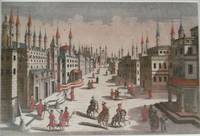
réf. #[35345]Augsburg Georg Balthasar Probst ca. 1770. Contemporary handcoloured perspective view vue d'optique or Guckkastenbild depicting a street scene with the prison in Constantinople. Ca 26 x 39 cm. Optical view inside Istanbul showing the state prison the seven towers to Constantinople. A fine street view with on both sides buildings with slender towers and several local peope and horsemen. - Fine. unknown
1983réf. 260207014Studion Publishers 1983. hardcover. Good. 9x6x1. Cover has light wear. Text unmarked small smudge on a few pages. Good solid binding. Ships Next Business Day. Studion Publishers hardcover
2026réf. LRB45015732Paris: Editions Recreasoft 2026 : . 602 . Français : Réimpression à la demande. Édition originale : 1864. Ouvrage en grec caractères grecs. Cette réimpression présente un texte grec ancien composé de lettres de questions et de réponses ainsi que de solutions à des problèmes philosophiques et théologiques. L'ouvrage reflète la pensée du patriarche Photius I figure majeure de la théologie byzantine. Le texte est introduit et annoté par Joannes Nicolaus Valetta érudit du XIXe siècle. Images du livre non contractuelles English: Print-on-demand reprint. Original edition : 1864. Text in Greek Greek script. This reprint features an ancient Greek text comprising letters questions and answers as well as solutions to philosophical and theological problems. The work reflects the thought of Patriarch Photius I a key figure in Byzantine theology. The text is introduced and annotated by Joannes Nicolaus Valetta a 19th-century scholar. Book images are non-contractual. Editions Recreasoft. Softcover. New. Editions Recreasoft paperback
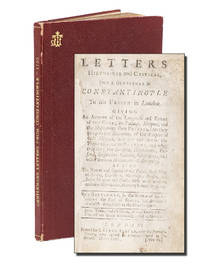
1735réf. 10011London: Printed for George Spavan 1735. First Edition. Hardcover. Very good. Octavo. 4.625 x 7.125 inches. 2 blanks 86 2 blanks pp. A British account of 18th-century Constantinople by an anonymous author "a gentleman" from the retinue of George Hay the 8th Earl of Kinnoul British ambassador to Constantinople 1729-1737. Title page professionally reinforced at an early date. Very good. Rebound in red textured cloth titled in gilt on spine with gilt monogram to upper cover all edges gilt. Classical archaeologist Henry Schroder Robinson's copy with his ex libris label affixed to front pastedown; inscribed to Robinson on front free endpaper "To Henry / the Bibliophile / as a token of appreciation / from / The Gennadius Library / June 30 1969". Text bright and unmarked binding square and tight. Very scarce with three copies appearing in libraries worldwide OCLC and no auction records. The Gennadius Library is located within the American School of Classical Studies at Athens. Printed for George Spavan hardcover
2026réf. LRB31030332Paris: Editions Recreasoft 2026 Langue : Français. Environ 542 pages. Français : Réimpression à la demande. Édition originale : 1909. Ouvrage en français. Cette étude approfondie explore la pastorale basque à travers l'analyse de la figure historique d'Hélène de Constantinople. L'ouvrage combine une approche historique et critique pour éclairer les traditions culturelles et religieuses de la région. Destiné aux chercheurs en histoire médiévale littérature et ethnologie ce texte offre une perspective unique sur un sujet peu documenté. Images du livre non contractuelles English: Print-on-demand reprint. Original edition : 1909. Text in French. This in-depth study examines the Basque pastoral tradition through the historical figure of Helen of Constantinople. The work combines historical and critical approaches to shed light on the cultural and religious traditions of the region. Aimed at researchers in medieval history literature and ethnology this text provides a unique perspective on a little-documented subject. Book images are non-contractual. Editions Recreasoft. Softcover. New. Editions Recreasoft paperback
réf. 19-7848Ixelles-Brussels: Tramways & Electricite de Constantinople 1929. . Folio. Single page. Very good. Includes seven rubber stamps on front. Signed by two administrators. En Francais. Ixelles-Brussels: Tramways & Electricite de Constantinople, [1929]. unknown
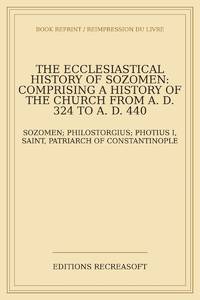
2026réf. LRB541438Paris: Editions Recreasoft 2026 Language: English. Approximately 536 pages. English : Print-on-demand reprint. Original edition : 1855. A scholarly English-language volume presenting Sozomen's Ecclesiastical History covering the history of the Church from A.D. 324 to A.D. 440. The work is of considerable interest for the study of early Christianity imperial church history and the development of late antique historiography. The volume also includes related historical material by Philostorgius and Photius with bibliographical references and an index making it useful for researchers and collectors of patristic and ecclesiastical texts. Book images are non-contractual. Editions Recreasoft. Softcover. New. Editions Recreasoft paperback
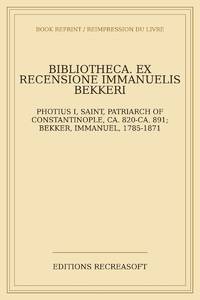
2026réf. LRB546954Paris: Editions Recreasoft 2026 Langue : Latin. Environ 604 pages. Français : Réimpression à la demande. Édition originale : 1824. Édition de l'oeuvre majeure de Photius patriarche de Constantinople texte fondamental pour l'histoire de la littérature grecque et de la transmission des auteurs antiques. Cette Bibliotheca présente un intérêt majeur pour les études patristiques philologiques et bibliographiques ainsi que pour la connaissance des lectures et jugements critiques d'un érudit byzantin. Images du livre non contractuelles English : Print-on-demand reprint. Original edition : 1824. Edition of the major work of Photius Patriarch of Constantinople a fundamental text for the history of Greek literature and the transmission of classical authors. The Bibliotheca is of major interest for patristic philological and bibliographical studies as well as for understanding the readings and critical judgments of a Byzantine scholar. Book images are non-contractual. Editions Recreasoft. Softcover. New. Editions Recreasoft paperback
réf. 0259113670.Gpaperback. Good. Access codes and supplements are not guaranteed with used items. May be an ex-library book. paperback
réf. 103727Facsimile reprint of the Leiden edition 1864. Two volumes. Edited by S. A. Naber. Hard cover 24 cm 458986 pp. ISBN: 978-960-400-377-8 set. . . ================================================ IMPORTANT: The shipping cost in not included in the price. You will have to approve it at confirmation of the order. hardcover