2.104 Ergebnisse
2000Best.-Nr. 36167Contains the original text in medieval-Byzantine Greek polytonic script and translation plus comments and introduction in modern Greek. Soft cover 21 cm 512 pp.; net weight 625 gr. Το πλέον σημαντικό από τα ÎÏγα που συνÎγÏαψε ο λόγιος πατÏιάÏχης είναι η "Βιβλιοθήκη" συλλογή Ï€ÎµÏιλήψεων-σημειώσεων από βιβλία του ÎµÎ¸Î½Î¹ÎºÎ¿Ï και χÏÎ¹ÏƒÏ„Î¹Î±Î½Î¹ÎºÎ¿Ï Ï€Î±Ïελθόντος. Οι πεÏιλήψεις αυτές φÎÏονται να γÏάφτηκαν για έναν και μόνο αποδέκτη σε κλίμα συγκινησιακά Ï†Î¿ÏτισμÎνο. Î ÏοσφÎÏονται στον ΤαÏάσιο τον αγαπημένο αδελφό του Φωτίου ως χαÏιστήÏιο ενθÏμιο λίγο Ï€Ïιν από το διπλωματικό ταξίδι του συγγÏαφÎα στους ΑσσυÏίους. ΠαÏά τον εσωστÏεφή και Ï€Ïοσωπικό χαÏακτήÏα η "Βιβλιοθήκη" γνώÏισε ευÏεία διάδοση. IMPORTANT: The shipping cost is an important parameter of this order; it is NOT included in the price and depends on the actual weight and destination; you will have to approve it after the confirmation of the order. You may ask for an estimate before placing the order at: dem.siatras@gmail.com Kanakis paperback
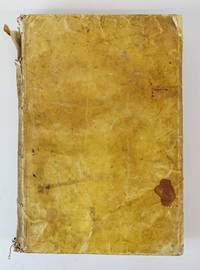
1606Best.-Nr. 1395728Augustae Vindelicorum Augsburg: Exeudebat Christophor Mangus Christoph Mang 1606. Hardcover. Quarto 28 555 35 pages. In Good minus condition. Bound in full vellum. Spine has handwritten ink titling. Tearing and partially detached vellum from spine and loose end band at tail end of spine. Boards have moderate yellowing and soiling. Textblock has tears to pastedowns minor worming scattered on some pages throughout not impacting the text; light age toning moderate foxing and stains scattered throughout. Title page has 2 blue stamps and 1 brown stamp. Red ink along the edges. Text in Latin. Shelved in Room A. VD17 no: 23:230865S; USTC no: 2014301; OCLC no: 80468668. 1395728. Special Collections. Exeudebat Christophor Mangus [Christoph Mang] hardcover
Best.-Nr. 18941110Leather bound album with 72 large format albumen photographs mounted dos-a-dos on tab-mounted card leaves; leaves measure 10.5 x 14 inches 268 X 322 mm images all measure approximately 8 x 10 inches 200 x 250 mm; album cover detached back strip perished; cards are a little wavy as is often the case with albumen photos; images are all clear with good tone. Also included is a typescript list of the photos with brief descriptions by the collector who purchased them on tour May and June 1890. The first twenty-four photos are from Greece all taken in Athens with the exception of a view of the port of Piraeus and two of Greeks in native dress. A few are signed "Rhomaides" and a few others appear to have the small Rhomaides credit scratched from the plate. The Benaki Musuem and the historical collections of the National Bank of Greece identify ten of the photos as the work of Constantine and Aristotle Romaidis Rhomaides probably the most prolific Greek photographers of the late nineteenth and early twentieth centuries; three other photos have either the Rhomaides name or its ghost. The remaining forty-eight are scenes in Constantinople Istanbul and the neighboring shores of the Bosporus. All but seven are signed as the work of Pascal Sebah 1823-1886 or that of his successor Policarpe Joaillier 1848-1904 working as Sebah and Joaillier. hardcover
1651Best.-Nr. 21700London: Robert Daniel 1651. First edition. leather_bound. Contemporary Cambridge style full brown calf lacking spine label. Very good. 393 pages plus 5 leaves: Index Rerum & Verborum & Index Scripturarum. 32 x 21 cm. Translated and edited by Richard Montague. Parallel text in Latin and Greek. He is recognized in the Eastern Orthodox Church as St. Photios the Great viewed as the most important intellectual of his time - "the leading light of the ninth-century renaissance" and a central figure in both the conversion of the Slavs to Christianity. Considered by some scholars as only one of many Byzantine scholars of Armenian descent. Text generally clean and fresh. Armorial bookplate hinges cracked but firm woodcut device on title leaf Ddd browned minor marginal worming not affecting text errata. Lacks first blank free endpaper. BRUNET Vol. IV p.623. WING P2136. Robert Daniel unknown
Best.-Nr. 1019262443.Ghardcover. Good. Access codes and supplements are not guaranteed with used items. May be an ex-library book. hardcover
Best.-Nr. 135894556X.Ghardcover. Good. Access codes and supplements are not guaranteed with used items. May be an ex-library book. hardcover
1968Best.-Nr. 58420Oxford UK: Oxford At The Clarendon Press. Very Good in Very Good dust jacket. 1968. Reprint edition. Hardcover. Very Good in Very Good DJ: shows a former owner's name place and date at the upper corner of the front free endpaper; just a touch of shelving wear to the lower extremities; the spine leans and the front board is sligthly bowed; else flawless; the binding is secure; the text is clean. Free of any creased or dog-eared pages in the text. Free of any underlining hi-lighting or marginalia or marks in the text. A handsome copy showing minor structural flaws but tightly bound and showing the mildest wear and the noted minor unobtrusive imperfections. Bright and clean. Corners sharp. The DJ shows moderate rubbing to panels; a short closed tear to the bottom edge of the rear panel and some attendant creasing; the price 35s is intact. Not unattractive; remains intact. Serviceable. NOT a Remainder Book-Club or Ex-Library. 8vo 7.55 x 5.25 x 1 inches. Frontispiece portrait of the author. Fold-out maps at the rear. Sparsely illustrated in black & white. Translated by Edward Seymour Forster. Blue cloth with gilt titles at the backstrip. First published in 1927; This reprint published in 1968. Hardback with DJ. A native of western Flanders Ogier Ghiselin de Busbecq served in several posts as diplomatic representative for the Habsburg ruler Ferdinand I King of Bohemia and Hungary 1526 - 64 and Holy Roman Emperor 1556 - 64 . Busbecq's most famous mission was to the Ottoman Empire at the zenith of its power and glory during the reign of Suleiman the Magnificent. In four letters to his friend Nicholas Michault who had been Busbecq's fellow student in Italy and afterwards was imperial ambassador to the Portuguese court he details impressions on everything he saw and experienced in Turkey including landscapes plants animals Islam ethnic groups architecture slavery military matters court practices clothing gender and domestic relations and the Sultan himself. Suleiman spelled Soleiman in the translation the Magnificent is perhaps the most distinguished figure in Turkish history and his reign saw the greatest extension of Turkish power. His devotion to his own religion and his tolerance of other faiths his munificence and generosity won him the fidelity of his subjects and the respect of his enemies. Busbecq was given the assignment of using diplomacy to check the raids of the Turks into Hungary and he proved very effective with his quick sympathy appreciation of the Turkish character and patience. He returned from Constantinople in the autumn of 1562 with an established reputation as a diplomat. Busbecq's Turkish Letters is a treasure of early travel literature reflecting Busbecq's rich literary talent classical education love for collecting antiquities and remarkable power of observation. Delightfully entertaining reading it also offers invaluable lessons on understanding and bridging cultural divides. The interest does not lie in the inevitable head-butting between two rival imperialisms in this case the remains of the Holy Roman Empire and the Ottoman Empire but in the labyrinthine complexity of Ottoman government. De Busbecq is however cultured and clever and not only manages to work with the Ottomans but is also a fascinating observer and commentator who draws out the differences between his own culture and that of the Ottoman regime. ; Small 8vo 7½" - 8" tall; xvi 265 pages . Oxford At The Clarendon Press hardcover
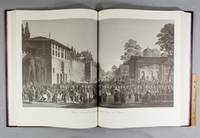
Best.-Nr. CJW1322Bern: Ertug & Kocabiyuk 2002. No. 46 OF 50 SPECIALLY BOUND COPIES of a total edition of 350. 670 x 508 mm. 26 3/8 x 20". 3 p.l. 10 pp. 63 leaves. Publisher's scarlet morocco by Buchbinderei Burkhardt AG covers with gilt-rolled border cornerpieces tooled in gilt upper cover with gilt calligraphic Arabic centerpiece lower cover with gilt central heraldic device marbled endleaves all edges gilt. With a portrait frontispiece of Emperor Selim III 48 DOUBLE-PAGE PLATES AND THREE DOUBLE-PAGE MAPS. ◆A virtually as-new copy. This is one of the deluxe copies of a modern facsimile of Melling's massive and magnificently illustrated work devoted to 18th century Constantinople a book that provided the earliest interior views and plans of the harems and palaces of Sultan Selim III when it was published in 1819. The illustrations remain the best and certainly most attractive record we have of the city during this era in its history. Our edition was produced from a copy of the elephant folio first printing in the collection of the facsimile's publisher Ahmet Ertug with images faithfully reproduced in their original mammoth size 650 x 970 mm. After his arrival in Constantinople in 1795 architect and painter Antoine Ignace Melling 1763-1831 was appointed imperial architect by Selim III. In the course of his duties he designed and landscaped a seaside palace for Selim's sister Princess Hatice and produced these striking panoramic views of the city and its environs. After completing the palace and a number of other building projects for Selim he returned to Paris and in 1804 issued a prospectus for this work. He established an engraving studio in 1809 to reproduce these drawings and began publishing the completed prints as a series of fascicles that were sent to subscribers. The last one appeared in 1819. The outstanding success of an exhibition of the paintings on which the "Voyage Pittoresque" was based earned Melling the rank of painter to the Empress Josephine. When "Voyage Pittoresque" was originally published booksellers in England sold copies for £84 a huge sum for a book at the time. The original edition in pleasing condition now fetches between $75000 and $100000. Our handsomely bound actual size facsimile offers an attractively priced alternative. Ertug & Kocabiyuk unknown
Best.-Nr. 041231770 Neuchatel Au dépends de la Société Typographique. 17 x 10 cm - 204187 pgs - plein veau marbré avec titre estampé en or sur de dos dos lisse avec fleuron dans la caissons estampée en or - coiffe usée autrement bel exemplaire l'intérieur est très bien petite fente en bas du mors suppérieur en bas 1770 Neuchatel Au dépends de la Société Typographique unknown
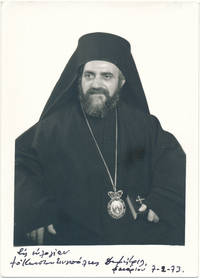
Best.-Nr. 47180This cleric was the spiritual leader of five million Eastern Orthodox Christians serving as Ecumenical Patriarch of Constantinople 1973-91 and the 269th successor to St. Andrew. IPS heavy stock 5" X 7" n.p. 2 July 1973. Near fine. Handsome half-length portrait in full regalia boldly inscribed and signed in Greek in black fineline along blank lower margin. Uncommon and a choice example. unknown
Best.-Nr. a32070NY 1840. Dodd. Hardcover. Sm.8vo. 323pp. frontis portrait of Mrs. Dwight who died during a plague epidemic in Constantinople original black cloth. Some names in pencil on front blank. VG a few small chips on spine some foxing on pages. Bright gilt labelling on spine. Original book not a reprint. . hardcover
1985Best.-Nr. 6356Robert LAFFONT 1985 1108 pages 21x15x2cm. 1985. broché. 1108 pages. Cette anthologie rassemble des récits de voyageurs français dans le Levant au XIXe siècle explorant la fascination pour un Orient défini comme un espace levantin autour de la Méditerranée orientale. L'ouvrage présente cette expérience comme un rite de passage bourgeois permettant d'accéder à la connaissance et au désir
1952Best.-Nr. 15752Bibliothèque de la Pléiade 1952 1537 pages in8. 1952. Reliure Editeur avec jaquette. 1537 pages. Cet ouvrage collectif de la Bibliothèque de la Pléiade rassemble les chroniques et récits historiques de plusieurs auteurs médiévaux dont Robert de Clari Villehardouin Joinville Froissart et Commynes. Il couvre des événements majeurs comme la conquête de Constantinople et l'histoire de Saint-Louis avec une édition annotée par Albert Pauphilet et des textes commentés par Edmond Pognon
Best.-Nr. 20186Tournai, Casterman, 1868 Relie, demi veau rouge a 4 nerfs et a l'impression dore sur le dos, pages de garde marbrees, page de titre original, 175 x 270mm., 417pp.
Best.-Nr. 012729Jean-Baptiste Annibal Aubert du Bayet (1757-1797), militaire français né en Louisiane, ayant servi lors de la guerre d'Indépendance des Etats-Unis, député en 1791, général de la révolution, ministre de la guerre, ambassadeur à Constantinople où il meurt. L.A.S., Péra-lez-Constantinople [quartier d'Istanbul aujourd'hui], 25 prairial an 5 [13 juin 1797], 2p in-4. Belle lettre à entête imprimé de l'ambassadeur avec mention en haut « Liberté Égalité ». Au « général St Cyr à Bucharest », i.e. Claude Carra-Saint-Cyr (1760-1834), fidèle d'Aubert qu'il accompagne à Constantinople. Il prendra sa place à sa mort et épousera aussi sa veuve. Cette sympathique lettre mentionne la réception de deux lettres de Saint-Cyr, numérotées, et l'envoi de réponses. Ce sont probablement des lettres confidentielles, d'où la tournure des phrases. « Je reçois aujourd'hui par le courrier tardif de la Bosnie les nouvelles de la démocratisation de ces odieux aristocrates, ou plutôt aulicrates, de Venise. Il y a six mois qu'il nous aurait fallu avoir cette trop tardive révolution ». « Je vous annonce avec regret que je reçois aujourd'hui les arrêtés que le directoire a pris le 18 pluviôse et 30 ventôse par lesquels je vois que le citoyen Flury a été nommé consul général de la Valachie et Parent vice-consul à Jassy. Il n'en faut pas moins attendre l'arrivée du consul avant de quitter Bucharest ». Il s'agit ici de Charles Flûry (1765-1842) et de Joseph Parant (1776-1806, mort à Bucarest). Les principautés de Valachie et de Jassy (Ia?i) sont des parties de la Roumanie actuelle. Carra-Saint-Cyr attendra bien les deux diplomates qui arriveront le 24 décembre 1797, après de décès d'Aubert du Bayet (17 décembre). Il partira peu après pour Constantinople. Très intéressante lettre. [69-2]
Best.-Nr. 014911Jacques Aupick (1789-1857), général, homme politique, beau-père de Baudelaire, ministre plénipotentiaire à Constantinople. L.S., [Turquie], 5 août 1848, 1p in-4. Il répond à une dame, Honorée Soulier, qui cherche des nouvelles de son fils, Louis Soulier parti à Constantinople. Selon Aupick, il a quitté Constantinople quatre ans plus tôt pour la Valachie (Roumanie actuelle) puis Vienne. Et depuis, plus de nouvelles. [362]
Best.-Nr. 018355Jacques Aupick (1789-1857), général, homme politique, beau-père de Baudelaire, ministre plénipotentiaire à Constantinople. L.A.S., 9 septembre 1841, 1p in-8. Il recommande un soldat dont la demande était alors jointe à la lettre. [426]
Best.-Nr. 018356Jacques Aupick (1789-1857), général, homme politique, beau-père de Baudelaire, ministre plénipotentiaire à Constantinople. L.A.S., sd, 1p in-8. Au colonel Salnave. Il lui demande de faire suivre une lettre à un ami commun. [426]
Best.-Nr. 018357Jacques Aupick (1789-1857), général, homme politique, beau-père de Baudelaire, ministre plénipotentiaire à Constantinople. L.A.S., 8 mars 1847, 1p in-8. Au général de Fernig (1772-1847), peu de temps avant sa mort. Sachant que Fernig fait partie de la Société du Nord, il lui demande d'appuyer sa demande pour en faire partie. [426]
Best.-Nr. 018358Jacques Aupick (1789-1857), général, homme politique, beau-père de Baudelaire, ministre plénipotentiaire à Constantinople. L.A.S., 16 mars 1843, 1p in-8. Lettre difficile à déchiffrer. [426]
Best.-Nr. 018359Jacques Aupick (1789-1857), général, homme politique, beau-père de Baudelaire, ministre plénipotentiaire à Constantinople. L.A.S., sd, 2p in-8. Il recommande le fils d'un ami, M. Gougelet, géomètre, dessinateur. [426]
Best.-Nr. 018360Jacques Aupick (1789-1857), général, homme politique, beau-père de Baudelaire, ministre plénipotentiaire à Constantinople. L.A.S., 7 mai 1836, 1p in-8. Lettre difficile à déchiffrer. [426]
Best.-Nr. 018361Jacques Aupick (1789-1857), général, homme politique, beau-père de Baudelaire, ministre plénipotentiaire à Constantinople. L.S. avec passage autographe, 9 septembre 1847, 1p in-4. Au duc de Nemours, afin de lui demander un avis. [426]
Best.-Nr. 018362Jacques Aupick (1789-1857), général, homme politique, beau-père de Baudelaire, ministre plénipotentiaire à Constantinople. L.S., 26 mars 1836, 1p in-4. Il envoie des congés de réforme. [426]
Best.-Nr. 018363Jacques Aupick (1789-1857), général, homme politique, beau-père de Baudelaire, ministre plénipotentiaire à Constantinople. L.S., 1er avril 1836, 1p in-4. Il envoie des congés de réforme. [426]