Edmond FaralLivre Rare Book
2 133 résultats
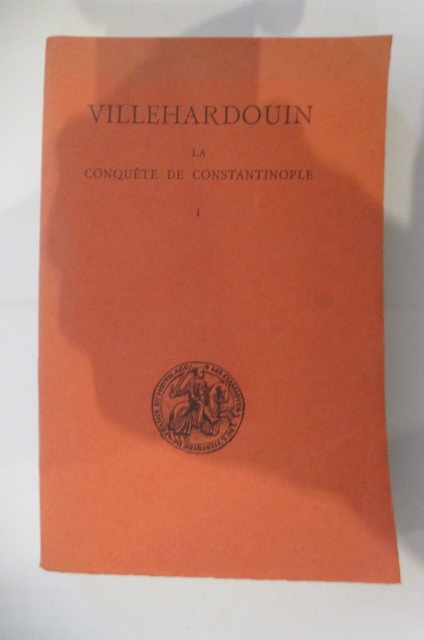
réf. HIS1269M1961 / 229 pages. Broché. Editions Les Belles Lettres.
2015New English Paperback. Pbo. Roy. 8vo. (24 x 17 cm). In French. 176, [2] p. En Moldavie, 1855-1856. Edition critique par Gabriel Leanca. Introduction En Moldavie par Édouard Grenier Chapitre Ier Chapitre II Chapitre III Chapitre IV Chapitre V Chapitre VI Chapitre VII Annexes Index. OTTOMANIA Ottoman Empire Diplomacy International relations Autobiography Memoirs Constantinople Istanbul Diplomat.
2015New New English Original bdg. Dust wrapper. Roy. 8vo. (24 x 17 cm). In English. 608 p. The book is organized chronologically, by political history, and then by theme; a great deal of space is devoted to archaeological history, art history, and architecture. Also discusses the physical nature of the city: how the art, the growth of the streets, and the politics all affected the city's appearance today. The history, mythology, art, and décor of significant mosques in the city are included. Contains about 600 pages of analysis, with a great number of photographs and illustrations. Constantinople was "the most important treatise . . . that has yet appeared in English," wrote a reviewer in the Springfield Republican. "One of the books of the year." The New York Times said that Grosvenor was "uniquely suited to the task." This special edition of the book comprises two volumes, separately published in 1900 and 1895.
1958Very Good Turkish Modern cloth bdg. 4to. (30 x 24 cm). In Turkish. 27 p. text; 21 numerous map feuilles in Ottoman script and modern Turkish. 19. asirda Istanbul haritasi. Ekrem Hakki Ayverdi was raised at a time in which Istanbul was undergoing its late Ottoman-early Republican period. Apart from his persona as an engineer-architect, restorer, and architectural historian, he was a collector passionately dedicated to Ottoman art. Undertaking the construction of different public buildings in Istanbul, Bursa and Edirne, as well as the restoration of many architectural works, Ayverdi not only brought together the most select and refined works of Ottoman art, which had begun to lose its prestige amidst the changing values of high culture in the time he lived, but he also paid particular attention to their conservation and preservation. Ayverdi's two seminal corpuses that study Ottoman architecture from its early days until the end of the Mehmed II era, as well as its examples in Roumelia, continue to maintain their place as the most important reference books for those working in this field. This is a detailed research on a 19th century map of Istanbul city.
2004Fine English Paperback. Pbo. Roy. 8vo. (24 x 17 cm). In Turkish. 29, [3] p., b/w plts. Architectural works in the period of Mehmed the Conqueror (Mehmet II). Fâtih devri mimarî eserleri.
1989Fine English Original bdg. Folio. (33 x 23 cm). In Turkish. [xii], 565 p., ills., folding plates. Istanbul mimari çaginin mensei: Osmanli mi'marisinin ilk devri, 630-805 / 1230-1402. Vol. 1: Ertugrul, Osman, Orhan Gaaziler, Hüdavendigar ve Yildirim Bayezid.
1989As New English Original bdg. Mint. Folio. (32 x 23 cm). 398 p., Ills. In Turkish. Osmanli mi'marisinde Fatih Devri, 855-886. Vol. 4: 1451-1481.
1989As New English Original bdg. Folio. (32 x 23 cm). 544 p., 146 plan (27 in large plates), 3 color plts., 765 ills. (5 color ills.). In Turkish. Mint. Osmanli mimarisinde Fatih Devri. Vol. 3: 1451-1481.
1989As New English Original bdg. Folio. (32 x 23 cm). In Turkish. [xii], 606 p., ills., folding plates. Osmanli mimarisinde Çelebi ve 2. Sultan Murad Devri. Vol. 2: 1403-1451.
2018New New English Original bdg. Dust wrapper. 4to. (28 x 22 cm). In English. 361 p., b/w and color ills. Everyday life in Istanbul: Social historical essays on people, culture and spatial relations. Third Edition. On the map of human existence. Istanbul throughout the age of empire represented the administrative power center. Rome, Byzantium and the Ottoman Empire each took its place in history as a ring of civilization that formed around this center. To view history from this perspective means to read the story of humanity in its pages and, in a sense, to rediscover each time this dazzling star that shone in the skies of Anatolia, the Balkans and the Mediterranean. As mankind discovered Istanbul, it also discovered itself as a passionate traveler on the road leading back to its own past. Istanbul today is a treasurehouse where all our lost values are carefully preserved. A compass for our social identity that has lost its way, a touchstonefor our decaying aesthetic taste, a trustworthy scale for our degenerating sense of justice - Istanbul can assume all these roles while at the same time generously offering us a human experience and store of knowledge capable of answering every question put to it. Everyday Life in Istanbul is a collection of striking images along a journey back to the roots of the Turks' social identity. A work embracing the history of an imperial city in a plane where Man, Culture and Space relate to each other, it is a noteworthy example of the new historiography, which sets up a balance among the social sciences. With its unique style and its theoretical framework set against a multidimensional background extending from politics to culture, from architecture to literature, it is at the same time a contemporary historian's gift to our city.
2003New New English Original bdg. Dust wrapper. 4to. (28 x 22 cm). In English. 361 p., b/w and color ills. Everyday life in Istanbul: Social historical essays on people, culture and spatial relations. Second Edition. On the map of human existence. Istanbul throughout the age of empire represented the administrative power center. Rome, Byzantium and the Ottoman Empire each took its place in history as a ring of civilization that formed around this center. To view history from this perspective means to read the story of humanity in its pages and, in a sense, to rediscover each time this dazzling star that shone in the skies of Anatolia, the Balkans and the Mediterranean. As mankind discovered Istanbul, it also discovered itself as a passionate traveler on the road leading back to its own past. Istanbul today is a treasurehouse where all our lost values are carefully preserved. A compass for our social identity that has lost its way, a touchstonefor our decaying aesthetic taste, a trustworthy scale for our degenerating sense of justice - Istanbul can assume all these roles while at the same time generously offering us a human experience and store of knowledge capable of answering every question put to it. Everyday Life in Istanbul is a collection of striking images along a journey back to the roots of the Turks' social identity. A work embracing the history of an imperial city in a plane where Man, Culture and Space relate to each other, it is a noteworthy example of the new historiography, which sets up a balance among the social sciences. With its unique style and its theoretical framework set against a multidimensional background extending from politics to culture, from architecture to literature, it is at the same time a contemporary historian's gift to our city.
2001New New English Original bdg. Dust wrapper. 4to. (29 x 22 cm). In Turkish. 361 p., color and b/w ills. Istanbul'da gündelik hayat. Insan, kültür ve mekan iliskileri üzerine toplumsal tarih denemeleri. Daily life in Istanbul: Essays of social history on people, culture and places' relations.
2019New Turkish Paperback. Roy. 8vo. (24 x 17 cm). In Turkish with Ottoman documents. XVI-XVII. yüzyil Üsküdar ser'iyye sicilleri. Diplomatik bilimi bakimindan bir inceleme.
2007New English Original bdg. HC. Roy. 8vo. (24 x 17 cm). In English. 125 p., color ills. In God's House. 150 years of the Union Church of Istanbul in the Dutch Chapel.
2012New English Paperback. Pbo. Cr. 8vo. (20 x 14 cm). In English. 243 p. " Eli Shaul (1916-2004) was a Turkish Jew. After spending his childhood in the colorful Balat neighborhood, he received a superb education at the prestigious Istanbul Erkek Lisesi (Istanbul Men's High School), the University of Istanbul, and the Reserve Officers Training School in Ankara. While still in high school, he began keeping a diary, which he continued during his college years and the time he spent serving as an army dentist in eastern Turkey. Those diaries, contained in this book, provide rare insights into what life was like for minorities - and particularly for Jews - in Turkey during the nineteen thirties and forties. Atatürk's Republic, which most of them ardently supported, had raised their hopes of at last being accepted as fully equal Turkish citizens in every way, but those hopes were cruelly dashed when discrimination and anti-Semitism continued, and even worsened, especially after Atatürk's death in 1938. Not surprisingly, most of Turkey's Jews immigrated to Israel after it won its independence in 1948. That exodus provoked harsh criticism of the Jews in the Turkish press, and the Turkish Jews founded their own newspapers and magazines to respond to those attacks. Shaul was one of the first contributors to Turkey's fledgling Jewish press, and some of his most important articles are included in this volume. He himself moved to Israel in 1950 but continued to write articles for Turkish Jewish publications throughout his life and also authored a book on the folklore of the Turkish Jews. From Balat to Bat Yam is a testament to Eli Shaul's deeply felt patriotism, which consisted not only of love for his native Turkey but insistence that she treat all her citizens as equals".
1994New English Paperback. Roy. 8vo. (24 x 17 cm). In Spanish. 190 p. Folklor de los Judios de Turkiya.
2008New English Paperback. Pbo. Roy. 8vo. (24 x 17 cm). In English. [xii], 151 p., color and b/w ills. The historic hammams of Bursa. The aim of the book you are about to read is to provide detailed information about the history of hammam culture in the city of Bursa, which is famous for its hot springs and hammams, and about the "public hammams" built in the Ottoman period. In order to create in the minds of readers an image of the "Turkish Hammam" in all its aspects it describes the tradition of bathing in the context of history as a whole and the emergence of the hammam phenomenon, the architectural and historical characteristics of the Ottoman hammam, the importance of the hammam tradition in Turkish culture and its place in social life. The book contains a review of the present state of the hammams of Bursa and the reasons for their decline. Proposals have been made as to how these structures could be better integrated into modern life.
2010New English Paperback. Pbo. Roy. 8vo. (24 x 16 cm). In Turkish. 191 p. Istanbul (Constantinople) at 19th century: Impressions of an English voyager. XIX. yüzyil Istanbulu. Bir Ingiliz seyyahin izlenimleri.
1993399 p., 2 pl. coul. (CNRS Histoire). Inv. 17304
2004New English Paperback. Roy. 8vo. (24 x 17 cm). In English. 170 p. The Kohens del de Campavias. A family's sweet and sour story in Ottoman and Republican Turkey.
2003Fine English Paperback. Cr. 8vo. (20 x 13 cm). In Turkish. 357 p. Cumhuriyet döneminde Istanbul Rum Patrikhanesi. Türkiye'nin Cumhuriyet tarihi boyunca tabu addettigi konularin basinda gelen azinliklar konusu, özellikle doksanli yillarla birlikte Türkiyeli arastirmacilarin gündeminde eskisine oranla daha agirlikli bir yere sahip oldu. Genelde hâkim konumda olan ve defansif/milliyetçi kaygilarla konuyu ele alip, ideolojik bir karsi durusu korumaya çalisanlarin yanisira, yeni kaynaklara, yeni yaklasimlara kapi açan arastirmalar da var. Elçin Macar'in bu çalismasi, sadece "netameli" sayilmis bir konu olarak Istanbul Rum Patrikhanesi'nin Cumhuriyet tarihi içindeki serüvenini dile getirmekle kalmiyor; konunun hiçbir derinligi olmadan, günlük iç ve dis siyasî çekismelerle sinirli olarak ele alinis tarzini terk etmeyi öneren bir derinligi de tasiyor. Macar, bu kitabiyla iki milliyetçilik arasinda sikismis, ötekilesmis, ideolojik açidan suistimal edilmis bir kurum olan Istanbul Rum Patrikhanesi'ne, hem teorik hem de metodolojik açidan bugüne kadar egemen olan anlayistan farkli bir yaklasim getirmeyi amaçliyor ve yitirilmis dinsel çesitliligin yakin tarihteki izlerini sürüyor.
2008Very Good English Paperback. Pbo. Demy 8vo. (21 x 14 cm). In Turkish. 368 p. History of Galatasaray Lycee from Mekteb-i Sultanî. Mekteb-i Sultani'den Galatasaray Lisesi'ne.
1982Very Good English Paperback. Pbo. Roy. 8vo. (23 x 16 cm). In Turkish. 12, [10] p. B/w plates and maps. [=The Yali (Sea side mansion) of Sadullah Pasha (An Eighteenth century house on the Bosphorus)]. Sa'dullah Pasa yalisi.
1984Very Good Very Good English Paperback. Pbo. Dust wrapper. Roy. 8vo. (24 x 17 cm). In English and Turkish. 80 p., color ills. The 'Yali' (Sea-side mansion) of Sa'dullah Pasa (An eighteenth century house on the Bosphorus).= Sa'dullah Pasa Yalisi.
2018New Turkish Paperback. Roy. 8vo. (24 x 17 cm). In Turkish. [xvi], 413 p., b/w ills. Birinci Dünya Savasi'nda Istanbul'a yapilan hava saldirilari. Aerial attacks to Istanbul city during the First World War.