2 111 résultats
2016New Turkish Paperback. Roy. 8vo. (24 x 16 cm). Edition in Turkish. 180 p. At Meydani'nda ölüm: 17. yüzyil Istanbul'unda toplumsal cinsiyet, hosgörü ve ihtida. Translated by Pinar Yanardag.
réf. 18941110Leather bound album with 72 large format albumen photographs mounted dos-a-dos on tab-mounted card leaves; leaves measure 10.5 x 14 inches 268 X 322 mm images all measure approximately 8 x 10 inches 200 x 250 mm; album cover detached back strip perished; cards are a little wavy as is often the case with albumen photos; images are all clear with good tone. Also included is a typescript list of the photos with brief descriptions by the collector who purchased them on tour May and June 1890. The first twenty-four photos are from Greece all taken in Athens with the exception of a view of the port of Piraeus and two of Greeks in native dress. A few are signed "Rhomaides" and a few others appear to have the small Rhomaides credit scratched from the plate. The Benaki Musuem and the historical collections of the National Bank of Greece identify ten of the photos as the work of Constantine and Aristotle Romaidis Rhomaides probably the most prolific Greek photographers of the late nineteenth and early twentieth centuries; three other photos have either the Rhomaides name or its ghost. The remaining forty-eight are scenes in Constantinople Istanbul and the neighboring shores of the Bosporus. All but seven are signed as the work of Pascal Sebah 1823-1886 or that of his successor Policarpe Joaillier 1848-1904 working as Sebah and Joaillier. hardcover
réf. 18941110Leather bound album with 72 large format albumen photographs mounted dos-a-dos on tab-mounted card leaves; leaves measure 10.5 x 14 inches 268 X 322 mm images all measure approximately 8 x 10 inches 200 x 250 mm; album cover detached back strip perished; cards are a little wavy as is often the case with albumen photos; images are all clear with good tone. Also included is a typescript list of the photos with brief descriptions by the collector who purchased them on tour May and June 1890. The first twenty-four photos are from Greece all taken in Athens with the exception of a view of the port of Piraeus and two of Greeks in native dress. A few are signed "Rhomaides" and a few others appear to have the small Rhomaides credit scratched from the plate. The Benaki Musuem and the historical collections of the National Bank of Greece identify ten of the photos as the work of Constantine and Aristotle Romaidis Rhomaides probably the most prolific Greek photographers of the late nineteenth and early twentieth centuries; three other photos have either the Rhomaides name or its ghost. The remaining forty-eight are scenes in Constantinople Istanbul and the neighboring shores of the Bosporus. All but seven are signed as the work of Pascal Sebah 1823-1886 or that of his successor Policarpe Joaillier 1848-1904 working as Sebah and Joaillier. hardcover books
2016New English Paperback. Pbo. Roy. 8vo. (24 x 17 cm). In Turkish. 180 p., ills. Atmeydani'nda ölüm: 17. yüzyil Istanbul'unda toplumsal cinsiyet, hosgörü ve ihtida. Death in Hippodrome: Social gender, tolerance and conversation to Islam in the 17th century of the Ottoman Istanbul.
1999New English Paperback. Pbo. 4to. (29 x 23 cm). In German and Turkish. 155 p. Color and b/w ills. Auf der Suche nach Verscwundenen Zeiten: Die Ausgrabungen des Deutschen Archaelogischen Instituts in der Türkei.= Kayip zamanlarin pesinde: Alman Arkeoloji Enstitüsü Anadolu kazilari. [Exhibition catalogue]. Design by Samih Rifat. Scientific advisor: Harald Hauptmann. Anatolian excavations of German Archaeology Institute. ARCHEOLOGY Anatolian civilizations Excavations Corporate history German Archaeological Institute Hittites.
1999Fine English Paperback. 4to. (29 x 23 cm). In German and Turkish. 155 p., b/w ills. Auf der Suche nach Verscwundenen Zeiten: Die Ausgrabungen des Deutschen Archaelogischen Instituts in der Türkei.= Kayip zamanlarin pesinde: Alman Arkeoloji Enstitüsü Anadolu kazilari. [Exhibition catalogue]. Design by Samih Rifat. Scientific advisor: Harald Hauptmann. ARCHEOLOYG Anatolian civilizations Excavations German Archaeological Institute Corporate history.
réf. 8703Librairie A. Lestringant, Rouen, 1935. In-8, broché, 51 pp.
1910réf. 053669Istanbul: ADS. AH 1326 1910. No Binding. Very Good. Original manuscript autograph document sealed by Bosnevî Darülhadis Basmüderrisi i.e. Bosnevî Darülhadis School in Sehzâde Istanbul. Oblong: 12x145 cm. In Ottoman script. 1 p. 4 lines. "Huve. Bâdi-i sehâdetnâme oldur ki; Müderrisi bulundugum Sehzâde civarinda Darülhadis Bosnevî Medresesi'nde mukayyid talebe ilm-i sarf. Mehmed bin Mehmed Efendi'nin. 1326 1910 AD.". ADS., [AH 1326] unknown
1959Very Good Turkish Original typescript document with manuscript autograph writings and signature by Lütfi Kirdar (as Minister of Health Lütfi Kirdar). 21x15 cm. Sent to Halide Nusret Zorlutuna. In Turkish (modern Turkish with Latin script). 1 p. Lütfi Kirdar was born in 1887 in Kirkuk. He comes from a rooted and well-known family 'Kirdarzâdes' of Kirkuk. After completing his primary and secondary education in Kirkuk and high school education in Baghdad, he came to Istanbul in 1908 and entered the Faculty of Medicine. After the Balkan War, Kirdar joined the war voluntarily and after the war he graduated from the Faculty of Medicine of the Darülfünûn -i.e. Istanbul Üniversitesi- (1917). With the outbreak of World War I, he joined the army. Kirdar who was participating in the National Struggle received the Independence War Medal. After the War of Independence, in 1923, he specialized in eye diseases in Vienna and Munich. He returned to Turkey in 1924 and was appointed to the Directorate of Izmir Health. At his own request, he was appointed to the eye clinic of Izmir Memleket Hospital in 1933. In 1935 he became a member of parliament from Kütahya. In 1936, Manisa was appointed as mayor and after that in 1938, to Istanbul. He held this last post for 12 years. Istanbul Harbiye Sports and Exhibition Palace, Open-Air Theater, Inonu Stadium in Dolmabahce, Taksim Square, Taksim Excursion, and Ataturk Boulevard were held during his period. In 1940, the Taksim Barracks was demolished. He was arrested on May 27th. He died of a heart attack on 17 February 1961 in Yassiada where he was tried. He was buried in Zincirlikuyu Cemetery after a funeral on 19 February 1961.
1901Very Good French Original autograph letter signed (ALS) by P.pon "[We hereby declare that Ms. L. Cassinelli occupied our house located in Pera Rue, Hodja Ali No 19. On December 1, 1887, and left him on September 30, 1899. That during all time, he did not pay me the tax... P. pon de la succession de feu le Comte A. de Camondo. [i.e. On behalf of the succession of Count A[braham Salomon] Camondo, (1781-1873)]. Probably it's signed by his advocate of Moise de Camondo. Recipient is not defined. Letter indicates one of Camondo family's houses in Pera, Constantinople. 26,5x21 cm. Completely in French. 14 lines. On a paper watermarked "William Brown & Co., London". William Brown and Co. were located in London in this 'St. Mary Axe, and 40 to 41, Old Broad Street, London, E.C.' address according to Grace's guide to British industrial industry; they worked on 'Lithographic and Letterpress Printers'. 1887 Registered as a Limited Company. Count Moïse de Camondo, (1860-1935), was an Ottoman Empire-born French banker and art collector. He was a member of the prominent Camondo family. As a child, Camondo moved with his family from their home in Constantinople, Ottoman Empire, to Paris around 1869, where he grew up and continued the career of his father, Nissim de Camondo (1830-1889), as a banker. He was born into a Sephardic Jewish family that owned one of the largest banks in the Ottoman Empire, established in France since 1869. Starting in 1911, he completely rebuilt the family's Parisian mansion on the Parc Monceau in order to house his collection of 18th-century French furniture and artwork. Working closely with the architect René Sergent, he created a palatial home conforming to certain 18th-century traditions, even planning the room dimensions to match exactly the objects in his collection. The entryway is inspired by the Petit Trianon of Versailles. The home includes a kosher kitchen with separate sections for meat and dairy. The dining room includes a beautifully-carved green marble fountain in the shape of a shell, with a dolphin spigot for the ritual washing of hands before eating a meal. Some highlights of his collection include a French silver service that had been ordered by Russian Empress Catherine the Great, a set of Buffon porcelain (with exact reproductions of ornithological drawings) from the Sèvres manufacturer, and perhaps the only existing complete set of Gobelin royal tapestry sketches. He married Irène Cahen d'Anvers, daughter of Louis Cahen d'Anvers, in 1891. They separated in August 1897 after her affair with de Camondo's stable master, Count Charles Sampieri, whom she would later marry and divorce. The children, Nissim and Beatrice, remained with de Camondo. The mansion was completed in 1914, but his son did not reside there very long, as he rejoined the French Army to fight in The Great War. It had been de Camondo's great hope that his son, whom he adored, would take over the family empire. Following Nissim's death in 1917, de Camondo closed all banking activities. He largely withdrew from society and devoted himself primarily to his collection and to hosting dinners for a club of gourmets at regular intervals. Camondo died in 1935, and the museum opened the following year. He donated the home to Paris's Decorative Arts society as a museum (Musée Nissim de Camondo) in honor of the loss of his son Nissim in World War I. In addition to the collection, the meticulously-restored service areas, elevator, and woodwork of the mansion are noteworthy. During the German occupation of France during World War II, his daughter Béatrice, his son-of-law Léon Reinach, and their children (Fanny and Bertrand) were deported from France and died in the Auschwitz concentration camp. As a result, the de Camondo family died out.
2010New English Paperback. Pbo. Roy. 8vo. (24 x 17 cm). In French. 312 p. Avant-Propos Chapitre I : Le langage des instructions I. "La voix du maître à travers les firmans de Soliman le Magnifique" dans Soliman le Magnifique et son temps. Actes des IXe rencontres de l'École du Louvre, Paris, 7-10 mars 1990, G. Veinstein, éd., La Documentation française, Paris, 1992, p. 127-144. II. « Comment Soliman le Magnifique préparait ses campagnes : la question de l'approvisionnement (1544-1545-1551-1552)» dans F. Bilici, I. Cândea, A. Popescu, éds., Enjeux économiques et militaires en mer Noire (XIVe-XXIe siècles), Braïla, éditions Istros, 2007, p. 487-532. III. "La dernière flotte de Barberousse" in The Kapudan Pasha, His Office and his Domain, Halcyon Days in Crete, IV. A Symposium held in Rethymnon, 7-9 january 2000, E. Zachariadou, éd., Crete University Press, p. 181-200 IV. "La grande sécheresse de 1560 au nord de la mer Noire : perceptions et réactions des autorités ottomanes" dans Natural Disasters in the Ottoman Empire, Halcyon days in Crete, III. A Symposium held in Rethymnon, 10-12 janvier 1997, Elizabeth Zachariadou, éd., Foundation for Research and Technology-Hellas. Institute for Mediterranean Studies, Crete University Press, Rethymnon 1999, p. 273-281 V. "Sur la draperie juive de Salonique (XVIe-XVIIe siècles)" dans Les Balkans à l'époque ottomane, sous la direction de D. Panzac, Revue du monde musulman et de la Méditerranée, 66, 1992/4, Aix-en-Provence, 1993, p. 55-62 Chapitre II : Les discours de justification I. "La politique hongroise du sultan Süleymân et d'Ibrâhîm pacha à travers deux lettres de 1534 au roi Sigismond de Pologne", Acta Historica Academiae Scientiarum Hungaricae, 33, 2-4, Budapest, 1987, numéro spécial Buda 1686, p. 177-191. Réédition augmentée dans Actes du VIIe symposium du Comité international des études pré-ottomanes et ottomanes, Ankara, Türk Tarih Kurumu, 1994, p. 333-380. II. "L'occupation ottomane d'Ocakov et le problème de la frontière lithuano-tatare (1538-1542)" dans Passé turco-tatar, présent soviétique, Mélanges en l'honneur d'Alexandre Bennigsen, Ch. Lemercier-Quelquejay, G. Veinstein et E.S. Wimbush éds., Éditions Peeters et Éditions de l'École des Hautes Études en Sciences Sociales, 1986, Paris, p. 221-237. III. "Une lettre de Selim II au roi de Pologne Sigismond-Auguste sur la campagne d'Astrakhan de 1569", Wiener Zeitschrift für die Kunde des Morgenlandes, 82, 1992, in memoriam Anton C. Schaendlinger, p. 397-420. IV. «Autour de la lettre de Selîm II aux Andalous et des origines de la guerre de Chypre» dans E Garcia Sanchez, P. M. Asuero, M. Bernardini, eds. Espana y el Oriente islamico entre los siglos XV y XVI (Imperio Otomano, Persia y Asia central), Actas del congreso Universita degli Studi di Napoli « l'Orientale » ; Naples 30 de septiembre-2 de octubre de 2004, Istanbul, Isis, 2007, p. 271-281. V. «Portugais et Ottomans», communication inédite dans le cadre du colloque international «L'empire portugais face aux autres empires, XVe-XIXe s.», organisé par le Centre culturel Calouste Gulbenkian et le Centre d'études du Brésil et de l'Atlantique sud (Université de Paris IV-Sorbonne), à Paris, les 13-14 décembre 2002. Chapitre III : Les figures de légitimation I. "Charles Quint et Soliman le Magnifique : le grand défi", in Carlos V. Europeismo y Universalidad. Los escnerarios del Imperio, III, Sociedad Estatal para la Conmemoración de los Centenarios de Felipe II y Carlo V, Madrid, 2001, p. 519-529. II. «La question du califat ottoman» in Le choc colonial et l'islam. Les politiques religieuses des puissances coloniales en terre d'islam, sous la direction de Pierre-Jean Luizard, Paris, éditions la Découverte, 2006, p. 451-468. III. «Le rôle des tombes sacrées dans la conquête ottomane» in Lieux de culte, lieux saints dans le judaïsme, le christianisme et l'islam, numéro thématique de la Revue d'histoire des religions , 222, IV, octobre-décembre 2005, p. 509-528. IV. «Retour à Salihiyya. Le Tom
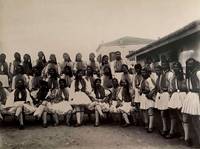
2020New English Original grey cloth bdg. Onlaid b/w photograph on board. Roy. 8vo. (24 x 16 cm). In English and Turkish. 128 p., color and b/w ills. Print run 300 copies, limited and numbered edition. This copy is: 274/300. In addition to the original photographs and negatives in the Ayten & I. Sazi Sirel Collection, this book includes a detailed review on the subject by art historian Dr. Necmi Sönmez.
2004New English Paperback. Pbo. Roy. 8vo. (24 x 17 cm). In French. 87 p. Avram Benaroya: Un journaliste Juif oublie. Suivi de ses memoires. ISBN: 9754281358.
2003New Turkish Paperback. Pbo. Large Roy. 8vo. (26 x 16 cm). In Turkish. 441 p. Ills. Musical culture in the Ottoman Empire through the eyes of European travelers. Avrupali gezginlerin gözüyle Osmanlilarda musiki.
2015New English Original bdg. HC. Folio. (40 x 30 cm). In English, French, Turkish, and Arabic. 80 p., full page color ills. Reprint of the 1852 Edition. St. Sofia converted by Mehmed the Conqueror into a mosque after the conquest of Istanbul often has been restored. There was again needed a major restoration in the era Sultan Abdulmecid. Sultan was appointed architect Gaspard Fossati for this restoration. For this restoration, about 800 workers worked and all the building has been almost completely repaired. Fossati has produced 25 drawings showing the interior and exterior of Hagia Sophia and he suppressed these drawings as a album in 1852 in French. The Fossati brothers, Gaspare and Giuseppe (1822-1891), were Swiss architects. They completed more than 50 projects in Turkey during the Tanzimat Era. They belonged to the Morcote branch of the Fossati, a prominent Ticinese family with mentions in the historical record going back to the 14th century. This Edition is a reprint and translated edition which is almost identical to original. A very heavy volume. 1000 copies were printed.
2015New English Original bdg. HC. In publisher's special slip-case. Folio. (40 x 30 cm). In English, French, Turkish, and Arabic. 80 p., full page color ills. Reprint of the 1852 Edition. St. Sofia converted by Mehmed the Conqueror into a mosque after the conquest of Istanbul often has been restored. There was again needed a major restoration in the era Sultan Abdulmecid. Sultan was appointed architect Gaspard Fossati for this restoration. For this restoration, about 800 workers worked and all the building has been almost completely repaired. Fossati has produced 25 drawings showing the interior and exterior of Hagia Sophia and he suppressed these drawings as a album in 1852 in French. The Fossati brothers, Gaspare and Giuseppe (1822-1891), were Swiss architects. They completed more than 50 projects in Turkey during the Tanzimat Era. They belonged to the Morcote branch of the Fossati, a prominent Ticinese family with mentions in the historical record going back to the 14th century. This Edition is a reprint and translated edition which is almost identical to original. A very heavy volume. 1000 copies were printed.
2011New English Paperback. Pbo. Small 4to. (25 x 25 cm). In Turkish. 213 p., color and b/w ills. Ayasofya ve Fossati Kardesler, (1847-1858). Hagia Sophia and Fossati Brothers' architectural restoration.
1943Very Good Turkish In contemporary cloth bdg. 4to. (32 x 24 cm). In Turkish. 17 p., ii numerous plans, color and b/w plts. Ayasofya ve tarihi. History of St. Sophia.
2010New Turkish Paperback. Pbo. 4to. (28 x 24 cm). In Greek and Turkish. 129 p., ills. Ayasofya'nin betimi. (In Greek - Turkish). Translated by Sami Rifat. As the first book to be published in the Classical Works Series, Ayasofya'nin Betimi is comprised of two poems Byzantine Emperor Justinian's chamberlain and literary figure Paulos wrote for the opening festivities of Hagia Sophia in 562 CE. Holding a unique place in eulogistic literature, the poems act as a highly important source for researchers of Byzantine history and literature, as they reflect features of a festival of poems, processions, orations in prose, religious rituals, and even non-religious forms of entertainment
2009New English Paperback. Pbo. 159 p. In Turkish. Color and b/w ills. Aydos'dan Sultanbeyligi'ne Kent-kale ve fetih.
2016New Turkish Original bdg. HC. Large 8vo. (23 x 23 cm). Edition in Turkish. 156 p., color and b/w ills. Ayvazovski'nin Istanbul'u. Texts by Sinan Genim, Sergei Levandowskii, Gül Irepoglu, Tatyana Gayduk.
1954Very Good English Paperback. Pbo. Roy. 8vo. (24 x 17 cm). In Turkish. [12] p., ills., [13] plts., [7] folding plates (plans and details). Azapkapi Çesmesi. Preface by Fahreddin Kerim Gökay. An architectural and historical study on Istanbul's Azapkapi Fountain. This fountain is located at the foot of the Atatürk Bridge, Karaköy, Istanbul.
1984Very Good English Paperback. Pbo. Demy 8vo. (21 x 14 cm). In Turkish. 2 b/w portrait of Resulzade, 40, 44 p. Two studies each other in one. Azerbaycan kültür gelenekleri ve çagdas Azerbaycan edebiyati. Resulzade's important works on Azerbaijani cultural traditions and contemporary literary history. First Editions in 1949. Second Edition.
2004New Turkish Paperback. Roy. 8vo. (24 x 17 cm). In Turkish. [x], 240 p. Azerbaycan siyasi muhaceretinin Istanbul'daki basin etkinliklerinin (1923-1931) kamuoyu olusturmadaki rolü.
2014As New English Paperback. Pbo. Mint. Demy 8vo. (21 x 14 cm). In Turkish. 400 p. Ills. Missionary from St. Paul to today and Fener-Rum Ecumenical Patriarchate. Aziz Paul'dan günümüze misyonerlik ve Fener Rum Patrikhanesi.