3 004 résultats
réf. 9781634846172NOVA SCIENCE PUBLISHERS INC
1935réf. 90899New York: John Wiley & Sons Inc 1935. Presumed First Edition First printing. Hardcover. Good. x 139 3 pages. Footnotes. Tabular Data. Appendix. Bibliography. by Frank Lorimer Index. No dust jacket present. A previous owner was Flemmie P. Kittrell name on fep. A fascinating work a statement of purpose 'arranged in the form of a catechism' from the American Eugenics Society of which Huntington was president. 'This book is an attempt to state in simple but accurate language the main principles of eugenics and their application to social problems.' Ellsworth Huntington September 16 1876 – October 17 1947 was a professor of geography at Yale University during the early 20th century known for his studies on environmental determinism/climatic determinism economic growth and economic geography. He served as president of the Ecological Society of America in 1917 the Association of American Geographers in 1923 and president of the board of directors of the American Eugenics Society from 1934 to 1938. Flemmie Pansy Kittrell December 25 1904 – October 3 1980 was the first African American woman to earn a Ph.D. in home economics. Her Ph.D. focused on nutritional interventions to address high Black mortality rates in the 1930s and she was also the first African American woman to get a Ph.D. from Cornell University. She transformed the field of home economics in the United States and internationally through research and programming on adult nutrition Black infant feeding practices and the importance of preschool enrichment experiences for children. Her work was foundational to the development of Head Start a national social program that provides early childhood education health and nutrition services to low-income children and families in the United States. Kittrell also served as an international ambassador using home economics to address global malnutrition and poverty. The American Eugenics Society AES was a pro-eugenics organization dedicated to "furthering the discussion advancement and dissemination of knowledge about biological and sociocultural forces which affect the structure and composition of human populations". It endorsed the study and practice of eugenics in the United States. Its original name as the American Eugenics Society lasted from 1922 to 1973 but the group changed their name after open use of the term "eugenics" became disfavored; it was known as the Society for the Study of Social Biology from 1973–2008 and the Society for Biodemography and Social Biology from 2008–2019. The Society was disbanded in 2019. During the Progressive Era Huntington expressed concern about immigration and the race mixing. He claimed that liberal immigration policy would lead to the "highest racial values" being "irrevocably swamped by those of lower calibre." Tomorrow's Children is a historical text outlining the goals of the eugenics movement in the United States. The book serves as a "catechism" or guide for the American Eugenics Society detailing the goals and principles of eugenics during that era. It discusses the application of eugenic principles including controversial ideas surrounding population control and sterilization which were active topics of debate in the 1930s. John Wiley & Sons, Inc hardcover
2000réf. 52236Los Angeles: St. Ann's Press 2000. Limited edition. Hardcover. Near fine condition. 15/25. Signed and numbered "David Levinthal 2000 V # 15" on half-title. Small Folio. 138pp. portfolio. Original red velvet covered boards with color photo pasted to cover with blind-stamped lettering on spine black endpapers. Red velvet chemise with original signed photograph 15/25 / 10 x 7" both housed in red velvet slipcase. Missing second photograph. Black endpapers. Known for his iconic photographs using miniature figures and toys this volume echoes Edward Hopper paintings and urban life in for Levinthal typical "dreamlike" settings. "Ever the strategist David Levinthal risks seeming idiotic throwing off those who seek to understand him. He likes declaring with innocent aplomb how much "fun" it is to make art with toys. Some apologists play along naively taking him at his word. Others seek to give his method the currently acceptable artistic cachet by grouping it with that of practitioners of goofy postmodernist theatrics." Eugenia Parry. St. Ann's Press hardcover
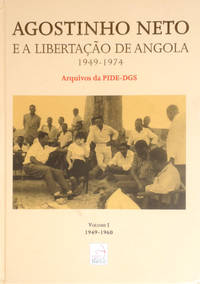
réf. 2402RS016Volume I 1949-1960 Volume II 1961-1967. Volume III 1968-1970. Volume IV 1971-1972. Volume V 1973-1974. Fundação Dr. António Agostinho Neto. Luanda. 2012. 5 Volumes de 295x21 cm. Com x 963; 890; 898; 949; 878 págs. Encadernações do editor com estampagens a ouro nas lombadas e nas capas anteriores. Profusamente ilustrados no texto com fac-similes de documentos de elevada qualidade. Apresenta ainda fotografias nas páginas que iniciam um novo capítulo e alguns mapas e tabelas no texto introdutório. Edição coordenada por Maria Eugénia Neto e Irene Neto. Esta última também foi responsável pela pesquisa e a selecção documental ficou a cargo do seu marido o economista São Vicente. A presente obra coloca «à disposição dos interessados uma colectânea de documentos da PIDE/DGS polícia política da ditadura do Estado Novo em Portugal entre 1933 e 1974 e de outra fontes relativos ao Processo Nº 88 de António Agostinho Neto» que permitem «seguir todo o seu percurso assim como o de muitos que o acompanharam até 1974». A obra é introduzida por uma extensa narrativa biográfica págs. 7-482 vol. I com o título: «Agostinho Neto e a Liderança da Luta pela Independência de Angola 1945-1975» da autoria de São Vicente. Segue-se então ao longo dos cinco volumes a reprodução de mais de 1500 documentos dispostos por ordem cronológica e selecionados entre os cerca de 6000 sobre Agostinho Neto que existem no Arquivo da PIDE/DGS e em outros fundos documentais na maioria existentes nos Arquivos da Torre do Tombo e que esta concedeu autorizou à Fundação Dr. Agostinho Neto para os seleccionar e reproduzir. António Agostinho Neto Caxicane Ãcolo e Bengo Angola 1922 - Moscovo 1979 Político e médico foi o Primeiro Presidente de Angola de 11 de Novembro de 1975 a 10 de Setembro de 1979 reconhecimento formal por Portugal em 22 de Fevereiro de 1976. Foi funcionário dos serviços de saúde em Angola inscreveu-se na Faculdade de Medicina da Universidade de Coimbra onde se torna um dos fundadores da secção da CEI - Casa dos Estudantes do Império que lança a revista Movimento em colaboração com Lúcio Lara e Orlando de Albuquerque e o grupo 'Vamos Descobrir Angola' que deu origem ao 'Movimento dos Jovens Intelectuais de Angola'. Em 1948 ganha uma bolsa de estudos dos metodistas americanos transferindo a sua matrícula para a Faculdade de Medicina da Universidade de Lisboa. Em 1948 foi preso pela Polícia Internacional e de Defesa do Estado PIDE em Lisboa quando recolhia assinaturas para a Conferência Mundial da Paz ficando encarcerado durante três meses. Ao ser solto Agostinho Neto em parceria com Amílcar Cabral Mário de Andrade Marcelino dos Santos e Francisco José Tenreiro fundam clandestinamente o Centro de Estudos Africanos instituição que viria a ser fechada pela PIDE em 1951. No mesmo ano é eleito representante da Juventude das Colônias Portuguesas JCP junto ao Movimento de Unidade Democrática - Juvenil MUD-J grupo fortemente ligado ao Partido Comunista Português PCP. As atividades no JCP rendem-lhe uma nova prisão pela PIDE em Lisboa em 1951. Em 1955 Foi novamente preso pelas suas atividades políticas no JCP e no MUD-J em 1955 sendo condenado a 18 meses de prisão o que motivou a condenação de muitos intelectuais entre eles Simone de Beauvoir François Mauriac Jean-Paul Sartre e o poeta cubano Nicolás Guillén. Libertado em Julho de 1957 licenciou-se em Medicina pela Faculdade de Medicina da Universidade de Lisboa em 27 de outubro de 1958. Em 1959 integra-se no Movimento Anticolonial MAC. Em 22 de dezembro de 1959 juntamente com a família ruma para Luanda onde abre um consultório médico. Em 8 de junho de 1960 é preso em Luanda e deportado para o arquipélago de Cabo Verde ficando instalado na prisão de Ponta do Sol ilha de Santo Antão; finalmente é transferido para o Campo do Tarrafal onde fica até outubro de 1962. É liberto da prisão em Março de 1963 e foge de Portugal com sua família instalando-se em Quinxassa onde o MPLA tinha a sua sede no exílio reassumindo as funções de presidente efetivo do MPLA durante a Conferência Nacional do Movimento. No mesmo ano ruma com a sede do MPLA para Brazavile em consequência da sua expulsão do Zaire que passou a dar o apoio total á Frente Nacional de Libertação de Angola FNLA. Passa a coordenar totalmente o núcleo militar do movimento abrindo as frentes de Cabinda 1963 e do Leste de Angola 1966. Em 1968 transfere a sua família para Dar-es-Salam onde continuará até 4 de Fevereiro de 1975. Nesse ano 1975 é recebido em Luanda nos preparativos para o Acordo do Alvor em Portugal onde é acordado estabelecer um 'governo de transição' que inclui o MPLA Portugal FNLA e União Nacional para a Independência Total de Angola UNITA. Agostinho Neto lidera o MPLA na proclamação da independência sendo essas ações o prelúdio da Guerra Civil Angolana. Em 11 de novembro de 1975 Angola é declarada independente e Agostinho Neto é proclamado seu primeiro presidente continuando Comandante-em-Chefe das FAPLA e Presidente do MPLA. Alinha-se com o bloco socialista e estabelece um regime ditatorial mono-partidário inspirado no modelo então praticado nos países comunistas do Leste Europeu. Morreu durante uma operação a um cancro no fígado realizada em Moscovo. Obs.: Esta obra pesa mais de 5kg. Está sujeita a portes extra. EN 5 Volumes. 29.5x21 cm. x 963; 890; 898; 949; 878 pp. Publishers bindings gilt on the spines and with dust covers. Fully illustrated in the text with high-quality facsimiles of documents. There are also photographs on the pages that start a new chapter and some maps and tables in the introductory text. Coordinated by Maria Eugénia Neto and Irene Neto. The latter was also responsible for the research and the selection of documents was the responsibility of her husband the economist São Vicente. This work makes available to interested parties a collection of documents from the PIDE/DGS political police of the Estado Novo dictatorship in Portugal between 1933 and 1974 and other sources relating to Case No. 88 of António Agostinho Neto which make it possible to 'follow his entire journey as well as that of many who accompanied him up until 1974'. The work is introduced by an extensive biographical narrative pp. 7-482 vol. I entitled: 'Agostinho Neto and the Leadership of Angolas Struggle for Independence 1945-1975' by São Vicente. This is followed throughout the five volumes by the reproduction of more than 1500 documents arranged in chronological order and selected from the approximately 6000 on Agostinho Neto that exist in the PIDE/DGS Archives and in other documentary funds most of which exist in the Torre do Tombo Archives Portugal National Archives and which the latter has authorised the Dr. Agostinho Neto Foundation to select and reproduce. António Agostinho Neto Caxicane Ãcolo e Bengo Angola 1922 - Moscow 1979 Politician and doctor he was the first President of Angola from 11 November 1975 to 10 September 1979 formally recognised by Portugal on 22 February 1976. He was a health worker in Angola enrolled at the Faculty of Medicine of the University of Coimbra where he became one of the founders of the CEI section - Casa dos Estudantes do Império Imperial Students House which launched the magazine Movimento in collaboration with Lúcio Lara and Orlando de Albuquerque and the group 'Vamos Descobrir Angola' Lets find out Angola which gave rise to the 'Movimento dos Jovens Intelectuais de Angola Movement from the Young Intelectuals from Angola'. In 1948 he won a scholarship from the American Methodists transferring his enrolment to the Faculty of Medicine at the University of Lisbon. In 1948 he was arrested by the International and State Defence Police PIDE in Lisbon when he was collecting signatures for the World Peace Conference and was imprisoned for three months. Upon his release Agostinho Neto in partnership with Amílcar Cabral Mário de Andrade Marcelino dos Santos and Francisco José Tenreiro clandestinely founded the Centro de Estudos Africanos Centre for African Studies an institution that was closed down by PIDE in 1951. In the same year he was elected representative of the Juventude das Colónias Portuguesas JCP Youth of the Portuguese Colonies to the Movimento de Unidade Democrática Juvenil MUD-J Youth Democratic Unity Movement a group strongly linked to the Portuguese Communist Party PCP. His activities in the JCP earned him another arrest by the PIDE in Lisbon in 1951. He was arrested again in 1955 for his political activities in the JCP and MUD-J and sentenced to 18 months in prison which led to the sentencing of many intellectuals including Simone de Beauvoir François Mauriac Jean-Paul Sartre and the Cuban poet Nicolás Guillén. Liberated in July 1957 he graduated in Medicine from the Faculty of Medicine of the University of Lisbon on 27 October 1958. In 1959 he joined the Movimento Anticolonia MAC Anti-Colonial Movement. On 22 December 1959 he and his family moved to Luanda where he opened a medical practice. On 8 June 1960 he was arrested in Luanda and deported to the Cape Verde archipelago where he was imprisoned in Ponta do Sol on the island of Santo Antão; he was finally transferred to the Tarrafal camp where he remained until October 1962. He was released from prison in March 1963 and fled Portugal with his family settling in Quinxassa where the Movimento Popular para a Libertação de Angola MPLA Popular Movement for the Liberation of Angola had its headquarters in exile resuming his role as effective president of the MPLA during the Movement"s National Conference. In the same year he and the MPLA headquarters moved to Brazaville as a result of his expulsion from Zaire which had given its full support to the Frente Nacional de Libertação de Angola FNLA National Front for the Liberation of Angola. He went on to coordinate the movement"s military centre opening the Cabinda 1963 and East Angola 1966 fronts. In 1968 he moved his family to Dar es Salaam where he stayed until 4 February 1975. In 1975 he was received in Luanda in preparation for the Alvor Agreement in Portugal where it was agreed to establish a 'transitional government' comprising the MPLA Portugal the FNLA and the União Nacional para a Independência Total de Angola UNITA National Union for the Total Independence of Angola. Agostinho Neto led the MPLA in proclaiming independence and these actions were the prelude to the Angolan Civil War. On 11 November 1975 Angola was declared independent and Agostinho Neto was proclaimed its first president remaining Commander-in-Chief of the Forças Armadas Populares de Libertação de Angola FAPLA People"s Armed Forces of Liberation of Angola and President of the MPLA. He aligned himself with the socialist bloc and established a mono-party dictatorial regime inspired by the model then practised in the communist countries of Eastern Europe. He died during an operation for liver cancer in Moscow. This work weighs more than 5kg. It is subject to extra shipping costs. SACO NM010-01 unknown
1909réf. 1417761Philadelphia PA: The John C. Winston Company 1909. First Edition First Printing. Hardcover. Octavo xi 342 pages. In Very Good condition. Bound in green cloth with gilt lettering to spine. Mild general shelf wear. Mild rubbing to boards. Mild bumping to head and tail of spine. Gilting on spine somewhat faded. Mild fraying to fore corners. Mild age toning to top of textblock. Mild foxing to second back free end-paper. Mild gutter damage between second front free end-paper and the next page. Gutter damage between page 1 and preceding frontispiece. Shelved Case 1. A landmark sociological study on the lives and efforts of Washington DC's poorest residents in the early 20th century. It also offers strategies for improving the conditions of such residents. 1417761. Shelved Dupont Bookstore. The John C. Winston Company hardcover
réf. 42957505-nnew. unknown
1923Very Good Turkish, Ottoman (1500-1928) Original wrappers. Cr. 8vo. (19,5 x 14 cm). In Ottoman script (Old Turkish with Arabic letters). 14 p. First and only Turkish edition of this important, rare, and the first work on eugenics in Turkey in book form, translated by Balaban from English, from a lecture Pearson gave at Oxford University, including the idea of the human race can be grown more perfectly in the future as well as the species of animals and plants. Balaban indicated in his preface of the work that Eugenism is discussed in the western world under the leadership of Sir Francis Galton (1822-1911), and it should be progressed in Turkey as well. Especially in this period when epidemics are common, the book emphasizes how important it is to combat these diseases. Mustafa Rahmi Balaban (1888-1953), tried to spread the principles and methods of modern pedagogy and contribute to the training of teachers in that period when the number of modern education and training institutions and the number of books and teachers is extremely low since 1923, when he was appointed as a member of the Turkish Ministry of Education, Copyright and Translation Committee, as a well-trained educator. He wrote about eighty copyrighted and translated works in fields such as pedagogy, philosophy, ethics, Turkish language, children's literature, civilization, and cultural history, and more than sixty of them were published. "Karl [Carl] Pearson (1857-1936) was a biometrician who became the first Galton Chair of Eugenics at University College London, where he also taught as a professor of applied mathematics and mechanics (Porter, 2013). He is remembered for being a founder of modern statistics (Porter, 2013). Pearson published the book, The Grammar of Science in 1892, which prompted him to emphasize the importance of data and statistics in biological and social sciences (Porter, 2013). These beliefs influenced Pearson's thoughts on natural selection and turned him towards eugenics (Porter, 2013). Pearson also helped found the first journal dealing with modern statistics, Biometrika with Sir Francis Galton, and Walter F. R. Weldon (Porter, 2013). Pearson was fascinated with heredity and statistics (Paul & Moore, 2010). He launched various studies on the differences in eye color, fertility, and longevity (Paul & Moore, 2010). Although he was influenced by Galton, his eugenic views were much harsher. For instance, he believed that "superior and inferior races cannot coexist; if the former is to make effective use of global resources; the latter must be extirpated" (Pearson, 1901, as cited in Paul & Moore, 2010, p. 39)." (Source: Kubergovich & Leung). Özege 8158.; OCLC 1030931792 (Only one copy in Orient-Institut Istanbul).
2022réf. Manohar-9780367209568Routledge 2022. Hardcover. New. Routledge hardcover
1798réf. 45354London: Printed for Mr. Hodges Pall Mall and sold by C. Mason 1798. Second edition but the first printed leaves with new preliminary matter. 8vo pp. iii-xi i 281 1. AEG bound in full 19th century polished calf couple of minor spots but a very nice copy. Rare. Although well represented in ESTC not listed in ABPC nor offered on the Internet. Eugenia Stanhope 1730-86 is best remembered for her publication of Lord Chesterfield's letters to his sonsee above. The letters were supposed to be private and Eugenia was attacked for being greedy and immoral. The present work "partly endorses partly rebuts Chesterfield. It argues that husbands are ordained superior that wives should be financially dependent and the world conformed to. Blain. She no longer defends extra maritial sex but does call for freedom of marriage choice. Printed for Mr. Hodges, Pall Mall, and sold by C. Mason unknown books
1989réf. x-0849345804CRC Pr I Llc 1989. Hardcover. New. 1st edition. 267 pages. 10.50x7.25x0.75 inches. CRC Pr I Llc hardcover
réf. 40780showing her full length in court dress with jewels a tiara and a fur stole seated in a carved throne 7½" x 5" Madrid Christian Franzen 1864-1923 was a Danish-born and trained photographer. In 1896 he established a studio in Madrid and became one of Spain's leading photographers. Among other things he was royal photographer for King Alfonso XIII's court. unknown
1798réf. 45354London: Printed for Mr. Hodges Pall Mall and sold by C. Mason 1798. Second edition but the first printed leaves with new preliminary matter. 8vo pp. iii-xi i 281 1. AEG bound in full 19th century polished calf couple of minor spots but a very nice copy. Rare. Although well represented in ESTC not listed in ABPC nor offered on the Internet. Eugenia Stanhope 1730-86 is best remembered for her publication of Lord Chesterfield's letters to his sonsee above. The letters were supposed to be private and Eugenia was attacked for being greedy and immoral. The present work "partly endorses partly rebuts Chesterfield. It argues that husbands are ordained superior that wives should be financially dependent and the world conformed to. Blain. She no longer defends extra maritial sex but does call for freedom of marriage choice. Printed for Mr. Hodges, Pall Mall, and sold by C. Mason unknown
1774réf. SET57-E-3London: J Dodsley 1774. First edition. Leather. Very Good. 8.5" by 5". None. A second edition collection of letters from the Earl of Chesterfield This collection of letters provides a wealth of information of the lives of the upper-class in the eighteenth century. The letters are mostly instructive detailing such subjects as geography history and classical literature. Later letters written when the author had become an established minor diplomat deal largely with political matters. In the letters epitomise the restraint of the polite 18th century society. The work contains over three hundred and ninety letters along with miscellaneous pieces on the government of the republic of the seven united provinces maxims of the Earl of Chesterfield a translation of Cardinal De Retz's political maxims and much more. Stanhope was a British statesman and man of letters known for his administration of Ireland his essays and skills as an orator. In a calf binding. Externally sound with some marks to boards and bumping to corners and head and tail of spine. Joints are starting but firm. Previous owner's bookplate to front pastedowns and ink inscriptions to front free end-papers. Internally firmly bound with very light spotting to pages. Very Good J Dodsley hardcover
réf. 144231Very Good. Duodecimo 4 pages on 2 conjugate leaves Hampstead 29 March 1899. Folded for posting; a few light smudges; paper a little unevenly tanned; in very good condition. The letter addressed to a Dr Williams begins with a declaration: 'I hasten to say that I personally am not a believer in telegony' a theory of heredity claiming that offspring can inherit the characteristics of a previous mate of the female parent. He corrects a misunderstanding that may have arisen from something he said regarding dog and horse breeders; 'It is also attested of negresses that have born to a white man that they will bear afterwards partially white children to a black man. some years ago I investigated the matter by testing for some five hundred pairs of sons & daughters whether the younger were more like the Father than the Mother but I could find no trace of it. Francis Galton at the discussion which followed the paper spoke of telegony as a superstition and Lankester Poulton & others had nothing to say in favour of it'. He refers to Charles Darwin's account in '"Origin of Species" . of Lord Morton's quagga' and notes that Ewart has been trying to repeat the experiment without success. 'I should say that telegony like the inheritance of acquired characters may have an element of truth in it but all the arguments in favour of it so far deduced are from the scientific standpoint worthless. It is a widespread superstition'. Karl Pearson 'has been credited with establishing the discipline of mathematical statistics. He founded the world's first university statistics department at University College London in 1911 and contributed significantly to the field of biometrics and meteorology. Pearson was also a proponent of Social Darwinism and eugenics and his thought is an example of what is today described as scientific racism' Wikipedia. He was the first Galton Professor of Eugenics holding the chair from 1911 to 1933. unknown
1774réf. 141377London: Printed for J. Dodsley 1774. First edition of one of the great classics of English letters. Quarto period quarter calf over marbled boards with morocco spine labels lettered in gilt engraved portrait frontispiece. Second state of volume one page 55 line 16 corrected to "qui auroit". From the library of Sir Edwyn Francis Stanhope with his bookplate to the pastedown of each volume. Sir Edwyn Francis Stanhope 2nd Baronet 1793 -1874 was the only son of Sir Henry Edwyn Stanhope 1st Baronet of Stanwell a distinguished naval commander and Margaret Peggy daughter of Francis Malbone Esq. of Newport Rhode Island U.S.A. Stanhope served as a midshipman on the Surveillante on the coast of France in 1810 was promoted Lieutenant of the Castor which cruised the coast of Catalonia in 1813 -1814 and was promoted Commander in 1814. In the same year he succeeded his father in the Baronetcy. He married 20 January 1820 Mary daughter of Major Thomas Dowell of Parker's Well in Devon. On 17 January 1826 he assumed by royal license the additional name and arms of Scudamore. His eldest son Henry Edwyn Chandos Scudamore Stanhope succeeded to the Earldom of Chesterfield in 1883. In very good condition. An exceptional example with noted provenance. When Lord Chesterfield's illegitimate son turned five the Earl began to write a series of letters of advice and fatherly wisdom to him. Though never intended for publication these letters became extremely popular after Chesterfield's death published somewhat scandalously by the younger Stanhope's widow Eugenia. Printed for J. Dodsley hardcover
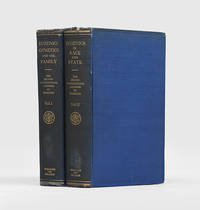
1923réf. 182347Baltimore: Williams & Wilkins Company 1923. Eugenics grows in America First editions of both volumes of the papers from the second international eugenics congress; from the library of the American Eugenics Society with their stamp to the front free endpapers. The three international eugenics congresses were the central forum for the worldwide eugenics movement to share papers and propose policies. Britain hosted the first congress in 1912 at the University of London. The second congress took place at the American Museum of Natural History in New York in September 1921. Henry Fairfield Osborn presided Alexander Graham Bell was the honorary president and the key guest speaker was Leonard Darwin the son of Charles who advocated measures to eliminate the unfit. The third congress met in 1932 at the same venue. The American Eugenics Society was founded in 1922 in the aftermath of the second congress and only dissolved in 2019. It was the main American body promoting eugenics in the 1920s during which eugenic policies were introduced in numerous American states and immigration quotas were set to limit immigration from outside western and northern Europe. The papers of the congress show the breadth of the movement which was at the forefront of scientific research at the time. Some are reputable studies of heredity traits but most include panic-stricken notions of national decline due to the increase of undesired races and peoples:. The papers include "Some Notes on the Jewish problem" "Negro-White Intermixture and Intermarriage" and "The War from the Eugenic point of view". 2 vols octavo. With frontispieces and 45 plates. Original blue cloth spines lettered in gilt. Faint shadow of removed label to spines. Light rubbing and very light wear at extremities contents clean and unmarked save for trivial notations on contents pages. A very good copy. hardcover
2003réf. 49515London: Chris Boot 2003. First edition. Hardcover. Fine condition. Initialed "CL 21/100" on imprint page and verso of pigment print 7 x 14 3/4" on glossy paper 11 1/2 x 16 1/4". Original brown cloth with blind-stamped and yellow lettering on cover housed in matching clamshell box with the pigment print. Design by SMITH. "History is a series of monumental panoramas moving from the streets of Baghdad to Ground Zero the embattled landscapes of Afghanistan and the Milosevic trial in the Hague. Evoking 19th Century war photographs and the tradition of history paintings." Science Media Museum. Chris Boot hardcover
1869réf. 0001361PROCTORSVILLE VERMONT VT. Good. 1869. On offer is the original 1869 manuscript diary in Eugenia A. Goodrich of Proctorsville Vermont. Researchers and collectors of Vermont ephemera will be hard pressed to find a more detailed retelling of local history and genealogy as this young woman does a super job keeping a careful record of the events in her life her family and the doings of her small village along the Black River in central Vermont. That said we find life is hard and brutal sometimes. It a cold region and a cold year and she and the family are frequently snowbound. Genie her nickname records the events as dear Ella grows weaker and then dies. February is a bad month with several deaths of friends and family. Genie sews for local ladies. She records the active visiting that people did in the days before automobiles and telephones except when the roads are filled with snow. Things look up in April when the sugaring starts. One day her brother boils off "done off" 57 pounds of sugar. She records murders and fatal accidents in nearby towns and writes about fear in the village that the reservoir will break and they'll all be drowned. She writes about one beau: "he is splendid" but others annoy her. The Fourth of July is "Glorious"; it's quite an honor when President Grant visits Proctorsville in August. There's a bad flood in October that takes out all the local bridges across the river and carries away Mr. Atherton's house. There's a smallpox scare in the village. Proctorsville celebrates Christmas and Genie writes about a merry Christmas at home; her brother receives a box of collars. This is a fine view of life in New England just after the Civil War. Here are some general notes and snippets: Jan. 1 1869: It has snowed all day and Genie is all alone and feeling lonely as she faces the New Year. She notes that this time last year brother Johnnie was with her so full of life and now he is gone to a better world. Genie lives in a village near Cavendish on the Black River in central Vermont. It's cold there's lots of snow. She sews for herself and for others in the village. There are lots of visits back and forth. On Monday Jan. 18 she writes about Mr. Oliver Perry visiting and taking her to Chester about 10 miles away. Then she writes "He is splendid." On Tuesday Jan. 19 she writes about a shocking murder in nearby 20 miles Claremont New Hampshire. A man was murdered by his nephew. "Murders are so common one doesn't know when they are safe these days" she writes. No doubt this refers to the murder of George Woodell by William Kenney on the night on Jan. 18 as reported by the Boston Post. Genie and her mother take turns caring for Ella. Genie notes on Tuesday Feb. 2 that Ella has failed very fast within a few days. Feb. 3 others come to visit Ella. Genie doesn't think she will live till morning. Feb. 4 Ella is about the same. Genie thought Ella was near death several times but she hangs on. Friday Fed. 5 Dear Ella left us this p.m. at twenty minutes to four to join that angel choir in our heavenly home. Dear Ella we mill thee but hope some day to meet you when our life's work is over. Saturday Feb. 6 spent all day at Mrs. Spaulding's helping to prepare for the funeral. It's Joseph's birthday today-he's 17. I would like to go see him tonight. Sunday Feb. 7 very cold. Joseph carried me up to help Viccie make a wreath. Uncle Wheeler Spaulding died this morning. Quite unexpected. Another life is ended and another home made lonely by the "Grim Monster" death! Monday Feb. 8 Ella's funeral today. Genie will stay at Mr. Spaulding's tonight. Tuesday Feb. 9 Uncle Wheeler's funeral today. Also Mr. Gibson's. Monday Feb. 15 we learned that Hale Spaulding was dead. He dies last night. Wed. Feb. 17 Miss Damon the Woman preacher preached at Hale's funeral. P.H.O. was here this morning. Genie received an invitation for a sleigh ride but had to decline. Sunday Feb. 21 Mother and Russell went to church all day but I didn't go. We heard today that was a woman in Andover VT murdered yesterday. 15 mi. south. Feb. 24 the murder was all a hoax. Thursday April 1. Joseph and the hired man commenced to make sugar today. Tuesday April 6. We done off 57 pounds of sugar today. Thursday Apr. 15. Saw a most remarkable display of Aurora Borealis this evening the like of which I have never seen before. Its rays illuminated the whole heavens converging with wonderful brilliancy. Sunday Apr. 18. Didn't go to church-bad travelling. Done off more sugar may be the last this spring. Wed. Apr. 21. Considerable excitement downtown. They are afraid the reservoir is giving out and they will be drowned. We hear that George sanders and Katie Mitchell were married. A "baby wedding" we should call it-both are so young. Sun. Apr. 25. Rev. J.S. Little preached his farewell sermon today at Proctorsville. Wed. Apr. 28. Mother quilting a bedspread. Saturday June 26. This would have been sister Hattie's birthday she'd be 20. Sunday June 27. I got all fixed up expecting a Bo beau but nary a one came only that hateful Adams fellow. Humph. Wish he knew enough to stay at home some of the time. Tuesday June 29. Mr. Elijah Bemis was killed this morning at Springfield and his wife was seriously injured. They were thrown from a carriage. Wed. June 30. Did not go strawberrying because Albert played me false. Thursday July 1. I went out and picked enough strawberries for one cake. Mother went strawberrying over in Parkers. I tried to sew some but did not accomplish much. "Albert bothers me so." Sunday July 4. Well this has been the Glorious fourth and is the ninety-third anniversary of the Declaration of Independence in this broad free land. I have celebrated it in a becoming manner. We stayed at Mr. Whitney's until after dinner then we came down to Warrens and called there a while and then came home. Sat. July 10. Little brother Johnnie would have been twelve years old today. Sat. Aug. 28. President Grant was at Proctorsville this afternoon. Quite an honor for our little town. Monday Oct. 4. It has been a continual pouring of rain all day. Cavendish never see such a __ before. The damages are immense. The bridges are all gone and the roads are washed so they are impassable. I went down to see the ruins. It looks rather rough along the Black river. We hear that Mr. Atherton's house is washed away. Tue. Oct. 5. The water in the river has fell considerably but not so we can cross it yet. Thurs. Nov. 30. Great excitement about the smallpox of which there are several cases in town. Friday Dec. 24. This evening all hands have been down for Proctorsville's Christmas eve. "Old Santa Clause" was generous this year. He put a present on the tree for me. Sat. Dec. 25. I spent a Merrie Christmas at home. This evening they have had exiting times at Farrsville. Quite a skirmish Merry merry Christmas indeed I should think. Joseph had a present of a box of collars and much much more. BIO NOTES: Courtesy of the Cavendish Historical Society Eugenia A. Goodrich was born in Cavendish 16 April 1846 daughter of Joseph D. and Lucy M. Paine Goodrich. Genie lived her whole live in the community of Proctorsville a village in the western part of the town. She also lived through the utmost tragedies that can ever be afflicted into the life of one little girl. During the first typhoid epidemic in Cavendish in 1851 her baby sister Hannah was taken. But even worse during the typhoid fever epidemic that struck Cavendish during the fall and winter of 1863 Genie lost her beloved father her twenty-year old sister Cassandra and her fifteen old sister Harriet. This left her poor grieving mother a widow at the age of 42 with three surviving children. Lucy did what she could but she was not strong and as time went on her heart grew weak. It was through her piety and humble work in the Baptist Church that she was adopted as a charity but she never asked for charity. Rev. Swett Brown was a pillar in the community and made sure that Lucy did not want for protection food and shelter with attentive neighborly love. Lucy Paine Goodrich was a gracious loving intelligent woman. Her life was a tragedy just as her daughter Genie's was. Lucy died of heart disease at her home in Cavendish 14 Oct. 1878 age 57. Her surviving son Joseph P. Goodrich lived with his wife Lizzie Oriette Kingston Goodrich and their children on a small farm in the Gassetts section of Chester a town south of Cavendish. Eugenia Lucy's daughter was married in Cavendish at the Baptist Church by Rev. Swett Farnsworth Brown 4 April 1872 to Albert Butler Adams. Albert was a Civil War veteran of Cavendish who enlisted at Cavendish 5 Aug. 1864 in the 2nd Battery Light Artillery as a private. He was discharged 28 July 1865. They lived in Cavendish District #8 on their own farm. Albert had a pension as he came home from war a very sick man. Genie died of consumption 15 June 1873 age 27. This was only three months and twelve days after giving birth to her only child Albert. Albert died of a scrofula illness 24 July 1878 at the young age of 34 years. They were buried in Cavendish. The book proper is a standard 19th century diary with astronomical items postage rates moon phases time of sunset and rise for each day etc.4"x2"x1" page a day small leather-bound book has a worn cover lining loose but overall G.; 64mo - up to 3" tall; KEYWORDS: HISTORY OF CAVENDISH EUGENIA A. GOODRICH NORTH HAVERHILL NEW HAMPSHIRE AMERICANA POST CIVIL WAR RECONSTRUCTION ERA PROCTORSVILLE VERMONT LUDLOW WOMENS STUDIES GENDER STUDIES RURAL LIFE HARDSHIPS EPIDEMICS INFLUENZA SMALLPOX FEVERS SUGARING MAPLE SYRUP HANDWRITTEN MANUSCRIPT DOCUMENT LETTER AUTOGRAPH DIARY JOURNAL LOG KEEPSAKE WRITER HAND WRITTEN DOCUMENTS SIGNED LETTERS MANUSCRIPTS HISTORICAL HOLOGRAPH WRITERS DIARIES JOURNALS LOGS AUTOGRAPHS PERSONAL MEMOIR MEMORIAL PERSONAL HISTORY AMERICANA Als antiquité contrat vélin document manuscrit papier Antike Brief Pergament Dokument Manuskript Papier oggetto d'antiquariato atto velina documento manoscritto carta antigüedad hecho vitela documento manuscrito Papel . hardcover
2007réf. 73001Mondadori Electa S. P. A. . New. Paperback. FREE UPGRADE to Courier/Priority Shipping Upon Request - IN STOCK AND IMMEDIATELY AVAILABLE FOR SHIPMENT - Flawless copy brand new pristine never opened -- Text in Italian. 312 pp. With 184 ills. 172 col. . 28 x 24 cm. -- with a bonus offer-- . 2007. 8837053363 . Mondadori Electa S. P. A. paperback
2009réf. 79554Actar. New. Hardcover. FREE UPGRADE to Courier/Priority Shipping Upon Request - IN STOCK AND IMMEDIATELY AVAILABLE FOR SHIPMENT - Flawless copy brand new pristine never opened -- Text in English Catalan and Spanish. 192 pp. 32 x 17 cm. -- with a bonus offer--; Multilingual Edition; FREQUENCIES is the catalogue that accompanies a new exhibition project by the artist Eugènia Balcells on some perceptive aspects of energy: light and colour. FREQUENCIES is a book that wants to be faithful to the screens on which the images of the multimedia installations Colour wheel Labyrinth Marble and Frequencies are projected. It is a book that allows us to slowly study the flow of the colour spectrum that defines the geometry of everything that exists. FREQUENCIES is both a visual source of knowledge and a collection of reflections on the communicative capacity of art and sciences. . 2009. 8492861037 . Actar hardcover
2014réf. 108379University of Texas Press. New. Hardcover. FREE UPGRADE to Courier/Priority Shipping Upon Request - IN STOCK AND IMMEDIATELY AVAILABLE FOR SHIPMENT - Flawless copy brand new pristine never opened - -- with a bonus offer--; Bill and Alice Wright Photography . 2014. 0292754639 . University of Texas Press hardcover
2008réf. 73613Skira. New. Paperback. FREE UPGRADE to Courier/Priority Shipping Upon Request - IN STOCK AND IMMEDIATELY AVAILABLE FOR SHIPMENT - Flawless copy brand new pristine never opened -- Text in Italian. 288 pp. With 180 ills. 89 col. . 28 x 25 cm. -- with a bonus offer-- . 2008. Skira paperback
2010réf. 87814RIT Cary Graphic Arts Press. New. Paperback. FREE UPGRADE to Courier/Priority Shipping Upon Request - IN STOCK AND IMMEDIATELY AVAILABLE FOR SHIPMENT - Flawless copy brand new pristine never opened -- 240 pages; 244 illus. -- with a bonus offer--; Claude Bragdon 1866-1946 was a first-generation modernist architect as well as an illustrator critic theorist and theater designer. Bragdon practiced architecture in Rochester New York throughout the Progressive Era. Although his masterpiece the New York Central Railroad Station was demolished in the 1960s-70s the First Universalist Church the Bevier Memorial Building the Peterborough Bridge near Toronto and nearly 100 residences remain today. A prolific and influential writer Bragdon published more than twenty books and hundreds of articles. He was nationally known for his graphic art his writing on the fourth dimension his Song & Light Festivals of 1915-1918 and his role in theater's New Stagecraft. He had technical and artistic expertise in many disciplines making it difficult to categorize his work into a specific stylistic trend. Bragdon's work as an early modernist is important both in its own right and as a key to other 20th Century architects work. The book includes a complete bibliography of Bragdon's published work a timeline and an index. Contributors: Eugenia V. Ellis Paul Emmons Marcia Feuerstein Marie Frank Jean France Joscelyn Godwin Linda Dalrymple Henderson Christina Malathouni Jonathan Massey Mary Nixon Joan Ockman Andrea Reithmayr and Richard Guy Wilson. . 2010. 1933360437 . RIT Cary Graphic Arts Press paperback
2010réf. 123263PUbliCan - Ediciones de la Universidad de Cantabria. New. Paperback. FREE UPGRADE to Courier/Priority Shipping Upon Request - IN STOCK AND IMMEDIATELY AVAILABLE FOR SHIPMENT - Flawless copy brand new pristine never opened. Text in Spanish. – with a bonus offer-- . 2010. 8481025712 . PUbliCan - Ediciones de la Universidad de Cantabria paperback