Lohenstein, Daniel Casper vonAntiquariat.de
25 173 résultats
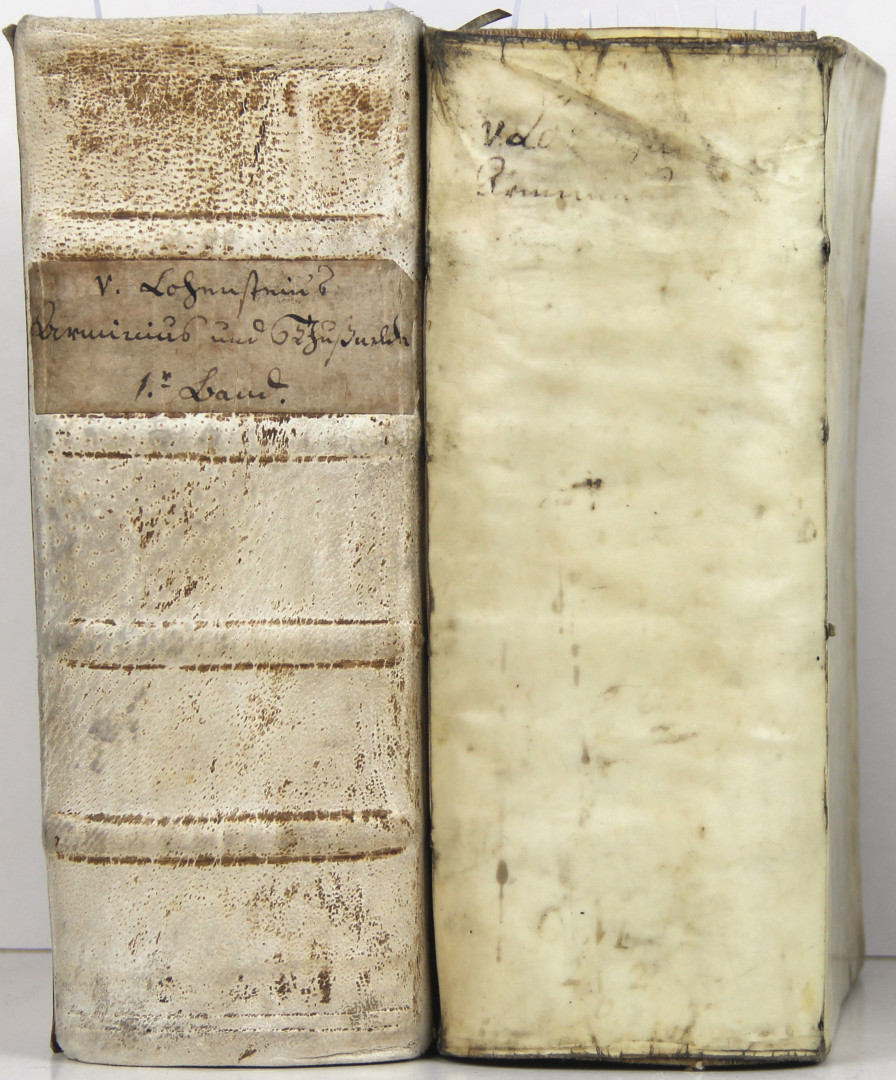
1690réf. 122899Leipzig, Christoph Fleischer für Johann Friedrich Gleditsch 1689-1690. * Mit 2 Kupfertiteln und 18 Kupferstich-Tafeln nach Sandrart. 19 Blatt, 1430 (recte 1432) Seiten; 4 Blatt, 1646, 51 Seiten, 40 Blatt. 25 x 21 cm. Halblederband der Zeit mit Pergamentdeckeln (Band I) und Pergamentband der Zeit (fleckig und berieben); letzterer mit Goldschnitt. [5 Warenabbildungen]
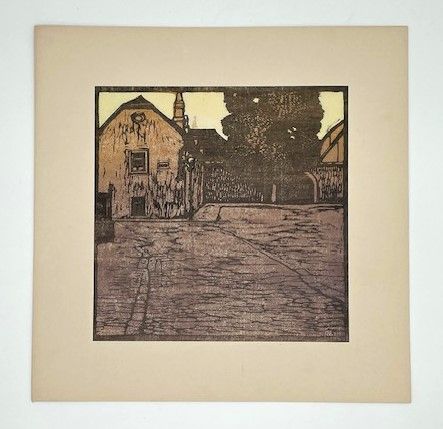
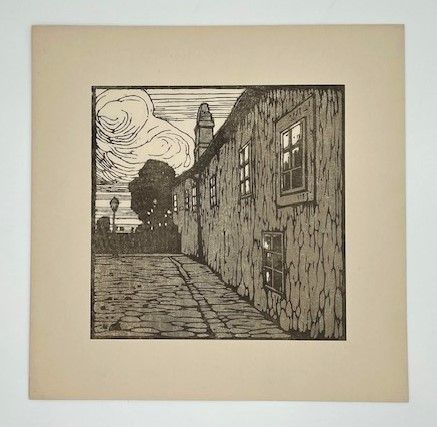
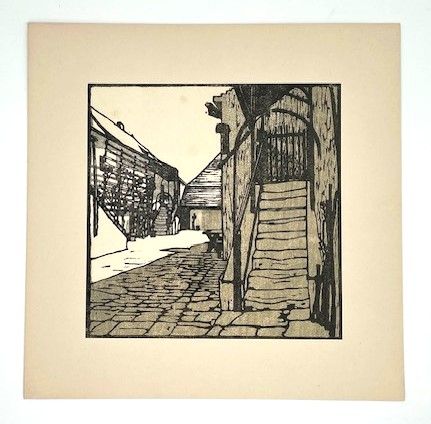
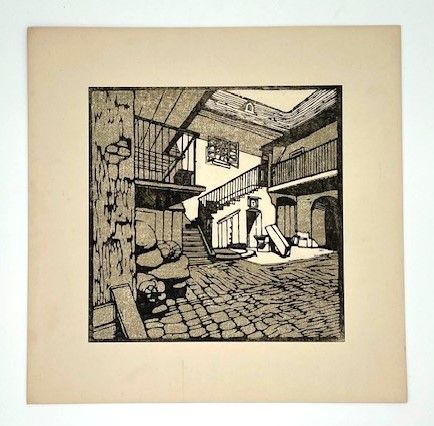
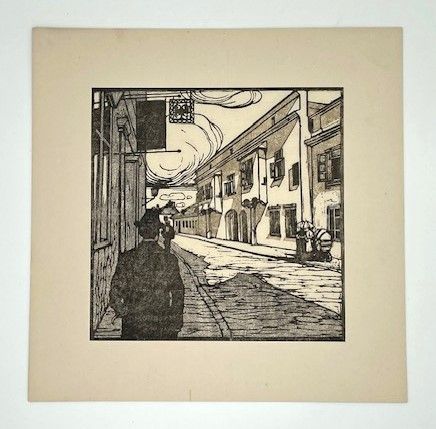
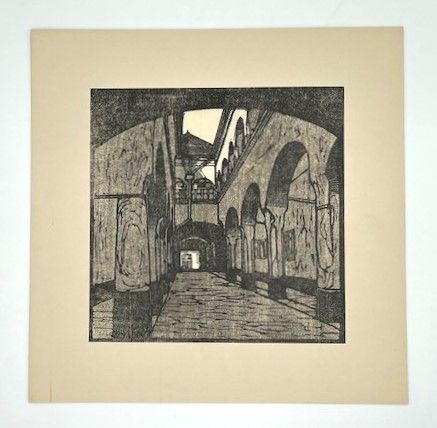
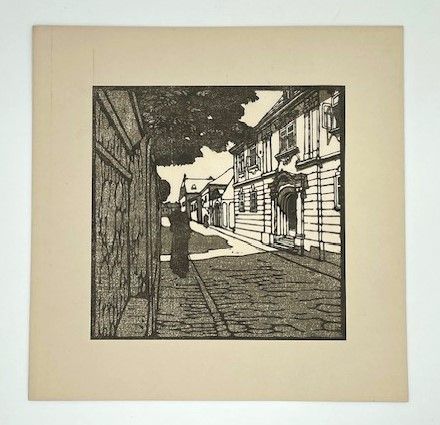
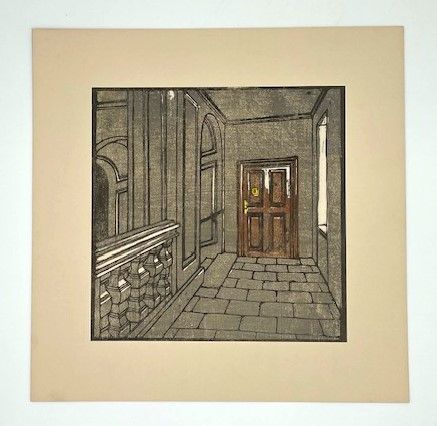
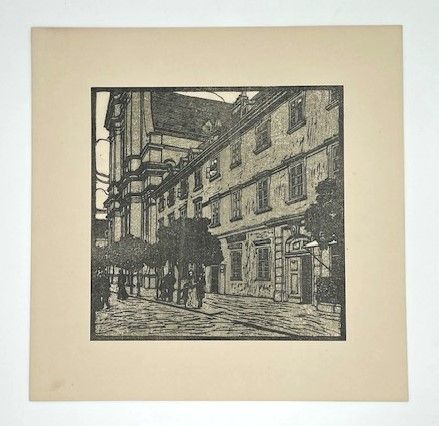
1907réf. 65697[Wien, Wiener Werkstätte, 1907]. Orig.-Farbholzschnitt auf Japan (Darstellung ca. 21 x 21 cm), unter Passepartout (ca. 30 x 30 cm) montiert.
1907réf. 65694[Wien, Wiener Werkstätte, 1907]. Orig.-Farbholzschnitt auf Japan (Darstellung ca. 21 x 21 cm), unter Passepartout (ca. 30 x 30 cm) montiert.
1907réf. 65692[Wien, Wiener Werkstätte, 1907]. Orig.-Farbholzschnitt auf Japan (Darstellung ca. 21 x 21 cm), unter Passepartout (ca. 30 x 30 cm) montiert.
1907réf. 65691[Wien, Wiener Werkstätte, 1907]. Orig.-Farbholzschnitt auf Japan (Darstellung ca. 21 x 21 cm), unter Passepartout (ca. 30 x 30 cm) montiert.
1907réf. 65699[Wien, Wiener Werkstätte, 1907]. Orig.-Farbholzschnitt auf Japan (Darstellung ca. 21 x 21 cm), unter Passepartout (ca. 30 x 30 cm) montiert.
1907réf. 65693[Wien, Wiener Werkstätte, 1907]. Orig.-Farbholzschnitt auf Japan (Darstellung ca. 21 x 21 cm), unter Passepartout (ca. 30 x 30 cm) montiert.
1907réf. 65698[Wien, Wiener Werkstätte, 1907]. Orig.-Farbholzschnitt auf Japan (Darstellung ca. 21 x 21 cm), unter Passepartout (ca. 30 x 30 cm) montiert.
1907réf. 65696[Wien, Wiener Werkstätte, 1907]. Orig.-Farbholzschnitt auf Japan (Darstellung ca. 21 x 21 cm), unter Passepartout (ca. 30 x 30 cm) montiert.
1907réf. 65695[Wien, Wiener Werkstätte, 1907]. Orig.-Farbholzschnitt auf Japan (Darstellung ca. 21 x 21 cm), unter Passepartout (ca. 30 x 30 cm) montiert.
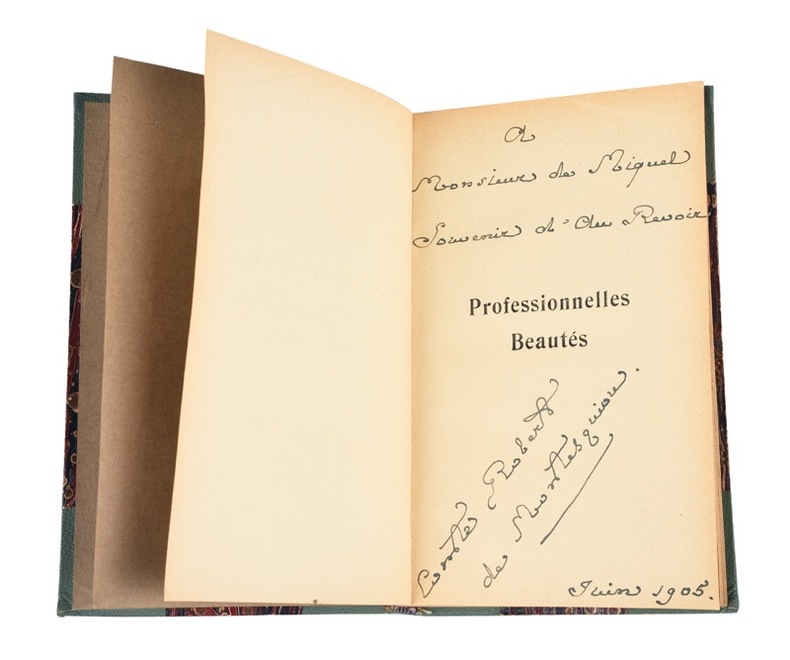
1905réf. 21639Paris, Félix Juven (Imprimerie Paul Dupont), (1905) ; petit in-8, bradel de percaline à coins vert lentilles d’eau, pièce de titre chair (reliure de l’époque) ; XXXIV, 313 pp., [1] f. de table.
réf. B143008-2Paris Maurice de Brunoff 1900. xv 1 277 3pp. 73 plates 68 collotype; 5 color 2 double-page each with tissue guards with descriptive letterpress. 99 text illus. Lrg. folio. Cloth. T.e.g. Compiled by Mataitci Foukoutci and Yoshio Ki; translated by E. Tronquois. Material collected under the auspices of the Imperial Museum at Tokyo. Ex-library. Paris (Maurice de Brunoff), 1900. hardcover
réf. B143008-2Paris Maurice de Brunoff 1900. xv 1 277 3pp. 73 plates 68 collotype; 5 color 2 double-page each with tissue guards with descriptive letterpress. 99 text illus. Lrg. folio. Cloth. T.e.g. Compiled by Mataitci Foukoutci and Yoshio Ki; translated by E. Tronquois. Material collected under the auspices of the Imperial Museum at Tokyo. Ex-library. Paris (Maurice de Brunoff), 1900. hardcover books
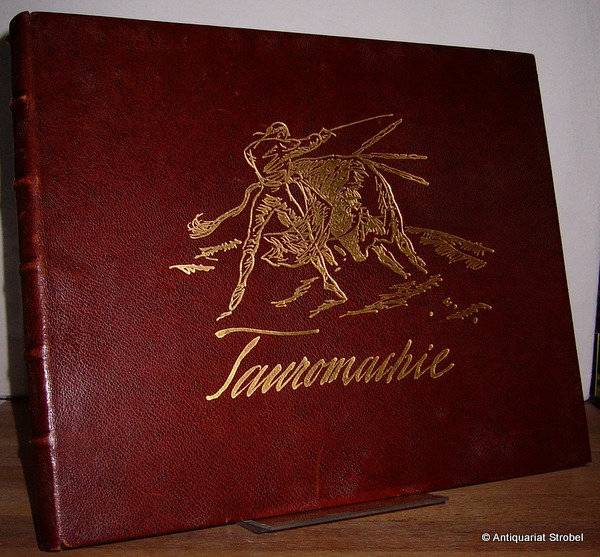
1925réf. 30186Leipzig, Seemann, um 1925. 8 Bl. Mit radiertem Titel und 30 signierten Original-Radierungen von Willi Geiger auf van Gelder-Bütten. Qu.-4° (26 x 32 cm). Braunes Original-Maroquin mit goldgeprägter Vorderdeckelillustration und Innenkantenfileten.
1919In-4 p., brossura orig., custodia in mz. pelle con ang. (spacchi a una cerniera), astuccio con cuffia in pelle, pp. (8),166,(2), illustrato da 13 affascinanti composizioni di Chimot, in tavole f.t.: sono 13 acqueforti originali incise dall’artista, qui presenti in due stati (a colori e in b.n.). Il vol. è ornato anche da 23 bellissimi finali, disegnati da Chimot. Il ns. esemplare contiene 1 tav. in più (in due stati) e 1 tav. in tre stati. Cfr. Carteret,IV, p. 259: “Edition recherchée“ - Benezit,III, p. 593. Bella edizione di 590 esempl. numerati. Il ns., 64, “sur Hollande van Gelder Zonen”, fa parte della tiratura di 70 (num. 21 a 90), firmati dall’Autore e dall’artista e “contenant deux états des eaux-fortes”. Esemplare ben conservato.
1910réf. 11429SCHREITER 1910. 1. hardcover. SCHREITER hardcover
1912In folio, brossura. Rivista settimanale fondata a Firenze da Giuseppe Prezzolini il 20 dicembre 1908, di straordinaria importanza per la vita e la cultura italiana.
1900réf. CLL-684Paris, Ollendorff, 1900 In-12 de (2)ff., 346pp., broché, non coupé.
1900réf. AMO-4231Jean Lorrain [Antoinette Wallgren, dédicataire, relieure et amie de Jean Lorrain] MADAME BARINGHEL Paris, Fayard frères, s.d. (1900) 1 volume in-18 (18,5 x 12 cm) de 306 pages. Reliure plein chagrin noir de l'époque (reliure signée A. W. pour Antoinette Wallgren), premier plat orné en mosaïque et fers dorés, dos lisse orné de fers floraux dorés, second plat resté vierge. Plats de couverture du brochage d'origine conservés. Bon état général. A noter des traces de recoloration des plats et du dos en noir, des mors un peu friables mais solides, papier jauni/bruni (marges), papier fragile comme toujours pour cette édition. Sur le premier plat de la reliure, un grand papillon en mosaïque semble manquer (cuir manquant) mais ce n'est pas certain (le papillon était peut-être décoré en creux dans le cuir). Voir photos. Edition originale sur papier ordinaire (sans mention). Envoi autographe de l'auteur Jean Lorrain adressé à Madame Antoinette Wallgren : à Madame Walgren (sic) cette [MADAME BARINGHEL] dont elle reconnaîtra quelques masques très respectueusement Jean Lorrain" Antoinette Wallgren (1858-1911) était née Antoinette Råström, à Stockholm en Suède. Ses parents étaient graveurs de médailles. On sait peu de choses sur elle. Elle a d'abord étudié la gravure sur bois, puis est devenue sculptrice et décoratrice. Elle a sculpté des plaques de bronze et réalisé des bustes. Elle s'est ensuite tournée vers la décoration extérieure des livres en appliquant des techniques de mosaïque et de cuirs repoussés aux reliures. En 1882 elle avait épousé l'artiste sculpteur Carl Wilhelm ”Ville” Vallgren (1855-1940). Il se trouve qu'Antoinette a relié cet exemplaire selon ses goûts et ses techniques. Le volume a été relié plein chagrin. Le premier plat a été mosaïqué de masques mosaïqués en pendentifs, de fleurs dorées, de papillons mosaïqués. Elle a signé sa reliure en bas à droite d'un fer doré AV (monogramme). Elle a poussé or en bas du premier plat, à gauche, une tête de fou. Le dos, lisse, est orné d'un décor doré feuilles de fougères. On retrouve un feuillage doré en encadrement intérieur des plats.
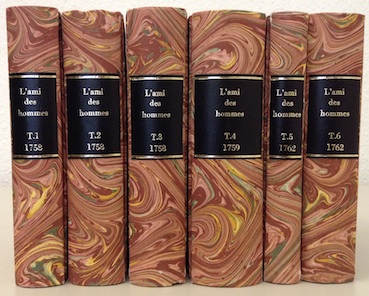
1762réf. 630639La Haye, Gibert, 1758-1762. Mit 6 Tafeln (Tableaux économiques, falsch in Band 4 gebunden). Moderne Pappbände mit schwarzem Lederrückenschild, Buchblöcke unbeschnitten.
2005In-4, bella legatura in mz. pelle edit., custodia in cartonato e pelle, pp. (34), illustrato nel t. e f.t. da 13 litografie di Mimmo Paladino. Bella edizione d'arte con note di Beppe Manzitti e Stefano Verdino, impressa al torchio su carta Magnani velata da Alessandro Zanella. Tiratura di 100 esempl. numerati "ad personam" e firmati dall'artista. Allo stato di nuovo.
1927In-4 gr., 2 volumi, cartonato edit. Primo volume: pp. (4),424, con 600 disegni e fac-simili nel t., riprodotti in nero e a colori, tratti dalle migliori edizioni pubblicate in Europa e in America. Secondo volume: pp. XXXIII,(3),XIII,(3), con 486 tavole fuori testo in tinta e a colori, alc. applic. alla pag. (come da Indice). Importante saggio di grafica editoriale. Bella edizione d’arte in tiratura di 750 esemplare numerati. Prime 35 cc. del 2° vol. con picc. foro al marg. infer., altrimenti molto ben conservato.
1922Telephone Talk was the glossy bimonthly publication of the British Columbia Telephone Company. It was written by employees for employees to present information of interest to those engaged in the plant, traffic, commercial, operating, accounting and other departments of the service. Each issue is replete with black and white photos and information on topics such as: company, industry and technological news, traffic levels, expansion plans, personnel announcements, publicity and social events, deaths, weddings, lists of exchanges, and more. As such, these issues serve as a vital preserve of rare and fascinating British Columbia history. This volume covers topics including: Nice photo montage of six female lower mainland agents; Commendation for Excellent service; Industrial Review - statistics for the province; Bar graph of phones in service between 1903 and 1921; When the telephone was a curiosity in the Capital City - nice seven page feature on the history of telephony in Victoria, beginning in 1877; Page of the 1880 Victoria and Esquimalt phone book; Facsimile of letter dated 1878 from the Bell Telephone office in Brantford, Ontario which says Mr. R.B. McMicking has accepted the agency of the company in British Columbia; City of Vancouver gets new phone number; Telephone development keeps pace with progress; Cover photo of the operating room of the Nanaimo exchange; Five-page illustrated article on Nanaimo, including 35 year-old photo of downtown with Bastion visible and an 1890 photo of a portion of the downtown and bowl area; Trouble shooting in Kootenay; The manufacture of porcelain; photo of operators at work in New Westminster; 6-page illustrated feature on New Westminster with mid-90s photo of the Colonial Hotel and area plus a photo of Columbia street before the fire of 1898; Composite cables will be important betterment; Fairmont operating room photo; Great photo montage of the old wooden bridge connecting Nanaimo's Fitzwilliam St. with downtown (the caption mentions E.P. LaBelle, whose name is stamped on the top edge of this book); 11 page feature on the history of telephony in Vancouver, with several photos from before 1900; pulling coils of duplex wire through the mountains by snow shoe(!); Nice photos of the following exchanges - Seymour, Fairmont, Highland, Bayview, Victoria, New Westminster, North Vancouver, Nanaimo, Chemainus, Cobble Hill, Cumberland, Belmont, Duncan, Courtenay, Port Alberni, Colquitz, Ladysmith, Keating, Aldergrove, Abbottsford, Collingwood, Fraser, Port Moody, Port Coquitlam, West Vancouver, Ladner, Kerrisdale, Eburne, Milner, Cloverdale, Steveston, Sidney, Hammond, Mission City, Kamloops, Agassiz, Trail, Rossland, Kaslo, Nelson, Grand Forks, Greenwood, New Denver, plus plant headquarters for the Mainland and Victoria; statement of development showing number of operating phones per community; Cover photo of the Foul Bay area of Victoria; More Switchboards for Seymour; Bayview Extension; Centralization of observation equipment; Demo. switchboard for school; Much outside construction; Seven duct miles of conduit laid in Seymour underground; Table showing exchanges in order of percent good toll calls; Alexander Graham Bell dies; Oaks Point snap shots; new motor control switchboard; Wireless telophony in early nineties (article); Laying underground conduit in Shaughnessy; New aerial cable across Capilano River; Passing of William Farrell, Company President; Rejuvinating used Plant material in machine shop; a peculiar case of hydrolysis; photo of Georgia street conduit trench; Second Annual Telephone Convention; 1885 B.C. Provincial Directory - article with 1885 photo of Vancouver Harbour; Autobiography of a switchboard plug; photo of burying conduit on Seymour in 1905; Appreciation shown by Port Alberni business men; Long Distance operators usually get their man; 7,000 mile motor trip of B.C. Telephone man; The telephone directory - my favourite book; Map showing routing of two cable between Book
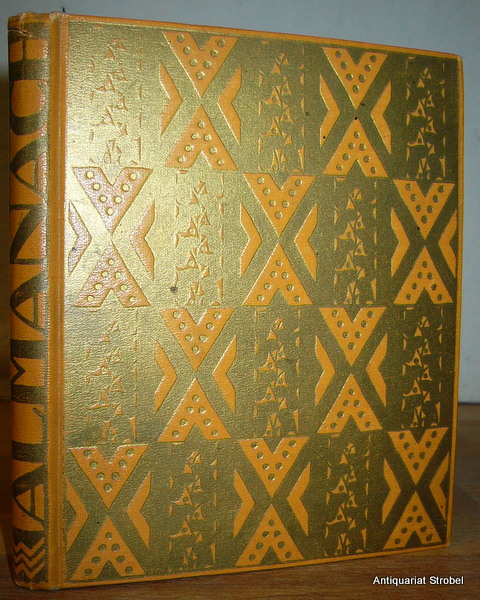
1911réf. 37483Wien und Leipzig, Brüder Rosenbaum, [1911]. 1 Bl., 126 S. Mit 12 Tafeln (davon 4 farbig). Kl.-4° (16,5 x 13,5 cm). Original-Leinwand mit Goldprägung. [5 Warenabbildungen]
1909réf. STLE0096a(Druck: Wien, Brüder Rosenbaum o.J. [1909]). 14 x 15 cm. 12 ungez. Bll. Mit 5 photogr. Abb. Kordelgeheft. OBrosch. m. dekorativem Buntpapiereinband (Herz-Flächenmuster in Rosa, Schwarz u. Rot gedruckt). Gut erhalten, Umschlag mit leichten Staubspuren Vgl. ÖBL I, 89 (hier irrig >Der Markt der Liebe<). Tanzspiel nach eigenem Buch des österreichischen Komponisten Julius Bittner (1874-1939). Sehr ansprechend gestaltete Broschüre mit Kostümentwürfen und Einbandgestaltung von (dem ungenannten) Koloman Moser. ?Die künstlerische Zusammenarbeit von Moser und Bittner geht auf das Jahr 1909 zurück, als Bittners Ballett ?Der Mantel der Liebe? im Gartentheater der internationalen Kunstschau uraufgeführt wurde. Ein undatierter Brief Kolo Mosers, der aus dem Jahr 1909 stammen muß, handelt von diesem Projekt: ??Es wäre gut wenn gleich nach Fertigstellung Ihrer Arbeiten [Klavierpart] mit den Proben begonnen werden könnte. Gretl Wiesenthal ist entzückt. [] Gretl möchte eventuell bei Reinhardt in Berlin die Lilith spielen und ihrer Schwester Else die Minne überlassen! ... Wir werden dann festsetzen ob und wann eine Zusammenkunft von Godlewsky, Gretl, Wimmer, Ihnen etc. stattfinden soll.? Die in dem Brief angekündigte Mitwirkung von Grete und Elsa Wiesenthal kam nicht zustande. Die Hauptrollen der Minne und Lilith tanzten bei der am 25. Juni 1909 stattfindenden Uraufführung Lene [d.i. Marie Madeleine] und Miss Macara. Die Choreographie stammte von Karl Godlewsky, die Inszenierung vom Architekten E. J. Wimmer [d.i. Eduard Josef Wimmer-Wisgrill], die musikalische Leitung hatte Egon Bloch inne.? (Vgl. dazu: Zauner W., ?Meine tiefe und aufrichtige Verehrung für ihre Person und ihr Werk? in ÖMZ Bd. 44, Dez. 1989, S. 78). - Die Abbildungen zeigen: ?Frau Minne? (Lene Jamrich) / ?Lilith? (Miss Macara) / ?Ein Sonnenstrahl? (Mitzi Schreiner) / ?Das Weib? (Clarisse Robert) / ?Die Kokette? (Mitzi Schreiner). Das Stoffmuster des Mantels den ?Frau Minne? trägt, ist dasselbe Flächenmuster wie das des Einbandes. - DIESES OBJEKT UNTERLIEGT DER DIFFERENZBESTEUERUNG.