[Hungarian Liberation] [Nationalist Art]Biblio.com

1.452 Ergebnisse
1970Best.-Nr. 9177Budapest 1970. First edition. 28x39cm 19 leaves laid loose in red padded leather portfolio. Table of contents introduction by Simon Peter and 17 etchings each signed in pencil by the respective artist. Tissue guards present plates in very bright near fine condition contents leaf and inner portfolio with some foxing. Rubbing to edges of folder otherwise a near fine set. Translated as "A Quarter Century of Liberated Hungary" this portfolio was issued in 1970 to commemorate 25 years since the end of World War II. The images in the Socialist-Realist style depict scenes such as the Provisional National Assembly in Debrecen cleaning rubble from the streets of Budapest following the war the birth of the Forint the working class voting during the 1947 parliamentary election in Borsod County factory nationalization and others. Artists include Gyula Hincz 1904-1986 Adam Würtz 1927-1994 Pásztor Gábor 1933–2012 Raszler Károly 1925–2005 and others. A scarce complete Cold War-era Hungarian graphic art portfolio with striking images from Nationalist artists. unknown
1970Best.-Nr. 228751970. Lester Julius. Some Revolutionary Notes 1970 presents a critical intervention in Black liberation thought at the transition from the Civil Rights Movement to the era of Black Power and New Left fragmentation. Issued by the Institute for the Study of Nonviolence in Palo Alto the work supports research into African American political thought nonviolent philosophy and internal debates over strategy within late 1960s and early 1970s radical movements. Written in the aftermath of major political ruptures including the rise of the Black Panther Party and the killings of Fred Hampton and Mark Clark the essays examine the limits of both nonviolence and armed resistance within the struggle for Black liberation. Lester Julius. Some Revolutionary Notes. Palo Alto: Institute for the Study of Nonviolence 1970. First separate printing. Quarto. Side-stapled self-wrappers printed in black on white stock. The 13-page pamphlet compiles a series of essays originally published in Liberation magazine between late 1969 and early 1970. Opening with "To Recapture the Dream" Lester traces the trajectory of the Movement from the Montgomery bus boycott through the emergence of militant Black activism identifying generational and ideological divisions within the struggle. Subsequent essays dated January through March 1970 address the limitations of the anti-Vietnam War Moratorium the political implications of the deaths of Hampton and Clark and the philosophical tension between nonviolence and revolutionary violence. The text incorporates references to Gandhian principles of satyagraha arguing for a form of political transformation grounded in ethical and human development rather than retaliatory force. Graphic patterned borders frame each essay reinforcing the pamphlet's visual identity within radical print culture. Light handling wear with faint toning along edges and a small crease to lower front corner; otherwise clean and well preserved; overall near fine condition. Produced within a network of West Coast pacifist activism associated with figures such as Ira Sandperl and Joan Baez the pamphlet provides direct evidence of ideological reassessment within Black and multiracial movements offering a concise and historically grounded articulation of nonviolence as a contested but persistent framework in post-Civil Rights era political thought. unknown
1970Best.-Nr. 228751970. Lester Julius. Some Revolutionary Notes 1970 presents a critical intervention in Black liberation thought at the transition from the Civil Rights Movement to the era of Black Power and New Left fragmentation. Issued by the Institute for the Study of Nonviolence in Palo Alto the work supports research into African American political thought nonviolent philosophy and internal debates over strategy within late 1960s and early 1970s radical movements. Written in the aftermath of major political ruptures including the rise of the Black Panther Party and the killings of Fred Hampton and Mark Clark the essays examine the limits of both nonviolence and armed resistance within the struggle for Black liberation. Lester Julius. Some Revolutionary Notes. Palo Alto: Institute for the Study of Nonviolence 1970. First separate printing. Quarto. Side-stapled self-wrappers printed in black on white stock. The 13-page pamphlet compiles a series of essays originally published in Liberation magazine between late 1969 and early 1970. Opening with "To Recapture the Dream" Lester traces the trajectory of the Movement from the Montgomery bus boycott through the emergence of militant Black activism identifying generational and ideological divisions within the struggle. Subsequent essays dated January through March 1970 address the limitations of the anti-Vietnam War Moratorium the political implications of the deaths of Hampton and Clark and the philosophical tension between nonviolence and revolutionary violence. The text incorporates references to Gandhian principles of satyagraha arguing for a form of political transformation grounded in ethical and human development rather than retaliatory force. Graphic patterned borders frame each essay reinforcing the pamphlet's visual identity within radical print culture. Light handling wear with faint toning along edges and a small crease to lower front corner; otherwise clean and well preserved; overall near fine condition. Produced within a network of West Coast pacifist activism associated with figures such as Ira Sandperl and Joan Baez the pamphlet provides direct evidence of ideological reassessment within Black and multiracial movements offering a concise and historically grounded articulation of nonviolence as a contested but persistent framework in post-Civil Rights era political thought. unknown books
1968Best.-Nr. 930FAT'H 1968. First Edition. Wraps. Very good. VARIOUS Palestinian National Liberation Movement The Distinguished Ulemas of Islam are Asking the Muslims to Support Al Fat'H Comandos FAT'H 1968. 32pp 8vo. FIRST EDITION. "On the occasion of Balfour Declaration and after issuing the decision of the Islamic World League at Mecca and the Conference of Islamic Research at Cairo which have asked for Jihad to save the Holy Land ." p. 32. Testimonials by various educators imams and political leaders. CONDITION: Very good or better in stapled salmon-colored wraps. Light fading to cover. FAT'H paperback
Best.-Nr. DADAX1612057233New unknown
Best.-Nr. DADAX0415312353New unknown
Best.-Nr. DADAX9774245679New unknown
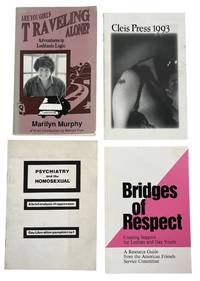
1978Best.-Nr. 239011978. Lesbian and gay movement print culture archive 1978 to 1993 tracing the passage from liberation era attacks on psychiatric authority to affirmative youth work lesbian feminist cultural criticism and the professional book trade built by independent presses. The earliest item is a 1978 Gay Liberation Information Service printing of Psychiatry and the Homosexual first published in 1973 by members of the London Gay Liberation Front's Counter Psychiatry Group while the sequence closes with Cleis Press's 1993 trade catalogue where lesbian studies sexual politics health fiction and other fields appear as an organized publishing list. Bridges of Respect and Marilyn Murphy's Are You Girls Traveling Alone document two additional routes by which lesbian and gay print entered broader institutional and intellectual settings: the American Friends Service Committee's national work with adults serving lesbian and gay youth and book length lesbian feminist writing drawn substantially from the periodical culture of Lesbian News. Archive of four publications 1978 to 1993 comprising one pamphlet one resource guide one first edition essay collection and one publisher catalogue. 1 Psychiatry and the Homosexual: A Brief Analysis of Oppression. Gay Liberation Pamphlet no. 1. London: Gay Liberation Information Service 1978. 32 pp. A collective critique of psychiatry's treatment of homosexuality opening with the declaration that "The oppression of homosexuality in Western society is total." 2 Whitlock Katherine. Bridges of Respect: Creating Support for Lesbian and Gay Youth. Philadelphia: American Friends Service Committee 1988. 97 pp. An affirmative resource guide for adults working with lesbian and gay youth grounded in AFSC's Quaker tradition of opposition to discrimination. 3 Murphy Marilyn. Are You Girls Traveling Alone Adventures in Lesbianic Logic. Los Angeles: Clothespin Fever Press 1991. First edition. 235 pp. With an introduction by Marilyn Frye. Murphy's essays many first published in Lesbian News combine humor personal narrative and lesbian feminist critique; Catherine O'Dette described her method as "the Lesbianic equivalent of the Socratic Method." 4 Cleis Press 1993. San Francisco and Pittsburgh: Cleis Press 1993. 23 pp. Trade catalogue organized into New Releases Fiction Lesbian Studies Sexual Politics Politics of Health and other sections with contributors and authors including Susie Bright Pat Califia bell hooks Carol A. Queen Andrew Ross and Michael Warner. The chronology begins with a British gay liberation text produced when activists were directly challenging psychiatry's authority to define and treat homosexuality. The Gay Liberation Front had identified psychiatry as a mechanism of oppression in its 1971 manifesto and its Counter Psychiatry Group formed partly in response to the continued use of aversion therapies; Psychiatry and the Homosexual emerged from that work and argued that homosexuality required neither cure nor therapeutic correction. PubMed Central PMC Ten years later Bridges of Respect shows an affirmative model operating inside a national service organization: AFSC later traced a direct line from the 1988 guide to its 1992 Bridges Project established as a national clearinghouse for LGBT youth and organizations serving them. Friends Journal Murphy's 1991 collection records another infrastructure the circulation of lesbian feminist argument through periodicals anthologies independent presses feminist bookstores and networks of writers including Frye Lyon Martin Dobkin Penelope and Valentine. The 1993 Cleis catalogue captures the trade end of that development. Cleis cofounder Felice Newman later recalled that the press began by hand addressing and shipping books from a basement and that late 1980s wholesaling arrangements brought its titles before national accounts including Barnes & Noble Borders and Ingram making the catalogue's sales and ordering apparatus evidence of a material change in how lesbian and gay books circulated. PublishersWeekly.com Moderate wrapper soiling and handling wear across the group; Psychiatry and the Homosexual and the Cleis catalogue show more pronounced surface soiling the Cleis rear wrapper retains mailing labels and adhesive residue and Murphy's front wrapper has a long diagonal crease with rubbing and edge wear; bindings remain intact and the visible interiors are clean. Overall good condition. unknown
1978Best.-Nr. 239011978. Lesbian and gay movement print culture archive 1978 to 1993 tracing the passage from liberation era attacks on psychiatric authority to affirmative youth work lesbian feminist cultural criticism and the professional book trade built by independent presses. The earliest item is a 1978 Gay Liberation Information Service printing of Psychiatry and the Homosexual first published in 1973 by members of the London Gay Liberation Front's Counter Psychiatry Group while the sequence closes with Cleis Press's 1993 trade catalogue where lesbian studies sexual politics health fiction and other fields appear as an organized publishing list. Bridges of Respect and Marilyn Murphy's Are You Girls Traveling Alone document two additional routes by which lesbian and gay print entered broader institutional and intellectual settings: the American Friends Service Committee's national work with adults serving lesbian and gay youth and book length lesbian feminist writing drawn substantially from the periodical culture of Lesbian News. Archive of four publications 1978 to 1993 comprising one pamphlet one resource guide one first edition essay collection and one publisher catalogue. 1 Psychiatry and the Homosexual: A Brief Analysis of Oppression. Gay Liberation Pamphlet no. 1. London: Gay Liberation Information Service 1978. 32 pp. A collective critique of psychiatry's treatment of homosexuality opening with the declaration that "The oppression of homosexuality in Western society is total." 2 Whitlock Katherine. Bridges of Respect: Creating Support for Lesbian and Gay Youth. Philadelphia: American Friends Service Committee 1988. 97 pp. An affirmative resource guide for adults working with lesbian and gay youth grounded in AFSC's Quaker tradition of opposition to discrimination. 3 Murphy Marilyn. Are You Girls Traveling Alone Adventures in Lesbianic Logic. Los Angeles: Clothespin Fever Press 1991. First edition. 235 pp. With an introduction by Marilyn Frye. Murphy's essays many first published in Lesbian News combine humor personal narrative and lesbian feminist critique; Catherine O'Dette described her method as "the Lesbianic equivalent of the Socratic Method." 4 Cleis Press 1993. San Francisco and Pittsburgh: Cleis Press 1993. 23 pp. Trade catalogue organized into New Releases Fiction Lesbian Studies Sexual Politics Politics of Health and other sections with contributors and authors including Susie Bright Pat Califia bell hooks Carol A. Queen Andrew Ross and Michael Warner. The chronology begins with a British gay liberation text produced when activists were directly challenging psychiatry's authority to define and treat homosexuality. The Gay Liberation Front had identified psychiatry as a mechanism of oppression in its 1971 manifesto and its Counter Psychiatry Group formed partly in response to the continued use of aversion therapies; Psychiatry and the Homosexual emerged from that work and argued that homosexuality required neither cure nor therapeutic correction. PubMed Central PMC Ten years later Bridges of Respect shows an affirmative model operating inside a national service organization: AFSC later traced a direct line from the 1988 guide to its 1992 Bridges Project established as a national clearinghouse for LGBT youth and organizations serving them. Friends Journal Murphy's 1991 collection records another infrastructure the circulation of lesbian feminist argument through periodicals anthologies independent presses feminist bookstores and networks of writers including Frye Lyon Martin Dobkin Penelope and Valentine. The 1993 Cleis catalogue captures the trade end of that development. Cleis cofounder Felice Newman later recalled that the press began by hand addressing and shipping books from a basement and that late 1980s wholesaling arrangements brought its titles before national accounts including Barnes & Noble Borders and Ingram making the catalogue's sales and ordering apparatus evidence of a material change in how lesbian and gay books circulated. PublishersWeekly.com Moderate wrapper soiling and handling wear across the group; Psychiatry and the Homosexual and the Cleis catalogue show more pronounced surface soiling the Cleis rear wrapper retains mailing labels and adhesive residue and Murphy's front wrapper has a long diagonal crease with rubbing and edge wear; bindings remain intact and the visible interiors are clean. Overall good condition. unknown books
Best.-Nr. 239344Stuttgart, Johann Scheible [Schnellpressendruck von Kreuzer - puis : Hofbuchdruckerei zu Guttenberg], 1849 - 1850 12 tomes en 4 vol. in-16, cartonnage Bradel de papier violine , pièces de titre noires (reliure de l'époque). Rousseurs. Quelques usures au cartonnage.
Best.-Nr. 9668P., Cussac, (1918). Affiche de 116 x 80 cm pliée, ornée de deux drapeaux français entrecroisés.
1945Best.-Nr. 20103Mexico, Poésie et Révolution, 1945 ; in-8 (197 x 141 mm), broché, [16] ff. non chiffré, le premier et le dernier blancs.
Best.-Nr. 2081402109703279Not Available N.A. Soft Cover. Fine. The book is in fine condition. Not Available paperback
Best.-Nr. 2081402109703450Not Available N.A. Soft Cover. Fine. The book is in fine condition. Not Available paperback
Best.-Nr. DADAX0684836122New unknown
2000Best.-Nr. 2092902137401543Not Available 2000. Soft Cover. Fine. Number of books: 8 Not Available paperback
2000Best.-Nr. 2090202120101701Not Available 2000. Soft Cover. Fine. Volume: 1 Not Available paperback
2000Best.-Nr. 2090202120301700Not Available 2000. Soft Cover. Fine. Volume: 1 Not Available paperback
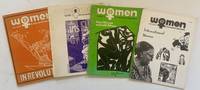
1970Best.-Nr. 178751970. Women: A Journal of Liberation 1970 to 1975 documenting feminist cultural expression and ideological debate within the Women's Liberation Movement during the early second wave period. The material reflects feminist print culture illustrating themes of gender roles domestic life labor sexuality and global political struggle and offering insight into how activists writers and artists articulated women's experiences and demands for social transformation. It supports research into feminist media intersectional discourse and the evolution of women-centered publishing in the United States. Archive includes: 1 Women: A Journal of Liberation Vol. 1 No. 4. Summer 1970. Baltimore MD: Women: A Journal of Liberation Inc. 1970. This issue's theme is "In Revolution" and its cover bears an image of a shouting woman breaking through chains her chin lifted in determination. On the back wrapper is a photographic collage of feminists and a woman behind bars sweat dripping down her forehead. Articles discuss Vietnam the Russian Revolution Rosa Luxembourg and various current events relating to the women's movement. 2 Women: A Journal of Liberation Vol. 2 No. 1 Fall 1970. Baltimore MD: Women: A Journal of Liberation Inc. 1970. An issue on women in the arts with articles on female authors women in music and film children's literature focused on women female visual artists and women as muse. Cover features a purple print of a woman sitting in a chair and hiding her face from view captioned "model in art class". 3 Women: A Journal of Liberation Vol. 2 No. 2 Winter 1971. Baltimore MD: Women: A Journal of Liberation Inc. 1970. This issue is titled "How We Live and With Whom" and includes articles on family marriage and homelife. Many of these articles explore marital and familial issues affecting women in the 70s including the difficulties of divorce sex education for young girls and alternative lifestyles like communal living. 4 Women: A Journal of Liberation Vol. 3 No. 2 Winter 1972. Baltimore MD: Women: A Journal of Liberation Inc. 1972. Titled "Building a New Culture". An issue exploring the role of women in culture and the impact of popular culture on women including articles on women in music theater and sports as well as women's studies and sociology. Cover features a green print of five women dancing in a circle. 5 Women: A Journal of Liberation Vol. 3 No. 4. Baltimore MD: Women: A Journal of Liberation Inc. 1974. This issue is titled "International Women" and bears cover images of an older woman wearing a bandana and prints of Native women a Black woman and a Vietnamese woman holding artillery in one hand and a baby in another. Articles discuss Vietnam women in the Cuban Revolution Nisei women Chicana culture and various current events relating to the women's movement. 6 Women: A Journal of Liberation Vol. 4 No. 2 Spring 1975. Baltimore MD: Women: A Journal of Liberation Inc. 1975. Titled "The Cost of Living" this is issue centers around the relationship between women and money. Includes articles on women in the workforce welfare living in poverty and women supporting themselves independently. This topic would have been especially relevant in the mid-70s when the Equal Credit Opportunity Act opened up new financial opportunities for women in the US. Six issues spanning 1970 to 1975 each approximately 11 x 8.25 inches. This period coincides with significant developments in U.S. feminist organizing including expanded discourse on workplace equality reproductive rights and financial independence as well as increased attention to global and intersectional perspectives within the movement. The journal's combination of political analysis creative expression and visual design situates it within a broader network of feminist periodicals that shaped activist and intellectual exchange. Light handling wear covers and pages well-preserved with strong color and clarity; overall very good condition. A cohesive and visually distinctive grouping illustrating the breadth of feminist thought and cultural production in the early 1970s. unknown
1970Best.-Nr. 178751970. Women: A Journal of Liberation 1970 to 1975 documenting feminist cultural expression and ideological debate within the Women's Liberation Movement during the early second wave period. The material reflects feminist print culture illustrating themes of gender roles domestic life labor sexuality and global political struggle and offering insight into how activists writers and artists articulated women's experiences and demands for social transformation. It supports research into feminist media intersectional discourse and the evolution of women-centered publishing in the United States. Archive includes: 1 Women: A Journal of Liberation Vol. 1 No. 4. Summer 1970. Baltimore MD: Women: A Journal of Liberation Inc. 1970. This issue's theme is "In Revolution" and its cover bears an image of a shouting woman breaking through chains her chin lifted in determination. On the back wrapper is a photographic collage of feminists and a woman behind bars sweat dripping down her forehead. Articles discuss Vietnam the Russian Revolution Rosa Luxembourg and various current events relating to the women's movement. 2 Women: A Journal of Liberation Vol. 2 No. 1 Fall 1970. Baltimore MD: Women: A Journal of Liberation Inc. 1970. An issue on women in the arts with articles on female authors women in music and film children's literature focused on women female visual artists and women as muse. Cover features a purple print of a woman sitting in a chair and hiding her face from view captioned "model in art class". 3 Women: A Journal of Liberation Vol. 2 No. 2 Winter 1971. Baltimore MD: Women: A Journal of Liberation Inc. 1970. This issue is titled "How We Live and With Whom" and includes articles on family marriage and homelife. Many of these articles explore marital and familial issues affecting women in the 70s including the difficulties of divorce sex education for young girls and alternative lifestyles like communal living. 4 Women: A Journal of Liberation Vol. 3 No. 2 Winter 1972. Baltimore MD: Women: A Journal of Liberation Inc. 1972. Titled "Building a New Culture". An issue exploring the role of women in culture and the impact of popular culture on women including articles on women in music theater and sports as well as women's studies and sociology. Cover features a green print of five women dancing in a circle. 5 Women: A Journal of Liberation Vol. 3 No. 4. Baltimore MD: Women: A Journal of Liberation Inc. 1974. This issue is titled "International Women" and bears cover images of an older woman wearing a bandana and prints of Native women a Black woman and a Vietnamese woman holding artillery in one hand and a baby in another. Articles discuss Vietnam women in the Cuban Revolution Nisei women Chicana culture and various current events relating to the women's movement. 6 Women: A Journal of Liberation Vol. 4 No. 2 Spring 1975. Baltimore MD: Women: A Journal of Liberation Inc. 1975. Titled "The Cost of Living" this is issue centers around the relationship between women and money. Includes articles on women in the workforce welfare living in poverty and women supporting themselves independently. This topic would have been especially relevant in the mid-70s when the Equal Credit Opportunity Act opened up new financial opportunities for women in the US. Six issues spanning 1970 to 1975 each approximately 11 x 8.25 inches. This period coincides with significant developments in U.S. feminist organizing including expanded discourse on workplace equality reproductive rights and financial independence as well as increased attention to global and intersectional perspectives within the movement. The journal's combination of political analysis creative expression and visual design situates it within a broader network of feminist periodicals that shaped activist and intellectual exchange. Light handling wear covers and pages well-preserved with strong color and clarity; overall very good condition. A cohesive and visually distinctive grouping illustrating the breadth of feminist thought and cultural production in the early 1970s. unknown books
1986Best.-Nr. 2090502113704439Not Available 1986. Soft Cover. Fine. The book is in fine condition. Not Available paperback
1994Best.-Nr. 2091202133213062Kaiho shubbansha 1994. Soft Cover. Fine. Number of books: 1 box Kaiho shubbansha paperback
1981Best.-Nr. 2091502135307732Meiji Map Publishing 1981. Soft Cover. Fine. Number of books: 13 Meiji Map Publishing paperback
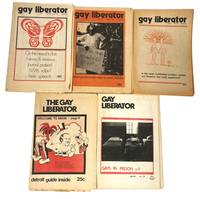
1972Best.-Nr. 195061972. Various contributors. Gay Liberator 1972-1976 documents grassroots LGBTQ organizing and community communication networks in the American Midwest specifically within Detroit's gay liberation movement. The material reveals how an independent newspaper functioned as a system of political coordination and cultural exchange demonstrating the process by which activists writers and community members articulated shared concerns disseminated information and built regional identity. Through reportage editorials and community-generated content the publication shows the mechanisms of local LGBTQ organizing and provides primary-source evidence for the study of post-Stonewall activism regional press networks and queer public discourse. Various contributors. Gay Liberator. Detroit: Gay Liberator Inc. / Pansy Press 1972-1976. Archive of 5 issues: July 1972 No. 19; January 1973 Vol. 1 No. 23; June 1974 Vol. 1 No. 38; February-March 1975 Vol. 1 No. 43; Spring 1976 Vol. 1 No. 48. Tabloid-format newspapers in pictorial wrappers each approximately 20 pages. Contents include opinion essays political commentary poetry letters to the editor and investigative reporting addressing topics such as internal "conference conflicts" lesbian artistic production debates on genetics and sexuality and conditions of "being gay in prison." Coverage of Stonewall uprising situates the publication within broader national movements while localized reporting reflects the specific concerns of Michigan-based communities. Each issue contains a classified section used for personal advertisements indicating the newspaper's role in facilitating social and romantic connections alongside political engagement. The range of content demonstrates an integrated communication system combining activism cultural expression and everyday community needs. This archive emerges from the early years of the gay liberation movement when regional publications played a critical role in sustaining activism outside major coastal centers. As the first gay newspaper in Michigan Gay Liberator contributed to the formation of a visible and organized LGBTQ presence in the Midwest linking local experiences to national conversations about rights identity and representation. Its combination of political analysis and community-oriented features reflects the dual function of such publications as both activist tools and social infrastructure. Each issue measures approximately 11 x 15.5 inches; light wear consistent with handling; overall very good condition. A cohesive group illustrating the operation of regional LGBTQ press and grassroots organizing in the 1970s. unknown
1972Best.-Nr. 195061972. Various contributors. Gay Liberator 1972-1976 documents grassroots LGBTQ organizing and community communication networks in the American Midwest specifically within Detroit's gay liberation movement. The material reveals how an independent newspaper functioned as a system of political coordination and cultural exchange demonstrating the process by which activists writers and community members articulated shared concerns disseminated information and built regional identity. Through reportage editorials and community-generated content the publication shows the mechanisms of local LGBTQ organizing and provides primary-source evidence for the study of post-Stonewall activism regional press networks and queer public discourse. Various contributors. Gay Liberator. Detroit: Gay Liberator Inc. / Pansy Press 1972-1976. Archive of 5 issues: July 1972 No. 19; January 1973 Vol. 1 No. 23; June 1974 Vol. 1 No. 38; February-March 1975 Vol. 1 No. 43; Spring 1976 Vol. 1 No. 48. Tabloid-format newspapers in pictorial wrappers each approximately 20 pages. Contents include opinion essays political commentary poetry letters to the editor and investigative reporting addressing topics such as internal "conference conflicts" lesbian artistic production debates on genetics and sexuality and conditions of "being gay in prison." Coverage of Stonewall uprising situates the publication within broader national movements while localized reporting reflects the specific concerns of Michigan-based communities. Each issue contains a classified section used for personal advertisements indicating the newspaper's role in facilitating social and romantic connections alongside political engagement. The range of content demonstrates an integrated communication system combining activism cultural expression and everyday community needs. This archive emerges from the early years of the gay liberation movement when regional publications played a critical role in sustaining activism outside major coastal centers. As the first gay newspaper in Michigan Gay Liberator contributed to the formation of a visible and organized LGBTQ presence in the Midwest linking local experiences to national conversations about rights identity and representation. Its combination of political analysis and community-oriented features reflects the dual function of such publications as both activist tools and social infrastructure. Each issue measures approximately 11 x 15.5 inches; light wear consistent with handling; overall very good condition. A cohesive group illustrating the operation of regional LGBTQ press and grassroots organizing in the 1970s. unknown books