COLIGNY (Henri de). LABOUREUR (Jean-Emile).Livre Rare Book

10 012 résultats
1928réf. 13447Paris CABINET DU LIVRE 1928 1 Publiées d'après l'exemplaire de 1625, et décorées d'eaux-fortes par J.-E. Laboureur. Se Vendent Au Cabinet du Livre, 79 rue Vaugirard à Paris, 1928, in-8, broché, couverture remplié, 1 f., faux-titre, frontispice, titre, préface signée B.G. pp. III-XXII, texte pp. 1-155, justificatif, 1 f.
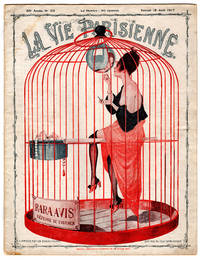
1917réf. 001504Paris: La Vie Parisienne 1917. First Edition . Illustrated Wraps. Very Good. 13.75" x 10.5. Georges Leonnec René Vincent Vald'Es Valvérane & D'Espagnat Fabien Fabiano Henri Guydo others uncredited . Paris: La Vie Parisienne 1917. The August 18 1917 Issue 55e annee No 33. Illustrations by Georges Leonnec René Vincent Vald'Es Valvérane & D'Espagnat Fabien Fabiano Henri Guydo others uncredited . Text in French. Illustrated wraps folio 13.75" x 10.5" 19 pp. Very Good to about Near Fine; modest amount of cover fade some soil to covers see scans; contents virtually immaculate almost As New after all this time. Sharp. See scans. Exceptional condition for this thin-but-large fragile weekly. Glossy covers; first and last few internal pages are on newsprint else all glossy. Rather spectacular full-page color illustrations in every issue in fact by the coterie of guys who knew how to do what you see here. In the case of this issue Georges Leonnec René Vincent Vald'Es Valvérane & D'Espagnat Fabien Fabiano and Henri Guydo are credited with some other very credit-worthy art being uncredited. See scans. Cute humor from the same mood as mutoscope cards or perhaps a bit only a bit more refined. Gentle titillation. Even the occasional partial nudity is rather tasteful and soft though humorously flirtatious. All of the full page efforts are eminently frame-able and at this time of a sensibility midway-evolved between nouveau and deco as is much of the uncredited b&w illustration. An original - and of course first and only edition - of the 8/18/1917 issue of this memorable and long-lived French weekly offering of very soft very artful light erotica. The captioned illustrations by the eminent "dessins" luminaries named above and others in their clan are what really "make" this issue as was generally the case through the era but cartoons serial fiction and around-town pieces nicely compliment those. Gorgeous oversized large color illustrations are what you collect these for. l-LNG2 La Vie Parisienne paperback
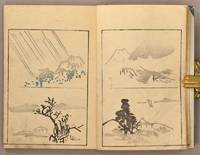
réf. 90849Keisai Masayoshi 北尾政美 and Baitei Kakei 梅äºè¯æºª artists. Keisai SÅga Vol. 2 蕙斎éºç”». early 1840s.Nagoya Eirakuya TÅshirŠ永楽屋æ±å››éƒŽ. 21.3 x 15.3cm string-bound Japanese-style fukuro-toji in embossed green replacement wrappers. Title slip appears to be modern over the original slip. Advertisements for other books on rear end papers. The title page with woodblock illustration reads SÅga Nihen v.2 éºç”» 二編 and the introduction begins with Keisai SÅga Nihen v.2 蕙斎éºç”» 二編. Published posthumously a second edition. This charming “Sketches of Keisai'' is a 22 cho volume of original color woodblock prints by artist Keisai Masayoshi 北尾政美 also Kitao Masayoshi. The work includes an introduction in Japanese script the aforementioned advertisements and title page and single page two-per-page and one double-page woodcuts. Small sketches of botanicals landscapes and creatures capture real and imagined moments in nature: a cat curled up asleep in the grass a blooming flower a sun rising/setting behind a mountain range a perfectly formed radish huts on the side of hill a single stalk of bamboo three frogs convening over a bottle of sake among others. Of special mention is the use of the à la poupée technique where different colors are applied to different areas of a single block. Mitchell p. 355 confirms Baitei Kakei 梅äºè¯æºª as the artist for volume 2. Comparable to the Pulverer copy with the exception of a page of advertisements on their inside front wrapper. Ours has one and a half sheets of advertisements from the Nagoya publisher Eirakuya TÅshirŠ永楽屋æ±å››éƒŽ as the final sheet and inside back cover that correspond with those in Forrer p.116 graphic 24a. The ads point to a date of early 1840s as the same ads as ours appeared in books printed in 1842. Modern string on binding slight wear to wrappers. Small sticker on top right corner with “Paul Mays” in ink and remnants of other stickers. Chipping on top front forecorner. Dust soiled on the bottom of pages. Rear end paper detached at corner. Nice impressions. unknown
réf. 90849Keisai Masayoshi 北尾政美 and Baitei Kakei 梅äºè¯æºª artists. Keisai SÅga Vol. 2 蕙斎éºç”». early 1840s.Nagoya Eirakuya TÅshirŠ永楽屋æ±å››éƒŽ. 21.3 x 15.3cm string-bound Japanese-style fukuro-toji in embossed green replacement wrappers. Title slip appears to be modern over the original slip. Advertisements for other books on rear end papers. The title page with woodblock illustration reads SÅga Nihen v.2 éºç”» 二編 and the introduction begins with Keisai SÅga Nihen v.2 蕙斎éºç”» 二編. Published posthumously a second edition. This charming “Sketches of Keisai'' is a 22 cho volume of original color woodblock prints by artist Keisai Masayoshi 北尾政美 also Kitao Masayoshi. The work includes an introduction in Japanese script the aforementioned advertisements and title page and single page two-per-page and one double-page woodcuts. Small sketches of botanicals landscapes and creatures capture real and imagined moments in nature: a cat curled up asleep in the grass a blooming flower a sun rising/setting behind a mountain range a perfectly formed radish huts on the side of hill a single stalk of bamboo three frogs convening over a bottle of sake among others. Of special mention is the use of the à la poupée technique where different colors are applied to different areas of a single block. Mitchell p. 355 confirms Baitei Kakei 梅äºè¯æºª as the artist for volume 2. Comparable to the Pulverer copy with the exception of a page of advertisements on their inside front wrapper. Ours has one and a half sheets of advertisements from the Nagoya publisher Eirakuya TÅshirŠ永楽屋æ±å››éƒŽ as the final sheet and inside back cover that correspond with those in Forrer p.116 graphic 24a. The ads point to a date of early 1840s as the same ads as ours appeared in books printed in 1842. Modern string on binding slight wear to wrappers. Small sticker on top right corner with “Paul Mays” in ink and remnants of other stickers. Chipping on top front forecorner. Dust soiled on the bottom of pages. Rear end paper detached at corner. Nice impressions. unknown books
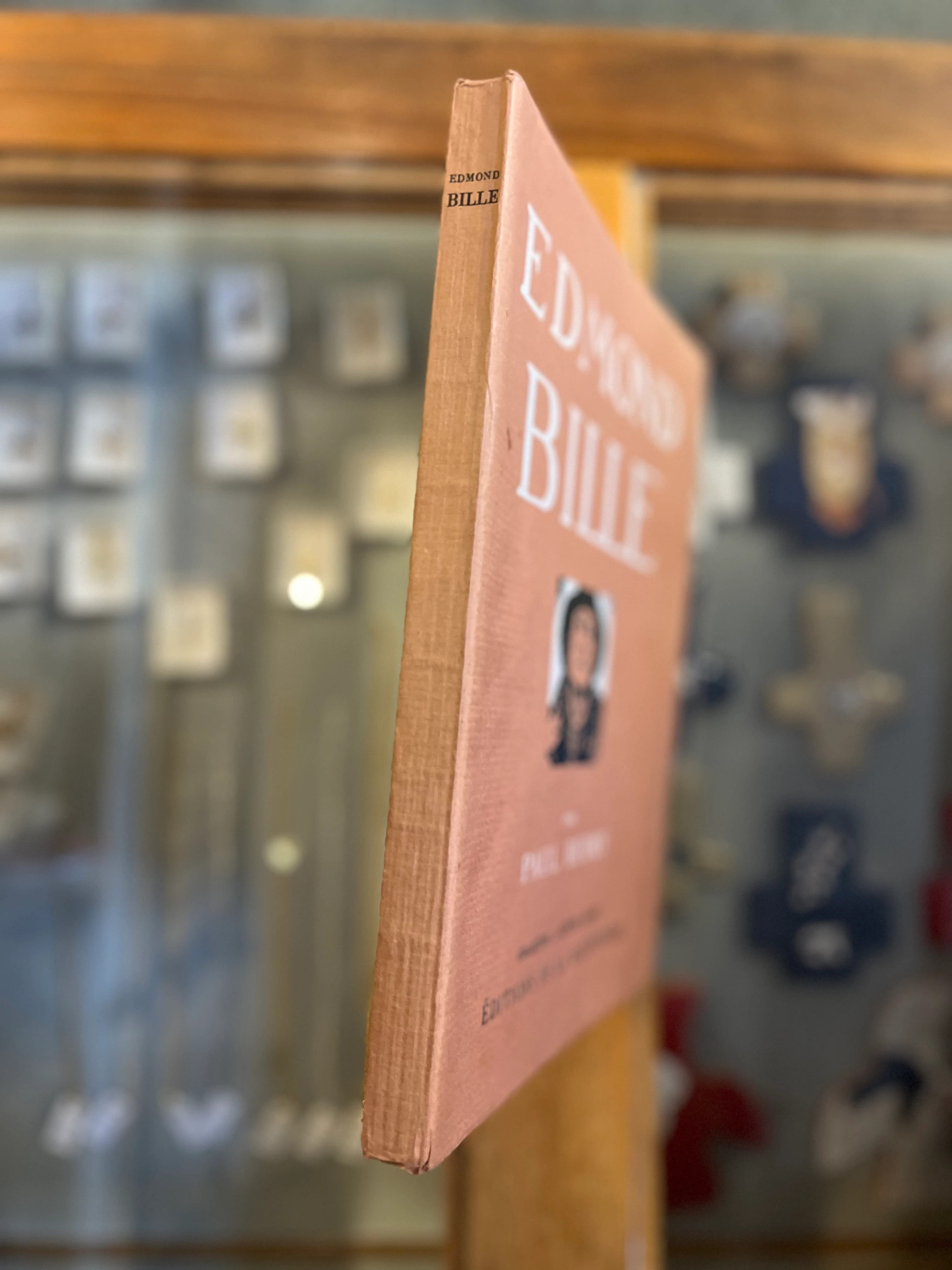
réf. CSP-1986Edétions de la Baconnière, Lausanne, février 1935. Broché 30 x 24 illustrée rempliée. Edition originale no. XVII des 30 exemplaires sur papier Hollande van Gelder, enrichis d'une aquarelle et d'une pointe-sèche originales. Dédicacés tant par l'auteur, Paul Budry que par Edmond Bille. En magnifique état !
réf. DADAX0241413311New unknown
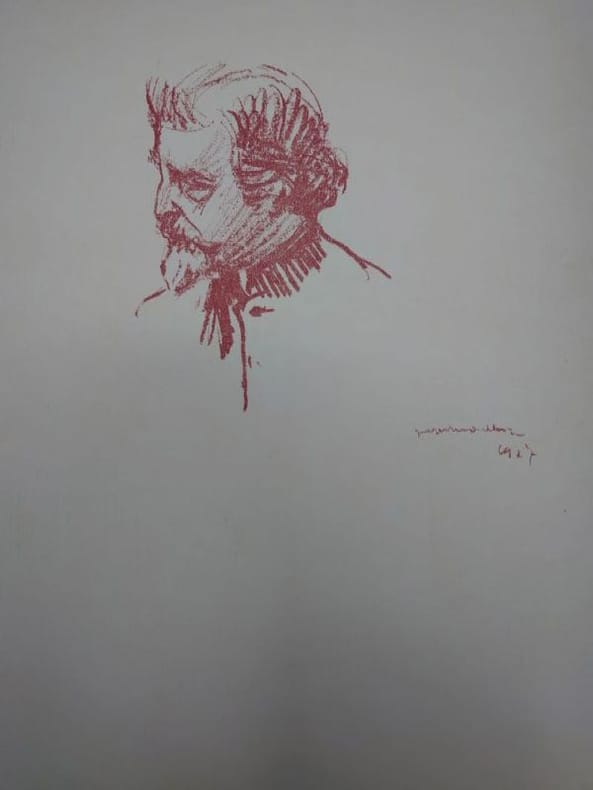
1937réf. 001462Paris 1937 Un ff. in-8 plié en deux En feuilles Ed. originale
1971réf. 011201Paris Edition J. Goutal-Darly 1971 In-2 En feuilles, couverture à rabats, emboitage toilé éditeur
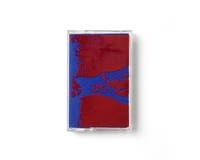
réf. 55569Netherlands: Corrosive Tapes 1990. Cassette tape with printed label and pictorial J-Card. Not played by us; very good. The tape recording contains alongside other contributions from the "Tape Underground Scene" a 19-minute piece by the Dutch group F.N.T.C. entitled "x 1000." The four members of the group Willem de Ridder Cora Emens and Hessel Veldman and Nicole Veldman experiment primarily with their voices which are interwoven into a dense sonic tapestry. From the tangle of non-semantic vocal sounds individual voices repeatedly emerge only to reintegrate into the collective sound structure or be replaced by another voice. Motifs such as the cries of children and infants chatter shrieks low- and high-pitched singing humming and droning sounds of lamentation and terror and meowing alternate in both harmonious and disharmonious succession. Listen to the digitized version here: https://corrosivetapes.bandcamp.com/album/our-nebula-incured-volume-5 One of the members of F.N.T.C. Willem de Ridder was a key figure in the Dutch Fluxus movement. In 1965 on behalf of George Maciunas de Ridder organized the "European Mailorder Warehouse" as a conceptual mail-order distribution system. This marketing platform for Fluxus multiples and prints is also known under the title "Fluxshop" cf. Hendricks Fluxus Codex pp. 231ff. In the 1970s de Ridder turned to radio and eventually to the audio cassette transforming his radio program De Radiola Improvisatie Salon in the 1980s into a prefiguration of a social media feed. The program consisted of playing cassettes that listeners mailed to the studio. De Ridder made no prior selection; instead he opened the envelopes containing the tapes live on air and played them in arbitrary order. Whenever possible each submission was allotted five minutes of airtime. In this way de Ridder became a catalyst of the Dutch "Tape Underground" which consisted primarily of independent neo-avant-garde artists experimenting among other things with synthesizer music proto-noise and industrial. The program became so popular that de Ridder released tape compilations under the Radiola label. In 1986 together with Cora Emans and members of the Dutch Tape Underground scene de Ridder developed the FNTC Opera. Antoni Michnik "The Story of a Performer the Story of an Item: Willem de Ridder's Tape Experiments" Glissando 23 2014. As of June 2026 not in KVK OCLC. unknown
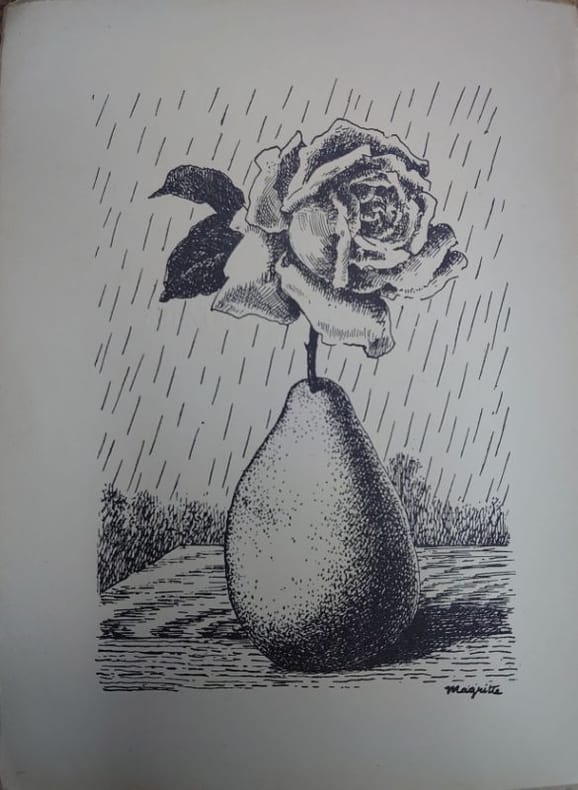
réf. 8647Paris, Sagesse, 1938. 22 x 16 cm, non paginé. Broché avec un cordon tressé. couverture légèrement usée sinon bon exemplaire. Tiré à part des feuillets de Sagesse, dont le tirage a été limité à 30 ex. num. et signés par l'auteur, sur vieux Japon à la main sous couverture Auvergne rustique, et comportant le frontispice de Magritte. Réf. : Schwilden, Magritte et l'image, pages 67, 155. Ancienne collection R.C.
réf. 8647Paris, Sagesse, 1938. 22 x 16 cm, non paginé. Broché avec un cordon tressé. couverture légèrement usée sinon bon exemplaire. Tiré à part des feuillets de Sagesse, dont le tirage a été limité à 30 ex. num. et signés par l'auteur, sur vieux Japon à la main sous couverture Auvergne rustique, et comportant le frontispice de Magritte. Réf. : Schwilden, Magritte et l'image, pages 67, 155. Ancienne collection R.C.
réf. 55568Québec: Les Éditions Intervention 1987. Cassette tape with printed label and pictorial J-Card. Not played by us; very good. An extensive 90-minute audio tape with over 40 distinct contributions including those by the Danish Fluxus artist Eric Andersen the French sound poet Bernard Heidsieck the noise and punk artist G.X. Jupitter-Larsen the French performance artist Orlan representatives of Italian Poesia Sonora namely Enzo Minarelli and Giovanni Fontana Neoism as represented by the Mail Art-developed "multiple identity" Monty Cantsin and the Canadian performance and sound art scene. The audio tape was published by the journal "Inter art actuel" which had also been operating a centre for contemporary art in Québec since 1982 under the name "Le Lieu." In its hundredth issue it stated in retrospect: ". in 1984 two international events imposed an extreme approach to poetry one to which the population of Québec City had always been allergic we need only recall how Claude Gauvreau was received by the public fifteen years earlier. There were events such as 'Néosong Cabaret: Festival d'Intervention 1' and 'In memoriam Georges Maciunas.' On the contrary both events showed that the wind was changing in a province more open to various projects including the inaugural 'bascule des arts actuels' in poetry. Both events were recorded on video and on disc respectively. As was the case for the collective as a whole the general profile of Inter/Le Lieu took shape through the projects and images it created. Over time festivals became interested in pure performance using almost no words and emphasizing the body images and objects which once in action transcend linguistic barriers. In return most of the subsequent meetings relied on the presence of performer-poets from the Francophone world. And Inter/Le Lieu would continue with events related to poetry. We can mention here the performances of 'Le 9' organised by Pierre-André Arcand in 1987 .". unknown
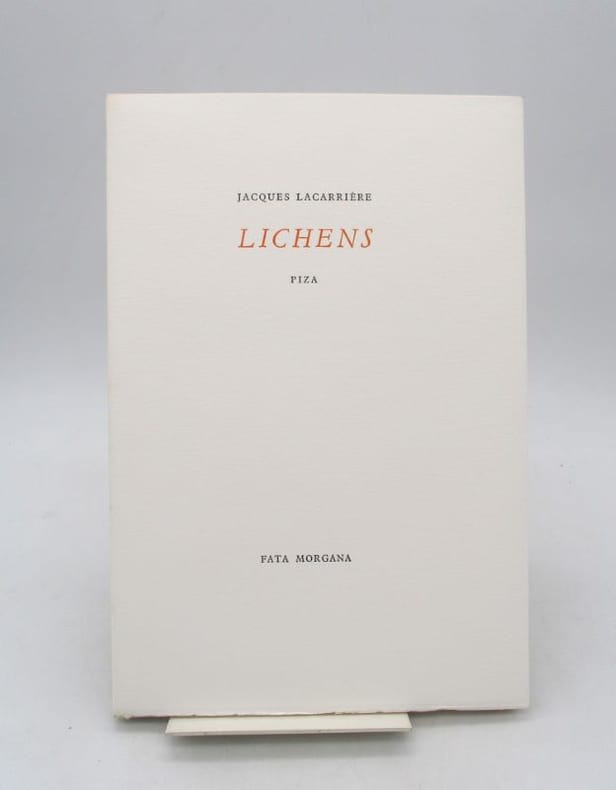
réf. 22351Montpellier, Fata Morgana, 1983. In-4, non paginé, en feuilles, étui en toile de l'éditeur.
1911réf. 153751911 1 Dessin à la pointe sèche original et aquatine, signée, titrée et datée dans la planche en bas à gauche, 1911, 36.5 x 26.5 cm.
1929réf. 19605Paris BABOU 1929 1 Etude par Camille Mauclair. Lettre-préface de Pierre Bellanger. Portrait par Laure Albin Guillot. Paris, Babou éditeur, Les Artistes du Livre, 1931, in-8, en feuilles, sous chemise rempliée dorée, 44 pages.
réf. 8365Louvain, Jos. Meulemans, 1929. 37 x 26,5 cm, en feuilles, non paginé sous couverture imprimée. Couverture sans dos, sinon bon exemplaire bien complet des 10 estampes. Édition originale, un des 100 exemplaires numérotés sur papier Oxford. Exemplaire non signé.
réf. 8365Louvain, Jos. Meulemans, 1929. 37 x 26,5 cm, en feuilles, non paginé sous couverture imprimée. Couverture sans dos, sinon bon exemplaire bien complet des 10 estampes. Édition originale, un des 100 exemplaires numérotés sur papier Oxford. Exemplaire non signé.
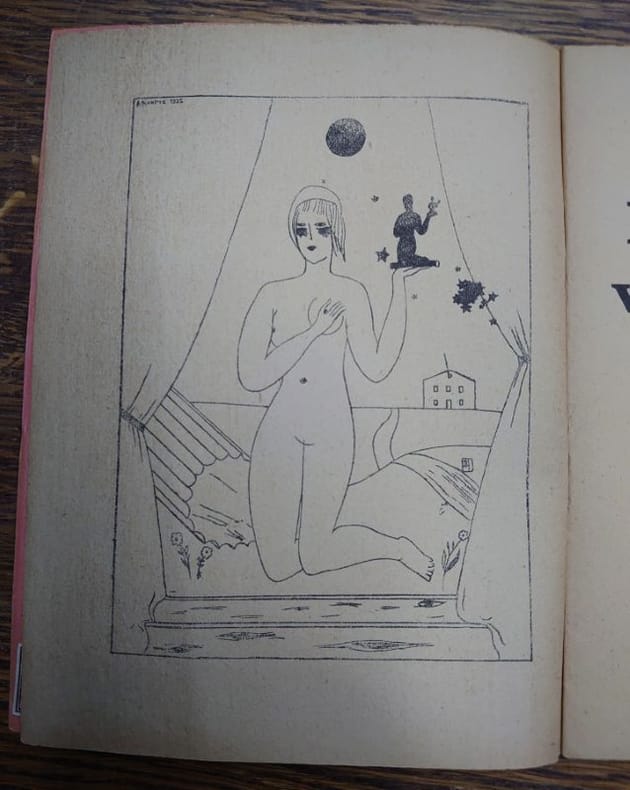
réf. 8641Cahiers Van de Driehoek n°5, Antwerpen, Uigave van De Driehoek, s.d. [1926]. 18,8 x 14 cm, 30 pp. Plaquette agrafée en bon état. Couverture légèrement insolée avec une petite déchirure, sinon bon exemplaire. Frontispice signé et daté Magritte 1925 en haut à gauche. Tirage limité à 330 ex. num. Celui-ci n'est pas numéroté. Réf : Schwilden, Magritte et l'image, page 61, 146 [Fig. 44]. Ancienne collection R.C.
réf. 8641Cahiers Van de Driehoek n°5, Antwerpen, Uigave van De Driehoek, s.d. [1926]. 18,8 x 14 cm, 30 pp. Plaquette agrafée en bon état. Couverture légèrement insolée avec une petite déchirure, sinon bon exemplaire. Frontispice signé et daté Magritte 1925 en haut à gauche. Tirage limité à 330 ex. num. Celui-ci n'est pas numéroté. Réf : Schwilden, Magritte et l'image, page 61, 146 [Fig. 44]. Ancienne collection R.C.
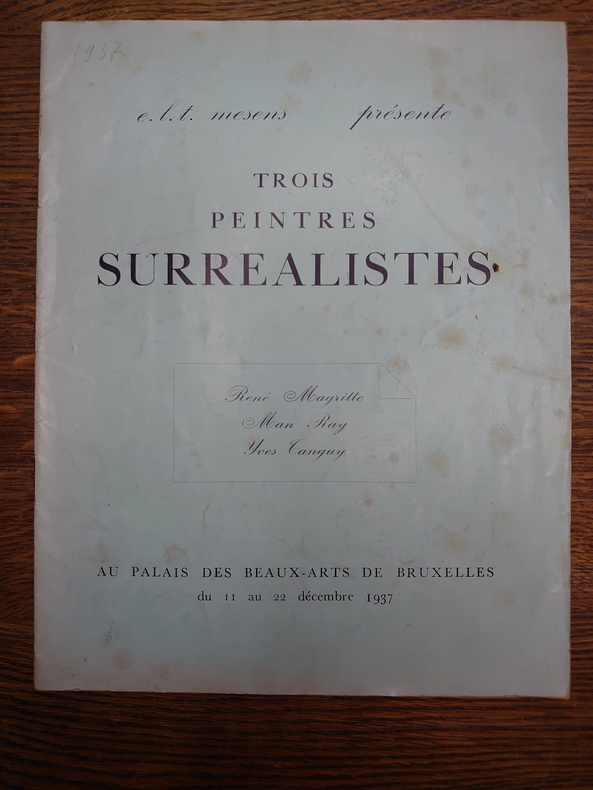
réf. 8655Bruxelles, Palais des Beaux-Arts, décembre 1937. Fascicule 28 x 22 cm, agrafé sous une couverture vert d'eau imprimée en noir, 20 pp., illustrations en noir. Couverture décolorée, annotations manuscrites au crayon de papier sur la dernière page, sinon bon exemplaire. Édition originale imprimée sur divers papiers couchés bicolores de ce catalogue publié à l'occasion de l'exposition consacrée à René Magritte, Man Ray et Yves Tanguy, organisée par E. L. T. Mesens au Palais des Beaux-Arts de Bruxelles, du 11 au 22 décembre 1937. Textes de Jean Scutenaire, André Breton, Paul Éluard. Listes des 76 pièces exposées. 7 illustrations reproduites en noir. Ancienne collection R.C.
réf. 8655Bruxelles, Palais des Beaux-Arts, décembre 1937. Fascicule 28 x 22 cm, agrafé sous une couverture vert d'eau imprimée en noir, 20 pp., illustrations en noir. Couverture décolorée, annotations manuscrites au crayon de papier sur la dernière page, sinon bon exemplaire. Édition originale imprimée sur divers papiers couchés bicolores de ce catalogue publié à l'occasion de l'exposition consacrée à René Magritte, Man Ray et Yves Tanguy, organisée par E. L. T. Mesens au Palais des Beaux-Arts de Bruxelles, du 11 au 22 décembre 1937. Textes de Jean Scutenaire, André Breton, Paul Éluard. Listes des 76 pièces exposées. 7 illustrations reproduites en noir. Ancienne collection R.C.
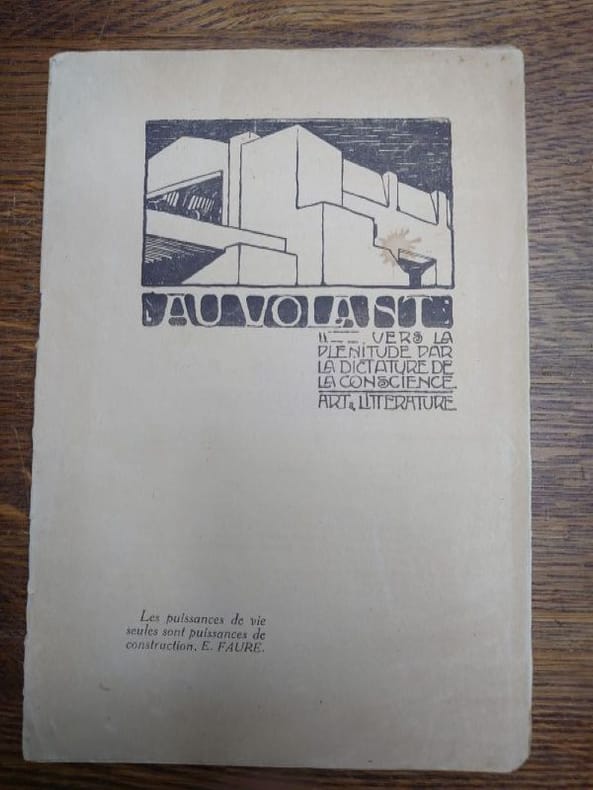
réf. 8666Bruxelles, 1928. 25 x 18 cm, deux fascicules, en feuilles, couvertures abîmées avec de légers manques et des déchirures. La couverture du numéro 2 est en deux parties déchirées. Le n°2 renferme la reproduction d'un dessin de Magritte, Le repos de l'acrobate. Le n°4 renferme la reproduction de l'ex-libris de Pierre Bourgeois dessiné par Magritte. Réf. : Schwilden, Magritte et l'image, pages 82, 193. Ancienne collection R.C
réf. 8666Bruxelles, 1928. 25 x 18 cm, deux fascicules, en feuilles, couvertures abîmées avec de légers manques et des déchirures. La couverture du numéro 2 est en deux parties déchirées. Le n°2 renferme la reproduction d'un dessin de Magritte, Le repos de l'acrobate. Le n°4 renferme la reproduction de l'ex-libris de Pierre Bourgeois dessiné par Magritte. Réf. : Schwilden, Magritte et l'image, pages 82, 193. Ancienne collection R.C
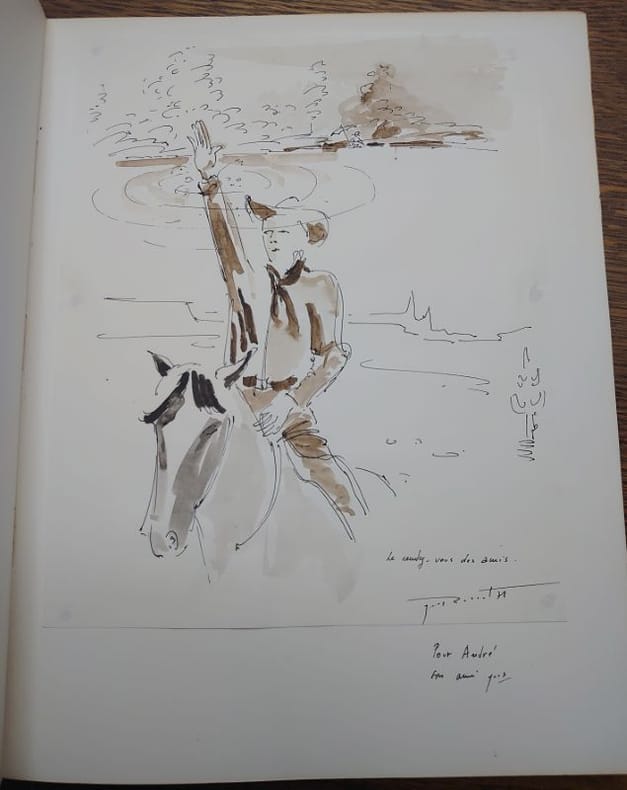
réf. 8419Sans lieu, sans nom d'éditeur, sans date [1967]. 32,5 x 25,5 cm, non paginé. Broché, couverture légèrement poussiéreuse sinon bel exemplaire. Édition originale, un des 100 ex. num. (après 20 ex. sur Hollande). Contrecollée sur la page de garde une aquarelle originale signée (26 x 21 cm), avec un envoi d'Yves Bossut.
réf. 8419Sans lieu, sans nom d'éditeur, sans date [1967]. 32,5 x 25,5 cm, non paginé. Broché, couverture légèrement poussiéreuse sinon bel exemplaire. Édition originale, un des 100 ex. num. (après 20 ex. sur Hollande). Contrecollée sur la page de garde une aquarelle originale signée (26 x 21 cm), avec un envoi d'Yves Bossut.