17.607 risultati
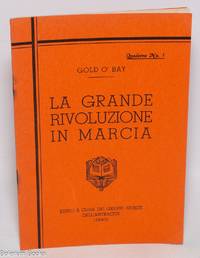
1940rif. 41547Newark NJ: L'Adunata dei Refrattari 1940. 28p. staplebound pamphlet small puncture near the bottom of the front cover otherwise very good. Quaderno no. 1. The anarchist poet journalist and author associated with the Futurist movement had arrived in the United States in 1938. L'Adunata dei Refrattari unknown books
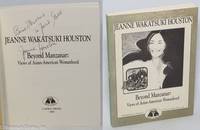
1985rif. 321252Santa Barbara: Capra Press 1985. Paperback. 65p. 65p. bound dos-a-dos 5.5x7.5 inches personal inscriptions to Herb Gold and signed and dated 1985 at their title pages by both authors very good first edition paperback in pictorial Frenchfold wraps. Capra Back-to-Back Series Volume III. From Gold's personal library. The husband and wife team who wrote "Farewell To Manzanar Capra Press paperback books
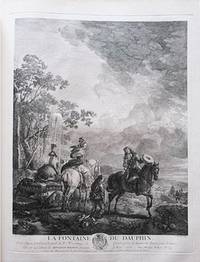
1762rif. 41877Paris: Chez Moyreau 1762. Folio. 23 1/2 x 19 1/2 inches. Engraved portrait of Moyreau by Nonnette dated 1749 and 100 engraved plates numbered 1-100 with the engraved rococo title being numbered as plate 25. 88 plates engraved by Moyreau and the others by Cochin Chedel etc. The title is engraved by Le Parmentier after J. de la Joue. Included are 5 double page plates and one page with 2 plates on the page. The final 8 plates are numbered in manuscript and the last 2 plates are proofs 'before letters'. Full contemporary calf gilt hinges strengthened A rare magnificent collection of engravings showcasing the works of the renowned Dutch Golden Age painter Philips Wouwerman. Engraved by master engraver Jean Moyreau the illustrations meticulously reproduce Wouwerman's celebrated equestrian and rural scenes capturing the dynamic compositions intricate details of the originals. Featuring some of the artists finest works carefully selected from the most esteemed collections in Paris and beyond the volume serves as a homage to Wouwerman's enduring artistry. Cohen de Ricci 1068; Bulletin Morgand 1889 No. 17315 '1 frontispice et 100 planches; Thiebaud p. 945-946; Brunet V 1480. Chez Moyreau unknown books
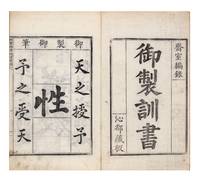
rif. 942941 folding leaves. Large 8vo 337 x 206 mm. orig. semi-stiff wrappers new stitching. Korea: Simdo æ²éƒ½ 1756. First edition and rare; WorldCat lists only one printed copy at Berkeley. This book of exhortations on good government with striking royal calligraphy was written by King YÅngjo or Yeongjo of ChosÅn 1694-1776 in 1756. At this time YÅngjo was commemorating the death of his father the previous king. According to Fang Chaoying 1908-85 YÅngjo then in his 65th year “could not foresee that he was to live twenty more years and so it appears that he was trying to justify himself in his own mind with regard to posterity as well as to the ancestors whom he expected to face any day” The Asami Library 115. YÅngjo offered three main principles for a king to follow: “to venerate Heaven to love the people and to treat the officials with respect” ibid. Large standard script characters written by the king himself are reproduced in the beginning of the book. The king’s brush records Confucian assertions such as “the following of human nature is called the Way / the cultivation of the Way is called instruction.” Accepting the Mencian dictum that human nature is inherently good the king continues: “I possess the good human nature / to realize the bright mandate of Heaven.” The main text of the book is reproduced in the handwriting of the important scholar-official SÅ MyÅng-ŭng or Seo Myeong-eung å¾å‘½è†º 1716-87. SÅ wrote in many genres and had a cosmopolitan outlook. For example he wrote a Preface to one of the major multilingual lexicographical works produced in ChosÅn in the 18th century see Söderblom Saarela “Mandarin over Manchu” 379-80. Very fine and fresh copy beautifully printed. References Fang Chaoying. The Asami Library: A Descriptive Catalog. Edited by Elizabeth Huff. Berkeley: University of California Press 1969. Söderblom Saarela Mårten. “Mandarin over Manchu: Court-Sponsored Qing Lexicography and Its Subversion in Korea and Japan.” Harvard Journal of Asiatic Studies 77.2 2017. unknown books
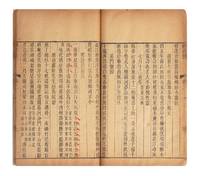
rif. 9506Preface title: “Qiu jiang ji.” 76; 99 folding leaves of which two in Vol. II are in manuscript replacing missing printed leaves. Six parts in two vols. 8vo modern wrappers text leaves lightly browned new stitching. China: Prefaces dated 1754 & 1756. First edition and very rare not in WorldCat of this collection of the poetry and prose of Ren Huang 1683-1768 one of “the foremost lyrical poets” Ko p. 92 see below of the Guangdong region and a member of the artistic circle whose center was Gu Erniang a famous woman inkstone carver whose shop was located in Zhuanszhu Lane in the imperial city of Suzhou. This collectors and scholars of this circle were both patrons and clients of Gu Erniang and in fact Ren’s main asset late in life was his collection of precious carved inkstones. Ren 1683-1768 whose literary name was Xintian or Shentian Ren was a native of Yongful county in Fujian. Born into a well-educated family of generations of government officials he learned poetry and painting as a child. He received the juren degree in 1702 and served as a county magistrate in Sihui in Guangdong province. Most of the poetry in this work is from manuscripts and appears here for the first time whereas the essays and other prose writings were previously published. The second preface dated 1754 is signed by Tingheng Xu and the third preface of 1756 is signed by Tiaoyuan Sang 1695-1771 scholar. A nice set but with two leaves of text replaced in early manuscript. Several natural paper flaws not touching text and mended. With the seal of Yosaburo Takekoshi 1865-1950 Japanese historian and politician. Preserved in a chitsu. ⧠Dorothy Ko The Social Life of Inkstones. Artisans and Scholars in Early Qing China 2017. unknown books
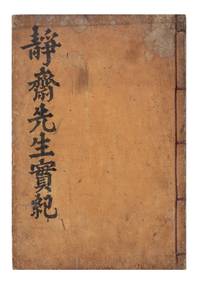
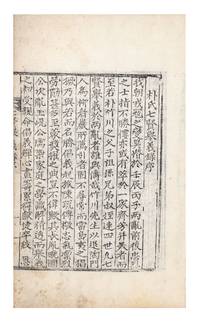
rif. 9511Woodblock-printed. 56 folding leaves. Two juan in one vol. Large 8vo 310 x 210 mm. orig. yellow patterned semi-stiff wrappers orig. stitching. YÅngch’Ån: 1854. First edition of this collection including the life and writings of Cho Sang-ch’i or Jo Sang-chi 曺尙治 fl. 1419-55 a prominent official in the early ChosÅn period. From an early age Cho studied “writings on human nature and principle” sÅngni chi sŠ性ç†ä¹‹æ›¸ — that is Neo-Confucianism. As one text on his life put it he “took this Confucian culture of ours as his personal duty.” Cho’s life was tied up with the factional conflicts that saw Sejo’s usurpation of the ChosÅn throne in 1455. Cho was among the “large number” of officials who “viewed the new ruler with distaste on moral grounds” Edward W. Wagner The Literati Purges: Political Conflict in Early Yi Korea p. 9. After Sejo demoted the previous king giving him the title Prince Nosan and subsequently had him killed Cho “got hold of a stone and neither cutting nor polishing it wrote in his own hand and had it inscribed ‘Here rests Cho Sang-ch’i the exiled Deputy Education Intendant of the court of Nosan’.” As recounted in one of the texts gathered in this collection he thus signaled his opposition to the new king. Cho was posthumously honored in the late 18th century. The book contains a Prefaces by Pak YÅng-wÅn 朴永元 1791-1854 and Yi Han-ŭng æŽæ¼¢è†º 1778-1864 the latter dated 1854 and the colophon by Yi Hwi-ryÅng æŽå½™å¯§ 1788-1861. Interesting features of our book include the use of the reign of the Korean kings for dating — “kabŭn the sixth year of the reign of the present king Ch’Åljong” 上之六年甲寅 is the date of Yi’s Preface — and the margins that cut through columns where the first character has been raised in deference to the dynasty. A note toward the end of juan 1 9a says that the two pieces that follow had been missed when the book was “first printed” ch’ogan åˆåˆŠ implying an earlier edition. We are not aware that one is extant however. Cho SÅg-u is listed as the author in the Korean Old and Rare Collection Information System as well as in the Jangseogak catalogue whence our attribution of authorship. Fine copy. References Encyclopedia of Korean Culture 한국민족문화대백과사전. https://encykorea.aks.ac.kr/ Digital Jangseogak. https://jsg.aks.ac.kr/ Korean Old and Rare Collection Information System í•œêµê³ 문헌종합목ë¡. unknown books
rif. 9423Woodblock printed. 57 folding leaves. Two juan in one vol. Large 8vo 313 x 204 mm. orig. semi-stiff yellow patterned wrappers upper wrapper a little soiled. Korea: 1832 or after. First edition and very rare; we find no copy in WorldCat. This is the collected poetry and prose by KwÅn 1575-1652 who lived through the tumultuous years of the early 17th century when ChosÅn Korea was twice invaded by the Manchus. KwÅn was from an early age taught by his father KwÅn Tae-gi 權大器 who had studied under one of the most important Neo-Confucian scholars of the ChosÅn period Yi T’oegye æŽé€€æºª Yi Hwang 滉 1501-70. The younger KwÅn passed a lower-level civil service examination and entered officialdom at a low rank. He served in the royal retinue when the court retreated to Ganghwa island during the 1627 Manchu invasion. KwÅn was promoted but retired from office citing illness. After the Manchus invaded the country again in 1636 KwÅn withdrew to a cottage at the foot of a peak of Mount Taebaksan called Chinbong 震峯 “Thunderous Peak” whence the name of his posthumously published oeuvre. The book contains a Preface written by Yi Ya-sun æŽé‡Žæ·³ 1755-1831 a ninth-generation descendant of Yi T’oegye dated 1825 “fourth ŭlyu since the Chongzhen reign”. An appendix contains eulogies for KwÅn and an account of KwÅn’s life written by Kim Si-ch’an 金是瓚 dated 1818 “third muin since the Guangde reign period of the August Ming” referencing the reign name of the abortive rebellion by Yang Qilong 楊起隆 1633-80. KwÅn Hun 權勳 a sixth-generation descendant of KwÅn Koeng wrote the colophon dated 1832 “fourth imjin since the first year of Chongzhen.” KwÅn Hun described how “I his unworthy distant descendant with pain and regret carefully searched far and wide to collect the writings bit by bit transcribing them for posterity. The years passed as I was putting them in order.” Fine copy. unknown books
rif. 8470Folding color-printed woodblock map. 49 folding leaves. Oblong 8vo orig. blue wrappers block-printed title label on upper cover label partly defective new stitching. Edo: Izumiya Shinpachi 1821. First edition and rare; WorldCat locates only one copy in Japan. Danrin is a temple that served as a college and institute to instruct Buddhist priests. In the early 17th century the Tokugawa shogunate recognized 18 temples of the Jodo Shinshu True Pure Land School as danrin: –Musashi Province today it incorporates Tokyo metropolis most of Saitama Prefecture & part of Kanagawa Prefecture: Zojo-ji Minato Tokyo; Denzuin Bunkyo Tokyo; Reigan-ji Koto Tokyo; Reizan-ji Sumida Tokyo; Banzuiin Koganei Tokyo; Renkei-ji Kawagoe Saitama; Shogan-ji Konosu Saitama; Daizen-ji Hachioji Tokyo; and Jokoku-ji Iwatsuki-ku Saitama. –Sagami Province: Komyo-ji Kamakura Kanagawa. –Shimosa Province: Gugyo-ji Yuki Ibaraki; Tozen-ji Matsudo Chiba; Daigan-ji Chiba Chiba; and Gugyo-ji Joso Ibaraki. –Kozuke Province: Daikoin Ota Gunma and Zendo-ji Tatashi Gunma. –Hitachi Province: Jofuku-ji Naka Ibaraki and Dainen-ji Inashiki Ibaraki. Takeo 1782-1839 was a high-ranking Buddhist priest at the main Zojo-ji temple where he was the historian of Jodo Shinshu and of the various temples and maintained the growing archives of the sect. Active as an author throughout his life he retired as a priest in 1821 and became a teacher and tutor for the bakufu and a member of the Edo literati. This book serves as a guide to the 18 danrin temples. It begins with a folding color-printed woodblock map of the region containing these temples. For each temple Takeo provides a valuable history with details of the important buildings and treasures number of students and teachers etc. The book also serves as a rather personal travel guide for pilgrims who want to visit all the temples mentioning distances between establishments sites to see along the way notes on where to cross rivers etc. At the end Takeo provides a “cheat sheet” for simplified chanting and recommends that pilgrims carry with them pickled plums salt towels extra tabi socks fans tissue paper and yatate small personal writing sets. A very good copy preserved in a chitsu. Some worming in the gutter and towards the end the outer corner occasionally touching the text. unknown books
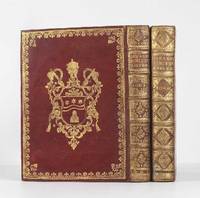
rif. 5035Woodcut printer’s device on titles. 4 p.l. xxvii 1 368 pp.; 547 pp. Large 4to cont. Italian red morocco covers of Vol. II a little rubbed sides richly gilt with the arms of Pope Clement XIV in gilt in center of each cover spines richly gilt each tooled slightly differently a.e.g. Faenza: G.A. Archi 1769. First edition and a very handsome set with the arms of Pope Clement XIV on covers of the first bio-bibliographical guide to the writers of Ravenna; about 2500 works by more than 600 authors are included. Ginanni 1698-1774 the learned Italian bibliographer and historian was a professor in Florence and then in Ravenna where he developed a great knowledge of Italian history and writers. He formed an important collection of books and medals and was a member of many academic societies. Very fine set. Stamp on titles of the Biblioteca Piervissana on titles. From the library of A.R.A. Hobson with bookplate. ⧠Besterman 5346. N.B.G. Vol. 20 cols. 570-71. unknown books
1949rif. 1404165London: B.T. Batsford 1949. Library edition. Hardcover. Quarto xxiv 169 pages. In Good minus condition with a Fair dust jacket. Spine is grey with black print. Dust jacket in mylar; edgewear with short tears at spine ends and flap corners surface tears to spine toning. Price unclipped: “£7.7.0 net”. Boards in brown cloth; wear to spine caps and corners. Text block has red tinted top edge; spine break at page 75. Illustrated: b&w frontispiece portrait b&w and color plates. Oversized books. Additional postage necessary for expedited/international orders. Economy International shipping unavailable due to size/weight restrictions. For international/expedited customers please inquire for rates. NOTE: Shelved in Locked Annex in column ND-QC. 1404165. FP New Rockville Stock. B.T. Batsford hardcover books
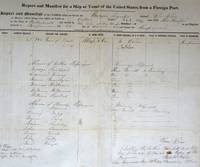
1850rif. List2418Callao: Alsop and Company 1850. Folded ship manifest measuring 15 ¼ x 12 ½ inches. Fine condition with slight normal wear. A very scarce Gold Rush period shipping manifest for the Barque Equator captained by William Weir listing the passengers and cargo for a voyage to San Francisco in December of 1850 with notations showing the vessel’s arrival in San Francisco in May of 1851. Alsop & Co. was the work of Joseph Alsop the grandson of Continental Congress delegate John Alsop and his friend Henry Chauncey. Originally from Middletown Connecticut the pair established Alsop & Co. in New York City in 1824 and would eventually play a large role in the gold trade in California and trade extensively in South and Central America. Chauncey Alsop and others were among the partners in the trans-Panamanian railway that helped transform trans-continental trade in 1850. One of Alsop & Co.’s treasure boxes was aboard the S.S. Central America when it sank in 1857 carrying gold to the Eastern United States from Panama. The shipping manifest offered here lists the primary cargo as 195 tons of coal and also lists the names of fourteen passengers on the voyage. Imported coal - from Callao in this case - was essential to heat houses and run furnaces at factories including assay offices before the development of a local coal industry in California. We find only two instances of Gold Rush-era ship manifests - which were usually thrown away - surfacing in the trade or auction records this one and one other which sold for $3600 at PBA Galleries in 2014. Alsop and Company unknown books
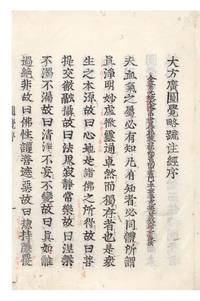
rif. 6775Eight columns per page 17 characters per column. Three sizes of type. 42; 41; 38; 40 folding leaves. Four vols. Large 8vo 280 x 195 mm. orig. dark wrappers dyed with persimmon juice shibubiki new stitching. Enryakuji Temple Mount Hiei: mid-Kan’ei ca. 1626-30. An unrecorded moveable type edition of the commentary and subcommentary of Zongmi 780-841 on the Sutra of Perfect Enlightenment. This is a rare example of an Eizan-ban a book printed with moveable type at the temples on Mount Hiei outside of Kyoto where Enryakuji Temple one of the most important monasteries of Japan and the headquarters of the Tendai sect of Japanese Buddhism is located. Printing began there in the 13th century. “There were few of these printed books in the medieval period perhaps due to the dominance of Kyoto itself as a printing centre…Eizan printing came into its own on a large scale only from the end of the sixteenth century with the introduction of movable-type printing. Typographic printing flourished at various temples on Hieizan from the Keicho to Kan’ei periods 1596-1644 and with the publication of Chinese works as well as Tendai scriptures publication and distribution at Hieizan began to develop into the beginnings of a commercial enterprise.”–K.B. Gardner “Centres of Printing in Medieval Japan: Late Heian to Early Edo Period” reprinted in Brokaw & Kornicki eds. The History of the Book in East Asia 2013 p. 450. The writings of Dushun 557-640 Zhiyan 602-68 Fazang 643-712 and Zongmi are considered by many as the “crowning glory of Chinese thought… marking the maturation of a process by which the Chinese made Buddhism their own.”–Bowring The Religious Traditions of Japan 500-1600 p. 104. Zongmi was a Tang dynasty Buddhist scholar monk; he was the fifth patriarch of the Huayan school as well as a patriarch of the Heze lineage of Southern Chan. The Sutra of Perfect Enlightenment was the scripture that led Zongmi to enlightenment in 808; he resolved to prepare a commentary and subcommentary on the text which he accomplished fifteen years later. As stated above this moveable type edition is unrecorded. Kawase in his bibliography of Japanese moveable type editions records another printing of this text dated 1626 but with ten columns per page and 20 characters per column Vol. I p. 304. Sorimachi in his amazing 40th anniversary catalogue of moveable type books issued in 1972 describes what appears to be yet another moveable type printing of this text with the same number of columns and characters as the Kawase example but using three different sizes of type they might be the same printing. It is described as four parts in two volumes in their original bindings printed in mid-Kan’ei ca. 1630 and with a slightly different title. The NIJL records no moveable type editions and only the woodblock-printed Seihan edition of 1644. On the printed title-labels of the second and fourth volume covers the title is given as Engaku ryakusho chu. The labels on Vols. I and III are no longer present. As mentioned above the wrappers have been dyed with persimmon juice which serves a dual purpose: to strengthen the paper and act as an insect repellent. Nevertheless the wrappers are somewhat wormed. Each volume has some worming but this set is in rather fresh and appealing condition. unknown books
1598rif. 66701598. 22 leaves including some blanks or pages ruled in ink for entries. Agenda format 315 x 100 mm. stitched as issued uncut. Nuremberg: 1598. A fascinating document of a type that rarely survives: the manuscript account book for the spring 1598 Leipzig fair of Hans Straub I or the Elder 1541-1610 the prominent Nuremberg gold- and silversmith alderman and son-in-law of Wenzel Jamnitzer the best-known German goldsmith of his time. The first leaf bears Straub’s hallmark interwined initials “HS” over an arrow pointing upward within a plain shield & also containing the inscription “No. 72”. Our manuscript sheds important light on the business relations in the late 16th century between the Nuremberg goldsmiths and their trade at the Leipzig fairs. Our account book is a list of sales orders and expenditures of Nuremberg goldsmith Hans Straub the Elder during the Leipzig Easter fair held in May 1598. While Straub is not expressly named he can be identified by his hallmark on the first leaf. At the fair trade was done in goblets rings knife-sheaths cutlery jewelry gemstones etc. Several business partners are named including the Nuremberg goldsmiths Heinrich Hahn Haan David Lauer and Paulus Koch. As an example of a transaction we see that the council of Halle paid over 33 florins for a goblet. In 1596 Straub was elected Alderman of the Artisans the most elevated and honorable office to which a Nuremberg artisan could aspire. Straub retained this position until his death in 1610. In 1569 he married Anna daughter of the famous goldsmith Wenzel Jamnitzer. On his father-in-law’s death in 1585 Straub inherited his casting molds and used them extensively in his own creations. Despite his long period of activity relatively few pieces made by Hans Straub have survived see Nürnberger Goldschmiedekunst 1541-1868 2007 ed. by Karin Tebbe et al. Vol. I p. 409. In fine condition. ⧠The mark is similar to Marc Rosenberg Der Goldschmiede Merkzeichen Frankfurt 1925 Vol. III no. 3969. unknown books
1615rif. 67051615. 14; 13 folding leaves. Two parts in one vol. Large 8vo cont. or later dark wrappers dyed with persimmon juice shibubiki new stitching. Japan probably Kyoto: printed with moveable types ca. 1615-40. A very rare edition printed with moveable types apparently unrecorded in the standard bibliographies of the story — or legend — of the creation of the first statue of Siddhartha Gautama or Gautama Buddha the founder of Buddhism. The statue executed while Buddha was still alive was commissioned by King Udayana of Kaushambi a contemporary of Buddha. It was the very first image of Buddha and is especially important as it was carved from life. Copies of this statue made their way to China with the spread of Buddhism and later as we shall see to Japan. The text provides a history of the creation of the first statue of Buddha which is perhaps the most famous of all Buddha images. King Udayana commissioned the statue “so that he could gaze upon the sacred form of the Buddha while the latter was off preaching to his mother in the heaven of Indra. Buddha’s disciple Maudgalyayana transported thirty-two craftsmen up to the heavenly realm so that they could observe the special marks of the Buddha firsthand thereby insuring the representational accuracy of the image they created. When the Buddha eventually returned to the earth King Udayana’s statue rose into the air to greet him of its own accord and the Buddha proclaimed that it would one day help to transmit his teachings.”–Brown ed. The Oxford Handbook of Religion and the Arts p. 371. We learn that the statue was carved out of sandalwood and that later copies were made of gold silver bronze lead tin or iron as well as of wood. This text was translated by the Khotanese monk Tiyunbanruo d. 691 or 692 whose original Sanskrit name was Devendraprajna. Khotan was an ancient Iranian Saka Buddhist kingdom on the branch of the Silk Road that ran along the southern edge of the Taklamakan Desert near modern-day Xinjiang. Tiyunbanruo came to Luoyang the “Eastern Capital” of the Tang dynasty of China in about 688 with a considerable reputation as a Buddhist missionary and set up a bureau to translate Buddhist texts into Chinese. An earlier edition of this text was published in Beijing in 1593 and only one copy is known at the BnF. This book was probably printed and issued as a way to reinforce the legitimacy of the famous Buddha statue of the temple of Seiryoji in the Saga fields of Kyoto. It is one of the chief objects of religious veneration in Kyoto. A copy of the original statue also commissioned by King Udayana was brought from the castle at Kaushambi in north-central India to China by Hsuan-tsang in 645. The statue moved many times and ultimately arrived at Kaifeng the Sung capital. The Japanese monk Chonen 938-1016 who spent the years 983-86 in China studying and collecting texts had worshiped the statue in Kaifeng and commissioned men in 984 to carve a copy to bring back to Japan. The copy was ultimately installed at Seiryoji and according to Japanese tradition the Chinese “original” and Chonen’s copy had miraculously changed places — the Seiryoji Buddha was actually the authentic example commissioned by Udayana. The Seiryoji Buddha is “probably the most important best-documented and best-preserved sculpture now existing which represents the school and tradition of Buddhist sculpture connected with the sacred Udayana image of the living Buddha of which Hsuan-tsang brought a copy to the court at Ch’ang-an.”–Henderson & Hurvitz “The Buddha of Seiryoji: New Finds and New Theory” Artibus Asiae Vol. 19 No. 1 1956 p. 43–and see the whole fascinating article. As mentioned above this rare work is printed with moveable types. It was at one time owned by the great Japanese dealer Shigeo Sorimachi. The chitsu has the characteristic handwriting on the label of Sorimachi’s assistant Mr. Mori who has written: “Zozo kudoku kyo. Genna kan’ei chu kan. Kokatsu ban” “Creation of the Statue a Pious Act. From Genna to mid-Kan’ei edition ca. 1615-40. Moveable type”. It is not cited by Kazuma Kawase Kokatsuji-ban no kenkyu Study of the Early Typographic Editions of Japan 1967 the definitive bibliography of Japanese moveable type books. There is no copy in WorldCat nor the Union Catalogue of Early Japanese Books. In very good condition. The first ten folding leaves which are a little stained have some repaired worming and strengthening. The following leaves have some worming some carefully repaired and others as the worming lessens not repaired. Several characters affected by the worming. As mentioned above the wrappers have been dyed with persimmon juice which serves a dual purpose: to strengthen the paper and act as an insect repellent. ⧠Wang Zhenping “Chonen’s Pilgrimage to China 983-986” Asia Major Third Series Vol. 7 No. 2 1994 pp. 63-97. Martha L. Carter The Mystery of the Udayana Buddha Naples: 1990. unknown books
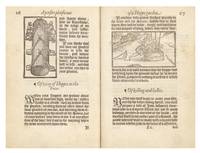
1576rif. 65511576. Numerous woodcut illus. in the text. Largely printed in black letter. 7 p.l. first leaf blank except for signature mark 63 1 pp. Small 4to early 20th cent. polished mottled calf by Riviere triple gilt fillet round sides spine richly gilt red morocco lettering pieces on spine dentelles gilt a.e.g. London: H. Denham 1576. Second edition “nowe newly corrected and augmented” of the first English book on hops. The first edition appeared two years earlier; both editions are very rare. This is “an eminently practical treatise illustrating the various methods of setting the roots making the hills and ramming the poles tying the bine and its pulling up and preservation with a number of curious cuts. It was the work of a practical man written for practical men and in this respect is far in advance of most of Scot’s contemporaries who were still much interested in the superstitions of the time and the traditional pseudo-science of the Middle Ages.”–Fussell I p. 12. Clinch in his English Hops a History of Cultivation and Preparation for the Market from the Earliest Times 1919 states that in many respects “the information is as useful today as it was nearly three-and-a-half centuries ago when it was published.” Scot d. 1599 is most famous for his The Discoverie of Witchcraft 1584 in which he attacked the general belief in witchcraft and other forms of credulity and superstition including astrology alchemy and Catholicism. For more on Scot and his fascinating life see ODNB. Fine copy. Signature of T. Barling on first leaf. ⧠Henrey I p. 64 & no. 338. McDonald Agricultural Writers from Sir Walter of Henley to Arthur Young 1200-1800 pp. 34-36. unknown books
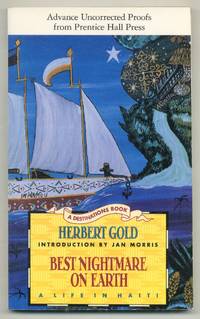
1990rif. 575454New York: Prentice Hall Press 1990. Softcover. Fine. Uncorrected proof. Glossy illustrated wrappers. Introduction by Jan Morris. Fine with publisher's material laid in. Prentice Hall Press unknown books
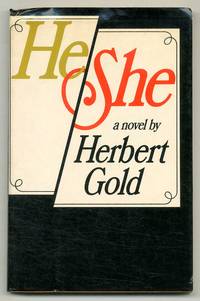
1980rif. 576771New York: Arbor House 1980. Softcover. Fine/Very Good. Uncorrected proof in proof jacket. Fine in printed wrappers in a tanned and worn very good proof jacket printed only on the spine and cover panel. The jacket is about 3/8" taller than the book. Arbor House unknown books
1982rif. 577463New York: Arbor House 1982. Softcover. Fine/Very Good. Uncorrected proof in proof jacket. Fine in printed wrappers in a modestly worn very good or better proof jacket. The jacket is printed only on the spine and cover panel and is just a bit taller than the book. Arbor House unknown books
1986rif. 577464New York: Donald I. Fine Inc 1986. Softcover. Near Fine/Near Fine. Uncorrected proof in proof dust jacket. Tiny foredge stain else fine in printed wrappers and tanned very good proof dust jacket creased along the topedge and with a tiny tear at the spine base. The jacket is printed only on the spine and cover panel and is about 1" taller than the book. Donald I. Fine, Inc unknown books
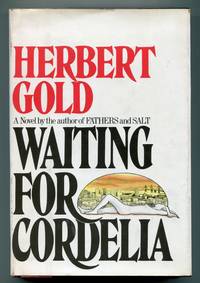
1977rif. 604458New York: Arbor House 1977. Hardcover. Very Good/Very Good. First edition. Jacket design by Judith Leeds. Light foxing on page edges small abrasions on boards with uneven sunning on spine very good in a very good dust jacket with a crease on the front flap soiling and a tiny tear. Arbor House hardcover books
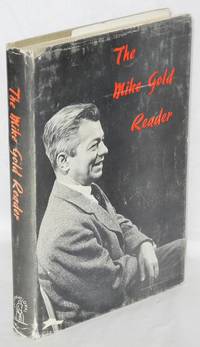
1954rif. 907New York: International Publishers 1954. Hardcover. 188p. shelf worn dj previous ownership inscription on front free endpaper otherwise in very good condition. International Publishers hardcover books
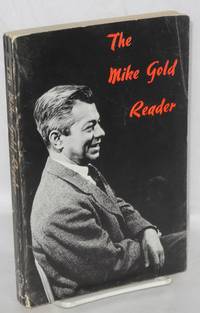
1954rif. 9578New York: International Publishers 1954. Paperback. 188p. wraps very good condition. International Publishers paperback books
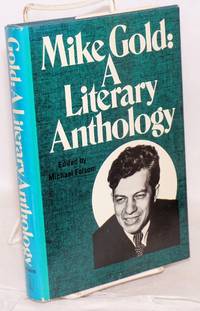
1972rif. 856New York: International Publishers 1972. Hardcover. 322p. first edition very good condition in a worn dj with a hint of fading along spine. International Publishers hardcover books
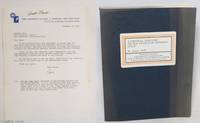
1971rif. 337040Ann Arbor: University Microfilms 1971. Paperback. 277p. wraps slightly faded else very good condition typical photocopy from microfilm. From the library of Herbert Gold with a letter from another academic figure to Herb Gold referencing this dissertation. University Microfilms paperback books
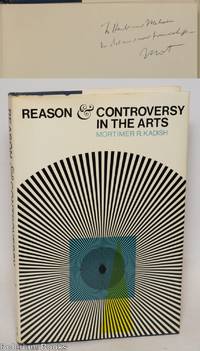
1968rif. 336934Cleveland: The Press of Case Western Reserve University 1968. Hardcover. xi 281p. first edition inscribed & signed "Mort" to Herb Gold and Melissa very good condition in an edge worn unclipped dj. The Press of Case Western Reserve University hardcover books