19.309 risultati
1982rif. 702802NY: Arbor House. 1982. Advance Uncorrected Proof. Very Good in wrappers laid into a Very Good publisher's proof DJ. Unless otherwise noted our first editions are first printings. First Edition. Softcover. Very Good. Arbor House paperback books
1990rif. 702798Boston: Houghton Mifflin. 1990. Advance Uncorrected Proof. Very Good in wrappers. Unless otherwise noted our first editions are first printings. First Edition. Softcover. Very Good. Houghton Mifflin paperback books
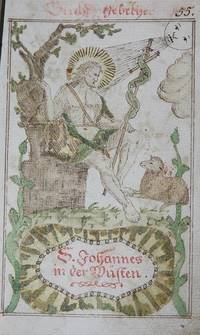
1797rif. 006602Keuth an der Crassen 1797. Full Blindstamped Calf. Good. A fine Folk Art manuscript prayer book from the late eighteenth century. 8vo. 17.5 by 10.5 cm. 3 516 13 1 pp. With eight full page paintings plus vignette decoration throughout. Besides the ubiquitous floral ornamentation all pretty accents the vignettes include a serpent a basilisk a skull etc. Most writing is a neat now archaic cursive but headings and the like rendered in an easily readable ornamental Fraktur Gothic. The paintings are the highlight most will find. Their subject matter is quintessential -- Momento Mori Saint Michael slaying the dragon Saint John in the desert Saint Sebastien the Christ child King David playing a harp etc. But while the subject matter may not be unusual the execution is done with uncommon flair even though it is resolutely naive or Folk Art. And the artist who we assume is one or both of the writers may be illustrating popular subjects there are original elements in his/her imagery or imagining of the subject. The authorship is stated but also a tad confusing. Our interpretation is that a Konrad Mueller created the book for Margaretha Pfaden-Hauerin. Condition: moderate wear to contemporary full calf binding. Unusual is a 13 page "Register" or Table of Contents in the rear. By unusual we mean for such a manuscript prayer book. Also a page of handwritten genealogical notes written on a prior blank leaf and written much later in the mid to late 19th Century. Moderate sometimes heavy soiling to margins of leaves. Corner cut out of front endpaper. Some loose gatherings. unknown books
1934rif. 1390753New York: William Morrow & Company 1934. Hardcover. Octavo x 309 pages. In Fair condition. Spine is brown with gold print. Boards in brown cloth. Wear to spine caps and corners shaken binding. Text block has cracked front hinge name in ink on front flyleaf intermittent spine breaks. NOTE: Shelved in Netdesk Column P. 1390753. FP New Rockville Stock. William Morrow & Company hardcover books
1929rif. 1390754New York: Harper & Brothers Publishers 1929. First edition. Hardcover. Octavo xxx 359 pages. In Good minus condition. Spine is black with gold print. Boards in black cloth with gold print. Wear to spine caps and corners toning and blemish to spine peripheral toning. Text block has spotting to edges. Illustrated: b&w frontispiece portrait and plates. NOTE: Shelved in Netdesk Column P. 1390754. FP New Rockville Stock. Harper & Brothers Publishers hardcover books
1928rif. 1390795New York: Harper & Brothers Publishers 1928. First edition. Hardcover. Octavo x 249 pages. In Good minus condition. Spine is orange with black print on paper title label. Boards quarter bound with orange cloth to spine and decorative blue paper to boards. Wear to spine caps and corners toning to spine peripheral toning. Text block has spine break at page 132. NOTE: Shelved in Locked Annex Area ND-HV Section. 1390795. FP New Rockville Stock. Harper & Brothers Publishers hardcover books
1949rif. 1390799Caldwell: Caxton Printers 1949. Hardcover. Octavo 224 pages. In Good minus condition. Spine is blue with gold print. Boards in blue cloth with gold print. Light wear to spine caps and corners toning to spine peripheral toning. Text block has light amount of penciled underlining and marginal notation. Illustrated: b&w frontispiece portrait. NOTE: Shelved in Netdesk Column P. 1390799. FP New Rockville Stock. Caxton Printers hardcover books
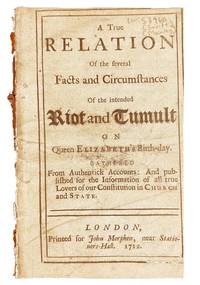
1712rif. 34981London 1712. 16pp. Trimmed close minor toning. Good. Disbound. An anonymous political work that has been attributed over the centuries to both Jonathan Swift and Mary de la Rivière Manley. Most sources identify Manley as the author; she was an English author and pamphleteer who was famous for presenting political screeds disguised as romances or satire. A rare pamphlet either in institutions or the market. ESTC N45508. unknown books
1788rif. 23913Edinburgh 1788. Small octavo. 7 15/16 x 4 5/8 inches. Half-title. Blind stamp to half-title and E1 ink number stamp to foot of verso of half-title and foot of p.48. 20th-century half calf over marbled paper-covered boards remnants of library label on upper cover extremities lightly rubbed First edition. Concerns the claims of John Drummond eldest surviving son of Edward 6th Duke of Perth. ESTC T193208. unknown books
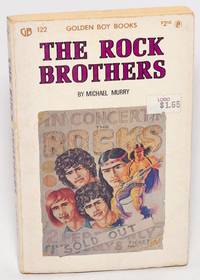
1979rif. 318008North Hollywood: Arena 1979. Paperback. 154p. good first printing PBO in camp pictorial wraps. Gay pulp fiction. Golden Boy Books GB 122. S M & R&R! The cover is most likely Sean but the N seems to be cut off. Arena paperback books
1980rif. 1388858Lille: Atelier Reproduction des Theses Universite de Lille III 1980. Softcover. Octavo Two volumes continuously paged: vii 947 pages. In Good condition. Spines are cream with blue and black print. Cover are cream with blue and black print. Peripheral toning light bump to bottom fore corners. Text blocks have bump to bottom fore corners. Illustrated: b&w plates. “These présentée devant l'Université de Paris IV le 9 novembre 1976”—title page. Text in French. NOTE: Shelved in Netdesk Column P. 1388858. FP New Rockville Stock. Atelier Reproduction des Theses, Universite de Lille III unknown books
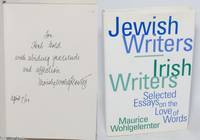
2000rif. 327468New Brunswick: Transaction Publishers 2000. Hardcover. 196p. first edition in very good condition in like dj from the library of Beat writer Herbert Gold who is blurbed on the back of the jacket signed and inscribed to Gold: "For Herb Gold with abiding gratitude and affection Moishe Wohlgelernter April 7/00 Transaction Publishers hardcover books
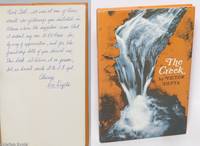
1973rif. 327471Athens OH: Ohio University Press 1973. Hardcover. 64p. very good first edition in lightly shelfworn dust jacket from the library of Beat writer Herbert Gold signed and inscribed by the author to Gold: "Herb Gold- It was at one of those small c/w gatherings you initiated in Athens where the suggestion came that I submit my ms. to OU Press. So by way of appreciation and for the friendship both of you showed us this book. I'd deliver it in person but we haven't made it to S.F. yet. Always Vic Depta Ohio University Press hardcover books
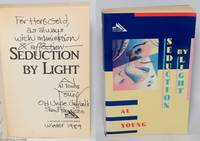
1988rif. 327469New York: Delta/Seymour Lawrence 1988. Trade Paperback. 338p. inscribed by the African American author first printing slight bend to front wrap. Comic novel. Paperback original. From the library of Beat writer Herbert Gold. Inscription reads: "For Herb Gold as always with admiration & affection-- Al Young Old Uncle Gaylord's San Francisco Winter 1989 Delta/Seymour Lawrence paperback books
1939rif. 19941Minneapolis Minnesota: The Northwestern Press 1939. First Edition. Near Fine. How to make period plays viable for amateur and high school productions. With all kinds of practical tips as well as the no no's in costuming particular types of characters. Sometimes laughable with the assertion of stereotypes and passe attitudes about types. 8vo. 19by 13cm. 85 11 pp. With many illustrations and whole pages devoted to illustration. Scarce -- no copies recorded on OCLC First Search. Pulp highly acidic leaves heavily age toned as inevitable but otherwise clean and we would say exceptional conditional. The Northwestern Press unknown books
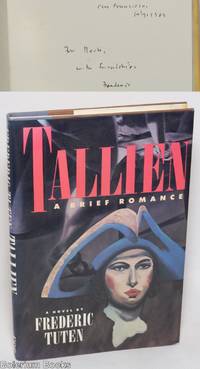
1988rif. 327198New York: Farrar Straus and Giroux 1988. hardcover. 152p. very good condition stated first edition in lightly faded dust jacket. From the library of Beat writer Herbert Gold signed and inscribed on front facing endpage by the author to Gold: "San Francisco July 1989 For Herb with friendship Frederic Farrar , Straus and Giroux unknown books
rif. 18941116Five books published in Hong Kong between 1961 and 1967 by the United States Information Agency through their Chinese language imprint World Today Press 今日世界社. Good condition only: these were inexpensively produced and the Kennedy and Twain in particular were clearly read. Titles include: •John F. Kennedy Profiles in Courage 1961. A more impressive production than the rest: dust jacket half-title text illustrations. First edition in Chinese. •Mark Twain The Adventures of Huckleberry Finn 1963. •Mark Twain The Adventures of Tom Sawyer 1964. •Frances Whitney ed. An Outline of American History 1965. •Sam Hunter Modern American Painting and Sculpture 1966. •Adlai Stevenson Looking Outward 1967 bilingual English and Chinese. From the mid 1950s through the mid 1970s the United States Information Agency known overseas as the United States Information Service published Chinese language books and magazines in Hong Kong under the imprint World Press Today. Their book list included over a hundred titles all relating to the United States including classic fiction liberal democratic philosophy and practice and surveys of American history and arts — a sort of Readers' Digest and Saturday Evening Post America with a little bit of heft. The USIA enlisted established Chinese writers resident in Taiwan and Hong Kong to do the translating and in general the books were well received. During the martial law period in Taiwan World Today Press was an important source of news and literature from the outside world and for many immigrants from China proper to Hong Kong it provided an introduction to the West. Despite the size and importance of World Today's output institutional holdings are spotty. paperback books
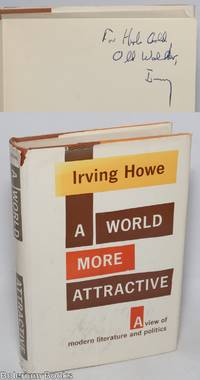
1963rif. 6787New York: Horizon Press 1963. Hardcover. xii 307p. very good condition in slightly shelfworn dj. From the library of Beat writer Herbert Gold. Signed and inscribed to Gold: "For Herb Gold Old Walker Irving Horizon Press hardcover books
2012rif. 326955Berkeley: El León Literary Arts 2012. Paperback. 261p. author bio lightly bent otherwise very good condition. From the library of Beat writer Herbert Gold whom the book is also dedicated to. Signed and inscribed by the author to Gold. El León Literary Arts paperback books
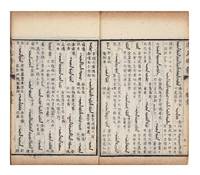
rif. 9990Eight vols. Large 8vo orig. wrappers orig. stitching. China: 1802 date of colophon. Second edition of this landmark Manchu-Chinese dictionary the last of the great Manchu dictionaries of the 18th century. Ihing first published his dictionary privately in 1786 the date of the Preface. We know of only one copy of this edition held at a Chinese library. All other copies in circulation are to the best of our knowledge of the second edition. In 1708 on the Kangxi emperor’s command a Mirror of the Manchu Language had been published at court. In 1724 Li Yanji published Ch.: Qingwen huishu 清文彙書 Ma.: Manju isabuha bithe Manchu Collected which translated the contents of the Mirror into Chinese and rearranged the entries in Manchu alphabetical order. Li’s book became outdated however when the Qianlong emperor reformed the Manchu lexicon and published a number of new lexicographical works the most important of which was the Mirror of the Manchu Language Expanded and Emended from 1772-73. Our book did to the “expanded and emended” Mirror what Li Yanji had done to Kangxi’s original: rearrange its contents in Manchu alphabetical order. Yet Ihing went further than that. He also culled words from other Manchu books published on imperial command in the preceding years including a book with phrases from pre-conquest Manchu sources and translations of the Confucian classics. The result is that Ihing’s dictionary contains words that were not in Qianlong’s expanded Mirror making it in these cases the more complete lexicographical resource. For example a term such as deyengge nimaha “flying fish” is included in our book but not in Qianlong’s Mirror. In such cases Ihing noted that the words had been announced by the Grand Secretariat on such-and-such a date. Our copy has slips on the outside cover of the volumes with Manchu syllables written in manuscript. The syllables indicate which word initials are covered in the volume in question facilitating searching the dictionary. There is a colophon by Fa-ke-jing-e æ³•å…‹ç²¾é¡ dated 1802. A nephew of Ihing Fa-ke-jing-e revised the book at his uncle’s request. Ihing Ch.: Yi-xing 1747-1809 belonged to the Bordered Yellow Manchu Banner and as a descendant of Nurhaci was a member of the imperial clan. He rose to the post of vice minister of several of the boards in the Qing secondary capital at Mukden and later served as governor of several southern provinces and as an imperial agent in Outer Mongolia. Very good set some light dampstaining in the final volume; preserved in a hantao. â§ Mårten Söderblom Saarela The Early Modern Travels of Manchu: A Script and Its Study in East Asia and Europe 109. unknown books
rif. 9707Five full-page woodcuts. 51; 58 folding leaves. Two vols. 8vo orig. semi-stiff wrappers orig. block-printed title labels on upper covers new stitching. Japan: 1737 An illustrated record of the truly gruesome sacrifices made by the Pure Land monk TaijÅ 1685-1731. He began studying Buddhism in 1715 and in 1719 decided to become a monk leaving his wife and child as well as his elderly mother. Following the example of the master who initiated him to Buddhism TaijÅ in 1720 severed his penis and took the tonsure. Among his other exploits we note the writing of the name of Amitabha Buddha on 5000 sheets of paper and the burning of two fingers of his right hand in a ceremony. He continued with the other fingers. In 1731 in front of monks and laymen TaijÅ sacrificed his body to send it to Buddhist sites. He gouged his eyes out cut off his tongue both ears cheeks lips his twelve toes and other parts of his mouth abdomen and legs and placed the pieces on a table. They were then placed in boxes and sent out to 87 locations. TaijÅ died from his wounds. The biography was written by Getsusen 1691-1760 who studied with the same master as Taijo. The book was collated by HÅshū 寶洲 d. 1738. The book has a Preface by HÅshū dated 1734 and one by Getsusen 月泉 dated 1733. The colophon is dated 1734. Our book does not contain an imprint but Biography of Taijo was first published by KÅshÅdŠ呿¾å ‚ in Kyoto in 1734. It was reprinted in that city in 1736 by KÅto shorin 皇都書林. The first edition contains two woodblock illustrations in its first volume: one of a mountain and one of TaijÅ reciting the Buddha’s name with burning candles on his fingerless hands and head. In the second volume there is an illustration of TaijÅ climbing onto the roof to recite the Buddha’s name underneath the moon and one of him reciting it for seven days submerged in a river in winter. The KÅto shorin edition contains only the illustration of the mountain. There is also a printing from 1737 with an unclear relationship to the two aforementioned editions. Our book contains all four illustrations gathered in the first volume plus a fifth woodcut. It might be a later printing of the 1734 edition with the material somewhat rearranged. Fine and fresh set. References Sekiguchi Shizuo é–¢å£éœé›„ and Miyamoto Hanae 宮本花æµ. “Dewa TaijÅ hÅshi ningyÅ nenbutsu den jÅ honkoku to kaitai” 『出羽待定法師å¿è¡Œå¿µä»ä¼ä¸Šã€ç¿»åˆ»ã¨è§£é¡Œ. Gakuen 学苑 852 2011: 15-75. unknown books
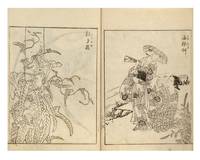
rif. 974339 leaves. Two parts in one vol. 8vo orig. patterned semi-stiff wrappers wrappers a little wormed new stitching. Osaka: Kashiwabaraya Seiemon 1764. First edition. SekkÅsai was an artist active in Osaka ca. 1740-50. He illustrated books and theater programs and also designed a number of prints. This is “the best of SekkÅsai’s sumi-printed books consisting of a wide range of miscellaneous pictures some in KanÅ or even ItchÅ style. The profile drawing of a girl wearing a kimono patterned with white hares and drooping willow wands is unusually winning.”–Hillier The Art of the Japanese Book p. 299. A fresh copy with some worming occasionally repaired touching images. We do not find it offensive. References Brown Louise Norton. Block Printing & Book Illustrations in Japan. London: 1924 p. 64. unknown books
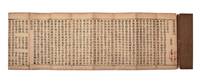
rif. 8663Trans. by Xuanzang 玄奘 in 650 CE. 70 pages six columns per page 30 columns per sheet 17 characters per column. 14 sheets average sheet length: 570 mm. five pages per sheet. Accordion format 305 x 7980 mm. print surface from top border to bottom border: 245–250 mm. Single woodcut borders at top & bottom of text. Orig. sutra binding of semi-stiff paper wrappers. Woodblocks carved by Ge Fang & Ma Qing & others in Sixi present day Huzhou printed between 1110s/40s–1276. This fascicle in its original sutra binding was printed in the 12th or 13th century in northern Zhejiang China as part of an extremely rare edition of the Buddhist canon variously known as the Yuanjue Canon Zifu Canon or Sixi Canon. Examples very rarely appear on the market. This edition of the Buddhist canon was for a long time largely unknown in China until the famous Chinese book collector and scholar Yang Shoujing 1839-1915 brought a set back from Japan in the late 19th century. Now in a Chinese library this is the only near-complete set as far as we know the rest being single sutras. Yuanjue Zifu or Sixi Canon: The three names refer to some or all of the imprints of the Chinese Tripitaka made from a set of blocks that were carved in a place called Sixi present-day Huzhou in what was then Songting township Guian county Hu prefecture part of the Circuit of the eastern and western Zhe of the Southern Song. Sixi one of the names retrospectively used for this edition was the location of Yuanjue Meditation Hall founded in 1119-25 where the printing blocks were housed and perhaps carved. Sometime after 1239 the hall’s name may have changed to Fabao Zifu lit. “Dharma jewel supplying happiness” Meditation Temple whence Zifu Canon. Bibliographic scholarship has dated certain imprints of this canon to either the period of Yuanjue Meditation Hall or that of Fabao Zifu Meditation Temple calling imprints dating from the earlier period Yuanjue Canon or “first Sixi canon” qian Sixi jing and imprints from the later period Zifu Canon or “second Sixi canon” hou Sixi jing. On the basis of a comparison of two catalogues of the canon — one claiming to be of the Yuanjue Canon and one of the Zifu Canon — it was believed that a substantial amount of re-carving had taken place between the Yuanjue and Zifu canons. However the catalogue purportedly of the Zifu Canon has been shown in fact to have been based not on an inventory of a set of the Zifu Canon but on another unrelated catalogue. Thus there is no reason to assume that a substantial amount of re-carving of the blocks took place after the temple changed its name and ipso facto there is no reason to posit the existence of two Sixi canons. Printings ascribed to the Yuanjue and Zifu canons belong to the same edition of the Chinese Tripitaka printed at various times during a period that stretched over a century. Blocks were repaired and replaced during this period but not to the extent that would justify calling them two editions. The Timing of Carving and Printing: The sources are ambiguous as to when carving of the blocks began. Li Fuhua and He Mei state that the carving began in 1126 whereas Wang Chonglong says it began before 1110 and thus not at the Yuanjue Hall which had not yet been founded and agrees with others that it likely had finished in 1132. It has also been proposed however that carving only began in 1132. Finally 1140 has been proposed as another completion date. Therefore we can say with confidence that the initial set of blocks was carved sometime between the 1110s and 1140s. Once the blocks were carved they were used for printing for a long time. Some printings can be dated because they contain colophons. Liu Yuantang has documented three instances of blocks being mended buban: in 1238 1248 and 1250. The blocks were burned by the invading Mongols in 1276 which is thus the terminus ante quem for prints from the Yuanjue Canon. Our Copy and the Yuanjue / Zifu Canon: Benshi jing is marked with the ordinal character shen 甚 in five editions of the Chinese Tripitaka. Of these five only the Yuanjue Canon also known as the Zifu or Sixi Canon is a possible candidate. More precisely our copy appears to be from a late printing of the Zifu Canon dating from sometime in the latter portion of the period 1110s/1140s-1276. The vast majority of extant sutras from this edition of the canon are late printings. They have the following characteristics: 1. Sheets folded into five pages with six columns per page 30 per sheet and 17 characters per column. 2. Glosses appended to the end of the volume. 3. Single woodcut borders at top and bottom of text. For earlier printings of this edition one source specifies that the borders go around on all four sides but for the later printings the same source simply says “single-lined margin frame” danxian biankuang 單線邊框. This would appear to suggest borders also at the beginning and the end of each sheet. 4. No empty column before the beginning of the text on the first page. 5. Small-script numerals marking the number of the sheet are printed at the beginning of every sheet as opposed to in the crease between pages for example except for the first sheet. 6. Printed area of roughly 570 mm. long and 250 mm. wide. The sutra has a total of seven fascicles juan of which we have fascicle six. The upper cover and the first line of the first page both have the character shen in manuscript on the cover which is here used as an ordinal drawn from Qianzi wen åƒå—æ–‡ The Thousand Character Essay to arrange the sutras of the Chinese Tripitaka. Layout and Appearance of Our Copy: Unsurprisingly for a very large printing project that took many years not all the sutras of the Yuanjue Canon have the same appearance. Yet the dimensions of our copy agree with other known copies: five pages per woodblock six columns per page 17 characters per column. Other non-official Song editions of the Buddhist canon Chongning and Pilu have six pages per block but the same number of columns per page and characters per column. The measurements of our copy accord with copies of other sutras from the same edition of the canon held by the Gansu Provincial Library in Lanzhou the National Palace Museum in Taipei and the Gotoh Museum outside of Tokyo. The layout of our copy accords with that of a different sutra from the same canon that has been reprinted in facsimile in unknown books
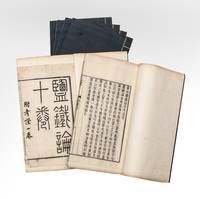
rif. 821136; 19; 20; 27; 37; 31 folding leaves neatly interleaved throughout. Ten juan in five vols. plus one vol. of commentary by Dunren Zhang. 8vo modern blue wrappers new stitching. China: 1807. A rare and important edition of this notable text; the sixth volume contains the valuable commentary and notes of Dunren Zhang 1754-1834 Qing scholar mathematician historian and book collector. After the death of Emperor Wu in 87 B.C. his successor summoned to the capital scholars from throughout the empire to discuss the most important problems of the day. Emperor Wu had “implemented a series of centralized economic measures to support his territorial expansion particularly to sustain wars with Xiongnu a confederation of nomadic tribes from Central Asia. For example the state monopolized salt iron and liquor industries; operated nationwide transportation facilities; and ran retail businesses. After the emperor died the new emperor gathered his officials and more than sixty Confucian literati to reassess these measures. The consultation turned into a lengthy debate not only on economic issues but also on topics such as agriculture border defense diplomacy legality and Confucianism… “The debate was later reconstructed under the title Yan tie fan by a Confucian bureaucrat-scholar Huan Kuan who consulted both living debaters and the historical record. The text delineates the debate in sixty episodes spanning over several days. In each episode the debaters focus on a specific issue that emerges during the debate.” You “Building Empire through Argumentation” 369. As a result of the debates the monopolies on salt and iron were briefly abolished but were soon resumed only to be abolished again after the overthrow of Emperor Wang Mang in 23 A.D. “The text of this book the Yantielun has been brought in the shape of a dialogue between the opponents. Except the state monopolies the text also touches political questions of the time like the power of the nomad federation of the Xiongnu in the north or the general style of politics as a ‘rule of the law’ versus ‘rule by virtue.’ Huan Kuan’s book is an important document about the internal discussions about political affairs during the Former Han period" ChinaKnowledge.de online. Fine set preserved in a slightly worn hantao. References ChinaKnowledge.de Wagner Donald B. Ferrous Metallurgy. Science and Civilisation in China. Vol. 5. Part 11. Cambridge: Cambridge University Press 2008. You Xiaoye. “Building Empire through Argumentation: Debating Salt and Iron in Western Han China.” College English Vol. 72 No. 4 March 2010. unknown books
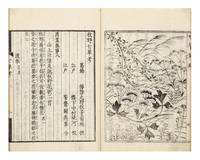
rif. 8333One full-page woodcut. .5 29 .5; 15.5 folding leaves. Two vols. 8vo orig. blue wrappers orig. block-printed title labels on upper cover later decorated wrappers later stitching. From the colophon at end of Vol. II: Edo Kyoto & Osaka: Hanabusaya Heikichi et al. 1812. with: —. Haru nanakusa ko Thoughts about Seven Herbs in Spring. Three full-page woodcuts & nine smaller woodcuts in the text. .5 36 folding leaves. 8vo orig. blue wrappers as above later decorated wrappers later stitching. From the colophon: Edo: Yamashiroya Sahei 1814. First editions a rare complete set of these two works which are concerned with two important seasonal celebrations. The first of the year is the Festival of Seven Herbs in Spring Nanakusa no sekku a traditional Japanese ritual of eating seven-herb rice porridge on the 7th of January; its consumption would bring longevity and health and ward off evil. The tradition derives from ancient China. The seven herbs are seri Japanese parsley nazuna shepherd’s purse gogyo cudweed hakobera chickweed tahirako nipplewort suzuna turnip and suzushiro daikon radish. The other is the Festival of Seven Autumn Herbs Akino nanakusa less well known then the spring celebration. These herbs are hagi bush clover obana/susuki Japanese pampas grass kuzu kudzu nadeshiko Japanese dianthus ominaeshi Patrinia scabiosifolia fujibakama Eupatorium fortunei and kikyo balloon flower. While many of them have medicinal qualities for this festival they are not for eating but for viewing and admiring. Kikuu Kitano 1762-1831 a native of Sendai came to Edo in the 1780s and opened an antiques gallery that enjoyed great success. In 1804 he purchased a large piece of land in the Mukojima section of Edo where he established a botanic garden today known as the Mukojima Hyakkaen Garden. It is Tokyo’s only surviving garden from the Edo period. There he planted a landscaped orchard of 360 plum trees and other plants including the seven herbs of both spring and autumn selected by Kitano and his literati friends both poets and painters. These works are very beautifully printed using a wide variety of character styles to express meanings and authorship. The first two volumes to be published — on the autumn festival — contain a fine full-page woodcut designed by the author showing all seven herbs. The text contains references to each herb in waka and kanshi Chinese poetry written by Japanese a guide to understanding the nuances of the poetry and the botanical literature. The spring festival volume published two years later describes each of the seven spring herbs and their uses in medicine and gastronomy with many references to the Japanese botanical literature. There is a long passage on how to prepare the springtime porridge. The woodcuts depicting each of the seven herbs are by prominent artists including Kita Busei 1776-1856 and an unidentified woman artist. PROVENANCE: With the seals of Mayori 1829-1906 and Mamichi 1866-1925 Kurokawa prominent father and son book collectors. Their collection was largely concerned with botanical and herbal books; most of the collection was destroyed in the great Kanto earthquake. Our set later entered the collection of Frank Hawley scholar and one of the most discerning collectors of Japanese books and manuscripts. His stamp appears on the first page of text. See R.H. van Gulik’s “In Memoriam. Frank Hawley 1906-1961” in Monumenta Nipponica Vol. 16 No. 3/4 Oct. 1960-Jan. 1961 pp. 434-47. Fine set preserved in a fine chitsu. With some mostly marginal worming much of which has been carefully repaired. unknown books