BOSA EUGENIO.MareMagnum

18.427 Ergebnisse
1835Cm. 24,5, frontespizio inciso, pp. (2) d'indice + 23 (di 24!) tavole incise all'acquaforte. Leg. in cart. muto. Leggere arrossature marginali, ma bell'esemplare, genuino ed a pieni margini. Rara e ricercata raccolta di soggetti veneziani. Esemplare che, come molto spesso accade, si presenta censurato, ovvero privo (dall'origine?) della tavola n. 10 la quale è intitolata "passeggiata sentimentale" e la cui visione non deve essere stata gradita per la morale del tempo.
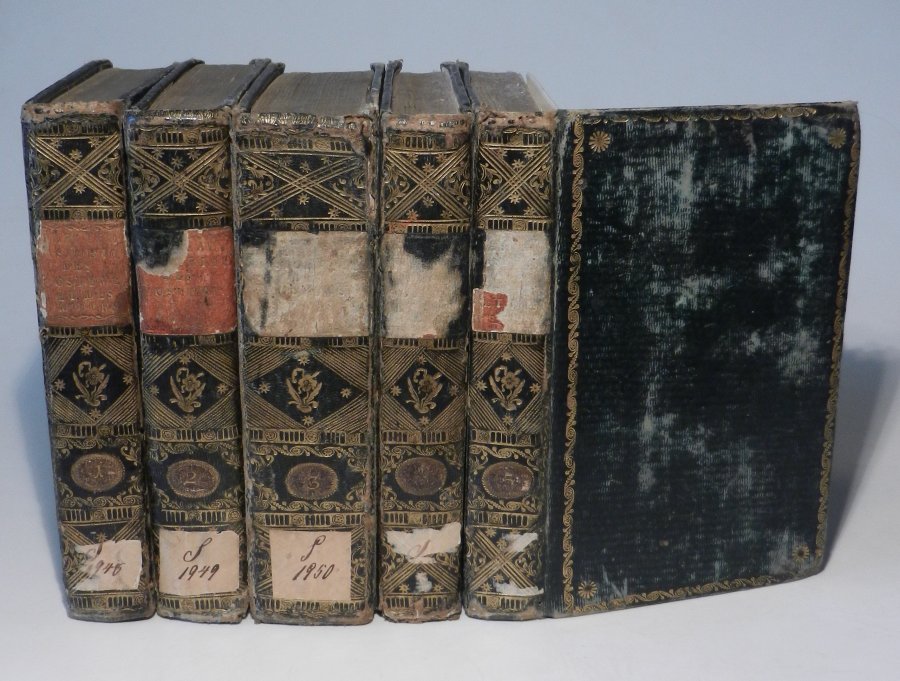
1806Best.-Nr. 29596-zn4Metz: Collignon 1804-1806. 4 Blatt, 299 Seiten, 18 Tafeln; 2 Blatt, 318 Seiten, 30 Tafeln; 390 Seiten, 42 Tafeln; 216 Seiten und 31 Tafeln, sowie 166 Seiten und 35 Tafeln. Dunkelgrünes Leder der Zeit mit Rücken- und Deckelvergoldung sowie allseitigem Goldschnitt (jeweils ein Signaturschildchen auf dem Rücken, berieben und bestoßen, teils beschabt, bei drei Bänden fehlt das Titel-Rückenschild, bei drei Bänden sind die Innengelenke gelockert, bei Band vier ist das hintere Innengelenk durchgebrochen, der Buchblock von Band 3 lose und das vordere Gelenk dieses Bandes auf einer Länge von ca. 5 cm gerissen, teils etwas fleckig, sonst gute und saubere, restaurierungswürdige Exemplare). 8°. fest gebunden
1885Cm. 35. Raccolta di 133 belle tavole incise in rame ed in fine coloritura coeva. Legatura del tempo in mezza pelle con titoli in oro al dorso. Qualche segno d'uso esterno e rade fioriture marginali, esemplare peraltro genuino ed in buono stato di conservazione. Poderosa raccolta iconografica che raccoglie le tavole a colori pubblicate tra il 1885 ed il 1888.
1883Cm. 35. Raccolta di 135 belle tavole incise in rame ed in fine coloritura coeva. Legatura del tempo in mezza pelle con titoli in oro al dorso. Qualche segno d'uso esterno e rade fioriture marginali, esemplare peraltro genuino ed in buono stato di conservazione. Poderosa raccolta iconografica che raccoglie le tavole a colori pubblicate tra il 1883 ed il 1885.
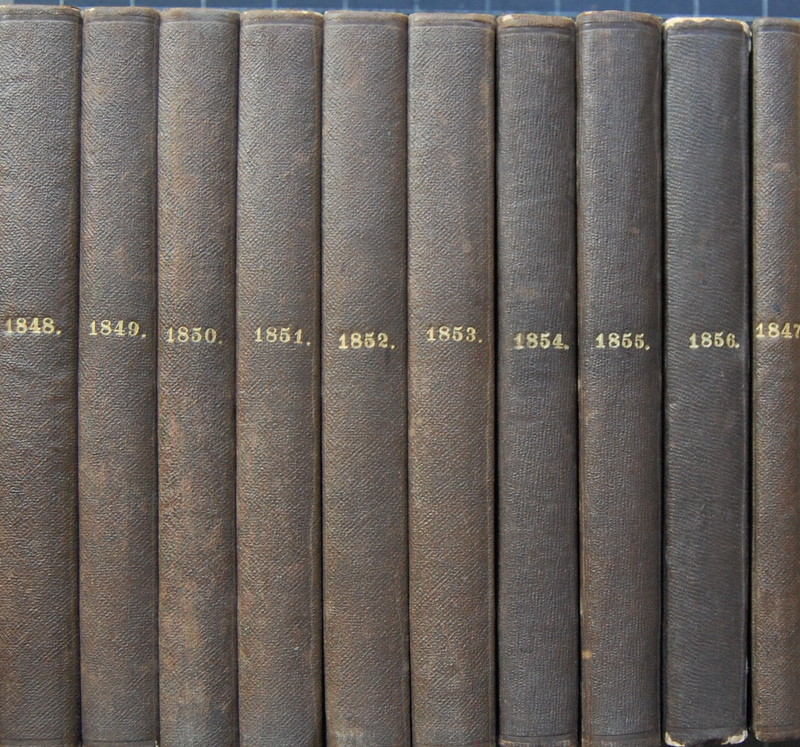
Best.-Nr. 89406Stuttgart, Engelhorn. Bände 1853, 1854, 1855, 1856 ohne Musterbogen und Extra-Beilagen. Band 1847: nur 2. Jahreshälfte. Pappbände mit Jahrgangsnr. auf dem Rücken, pro Jahrgang jeweils 12 kolorierte Stiche (Januar - December) und 24 Hefte, VIII,384 Seiten, zweispaltig, 21,8 x 15,5 cm. In Frakturschrift. Einbandecken stark bestoßen, Einbände berieben sowie gelegentlich mit kleinen Fehlstellen, Seiten mit Gebrauchsspuren und Stockflecken, die kolorierten Stiche sind teilweise fingerfleckig oder stockfleckig. Bd. 1848: 1 Stich lose, 1 Stich teilweise lose. Die Musterbogen und Extrablätter sind bestoßen und an den Rändern oder am Falz eingerissen sowie mit Gebrauchsspuren. [8 Warenabbildungen]
1884Edizione: Première édition . Pagine: 344+61 FOGLI . Illustrazioni: 61 Magnifiche grandi litografie colorate (cm.36,50 per 25,50) con modelli di abiti femminili e qulcuno anche per bambini. Centinaia di immagini di moda nel testo in bianco e nero. Due grosse immagini a doppia pagina in bianco e nero con modFormato: 4° . Rilegatura: Cartonato marmorizzato rosso con dorso in tela rossa un poò consumata e con piccola sbrecciatura nella parte bassa del dorso. . Stato: Buono . Caratteristiche: Quindicinale di moda femminile. Sono presenti 43 numeri. Da notare che fino al 24° numero la rivista prendeva nome di La Mode Universelle, poi si fuse con La Saison, per trasformarsi in Mode Parisienne e ritornare La Saison.Foto disponibili . Note epoca: 1886
1982Best.-Nr. 247441982 Estampe affiche impression offset en couleurs signée en bas dans la planche, 1982, 44 x 54 cm., encadrée.
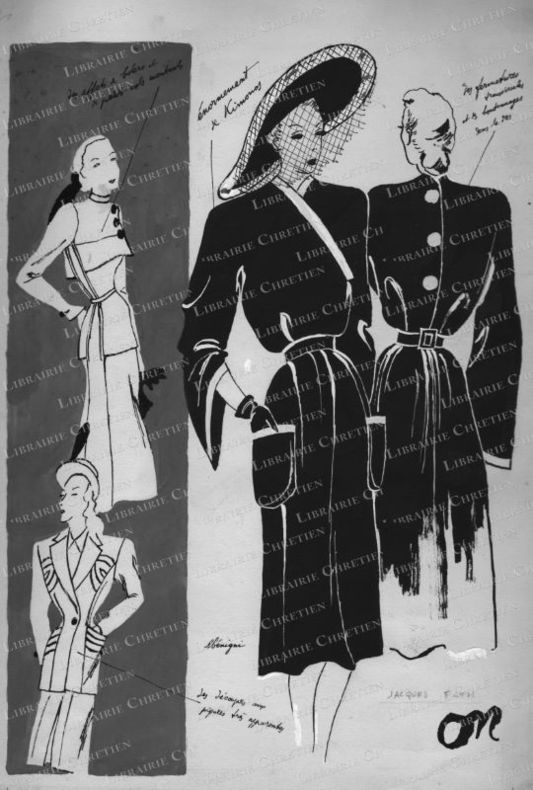
1946Best.-Nr. 24980Paris IMPRIMERIE SEIDO 1946 1 Croquis de René Gruau. Paris, Été 1946, in-4, broché, Imprimerie Seido, couverture rempliée, titre bordeaux, 28 pages dont huit planches.
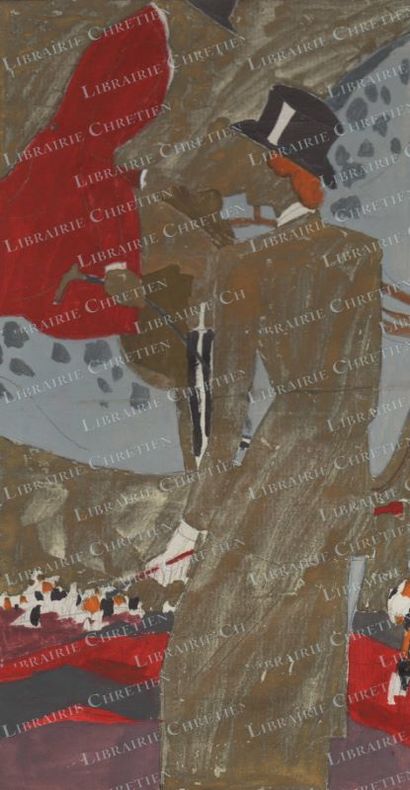
1930Best.-Nr. 192271930 Gouache et encre de Chine, rehauts d'or, (1930), sur papier collé sur calque, 31.5 x 16.7 cm., encadrée.
1930Best.-Nr. 192421930 Encre de Chine et gouache verte, mine de plomb, annotations marginales, (1930), sur papier cartonné, 28 x 12.4 cm., encadrée.
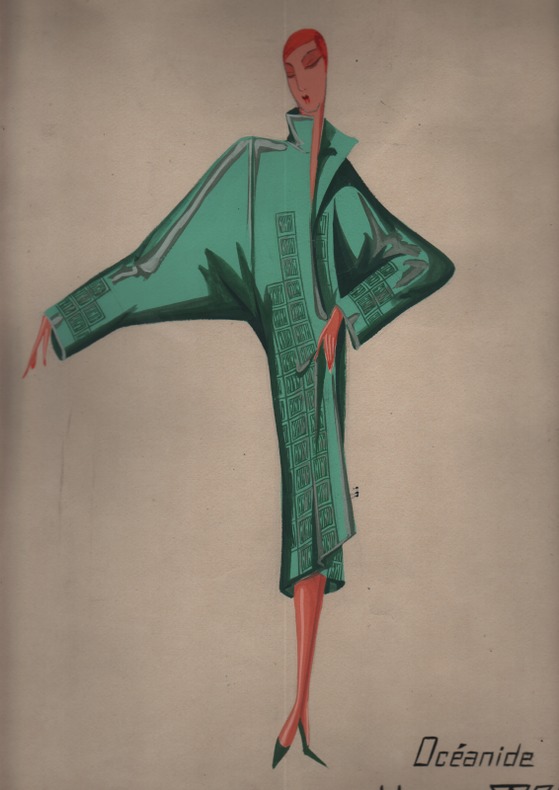
1930Best.-Nr. 22324LANVIN 1930 1 Gouache sur papier crème, titrée et datée dans la partie inférieure droite, Hiver 1930, 42 x 29 cm.
Best.-Nr. 19232Deux maquettes préparatoires et un tirage ; maquette gouachée, en couleurs, 41 x 30.5 cm ; maquette gouachée, en noir et blanc, encadrement en roses et fleurs photographiées et découpées, 33 x 24.2 cm ; un tirage en couleurs 33.3 x 25.4 cm ; studio photographique Nadal.
1886Best.-Nr. 77114A. Quantin | Paris 1886 | 17.50 x 25.80 cm | relié
1910Best.-Nr. 228731910 Aquarelle et encre de Chine signée en bas à droite, Draeger, (1910), 35.5 x 25 cm.
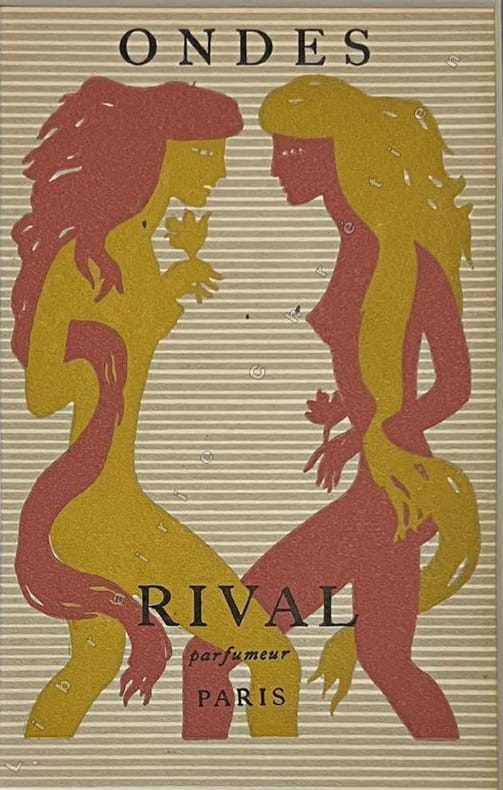
1945Best.-Nr. 19238(1945) Une maquette préparatoires à la gouache, 21 x 13.5 cm, en couleurs. (1945).
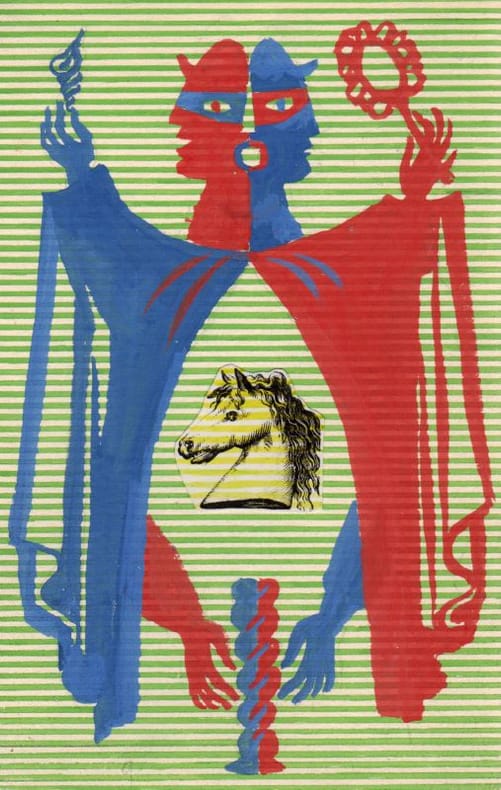
1945Best.-Nr. 247881945 Gouache et collage, 21 x 13.5 cm, (1945).
1950Best.-Nr. 7426ABPadova, o.J. (ca. 1950). 33 : 30 cm. 280 Gürtelschnallen montiert auf 15 Tafeln in Klarsichthüllen. Original-Leinenordner.
1920Best.-Nr. 199741920. Vernacular fashion illustration archive circa 1920s-1950s documents the evolution of women's dress and stylistic ideals across early and mid-twentieth-century design with emphasis on silhouette material and aspirational presentation. The drawings capture shifts from the elongated androgynous forms associated with 1920s and 1930s fashion to the structured tailoring and fitted garments of the postwar period. Elements such as exaggerated shoulders cinched waists and coordinated ensembles situate the works within broader developments in women's fashion including the influence of tailored suits and formal eveningwear. The illustrations also record accessory culture including gloves hats and jewelry positioning dress within a larger system of social signaling and presentation tied to class gender norms and modern consumer identity. United States and possibly Europe circa 1920s-1950s. Archive of six original gouache and pencil fashion illustrations on hard mat boards and one on thick watercolor paper each measuring approximately 10 x 7 to 10 x 15 inches. Several works bear artist signatures or initials including examples signed "Virginia" and "G. Wichner." Two dated compositions from April 11 1954 depict coordinated ensembles including a rose-toned set with a pencil skirt and structured blazer rendered with detailed attention to tailoring and fabric accents. Other illustrations include multi-figure studies of women in draped garments with belted waists a single-figure composition in a long gown with fur coat and elongated cigarette holder and portrait studies featuring headpieces veils and bold cosmetic styling. Use of shading color variation and line work emphasizes fabric texture garment movement and body form. Produced during a period of significant transformation in women's fashion these illustrations align with the development of modern fashion media including editorial illustration design sketching and commercial garment production. The visual emphasis on proportion tailoring and accessorization reflects the increasing codification of fashion as both industry and cultural expression in the twentieth century. As original works the drawings provide insight into the processes of design visualization and stylistic interpretation supporting research into fashion history gender presentation and visual culture. Light handling wear to mounts and sheets; overall very good condition. unknown
1920Best.-Nr. 199741920. Vernacular fashion illustration archive circa 1920s-1950s documents the evolution of women's dress and stylistic ideals across early and mid-twentieth-century design with emphasis on silhouette material and aspirational presentation. The drawings capture shifts from the elongated androgynous forms associated with 1920s and 1930s fashion to the structured tailoring and fitted garments of the postwar period. Elements such as exaggerated shoulders cinched waists and coordinated ensembles situate the works within broader developments in women's fashion including the influence of tailored suits and formal eveningwear. The illustrations also record accessory culture including gloves hats and jewelry positioning dress within a larger system of social signaling and presentation tied to class gender norms and modern consumer identity. United States and possibly Europe circa 1920s-1950s. Archive of six original gouache and pencil fashion illustrations on hard mat boards and one on thick watercolor paper each measuring approximately 10 x 7 to 10 x 15 inches. Several works bear artist signatures or initials including examples signed "Virginia" and "G. Wichner." Two dated compositions from April 11 1954 depict coordinated ensembles including a rose-toned set with a pencil skirt and structured blazer rendered with detailed attention to tailoring and fabric accents. Other illustrations include multi-figure studies of women in draped garments with belted waists a single-figure composition in a long gown with fur coat and elongated cigarette holder and portrait studies featuring headpieces veils and bold cosmetic styling. Use of shading color variation and line work emphasizes fabric texture garment movement and body form. Produced during a period of significant transformation in women's fashion these illustrations align with the development of modern fashion media including editorial illustration design sketching and commercial garment production. The visual emphasis on proportion tailoring and accessorization reflects the increasing codification of fashion as both industry and cultural expression in the twentieth century. As original works the drawings provide insight into the processes of design visualization and stylistic interpretation supporting research into fashion history gender presentation and visual culture. Light handling wear to mounts and sheets; overall very good condition. unknown books
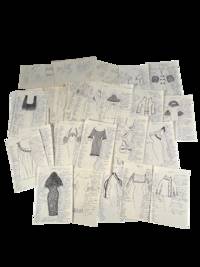
1950Best.-Nr. 218261950. Fashion design archive. 1950s-1960s. This group documents mid-century women's fashion design practice through a sustained body of original sketches and working notes showing how garments were conceived annotated and prepared for construction during a period of stylistic transition in American dress. The material provides direct evidence of design thinking at the level of silhouette fabric selection and pattern planning including repeated attention to cocktail wear outer garments and formal dress. It captures the movement from structured postwar styles toward more experimental and decorative approaches associated with later mid-century fashion with particular emphasis on the technical and aesthetic decisions made by a designer or dressmaker. Archive of over 100 original hand-drawn fashion sketches on individual sheets measuring approximately 6.5 x 9 inches executed in ink with extensive handwritten annotations on rectos versos and margins. The drawings depict a range of women's garments including dresses blouses coats and evening wear with recurring titles such as "cocktail dress" "cocktail cape" and "dress." The figures are rendered with attention to line proportion and textile texture often emphasizing drape fitted bodices and surface embellishment. Annotations provide detailed construction guidance including measurements fabric types and pattern instructions. One design for a strappy dress specifies "Pattern: leopard or zebra fur attached.fabric velveteen.color red -- orange -- black." indicating experimentation with bold materials and color combinations. The consistent pairing of image and instruction suggests use as a working portfolio either for client presentation dressmaking production or formal training. Mid-century fashion in the United States expanded through department stores home sewing and professional dressmaking with designers and students producing working sketches that translated style into reproducible garments. The presence of detailed technical notes alongside finished illustrations places this archive within that production process linking aesthetic design to practical construction. Light wear from handling; overall very good. A concentrated record of mid-century women's fashion design practice preserving both the visual language and technical methods used to create garments during a period of evolving style. unknown
1950Best.-Nr. 218281950. Fashion design archive likely 1950s to 1960s documenting women's garment design during the mid-century through original working sketches that preserve both style development and the practical language of dressmaking. The archive is strongest as evidence of how women's fashion was conceived on paper before production with repeated attention to silhouette trim fabric and construction. Dresses blouses coats and eveningwear appear throughout placing the material within the visual world of postwar American fashion as it moved from structured elegance toward sharper and more decorative later mid-century forms. Archive of over 100 original hand-drawn fashion sketches on individual sheets measuring approximately 6.5 x 9 inches. The drawings are executed in ink and depict a wide range of women's clothing including fitted dresses capes blouses coats and formal designs with careful attention to drape proportion neckline sleeve treatment and surface embellishment. Many sheets are accompanied by dense handwritten notes in the margins or on the reverse recording measurements fabric suggestions and pattern or construction instructions. The combination of illustration and notation gives the sheets the character of working designs rather than purely display drawings and suggests use in dressmaking training or client planning. The archive belongs to the history of women's fashion not only as a record of finished styles but as evidence of the design process itself preserving the intermediate stage between idea and garment. Such working sketches show how fashion circulated through manual skill technical knowledge and close attention to fabric and form in the decades before design became fully digitized. Light general wear from use; overall very good. A substantial mid-century design archive that preserves the visual and technical vocabulary of women's fashion making across more than one hundred original sketches. unknown
1950Best.-Nr. 218261950. Fashion design archive. 1950s-1960s. This group documents mid-century women's fashion design practice through a sustained body of original sketches and working notes showing how garments were conceived annotated and prepared for construction during a period of stylistic transition in American dress. The material provides direct evidence of design thinking at the level of silhouette fabric selection and pattern planning including repeated attention to cocktail wear outer garments and formal dress. It captures the movement from structured postwar styles toward more experimental and decorative approaches associated with later mid-century fashion with particular emphasis on the technical and aesthetic decisions made by a designer or dressmaker. Archive of over 100 original hand-drawn fashion sketches on individual sheets measuring approximately 6.5 x 9 inches executed in ink with extensive handwritten annotations on rectos versos and margins. The drawings depict a range of women's garments including dresses blouses coats and evening wear with recurring titles such as "cocktail dress" "cocktail cape" and "dress." The figures are rendered with attention to line proportion and textile texture often emphasizing drape fitted bodices and surface embellishment. Annotations provide detailed construction guidance including measurements fabric types and pattern instructions. One design for a strappy dress specifies "Pattern: leopard or zebra fur attached.fabric velveteen.color red -- orange -- black." indicating experimentation with bold materials and color combinations. The consistent pairing of image and instruction suggests use as a working portfolio either for client presentation dressmaking production or formal training. Mid-century fashion in the United States expanded through department stores home sewing and professional dressmaking with designers and students producing working sketches that translated style into reproducible garments. The presence of detailed technical notes alongside finished illustrations places this archive within that production process linking aesthetic design to practical construction. Light wear from handling; overall very good. A concentrated record of mid-century women's fashion design practice preserving both the visual language and technical methods used to create garments during a period of evolving style. unknown books
1950Best.-Nr. 218281950. Fashion design archive likely 1950s to 1960s documenting women's garment design during the mid-century through original working sketches that preserve both style development and the practical language of dressmaking. The archive is strongest as evidence of how women's fashion was conceived on paper before production with repeated attention to silhouette trim fabric and construction. Dresses blouses coats and eveningwear appear throughout placing the material within the visual world of postwar American fashion as it moved from structured elegance toward sharper and more decorative later mid-century forms. Archive of over 100 original hand-drawn fashion sketches on individual sheets measuring approximately 6.5 x 9 inches. The drawings are executed in ink and depict a wide range of women's clothing including fitted dresses capes blouses coats and formal designs with careful attention to drape proportion neckline sleeve treatment and surface embellishment. Many sheets are accompanied by dense handwritten notes in the margins or on the reverse recording measurements fabric suggestions and pattern or construction instructions. The combination of illustration and notation gives the sheets the character of working designs rather than purely display drawings and suggests use in dressmaking training or client planning. The archive belongs to the history of women's fashion not only as a record of finished styles but as evidence of the design process itself preserving the intermediate stage between idea and garment. Such working sketches show how fashion circulated through manual skill technical knowledge and close attention to fabric and form in the decades before design became fully digitized. Light general wear from use; overall very good. A substantial mid-century design archive that preserves the visual and technical vocabulary of women's fashion making across more than one hundred original sketches. unknown books
1905Best.-Nr. 56908Chicago IL: American Woolen Mills Co. 1905. Thick elephant folio 17.5 x 21.5 x 3.25 in. 58 pp. printed on thick card stock each mounted on linen hinge. With 6 black & white fashion plates illustrating suit styles of the period with 380 of 400 -- many marked in pencil “O.S.” or Out-of-Stock mounted textile samples in wool wool-silk blends -- all samples clearly marked with prices and availability numerous text illustrations decorative borders printed in colour many showing bucolic scenes of sheep pastures and winter frolics. Black & blue cloth Arts & Crafts gilt lettering & ornament on front cover expertly rebacked and back cover renewed dustsoiling and occasional soiling to some leaves some samples w/ predation and minor loss dampstaining to gutter margin of last few leaves minor loss & damage to last couple leaves still a good copy. First edition of this scarce Progressive-era salesman sample catalogue for Winter season men’s suits overcoats and evening wear. The American Woolen Mills Company also known as the “Progressive Tailors”maintained a huge tailoring operation in Chicago at Union & Washington until the Great Depression employing hundreds of tailors and seamstresses to fill orders. Unlike J.L. Taylor Royal Tailors and many of the other tailoring houses of the period the American Woolen Mills targeted the average white collar clerk or American immigrant salesman and merchant trying to look professional and offered $ 15.00 high class made to measure suits. These catalogues were very expensive to produce and were often issued with minimal company brand names allowing their sales force to target small shops mercantiles and general stores which would have these catalogues on the sales floor for several years. Sales people were directed to simply clip the corners of samples for out-of-stock and discontinued fabrics but they often chose to remove the entire sample in order to not distract potential customers. The catalogue offers invaluable illustrated historical reference for the colours styles and fabrics during the era of Teddy Roosevelt and the Anti-Trust policies even referring to these in their sales pitch by claiming that unlike Trusts which “by combining saves numerous expenses and sticks ALL the savings in its own pocket. . . there is no Trust in the tailoring trade.” They further claim that they remove all middlemen procure woolens directly from the weavers and by avoiding wastes of all kinds that AWM CO. lowers their prices and “it is a public benefit.” The textiles here focus on darker shades and very muted colours along with durable thick fabrics while marketing their double-breasted sacks 3-button frock coats 2-button single breasted suits assorted overcoats and more. No copies in Worldcat; See: Swell Nifty Suit Free! The Household Journal Vols. V No. 8 August 1912 p. 6; Machinists’ Monthly Journal Vol. XVII No. 3 March 1905 p. 282. American Woolen Mills Co., hardcover