813 résultats
réf. DADAX1426958986New unknown
réf. DADAX1563672162New unknown
réf. 5g2986Ohne Verlagsangaben um 1980. 6 Tafeln ca. 152 x 201 cm im Passepartout ca. 216 x 276 cm in kartonierter illustrierter Mappe quart Mappe gebräunt und eingerissen. unknown
réf. 2M3219Neue Verlags-Gesellschaft mbH Baden-Baden 1952. Insgesamt ca. 240 S. mit vielen Abbildungen broschierte Einbände folio teils mit Gebrauchsspuren/Name auf Einband/1 Einband lädiert. - Enthalten: Nummer 2 13 16 17 20 22 - 26 - unknown
réf. Aav. MarianneIn Pristine Condition. unknown
réf. 2M3220Neue Verlags-Gesellschaft mbH Baden-Baden 1953. Je Heft 32 S. mit vielen Abbildungen broschierte Einbände folio teils mit leichten Gebrauchsspuren/Name auf Einband. - komplett - unknown
réf. Gundtoft, DorotheaIn Pristine Condition. unknown
réf. Reenberg, HolgerIn Pristine Condition. unknown
réf. 2N4118Tescoha Hamburg 1980. 28 kartonierte teils ausklappbare Seiten mit 99 aufgezogenen Mustern sowie 5 Beispielabbildungen betitelter Original-Leineneinband quart leichte Gebrauchsspuren. unknown
2006réf. 214286Model A Ford Club of America 2006. Book. Very Good. Soft cover. 11 x 8.25. Excellent copy with just mild wear to spine. Pages of text are clean bright and free of markings. Binding is tight and secure. Ships today or next business day. Our books are carefully described and packaged in boxes not envelopes. A gift card and personalized message can be included upon request. Model A Ford Club of America Paperback
1922réf. 62342New York: Edward J. Clode 1922. 12 vols. 12mo. 1184 pp all vols. separately paginated. With 100’s of text illustrations diagrams patterns. Brown cloth-backed cream-coloured softcovers illustrated in brown & brown lettering very slight shelfwear slight soiling to fore-edges still a NF set preserved in the original open case. First edition 2nd printing of this informative and well-illustrated set issued by Woman’s Home Companion intended as a Jazz Age “how-to” instructional sewing and tailoring course to properly instruct young aspiring fashion designers seamstresses and at home housewives how to craft the current Flapper-era fashions. These well-organized volumes include sections on selecting the proper clothes and colours simple stitches making their garments attractive trimmings to add a little extra to underwear; different types of blouses lingerie blouses kimono blouses “Smart” clothes drop waist dresses and the key of pattern making. This course helped to propel the idea of “Flapper Design Fashion” and reflected many of her own innovative artistic and graciously elegant designs. Conover Stadtmiller 1891-1968 was a Los Angeles fashion designer associate fashion editor of Woman’s Home Companion and after marrying noted Kennicott Copper Co. mining engineer Karl Stadtmiller 1893-1934 retired from her career until after her husband’s sudden death. Worldcat locates 4 sets FIT-NY Indiana U MFA Boston Toronto Public. Edward J. Clode, paperback
1950réf. 25251New York N.Y.: Fashion Institute of Technology 1950. 96 pages; illustrated throughout in black and white. This issue of the Fashion Institute of Technology yearbook was dedicated to the textile industry due to this a ".systematic plan of coordination between important fabric firms of this nation and F.I.T. has been developed." Illustrations show the students at various tasks at the school using industrial sewing machines learning drafting modeling fabric design & the formal showing of the finished pieces. Approx. 9" x 12" size with cloth textile covered boards; various sections of the book divided with yellow paper half-sheets giving title of the sections and some illustrated. The graduates section gives portrait photos of the women and men with their educational focus - millinery design management apparel design and textile design. With a map-plan of the school. Advertisements section at back mostly from the fashion textiles industry. Light edge tips wear bumping a little soiling to the binding; contents clean and in very good condition. First Printing. Hard Cover. Very Good. Fashion Institute of Technology hardcover
réf. 1379774918.Ghardcover. Good. Access codes and supplements are not guaranteed with used items. May be an ex-library book. hardcover
1983réf. 904Z38New York: Alfred A. Knopf 1983. First edition. Cloth. Near Fine/Near Fine. 8.5" by 6"; 8.5" by 5.5". None. The first edition of W. M. Spackman's novel portraying women in love with the scarce uncorrected proof. The first edition paired with the scarce uncorrected proof copy of the novel. In the publisher's original cloth with the original unclipped dust wrapper and the original paper cover to uncorrected proof. This work was written by William Mode Spackman an American writer and provides a tender portrayal of women in love. The novel follows Sather who meets two women in Paris who fall for him but display their feelings in very different ways. In the publisher's original cloth with the original unclipped dust wrapper and in the original paper covers to the 'Uncorrected Proof'. Externally lovely with only slight shelf wear and very smart to the proof copy with sunning to the spine and extremities marks and a very minimal closed tear to the head of the front. The wrap is excellent with slight edge wear only. Internally firmly bound with clean and bright pages to both. Near Fine Alfred A. Knopf hardcover
réf. 1333878443.Gpaperback. Good. Access codes and supplements are not guaranteed with used items. May be an ex-library book. paperback
réf. 6358099586MacMillan . Papeback. New. pp. 266 MacMillan unknown
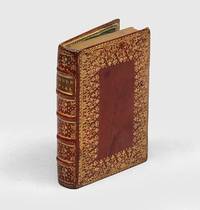
réf. 133200France: 18th century. Puffs Powders Patches Bibles Billet-doux A beautifully crafted vanity kit bound to mimic a French Book of Hours. Its elaborately gilt-tooled red morocco casing disguises an ingenious interior of fashionable accoutrements bodkin brush looking glass and miniature essentials writing tools all key elements of the ritualized toilette. Books of Hours - personal prayer books kept by laypersons for private devotion - were frequently the remit of women whether gifted to commissioned by or made for them. The books' content encouraged quiet introspection while their lavish illumination decoration and bindings became an external expression of wealth and status. This palm-sized "Heures Royal" as the spine label reads encourages reflection of a more literal kind. Instead of religious meditations its contents include a set of six vanity tools a removable mirror an ivory writing tablet and a retractable pencil all carefully positioned within a compartmentalized silk- and ribbon-lined interior. "A wealthy woman never left home without her travelling case or nécessaire which held her perfumes and toiletries" Martin p. 18. French vanity boxes ranged from the larger nécessaire de voyage and nécessaire de toilette to "nécessaires de poche which housed one or two important bottles and brushes for emergency application deep in the many pockets of their voluminous gowns" Martin. Even tinier were "much smaller vanity cases called etuis intended to fit into a pocket. another must-have item. These were also used as containers for other items such as sewing kits and writing tools" Stewart. Most of the finest manufacturers and retailers of nécessaires were located near to the Palais Royal in Paris. Cases were available in a wide variety of costly materials and designs often incorporated precious stones. Book-form examples like this are much more unusual. Alexander Pope satirized the toilette in The Rape of the Lock 1712 mocking the frivolous combination of "Puffs Powders Patches Bibles Billet-doux" - a clash of religious and cosmetic devotion neatly encapsulated in this etui case. This item has been registered with the UK government's ivory declaration service. Book-form box sextodecimo 112 x 72 mm. Original red morocco green spine label lettered "Heures Royal" raised bands compartments covers and inner dentelles heavily gilt-tooled with floriate scrollwork and star motifs edges gilt 2 metal catches. Interior lined with green moiré silk and trimmed with yellow ribbon. Interior sections include recesses one holding 12 blank paper slips tied with pink ribbon a hinged panel supporting an ivory aide-memoire leaf on recto and a pull-out mirror on verso and compartments for 6 miniature engraved vanity tools: 2 retractable styluses likely formerly holding a pencil or tooth pick pair of scissors bodkin with ear spoon at end scraper and brush. Externally bright and well preserved small chip at upper outer corner of front cover tiny pinholes at edges near catches; internally sound lining a little frayed implements tarnished mirror desilvered and corroded. A remarkable survival. Morag Martin Selling Beauty: Cosmetics Commerce and French Society 2009; Susan Stewart Common and Uncommon Scents: A Social History of Perfume 2022. hardcover
1985réf. Q-0394547225Knopf 1985-10-12. Hardcover. New. In shrink wrap. Looks like an interesting title! Knopf hardcover
2016réf. 61053Dunedin: Ehn and Smith Publishing. Near Fine in No DJ As Issued dust jacket. 2016. First Edition; First Printing. Hardcover. Stiff crisp unmarked book about new but for minor bump to heel of spine.; 8.75 x 11"; 192 pages . 0473372770 . Ehn and Smith Publishing hardcover
1960réf. 56965Pasadena CA: n.p. ca. 1960. Folio. 14.5 x 20 in. Twelve original gouache paintings on thick artist’s board 10 of them either w/ typed or manuscript labels 1 entitled “Garden Party” written in manuscript at upper fore-edge 8 preserving their cloth fabric swatch samples some w/ designer’s notes trimmings etc. All are preserved in a gray linen clamshell case minor edgewear rubbing wear to corners still a well-preserved fine set of paintings. This nicely executed set of fashion designs were apparently created for a Civil War theatre production in Southern California around 1960 with characters named Florence Bagshot Mrs. Ludley Bagshot Agatha Mrs. W.D.P.S. and Mrs. Forbes. The designs primarily focused on the women characters including one of a nurse standing in costume in gray striped dress apron and cap with Confederate cavalry trooper in kepi astride his horse and hatless officer with sash standing in the background. Many of the designs reflect the colour palate of the early 1960’s with avocado green vivid blues solid brown earth tones and bright nearly neon orange gauze fabrics in the renderings and samples which would not have been common in those combinations during the Civil War era. Still most of the dress designs incorporate the hoop skirts of the period often with crinoline and/or crinoline cage hoop skirts and high collars with ties and ribbons at the neck and trim patterns typical of the period. The design for Florence Bagshot’s bedroom wear incorporates elements of Mid 20th-Century design and sensibilities rather than the more common chemise and sturdy cotton for the 1860’s. The Confederate Nurse design was painted on “Brownie Board Cold Pressed Duncan Vail Co. Los Angeles” which appears in California art supply advertising from about 1960-1963. We were unable to identify the production after an extensive search through contemporary theatre production trade magazines newspapers and other industry publications. n.p., hardcover
1924réf. 62500Tacoma WA: A.V. Love Dry Goods Co. 2102-2106 Pacific Ave. 1924. 4to. 4 286 i.e. 338 10 pp. Including 52 pp. of colour lithograph sample pages many w/raised colour-embossed plates of bolts of cloth or fabric samples ribbon samples colour swatches 100’s of text illustrations photo illustrations. Brown-cloth backed colour-illustrated flexible covers cover art of 1920’s bobbed-hair woman measuring bolts of cloth Love Co. advertisement on back cover minor chipping & creasing to corners edgewear minor scuffing couple minor closed tears still VG- copy. First edition of this very scarce and lavishly illustrated wholesaler’s dry-goods catalogue issued by A.V. Love Dry Goods Co. during the Roaring 20’s. As a wholesale catalogue goods and counter displays are depicted and priced such as those for cuff buttons combs hair pins perfumes pipes sewing goods textiles and yarns. Of particular interest are the beautifully colour-printed & embossed inserted sample pages for trimmings silks silk threads yarns underwear towels blankets and more. Sections specifically devoted to work clothes including overalls work gloves boots logger’s plaid work shirts wool flannels and even bathing suits are also featured. Love Sr. 1868-1942 a Virginia grocer first moved to Washington State before 1900 and by 1902 had established his own firm in Tacoma for the A.V. Love Dry Goods Co. eventually with sample showrooms in Seattle Portland Bellingham Bremerton Everett Yakima Walla Walla Aberdeen Eugene Lewiston Wenatchee and Juneau & Fairbanks Alaska Territory. The company erected the Love Dry Goods and Loft Building in 1925 built by Heath Gove and Bell located in the Denny Triangle neighborhood and was an excellent example of Seattle’s early Art Deco Architecture. The company moved their base of operations to Seattle from Tacoma on Pacific Ave. after completion. No copies in Worldcat; See: A.V. Love Dry Goods and Loft Building Photograph Collection Boyle Wagoner Architects Univ. of Washington Lib. Spec. Collects. PH0639. A.V. Love Dry Goods Co., 2102-2106 Pacific Ave., hardcover
réf. 51-5342Paris: Cica 1850. Color lithograph. 61 x 43.5cm. Creasing on edges. From the portfolio "Saint Germain des Prés ; abbaye et église plans vues square et fontaine." Planche numérotée XXXII. Alexandre Albert Lenoir a French architect born in Paris Oct. 211801. He studied under Debret in Paris and in Italy and was the architect of a museum in the Palais des Thermes uniting this palace with the museum of Cluny. In 1862 he became secretary of the school and in 1859 a member of the academy of fine arts. His principal works are: Architecture et archeologie Paris 1839; Architecture militaire au moyen age et monuments religieux du moyen age 1847; and Architecture monastique 1852. Paris: Cica 1850 unknown
réf. 105405Abiti e fogge civili e militari dal I al XVIII secolo - Raccolta di disegni del Cav. Federico Stibbert - - Riproduzione anastatica anno 1975 dell'edizione stampata a Bergamo nel 1914. - Pag. 9 di testo e 217 tavole illustrate ognuna preceduta dalla propria didascalia. - Dimensioni: 26 x 36 x 7 cm ca. - Copertina rigida - Lingua italiana. - Condizioni generali molto buone. unknown
1920réf. 47418Milwaukee WI: Adler Compay ca. 1920. Large image mounted on thick card stock 14 x 22 in. Colour lithograph decorative arts & crafts border nice colours varnished some minor edgewear lettering at borders slightly cropped in order for counter display to be cut to standard size very minor soiling lower fore-edge some yellowing from varnish still VG exemplar. A vivid and scarce counter advertising display for Adler Company Collegian men’s suits line. The Collegian line was for college men and any man who cared about perfect style with points of refinement. Although their advertising was not specifically collegiate their advertising campaigns often employed illustrations that conjured idealized college associations implying that if one were to buy their ready-to-wear suits then they too would be successful in college business and the appropriate middle class lifestyle. This advertisement offers a beautiful example of Jazz Age advertising. The Adler Company was founded in 1848 by Solomon Adler in Milwaukee Wisconsin and grew and thrived through the Civil War the Victorian era and eventually would employ over 900 people with nationwide sales in the 1920s over one and one-half million dollars. During the Jazz Age the Adler Company was synonymous with their Collegian line. The company was liquidated after the crash in 1929. See: Daniel Clark Creating the College Man American Mass Magazines and Middle-Class Manhood pp. 165-168; Historic Designation Study Report Emanuel D. Adler House pp. 5-6. Adler Compay, unknown
2011réf. c1986vg042822e2Metro 2011-01-04. First Edition Thus. Hardcover. VERY GOOD. 7x4x0. First Ed Thus. Lovely book. Text is clean and unmarked no highlighting underlining or writing. Hard Cover. Dust jacket is clean and bright light edge & shelf wear a few small closed tears at edges please see photos. Binding is in very good condition square and solid. First Thus English Metro. Ships in box quickly and with care. _____________________________________________________________________________________________________________________________ SYNOPSIS & HISTORY: Throughout his life Adolf Loos raised his eloquent voice against the squandering of fine materials frivolous ornamentation and unnecessary embellishments. His admirers consider him to be the inspiration for all modern architecture. Yet few are acquainted with his amusing incisive critical and philosophical literary work reflecting on applied design and the essence of clothing in fin de siA cle Vienna. Adolf Loos often had a radical yet innovative outlook on life that made him such a nuisance for many of his contemporaries. His provocative musings on many subjects portray him as a man of varied interests and intellectual refinement as well as possessing a keen sense of style which still has value today. For the first time the Loos Dress Code is available in English. Included is a short social/historical look as the birth of Modernism in Adolf Loos Vienna. Metro hardcover