1 271 résultats
1971réf. 58823New York: Simplicity Pattern Co. 200 Madison Ave. 1971. 4to. 96 pp. With 100’s of colour illustrations photos text illustrations diagrams & sewing measurement instructions. Colour-illustrated softcovers cover art photo of models in stylish hot pants and sporty jackets and vests minor shelfwear slight bumping still VG copy. First edition of this Simplicity catalogue reflecting the explosion of fashions influenced by hippie fashions of the 1960s featuring bold colours embroidery and even nascent prairie dresses to mini skirts shorts all promoted in the new synthetic fabrics of the “Polyester Decade.” Simplicity Vogue and other sewing pattern makers were all drawing from such designers as Yves Saint-Laurent Gunne Sax and Bill Gibb reviving Victorian styles as well as the 1930s and 1940s with Halston’s dress designs reminiscent of the 1950’s shirt dresses. This Simplicity fashion serial began in 1966 and ran till Spring 1979 and issues tend to be scarce. No copies of this particular issue located in Worldcat 6 libraries hold assorted issues. Simplicity Pattern Co., 200 Madison Ave., paperback
1953réf. 46799New York: Reporter Publications 1953-1955. Four vols. Folio. 151 1; 116 2; 116 16; 100 pp. 100s of colour and black & white illustrations some tipped-in plates over 200 tipped-in fabric samples including nylons worsted wools cotton blends taffeta ribbons quilted fabrics and more. Colour-illustrated softcovers first with Chinese still live cover art 2nd w/ Van Gogh Starry Night; 3rd w/ Hiroshige 4th with Herman Miller textile patterns minor shelfwear slight creasing VG set. First editions of these four issues of William Segal’s famed American Fabrics magazine that was considered the bible of the fashion industry at the time. All of the issues included sophisticated layout special inserts varied textures fashion design fashion art and promoted fabrics and textiles of the period. The articles on the silk section in No. 26 are of particular interest as are the numerous references to Army uniforms aviation fabrics automobile fabrics and of particular interest is the index to the first 28 issues in No. 29. Reporter Publications, paperback
2001réf. 230066Oslo : Astrup Fearnley Museum of Modern Art 2001. First Edition. Hardcover. Fine cloth copy in a near fine very slightly edge-nicked and dust-dulled dust wrapper now mylar-sleeved. Remains particularly and surprisingly well-preserved; tight bright clean and sharp-cornered. Physical description; 88 p. some folded : ill. chiefly col. ports. ; 26 cm. Notes; Biog. Cat. no. 32. Catalogue of an exhibition held at Astrup Fearnley Museet for Moderne Kunst Oslo 14 Jan. - 18 Mar. 2001; Louisiana Museum of Modern Art Humlebaek 31 Mar. - 29 July 2001. Includes bibliographical references. Text by Jutta Nestegard Jon-Ove Steihaug and Poul Erik Tøjner. Subjects; Polke Sigmar 1941-2010. Sigmar Polke 1941-2010. Genre; Illustrated. Oslo : Astrup Fearnley Museum of Modern Art hardcover
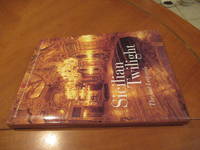
2000réf. 044278New York: Vendome Press 2000. 1st Edition 1st Printing. Hardcover. Fine/Fine. Photographs By Jean-Bernard Naudin. 182 Pp. First Printing Hardcover Fine In Fine Dust Jacket. Large Format. Vendome Press hardcover
réf. BN46043Schwarzkopf & Schwarzkopf. Schwarzkopf & Schwarzkopf unknown
réf. 0244456062.Gpaperback. Good. Access codes and supplements are not guaranteed with used items. May be an ex-library book. paperback
réf. 1326717545.Gpaperback. Good. Access codes and supplements are not guaranteed with used items. May be an ex-library book. paperback
réf. DADAX0244057389Lulu 2017-12-24. paperback. New. 8.50x0.11x8.50. Buy with confidence. Excellent Customer Service & Return policy. Lulu paperback
réf. 32456079-nnew. unknown
réf. 32456079like new. unknown
réf. 0244057389.Gpaperback. Good. Access codes and supplements are not guaranteed with used items. May be an ex-library book. paperback
réf. 32456126like new. unknown
réf. DADAX0244972974Lulu 2018-03-21. paperback. New. 8.50x0.17x8.50. Buy with confidence. Excellent Customer Service & Return policy. Lulu paperback
réf. 0244972974.Gpaperback. Good. Access codes and supplements are not guaranteed with used items. May be an ex-library book. paperback
réf. 32456126-nnew. unknown
réf. 1326963414.Gpaperback. Good. Access codes and supplements are not guaranteed with used items. May be an ex-library book. paperback
réf. 0244605254.Gpaperback. Good. Access codes and supplements are not guaranteed with used items. May be an ex-library book. paperback
réf. 0244958483.Gpaperback. Good. Access codes and supplements are not guaranteed with used items. May be an ex-library book. paperback
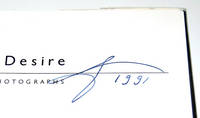
1986réf. 13229New York: Clarkson N. Potter & Polaroid Corp. 1986. Hardcover. SIGNED. First edition first printing. Fine in a Very Good minus dust jacket with some scratches to the back panel wear at the extremities and edges and one short tear/crease. Buckram-bound hardcover with crisp gilt title to spine. All dust jackets are protected by a clear mylar cover. BOOKS SHIP THE NEXT BUSINESS DAY WRAPPED IN PADDING IN A BOX. Portraits nudes fashion and still-lifes. The dreamy and romantic quality of Metzner's color photographs is enhanced by a printing process invented by the Fresson family in 1895 in France resulting in images with a grainy painterly feel an ethereal tonal range and rich color saturation. Photographs by Sheila Metzner; preface by Mark Strand; edited by Constance Sullivan. Unpaginated; 54 full-page color and duo-toned b&w plates; 12 x 11.25 inches. SIGNED BY METZNER on the half title and dated in 1991; no inscription. Clarkson N. Potter & Polaroid Corp. hardcover
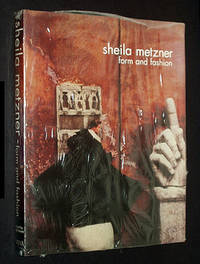
2001réf. 10593Arena Editions 2001. Hardcover. First edition. Fine/As New hardcover in dust jacket in publisher's shrink wrap. BOOKS SHIP THE NEXT BUSINESS DAY WRAPPED IN PADDING BOXED. A retrospective of Metzner's fashion work her sensual and erotic nudes and her formalist still-lifes. The dreamy and romantic quality of many of Metzner's photographs is enhanced by a printing process invented by the Fresson family in 1895 in France resulting in images that reveal an ethereal tonal range and color saturation. Photographs and preface by Sheila Metzner; foreword by Ralph Lauren; introduction by M. Raven Metzner. Includes a list of photographs. 220 pages; 132 four-color and duotone plates; 12.5 x 10 inches. Due to size and weight international and expedited shipping may be more than quoted. Arena Editions hardcover
1991réf. 4689z1991. Soft Cover. Good. PB/pub.1991/Gd. condition/191 pages - Professional Methods for the custom look. H64689z paperback
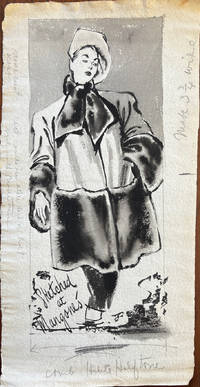
1942réf. 61064Brooklyn NY: Barbara Duffy ca. 1942-1945. Seven pieces of original pen & ink art and gouache colouring and overpainting sized from 10 x 15 in. 3 up to 15 x 20 in. 3 on “Winsor & Newton’s Illustration Board 30 x 40” while the 7th piece is 9 x 17 in. executed on textured thick laid-paper pencil annotations in MS on fore-edges all pieces signed in thick black pen on versos some dustsoiling staining to fore-edges to a couple bumping to corners edgewear still a VG set of well-done exemplars. These original fashion design illustrations encompass women’s dresses hats fur coats evening wear and a post-War design by Mangone. The two dresses drawn by Duffy are reminiscent of the Claire McCardell easy to wear and comfortable dresses which emerged at the end of the War and featured a cinched-in waist floppy collars and padded shoulders retaining the influence of men’s tailoring on women’s fashions during the War. The “Toppers” are splendid examples of box or swagger coats often made in light wool cotton or rayon blends and in this case with fetching hats and cinched-in waists. The two smaller designs with mink or beaver coats include one with a matching purse and the other with a pillbox hat. The two “Paris” style Cloche hats are nicely drawn and one is fitted with a mesh veil. The exceptional Mangone design indicates it was “Sketched at Mangone’s” which was probably one of the frequent sessions the designer would put on fashion shows at the Fashion Institute or local boutiques in and around New York following World War II and features a coat trimmed in beaver fur with Cloche hat and according to Duffy was available in light and dark wool along with an ascot. Mangone 1884-1957 was not only a significant Italian-American designer who quickly adapted Paris fashion trends into his own American style and was very popular from before World War I until after World War II. Strikingly he also was a survivor of the Hindenburg disaster who managed to leap from the Zeppelin at Lakehurst NJ with his daughter and grand-daughter looking on suffering significant burns and after shock and hospitalization spent considerable time recovering. Duffy b. 1919 taught at the Jacob Gould Vocational School for girls in Prospect Park Brooklyn NY from the time she left college until after World War II after which she worked as designer in local department stores and then disappears from census and public records. Barbara Duffy, unknown
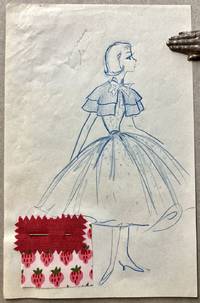
1955réf. 16984n.p. Los Angeles areaa: 1955-57 Stored in a contemporary accordion-fold card paper portfolio hand-labeled "Sketches of Accepted Designs.". 137 sheets of hand-drawn sketches sixty-two on 9" x 11 " sheets 75 on 5 " x 8 " sheets. Most with handwritten design descriptions notes and accompanying fabric swatches pinned or taped onto the sheets. Also with price lists inventories and printed ads for the Candy Jr. brand ads correspond with designs made by Saunders that are included in the present set. Portfolio somewhat worn and creased. Enclosed are eight contemporary manila folders organized by season Holiday 1955 Fall 1956 Spring 1957 etc. all hand-labeled in pencil. Some designs signed "V. Saunders" or "Vivian Saunders." Some toning and creasing to leaves. A few fabric swatches detached from leaves. Overall a very good set of striking original sketches of 1950s-era fashion designs for young women. Most of the sketches are for party dresses and evening gowns made for young women in their early teens to early twenties juniors and misses. The designs include many iconic designs associated with the 1950s including "poodle" skirts with ample petticoats boleros and cardigans and sheath dresses with cinched waists. The 26 swatches indicate a wide range of textures colors and patterns like gingham plaid organza metallics appliques ribbon velvet fur and much more." unknown
1940réf. 64735Portland OR: Jantzen Knitting Mills 1940. 8vo. 32 pp. With colour chart of “Water-Velva” fabrics on inner front cover photo illustrations throughout. Colour-illustrated softcovers updated Jantzen diving girl logo on front cover and illustration of Water-Velva fabric front cover minor rubbing soiling occasional internal pricing & product annotations still a VG copy from the library of Jantzen Co. founder John Adam Zehntbauer 1884-1969 who in 1910 had set up the Portland Knitting Co. with Carl Jantzen and C.R. Zehntbauer later becoming longtime President of the company. First edition of this very rare in-house sales manual and advertising catalogue for Jantzen Swimwear and sportswear line featuring their Lastex Yarn line-up. In the late 1930’s the Jantzen swimwear lineup became synonymous with glamour and beach fashion culture often with designs created and inspired by such movie stars as Loretta Young Joan Blondell Ginger Rogers and Dick Powell for 1-piece and 2-piece Jantzen swimsuits representing Jantzen’s philosophy of flattering the female form. These styles incorporate in this catalogue the development and introduction of the more waterproof elastic Lastex Yarn “Water-Velva” which was blended into the wool rayon cotton and silk blends in order to allow better give and fit to the suits as well as the introduction of the “Molded Fit” bustline suits. The men’s swimwear depicted in this catalogue include the “Half-Hitch Topper” “De Luxe Topper” “Commodore” “Surfer” and others.Jantzen Knitting Mills were founded in 1910 as the Portland Knitting Company and within a few years they were producing a wool suit for rowing teams and then began offering bathing suits in their catalogue. By 1918 the demand for the “Jantzen Suits” had increased so much the company changed their name to the Jantzen Knitting Mills and in 1921 the red Diving Girl logo appeared as part of a national advertising campaign. The Jantzen trademark was purchased by Perry Ellis in 2002. See: Carrie Snyder & Debra Regan Cleveland Jantzen Inc. -- Fashion Designer Encyclopedia; Jantzen Timeline 2016. No copies in Worldcat. Jantzen Knitting Mills, paperback
1911réf. 51748France: n.p. 1911. Tall 8vo. 6 leaves on thick card stock printed in gilt & black 7 x 11 in. with 369 black silk & vegetable ivory buttons all with stock numbers below and to the side many in the dark brown patterned material some jet black and many with incised or woven patterns each sample card carefully mounted within corners with facing padded red silk leaves to protect the buttons many with ink annotations indicating whether they were available in stock or not. Quarter-black cloth over purple patterned cloth gilt lettering on front cover spine very minor rubbing at the hinges slight bumping to corners still a NF exemplar with the buttons entirely complete and in perfect condition. First edition of this remarkably beautiful Edwardian button sample catalogue which are exceedingly scarce in such exceptional condition. Included are a number of different styles of buttons in vegetable ivory for clothing coats sportswear and more which were sold by this French manufacturer for export together with a number of beautifully woven black silk cloth buttons for women’s coats hats and dresses. Vegetable Ivory is a very dense material that is manufactured into buttons from the Corozo nut that grows on the Tague Tree a type of Palm. It was named Vegetable Ivory in the 19th Century because it resembles real ivory but was not as heavy or dense. These types of buttons were first introduced at the 1862 International Exhibition in England and then reached full popularity at the 1867 Paris Exposition. The sample buttons preserved here come in pressed carved and fine lined patterns some of them painted with a dark flat black other shiny black and many with a beautiful rich shiny mottled effect. During the Victorian and Edwardian periods and prior to the growth in production and popularity these were the buttons of choice for men’s suits. No copies located in Worldcat. n.p.], hardcover