436 190 résultats
réf. DADAX052123445XNew unknown
réf. DADAX0688037054New unknown
réf. SONG0140077928Used: Good unknown
réf. DADAX1562330454New unknown
réf. TA-PWDY-P0M1Used - Very Good. Almost like new. Very good condition. Ships Directly From Amazon. Has moderate shelf and/or corner wear. Decent used condition. Used books usually do not include CD's valid access codes or other supplements unless otherwise noted. Almost like new. Very good condition. Ships Directly From Amazon. Has moderate shelf and/or corner wear. Decent used condition. Used books usually do not include CD's valid access codes or other supplements unless otherwise noted. unknown
réf. DADAX1555531385New unknown
réf. DADAX1567666876New unknown
réf. DADAX081281438XNew unknown
réf. DADAX0199542961New unknown
First edition, 12mo (160 x 95 mm), iv, [5]-154, [2]pp., cont. calf, a little rubbed, joints starting, red morocco spine lettering piece. John Gough (1720?1791) arithmetician, born and educated at Kendal, Westmorland. After several years spent as a teacher in Pickwick in Wiltshire, he arrived in Ireland in 1750 to take charge of the school at Cork established by his only brother, James Gough (1712?1780). In 1752 he accepted the mastership of the prestigious Friends' school at Dublin, which he held until 1774, and after moved to a similar appointment at Lisburn. He was the author of the Rise and Progress of the People called Quakers, as well as numerous school text books. The verso of the title carries and advert for the "Boarding School at Prospect Hill, near Lisburn." Including a chapter with "Several short stories relative to the Treatment of the Indians in America and the Slave Trade." ESTC locates just the British Library and Trinity College copies; The National Library of Ireland also hold a copy.
First Edition, [2], vj, 246 pp., contemporary panelled calf, upper hinge detached, lacks label, a good copy. Alston, III, 222.
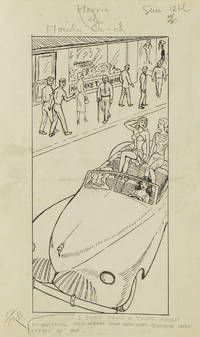
1949réf. 313357Gainesville Fla 1949. Aprox 77 pen and ink drawings with the newspaper cliping done generally for Wednesdays and Sundays. 8vo & 4to. In spiral rink notebook. Aprox 77 pen and ink drawings with the newspaper cliping done generally for Wednesdays and Sundays. 8vo & 4to. unknown
1949réf. 313357Gainesville Fla 1949. Aprox 77 pen and ink drawings with the newspaper cliping done generally for Wednesdays and Sundays. 8vo & 4to. In spiral rink notebook. Aprox 77 pen and ink drawings with the newspaper cliping done generally for Wednesdays and Sundays. 8vo & 4to. unknown books
1950réf. 544849New York: Universal Attractions 1950. Unbound. Very Good. Gelatin silver publicity photo. Portrait by James J. Kriegsmann. Measuring 8" x 10". Professionally matted glazed with conservation glass and framed to approximately 14" x 16½" the photo held in place with clear photo corners. Unexamined out of frame but the photo appears very good with modest wear and some crazing. The frame is fine with a tiny bit of wear. A nice publicity photo of the influential early rock band The Midnighters fronted by Hank Ballard. The Midnighters were inducted into the Rock and Roll Hall of Fame in 2012. Universal Attractions unknown
1950réf. 544849New York: Universal Attractions 1950. Unbound. Very Good. Gelatin silver publicity photo. Portrait by James J. Kriegsmann. Measuring 8" x 10". Professionally matted glazed with conservation glass and framed to approximately 14" x 16½" the photo held in place with clear photo corners. Unexamined out of frame but the photo appears very good with modest wear and some crazing. The frame is fine with a tiny bit of wear. A nice publicity photo of the influential early rock band The Midnighters fronted by Hank Ballard. The Midnighters were inducted into the Rock and Roll Hall of Fame in 2012. Universal Attractions unknown books
1945réf. 43099No Place Baden-Baden: Arbeitsgemeinschaft "Das Licht 1945. Paperback. No Date 1945 1st edition original printed paper wrappers. Large 8vo 130 pages plus 56 unnumbered pages of photo plates. 27 cm. In German. Title translates as “Concentration Camps: Factual Report on the Crimes Committed Against Humanity. Document F 321 for the International Military Tribunal in Nuremberg.” Compiled by Eugène Aroneanu the creator of the concept of “Crimes Against Humanity under International Law” with the first prosecution under this concept taking place during the Nuremberg trials against defeated leaders of Nazi Germany as outlined in this work. Includes 17-page list of camps and prisons on pages 113-130 listing the name location and type of each camp. This report provides the evidentiary material given to each participant of the Nuremberg Military Tribunal to become acquainted with the evidence to be presented. The report recounts the German crimes against humanity detailing deportation detention concentration camps tortures medical experimentation execution gassing and incineration. It also delineates the web of procedures and complex organizational structure of concentration and extermination camps set up by the Germans during the course of Nazi rule. With an appendix of dozens of unimaginably gruesome photographs. Table of contents translated: - Foreword - List of witnesses reports and documents - The four main Nazi accusations - Deportation departure / arrival - Internment admission / theft / clothing / housing / food / hygiene - Administration and camp regulations distinction between prisoners - Camp life discipline / customs / religion / everyday scenes / roll call / punishments and torture - Work men's work / women's work - Sanitary conditions illnesses / medical examinations / hospital accommodation / sick conditions / nursing and treatment of the sick / abortions / childbirths / sterilization of women / sterilization and castration of men / the German medical corps - Medical experiments and vivisection - Various executions - Repercussions on the prisoners revolt escape suicide - Extermination selection in the camp / selection upon arrival / gassing and cremation - Liberation - Number of deaths percentage / balance - Before the war - Appendix - List of the camps commandos and prisons used for incarceration - Illustrations Eugène Aroneanu “was a Romanian lawyer resistance fighter and author of several works on international law. In the mid-1930s he emigrated to Paris. When World War II broke out in September 1939 he conducted radio broadcasts to Romania. When France was occupied in 1940 he joined the French Resistance operating underground under the name Aréne. In 1943 he managed to escape to Switzerland . Aroneanu authored 58 publications. In 1945 he was tasked with compiling a documentation of Nazi wartime atrocities for the Nuremberg Trials. He also drafted a corresponding legal plea intending to expand the prosecution beyond the treatment of the extermination of the Jews as merely a crime against peace and war crimes as desired primarily by the British to include the new territory of crimes against humanity under international law” Wikipedia SUBJECTS: World War 1939-1945 -- Concentration camps. Holocaust Jewish 1939-1945 -- Personal narratives. -- Atrocities. Guerre mondiale 1939-1945 -- Camps d'internement. Holocauste 1939-1945 -- Re´cits personnels. -- Atrocite´s. Internment camps. Crimes against humanity -- Germany. OCLC: 37149416. Light wear to wrappers toning to paper Very Good Condition overall. BK5 Holo2-162-39XX-EGGACC-'l. No Place [Baden-Baden]: Arbeitsgemeinschaft "Das Licht paperback
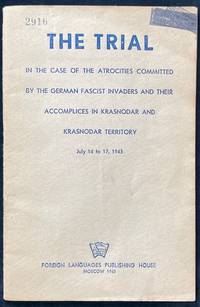
1943réf. 42274Moscow Foreign Languages Pub. House 1943. Paperback. 1st English Language Edition. Original Wrappers. 8vo. 40 pages; 19 cm. Koppel Pinson's copy with gift bookplate. Contemporary account published in 1943 of the very first war crimes trial against Nazi defendants held following the Russians’ recapturing of Krasnodar From the Germans who had occupied it. SS-sonderkommando units massacred thousands of Russian citizens Jews and communists. The trials were held immediately in the summer of 1943 while the war against Hitler was ongoing. Includes transcript from the trial and gruesome photographs of the victims of the atrocities. SUBJECT S : War crimes -- Soviet Union. OCLC: 11136869. Small donation bookplate number on margin of final leaf otherwise Very Good condition excellent copy. Very important. B holo2-135-10-LWWEV-'mmacc. Moscow, Foreign Languages Pub. House paperback
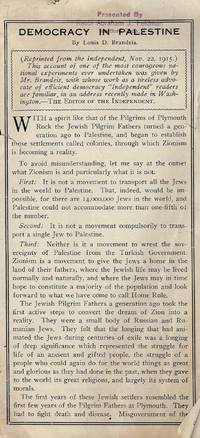
1915réf. 35996New York: Provisional Executive Committee For General Zionist Affairs 1915. Pamphlet. No date 1915 1st separate edition Single-fold pamphlet 4 pages; 16 cm. "Reprinted from the Independent Nov. 22 1915." Compares the early Zionists to the American Founding Fathers and the early settlers to the Mayflower Pilgrims calls on support to help Palestine with funds. Important call to action from the future Supreme Court Justice which puts the Zionist cause squarely hand in had with the American story and American values. SUBJECT S: Zionism -- United States. OCLC lists only 1 copy worldwide Columbia. Some edgewear Small Rabbi's presentation stamp on cover Good Condition. Rare. B KH-3-12. [New York: Provisional Executive Committee For General Zionist Affairs] unknown
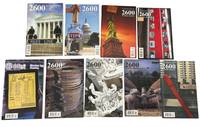
2001réf. 237932001. Emmanuel Goldstein's 2600: The Hacker Quarterly across nine issues from 2001 to 2011 documenting the movement of hacker culture from telephone systems desktop computing and the early commercial Internet toward broadband wireless networks social media smartphones biometrics and electronic surveillance. Founded in 1984 2600 developed from phone phreaking culture into a forum for computer security telecommunications privacy and the politics of technological access. The earliest issue here appeared during the DeCSS litigation involving editor Emmanuel Goldstein the pseudonym of Eric Corley and 2600 Enterprises placing the magazine directly within the early legal conflict over computer code copyright enforcement linking and the Digital Millennium Copyright Act. Later issues show the field broadening through articles on password recovery denial of service attacks caller ID spoofing cyberwar penetration testing Facebook Google Analytics smartphones phishing IPv6 and quantum computing. 2600: The Hacker Quarterly" Emmanuel Goldstein Eric Corley editor. Middle Island and Setauket New York: 2600 Enterprises Inc. 2001 to 2011. Nine issues. The Spring 2001 issue includes "Police Searches of Computers" "The Future of PKI" "PHP/CGI Vulnerabilities and Abuses" "The Anna Kournikova Virus" and "'Takedown' Taken Down." Subsequent issues include "Lawfully Authorized Electronic Surveillance" "A Password Grabbing Attempt" "Denial of Service Attacks Tools of the Tools" "The Threat of Biometrics" "ANI and Caller ID Spoofing" "The State of Cyberspace and Cyberwar" "Penetration Testing: The Red Team Way" "Hacking Google Analytics" "Free Encrypted 3G Web Access on T Mobile Smartphones" "More on Hacking Facebook" "The Joy of IPv6" and "Vulnerabilities in Quantum Computers." Recurring international payphone sections range across India Puerto Rico the Dominican Republic North Korea France Ireland Romania Malaysia Singapore Brunei Hungary South Africa Egypt Thailand Eritrea and the Netherlands Antilles retaining the magazine's phreaking origins as its technical attention shifted toward networked and mobile systems. The issues span a period when practical hacking increasingly intersected with debates over surveillance intellectual property privacy and corporate control of networked systems. Staff and contents pages place technical exploits beside quotations and commentary on government and corporate authority while the international payphone features preserve an older telecommunications culture increasingly displaced by broadband and cellular networks. By the later issues Facebook Google Analytics encrypted 3G access wireless honeypots phishing darknet services and electronic medical records had joined telephone systems as objects of hacker inquiry. Covers and wrappers show light to moderate edge and spine wear rubbing occasional creasing and handling wear; interiors shown are clean and legible. Overall good condition. A concentrated record of 2600 during the transition from telephone phreaking and early Internet hacking to broadband networks social platforms mobile computing and pervasive digital surveillance. unknown
2001réf. 237932001. Emmanuel Goldstein's 2600: The Hacker Quarterly across nine issues from 2001 to 2011 documenting the movement of hacker culture from telephone systems desktop computing and the early commercial Internet toward broadband wireless networks social media smartphones biometrics and electronic surveillance. Founded in 1984 2600 developed from phone phreaking culture into a forum for computer security telecommunications privacy and the politics of technological access. The earliest issue here appeared during the DeCSS litigation involving editor Emmanuel Goldstein the pseudonym of Eric Corley and 2600 Enterprises placing the magazine directly within the early legal conflict over computer code copyright enforcement linking and the Digital Millennium Copyright Act. Later issues show the field broadening through articles on password recovery denial of service attacks caller ID spoofing cyberwar penetration testing Facebook Google Analytics smartphones phishing IPv6 and quantum computing. 2600: The Hacker Quarterly" Emmanuel Goldstein Eric Corley editor. Middle Island and Setauket New York: 2600 Enterprises Inc. 2001 to 2011. Nine issues. The Spring 2001 issue includes "Police Searches of Computers" "The Future of PKI" "PHP/CGI Vulnerabilities and Abuses" "The Anna Kournikova Virus" and "'Takedown' Taken Down." Subsequent issues include "Lawfully Authorized Electronic Surveillance" "A Password Grabbing Attempt" "Denial of Service Attacks Tools of the Tools" "The Threat of Biometrics" "ANI and Caller ID Spoofing" "The State of Cyberspace and Cyberwar" "Penetration Testing: The Red Team Way" "Hacking Google Analytics" "Free Encrypted 3G Web Access on T Mobile Smartphones" "More on Hacking Facebook" "The Joy of IPv6" and "Vulnerabilities in Quantum Computers." Recurring international payphone sections range across India Puerto Rico the Dominican Republic North Korea France Ireland Romania Malaysia Singapore Brunei Hungary South Africa Egypt Thailand Eritrea and the Netherlands Antilles retaining the magazine's phreaking origins as its technical attention shifted toward networked and mobile systems. The issues span a period when practical hacking increasingly intersected with debates over surveillance intellectual property privacy and corporate control of networked systems. Staff and contents pages place technical exploits beside quotations and commentary on government and corporate authority while the international payphone features preserve an older telecommunications culture increasingly displaced by broadband and cellular networks. By the later issues Facebook Google Analytics encrypted 3G access wireless honeypots phishing darknet services and electronic medical records had joined telephone systems as objects of hacker inquiry. Covers and wrappers show light to moderate edge and spine wear rubbing occasional creasing and handling wear; interiors shown are clean and legible. Overall good condition. A concentrated record of 2600 during the transition from telephone phreaking and early Internet hacking to broadband networks social platforms mobile computing and pervasive digital surveillance. unknown books
1855réf. 3iAc0033Washington D.C.: Beverly Tucker 1855. Book. Very Good. Hardcover. 8vo or 8° Medium Octavo: 7¾" x 9¾" tall. 638 pp. A rare hard-to-find out-of-print scarce true collectible gem! A wonderful copy! An excellent addition to any collection! Solidly bound copy with moderate external wear crisp pages and clean text. Minimal light slight or very mild browning tanning foxing or discoloration on page edges not affecting text. Bumped cover board corners. Pen note on inside of back cover board. No dj. Over-sized and/or over weight book; extra postage required. Please note that large and/or heavy items may incur an additional shipping charge. Pictures of actual copy -not displayed here!- available upon request. . Beverly Tucker Hardcover
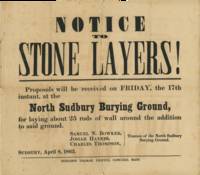
1863réf. Cat320Concord Massachusetts: Benjamin Tolman 1863. Printed broadside 11 ¼ x 10 inches. Some tearing at folds very good. A straightforward but telling piece documenting the expansion of a Massachusetts burying ground during the American Civil War signed in type by three trustees of the North Sudbury Burying Ground. As casualties mounted and remains were returned to hometowns existing cemeteries were frequently enlarged with new land enclosed and improved by contract. The specification of “25 rods” over 400 feet of wall indicates a substantial addition typical of mid-war efforts to increase capacity in established town burial grounds rather than create entirely new sites. Sudbury contributed roughly 150–170 men to Union service of whom approximately eleven died a scale of loss consistent with small Massachusetts towns and sufficient to register locally in burial and memorial practices. We find no other records of ephemera or broadsides relating to Civil War-era cemetery expansion. This notice is not at AAS. Benjamin Tolman unknown
1863réf. Cat320Concord Massachusetts: Benjamin Tolman 1863. Printed broadside 11 ¼ x 10 inches. Some tearing at folds very good. A straightforward but telling piece documenting the expansion of a Massachusetts burying ground during the American Civil War signed in type by three trustees of the North Sudbury Burying Ground. As casualties mounted and remains were returned to hometowns existing cemeteries were frequently enlarged with new land enclosed and improved by contract. The specification of “25 rods” over 400 feet of wall indicates a substantial addition typical of mid-war efforts to increase capacity in established town burial grounds rather than create entirely new sites. Sudbury contributed roughly 150–170 men to Union service of whom approximately eleven died a scale of loss consistent with small Massachusetts towns and sufficient to register locally in burial and memorial practices. We find no other records of ephemera or broadsides relating to Civil War-era cemetery expansion. This notice is not at AAS. Benjamin Tolman unknown books
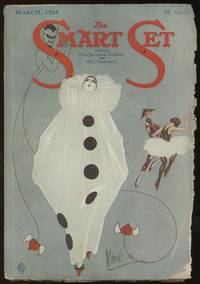
1923réf. 32653New York: Smart Set Company Inc. 1923. Text paper white covers have several small tears to right and bottom edges reading crease label remnant to upper right front cover small paper loss to spine ends a very good copy. 32653. Octavo single issue pictorial wrappers. Magazine. One page article "The Master Mind" by Dashiell Hammett. Reference: Laymen Dashiell Hammett: A Descriptive Bibliography C6. Smart Set Company, Inc. unknown
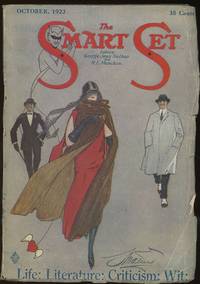
1923réf. 32655New York: Smart Set Company Inc. 1923. Text paper white covers have mild wear and closed tears along right and lower edges front and back slight paper loss to spine ends a very good copy. 32655. Octavo single issue pictorial wrappers. Magazine. Story "The Crusader" by Dashiell Hammett writing as "Mary Jane Hammett." Reference: Laymen Dashiell Hammett: A Descriptive Bibliography C13. Smart Set Company, Inc. unknown