594 résultats
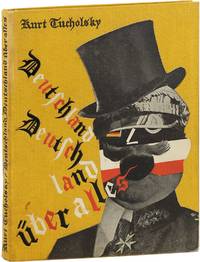
1929réf. 84810Berlin: Neuer Deutscher Verlag 1929. First German Edition. First Printing cloth issue with 1.-20. Tausend printed on title page. Octavo 24cm; yellow decorative cloth with photomontage by John Heartfield applied to covers and titles stamped in black on spine; yellow topstain; 231pp 5; illus; text is in German. Contemporary October 1929 owner's name penciled to front endpaper; slight forward lean light overall dust-soil to cloth with pictorial elements well-preserved and largely unrubbed; browning to endpapers with mild wear to base of spine; a presentable copy Very Good lacking the rare dustjacket. A powerful piece of social criticism by Tucholsky one of the most prominent German-Jewish authors and journalists of the Weimar Republic. Produced with graphic designer John Heartfield Tucholsky managed to combine vicious attacks on everything he disliked about Germany with a declaration of love for his country. He warned of a government with anti-democratic tendencies and the impending threat of National Socialism - a plea almost to revolutionize a dormant country - though his fears were realized in 1933 when Hitler assumed the position of Chancellor of Germany. Axel Eggebrecht one of Tucholsky's contemporaries said of Deutschland: "If this book were to turn out to be quite a big success it might be realized that the dream of awakening is still very vivid in Germany." Deutschland was listed on the Nazis list of censored books and though it did go through a second printing few enough survived destruction. The present example is one of apparently two variant bindings for the first printing with no extablished priority known to us. While the pictorial cloth binding is the variant we have seen and handled most often we note another in yellow cloth without the pictorial elements and titles stamped in black on spine and front cover. A well-preserved example and a high-point of Heartfield's graphic design and layout work. Pachnicke & Honnef 60a-69 p.148-161. Neuer Deutscher Verlag unknown books
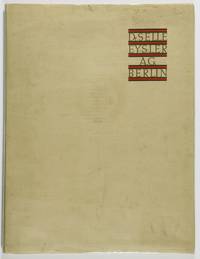
1930réf. 51604Berlin: Dr. Selle-Eysler A.G. 1930. First printing. Softcover. Very good- to fine condition. Folio 15 1/4 x 11 3/4". Unpaginated 45 leaves. Original stiff ivory paper boards with embossed circular company logo in silver and red on cover with tissue guard in original stiff ivory parchment dustjacket with gilt lettering and red and black ruling on cover. Frontispiece silkscreen. Double page silkscreen with white lettering on gilt background announcing the 25th company anniversary. The dedication page with a silkscreen with gilt lettering and the founder's portrait Dr. med. Gustav Selle in gilt and black both silkscreens. Second frontispiece with gilt company buildings in gilt title page with bold gilt lettering and red and black ruling. Decorative initials. Lavish company history of the Selle-Eysler A.G. one of the first industrial graphic design companies specializing in photographic photomechanical and electromechanical procedures to prepare artwork photographs and graphic design for the printing process. Following the title page four pages with high quality offset reproductions of photographs of the company founder Erich Zander the cofounder Siegmund Labisch both full page and five members of the corporate board on one page. The photographs are rendered in photogravure and many of the designs with gilt overprinting. Striking work celebrating the 25th anniversary featuring the highest quality of graphic design and printing stating an example for the company intrinsically linked to the history of these techniques. This book is profusely illustrated with numerous b/w and color photographs of prepress procedures printing facilities company employees and contains an extensive section with color reproductions of various magazines including :Elegante Welt" "Das Magazin" "Wahre Geschichten"Deutsche Illustrierte" "Lustige Blätter" and others printed by the company. Includes various diagrams. Typesetting clichés and printing by the Dr. Selle-Eysler AG. Printed to heavy flat as well as glossy paper. Scarce in original dustjacket. Text in German. Dustjacket with light wear along edges minor chips and creasing closed tears reinforced with clear tape along inside bottom of front flap cover and spine and lightly rubbed. Binding with small strip of sunning along top of front cover interior in fine condition. Dr. Selle-Eysler A.G. unknown books
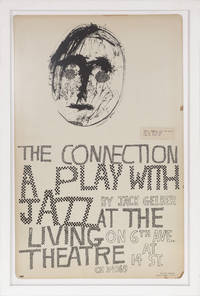
1959réf. 158542New York: Inkweed Studios 1959. Vintage poster for the 1959 off-Broadway play which opened on July 15 1959 at the Living Theatre. Poster designed by Inkweed Studios with a label affixed to the recto stating showtimes. Presumably either unique or produced in very small quantity. Mounted on art board as issued and used. Founded in 1951 by Beat poet Kabbalist and Lower East Side underground luminary Lionel Ziprin with his wife illustrator and dancer Joanne Ziprin Inkweed Studios was originally created to produce "studio cards"-greeting cards to rival the mass-produced cards produced by the Hallmark Company. While not financially successful Inkweed did produce many outstanding graphics such as the poster on offer here. The company also served as the launching pad for the graphic work of artists such as Harry Smith Jordan Belson Bruce Conner Barbara Remington and William Mohr. Jack Gelber's landmark play within a play observes a producer and writer attempting to stage a production using "real" heroin addicts largely jazz musicians waiting for their score interspersed with jazz music. Notable not only for its honest depiction of addiction the play also radically re-imagined the relationship between audience and actor with actors utilizing the theatre's aisles as performance areas an actor presented as an audience member and actors remaining in character and panhandling during intermission. A key play in the history of American jazz and an evocative portrait and product of the Beat era. Winner of three Obie Awards including Best New Play Best All-Around Production and Best Actor for Warren Finnerty. Made into an equally groundbreaking and largely unrecognized motion picture in 1961 directed by Shirley Clarke and starring Finnerty and William Redfield. 13.75 x 21.75 inches archivally framed to 16.25 x 24.25 inches. Very Good plus with some light corner and edgewear a small chip to the bottom right corner and a small bruise to the mid-right edge. Inkweed Studios unknown books
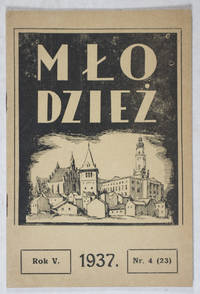
1937réf. 40404Drohobycz/Drohobych: Komitetu Redakcyjnego Uczniow Panstw. Gimn. w Drohobyczu 1937. First edition. Softcover. vg to near fine. Large octavo. 15pp. 1. Original tan illustrated stapled wrappers with black and white lettering on cover. Design and cover illustration by Bruno Schulz depicting the buildings of Drohobycz. This is vol. 5 issue 4 from the youth magazine November/December 1937. Co-published by students of the "State Gymnasium of Jagiello High School" and the private "Co-Educational Sienkiewicz High School" the periodical ran from 1933-1938. The publication covers the topics of celebrations of the Polish Independence Day November 11 gymnasium chronicles contribution on sports poetry and other material. Illustrated with two b/w reproductions of photographs. The final chapter of memoirs describes the Scout Units of the gymnasium and its history. Photographic reproductions from glass negatives courtesy of "Skauts." Wrappers with minor smudges and scratches to the front cover. The back cover contains light scribbling in pet at the top left corner. Wrappers in very good interior in near fine condition overall. Extremely scarce. Bruno Schulz 1892-1942 was a Polish Jewish novelist and painter who studied and lived most of his life in Drohobycz. Editorial attribution of the cover to Bruno Schulz in the second issue of the magazine where the editor thanks Schulz for his contribution. Komitetu Redakcyjnego Uczniow Panstw. Gimn. w Drohobyczu unknown books
1934réf. 912441934. DESIGN Kamisaka SEKKA. UTA-E Kyoto & Tokyo: Unsodo Showa 9 1934. 1 volume 31 x 22 cm cloth ribbon bound covers paper label. 25 color full page images after designs by Sekka. As Sekka's last work it crowns his remarkable career with a lovely evocation of Koetsu's Saga-bon. For more on this important work see Hillier's description on p.976 of the second volume of his ART OF THE JAPANESE BOOK. The condition is a bit better than average with relatively little of the offsetting from the prints to the poems that is usual in this book. Slight foxing and slight edgewear. The printing is very good the colors lovely. It is a good copy overall but the back cover has an ownership note in Japanese upon it. Without the original publishers clasped case but otherwise complete. Priced accordingly. One volume:. unknown books
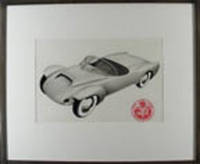
1953réf. 18794Boston 1953. Mixed media on paper. Mounted circular label lower right of the Motor Vehicle Research Company. Drawn for A. J White's Motor Vehicle Research Company which is said to have been a Boston based car designer of exotic cars in the 1950's this handsome prototype embodies several features that were realized later especially in recent racing cars. The gleaming prototype is extremely well drawn and seems to be happily flying through the air. unknown books
1944réf. 187991944. Pencil and watercolor on drafting paper. Lower right corner of page has been skillfully replaced. Does not affect images. Handsome proposed design for a post-war Cadillac. The license plate reads "GM 1944" raising interesting questions since as everyone knows virtually no new cars were produced during the high armament production years of World War II and certainly not pretty new dark pink ones. The car portrayed here does however anticipate very much the look of early fifties' vehicles if not necessarily Cadillacs. And bright colors certainly would catch on in a way they had not before the war. Note the 1930's Cadillac emblem on the front grille which was changed when auto production actually re-commenced. unknown books
1922réf. 156616St. Louis MO: Lippman Kamprite Trailer Company 1922. Vintage oversize double weight composite retail display photograph showing 18 images of the Lippman Kamprite Trailer circa 1922. Originally produced in 1921 in St. Louis Missouri the Lippman Kamprite Trailer was one of the earliest self-contained travel trailers. Advertised as "a real camp home in three minutes" the trailer boasted beds for four a privacy partition hammocks for clothes and a tail lamp. The composite photograph on offer here displays the assembly and functionality of the trailer in eighteen charming images and was almost certainly used for retail display. As production-line manufacturing of affordable automobiles began in the early twentieth century and car ownership boomed the production of auto trailers and goods and amenities for auto touring followed close behind. A number of creative and unusual apparatuses marketed for auto touring appeared in the 1910s including bed kits for car interiors bed and tent kits which mount to the running board and about the car as well as a variety of early auto trailers. The following decade the 1920s would be a golden age for motor camping with the refinement of the design of tent trailers and the advent of travel trailers. A charming relic of the golden age of motor camping. 13.5 x 19.5 inches. Very Good plus with a small closed tear to the top margin two modest chips to the bottom margin and a modest chip to the bottom right corner repaired with cello tape on the verso. Clean sharp and unfaded. Lippman Kamprite Trailer Company unknown books
1929réf. 45443Prague: Klub Architektu Stavba 1929. First edition. Softcover. vg- to near fine. Octavo. 4 1/4x 8". 23pp. 9. Grey staple-bound wrappers with red lettering on the covers. This scarce publication is a catalog for the modern architecture exhibition of the same name held at the Central Library of Prague May 15-31st 1929. Based on the successful "Neues Bauen" exhibition organized by the "Deutscher Werkbund" in Stuttgart this exhibition combined the works feature there with additional sections of Czech modern architecture for a total of 415 designs. Among those whose work was featured were many of the greatest modernist architects and designers of the era including Le Corbusier Walter Gropius Jaromír Krejcar "E. Lisickij" El Lissitzky Peter Behrens Kazimir Malevich Ludwig Hilberseimer Andre Lurcat Erich Mendelsohn Mies van der Rohe J. N .Sobolev Mart Stam Richard Neutra Hans Scharoun Bruno Taut J. J. P. Oud Henri van de Velde Adolf Meyer Hans Poelzig Gerrit Rietveld and Frank Loyd Wright as well as Czech architects Antonín Černý Bohuslav Fuchs Karel Chochola Adolf Loos and Vít Obrtel. The catalog lists those architects and designs exhibited and includes a preface by Czech architect and professor Oldřich Starý 1884-1971 and nine pages of advertisements at the end. Text in Czech. Wrappers with light rubbing to extremities and minor foxing and smudges to the covers. Wrappers in very good- interior in near fine condition overall. Extremely scarce. Klub Architektu Stavba unknown books
1967réf. 008323New York: Holt Rinehart and Winston 1967. Book. Near Fine. Cloth. First Edition. Tall 4to - over 9¾" - 12" Tall. RARE Review Copy of this groundbreaking behind-the-scenes look into the New York art scene of the 1960s. With four 8" x 10" B&W glossy photos from the book laid in; George Segal's "Couple at the Stairs"; Andy Warhol in his studio; Marcel Duchamp in his Manhattan apartment; and Lee Bontecon relaxing in her studio first 3 photos Fine last photo small faint spot bottom margin and faint bottom corner crease. The book is Near Fine small prior owner name 2nd front end page slight bowing to boards. In a Very Good dust jacket 1/4" chip across head and 1 1/2" chip base of spine narrow chip at top edge front flap fold several small closed edge tears. Original photographs from this New York collection are uncommon at auction.RBH. While these four are not originals they would be striking framed as a set. Holt, Rinehart and Winston Hardcover books
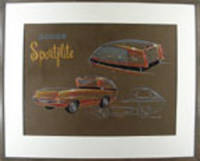
réf. 187861970. Watercolor and pastel on illustration board. Signed "William A. Moore" Intriguing concpetual drawing for an unusual pickup truck Three views of a rather dazzling vision of a pickup truck and though the "Dodge Sportflite" was never produced the idea of making more luxurious and innovative pickup trucks has definitely caught fire since the time of this handsome drawing. This design brings the driver over the engine as in many heavier trucks giving the driver greater command of the road especially for town and city driving. The styling of the cab and cargo bed is anything but mundane with lines vents a black ribbon around the cab and two large additional brake lights that add a notes of elegance and creativity to the overall effect. "In 1956 William Moore won the General Motors Fisher Body Craftsmen' Guild National Exhibition for his car design. In 1968 he accepted a position as Head of Design for Lear in Reno Nevada. William Moore's art has been placed in.the Smithsonian and the Favell Museum of Art and Artifacts." The Museum of Automotive Art and Design website. The Museum of Automotive Art and Design website artist biographies # 129. unknown books
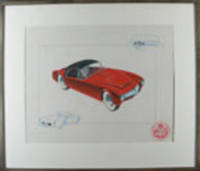
1953réf. 18800Boston 1953. Tempera on paper. Initialled "R.S.W." Mounted circular label lower right. Handsome 1950s sports car design. All of our present information about this drawing comes from a label on the back of the piece which indicates that it comes from the archives of the A.J. White Motor Vehicle Research Company - designers of exotic cars in the Boston MA area. We have not discovered any further information about the A. J. White Research Company thus far nor about the artist R.S.W. of this particular drawing. There does not appear to be any connection to the great White truck manufacturer. The drawing itself is especially nice its cool red sportscar positioned diagonally between two details in blue in a way that makes it appear anxious to move. unknown books
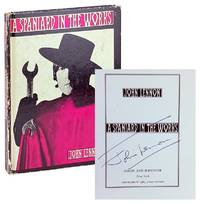
1965réf. 45569New York: Simon and Schuster 1965. Very Good-. New York: Simon and Schuster 1965. Second Printing. Small octavo; publisher's photo-illustrated paper covered boards; 90pp.; illus. throughout by Lennon. Boards quite rubbed front hinge starting to crack; overall a Good to Very Good only example of this fragile work. Signed by Lennon on title page with Certificate of Authenticity laid in. Simon and Schuster unknown books
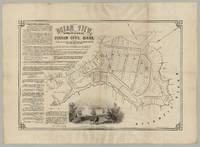
réf. 7643Boston: J. H. Bufford’s Lith. ca. 1870. Lithograph 20.25” x 30.25” plus margins. CONDITION: Very good old folds and a .5” chip to upper-right edge recently backed with Japanese tissue. A scarce and elaborate plat map for a seaside resort development at Pigeon Cove in Rockport Mass. Located on the eastern extremity of Cape Ann Pigeon Cove began attracting vacationers from the Boston area during the 1840s. Once the train reached the area in 1862 summer boarding homes soon gave way to seasonal hotels. Spearheading the development of Ocean View were the two men listed at the center-left of this map—George Babson of Pigeon Cove 1835–1895 and Eben Phillips of Boston 1808–1875 the latter owning much property there. The map shows the various subdivisions of Ocean View including occupied lots and those set aside for various purposes as well as numbered lots for sale. Among the lots occupied or in use are those of Pigeon Cove House Mrs. M. D. Babson Summer Boarding House Rev. E. H. Chapin of New York two observatories and the town school. Also identified on the plan are commercial entities surrounding Pigeon Cove Harbor such as E. Eames & Co. and Marchent & Co. A vignette entitled “View from Phillips Avenue near Dick’s Dream” shows a couple riding horseback against a sunset backdrop of vessels plying the waters. Text in the upper-left corner extolls Ocean View’s various beauties its mineral springs—“differing entirely from others and pronounced by leading physicians to contain great medicinal properties”—and the “laying out of the lots which are very large” and “beautifully shaded with a native growth of Walnut Oak and Pine trees…” In the lower-left corner are fifteen glowing testimonials from summer residents visitors from Boston and New York the editor of the New Orleans Picayune and publications such as Springfield Republican Boston Transcript etc. Commended here are Ocean View’s “wild and romantic” scenery; the “grateful odor of the forest mingled with the briny exhalations from the ocean”; “rocks in magnific multitudes” and so on. Poet William Cullen Bryant observes: “Full of pleasant paths running in every direction the woods here look like a beautiful rural temple.” One rapturous visitor cites a few lines of poetry: “Blended there / In wild reality when life is old / And many a scene forgot the heart will hold / Its memory of this.” Ocean View is here advertised as accessible from Boston by little over an hour’s rail ride via the Eastern Railroad; at the time of this map’s production four trains traveled from Boston to Ocean View each way daily. OCLC records just two holdings of what appears to be the same edition of this map at the Peabody Essex Museum and the Leventhal Center at the Boston Public Library. We locate a third example held by the town of Rockport. Another edition with tinting and more vignettes was published as well. A rare and quite handsome promotional map for this North Shore resort development. REFERENCES: Ray Martin. “Ocean View” at Notes from Halibut Point online; pictured at Digital Commonwealth Massachusetts of Rockport Town Hall. Boston: J. H. Bufford’s Lith., [ca. 1870] unknown books
1927réf. 910941927. ONCHI Koushirou æ©åœ°å四郎 binding design. NIHON JIDOU BUNKO 日本å…童文庫 JAPANESE CHILDREN'S LIBRARY 76 volumes complete. Searching for a concise introduction to this set I found a wonderful little essay written by the owner of the UMINEKO book shop in Japan. He was remarking on the exhibition of art bindings that he had seen at an exhibition of art bindings from the 20s and 30s that was held at the Old Book Center æ±äº¬å¤æ›¸ä¼šé¤¨ã€€in Tokyo a few years ago. This is a rather poor translation more a paraphrase really from his original Japanese. Just a nice introduction to the set and the era. ”When I went to the recent exhibition I was quite taken with a variety of book named "Yenbon" It is a general term for the collection of literary works published by many publishers in the late 1920s early Showa era. They were called 'yen book' at that time because they were priced cheaply at 1 yen per volume. So-called "Yen books" for children representatives of which are this "Nihon Jidobunko"Children's Library and "Shougakusei Zenshuu" Elementary School Children's Complete Works Published by Kobunsha Bungeishunjusha. ARS and Koubunsha are known for their fierce competition in advertising and sales in that era. "Nihon Jidoubunko" was a collection of 76 volumes published by ARS from 1927 Showa 2 to 1930 Showa 5. Ars Publishing is a publishing company founded by the famous poet Kitahara Hyakushu's younger brother Tetsuo. They published wonderful works on art theory photographic manuals dictionaries of science. many designed by Onchi. The sales policy of this "Japan Children's Library" was "Distributed only to reserved members not sold individually. Separate volume 'Self-Study Dictionary' will be given free of charge." In other words quite like the animal encyclopedia my parents bought me monthly at the supermarket back in the early 60s. Illustrated by Takeo Takei Yumeji Takehisa Hatsuyamaji Kiichi Okamoto and many other of the finest children's illustrators of the time. The authors and editors included Mimei Ogawa Hakushu Kitahara Shoyo Tsubouchi Miekichi Suzuki and Toson Shimazaki. Onchi himself worked on the cover art and binding of all volumes and the cover art is different for each volume. All are very beautiful. Onchi worked on everything from the layout of the illustrations to the creation of the block copy and the creation of the advertising pamphlet for the entire volume. A revised edition was released after the war in 1953 Showa 28. Onchi was in charge of the binding for the revised version but the design and binding are the same for all volumes. Not varied for each volume as here. Thus a remarkable set virtually impossible to find complete of a collection of contemporary children's stories by famous Japanese authors housed in a beautiful binding and book design. brother Tetsuo. They published wonderful works on art theory photographic manuals dictionaries of science. many designed by Onchi. The sales policy of this "Japan Children's Library" was "Distributed only to reserved members not sold individually. Separate volume 'Self-Study Dictionary' will be given free of charge." In other words quite like the animal encyclopedia my parents bought me monthly at the supermarket back in the early 60s. Illustrated by Takeo Takei Yumeji Takehisa Hatsuyamaji Kiichi Okamoto and many other of the finest children's illustrators of the time. The authors and editors included Mimei Ogawa Hakushu Kitahara Shoyo Tsubouchi Miekichi Suzuki and Toson Shimazaki. Onchi himself worked on the cover art and binding of all volumes and the cover art is different for each of the 76. All are very beautiful. He also did the layout of the illustrations created the block copy and the advertising pamphlet for the entire volume. A revised edition was released after the war in 1953 Showa 28. Onchi was in c. unknown books
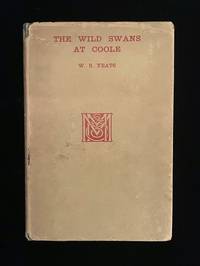
1920réf. 013746London: Macmillan 1920. 1st Edition. Hardcover. Very Good/Good . First edition in first issue dustjacket which is soiled with a spine that is browned and missing about half inch at each end. Covers designed by Moore are quite nice. Moderate wear to cloth at spine ends. Some offsetting to ffe and fly with an ownership name that looks like Leslie Hogarth dated 1919 upper right corner of half title. Macmillan hardcover books
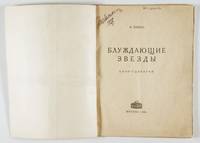
1926réf. 54867Moscow МоÑква: Kinopechat Кинопечать 1926. First edition. Softcover. Good to very good condition. Octavo. 80pp. Dark blue and white wrappers with constructivist typography on the front cover housed in modern blue heavy paper portfolio with printed typographic design of original cover pasted to cover flap. Publisher's device on title page. This scarce published screenplay for the film adaptation of Sholem Aleichem's novel "Wandering Stars" by the acclaimed Russian-Jewish novelist playwright and journalist Isaac Babel 1894-1940. The film was premiered in Kiev on January 4th 1927 and was directed by Grigori Gritscher-Tscherikower 1883-1945. It was produced by VUFKU studios the national film studios of the Ukrainian SSR. This book contains the entirety of the film's screenplay accompanied by three striking b/w illustrations by Soviet artist and designer Alexander Bykhovskii 1888-1978 who likely also created the striking cover. The final three pages contain publisher's ads listing other work on the topic of cinema. The story tells of the love between Leibel the son of a wealthy shtetl family and Reizel a poor cantor's daughter in Bessarabia. The two run off to join a traveling Yiddish theater group. They are later separated with each becoming successful in their own right only to eventually reunite in America. The work was first serialized and originally appeared in the Warsaw newspapers between 1909 and 1911. It has come to be seen as the third in an unofficial trilogy of novels by the writer centering on musicians or performers preceded by Stempenyu 1888 and The Nightingale 1889. In 1925 the Moscow State Jewish Theater suggested that the Goskino the Soviet State Film Studio produce a film adaptation of Sholem Aleichem's novel. The order was commissioned to Isaac Babel for translation and adaptation from the book's original Yiddish language to Russian for the screenplay. During this period Babel had been working on other translations of Yiddish literature into Russian including the collected works of Sholem Aleichem and work by David Bergelson. According to Babel's foreword printed here he faced a number of difficulties adapting the novel including the modification of petty bourgeoisie motifs as well as the changes of film directors and their differing requirements. Because of certain elements in the script of which the main committee of the Goskino did not approve the film's production had to ultimately be switched to VUFKU studios in Odessa. In a letter during the period of production Babel apparently wrote: "I will have to be present on the set. if I am not there the director will ruin everything" and later upon hearing of further changes made by Gritscher-Tscherikower wrote that "it is more profitable for me not to participate in this shameful production". Regardless of Babel's opinion of the final product the film was well received by Soviet audiences at the time. Text in Russian. Portfolio with minor wear. Wraps partially restored with minor wear. Previous owner's names and date at top of title page one near gutter. Light water staining along right half of bottom edge of first 30 pages reappearing from pages 40 to end though along lower part of foredge more pronounced on pages 75/76 and light fraying along foredge from pages 67 to 76. Block lightly age-toned. Kinopechat (Кинопечать) unknown books
réf. 50199Tokyo: Shueisha 集英社 1971. New edition. Hardcover. vg- to near fine. Large oblong folio. 15x21". Unpaginated. All content housed inside the publisher's original cardboard shipping box with printed label pasted on the front. Binding protected in original a white cloth portfolio with red lettering on the front cover and lavishly decorated interior flaps. Black suede-covered boards with mutli-colored illustration mounted on the front cover. Decorative endpapers. Engraved stainless-steel plate showing Mishima's face mounted on black paper preceding the title page. The deluxe and lavishly printed new bilingual edition of the acclaimed and eroticly-charged work also know as "Killed by Roses" by Japanese photographer Eikoh Hosoe b.1933. It gained notoriety and elicited controversy when it was originally released in 1963 and won the Japan Photo Critics Association's writer award. The main photographic subject of the book the acclaimed and controversial writer Yukio Mishima 1925-1970 wrote the preface to the original edition and also writes the preface for this new edition both are included here. Mishima's acclaimed works include the famous and controversial novels "Confessions of a Mask" 1949 and "The Temple of the Golden Pavilion" 1956. Hosoe's striking high-contrast b/w photographs are all printed in high-quality photogravure retaining all the power and atmosphere of his original images. In comparison with the first version of the work this edition features the content having been noticeably re-edited with one image added a few others removed. The images have been thematically re-organized into five new chapters with the names "Sea & Eyes" "Eyes & Sins" "Sins & Dreams" "Dreams & Death" and "Death" respectively. Influential artist and graphic designer Tadanori Yokoo b. 1936 oversaw all of the design and layout aspects of the book and also created its additional illustrated elements most of which comprise the first chapter of this new edition. While Hosoe was still completing work to prepare this new edition of "Ordeal by Roses" the notorious "Mishima Incident" occurred November 25th 1970 which culminated in the ritual suicide of Yukio Mishima by seppuku. The incident shocked the nation and in its wake the photographer was quite unsure of how to proceed regarding the publication of the book. Not wanting to seem like an opportunist taking advantage of the controversy and the publicity surround Mishima's death he contemplated shelving the project but was later persuaded by Mishima's widow Yoko who said that her husband would have wanted it to be released. It was finally release only a few months later on January 30th 1971. Text in Japanese and English throughout. Portfolio with foxing to the white cloth including the front cover and the interior but the illustrations on the flaps are still clean. Suede binding clean and protected in modern mylar. Light foxing to the edges of the book block. Interior with all pages and images clean and vibrant save for a few sporadic instances of the most minor stains or smudges on the blank versos a few pages. The verso of the final photographic plate and the page opposite have a bit more foxing. Portfolio in very good- binding and interior in very good to near fine condition overall. Alternate title: 細江英公写真作å“. Shueisha (集英社) hardcover books
1910réf. 891951910. DESIGN Ogino Issui designer. ZUAN HYAKUDAI. 3 Vols. Kyoto Unsodo Meiji 43 1910 An orihon in 3 volumes 27 X 19 cm with woodblock printed covers all in a later fitted clasped cloth chitsu case. Unsodo outdid itself in this early design effort. Dozens of double page horizontal designs which become large prints the paper size being 37.5 x 27 cm as well as circular and fan-shaped and single page designs too. Most in the neo-Rimpa style which Unsodo artists pioneered at the beginning of the last century - bold and lovely. A bit of browning and fading the covers show some wear but overall very good condition a very nice impression of this important set. Complete. One of the very best of the Unsodo design books which is very good indeed. unknown books
1890réf. 249781New York 1890. Approximately 34 items on various stock including George D. Thompson letterhead. Various sizes generally 7 x 3 1-2 in to 11 x 8 1/2 in. Some toning some designs show signs of previous mounting on verso generally very good. Approximately 34 items on various stock including George D. Thompson letterhead. Various sizes generally 7 x 3 1-2 in to 11 x 8 1/2 in. Watercolor designs in Classical Romantic and Chinoise styles for leather screens manufactured by George D. Thompson & Co. The company letterhead advertises "Hand tooled and painted chair leathers and wall panels . Period designs still life flower bird & fruit panels hand painted bellows trays humidors book covers." Some designs give dimensions and prices on verso. unknown books
1965réf. 013433Philadelphia: Institute of Contemporary Art University of Pennsylvania 1965. 1st Edition. Hardcover. Near Fine. Catalog of Warhol's first museum show with the compliments card of Sam Green who curated it. 8vo illustrated stiff covers black cloth backstrip perfect bound 27 full page illustrations. Housed in a phase box with an enameled medallion - with the Warhol image of Campbell soup cans similar to the cover of the catalog - in a round silver mount on the front slot designed and crafted by Wesley Tanner. Institute of Contemporary Art, University of Pennsylvania hardcover books
1938réf. 894341938. DESIGN HAPPODO publisher/printer. KOKUGA OGI. Kyoto Happodo N.D. other sources indicate a date of 1938 Very large oblong brocade porfolio 36.5 x 59.0 cm. Contains an undated Happodo colophon and 50 design prints 49 in color and one as a textual calligraphic introduction to the work A source indicates the designs were done by Yamaoka Chinpei. The prints are extraordinarily lavish with sprinkled metal flakes overprinting metallic inks etc. A wonderfultribute to the Neo-Rimpa and Deco sensibilities of the age. The case has been restored the prints are quite clean. unknown books
1963réf. 54664Bratislava: Mladé letá 1963. First edition. Hardcover. Very good to near fine condition. 1/5000. Large quarto. Unpaginated. 72pp. Original off-white cloth with abstract illustration of a human heart on front cover red lettering on spine in original photo-illustrated dustjacket black lettering on spine red on cover protected by modern mylar. Photo-illustrated endpapers. "The book is one of the most unusually edited and designed and also rarest postwar photo books by Karol Kállay." Czech and Slovak Photoo-Publications p. 316 This rare and poignant photo-essay by Slovak photographer Karol Kállay present seventy-two sheet-fed gravures. Divided into two parts: A selection of photographs showing Bratislava children playing together or walking through a neighborhood under construction in part one and part two documents the everyday life of surgeons and nurses dedicated to save lives at the Bratislava Children's University Hospital where children are seen undergoing open-heart surgery while anxious parents wait and hope for a positive outcome. Text in Czech. Dustjacket lightly rubbed along edges slightly more pronounced at top of front foredge and minor chips at tail of spine. Binding age-toned along top and bottom edges. Interior in near fine condition. Karol Kallay 1926-2012 was a citizen of the world a photographer with blue blood running in his veins who in the educational spirit of the First Republic remained a sworn Czechoslovak even after the breakup of Czechoslovakia in 1993. He was born a Hungarian aristocrat on the 26th of April 1926 in Cadca in Czechoslovakia's First Republic where right from the republic's beginnings the use of aristocratic titles - distinguishing those with "blue blood" from the mere mortals - was officially banned. Despite this his distinction conspicuously radiated out of him all his life. He always wanted to be a photographer. Perhaps it was because at the age of sixteen he won a gold medal in a Slovak photo contest. But it was also thanks to the excellent education he got from his older friends in the Trencin amateur photographic club Halasa Hajduch Farkas which was one of the many Slovak photographic societies started after the war by Jiri Jenicek an officer of the Czechoslovak army and a brilliant and enthusiastic amateur photographer. Kallay's wise father didn't want to impede his son's "comedian career" as he regarded the photographic profession but he had one condition - his son had to study something proper first. And so Karol after the end of the Second World War studied commercial engineering and law in Bratislava. He worked for a construction company in Zilina and Sucany and in his free time he devoted himself to photo reportage as an associate of a photo weekly Domov and Svet. That brought him to Prague where he meet two eminent photographers: Karel Hajek the shining star of reportage photography and Jan Lukas whose recently published book Zeme a lide not only impressed him but practically predetermined his future photojournalistic direction in the spirit of humanistic photography. "Through Jan Lucas I discovered magazines - "Life" "Paris Match" "Illustrated London News" including fashion magazines such as "Vogue" and "Harper's Bazaar"; articles and the opinions of the aesthetician Alexander Libermann and the artistic direction of Alexey Brodovitch - it was all important learning for me because we didn't have that in Slovakia" he remembers. And so Kallay's specific bipolarity as an excellent fashion and advertising photographer was basically the source of his income with excellent reporting constantly mapping out the people's lifestyles that he found on his frequent travels all over the world. Thanks to the Bratislava weekly magazine "Moda" to which he was a regular contributor he could leave his regular job in 1956 and become a freelance photographer. That opened the way for him to contribute to the most important foreign fashion magazines - mainly "Jardin des Modes" in Paris and "Saison" and "Sybille" in Berlin. And because of this at home he became forever known as a successful photographer of fashion who brought the freshness and the dynamism of live photography into his work. In other words: he stopped photographing models as stiff coat hangers. In addition he traveled published books and did reportages for prestigious magazines such as "Geo" "Stern" "Spiegel" "Focus" "Merian" "Sports International" "Paris Match" and "Illustré" of which at that time the world behind the iron curtain knew practically nothing about. And thanks to this talent Karol Kallay became a photo reporter like none other in Czechoslovakia. Mladé letá hardcover books
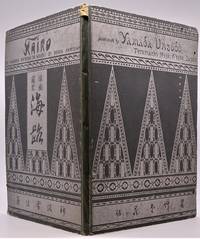
réf. 009472Teramachi Nijo Kyoto Japan: Yamada Unsodo Book. Very Good. Pictorial Paper Covered Boards. First Edition. Folio - over 12" - 15" tall. 37 pages held together with 2 brads top end. 35 pages with tissue guards over multiple lovely woodblock prints either 96 or 102 depending on how one repeated image is counted. With an additional full page black and silver woodblock print on rice paper 9" x 12 1/2" laid in. No date in English circa 1902-1905. Laid into original folio black paper covered boards printed in silver Art Deco design with title artist and publisher printed in English front and back. Front and back pages printed in Japanese. Very Good cloth at spine torn at top and bottom edges rubbing to boards at edges. Some tissue guards creased or torn the woodblock prints are all bright and Fine. Kamisaka Sekka 1866-1942 was aan important early 20th c. Japanese artist known as the father of modern Japanese design and the last great master of the Rinpa traditional school of art. RARE one copy found in current commerce lacking the additional woodblock print and 8 copies found at WorldCat. Yamada Unsodo Hardcover books
réf. 52019Bonlanden/ near Stuttgart: Edition Domberger 1973. First edition. Paperback. Very good- to fine condition. Folio 1971 17 x 11 3/4". 1 12/14pp.; Elephant Folio 1972 1972 19 1/4 x 16 1/2". 1 12/12pp. each. Spiral-bound calendars with original screen prints and black lettering on covers with additional screen printed mylar overlays. All calendars designed by Luitpold Domberger and printed at the Domberger KG Bonlanden Germany. All calendars are limited editions and hand-numbered on title page. The screen-printed mylar overlays create an op-art effect. The 1971 contains prints by Max Bill Herbert Bayer and Robert Indiana. 1971 558/2500: Cover and overlays with screen prints by Herbert W. Kapitzki; January: Max Bill; February: George Van der Sluis; March: Herbert Bayer; April: Robert Indiana; May: Müller-Brittnau; June: Allan d'Arcangelo; July: Horst Scheffler; August: Peter Stroud; September: Josef Levi; October: Sanford Wurmfeld; November: Erich Lethgau; December: Larry Zox. 1972 1754/3000: Cover and overlay with screen prints of Herbert W. Kapitzki; January: Stephen Edlich; February: Robert Indiana; March: Frank Werner; April: Josef Levi; May: Richard Anuszkiewicz; June: Luitpold Domberger; July: Nicholas Krushenick; August: Horst Scheffer; September: Hugo Dietz; October: Edna Andrade; November: Peter Stroud; December: Raimund Gierke. 1973 2107/2500: Cover and overlay with screen prints by Herbert W. Kapitzki; January: Walter Allner; February: Werner Berges; March: Allan d'Arcangelo; April: Julian Stanczak; May: Larry Stark; June: Ingrid Pohl; July: Rinaldo Paluzzi; August: Timo Kw. Heimann; September :Karel Novosad; October: Fritz Ruoff; November: Gerd Winner; December: John Willenbecher. Text in German. Printed overlay of the 1971 calendar partially separated from spiral. 1971 bound with two duplicate pages of calendar January and October without graphic. Front cover of 1972 with three inch crease at bottom right of front cover not affecting screen print. Generally some minor wear. Screen prints in fine condition. Calendars all protected in modern mylar. Luitpold Poldi Domberger was a pioneer of screen-printing in Germany. He established his first printing studio in 1949 in Stuttgart. His neighbor at the time was Willi Baumeister. His son Michael Domberger joined him developed and continued his legacy to the present day. Edition Domberger is at the forefront of screen-printing and continues to develop and promote the medium. Amongst the artists collaborating with Edition Domberger are Josef Albers Josef Beuys Keith Haring Claes Oldenburg Robert Indiana Antoni Tapies Cy Twombly among many others. "For decades the Domberger brand has been synonymous with excellence in screen printing. The print workshop is open to artists and publishers providing a wide range of technical possibilities alongside seasoned expertise. It offers the highest level of craftsmanship in both digital- and screen-printing. The exceptional quality of the prints produced by Domberger have made it one of the leading print workshops in the world" Edition Domberger. Edition Domberger paperback books