EARLOM RichardLivre Rare Book

10.182 resultados
1782ref. 8255Manière noire. Le Blanc 99; Très belle épreuve du 2è état sur 3, avant la lettre. Cadre moderne. Cadre moderne Très bon Londres John Boydell 1782 55 x 73 cm avec le cadre.
1903ref. 7960Belle épreuve. IFF 3. Tirage à 40 exemplaires. Celui-ci numéroté et signé avec dédicace. Paris 1903 10 x 16 cm. Marges 21,7 x 26,7 cm.
ref. 7957
ref. 7942Estampe originale. Épreuve avant la lettre. I.B.N.F. non répertoriée. Paris. 12,6 x 19,3 cm. Marges 19,2 x 28,5 cm.
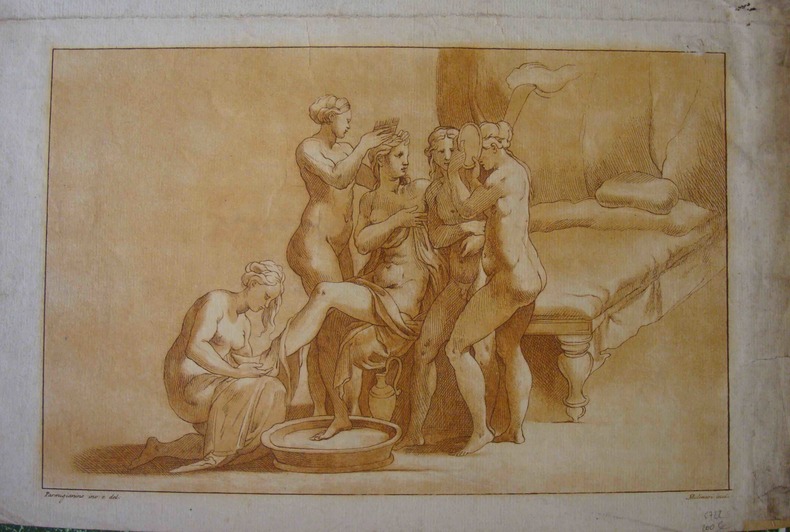
ref. 5722D’après un beau dessin de Parmigianino 23 x 34
1599ref. 11698Copie n°2 d'après Bartsche (p. 60, n° 190) de la plus rare des gravures de Goltzius. Cette très belle copie par un maître anonyme de la fin du XVIè siècle est également très rare. en feuille Très bon 1599 35,3 x 26,2 cm
1920- Lucien Vogel éditeur, Paris [circa 1920], 19,5x25cm, une feuille. - Original color print, printed on vergé paper, signed in the plate. An original print used to illustrate the Gazette du bon ton, one of the most attractive and influential 20th century fashion magazines, featuring the talents of French artists and other contributors from the burgeoning Art Deco movement. A celebrated fashion magazine established in 1912 by Lucien Vogel, La Gazette du bon ton appeared until 1925, with a hiatus from 1915 to 1920 due to the war (the editor-in-chief having been called up for service). It consisted of 69 issues printed in only 2,000 copies each and notably illustrated with 573 color plates and 148 sketches of the models of the great designers. Right from the start, this sumptuous publication "was aimed at bibliophiles and fashionable society," (Françoise Tétart-Vittu, "La Gazette du bon ton", in Dictionnaire de la mode, 2016) and was printed on fine vergé paper using a type cut specially for the magazine by Georges Peignot, known as Cochin, later used (in 1946) by Christian Dior. The prints were made using stencils, heightened in colors, some highlighted in gold or palladium. The story began in 1912, when Lucien Vogel, a man of the world involved in fashion (he had already been part of the fashion magazine Femina) decided, with his wife Cosette de Brunhoff - the sister of Jean, creator of Babar - to set up the Gazette du bon ton, subtitled at the time: "Art, fashion, frivolities." Georges Charensol noted the reasoning of the editor-in-chief: "'In 1910,' he observed, 'there was no really artistic fashion magazine, nothing representative of the spirit of the time. My dream was therefore to make a luxury magazine with truly modern artists...I was assured of success, because when it comes to fashion, no country on earth can compete with France.'" ("Un grand éditeur d'art. Lucien Vogel" in Les Nouvelles littéraires, no. 133, May 1925). The magazine was immediately successful, not only in France but also in the United States and Latin America. At first, Vogel put together a team of seven artists: André-Édouard Marty and Pierre Brissaud, followed by Georges Lepape and Dammicourt, as well as eventually his friends from school and the School of Fine Arts, like George Barbier, Bernard Boutet de Monvel and Charles Martin. Other talented people soon came flocking to join the team: Guy Arnoux, Léon Bakst, Benito, Boutet de Monvel, Umberto Brunelleschi, Chas Laborde, Jean-Gabriel Domergue, Raoul Dufy, Édouard Halouze, Alexandre Iacovleff, Jean Émile Laboureur, Charles Loupot, Chalres Martin, Maggie Salcedo. These artist, mostly unknown when Lucien Vogel sought them out, later became emblematic and sought-after artistic figures. It was also they who worked on the advertising drawings for the Gazette. The plates put the spotlight on, and celebrate, dresses by seven designers of the age: Lanvin, Doeuillet, Paquin, Poiret, Worth, Vionnet and Doucet. The designers provided exclusive models for each issue. Nonetheless, some of the illustrations are not based on real models, but simply on the illustrator's conception of the fashion of the day. The Gazette du bon ton was an important step in the history of fashion. Combining aesthetic demands with the physical whole, it brought together - for the first time - the great talents of the artistic, literary, and fashion worlds; and imposed, through this alchemy, a completely new image of women: slender, independent and daring, which was shared by the new generation of designers, including Coco Chanel, Jean Patou, Marcel Rochas, and so on... Taken over in 1920 by Condé Montrose Nast, the Gazette du bon ton was an important influence on the new layout and aesthetics of that "little dying paper" that Nast had bought a few years earlier: Vogue. [FRENCH VERSION FOLLOWS] Estampe originale en couleur tirée sur papier vergé, signée en bas à droite dans la planche. Gravure originale réalisée pour l'illustra
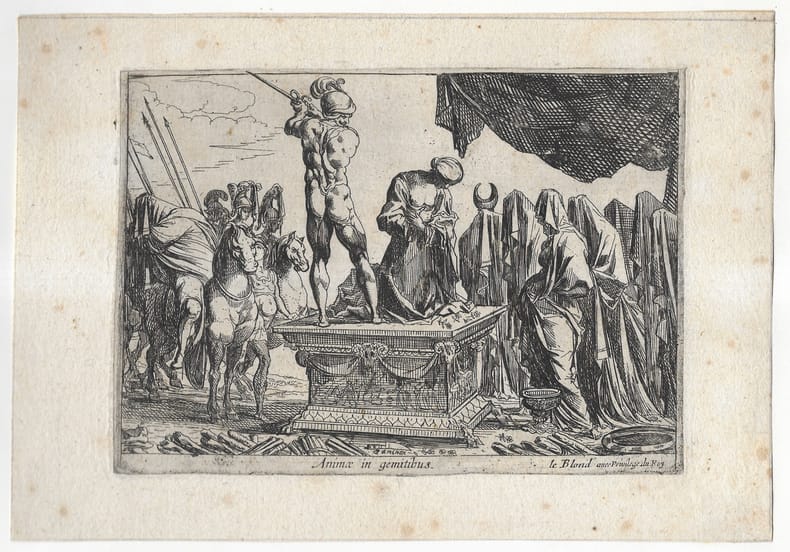
ref. 6623IFF 27-45. Le Blond avec privilège du Roy XVIIè 11,5 x 16
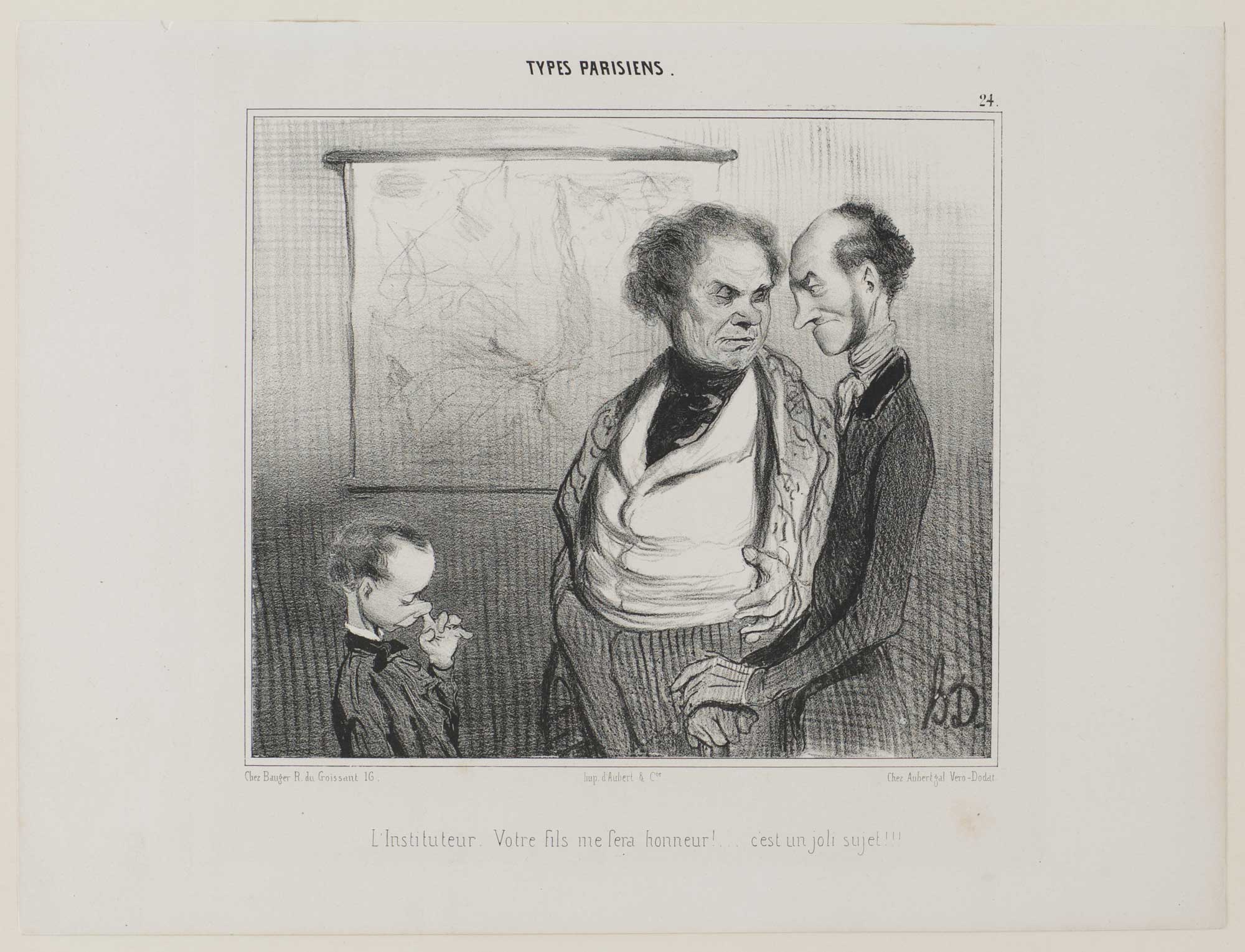
ref. HD-044o.J. (Der Lehrer): Ihr Sohn wird mir alle Ehre machen! Er ist ein guter Junge. Lithographie, auf chamoisfarbenem Velin, mit den Adressen: Chez Bauger. R du Croissant 16, Imp. d. Aubert & Cie. und: Chez Aubert gal. Véro-Dodat. Blattgröße 25,7:34,4 cm. Literatur: Daumier-Register 580; Delteil 580, Blatt 24 aus der Serie ?Types Parisiens?, erschienen 23.11.1841 in ?Le Charivari?. ? Sur blanc!
ref. 5964Des pickpockets sévissent à l’époque des Incroyables : l’un d’entre eux cherche à échanger des mandats territoriaux, et se fait voler pendant ce temps ! Agréable cadre en pichpin incrusté. Paris, ultime fin XVIIIè siècle 43x 47 cm.
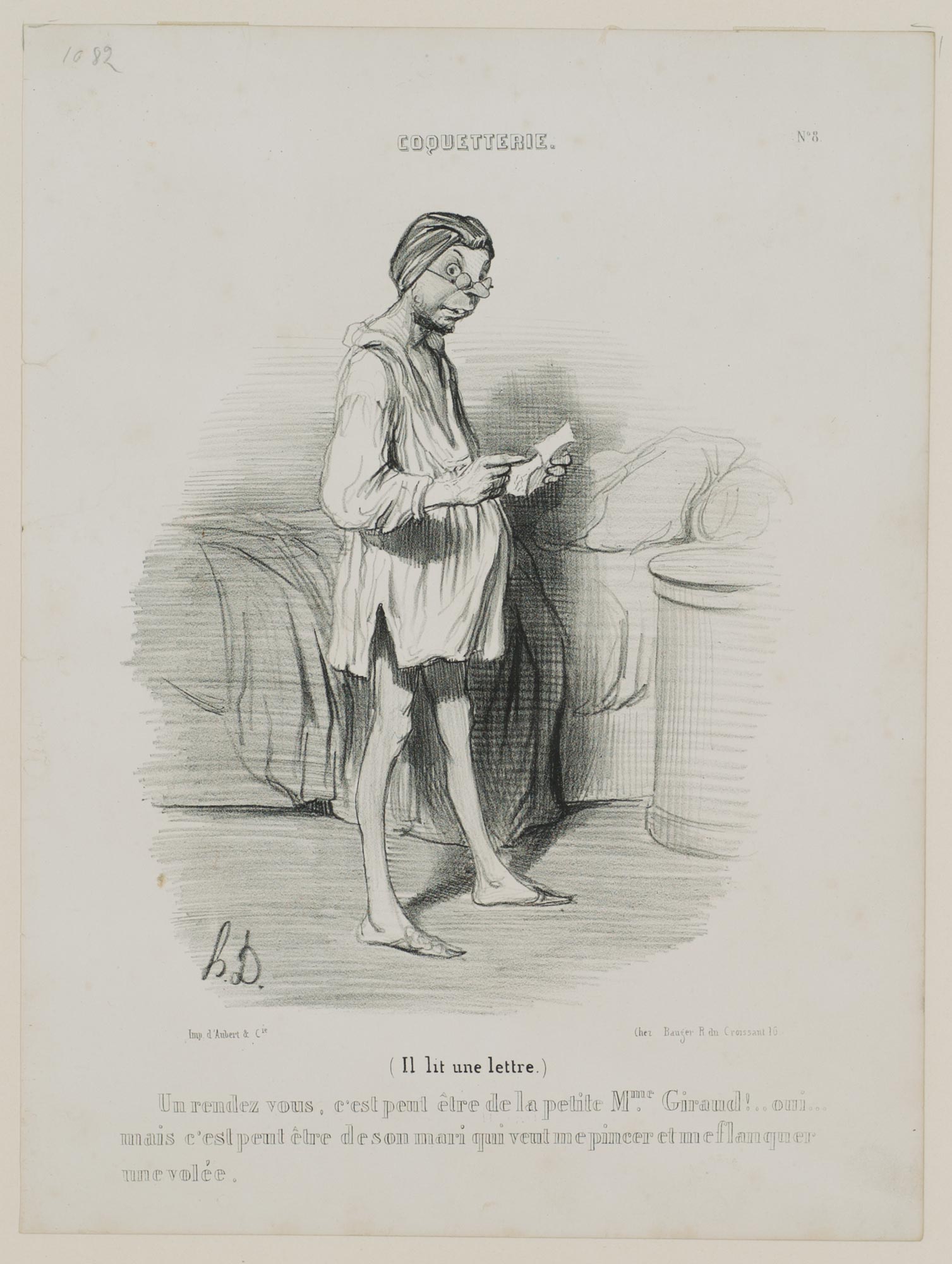
ref. HD-095o.J. (Er liest einen Brief) Ein Rendez-vous, etwa von der süssen Madame Giraud ?? ja, aber es könnte auch von ihrem Mann kommen, der mich verdreschen will... Lithographie, auf chamoisfarbenem Velin, mit den Adressen: Imp. d?Aubert & Cie. sowie: Chez Bauger R. du Croissant 16. Blattgröße 33:24,7 cm. Literatur: Daumier-Register 743; Delteil 743, II (von 2), No. 8 der Serie ?Coquetterie?. (Koketterie) ist eine Serie von 10 nummerierten Lithographien, welche in der Zeit vom 7. Juli 1839 bis zum 15.November1840 im Charivari publiziert wurden. ? Sur blanc!
1880ref. 7979Très belle épreuve. 1880 1880 19,5 x 13,4 cm au trait carré. Marges 30 x 24 cm.
1883ref. 27515ABZürich, Orell, Füssli und Comp., 1883-1884. Gr.-8°. 23 S. Mit einem lithogr. Porträt (Joh. Friedr. Reichardt); 26 S. Mit einem lithogr. Porträt (Wilhelm Baumgartner). Orig.-Hefte. + Wichtig: Für unsere Kunden in der EU erfolgt der Versand alle 14 Tage verzollt ab Deutschland / Postbank-Konto in Deutschland vorhanden + 2 Bände. = "71. und 72. Neujahrsblatt (Neujahrsgeschenk an die Zürcherische Jugend sic.) von der allgemeinen Musik-Gesellschaft i
1883ref. 27515AB2 Bände. Zürich, Orell, Füssli und Comp., 1883-1884. Gr.-8°. 23 S. Mit einem lithogr. Porträt (Joh. Friedr. Reichardt); 26 S. Mit einem lithogr. Porträt (Wilhelm Baumgartner). Orig.-Hefte. = "71. und 72. Neujahrsblatt (Neujahrsgeschenk an die Zürcherische Jugend sic.) von der allgemeinen Musik-Gesellschaft in Zürich auf das Jahr 1883 und 1884".
1991ref. 1225647Hamburg, Kunsthalle, 1991. 4to. 253 S. m. Textabb. u. 101 teils farb. Taf. (Einbd gering fleckig).
1984ref. 1226086Berlin, Gemäldegalerie Staatliche Museen Preußischer Kulturbesitz, 1984. 4to. 400 S. m. Textabb. u. 126 meist ganzseitigen farb. Abb. OKart.
1974ref. 1189052München, Rogner u. Bernhard, (1974). 2030 S. m. über 1900 ganzseitigen Abb. OLwdbde m. OUmschl. (leichte Gebrauchsspuren).
1988ref. 1189024Berlin, Eulenspiegel Verlag, (1988). Gr.-4to. 143, (1) S. m. 131 farbigen Wiedergaben, 1 gefaltete Beilage. OLwdbd m. OUmaschl.
1923ref. 1207520München, O. C. Recht & Noether, 1923. 4to. 2 Bl., 22 Bl. Abb. OHlwdbd (berieben u. gebräunt, untere Ecke vorn gestaucht, Papier gebräunt).
ref. 7333Le Blanc n° 33. Belle épreuve à bonnes marges, sur papier vergé filigrané, mouillure dans le haut. D’après une composition du Dominiquin. En feuille Moyen Rome Le nom de l'éditeur a été effacé. XVIIè 38 x 44,5 cm
1898ref. 5244Belle épreuve. Marque de l’éditeur au bas à droite. Rousseurs dans les grandes marges. Au dos cacher de L’Estampe Moderne - Tirage de luxe. (Publication mensuelle de mai 1897 à avril 1899) En feuille 1898 32 X 24,5 (54 x 40)
1992ref. 85411Praha 1992, 15,4 21,3 cm / 42x60cm, Good condition. 7/10 ex. Mírn stín v bílém okraji. Slight shadow in the white margin. Légère ombre dans la marge blanche.
ref. 8133D'après le tableau de Greuze 24,8 x 17,1cm.
1950ref. 1227231München, Bruckmann, 1950. 4to. 34 S., 1 Bl., etwa 60 Bl. m. teils ganzseitigen Abb. OHlwd (Einbd gering fleckig).
1920ref. 10223701920. Gr.-8vo. 183, (3) S. m wenigen Textillustr., 11 Taf., meist in Lichtdruck, 2 Original-Radierungen. (Print Society Publications 1). OHlwd (unbeschnitten).