ROUAULT GeorgesLivre Rare Book

10 194 résultats
1928réf. 10119Initiales et date en bas à gauche dans la planche.Eau-forte originale; tirage en 1928. Reproduit page 60 de Sauret. 44,5 x 31,5 cm Très bon Paris Vollard 1928 44,5 x 31,5 cm
Litografia originale a colori Firma e numerazione a matita. Esemplare 46/100. Cm 48,5x67. . . Molto buono (Very Good). . Tiratura 100 (Edition of 100 copies). .
Litografia Firma e numerazione a matita. Timbro a secco dello stampatore Giorgio Upiglio. Esemplare p.d.a.. cm 51x40,5. . . Ottimo (Fine). . . .
1923réf. 4528FBBerlin, Verlag von Paul Cassirer, 1923. Groß-8°. 23 x 19,5 cm. 331 (1) Seiten. Original-Leinenband mit goldgeprägtem Deckel- und Rückentitel und schwarzem Kopfschnitt.
1994réf. 276201994 | 11.50 x 16 cm | Encadré
1947réf. 009774Paris NRF Gallimard 1947 en feuilles, couverture rempliée illustrée, chemise et étui éditeur
1746réf. 703536Leipzig, John Grosse's Heir, 1746. 21 x 13,5 x 5 cm. 784, 239 Seiten, 1 (weißes) Blatt. Leder der Zeit auf 5 gehöhten Bünden mit Rückenschild und reicher Rückenvergoldung. Rotschnitt. Einband gering berieben.
réf. 27627in4 plein maroquin,plats decorés,trés frotté,titré museo Londres,sans page de titre, tranches dorées, 80 eaux fortes sous serpentes avec le texte en regard, montées sur onglets, Author: Thomas H Shepherd, (Thomas Hosmer), artist.Contributor: Wallis, William, 1796- engraver.- rare-
réf. 8513D'après un tableau de Wille. Se vend à Paris chez Vidal, graveur rue des Noyers. Beau filigrane. en feuille Très bon Paris Vidal XVIIIè 37 x 25,5 cm
1795réf. 703064Weimar, Verlag des Industrie-Comptoirs, 1795. 3 nnr. Blatt, 636 Seiten. 3 Kupferstiche vorhanden (I, III und IV). Schlichter Pappband der Zeit mit goldgeprägtem Rückenschild und Rückenvergoldung. Privater (gelöschter) Besitzerstempel (C. Kronbiegel-Collenbusch, Sömmerda) auf Titelblatt. Kupferstich I mit Bildverlust beschädigt. Eine tabellarische Beilage beschädigt, restauriert und von alter Hand ergänzt. Das im Vorbericht erwähnte Porträt von Herzog Carl August fehlt.
1829réf. 8060London: Jones 1829. Hardcover. Fine. Rebound in maroon cloth with black paper spine labels stamped in gilt. Fine condition. Minor foxing otherwise fine condition. 70 pages of text and 38 pages of steel engravings two illustrations per page in the first title. 52 pages of descriptive text and 40 pages of steel engravings two illustrations per page in the second title. Altogether 156 steel engravings on 78 pages. Jones hardcover books
1829réf. 8060London: Jones 1829. Hardcover. Fine. Rebound in maroon cloth with black paper spine labels stamped in gilt. Fine condition. Minor foxing otherwise fine condition. 70 pages of text and 38 pages of steel engravings two illustrations per page in the first title. 52 pages of descriptive text and 40 pages of steel engravings two illustrations per page in the second title. Altogether 156 steel engravings on 78 pages. Jones hardcover
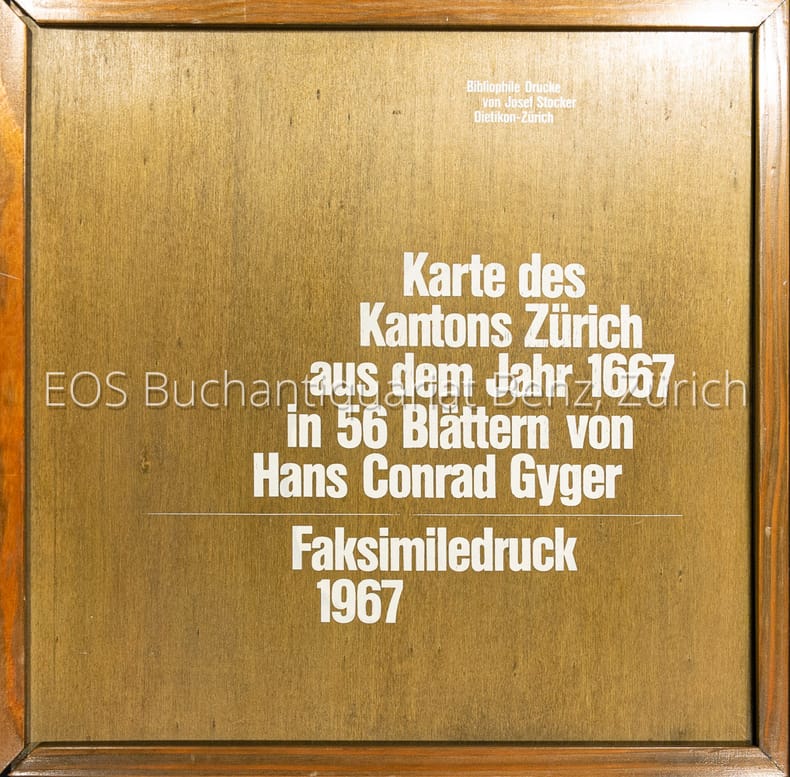
1967réf. 25514ABDietikon-Zürich, Bibliophile Drucke von Josef Stocker, 1967. 4°. 56 Blätter mit Teilkarten (49 zu ca. 30 x 30 cm. und 7 zu ca. 30 x 8 cm.) und 1 Übersichtsraster. Begleitheft: 25 (3) S. Mit zahlr. Abbildungen. In Holzkiste.
2004réf. 041968Los Angeles: The Love Press 2004. 1st Edition . No Binding. Fine/Portfolio and box. 50 Color Plates With A Haiku On Each With Cover Sheet. #46 Of 300 Copies Of A Limited Edition. Wikipedia Reports This Was Self-Published In 2005. Fine In Vellum Portfolio Enclosed In Box With Plate Of Thelonius Monk On Front Cover Lettered On Black On One Side Numbered In Pencil On The Flap. Contents Fine; Vellum Portfolio With Some Wrinkling And A 1/4" Tear At One Flap Fold; Box With Slight Wear And Aging. Per Wikipedia Amber Rose Tamblyn Born 1983 Is An American Actress And Writer. She First Came To National Attention In Her Role On The Soap Opera General Hospital As Emily Quartermaine At The Age Of 11. She Followed By A Starring Role On The Prime-Time Series Joan Of Arcadia Portraying The Title Character Joan Girardi For Which She Received Primetime Emmy And Golden Globe Nominations. Her Feature Film Work Includes Roles Such As Tibby Rollins From The First Two The Sisterhood Of The Traveling Pants And Megan Mcbride In 127 Hours 2010 As Well As The Critically Acclaimed Film Stephanie Daley Opposite Tilda Swinton Which Debuted At The Sundance Film Festival And For Which Tamblyn Won Best Actress At The Locarno International Film Festival And Was Nominated For An Independent Spirit Award. In 2021 She Starred Opposite Diane Lane In Fx's "Y The Last Man." Tamblyn Is A Published Author And Cultural Critic At Large. She Has Published Seven Books Across Genres And Writes For The New York Times And Other Publications On Issues Of Gender Inequality And Women's Rage. The Love Press unknown
1680réf. 703845Tübingen, Joh. Heinrich Reiß, 1680. Klein-8°. 32 nnr. Seiten, 447 Seiten. Pergament der Zeit. Vorsätze erneuert. Die ersten 2 Blätter angerändert. Die ersten Blätter mit schwacher Feuchtigkeitsspur im Rand.
1841réf. 008974London: Longman Orme Brown Green and Longman 1841. Book. Very Good. Hardcover. First Edition. 8vo - over 7¾" - 9¾" tall. SCARCE in contemporary fine binding two volumes in polished calf the backs with black and red morocco labels and intricate gilt tooling marbled end papers and edges the bookplates of Walmer Castle and a later 20th c. owner front end papers prior owner inscriptions in pencil and ink concerning Walmer Castle and Cattermole's engravings "considered to be some of his finest". Very Good the calf rubbed and soiled. Both volumes with frontis engravings and engraved title pages Vol. I with 7 engravings in text Vol. II with 13 in text. The title pages call for 15 in Vol. I and 13 in Vol. II leaving the possibility of 4 missing engravings however no evidence of removal. Longman, Orme, Brown, Green, and Longman Hardcover books
1997réf. 2349Éditions Au fil du bois In-8 carré Couverture souple Montréal 1997 Ed. originale
1841réf. 008974London: Longman Orme Brown Green and Longman 1841. Book. Very Good. Hardcover. First Edition. 8vo - over 7¾" - 9¾" tall. SCARCE in contemporary fine binding two volumes in polished calf the backs with black and red morocco labels and intricate gilt tooling marbled end papers and edges the bookplates of Walmer Castle and a later 20th c. owner front end papers prior owner inscriptions in pencil and ink concerning Walmer Castle and Cattermole's engravings "considered to be some of his finest". Very Good the calf rubbed and soiled. Both volumes with frontis engravings and engraved title pages Vol. I with 7 engravings in text Vol. II with 13 in text. The title pages call for 15 in Vol. I and 13 in Vol. II leaving the possibility of 4 missing engravings however no evidence of removal. Longman, Orme, Brown, Green, and Longman Hardcover
1991réf. 143631Alexandria Ontario: Ayorama Publications 1991. Softcover. Very good condition. Limited to 50 copies. 50 tissue papers folded unpaginated prints. Quarto soft cover in a hand-crafted portfolio made out of hand-made paper original Japanese thread hand-sewn binding. The portfolio has tears on the edges with a wooden clasp. Forty seven lyrical poems printed on translucent paper 102 pages of colourful woodcut prints on handmade Japanese paper 54 folded prints including the covers. Signed by the artist and the poet on the colophon page. With an original prospectus of Stones to Harvest. Laid in loosely is the original contract between the artist and the publisher. Very good condition. A fantastic collaboration of art and poetry. Henry Beissel a Germany born poet writer and translator survived the second World War as a youth and emigrated to Canada in 1951. This collaborative work between him and Dale Alpen-Whiteside a Manitoba-born painter and sculptor now residing on Hornby Island in British Columbia. This work reflects the influence of moraine landscape in Eastern Ontario on their works. The poems are divided into four sections as i. seeds ii. roots iii. flowers and iv. leaves setting out four seasons in a striking harmony with warm and cold colours used in the prints. 1991 Ayorama Publications paperback
1924- Lucien Vogel éditeur, Paris 1924-1925, 36x24cm, une feuille. - Double original color print heightened with palladium, printed on vergé paper, signed in the plate. An original print used to illustrate the Gazette du bon ton, one of the most attractive and influential 20th century fashion magazines, featuring the talents of French artists and other contributors from the burgeoning Art Deco movement. A celebrated fashion magazine established in 1912 by Lucien Vogel, La Gazette du bon ton appeared until 1925, with a hiatus from 1915 to 1920 due to the war (the editor-in-chief having been called up for service). It consisted of 69 issues printed in only 2,000 copies each and notably illustrated with 573 color plates and 148 sketches of the models of the great designers. Right from the start, this sumptuous publication "was aimed at bibliophiles and fashionable society," (Françoise Tétart-Vittu, "La Gazette du bon ton", in Dictionnaire de la mode, 2016) and was printed on fine vergé paper using a type cut specially for the magazine by Georges Peignot, known as Cochin, later used (in 1946) by Christian Dior. The prints were made using stencils, heightened in colors, some highlighted in gold or palladium. The story began in 1912, when Lucien Vogel, a man of the world involved in fashion (he had already been part of the fashion magazine Femina) decided, with his wife Cosette de Brunhoff - the sister of Jean, creator of Babar - to set up the Gazette du bon ton, subtitled at the time: "Art, fashion, frivolities." Georges Charensol noted the reasoning of the editor-in-chief: "'In 1910,' he observed, 'there was no really artistic fashion magazine, nothing representative of the spirit of the time. My dream was therefore to make a luxury magazine with truly modern artists...I was assured of success, because when it comes to fashion, no country on earth can compete with France.'" ("Un grand éditeur d'art. Lucien Vogel" in Les Nouvelles littéraires, no. 133, May 1925). The magazine was immediately successful, not only in France but also in the United States and Latin America. At first, Vogel put together a team of seven artists: André-Édouard Marty and Pierre Brissaud, followed by Georges Lepape and Dammicourt, as well as eventually his friends from school and the School of Fine Arts, like George Barbier, Bernard Boutet de Monvel and Charles Martin. Other talented people soon came flocking to join the team: Guy Arnoux, Léon Bakst, Benito, Boutet de Monvel, Umberto Brunelleschi, Chas Laborde, Jean-Gabriel Domergue, Raoul Dufy, Édouard Halouze, Alexandre Iacovleff, Jean Émile Laboureur, Charles Loupot, Chalres Martin, Maggie Salcedo. These artist, mostly unknown when Lucien Vogel sought them out, later became emblematic and sought-after artistic figures. It was also they who worked on the advertising drawings for the Gazette. The plates put the spotlight on, and celebrate, dresses by seven designers of the age: Lanvin, Doeuillet, Paquin, Poiret, Worth, Vionnet and Doucet. The designers provided exclusive models for each issue. Nonetheless, some of the illustrations are not based on real models, but simply on the illustrator's conception of the fashion of the day. The Gazette du bon ton was an important step in the history of fashion. Combining aesthetic demands with the physical whole, it brought together - for the first time - the great talents of the artistic, literary, and fashion worlds; and imposed, through this alchemy, a completely new image of women: slender, independent and daring, which was shared by the new generation of designers, including Coco Chanel, Jean Patou, Marcel Rochas, and so on... Taken over in 1920 by Condé Montrose Nast, the Gazette du bon ton was an important influence on the new layout and aesthetics of that "little dying paper" that Nast had bought a few years earlier: Vogue. [FRENCH VERSION FOLLOWS] Estampe double originale en couleur rehaussée au palladium, tirée sur papier vergé, signée en bas
1914- Lucien Vogel éditeur, Paris Mai 1914, 36,5x24cm, une feuille. - Double original color print heightened with gold, printed on vergé paper, signed in the plate. An original print used to illustrate the Gazette du bon ton, one of the most attractive and influential 20th century fashion magazines, featuring the talents of French artists and other contributors from the burgeoning Art Deco movement. A celebrated fashion magazine established in 1912 by Lucien Vogel, La Gazette du bon ton appeared until 1925, with a hiatus from 1915 to 1920 due to the war (the editor-in-chief having been called up for service). It consisted of 69 issues printed in only 2,000 copies each and notably illustrated with 573 color plates and 148 sketches of the models of the great designers. Right from the start, this sumptuous publication "was aimed at bibliophiles and fashionable society," (Françoise Tétart-Vittu, "La Gazette du bon ton", in Dictionnaire de la mode, 2016) and was printed on fine vergé paper using a type cut specially for the magazine by Georges Peignot, known as Cochin, later used (in 1946) by Christian Dior. The prints were made using stencils, heightened in colors, some highlighted in gold or palladium. The story began in 1912, when Lucien Vogel, a man of the world involved in fashion (he had already been part of the fashion magazine Femina) decided, with his wife Cosette de Brunhoff - the sister of Jean, creator of Babar - to set up the Gazette du bon ton, subtitled at the time: "Art, fashion, frivolities." Georges Charensol noted the reasoning of the editor-in-chief: "'In 1910,' he observed, 'there was no really artistic fashion magazine, nothing representative of the spirit of the time. My dream was therefore to make a luxury magazine with truly modern artists...I was assured of success, because when it comes to fashion, no country on earth can compete with France.'" ("Un grand éditeur d'art. Lucien Vogel" in Les Nouvelles littéraires, no. 133, May 1925). The magazine was immediately successful, not only in France but also in the United States and Latin America. At first, Vogel put together a team of seven artists: André-Édouard Marty and Pierre Brissaud, followed by Georges Lepape and Dammicourt, as well as eventually his friends from school and the School of Fine Arts, like George Barbier, Bernard Boutet de Monvel and Charles Martin. Other talented people soon came flocking to join the team: Guy Arnoux, Léon Bakst, Benito, Boutet de Monvel, Umberto Brunelleschi, Chas Laborde, Jean-Gabriel Domergue, Raoul Dufy, Édouard Halouze, Alexandre Iacovleff, Jean Émile Laboureur, Charles Loupot, Chalres Martin, Maggie Salcedo. These artist, mostly unknown when Lucien Vogel sought them out, later became emblematic and sought-after artistic figures. It was also they who worked on the advertising drawings for the Gazette. The plates put the spotlight on, and celebrate, dresses by seven designers of the age: Lanvin, Doeuillet, Paquin, Poiret, Worth, Vionnet and Doucet. The designers provided exclusive models for each issue. Nonetheless, some of the illustrations are not based on real models, but simply on the illustrator's conception of the fashion of the day. The Gazette du bon ton was an important step in the history of fashion. Combining aesthetic demands with the physical whole, it brought together - for the first time - the great talents of the artistic, literary, and fashion worlds; and imposed, through this alchemy, a completely new image of women: slender, independent and daring, which was shared by the new generation of designers, including Coco Chanel, Jean Patou, Marcel Rochas, and so on... Taken over in 1920 by Condé Montrose Nast, the Gazette du bon ton was an important influence on the new layout and aesthetics of that "little dying paper" that Nast had bought a few years earlier: Vogue. [FRENCH VERSION FOLLOWS] Estampe double originale en couleur rehaussée à l'or, tirée sur papier vergé, signée en bas à gauche
1914- Lucien Vogel éditeur, Paris Janvier 1914, 36,5x24cm, une feuille. - Double original color print heightened with gold, printed on vergé paper, signed in the plate. An original print used to illustrate the Gazette du bon ton, one of the most attractive and influential 20th century fashion magazines, featuring the talents of French artists and other contributors from the burgeoning Art Deco movement. A celebrated fashion magazine established in 1912 by Lucien Vogel, La Gazette du bon ton appeared until 1925, with a hiatus from 1915 to 1920 due to the war (the editor-in-chief having been called up for service). It consisted of 69 issues printed in only 2,000 copies each and notably illustrated with 573 color plates and 148 sketches of the models of the great designers. Right from the start, this sumptuous publication "was aimed at bibliophiles and fashionable society," (Françoise Tétart-Vittu, "La Gazette du bon ton", in Dictionnaire de la mode, 2016) and was printed on fine vergé paper using a type cut specially for the magazine by Georges Peignot, known as Cochin, later used (in 1946) by Christian Dior. The prints were made using stencils, heightened in colors, some highlighted in gold or palladium. The story began in 1912, when Lucien Vogel, a man of the world involved in fashion (he had already been part of the fashion magazine Femina) decided, with his wife Cosette de Brunhoff - the sister of Jean, creator of Babar - to set up the Gazette du bon ton, subtitled at the time: "Art, fashion, frivolities." Georges Charensol noted the reasoning of the editor-in-chief: "'In 1910,' he observed, 'there was no really artistic fashion magazine, nothing representative of the spirit of the time. My dream was therefore to make a luxury magazine with truly modern artists...I was assured of success, because when it comes to fashion, no country on earth can compete with France.'" ("Un grand éditeur d'art. Lucien Vogel" in Les Nouvelles littéraires, no. 133, May 1925). The magazine was immediately successful, not only in France but also in the United States and Latin America. At first, Vogel put together a team of seven artists: André-Édouard Marty and Pierre Brissaud, followed by Georges Lepape and Dammicourt, as well as eventually his friends from school and the School of Fine Arts, like George Barbier, Bernard Boutet de Monvel and Charles Martin. Other talented people soon came flocking to join the team: Guy Arnoux, Léon Bakst, Benito, Boutet de Monvel, Umberto Brunelleschi, Chas Laborde, Jean-Gabriel Domergue, Raoul Dufy, Édouard Halouze, Alexandre Iacovleff, Jean Émile Laboureur, Charles Loupot, Chalres Martin, Maggie Salcedo. These artist, mostly unknown when Lucien Vogel sought them out, later became emblematic and sought-after artistic figures. It was also they who worked on the advertising drawings for the Gazette. The plates put the spotlight on, and celebrate, dresses by seven designers of the age: Lanvin, Doeuillet, Paquin, Poiret, Worth, Vionnet and Doucet. The designers provided exclusive models for each issue. Nonetheless, some of the illustrations are not based on real models, but simply on the illustrator's conception of the fashion of the day. The Gazette du bon ton was an important step in the history of fashion. Combining aesthetic demands with the physical whole, it brought together - for the first time - the great talents of the artistic, literary, and fashion worlds; and imposed, through this alchemy, a completely new image of women: slender, independent and daring, which was shared by the new generation of designers, including Coco Chanel, Jean Patou, Marcel Rochas, and so on... Taken over in 1920 by Condé Montrose Nast, the Gazette du bon ton was an important influence on the new layout and aesthetics of that "little dying paper" that Nast had bought a few years earlier: Vogue. [FRENCH VERSION FOLLOWS] Estampe double originale en couleur rehaussée à l'or, tirée sur papier vergé, signée en bas à gau
1973Dieci incisioni originali, numerate e firmate a matita, di Roberto Stelluti, Luigi Toccacieli, Alfredo Bartolomeoli, Angelo Rosetti, Edgardo Travaglini, Adriano Calavalle, Claudio Polzonetti, Silvano Silvani, Nani Tedeschi e Mario Bellagamba (cm. 20x20, foglio 50x35) Ciascuna incisione, stampata al torchio su carta a mano della cartiera Magnani di Pescia è custodita in un quartino con la riproduzione di un brano del discorso ufficiale di Paolo VI, pronunciato in occasione del viaggio. Fogli sciolti custoditi in cartella in cartoncino "Murillo" della cartiera Milani di Fabriano. Esemplare n. 40. Cm 50x35. . . Ottimo (Fine). . Edizione originale di 99 esemplari numerati. .
1897réf. 6131Belle épreuve parue dans le numéro 8 (décembre 1897) de l’Estampe Moderne. Notre épreuve porte le timbre sec de l’Estampe Moderne en bas à droite. L’Estampe Moderne a paru de mai 1897 à avril 1899. en feuille Très bon Paris L’Estampe Moderne. 1897 26 x 35 cm.
1898réf. 6121Belle épreuve parue dans le numéro 9 (janvier 1898) de l’Estampe Moderne. Notre épreuve porte le timbre sec de l’Estampe Moderne en bas à droite. L’Estampe Moderne a paru de mai 1897 à avril 1899. en feuille Très bon Paris L’Estampe Moderne. 1898 24 x 35 cm.