JONES JohnLivre Rare Book

10.207 Ergebnisse
1790Best.-Nr. 5698D'après Bigg. Cadre et passe-partout anciens Londres 1790
Best.-Nr. ria9781953987143_inpHardcover. New. New Book; Fast Shipping from UK; Not signed; Not First Edition; 130 Diary PagesHardback CoverMatte FinishSized at a large 8.5" x 11"Great for writing note taking sketching doodling journaling and jottingPerfect for school home or officeFor use with gel metallic glitter pastel and florescent hardcover
Best.-Nr. B9781953987143Hardback. New. hardcover
Best.-Nr. 1953987141.Ghardcover. Good. Access codes and supplements are not guaranteed with used items. May be an ex-library book. hardcover
19368' 48pp. slightly torn and stained paperback, slightly stained, slightly wrinkled edges, black & white engravings, else in fair+ condition.
Best.-Nr. 83La Comète de Carthage, [1997]. Triptyque Giraud sur vergé, composé de reproductions de 3 superbes aquarelles de Blueberry. Très légères traces de plis, 3 fois rien.
2005Best.-Nr. 38859Windsor:: Tide-Mark Press. Near Fine in Near Fine dust jacket. 2005. Hardcover. 1594901171 . Color plates throughout. First printing. Fine in a fine dust jacket. Upper corners slightly bumped else near fine in a near fine dust jacket. . Tide-Mark Press, hardcover books
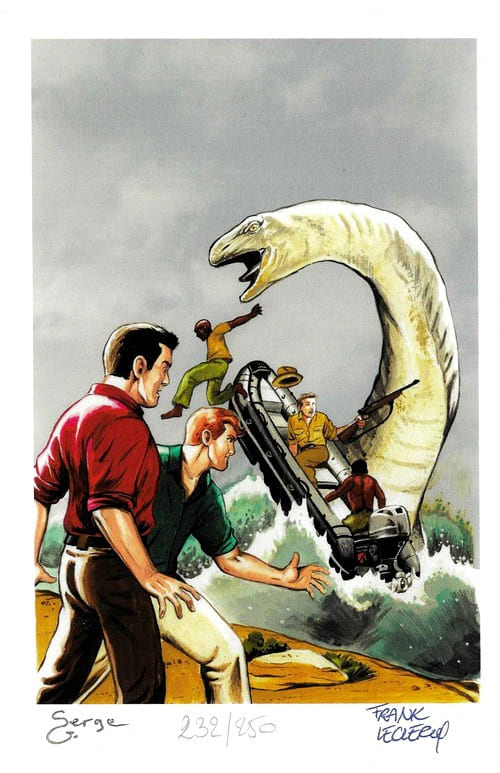
Best.-Nr. 33299Editions L'Âge d'Or sans date. Superbe ex-libris au format 20,5 x 13,5 cm. Numéroté et signé par Serge Allemand et Frank Leclerq ( illustrateur ). Tirage unique, hors commerce à 250 exemplaires. Edition originale en état de neuf.
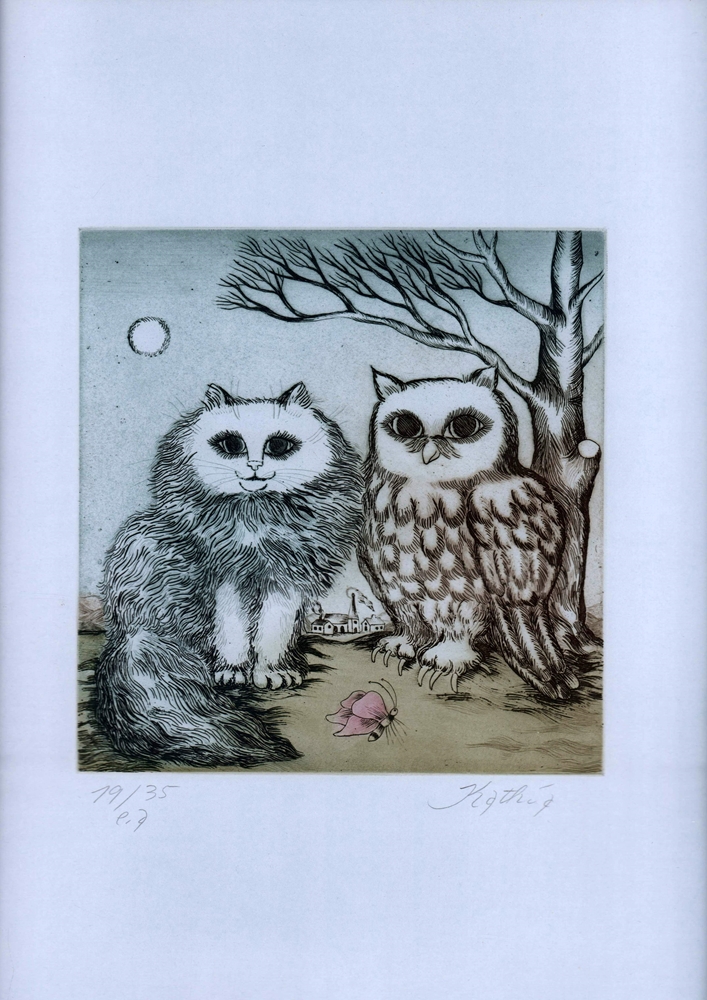
1980Best.-Nr. 91355[Ca. 1980]. Auf festem bläulich getönten Bütten. Plattenmaß 22,5 x 21,8 cm. Bogenmaß 48 x 40 cm.
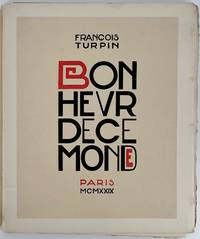
1929Best.-Nr. 518Paris: Éditions du Scarabée 1929. First Edition. Near fine. Large 8vo 11 7/8 x 9 3/4 inches 302 x 250 mm; 45 pp. with 4 etchings by Gio Colucci. Edition limited to 115 numbered copies on white Arches paper with Jenson type of which this is copy no. 50 as printed on the limitation page. Loose as issued in portfolio with original paper cover with flaps printed in red and black with beautiful typography and with its original glassine wrapper. There is some toning and slight wear to the glassine and cover and offset to pages facing the etchings but the portfolio is in excellent condition and the impressions strong and powerful. Inscribed and dated in pencil by artist on the half title. BNF31506565. This play by François Turpin was created on the stage of the Atelier in Paris by the Athéna theater on February 1 1928 Gio COLUCCI 1892-1974 Painter sculptor ceramist was born in Florence. Éditions du Scarabée unknown
Best.-Nr. 13606Belle lithographie rehaussée de couleurs gommées. En feuille Très bon Paris Lebrasseur et Delarue XIXè 48 x 38,5 cm
Best.-Nr. 13605Belle lithographie rehaussée de couleurs gommées. En feuille Très bon Paris Lebrasseur et Delarue XIXè 56 X 42,5 cm
1921- Lucien Vogel éditeur, Paris 1921, 18x24cm, une feuille. - Original color print, printed on vergé paper, signed in the plate. An original print used to illustrate the Gazette du bon ton, one of the most attractive and influential 20th century fashion magazines, featuring the talents of French artists and other contributors from the burgeoning Art Deco movement. A celebrated fashion magazine established in 1912 by Lucien Vogel, La Gazette du bon ton appeared until 1925, with a hiatus from 1915 to 1920 due to the war (the editor-in-chief having been called up for service). It consisted of 69 issues printed in only 2,000 copies each and notably illustrated with 573 color plates and 148 sketches of the models of the great designers. Right from the start, this sumptuous publication "was aimed at bibliophiles and fashionable society," (Françoise Tétart-Vittu, "La Gazette du bon ton", in Dictionnaire de la mode, 2016) and was printed on fine vergé paper using a type cut specially for the magazine by Georges Peignot, known as Cochin, later used (in 1946) by Christian Dior. The prints were made using stencils, heightened in colors, some highlighted in gold or palladium. The story began in 1912, when Lucien Vogel, a man of the world involved in fashion (he had already been part of the fashion magazine Femina) decided, with his wife Cosette de Brunhoff - the sister of Jean, creator of Babar - to set up the Gazette du bon ton, subtitled at the time: "Art, fashion, frivolities." Georges Charensol noted the reasoning of the editor-in-chief: "'In 1910,' he observed, 'there was no really artistic fashion magazine, nothing representative of the spirit of the time. My dream was therefore to make a luxury magazine with truly modern artists...I was assured of success, because when it comes to fashion, no country on earth can compete with France.'" ("Un grand éditeur d'art. Lucien Vogel" in Les Nouvelles littéraires, no. 133, May 1925). The magazine was immediately successful, not only in France but also in the United States and Latin America. At first, Vogel put together a team of seven artists: André-Édouard Marty and Pierre Brissaud, followed by Georges Lepape and Dammicourt, as well as eventually his friends from school and the School of Fine Arts, like George Barbier, Bernard Boutet de Monvel and Charles Martin. Other talented people soon came flocking to join the team: Guy Arnoux, Léon Bakst, Benito, Boutet de Monvel, Umberto Brunelleschi, Chas Laborde, Jean-Gabriel Domergue, Raoul Dufy, Édouard Halouze, Alexandre Iacovleff, Jean Émile Laboureur, Charles Loupot, Chalres Martin, Maggie Salcedo. These artist, mostly unknown when Lucien Vogel sought them out, later became emblematic and sought-after artistic figures. It was also they who worked on the advertising drawings for the Gazette. The plates put the spotlight on, and celebrate, dresses by seven designers of the age: Lanvin, Doeuillet, Paquin, Poiret, Worth, Vionnet and Doucet. The designers provided exclusive models for each issue. Nonetheless, some of the illustrations are not based on real models, but simply on the illustrator's conception of the fashion of the day. The Gazette du bon ton was an important step in the history of fashion. Combining aesthetic demands with the physical whole, it brought together - for the first time - the great talents of the artistic, literary, and fashion worlds; and imposed, through this alchemy, a completely new image of women: slender, independent and daring, which was shared by the new generation of designers, including Coco Chanel, Jean Patou, Marcel Rochas, and so on... Taken over in 1920 by Condé Montrose Nast, the Gazette du bon ton was an important influence on the new layout and aesthetics of that "little dying paper" that Nast had bought a few years earlier: Vogue. [FRENCH VERSION FOLLOWS] Estampe originale en couleur, tirée sur papier vergé, signée en haut à droite de la planche. Gravure originale réalisée pour l'illustration de La
Best.-Nr. 25654Le Charivari, trente-quatrième année, samedi 29 juillet 1865- Lithographie - Œuvre: Hauteur: 43.9cmx Largeur: 31cmDimensions - Trait carré: Hauteur: 23.2cmx Largeur: 19.9cm- 1 feuillet ; illustration page 3.- Au dessus de l'image, centré : "ACTUALITES" ; et à droite : "314" ; signature en bas de l'image à droite : "R CHAM" ; en dessous de l'image à gauche : "M[ais]on Martinet Paris" ; en dessous de l'image à droite : "Lith Destouches Paris" ; en dessous, centré : "- Bonjour Mr Abdel Kader ! bien aise de vous voir en bonne santé / - Tu te rappelles donc de moi ? / - Mais oui ! à tous les changements de temps !"Personnage représenté:Abd al-Qādir ibn Muhyī al-Dīn al-Ǧazā'irī
Best.-Nr. 24042New York Gallery Books 1981 in 4 (33,5x25) 1 volume reliure cartonnée verte de l'éditeur sous jaquette illustrée en couleurs, 351 pages. 129 numéros décrits et reproduits, avec 536 illustrations, dont 60 en couleurs. Pierre Bonnard, Fontenay-aux-Roses 1867 - Le Cannet 1947, peintre, illustrateur, graveur et sculpteur français. Introduction by Antoine Terrasse. Texte en langue anglaise. Bon exemplaire ( Photographies sur demande / We can send pictures of this book on simple request )
1913- Lucien Vogel éditeur, Paris Août 1913, 19x24,5cm, une feuille. - Original color print, printed on vergé paper, signed in the plate. An original print used to illustrate the Gazette du bon ton, one of the most attractive and influential 20th century fashion magazines, featuring the talents of French artists and other contributors from the burgeoning Art Deco movement. A celebrated fashion magazine established in 1912 by Lucien Vogel, La Gazette du bon ton appeared until 1925, with a hiatus from 1915 to 1920 due to the war (the editor-in-chief having been called up for service). It consisted of 69 issues printed in only 2,000 copies each and notably illustrated with 573 color plates and 148 sketches of the models of the great designers. Right from the start, this sumptuous publication "was aimed at bibliophiles and fashionable society," (Françoise Tétart-Vittu, "La Gazette du bon ton", in Dictionnaire de la mode, 2016) and was printed on fine vergé paper using a type cut specially for the magazine by Georges Peignot, known as Cochin, later used (in 1946) by Christian Dior. The prints were made using stencils, heightened in colors, some highlighted in gold or palladium. The story began in 1912, when Lucien Vogel, a man of the world involved in fashion (he had already been part of the fashion magazine Femina) decided, with his wife Cosette de Brunhoff - the sister of Jean, creator of Babar - to set up the Gazette du bon ton, subtitled at the time: "Art, fashion, frivolities." Georges Charensol noted the reasoning of the editor-in-chief: "'In 1910,' he observed, 'there was no really artistic fashion magazine, nothing representative of the spirit of the time. My dream was therefore to make a luxury magazine with truly modern artists...I was assured of success, because when it comes to fashion, no country on earth can compete with France.'" ("Un grand éditeur d'art. Lucien Vogel" in Les Nouvelles littéraires, no. 133, May 1925). The magazine was immediately successful, not only in France but also in the United States and Latin America. At first, Vogel put together a team of seven artists: André-Édouard Marty and Pierre Brissaud, followed by Georges Lepape and Dammicourt, as well as eventually his friends from school and the School of Fine Arts, like George Barbier, Bernard Boutet de Monvel and Charles Martin. Other talented people soon came flocking to join the team: Guy Arnoux, Léon Bakst, Benito, Boutet de Monvel, Umberto Brunelleschi, Chas Laborde, Jean-Gabriel Domergue, Raoul Dufy, Édouard Halouze, Alexandre Iacovleff, Jean Émile Laboureur, Charles Loupot, Chalres Martin, Maggie Salcedo. These artist, mostly unknown when Lucien Vogel sought them out, later became emblematic and sought-after artistic figures. It was also they who worked on the advertising drawings for the Gazette. The plates put the spotlight on, and celebrate, dresses by seven designers of the age: Lanvin, Doeuillet, Paquin, Poiret, Worth, Vionnet and Doucet. The designers provided exclusive models for each issue. Nonetheless, some of the illustrations are not based on real models, but simply on the illustrator's conception of the fashion of the day. The Gazette du bon ton was an important step in the history of fashion. Combining aesthetic demands with the physical whole, it brought together - for the first time - the great talents of the artistic, literary, and fashion worlds; and imposed, through this alchemy, a completely new image of women: slender, independent and daring, which was shared by the new generation of designers, including Coco Chanel, Jean Patou, Marcel Rochas, and so on... Taken over in 1920 by Condé Montrose Nast, the Gazette du bon ton was an important influence on the new layout and aesthetics of that "little dying paper" that Nast had bought a few years earlier: Vogue. [FRENCH VERSION FOLLOWS] Estampe originale en couleur, tirée sur papier vergé, signée en bas au milieu de planche. Gravure originale réalisée pour l'illu
1913Best.-Nr. 54567Lucien Vogel éditeur | Paris Août 1913 | 19 x 24.50 cm | une feuille
1913Best.-Nr. 89512Paris Août 1913 | 19 x 24.50 cm | une feuille
Best.-Nr. 24159Le Journal des Dames et es Modes, Costume Parisens., .an 7,Belle épreuve aux coloris très frais, coupée aux limites du cuivre 19 x 12 cm,sur papier vert, doublée et montée sur carton fort,gravure d'époque.
Best.-Nr. 133342986X.Gpaperback. Good. Access codes and supplements are not guaranteed with used items. May be an ex-library book. paperback
Best.-Nr. ria9798170494729_inpPaperback. New. New Book; Fast Shipping from UK; Not signed; Not First Edition; BookGen OS v3.1 User Guide & ManualTurning an AI-assisted book project into a professional nonfiction manuscript requires a clear workflow. You need to know what to do first which prompt to use what information is required when to re paperback
Best.-Nr. 15-5747Ann Arbor MI.: Passim Editions 1998. 12mo. Thirteen Book Marks Very Good with some creasing. Envelope addressed to Peter Howard & of Serendipity Books present. Thirteen bookmarks letterpressed on handmade paper with wood-engravings. Ann Arbor, MI.: Passim Editions, 1998. unknown