10.207 Ergebnisse
19994to., First Edition, with a frontispiece and very numerous reproductions from engravings in the text; cloth, gilt back, a fine copy in unclipped dustwrapper.
Acquaforte e acquatinta. Opera riprodotta in copertina del catalogo dell'''Opera incisoria'' Firma e data a matita. Firma a secco su foglio. Certificato di autenticità rilasciato dall'Editore. Esemplare 65/80. Cm 29,5x49,5 (Foglio 50x70). pp.. . Ottimo (Fine). . Tiratura 80. .
Large 4to (225 x 268 mm). 224 unnumbered ff. with more than 250 page-sized plant illustrations, mostly in a mixed techique of nature printing and coloured drawings. Also includes 3 coloured engraved plates and 1 tipped-in coloured lithograph. Later half calf over marbled boards with stamped title to spine. An uncommon collection of talented botanical illustrations, many based on nature prints amplified and coloured in various techniques. The plates show mainly medicinal and culinary plants (belladonna, calendula, tobacco, eggplant "from Arabia" etc.), frequently with blossoms and fruits. All plates are identified in Latin, many have additional notes in German stating the plants' flowering season and place of origin. Some plates are signed "G.F.", a fact which has suggested attribution to the Austrian naturalist Georg von Frauenfeld (1807-73), one of the leading scientists on the Novara expedition (cf. Reiss 77 [2001], lot 77). Frauenfeld himself published a book on the algae of the Dalmatian coast, illustrated by nature printing (cf. Fischer, Naturselbstdruck, no. 72). Includes three engravings and one lithograph from other botanical works. - Occasional light browning and fingerstaining; a few slight edge defects, but well preserved altogether.
Best.-Nr. 40223Paris Editions Cercle d'Art 1992 in 4 (31x23,5) 1 volume reliure cartonnée rouge de l'éditeur sous jaquette rempliée illustrée, XXIII et 183 pages, avec 216 illustrations, dont 119 en couleurs. Fernando Botero, né à Medellín en 1932, peintre et sculpteur colombien. Très bel exemplaire ( Photographies sur demande / We can send pictures of this book on simple request )
Best.-Nr. 1637625X33 cm
1921- Lucien Vogel éditeur, Paris 1921, 18x24cm, une feuille. - Original color print, printed on vergé paper, signed in the plate. An original print used to illustrate the Gazette du bon ton, one of the most attractive and influential 20th century fashion magazines, featuring the talents of French artists and other contributors from the burgeoning Art Deco movement. A celebrated fashion magazine established in 1912 by Lucien Vogel, La Gazette du bon ton appeared until 1925, with a hiatus from 1915 to 1920 due to the war (the editor-in-chief having been called up for service). It consisted of 69 issues printed in only 2,000 copies each and notably illustrated with 573 color plates and 148 sketches of the models of the great designers. Right from the start, this sumptuous publication "was aimed at bibliophiles and fashionable society," (Françoise Tétart-Vittu, "La Gazette du bon ton", in Dictionnaire de la mode, 2016) and was printed on fine vergé paper using a type cut specially for the magazine by Georges Peignot, known as Cochin, later used (in 1946) by Christian Dior. The prints were made using stencils, heightened in colors, some highlighted in gold or palladium. The story began in 1912, when Lucien Vogel, a man of the world involved in fashion (he had already been part of the fashion magazine Femina) decided, with his wife Cosette de Brunhoff - the sister of Jean, creator of Babar - to set up the Gazette du bon ton, subtitled at the time: "Art, fashion, frivolities." Georges Charensol noted the reasoning of the editor-in-chief: "'In 1910,' he observed, 'there was no really artistic fashion magazine, nothing representative of the spirit of the time. My dream was therefore to make a luxury magazine with truly modern artists...I was assured of success, because when it comes to fashion, no country on earth can compete with France.'" ("Un grand éditeur d'art. Lucien Vogel" in Les Nouvelles littéraires, no. 133, May 1925). The magazine was immediately successful, not only in France but also in the United States and Latin America. At first, Vogel put together a team of seven artists: André-Édouard Marty and Pierre Brissaud, followed by Georges Lepape and Dammicourt, as well as eventually his friends from school and the School of Fine Arts, like George Barbier, Bernard Boutet de Monvel and Charles Martin. Other talented people soon came flocking to join the team: Guy Arnoux, Léon Bakst, Benito, Boutet de Monvel, Umberto Brunelleschi, Chas Laborde, Jean-Gabriel Domergue, Raoul Dufy, Édouard Halouze, Alexandre Iacovleff, Jean Émile Laboureur, Charles Loupot, Chalres Martin, Maggie Salcedo. These artist, mostly unknown when Lucien Vogel sought them out, later became emblematic and sought-after artistic figures. It was also they who worked on the advertising drawings for the Gazette. The plates put the spotlight on, and celebrate, dresses by seven designers of the age: Lanvin, Doeuillet, Paquin, Poiret, Worth, Vionnet and Doucet. The designers provided exclusive models for each issue. Nonetheless, some of the illustrations are not based on real models, but simply on the illustrator's conception of the fashion of the day. The Gazette du bon ton was an important step in the history of fashion. Combining aesthetic demands with the physical whole, it brought together - for the first time - the great talents of the artistic, literary, and fashion worlds; and imposed, through this alchemy, a completely new image of women: slender, independent and daring, which was shared by the new generation of designers, including Coco Chanel, Jean Patou, Marcel Rochas, and so on... Taken over in 1920 by Condé Montrose Nast, the Gazette du bon ton was an important influence on the new layout and aesthetics of that "little dying paper" that Nast had bought a few years earlier: Vogue. [FRENCH VERSION FOLLOWS] Estampe originale en couleur, tirée sur papier vergé, signée en bas à gauche dans la planche. La Gazette du bon ton, l'une des plus bel
1921Best.-Nr. 54925Lucien Vogel éditeur | Paris 1921 | 18 x 24 cm | une feuille
Best.-Nr. 7293Tirage sur vergé. Elle a été imprimée par Salmon. D’après Théodore Rousseau. Belle épreuve, réalisée pour illustrer le catalogue de la vente Michel de Trétaigne en 1872. Béraldi 329. IFF 325. en feuille 12,5 x 15,5 cm.
Best.-Nr. 26459ST.Germain en Laye 1 janvier 1878,eau-forte originale signée avec envoi,rare
Best.-Nr. 24156Le Journal des Dames et es Modes, Costume Parisens., .an ,Belle épreuve aux coloris très frais, coupée aux limites du cuivre 19 x 12 cm,sur papier vert, doublée et montée sur carton fort,gravure d'époque.
Best.-Nr. 5870[s.l.n.n.], [fin XVIe s.] Vue de Bourges (20 x 46 cm hors marges, 21 x 53 cm toutes marges comprises) gravée en taille-douce sur double page (dont elle constitue la moitié inférieure). Mention Depingebat Georgius Hoefnagle (Georg Hoefnagel l'a dessiné) gravée au bas de la vue. Légende donnant le nom des monuments numérotés. Tirage de l'époque. Bon état. Pliure centrale.
The standard catalogue raisonne of Bracquemond's prints from 1849 to 1859, far and away the most fertile and important years of his career. About 200 items illustrated and described in exhaustive detail. Folio. Publisher's cloth with dustjacket and board slipcase. As new.
Best.-Nr. B196190-1Genève 1979. 115 1pp. 1 double-page color lithograph. 204 catalogue illus. 4 text figs. 4to. Wraps. Genève, 1979. paperback
Best.-Nr. B196190-1Genève 1979. 115 1pp. 1 double-page color lithograph. 204 catalogue illus. 4 text figs. 4to. Wraps. Genève, 1979. paperback books
199314.5x22 cm. 91 pages. Paperback. In good condition.
Best.-Nr. 26367Planche HT parue dans La Caricature politique, morale, littéraire et scénique, volume 5, 10 janvier 1833 (Planche n°237)- Lithographie - Oeuvre: Hauteur: 27.3cmx Largeur: 35.8cm - Image: Hauteur: 20.2cm Largeur: 23.4cm - Titre en bas au centre : « BRAVO ! TOUS LES COUPS PORTENT. » ; indications : en ht à gche : « La Caricature (Journal) N°114. », en ht à dte : « Pl. 237. »Inscription - Dans la lettre : « Lith. de Becquet, rue childebert N°9. » [imprimeur], « On s’abonne chez Aubert, Galerie véro dodat. » [éditeur] ; attribution : Auguste Desperet ?
Best.-Nr. ART7075M1975, Éditions contraires, Paris. In-4, broché, 29 planches n&b. Exemplaire satisfaisant.
Best.-Nr. 47952Paris Chêne 1976 in 4 (27x20) 1 volume broché, couverture illustrée, 188 pages [2], avec de nombreuses illustrations en noir et blanc, et en couleurs. Rodolphe Bresdin. Bel exemplaire ( Photographies sur demande / We can send pictures of this book on simple request )
1802Best.-Nr. 005382London: R. Bowyer Historic Gallery 1802. Very Good. 1 aquatint engraving 439 x 317 mm. image is 221 x 312 mm. In Very Good Condition: minor soiling in right margin; minor loss at lower right-hand corner; otherwise clean and bright. R. Bowyer Historic Gallery unknown
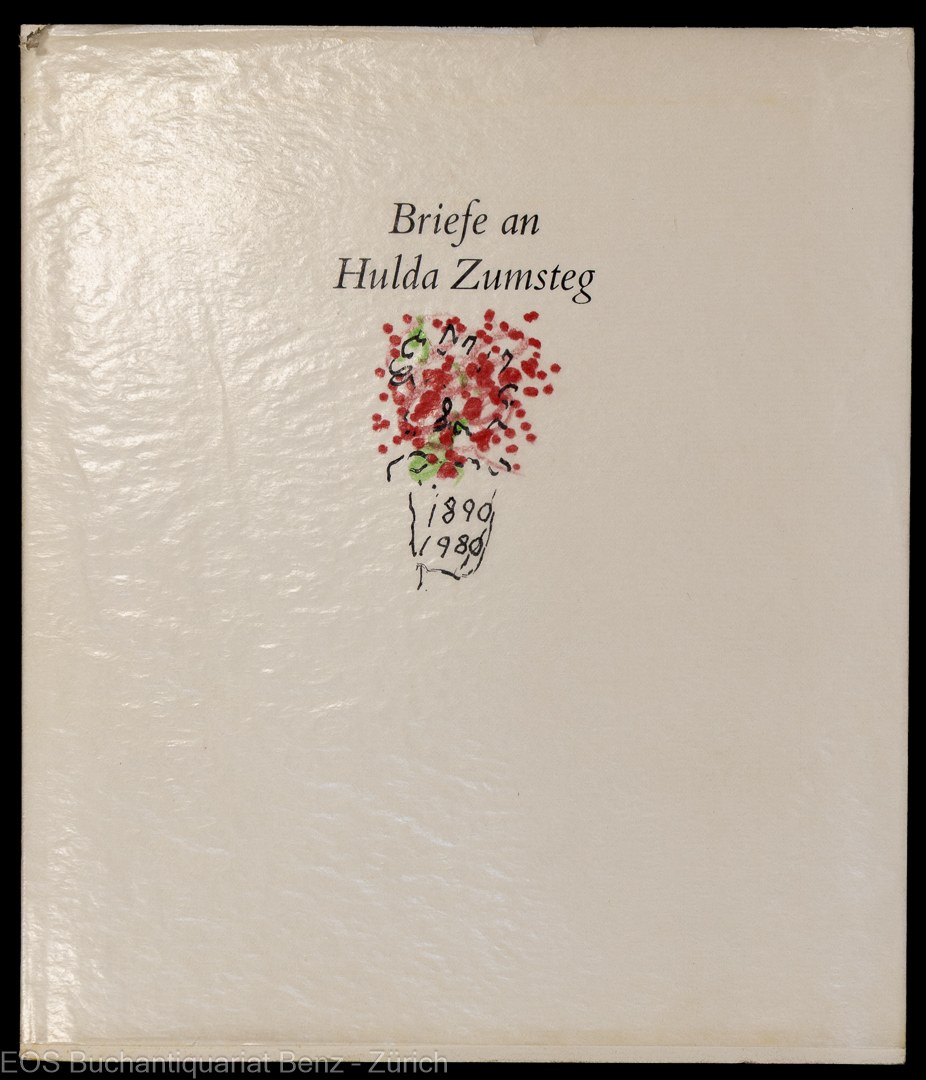
1980Best.-Nr. 5819CBZürich, G. Zumsteg, 1980. 4°. 69, (2) S. Orig.-Broschur. + Wichtig: Für unsere Kunden in der EU erfolgt der Versand alle 14 Tage verzollt ab Deutschland / Postbank-Konto in Deutschland vorhanden +, 5819C
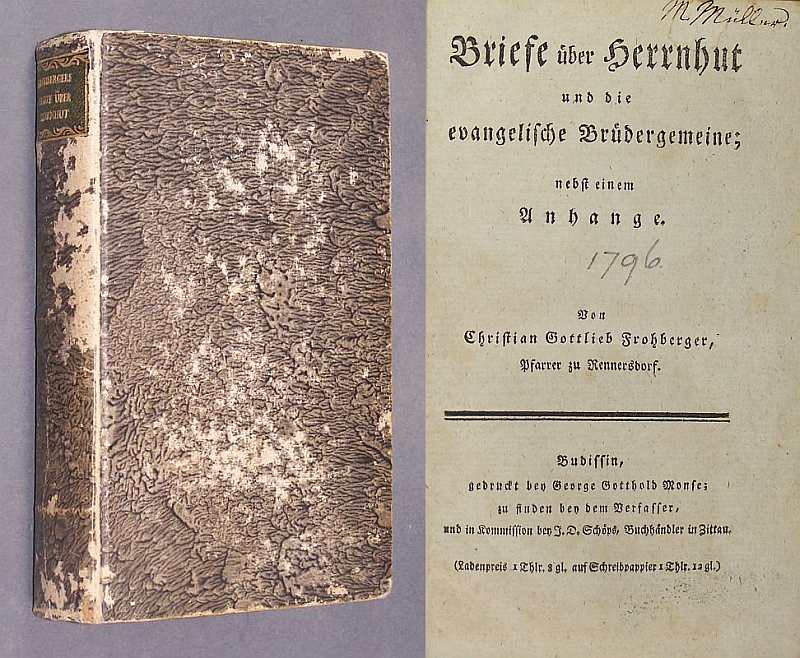
1797Best.-Nr. 1046496Budissin [Bautzen], Verlag des Verfassers (Druck von Georg Gotthold Monse / in Kommission bei J.D. Schöps, Zittau) ohne Jahr [1797]. Titel, (22), 430, (2 weiße), 136 Seiten, 8° (17,5 x 11 cm). Pappband der Zeit mit grauem geädertem Kleisterpapierbezug, goldgeprägtem Rückenschild und rot gefärbtem Schnitt.
1891Best.-Nr. 3197DBBasel, Sallmann und Bonacker, 1891. Gr.-8°. 106 S., 1 Bl. (Berichtigungen). Broschur. + Wichtig: Für unsere Kunden in der EU erfolgt der Versand alle 14 Tage verzollt ab Deutschland / Postbank-Konto in Deutschland vorhanden + 1. Teil (alles erschienene ?). berieben, Deckel staubfleckig.
1891Best.-Nr. 3197DB1. Teil (alles erschienene ?). Basel Sallmann und Bonacker 1891 Gr.-8°. 106 S., 1 Bl. (Berichtigungen). Broschur. berieben, Deckel staubfleckig.
1989Around the turn of the 19th century the towns, villages and countryside of Britain attained a level of picturesque beauty and charm that has been unsurpassed since. In watercolour drawing artists caught the changing light and weather to perfection, and in aquatint engravings their subtle tones could be reproduced in prints virtually indistinguishable from the originals. Here nearly 50 of the finest views and scenes in prints of the period are reproduced, their colours still as fresh and vivid today as when they were first published. Drawing upon contemporary accounts, John Barr provides a commentary of the artists, engravers and prints in this album which portrays the elegance and robust variety of Regency Britain for today's armchair tourist.A selection 50 illustrations reproduced from Topographical and Colour Plate Books of the Regency period [1790-1840] "providing today's armchair tourist with an album that faithfully portrays the elegance and robust variety of Regency Britain." 127p.illus. Illustrated endpapers Book
Best.-Nr. B273674-2New York Pace Editions 1985. 30pp. Prof. illus. Lrg. 8vo. Wraps. New York (Pace Editions), 1985. paperback books