Peters, WAntiquariat.de
10 815 résultats
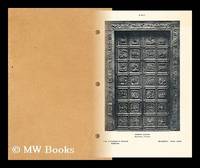
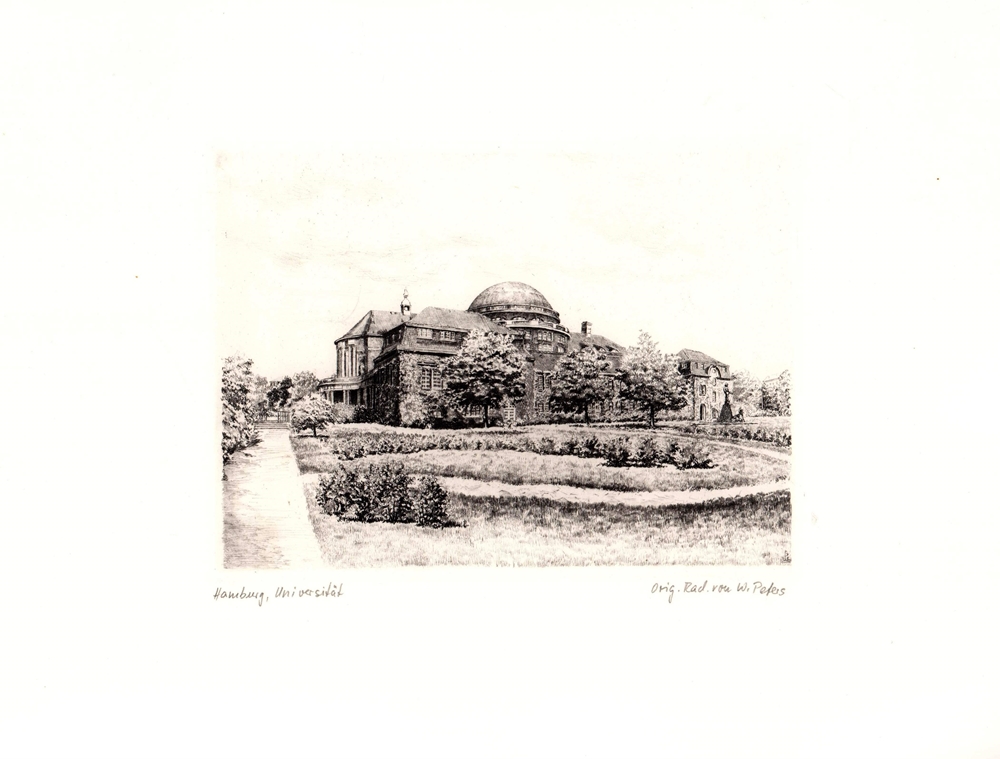
1950réf. 92433[ca. 1950]. Bildmaß: 14,9 x 20,2 cm. Blattmaß: ca. 30 x 40 cm.
réf. B9781019966549Hardback. New. hardcover
2026réf. LRB4001332Paris: Editions Recreasoft 2026 Language: English. Approximately 500 pages. Printed on premium paper. English : Print-on-demand reprint. Original edition : 1916. Catalogue illustré de planches destiné à l'étude et à l'enseignement présentant un vaste ensemble d'images reproduites et classées pour l'usage académique. L'ensemble reflète les pratiques de diffusion visuelle du début du XXe siècle et constitue une source utile pour l'histoire de l'iconographie de la pédagogie et des collections d'images imprimées. Illustrated catalogue of plates intended for study and teaching presenting a broad range of reproduced images arranged for academic use. The volume reflects early twentieth-century visual dissemination practices and is a useful source for the history of iconography pedagogy and printed image collections. Book images are non-contractual. Editions Recreasoft. Softcover. New. Editions Recreasoft paperback
1942réf. 194986Boston : University prints 1942 1942. First Edition. Hardback. Near fine copy in the original plates contained in publisher's cardboard box. Slightest suggestion only of dust-dulling to the spine bands and panel edges. Remains particularly well-preserved overall; tight bright clean and strong. ; 8vo 8"" - 9"" tall; Physical desc.: 20x14 plates ; Notes: Title supplied from catalogue: The University prints art reproductions for students. (Boston : University prints, 1942) hardcover
198015x22.5 cm. 156 pages. Paperback. In good condition.
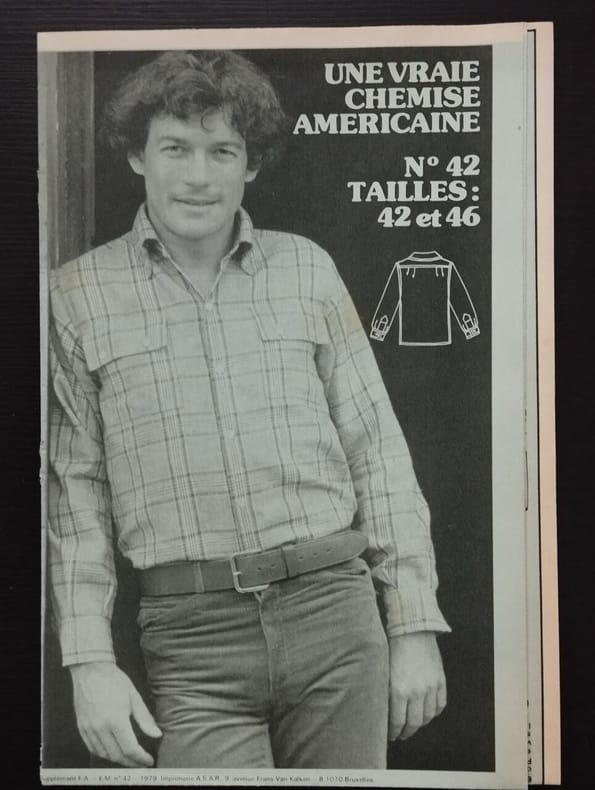
réf. 500297356Sans date.
réf. HD-200o.J. MORGENBESUCH IM ELYSÉE. - Aber, Monsieur Véron, Sie werden mir doch wohl nicht nur eine Unterpräfektur anbieten! Lithographie, auf chamoisfarbenem Velin, mit den Adressen: Chez Aubert, Pl. de la Bourse., sowie: Imp. Aubert & Cie. Darstellungsgröße 20:26,3 cm, Blattgröße 25,5:33,9 cm. Literatur: Daumier-Register 1914 II (von 3); Delteil 1914 II (von 3), Blatt Nr. 33 der Serie ?ACTUALITÉS?, erschienen 21.11.1849 in ?LE CHARIVARI?. ? Sur blanc!
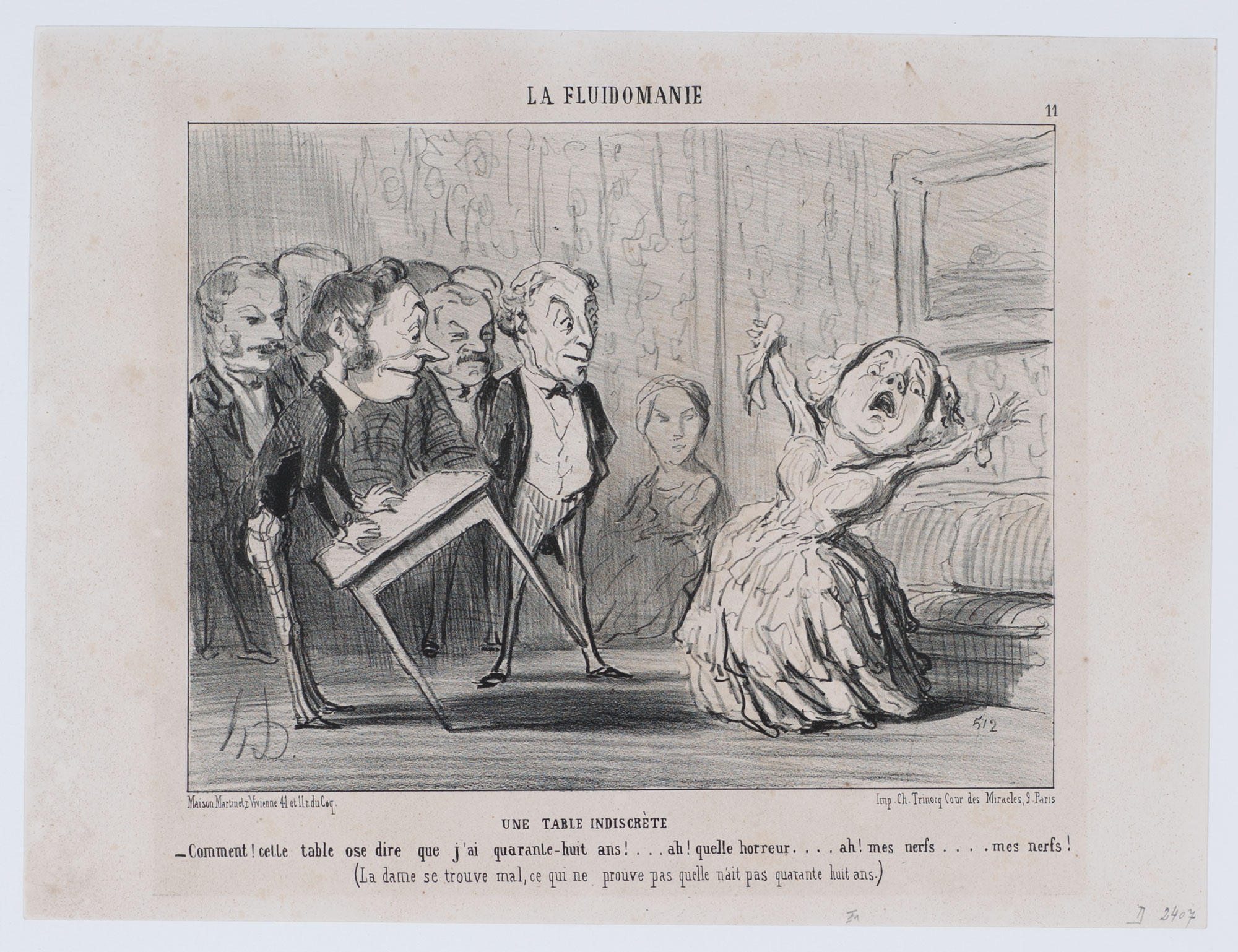
réf. HD-237o.J. EIN INDISKRETER TISCH. - Was? Dieser Tisch wagt zu behaupten, dass ich achtundvierzig Jahre alt bin?... Oh welche Schande... meine Nerven..... meine Nerven! (Der Dame wird schlecht, was nicht heissen will, dass sie nicht tatsächlich achtundvierzig Jahre alt ist). Lithographie, auf chamoisfarbenem Velin, mit den Adressen: Maison Martinet r.Vivienne 41 et 11 r.du Coq, sowie: Imp. Ch.Trinocq, Cour des Miracles, 9, Paris. Darstellungsgröße 19,7:25,7 cm, Blattgröße 26,4:35 cm. Literatur: Daumier-Register 2407 II (von 2); Delteil 2407 II (von 2), Blatt 11 der Serie ?LA FLUIDOMANIE.?, erschienen 15.06.1853 in ?LE CHARIVARI?. ? Sur blanc!
réf. 5274Beau tirage pour la revue L'Art En feuille très bon Paris L'Art 42,5 x 28,5 cm
1902réf. 7977Très belle épreuve avant toute lettre. IFF 6. 1902 22 x 15 cm au trait carré. Marges 28,2 x 20 cm.
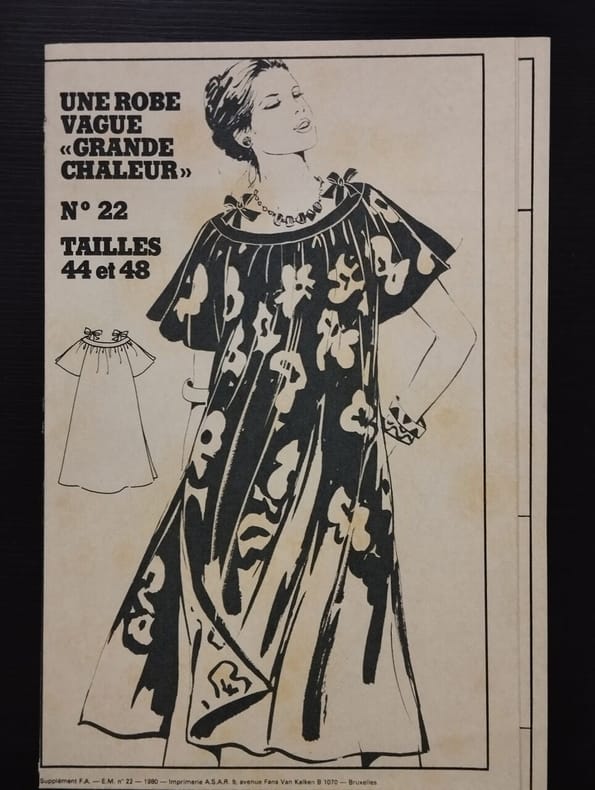
réf. 500297355E.M Sans date.
réf. 500297341Sans date.
1920- Lucien Vogel éditeur, Paris Juin 1920, 18x24cm, une feuille. - Original color print, printed on vergé paper, signed in the plate. An original print used to illustrate the Gazette du bon ton, one of the most attractive and influential 20th century fashion magazines, featuring the talents of French artists and other contributors from the burgeoning Art Deco movement. A celebrated fashion magazine established in 1912 by Lucien Vogel, La Gazette du bon ton appeared until 1925, with a hiatus from 1915 to 1920 due to the war (the editor-in-chief having been called up for service). It consisted of 69 issues printed in only 2,000 copies each and notably illustrated with 573 color plates and 148 sketches of the models of the great designers. Right from the start, this sumptuous publication "was aimed at bibliophiles and fashionable society," (Françoise Tétart-Vittu, "La Gazette du bon ton", in Dictionnaire de la mode, 2016) and was printed on fine vergé paper using a type cut specially for the magazine by Georges Peignot, known as Cochin, later used (in 1946) by Christian Dior. The prints were made using stencils, heightened in colors, some highlighted in gold or palladium. The story began in 1912, when Lucien Vogel, a man of the world involved in fashion (he had already been part of the fashion magazine Femina) decided, with his wife Cosette de Brunhoff - the sister of Jean, creator of Babar - to set up the Gazette du bon ton, subtitled at the time: "Art, fashion, frivolities." Georges Charensol noted the reasoning of the editor-in-chief: "'In 1910,' he observed, 'there was no really artistic fashion magazine, nothing representative of the spirit of the time. My dream was therefore to make a luxury magazine with truly modern artists...I was assured of success, because when it comes to fashion, no country on earth can compete with France.'" ("Un grand éditeur d'art. Lucien Vogel" in Les Nouvelles littéraires, no. 133, May 1925). The magazine was immediately successful, not only in France but also in the United States and Latin America. At first, Vogel put together a team of seven artists: André-Édouard Marty and Pierre Brissaud, followed by Georges Lepape and Dammicourt, as well as eventually his friends from school and the School of Fine Arts, like George Barbier, Bernard Boutet de Monvel and Charles Martin. Other talented people soon came flocking to join the team: Guy Arnoux, Léon Bakst, Benito, Boutet de Monvel, Umberto Brunelleschi, Chas Laborde, Jean-Gabriel Domergue, Raoul Dufy, Édouard Halouze, Alexandre Iacovleff, Jean Émile Laboureur, Charles Loupot, Chalres Martin, Maggie Salcedo. These artist, mostly unknown when Lucien Vogel sought them out, later became emblematic and sought-after artistic figures. It was also they who worked on the advertising drawings for the Gazette. The plates put the spotlight on, and celebrate, dresses by seven designers of the age: Lanvin, Doeuillet, Paquin, Poiret, Worth, Vionnet and Doucet. The designers provided exclusive models for each issue. Nonetheless, some of the illustrations are not based on real models, but simply on the illustrator's conception of the fashion of the day. The Gazette du bon ton was an important step in the history of fashion. Combining aesthetic demands with the physical whole, it brought together - for the first time - the great talents of the artistic, literary, and fashion worlds; and imposed, through this alchemy, a completely new image of women: slender, independent and daring, which was shared by the new generation of designers, including Coco Chanel, Jean Patou, Marcel Rochas, and so on... Taken over in 1920 by Condé Montrose Nast, the Gazette du bon ton was an important influence on the new layout and aesthetics of that "little dying paper" that Nast had bought a few years earlier: Vogue. [FRENCH VERSION FOLLOWS] Estampe originale en couleur, tirée sur papier vergé, signée en bas à gauche de la planche. Gravure originale réalisée pour l'illustration de
1920réf. 54779Lucien Vogel éditeur | Paris Juin 1920 | 18 x 24 cm | une feuille
1922- Lucien Vogel éditeur, Paris 1922, 18x24cm, une feuille. - Original color print, printed on vergé paper, signed in the plate. An original print used to illustrate the Gazette du bon ton, one of the most attractive and influential 20th century fashion magazines, featuring the talents of French artists and other contributors from the burgeoning Art Deco movement. A celebrated fashion magazine established in 1912 by Lucien Vogel, La Gazette du bon ton appeared until 1925, with a hiatus from 1915 to 1920 due to the war (the editor-in-chief having been called up for service). It consisted of 69 issues printed in only 2,000 copies each and notably illustrated with 573 color plates and 148 sketches of the models of the great designers. Right from the start, this sumptuous publication "was aimed at bibliophiles and fashionable society," (Françoise Tétart-Vittu, "La Gazette du bon ton", in Dictionnaire de la mode, 2016) and was printed on fine vergé paper using a type cut specially for the magazine by Georges Peignot, known as Cochin, later used (in 1946) by Christian Dior. The prints were made using stencils, heightened in colors, some highlighted in gold or palladium. The story began in 1912, when Lucien Vogel, a man of the world involved in fashion (he had already been part of the fashion magazine Femina) decided, with his wife Cosette de Brunhoff - the sister of Jean, creator of Babar - to set up the Gazette du bon ton, subtitled at the time: "Art, fashion, frivolities." Georges Charensol noted the reasoning of the editor-in-chief: "'In 1910,' he observed, 'there was no really artistic fashion magazine, nothing representative of the spirit of the time. My dream was therefore to make a luxury magazine with truly modern artists...I was assured of success, because when it comes to fashion, no country on earth can compete with France.'" ("Un grand éditeur d'art. Lucien Vogel" in Les Nouvelles littéraires, no. 133, May 1925). The magazine was immediately successful, not only in France but also in the United States and Latin America. At first, Vogel put together a team of seven artists: André-Édouard Marty and Pierre Brissaud, followed by Georges Lepape and Dammicourt, as well as eventually his friends from school and the School of Fine Arts, like George Barbier, Bernard Boutet de Monvel and Charles Martin. Other talented people soon came flocking to join the team: Guy Arnoux, Léon Bakst, Benito, Boutet de Monvel, Umberto Brunelleschi, Chas Laborde, Jean-Gabriel Domergue, Raoul Dufy, Édouard Halouze, Alexandre Iacovleff, Jean Émile Laboureur, Charles Loupot, Chalres Martin, Maggie Salcedo. These artist, mostly unknown when Lucien Vogel sought them out, later became emblematic and sought-after artistic figures. It was also they who worked on the advertising drawings for the Gazette. The plates put the spotlight on, and celebrate, dresses by seven designers of the age: Lanvin, Doeuillet, Paquin, Poiret, Worth, Vionnet and Doucet. The designers provided exclusive models for each issue. Nonetheless, some of the illustrations are not based on real models, but simply on the illustrator's conception of the fashion of the day. The Gazette du bon ton was an important step in the history of fashion. Combining aesthetic demands with the physical whole, it brought together - for the first time - the great talents of the artistic, literary, and fashion worlds; and imposed, through this alchemy, a completely new image of women: slender, independent and daring, which was shared by the new generation of designers, including Coco Chanel, Jean Patou, Marcel Rochas, and so on... Taken over in 1920 by Condé Montrose Nast, the Gazette du bon ton was an important influence on the new layout and aesthetics of that "little dying paper" that Nast had bought a few years earlier: Vogue. [FRENCH VERSION FOLLOWS] Estampe originale en couleur, tirée sur papier vergé, signée en bas à droite de la planche. La Gazette du bon ton, l'une des plus belles et des pl
1922réf. 55008Lucien Vogel éditeur | Paris 1922 | 18 x 24 cm | une feuille
1922réf. 84725Lucien Vogel éditeur | Paris 1922 | 18 x 24 cm | une feuille
1922réf. 84735Lucien Vogel éditeur | Paris 1922 | 18 x 24 cm | une feuille
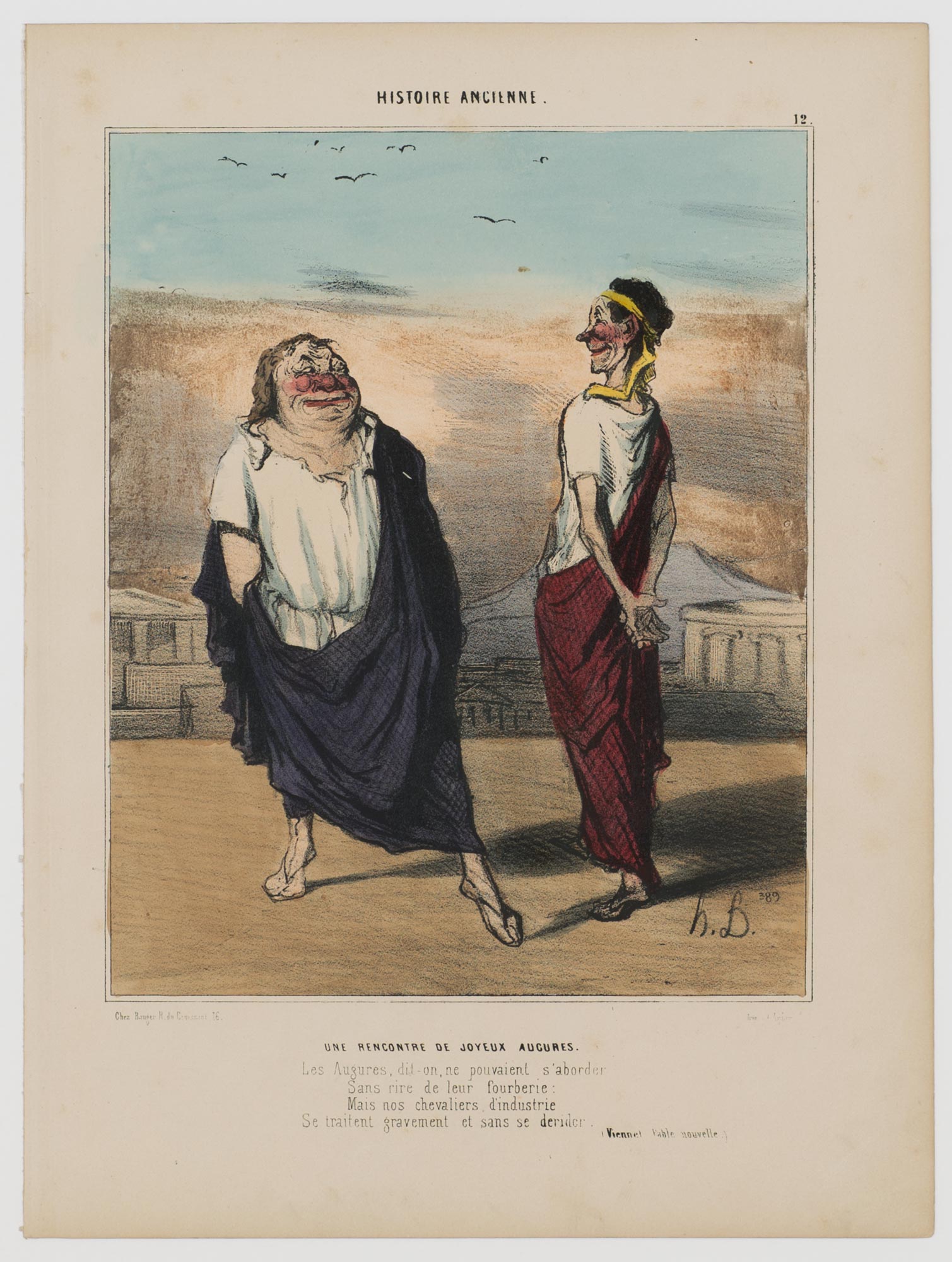
réf. HD-132o.J. EIN TREFFEN LÄCHELNDER AUGUREN. Es heisst, dass Auguren nicht zusammentreffen konnten, ohne über ihre Schurkenstreiche zu lächeln. Aber unsere Industrieritter begegnen sich ernsthaft, und ohne Heiterkeit. Zeitgenöss. aquarellierte Lithographie, auf chamoisfarbenem Velin, mit der Adresse: Chez Bauger R. du Croissant 16, sowie: Imp. d?Aubert & Cie. Blattgröße 33,6:25,1 cm. Literatur: Daumier-Register 936, III (von 3); Delteil 936, II (von 2), Blatt 12 der Serie ?Histoire Ancienne?. ? Sur blanc.
réf. HD-170o.J. EIN EMPFANG. Meine Herren,..... lassen Sie uns auf die Gesundheit der französischen Seeleute im Allgemeinen und auf das neue Mitglied Greluchon im Besonderen trinken.... und während wir auf seine Feuertaufe warten, taufen wir ihn schon mal mit Wasser. Lithographie, auf chamoisfarbenem Velin, mit den Adressen: Chez Pannier& Cie.Edrs. R. du Croissant. 16., sowie: Chez Aubert & Cie. Pl. de la Bourse und: Imp. d'Aubert & Cie. Darstellungsgröße 22,9:19,8 cm, Blattgröße 34,9:26,5 cm. Literatur: Daumier-Register 1032 III (von 4); Delteil 1032 III (von 4), Blatt 10 der Folge ?LES CANOTIERS PARISIENS.?, erschienen 26.05.1843 in ?LE CHARIVARI?. ? Sur blanc! Provenienz: zugeschrieben Coll. Hazard, Nicolas-Auguste (Lugt 1279), vgl. Lugt 1975.
réf. 17839Paris: Societe des Aqua-fortistes,1 avril 1864 ,eau-forte avec ton de planche sur papier vergé,Imprimé par Auguste Delâtre;35,7 x 52,6 cm; plate: 23,5 x 31,7 cm; image: 21,1 x 29,6 cm
réf. 26508Format: 120×160 cm / 47×63 in- PLIEE / Folded - Interprete(s) :Anthony FRANCIOSA, Don MURRAY, Eva MARIE-SAINT, Gerald O'LAUGHLIN, Henry SILVA, Lloyd NOLAN
1924réf. 55150Lucien Vogel éditeur | Paris 1924-1925 | 24 x 18 cm | une feuille
1924- Lucien Vogel éditeur, Paris 1924-1925, 24x18cm, une feuille. - Original color print, printed on vergé paper, non signed. An original print used to illustrate the Gazette du bon ton, one of the most attractive and influential 20th century fashion magazines, featuring the talents of French artists and other contributors from the burgeoning Art Deco movement. A celebrated fashion magazine established in 1912 by Lucien Vogel, La Gazette du bon ton appeared until 1925, with a hiatus from 1915 to 1920 due to the war (the editor-in-chief having been called up for service). It consisted of 69 issues printed in only 2,000 copies each and notably illustrated with 573 color plates and 148 sketches of the models of the great designers. Right from the start, this sumptuous publication "was aimed at bibliophiles and fashionable society," (Françoise Tétart-Vittu, "La Gazette du bon ton", in Dictionnaire de la mode, 2016) and was printed on fine vergé paper using a type cut specially for the magazine by Georges Peignot, known as Cochin, later used (in 1946) by Christian Dior. The prints were made using stencils, heightened in colors, some highlighted in gold or palladium. The story began in 1912, when Lucien Vogel, a man of the world involved in fashion (he had already been part of the fashion magazine Femina) decided, with his wife Cosette de Brunhoff - the sister of Jean, creator of Babar - to set up the Gazette du bon ton, subtitled at the time: "Art, fashion, frivolities." Georges Charensol noted the reasoning of the editor-in-chief: "'In 1910,' he observed, 'there was no really artistic fashion magazine, nothing representative of the spirit of the time. My dream was therefore to make a luxury magazine with truly modern artists...I was assured of success, because when it comes to fashion, no country on earth can compete with France.'" ("Un grand éditeur d'art. Lucien Vogel" in Les Nouvelles littéraires, no. 133, May 1925). The magazine was immediately successful, not only in France but also in the United States and Latin America. At first, Vogel put together a team of seven artists: André-Édouard Marty and Pierre Brissaud, followed by Georges Lepape and Dammicourt, as well as eventually his friends from school and the School of Fine Arts, like George Barbier, Bernard Boutet de Monvel and Charles Martin. Other talented people soon came flocking to join the team: Guy Arnoux, Léon Bakst, Benito, Boutet de Monvel, Umberto Brunelleschi, Chas Laborde, Jean-Gabriel Domergue, Raoul Dufy, Édouard Halouze, Alexandre Iacovleff, Jean Émile Laboureur, Charles Loupot, Chalres Martin, Maggie Salcedo. These artist, mostly unknown when Lucien Vogel sought them out, later became emblematic and sought-after artistic figures. It was also they who worked on the advertising drawings for the Gazette. The plates put the spotlight on, and celebrate, dresses by seven designers of the age: Lanvin, Doeuillet, Paquin, Poiret, Worth, Vionnet and Doucet. The designers provided exclusive models for each issue. Nonetheless, some of the illustrations are not based on real models, but simply on the illustrator's conception of the fashion of the day. The Gazette du bon ton was an important step in the history of fashion. Combining aesthetic demands with the physical whole, it brought together - for the first time - the great talents of the artistic, literary, and fashion worlds; and imposed, through this alchemy, a completely new image of women: slender, independent and daring, which was shared by the new generation of designers, including Coco Chanel, Jean Patou, Marcel Rochas, and so on... Taken over in 1920 by Condé Montrose Nast, the Gazette du bon ton was an important influence on the new layout and aesthetics of that "little dying paper" that Nast had bought a few years earlier: Vogue. [FRENCH VERSION FOLLOWS] Estampe originale en couleur, tirée sur papier vergé, non-signée. Gravure originale réalisée pour l'illustration de La Gazette du bon ton
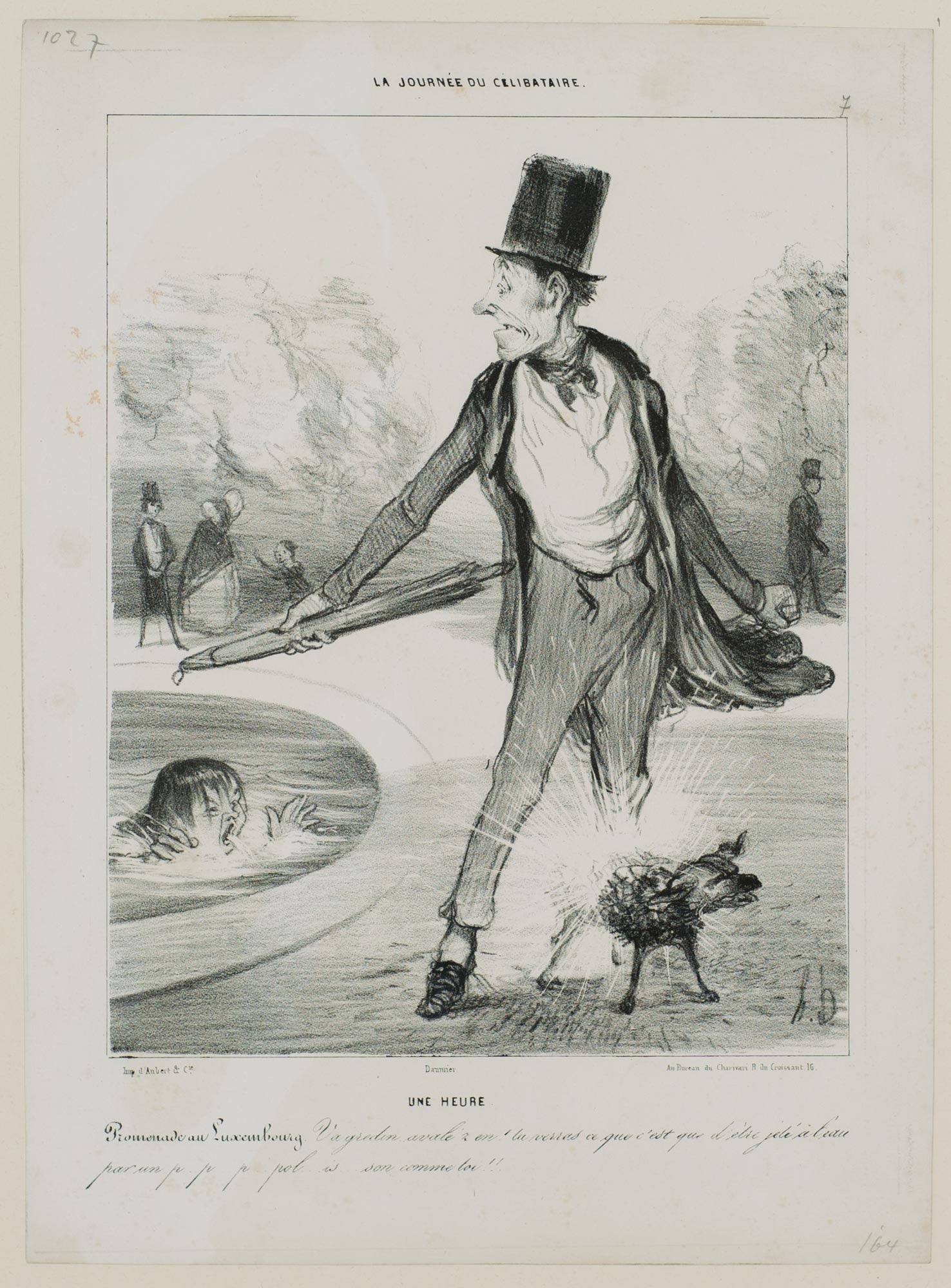
réf. HD-068o.J. (EIN UHR. Spaziergang im Luxembourg Park. Komm her, Nichtsnutz, schluck es! Du wirst schon sehen, was es bedeutet, wenn man von einem Schurken, wie Du einer bist, ins Wasser geworfen wird!..). Lithographie, auf chamoisfarbenem Velin, mit den Adressen: Imp. d?Aubert & Cie., sowie: Au bureau du Charivari rue du Croissant 16. Blattgröße 33,1:24,2 cm. Literatur: Daumier-Register 613; Delteil 613, Blatt 7 (Zahl mit Bleistift hinzugefügt) aus der Serie ?La Journée du Célibataire?, erschienen 17.06.1839 in ?Le Charivari?. ? Sur blanc!