Wirz, Victor:Livre Rare Book

10.788 risultati
1909rif. 2719CBZürich, F. Lohbauer, 1909. Gr.-8°. 118, 38 S. Mit 4 (davon 1 doppels.) Tafeln und 1 Abb. im Text. Orig.-Broschur.
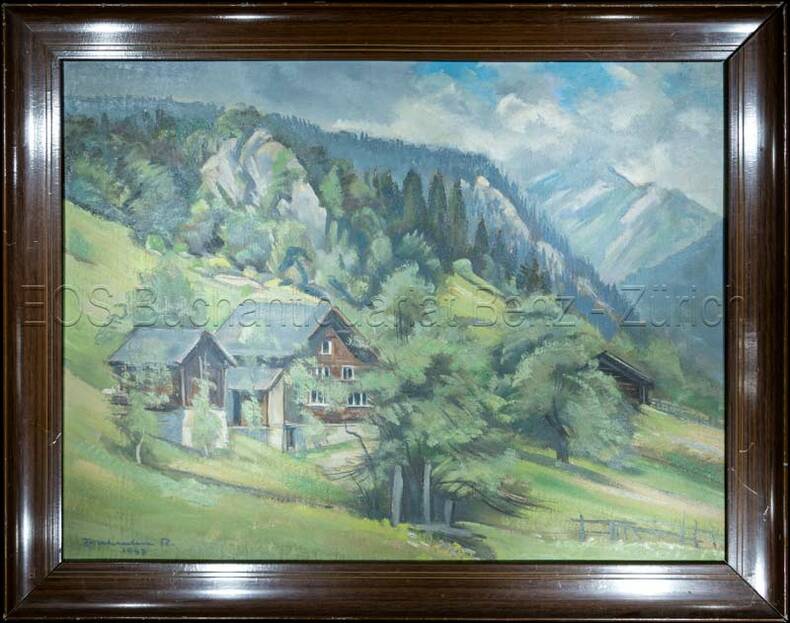
1947rif. 811CG1947. Oel auf Leinwand. Bildausschnitt: 37 x 49 cm.
1948This is a very good hardcover copy in a gray cloth binding. No dust jacket. Title page has been slightly cut down and re-attached to it's original position. Introduction by Herbert Read. The whole book was designed by Nicholson. 203 plates in color and black & white. Bibliography. Biographical note. Summary of text in French. Large 4to, 11 1/2" high X 9" wide, 32 pages of text + plate section.
rif. 15212Épreuve sur beau papier filigrané. en feuille Très bon Paris 15 x 11 cm
1796rif. 701665Ohne Ort, ohne Verlag, 1796. 42 Seiten, 5 Blatt. Schlichter Pappband der Zeit.
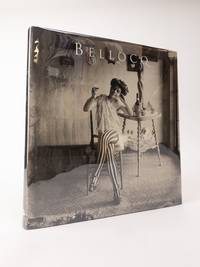
1996rif. 1378311New York: Random House 1996. First American Edition. Hardcover. Quarto 83 pages. In Very Good condition with a Very Good dust jacket. Spine black with red and white lettering. Dust jacket protected in mylar covering. Minor shelf wear. Scuffing to rear cover. Textblock clean. Features full-page photographs throughout. Shelved in Case 11. 1378311. Shelved Dupont Bookstore. Random House hardcover books
rif. 361129Jonathan Cape 1996. Square folio black cloth boards stamped blind lettering to front board and spine frontispiece 83pp illus/photos sl fading to board edges sl soiling to eps sm internal reinforcing of front gutter with paper tape in d/w Near FINE minimal creasing to upper edge of rear flap Jonathan Cape 1996 hardcover
1996rif. 1378311New York: Random House 1996. First American Edition. Hardcover. Quarto 83 pages. In Very Good condition with a Very Good dust jacket. Spine black with red and white lettering. Dust jacket protected in mylar covering. Minor shelf wear. Scuffing to rear cover. Textblock clean. Features full-page photographs throughout. Shelved in Case 11. 1378311. Shelved Dupont Bookstore. Random House hardcover
1921- Lucien Vogel éditeur, Paris 1921, 19,5x25cm, une feuille. - Original color print, printed on vergé paper, non signed. An original print used to illustrate the Gazette du bon ton, one of the most attractive and influential 20th century fashion magazines, featuring the talents of French artists and other contributors from the burgeoning Art Deco movement. A celebrated fashion magazine established in 1912 by Lucien Vogel, La Gazette du bon ton appeared until 1925, with a hiatus from 1915 to 1920 due to the war (the editor-in-chief having been called up for service). It consisted of 69 issues printed in only 2,000 copies each and notably illustrated with 573 color plates and 148 sketches of the models of the great designers. Right from the start, this sumptuous publication "was aimed at bibliophiles and fashionable society," (Françoise Tétart-Vittu, "La Gazette du bon ton", in Dictionnaire de la mode, 2016) and was printed on fine vergé paper using a type cut specially for the magazine by Georges Peignot, known as Cochin, later used (in 1946) by Christian Dior. The prints were made using stencils, heightened in colors, some highlighted in gold or palladium. The story began in 1912, when Lucien Vogel, a man of the world involved in fashion (he had already been part of the fashion magazine Femina) decided, with his wife Cosette de Brunhoff - the sister of Jean, creator of Babar - to set up the Gazette du bon ton, subtitled at the time: "Art, fashion, frivolities." Georges Charensol noted the reasoning of the editor-in-chief: "'In 1910,' he observed, 'there was no really artistic fashion magazine, nothing representative of the spirit of the time. My dream was therefore to make a luxury magazine with truly modern artists...I was assured of success, because when it comes to fashion, no country on earth can compete with France.'" ("Un grand éditeur d'art. Lucien Vogel" in Les Nouvelles littéraires, no. 133, May 1925). The magazine was immediately successful, not only in France but also in the United States and Latin America. At first, Vogel put together a team of seven artists: André-Édouard Marty and Pierre Brissaud, followed by Georges Lepape and Dammicourt, as well as eventually his friends from school and the School of Fine Arts, like George Barbier, Bernard Boutet de Monvel and Charles Martin. Other talented people soon came flocking to join the team: Guy Arnoux, Léon Bakst, Benito, Boutet de Monvel, Umberto Brunelleschi, Chas Laborde, Jean-Gabriel Domergue, Raoul Dufy, Édouard Halouze, Alexandre Iacovleff, Jean Émile Laboureur, Charles Loupot, Chalres Martin, Maggie Salcedo. These artist, mostly unknown when Lucien Vogel sought them out, later became emblematic and sought-after artistic figures. It was also they who worked on the advertising drawings for the Gazette. The plates put the spotlight on, and celebrate, dresses by seven designers of the age: Lanvin, Doeuillet, Paquin, Poiret, Worth, Vionnet and Doucet. The designers provided exclusive models for each issue. Nonetheless, some of the illustrations are not based on real models, but simply on the illustrator's conception of the fashion of the day. The Gazette du bon ton was an important step in the history of fashion. Combining aesthetic demands with the physical whole, it brought together - for the first time - the great talents of the artistic, literary, and fashion worlds; and imposed, through this alchemy, a completely new image of women: slender, independent and daring, which was shared by the new generation of designers, including Coco Chanel, Jean Patou, Marcel Rochas, and so on... Taken over in 1920 by Condé Montrose Nast, the Gazette du bon ton was an important influence on the new layout and aesthetics of that "little dying paper" that Nast had bought a few years earlier: Vogue. [FRENCH VERSION FOLLOWS] Estampe originale en couleur tirée sur papier vergé, non-signée. Gravure originale réalisée pour l'illustration de La Gazette du bon ton, l'u
1921- Lucien Vogel éditeur, Paris 1921, 18x24cm, une feuille. - Original color print, printed on vergé paper, non signed. An original print used to illustrate the Gazette du bon ton, one of the most attractive and influential 20th century fashion magazines, featuring the talents of French artists and other contributors from the burgeoning Art Deco movement. A celebrated fashion magazine established in 1912 by Lucien Vogel, La Gazette du bon ton appeared until 1925, with a hiatus from 1915 to 1920 due to the war (the editor-in-chief having been called up for service). It consisted of 69 issues printed in only 2,000 copies each and notably illustrated with 573 color plates and 148 sketches of the models of the great designers. Right from the start, this sumptuous publication "was aimed at bibliophiles and fashionable society," (Françoise Tétart-Vittu, "La Gazette du bon ton", in Dictionnaire de la mode, 2016) and was printed on fine vergé paper using a type cut specially for the magazine by Georges Peignot, known as Cochin, later used (in 1946) by Christian Dior. The prints were made using stencils, heightened in colors, some highlighted in gold or palladium. The story began in 1912, when Lucien Vogel, a man of the world involved in fashion (he had already been part of the fashion magazine Femina) decided, with his wife Cosette de Brunhoff - the sister of Jean, creator of Babar - to set up the Gazette du bon ton, subtitled at the time: "Art, fashion, frivolities." Georges Charensol noted the reasoning of the editor-in-chief: "'In 1910,' he observed, 'there was no really artistic fashion magazine, nothing representative of the spirit of the time. My dream was therefore to make a luxury magazine with truly modern artists...I was assured of success, because when it comes to fashion, no country on earth can compete with France.'" ("Un grand éditeur d'art. Lucien Vogel" in Les Nouvelles littéraires, no. 133, May 1925). The magazine was immediately successful, not only in France but also in the United States and Latin America. At first, Vogel put together a team of seven artists: André-Édouard Marty and Pierre Brissaud, followed by Georges Lepape and Dammicourt, as well as eventually his friends from school and the School of Fine Arts, like George Barbier, Bernard Boutet de Monvel and Charles Martin. Other talented people soon came flocking to join the team: Guy Arnoux, Léon Bakst, Benito, Boutet de Monvel, Umberto Brunelleschi, Chas Laborde, Jean-Gabriel Domergue, Raoul Dufy, Édouard Halouze, Alexandre Iacovleff, Jean Émile Laboureur, Charles Loupot, Chalres Martin, Maggie Salcedo. These artist, mostly unknown when Lucien Vogel sought them out, later became emblematic and sought-after artistic figures. It was also they who worked on the advertising drawings for the Gazette. The plates put the spotlight on, and celebrate, dresses by seven designers of the age: Lanvin, Doeuillet, Paquin, Poiret, Worth, Vionnet and Doucet. The designers provided exclusive models for each issue. Nonetheless, some of the illustrations are not based on real models, but simply on the illustrator's conception of the fashion of the day. The Gazette du bon ton was an important step in the history of fashion. Combining aesthetic demands with the physical whole, it brought together - for the first time - the great talents of the artistic, literary, and fashion worlds; and imposed, through this alchemy, a completely new image of women: slender, independent and daring, which was shared by the new generation of designers, including Coco Chanel, Jean Patou, Marcel Rochas, and so on... Taken over in 1920 by Condé Montrose Nast, the Gazette du bon ton was an important influence on the new layout and aesthetics of that "little dying paper" that Nast had bought a few years earlier: Vogue. [FRENCH VERSION FOLLOWS] Estampe originale en couleur, tirée sur papier vergé, non-signée. Gravure originale réalisée pour l'illustration de La Gazette du bon ton, l'
1927rif. 92741927 Paris, Drouot, 27 et 28 mai 1927. Un cahier in-8 broché, couverture rose, 46 pp. et illustrations en n&b. Bon état.
rif. 26361Planche HT parue dans La Caricature politique, morale, littéraire et scénique, volume 7, 27 mars 1834 (Planche n°374)- Hauteur: 35.5cmx Largeur: 27cm - Image: Hauteur: 23.5cmx Largeur: 18.5cm - Titre en ht au centre : « Le Renard et les Masques » ; légende en bas au centre : « « Belle tête, dit-il ; mais de cervelle point. » // (Lafontaine [La Fontaine].) » ; indications : en ht à gauche : « La Caricature (Journal) N°177. », en ht à dte : « Pl. 374. »Inscription - Dans la lettre : « Chez Aubert, galerie véro dodat. » [éditeur], « L. de Benard. » [imprimeur]Inscription - A côté du masque de Thiers, un livre dont le titre est en partie illisible. Il s’agit sans doute de la représentation d’un vol. de l’ « histoire [de la révolution française] » que Thiers écrivit entre 1823 et 1827. Derrière le masque de Lobau semble se trouver une seringue à clystère, son attribut caricatural traditionnel.
1921rif. 39015Lucien Vogel éditeur | Paris 1921 | 19.50 x 25 cm | une feuille
1921rif. 54860Lucien Vogel éditeur | Paris 1921 | 18 x 24 cm | une feuille
1890rif. 11520ABZürich, Zürcher und Furrer, 1890. 4°. Mit 9 lithogr. Tafeln. Pappbände der Zeit mit rotem Rücken- und Bibliotheksnummernschild + Wichtig: Für unsere Kunden in der EU erfolgt der Versand alle 14 Tage verzollt ab Deutschland / Postbank-Konto in Deutschland vorhanden + (berieben und bestossen). = "Neue Denkschriften der allg. schw. Ges. für die gesammten Naturwissenschaften", Bd. 30.
1862rif. 22511ABNeuenburg, Fritz Marolf, 1862. 4°. (8), V, 70 (1) S. Mit 2 (v. 3) Falttafeln. Halbleinenband der Zeit mit mont. Rückenschild (leicht berieben). + Wichtig: Für unsere Kunden in der EU erfolgt der Versand alle 14 Tage verzollt ab Deutschland / Postbank-Konto in Deutschland vorhanden +
1944rif. 2177DBFrauenfeld, Huber & Co., 1944. 8°. 108 S. Mit 3 gef. Tafeln u. Profilen sowie vereinzelten Textabb. Orig.-Broschur. + Wichtig: Für unsere Kunden in der EU erfolgt der Versand alle 14 Tage verzollt ab Deutschland / Postbank-Konto in Deutschland vorhanden + = "Mitteilungen aus dem Geologischen Institut der eidgen. techn. Hochschule und der Universität Zürich", Serie C. Nr. 22
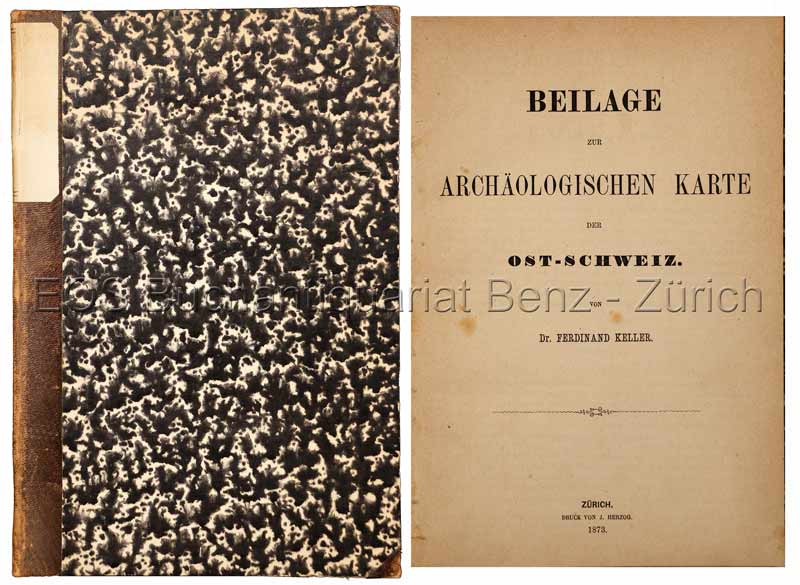
1873rif. 30263ABZürich, J. Herzog, 1873. Gr.-8°. (1) Bl., XIV, (2), 32 S. Mit 1 farb. Tafel mit Karte, 1 gef. lithogr. Tafel und 1 mehrfach gefaltete farb. Karte. Halbleinenband der Zeit. + Wichtig: Für unsere Kunden in der EU erfolgt der Versand alle 14 Tage verzollt ab Deutschland / Postbank-Konto in Deutschland vorhanden +, Titelblatt
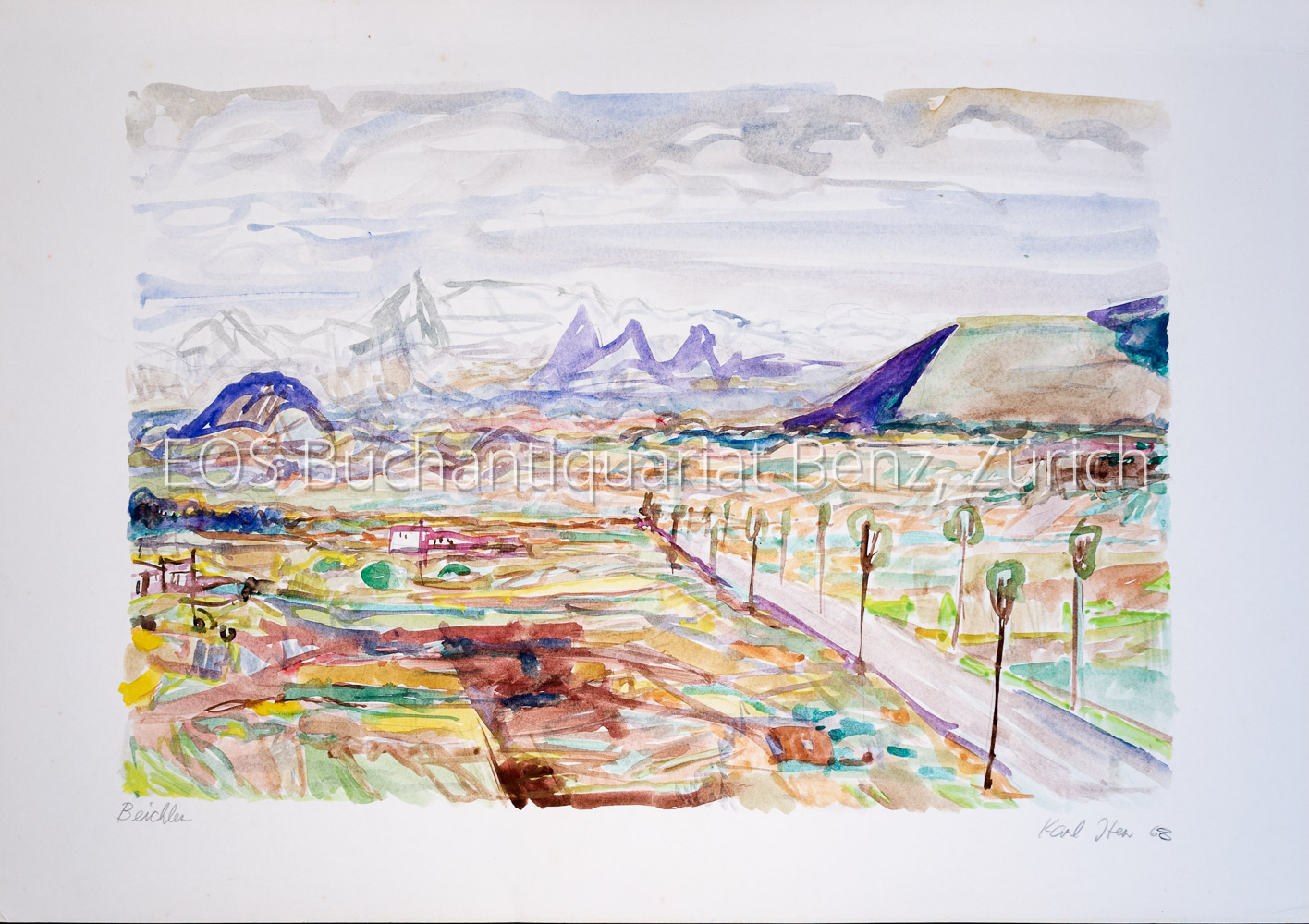
1968rif. 1692AG1968. Aquarell. Blattformat: 43 x 61 cm. + Wichtig: Für unsere Kunden in der EU erfolgt der Versand alle 14 Tage verzollt ab Deutschland / Postbank-Konto in Deutschland vorhanden +, A
1862rif. 22511ABNeuenburg, Fritz Marolf, 1862. 4°. (8), V, 70 (1) S. Mit 2 (v. 3) Falttafeln. Halbleinenband der Zeit mit mont. Rückenschild (leicht berieben).
1890rif. 11520ABZürich Zürcher und Furrer, 1890. 4°. Mit 9 lithogr. Tafeln. Pappbände der Zeit mit rotem Rücken- und Bibliotheksnummernschild (berieben und bestossen). = "Neue Denkschriften der allg. schw. Ges. für die gesammten Naturwissenschaften", Bd. 30.
1968rif. 1692AG1968. Aquarell. Blattformat: 43 x 61 cm.
1873rif. 30263ABZürich, J. Herzog, 1873. Gr.-8°. (1) Bl., XIV, (2), 32 S. Mit 1 farb. Tafel mit Karte, 1 gef. lithogr. Tafel und 1 mehrfach gefaltete farb. Karte. Halbleinenband der Zeit.
1944rif. 2177DBFrauenfeld, Huber & Co., 1944. 8°. 108 S. Mit 3 gef. Tafeln u. Profilen sowie vereinzelten Textabb. Orig.-Broschur. = "Mitteilungen aus dem Geologischen Institut der eidgen. techn. Hochschule und der Universität Zürich", Serie C. Nr. 22.
2000SIGNED BY AUTHOR. FACSIMILE EDITION. 22x17 cm. XI+260 pages. Hardcover. In good condition.