Antiquariat.de
10.815 risultati
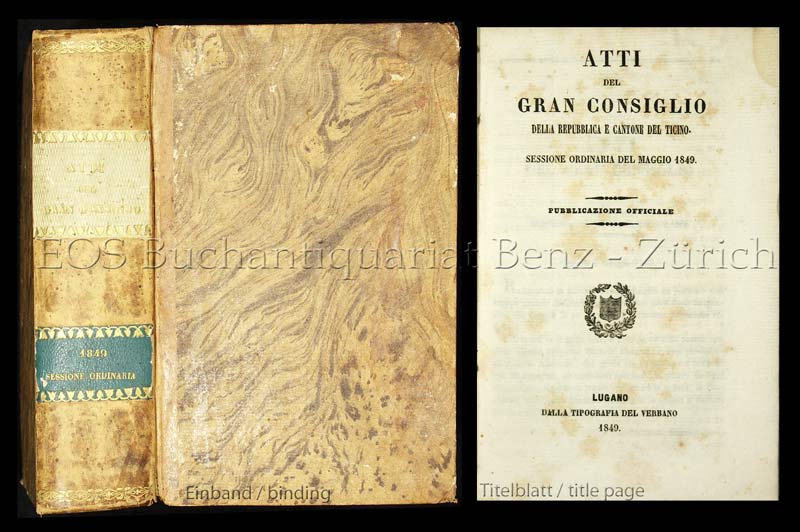
1849rif. 2583DBLugano, Dalla Tipografia Verbano, 1849. 8°. 826 S. Halblederband der Zeit mit 2 verg. Rückensch. + Wichtig: Für unsere Kunden in der EU erfolgt der Versand alle 14 Tage verzollt ab Deutschland / Postbank-Konto in Deutschland vorhanden +, 2583D
1849rif. 2583DBLugano, Dalla Tipografia Verbano, 1849. 8°. 826 S. Halblederband der Zeit mit 2 verg. Rückensch.
1965Litografia originale a colori Firma, data e numerazione a matita. Timbro a secco dello stampatore/editore. Esemplare 19/80. cm 36x36 (Foglio cm 70x49). pp.. . Molto buono (Very Good). . Tiratura: 80. .
1865rif. 13292Charles Jacque 1813-1894. Eau-forte originale sur Chine appliqué parue chez Delâtre. Encadrée Très bon Paris Delâtre 1865 26 x 32 cm
1894rif. 14306Bois colorié, 3 feuilles assemblées. En feuilles Très bon 1894 35 x 73 cm
1833rif. 250721833 Planche 286 de La Caricature N° 138. La Caricature, 27 juin, 1833. Lithographie originale sur Velin blanc. . ., épreuve en noir, plis central ,plis en marge ;lithographie sur velin blanc,tirage noir malgré l'image jaunie
1833rif. 260031833 Planche 286 de La Caricature N° 138. La Caricature, 27 juin, 1833. Lithographie originale sur Velin blanc. . ., épreuve en noir, plis central ,plis en marge ;lithographie sur velin blanc,tirage noir malgré l'image jaunie,petite tache jaune coin haut
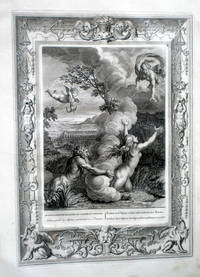
1787rif. 269301787 [Paris] : [s.n.], 1787- 1 est. : eau-forte, outils, colorié à main levée ; 8,7 x 5,3 cm (tr. c.) Appartient à : Tableaux de la Fable ; ou Nouvelle Histoire poétique des Dieux ; Demi-Dieux et Héros de la Fable, représentée par figures et accompagnée d'explications Dédiés à Madame la Comtesse de Genlis -GRASSET DE SAINT-SAUVEUR (J.) et MARECHAL (Sylvain)- 1785
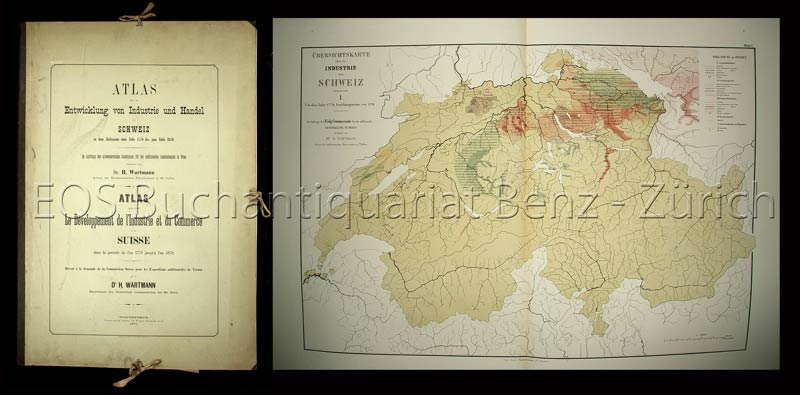
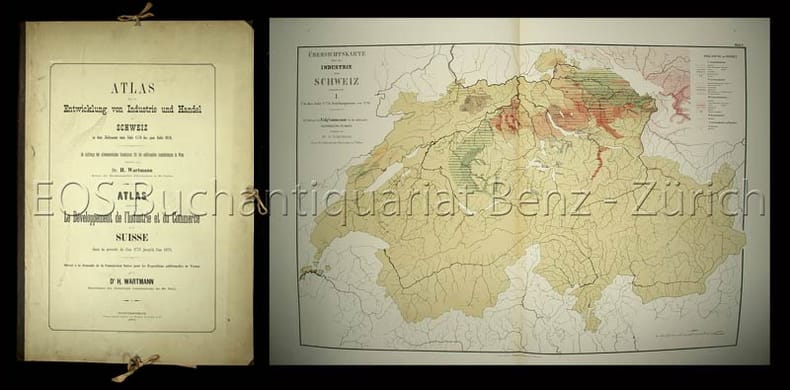
1873rif. 2865DBWinterthur, Topograpisches Institut Wurster Randegger, 1873. Gr.-folio. (2) Bl. Mit 8 farb. doppelblattgr. Tafeln. Orig.-Halbleinenmappe. + Wichtig: Für unsere Kunden in der EU erfolgt der Versand alle 14 Tage verzollt ab Deutschland / Postbank-Konto in Deutschland vorhanden +, 2865D
1873rif. 2865DBWinterthur, Topograpisches Institut Wurster Randegger, 1873. Gr.-folio. (2) Bl. Mit 8 farb. doppelblattgr. Tafeln. Orig.-Halbleinenmappe.
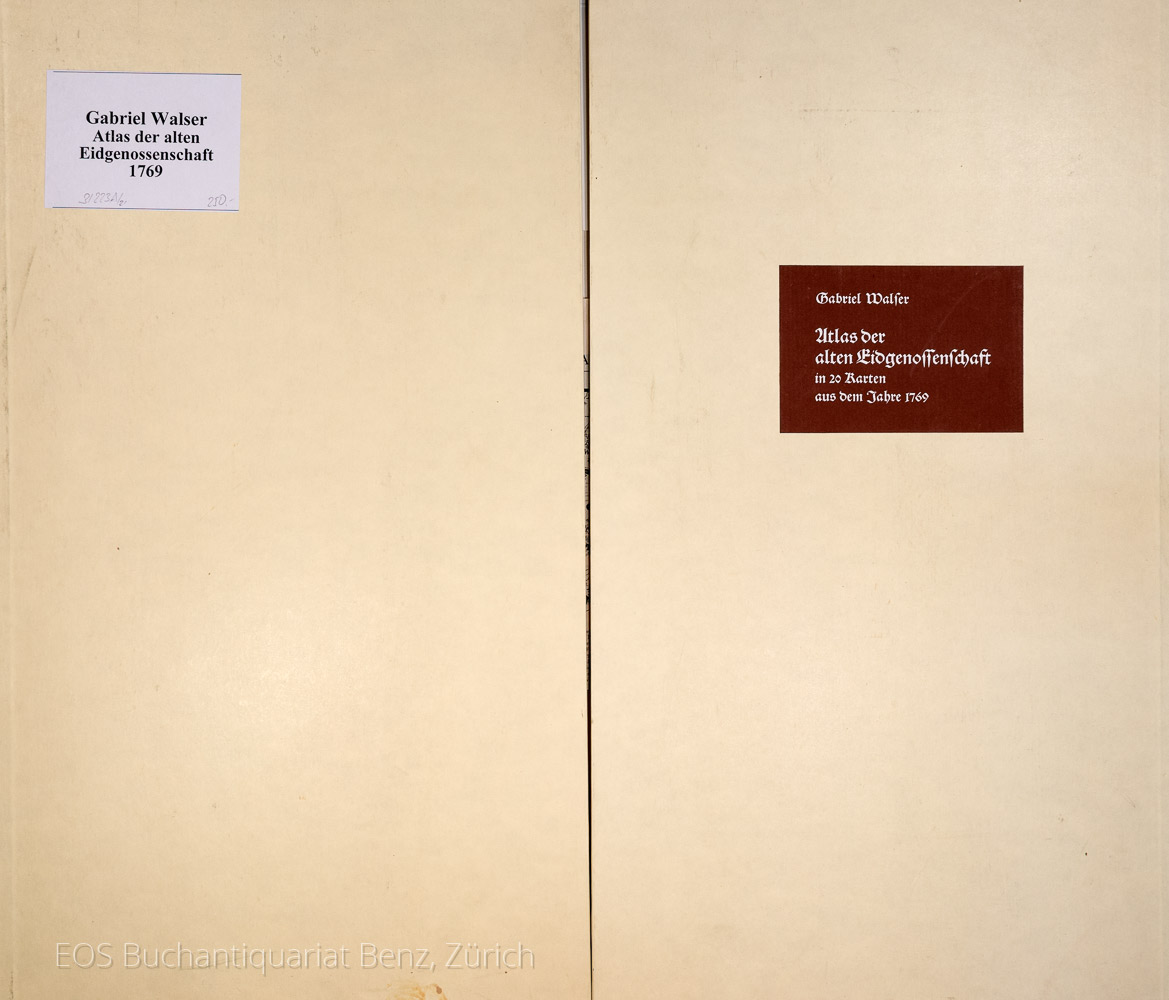
1968rif. 31223ABGattikon, Verlag Dorfpresse, 1968. Folio. 2 Bl. Mit 20 kol. faks. Karten. Lose in Pappmappe. + Wichtig: Für unsere Kunden in der EU erfolgt der Versand alle 14 Tage verzollt ab Deutschland / Postbank-Konto in Deutschland vorhanden +, A|B [2 Warenabbildungen]
19599 radierungen von Emil Schumacher vorwort von Hans Platschek (cm 30x24,5; 25x11). Den druck der Radierungen besorgte Katelhon, Wamel bei Soest/W. Alle Rechte bei Johanna Schiessel. 9 incisioni numerate e firmate a matita dall'artista (cm 30x24,5; 25x11) Esemplare 44/70. folio (cm 50x37). pp. 10. . Ottimo (Fine). . Prima edizione di 70 es. numerati. .
rif. 500298020Sans date.
rif. 24416La Caricature. Journal. Morale, Religieuse, Littéraire, Scénique - La Caricature ( Journal) No.210. Plate 438. [Paris] Delaunois for Maison Aubert [13 November 1834] Lithograph. Overall paper size 26 × 33.7 cm.
rif. 500298021Sans date.
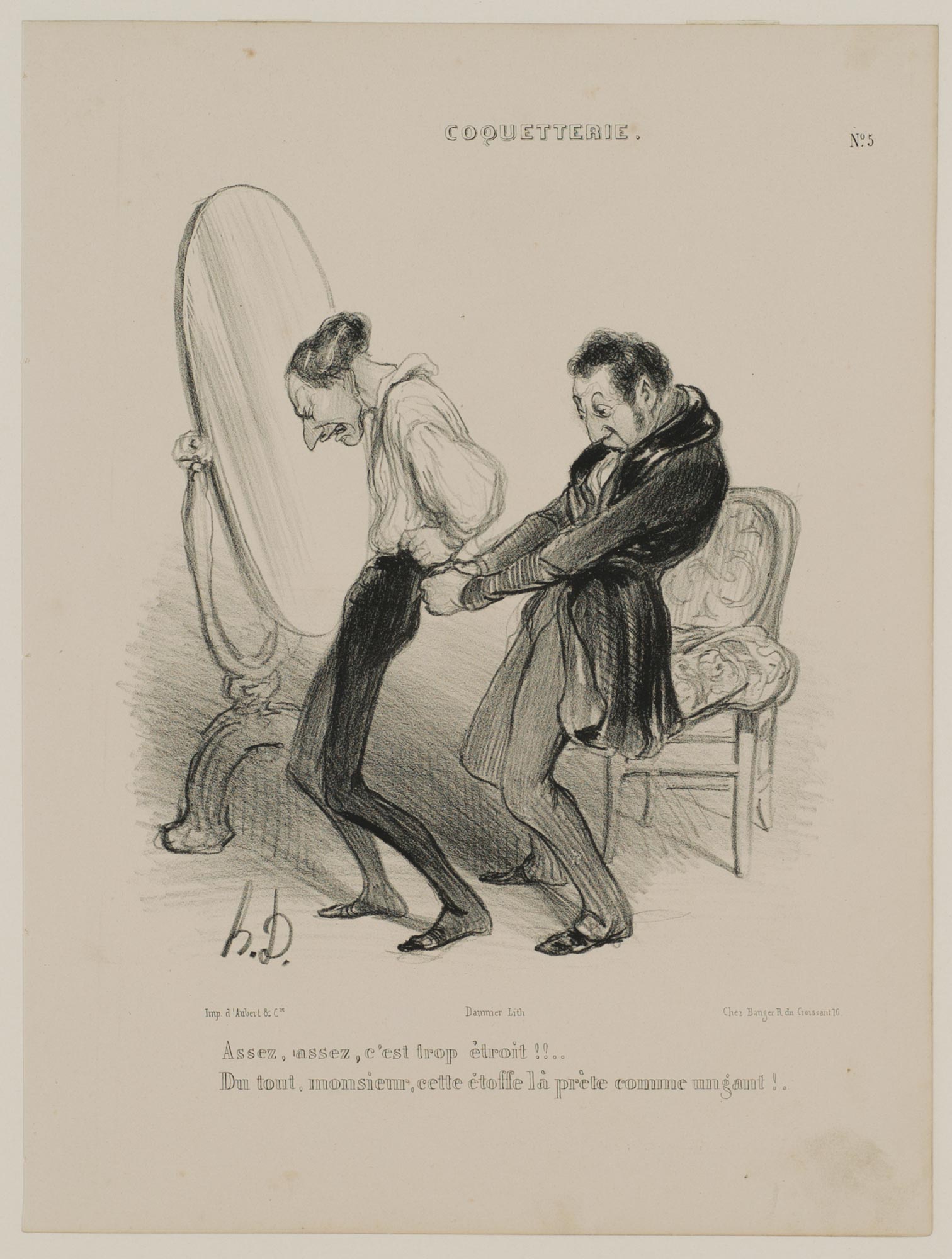
rif. HD-092o.J. Genug, genug, das ist viel zu eng!! - Aber überhaupt nicht, Monsieur, dieser Stoff passt Ihnen wie ein Handschuh! Lithographie, auf chamoisfarbenem Velin, mit den Adressen: Imp. d?Aubert & Cie. sowie: Chez Bauger R. du Croissant 16. Blattgröße 33:24,8 cm. ? Leicht fingerfleckig. Literatur: Daumier-Register 740; Delteil 740, II (von 2), No. 5 der Serie ?Coquetterie?. (Koketterie) ist eine Serie von 10 nummerierten Lithographien, welche in der Zeit vom 7. Juli 1839 bis zum 15.November1840 im Charivari publiziert wurden. ? Sur blanc!
rif. 13955D'après Watteau. En feuille Très bon Paris 40 x 30 cm
Engraved map in 36 segments on canvas, folded. Fine original hand-colour. Ca. 1450 x 1230 mm. Earliest edition of this wall map, the most accurate map of Asia published at the beginning of the 19th century. It shows significant advancement compared with other maps of the period, incorporating the work of surveyors like James Rennell, to whom the map was dedicated. Rennell was surveyor-general of the East India Company's dominions in Bengal, and the information published in his "Bengal Atlas" in 1779 appears here. Arrowsmith also included remarkable topographical detail such as mountain ranges in regions as remote as Tibet. Remarkably, the region on the shore of the Arabian Gulf is already labelled as "Bani Yas" territory. Arrowsmith has marked the track of Lapérouse's voyage in the Indian Ocean and Far East. - Aaron Arrowsmith (1750-1823) was the finest cartographer of his generation. Although he received little formal education, it is believed that he was provided with some mathematical instruction by William Emerson, an author of several books on the application of mathematics to the area of cartography. Around 1770, Arrowsmith moved to London to seek employment. It is believed that he worked for William Faden before joining John Cary Sr. in the early 1780s. There he provided the measurements for John Cary's early publication detailing the roads from London to Falmouth, his first signed work. Arrowsmith set up on his own in 1790 and over the next thirty years produced some of the most beautiful and elegant maps of the era. "This highly detailed wall map of Asia is probably one of the most accurate maps of the continent before the completion of the Ordnance Survey maps of 1820" (Sweet). - Slightly soiled and browned, but well preserved. Not in Al Ankary or Al-Qasimi. Cf. Sweet 238 (1811 edition only).
rif. 25269Lithographie - Planche HT parue dans La Caricature politique, morale, littéraire et scénique, volume 7, 27 février 1834 (Planche n°364) ;- Œuvre : Hauteur: 35.5cmx Largeur: 27cm - Image : Hauteur: 25.8cm Largeur: 19.7cm - Titre en bas au centre : « Ascension du Constitutionnel. » ; légende plus bas au centre : « Bienheureux les pauvres d’esprit, le Royaume des cieux leur appartient. // (Evangile Selon St. Etienne, ou St. Bailleul, ou St. Chevassut) » ; indications : en ht à gauche : « La Caricature (Journal) N°173. », en haut à dte : « Pl. 364. » - Dans la lettre : « Chez Aubert, galerie véro dodat. » [éditeur], « L. de Benard. » [imprimeur] ; attribution : François-Fortuné-Antoine Ferogio, dessinateur ?Inscription - Le phylactère enroulé autour du bâton tenu par un des anges et surmonté d’une croix d’honneur porte l’inscription : « Au constitutionnel les désabonnés [ ?] ».Description iconographique:Dans les cieux, représentation de l’ascension du journal "Le Constitutionnel", sous la forme d’un homme assez gros, vêtu d’une redingote, portant la croix d’honneur, un bonnet sur lequel se lit « St // […] onstitutionnel [Constitutionnel] » : le Constitutionnel est mort et est devenu saint. Une auréole flotte au-dessus de sa tête. Il lève sa main dte vers le ciel, tandis qu’il s’appuie de l’autre sur la « LISTE // de // désabonnés ». C’est précisément cette succession de désabonnements qui a causé la perte du journal. Tandis que "La Caricature" a déjà célébré dans plusieurs pl. la mort et l’enterrement du Constitutionnel, c’est son ascension qui est ici mise en image. L’explication précise que l’âme du Constitutionnel met du temps à monter au ciel (cinquante jours après sa mort), contrairement à « l’âme du vulgaire, qui est un pur esprit » (in explication) qui monte au ciel très rapidement. Autour de lui, un groupe d’anges le portant et permettant son ascension. Tandis que les séraphins, chérubins et archanges ne souhaitent pas assister à l’ascension du journal, ce sont des « anges des ténèbres » (in explication) qui s’en chargent, c'est-à-dire des députés favorables au gouvernement de Juillet : Fruchard, soutenant le bras du Constitutionnel. Se trouvent également Lefèvre, Jollivet. Prunelle soutient le pied, Viennet, accompagné de sa lyre, soutient l’autre pied et porte la main sur la liste des désabonnés. Etienne (le pls à dte) et Tissot, enfin, sont présents. Le titre reprend la phrase « Heureux les pauvres en esprit, car le Royaume des Cieux est à eux » qu’aurait prononcée le Christ selon saint Matthieu dans ses béatitudes (Evangile selon saint Matthieu) en insinuant que si les pauvres d’esprit peuvent aller facilement au ciel, alors le Constitutionnel n’aura aucune peine à y parvenir. La pl. semble assez largement inspirée par L’Assomption de la vierge de Nicolas Poussin (1650 ; Paris, musée du Louvre).Personne / Personnage représenté:Viennet, Jean Pons Guillaume; Etienne, Charles Guillaume; Jollivet, Adolphe
1920- Lucien Vogel éditeur, Paris 1920, 19x24,5cm, une feuille. - Original color print, printed on vergé paper, signed in the plate. An original print used to illustrate the Gazette du bon ton, one of the most attractive and influential 20th century fashion magazines, featuring the talents of French artists and other contributors from the burgeoning Art Deco movement. A celebrated fashion magazine established in 1912 by Lucien Vogel, La Gazette du bon ton appeared until 1925, with a hiatus from 1915 to 1920 due to the war (the editor-in-chief having been called up for service). It consisted of 69 issues printed in only 2,000 copies each and notably illustrated with 573 color plates and 148 sketches of the models of the great designers. Right from the start, this sumptuous publication "was aimed at bibliophiles and fashionable society," (Françoise Tétart-Vittu, "La Gazette du bon ton", in Dictionnaire de la mode, 2016) and was printed on fine vergé paper using a type cut specially for the magazine by Georges Peignot, known as Cochin, later used (in 1946) by Christian Dior. The prints were made using stencils, heightened in colors, some highlighted in gold or palladium. The story began in 1912, when Lucien Vogel, a man of the world involved in fashion (he had already been part of the fashion magazine Femina) decided, with his wife Cosette de Brunhoff - the sister of Jean, creator of Babar - to set up the Gazette du bon ton, subtitled at the time: "Art, fashion, frivolities." Georges Charensol noted the reasoning of the editor-in-chief: "'In 1910,' he observed, 'there was no really artistic fashion magazine, nothing representative of the spirit of the time. My dream was therefore to make a luxury magazine with truly modern artists...I was assured of success, because when it comes to fashion, no country on earth can compete with France.'" ("Un grand éditeur d'art. Lucien Vogel" in Les Nouvelles littéraires, no. 133, May 1925). The magazine was immediately successful, not only in France but also in the United States and Latin America. At first, Vogel put together a team of seven artists: André-Édouard Marty and Pierre Brissaud, followed by Georges Lepape and Dammicourt, as well as eventually his friends from school and the School of Fine Arts, like George Barbier, Bernard Boutet de Monvel and Charles Martin. Other talented people soon came flocking to join the team: Guy Arnoux, Léon Bakst, Benito, Boutet de Monvel, Umberto Brunelleschi, Chas Laborde, Jean-Gabriel Domergue, Raoul Dufy, Édouard Halouze, Alexandre Iacovleff, Jean Émile Laboureur, Charles Loupot, Chalres Martin, Maggie Salcedo. These artist, mostly unknown when Lucien Vogel sought them out, later became emblematic and sought-after artistic figures. It was also they who worked on the advertising drawings for the Gazette. The plates put the spotlight on, and celebrate, dresses by seven designers of the age: Lanvin, Doeuillet, Paquin, Poiret, Worth, Vionnet and Doucet. The designers provided exclusive models for each issue. Nonetheless, some of the illustrations are not based on real models, but simply on the illustrator's conception of the fashion of the day. The Gazette du bon ton was an important step in the history of fashion. Combining aesthetic demands with the physical whole, it brought together - for the first time - the great talents of the artistic, literary, and fashion worlds; and imposed, through this alchemy, a completely new image of women: slender, independent and daring, which was shared by the new generation of designers, including Coco Chanel, Jean Patou, Marcel Rochas, and so on... Taken over in 1920 by Condé Montrose Nast, the Gazette du bon ton was an important influence on the new layout and aesthetics of that "little dying paper" that Nast had bought a few years earlier: Vogue. [FRENCH VERSION FOLLOWS] Estampe originale en couleur tirée sur papier vergé, signée en bas à droite dans la planche. Gravure originale réalisée pour l'illustration de
1920rif. 51305Lucien Vogel éditeur | Paris 1920 | 19 x 24.50 cm | une feuille
1970rif. B52349Mount Pleasant PA: The Laurel Group Press 1970. Paperback. Near Fine. RARE! Inscribed by Little! Printed paper wrap oblong octavo 68pp. illustrated in color and b&w. Book has mild rubbing to wrap binding tight text clean and unmarked. No DJ. The Laurel Group Press paperback
1733rif. biblio318Amsterdam: Chatelain 1733. Gravure sur cuivre La feuille = 310 X 460 mm la cuvette = 255 x 352 mm quelques rousseurs en marge image propre Chatelain unknown
rif. 14092Eau-forte originale non signée en couleurs sur papier Japon (dimensions de la feuille : 277 x 225 mm), représentant une femme brune nue.Présentée sous passe-partout noir 400 x 300 mm prêt à être encadré, la vue étant protégée par un Rhodoïd.Très bon état.
rif. 14085Présentée sous passe-partout crème 600 x 400 mm prêt à être encadré, la vue étant protégée par un Rhodoïd.Pli central vertical d'origine (planche double pliée dans l'ouvrage), très bon état par ailleurs.Pli central vertical d'origine (planche double pliée dans l'ouvrage), très bon état par ailleurs.