(Bible Latin)ABAA
21 326 résultats
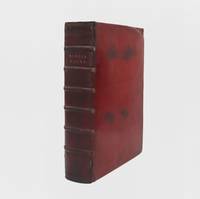
1590réf. 372093Rome: Ex Typographia Apostolica Vaticana 1590. First edition of the Sixtine Vulgate Bible. Engraved illustrated title-page. Title in red and black text in double columns. 8 479 1; 5 482-899; 5 902-1141pp. Lacks the 4ff preface i.e. the papal bull of Sixtus V beginning "Aeternus ille caelestium terrestriumq. rerum omnium conditr ac moderator Deus ." as often. Folio 13-1/2 x 9-1/2 inches. Later red morocco spine darkened corners bumped some repairs at head and tail of spine marbled endpapers gilt edges. Engraved title and title page paper-backed. Red quarter morocco clamshell box. First edition of the Sixtine Vulgate Bible. Engraved illustrated title-page. Title in red and black text in double columns. 8 479 1; 5 482-899; 5 902-1141pp. Lacks the 4ff preface i.e. the papal bull of Sixtus V beginning "Aeternus ille caelestium terrestriumq. rerum omnium conditr ac moderator Deus ." as often. Folio 13-1/2 x 9-1/2 inches. The Sixtine Bible containing the Vulgate text as edited by Pope Sixtus V intended as the first ecclesiastically authorized text to be used throughout Christendom. "In its text it comes closer to R. Stephanus' Bible of 1538-40 than to the Louvain editions" Darlow & Moule who discuss the textual variations. The association with Aldus II suggested by Renouard and lasting long thereafter is spurious. Pope Sixtus V died soon after the book was printed and was followed by three short-lived popes. The Sixtine Bible had "aroused antagonism among both clergy and laity" and was swiftly condemned; the edition was withdrawn by Pope Clement VIII soon after his elevation to the papal throne in 1592 and many copies were destroyed. Preparations began in 1591 for a new edition of the Vulgate printed in 1592 and known as the Clementine Bible which long remained the standard Vulgate text. As often e.g. the Brooker copy this copy without the preface the Bull of Sixtus declaring the text to be immutable and forbidding any reprint without papal permission. Copinger 521; Darlow & Moule 6181; Adams B1098; BM STC Italian 1465-1600 p. 93; EDIT16 CNCE 5805. Provenance: Henry John Farmer Atkinson his sale Sotheby Wilkinson & Hodge March 1896 lot 2752 sold for £18.15s to; Bernard Quaritch; General Theological Seminary bookplate Ex Typographia Apostolica Vaticana unknown books
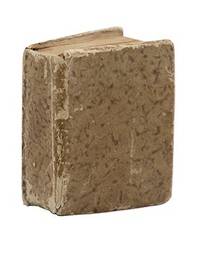
1802réf. 373649Boston: Printed by Thomas Fleet 1802. The tenth American thumb Bible. Separate title pages to each work. With three wood or metal cuts in N.T. 1013-160; vi 107 2 ii-iv iv pp. 1 vols. Miniature 2-1/16 x 3-1/4 inches in 12s. Dappled tan pastepaper over wooden boards. Leaf A1 in OT supplied and remargined. The tenth American thumb Bible. Separate title pages to each work. With three wood or metal cuts in N.T. 1013-160; vi 107 2 ii-iv iv pp. 1 vols. Miniature 2-1/16 x 3-1/4 inches in 12s. A splendid copy of the miniature Bible printed by Thomas Fleet in 1801-2 the tenth American thumb Bible. The text is a paraphrase of the Old and New Testaments by John Taylor 1578-1653 known as the Water Poet; the earliest surviving edition of which was printed in London in 1614. In America five editions were printed in the 1760s and four more between 1786 and 1799. All are rare and survive in just a few copies. After about 1810 the number of thumb Bibles and the variousness of their titles and imprints increased markedly. The Fleet thumb Bible is two volumes bound as one each with a separate dated title page. Following the New Testament are Prayers for Morning and Prayers for Evening. There are four other recorded copies of this book: at the Morgan Library PML81221 lacking all half title and titles and other leaves; at AAS the Welch Stone copy lacking the half title and six pages of the Old Testament; at the Boston Public library rebound; and at the Lilly Library bibliographer Ruth Adomeit's copy in the original binding lacking the first leaf. A gorgeous copy in original binding. Shaw & Shoemaker 1383; Welch 1293.10; Adomeit A10 Printed by Thomas Fleet unknown
1802réf. 373649Boston: Printed by Thomas Fleet 1802. The tenth American thumb Bible. Separate title pages to each work. With three wood or metal cuts in N.T. 1013-160; vi 107 2 ii-iv iv pp. 1 vols. Miniature 2-1/16 x 3-1/4 inches in 12s. Dappled tan pastepaper over wooden boards. Leaf A1 in OT supplied and remargined. The tenth American thumb Bible. Separate title pages to each work. With three wood or metal cuts in N.T. 1013-160; vi 107 2 ii-iv iv pp. 1 vols. Miniature 2-1/16 x 3-1/4 inches in 12s. A splendid copy of the miniature Bible printed by Thomas Fleet in 1801-2 the tenth American thumb Bible. The text is a paraphrase of the Old and New Testaments by John Taylor 1578-1653 known as the Water Poet; the earliest surviving edition of which was printed in London in 1614. In America five editions were printed in the 1760s and four more between 1786 and 1799. All are rare and survive in just a few copies. After about 1810 the number of thumb Bibles and the variousness of their titles and imprints increased markedly. The Fleet thumb Bible is two volumes bound as one each with a separate dated title page. Following the New Testament are Prayers for Morning and Prayers for Evening. There are four other recorded copies of this book: at the Morgan Library PML81221 lacking all half title and titles and other leaves; at AAS the Welch Stone copy lacking the half title and six pages of the Old Testament; at the Boston Public library rebound; and at the Lilly Library bibliographer Ruth Adomeit's copy in the original binding lacking the first leaf. A gorgeous copy in original binding. Shaw & Shoemaker 1383; Welch 1293.10; Adomeit A10 Printed by Thomas Fleet unknown books
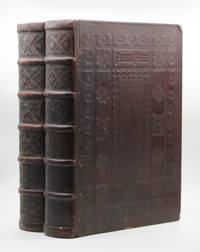
1914réf. 353913Leipzig: Insel Verlag 1914. No. 208 of 300 copies limitation leaf at end of each volume. Photolithographic facsimile of the 42-line Bible printed in colors with gilt ornamental incipit pages book headings and red and blue initials and headlines throughout. 2 vols. Folio. Publisher's full blindstamped brown calf after the original binding on the Fulda Landesbibliothek copy. Finely rebacked preserving original spines. No. 208 of 300 copies limitation leaf at end of each volume. Photolithographic facsimile of the 42-line Bible printed in colors with gilt ornamental incipit pages book headings and red and blue initials and headlines throughout. 2 vols. Folio. The first and finest facsimile of the great landmark of printing history the Gutenberg Bible reproduced from the Berlin copy now in the Universitätsbibliothek at Tubingen with some leaves in the first volume reproduced from the Landesbibliothek copy at Fulda. Insel Verlag unknown
1914réf. 353913Leipzig: Insel Verlag 1914. No. 208 of 300 copies limitation leaf at end of each volume. Photolithographic facsimile of the 42-line Bible printed in colors with gilt ornamental incipit pages book headings and red and blue initials and headlines throughout. 2 vols. Folio. Publisher's full blindstamped brown calf after the original binding on the Fulda Landesbibliothek copy. Finely rebacked preserving original spines. No. 208 of 300 copies limitation leaf at end of each volume. Photolithographic facsimile of the 42-line Bible printed in colors with gilt ornamental incipit pages book headings and red and blue initials and headlines throughout. 2 vols. Folio. The first and finest facsimile of the great landmark of printing history the Gutenberg Bible reproduced from the Berlin copy now in the Universitätsbibliothek at Tubingen with some leaves in the first volume reproduced from the Landesbibliothek copy at Fulda. Insel Verlag unknown books
réf. LCS-17654Précieux exemplaire de cette rare bible illustrée du début du XVIe siècle. Lyon, Jacques Sacon, expensis Antonii Koberger, 10 mai 1518. In-folio gothique à 2 colonnes de (14) ff. pour le titre frontispice, la table, l’épitre et le prologue ; CCCXVII ff., (1) f.bl., (25) ff., relié sans le dernier feuillet (CC10) qui est blanc. Manchettes doubles. Pte. brulure marge inf. f. CCLXXXV. Titre imprimé en rouge au-dessus d’un grand bois à pleine page représentant Saint Jean-Baptiste, 2 bois à pleine page représentant les six jours de la Création (face au premier feuillet de la Genèse) et l’Adoration des bergers (au début du Nouveau Testament), nombreuses vignettes, nombreuses initiales gravées. Veau granité, encadrement de filets à froid autour des plats, dos à nerfs et coins refaits, tranches mouchetées. Reliure du XVIIIe siècle. 340 x 247 mm.
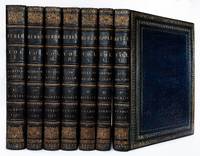
réf. 57837London: Printed for Thomas Macklin by Thomas Bensley 1800. 7 vols. Large folio 47.25 x 38 cm. Contemporary blue straight-grain morocco by C. Meyer sides ruled in gilt with decorative fillet and roll borders spine with raised bands and gilt in compartments brown coated endpapers all edges gilt and with some gauffering. Engrave title and 70 full-page engraved plates after Fuseli Reynolds Kauffman Hamilton West etc. plus numerous vignette head- and tail-pieces. Ex libris Gaddesden Library with their armourial bookplate to front-pastedown of each volume. Joints to volume one with professional restorations occasional light offsetting and spotting generally a fine example of this landmark edition of the bible. The most prodigious form of scripture in English ever published the Macklin Bible features large and bold type fine Whatman paper and a series of engravings by some of the most celebrated artists of the time. Macklin announced his plan to produce a lavishly illustrated luxuriously produced folio Bible in 1789 and he spent the next 11 years making his dream a reality though it proved a costly endeavour. He paid Reynolds £500 for his Holy Family and William Sharp £700 for its engraving. The average cost for 45 of the Bible's other engravings was £220 and the total cost of the publication was an estimated £30000 approximately £4500000 in today's money. His efforts paid off: "the subscription list for 703 copies at £46 1s. apiece was headed by the King the Queen and the Prince of Wales" DNB. Macklin died just five days after the last engraving was finished and did not see his masterpiece become one of the most acclaimed English Bibles. "The Macklin Bible endures as the most ambitious edition produced in Britain often pirated but never rivalled" DNB. A further volume of the Apocrypha was published in 1816. London: Printed for Thomas Macklin by Thomas Bensley, 1800. hardcover
réf. 107689Oxford Printed for the Society at The Clarendon Press 1817. . 8 vols; large 4to 32.5 x 26 cm; extra-illustrated with over 800 additional plates mounted on thin card and bound-in plus the 56 issued plates and 8 maps including mezzotints stipple engravings copper engravings and steel engravings some folding some two per page a few in text occasional light soiling to margins very occasional offsetting; contemporary dark blue straight-grained morocco gilt covers with wide gilt borders of small tools with large fan-shaped corner devices spines in six compartments gilt lettered direct in second third and fifth others richly gilt broad raised bands gilt all edges gilt joints of vols I and II expertly restored occasional light rubbing a very handsome set. A fine bible extra-illustrated with over 800 additional plates after Guercino Cipriani Rubens Sadeler Durer Blake and other Old Masters. This annotated edition according to the King James Version was prepared for the Archbishop of Canterbury Charles Manners-Sutton 1755-1828 by his domestic Chaplains. D'Oyly 1778-1846 was Rector of Buxted in Sussed and later became rector of Lambeth. Mant 1776-1848 subsequently became Bishop of Down Connor and Dromore in Ireland. Herbert 1658; Darlow/Moule 1072. Oxford, Printed for the Society, at The Clarendon Press, 1817. hardcover
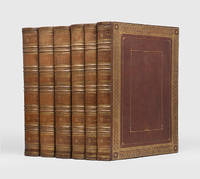
1800réf. 173564London: printed for Thomas Macklin by Thomas Bensley 1800. The grandest Bible ever printed in Britain First Macklin edition of the Bible handsomely bound. "The most ambitious edition produced in Britain often pirated but never rivalled" ODNB this Bible is a masterpiece of book art published at the apogee of British copperplate engraving and involving some of the best artists of its day. The Bible dedicated to the king was published serially between 1791 and 1800 in 70 parts each at £1. 1s. Thomas Macklin 1752-1800 began work on the project in the year following the opening of his famous Poets' Gallery in Pall Mall. The prospectus issued in 1789 explained that he was planning to add scripture pictures to his exhibition to be then reproduced in a "magnificent Bible". The paintings were realised by several artists including Hamilton Fuseli and Loutherbourg and exhibited at the Poets' Gallery between 1790 and 1796. Initially promising 60 plates the project eventually included 71 some of which never appeared in Macklin's exhibitions. Most of the headpiece and tailpiece vignettes were designed by Loutherbourg the type was cut by Joseph Jackson and his apprentice Vincent Figgins and the paper made by Whatman. The Bible took 11 years to complete and the publication costs exceeding £30000 almost bankrupted Macklin. Though the final engraving was finished five days before his death the last of the vignettes was not completed for another six weeks and he consequently never saw the finished work. Some copies of the Bible were bound in a fine neoclassical style by contemporary London binders particularly Staggemeier and Welcher. This set is unsigned but the treatment of the spine appears closer to the work of Kalthoeber see Maggs Cat. 1212 II no. 164. This set is bound in six volumes as recommended in the instructions to the binder vol. I. However sets are sometimes found bound in seven. 6 vols large folio 458 x 370 mm. With 71 copper engraved plates after Fuseli and others 113 wood engraved vignette head- and tailpieces. Contemporary diced russia spines with raised bands compartments lettered and tooled in gilt elaborate gilt frames to covers incorporating foliate and flower tools board edges and turn-ins tooled in gilt leather inner hinges marbled endpapers edges gilt silk bookmarkers. Bound with half-titles. A few trivial marks and light scuffs to covers small cosmetic repair to rear cover of vol. I superficial splits to a couple of joints subsequently retouched and now firm occasional foxing to contents and offsetting from plates else clean and bright. A very good set. ESTC T123175; Herbert 1441; Lowndes I p. 192. Maggs Bros Ltd Bookbinding in the British Isles Sixteenth to the Twentieth Century Cat. 1212 Part II 1996. hardcover
1638réf. 371824Cambridge: Thomas Buck and Roger Daniel 1638. Large paper copy. Ruled in red throughout. Roman letter in two columns. Engraved title page within architectural border featuring Biblical characters a vignette of the 'Last supper' and printer's device. 12 642 151 3 202pp. Bound with preceding the Bible: The Book of Common Prayer. 104pp. And with following the Bible: Whole Book of Psalmes. 8 1 2-90 10 pp. Folio 17 x 11 inches. Contemporary black morocco gilt covers panelled with roll tool borders and central arabesque design in gilt flat spine gilt with marching morocco labels gilt edges minor wear at joints lower corners bumped. Provenance:Webb early inscription on the front pastedown; Maggs Brothers item 827 in unidentified mid-20th century catalogue clipping laid in; General Theological Seminary bookplate. Large paper copy. Ruled in red throughout. Roman letter in two columns. Engraved title page within architectural border featuring Biblical characters a vignette of the 'Last supper' and printer's device. 12 642 151 3 202pp. Bound with preceding the Bible: The Book of Common Prayer. 104pp. And with following the Bible: Whole Book of Psalmes. 8 1 2-90 10 pp. Folio 17 x 11 inches. This edition contains the first major revisions of the King James version standardising the use of italics and altering several readings. "This remained the standard text until the publication of Dr. Paris' Cambridge edition of 1762" Herbert. A lovely example bound in contemporary English black morocco and measuring 430x280mm is considerably larger than the dimensions cited by Darlow & Moole 402 375x234 mm and Darlow & Moole 403 for a "large thick paper" copy 397x270 mm. Bible: Herbert 520; Darlow & Moule 402 and 403; ESTC S123371; STC 2nd ed 2331. Common Prayer: Griffiths 1638:2; STC 2nd ed. 16410; ESTC S902. Psalms: STC 2nd ed. 2682; ESTC S122380 Thomas Buck and Roger Daniel unknown
1638réf. 371824Cambridge: Thomas Buck and Roger Daniel 1638. Large paper copy. Ruled in red throughout. Roman letter in two columns. Engraved title page within architectural border featuring Biblical characters a vignette of the 'Last supper' and printer's device. 12 642 151 3 202pp. Bound with preceding the Bible: The Book of Common Prayer. 104pp. And with following the Bible: Whole Book of Psalmes. 8 1 2-90 10 pp. Folio 17 x 11 inches. Contemporary black morocco gilt covers panelled with roll tool borders and central arabesque design in gilt flat spine gilt with marching morocco labels gilt edges minor wear at joints lower corners bumped. Provenance:Webb early inscription on the front pastedown; Maggs Brothers item 827 in unidentified mid-20th century catalogue clipping laid in; General Theological Seminary bookplate. Large paper copy. Ruled in red throughout. Roman letter in two columns. Engraved title page within architectural border featuring Biblical characters a vignette of the 'Last supper' and printer's device. 12 642 151 3 202pp. Bound with preceding the Bible: The Book of Common Prayer. 104pp. And with following the Bible: Whole Book of Psalmes. 8 1 2-90 10 pp. Folio 17 x 11 inches. This edition contains the first major revisions of the King James version standardising the use of italics and altering several readings. "This remained the standard text until the publication of Dr. Paris' Cambridge edition of 1762" Herbert. A lovely example bound in contemporary English black morocco and measuring 430x280mm is considerably larger than the dimensions cited by Darlow & Moole 402 375x234 mm and Darlow & Moole 403 for a "large thick paper" copy 397x270 mm. Bible: Herbert 520; Darlow & Moule 402 and 403; ESTC S123371; STC 2nd ed 2331. Common Prayer: Griffiths 1638:2; STC 2nd ed. 16410; ESTC S902. Psalms: STC 2nd ed. 2682; ESTC S122380 Thomas Buck and Roger Daniel unknown books
1483réf. 372162Strasbourg: Johann Grüninger 1483. Fifth 'Fontibus ex Graecis' edition. 678 ff. Collation: A-ZAA-DD⸠FF⸠EE⸠GG-IIkkLL-PP⸠14-18⸠19¹²; a-long ss-v⸠uâ´ x⸠1-89-13¹Ⱐ14-17⸠18¹Ⱐ19¹². Signatures 14-19 Interpretationes hebraicorum nominorum & Nominorum hebraicorum printed in both volumes; signatures EE and FF in Vol. I bound in reverse; 2 leaves in signature 18 in Vol. II duplicated. Complete. Text in two columns 45 lines per page. 37-line capital in purple green and yellow on leaf A2 many initials completed in red ink Vol. I rubricated throughout in red. Manuscript title to Vol. I initial blank and table of contents to Vol. II initial blank Vol. II has early ink numbering in top corners. 2 vols. Chancery folio. Contemporary blind-stamped calf over wooden boards early vellum reback to Vol. I twentieth-century plain brown calf reback to Vol. II brass catches to fore-edges clasps lacking manuscript title "prima pars biblie" to bottom edge of Vol. I text block. Front board of Vol. I detached its spine mostly perished front catches of Vol. II lacking minor worming to pastedowns of Vol. I endpapers of Vol. II renewed. Minor worming to margins of first and final few leaves occasional light soiling and faint staining mostly confined to margins clean tear to foot of leaf 11⸠extending into three lines of text block without loss small hole to leaf 14-6 Vol. II with loss to a word upper inside corner of final leaf torn away with loss missing text supplied in manuscript in an early hand. Worn and crudely repaired but a complete copy in a mostly contemporary binding and with good margins. Fifth 'Fontibus ex Graecis' edition. 678 ff. Collation: A-ZAA-DD⸠FF⸠EE⸠GG-IIkkLL-PP⸠14-18⸠19¹²; a-long ss-v⸠uâ´ x⸠1-89-13¹Ⱐ14-17⸠18¹Ⱐ19¹². Signatures 14-19 Interpretationes hebraicorum nominorum & Nominorum hebraicorum printed in both volumes; signatures EE and FF in Vol. I bound in reverse; 2 leaves in signature 18 in Vol. II duplicated. Complete. Text in two columns 45 lines per page. 37-line capital in purple green and yellow on leaf A2 many initials completed in red ink Vol. I rubricated throughout in red. Manuscript title to Vol. I initial blank and table of contents to Vol. II initial blank Vol. II has early ink numbering in top corners. 2 vols. Chancery folio. The colophon dated but without publisher or place notes this as a Fontibus ex Graecis Bible: part of "a series of corrected Latin Bibles which claim for themselves-apparently with justice-a superiority above all contemporary editions. They are known as the 'Fontibus ex Graecis' editions from the opening words of the Latin distichs found in them. Masch enumerates ten genuine 'Fontibus ex Graecis' editions the other nine bearing the dates 1479 1481 1482 1483 1485 1486 2 editions 1487 and 1489-all without name of printer or place" Darlow & Moule. A unique copy with the indexes of Hebrew names appearing twice at the end of each volume. ISTC ib00577000; Goff B-577; GW 4242; Darlow & Moule II pp. 911-912 note following 6083. Provenance: General Theological Seminary Copinger Collection gift of Cornelius Vanderbilt and Dean Augustus Hoffman bookplates and blindstamps Johann Grüninger] unknown
1483réf. 372162Strasbourg: Johann Grüninger 1483. Fifth 'Fontibus ex Graecis' edition. 678 ff. Collation: A-ZAA-DD⸠FF⸠EE⸠GG-IIkkLL-PP⸠14-18⸠19¹²; a-long ss-v⸠uâ´ x⸠1-89-13¹Ⱐ14-17⸠18¹Ⱐ19¹². Signatures 14-19 Interpretationes hebraicorum nominorum & Nominorum hebraicorum printed in both volumes; signatures EE and FF in Vol. I bound in reverse; 2 leaves in signature 18 in Vol. II duplicated. Complete. Text in two columns 45 lines per page. 37-line capital in purple green and yellow on leaf A2 many initials completed in red ink Vol. I rubricated throughout in red. Manuscript title to Vol. I initial blank and table of contents to Vol. II initial blank Vol. II has early ink numbering in top corners. 2 vols. Chancery folio. Contemporary blind-stamped calf over wooden boards early vellum reback to Vol. I twentieth-century plain brown calf reback to Vol. II brass catches to fore-edges clasps lacking manuscript title "prima pars biblie" to bottom edge of Vol. I text block. Front board of Vol. I detached its spine mostly perished front catches of Vol. II lacking minor worming to pastedowns of Vol. I endpapers of Vol. II renewed. Minor worming to margins of first and final few leaves occasional light soiling and faint staining mostly confined to margins clean tear to foot of leaf 11⸠extending into three lines of text block without loss small hole to leaf 14-6 Vol. II with loss to a word upper inside corner of final leaf torn away with loss missing text supplied in manuscript in an early hand. Worn and crudely repaired but a complete copy in a mostly contemporary binding and with good margins. Fifth 'Fontibus ex Graecis' edition. 678 ff. Collation: A-ZAA-DD⸠FF⸠EE⸠GG-IIkkLL-PP⸠14-18⸠19¹²; a-long ss-v⸠uâ´ x⸠1-89-13¹Ⱐ14-17⸠18¹Ⱐ19¹². Signatures 14-19 Interpretationes hebraicorum nominorum & Nominorum hebraicorum printed in both volumes; signatures EE and FF in Vol. I bound in reverse; 2 leaves in signature 18 in Vol. II duplicated. Complete. Text in two columns 45 lines per page. 37-line capital in purple green and yellow on leaf A2 many initials completed in red ink Vol. I rubricated throughout in red. Manuscript title to Vol. I initial blank and table of contents to Vol. II initial blank Vol. II has early ink numbering in top corners. 2 vols. Chancery folio. The colophon dated but without publisher or place notes this as a Fontibus ex Graecis Bible: part of "a series of corrected Latin Bibles which claim for themselves-apparently with justice-a superiority above all contemporary editions. They are known as the 'Fontibus ex Graecis' editions from the opening words of the Latin distichs found in them. Masch enumerates ten genuine 'Fontibus ex Graecis' editions the other nine bearing the dates 1479 1481 1482 1483 1485 1486 2 editions 1487 and 1489-all without name of printer or place" Darlow & Moule. A unique copy with the indexes of Hebrew names appearing twice at the end of each volume. ISTC ib00577000; Goff B-577; GW 4242; Darlow & Moule II pp. 911-912 note following 6083. Provenance: General Theological Seminary Copinger Collection gift of Cornelius Vanderbilt and Dean Augustus Hoffman bookplates and blindstamps Johann Grüninger] unknown books
1497réf. WB19676Strasbourg: Johann Reinhard Grüninger 26 April 1497. Hardcover. Very Good. Chancery Folio; 304 x 207mm; 490 leaves of 492 lacking blank Z6 and the final leaf of the table; a bifolium from gathering B is bound in A. It features red and blue Lombard capitals with a woodcut depicting Saint Jerome on the title page. The first bifolium has undergone extensive repair work at the gutter and outside edges with the first leaf being soiled chipped and laid down on new paper. Throughout the volume there are smaller repairs and tears with one larger tear that has been repaired affecting the text on page ss2. Dampstaining and some soiling are present particularly at the ends and there is worming affecting some of the text. The final leaf has been heavily repaired resulting in loss of text at the outer edge. The book is bound in modern black blindstamped morocco with clasps in a style reminiscent of the period with gilt edges showing some signs of wear. The provenance of the book includes extensive marginalia with an inscription indicating it belonged to Georgius Wenceslaus Pastor of Olbersdorf dated 1635 who acquired it from Samuel Ursinus. A Bible printed by the prolific Strasbourg printer Johann Reinhard Grüninger replete with annotations credibly by Georgius Wenceslaus the Lutheran pastor who served in Olbersdorf a town in the historical region of Silesia which is now part of modern-day Poland. It features a woodcut on the title page portraying Saint Jerome depicted both in contemplative study and in prayer at the foot of the cross. HC 3122; BMC I 111; BSB-Ink B-476; GW 4277; Bod-inc B-308; Goff B-600; ISTC ib00600000. Uncommon in commence. [Johann (Reinhard) Grüninger,] hardcover
1497réf. WB19676Strasbourg: Johann Reinhard Grüninger 26 April 1497. Hardcover. Very Good. Chancery Folio; 304 x 207mm; 490 leaves of 492 lacking blank Z6 and the final leaf of the table; a bifolium from gathering B is bound in A. It features red and blue Lombard capitals with a woodcut depicting Saint Jerome on the title page. The first bifolium has undergone extensive repair work at the gutter and outside edges with the first leaf being soiled chipped and laid down on new paper. Throughout the volume there are smaller repairs and tears with one larger tear that has been repaired affecting the text on page ss2. Dampstaining and some soiling are present particularly at the ends and there is worming affecting some of the text. The final leaf has been heavily repaired resulting in loss of text at the outer edge. The book is bound in modern black blindstamped morocco with clasps in a style reminiscent of the period with gilt edges showing some signs of wear. The provenance of the book includes extensive marginalia with an inscription indicating it belonged to Georgius Wenceslaus Pastor of Olbersdorf dated 1635 who acquired it from Samuel Ursinus. A Bible printed by the prolific Strasbourg printer Johann Reinhard Grüninger replete with annotations credibly by Georgius Wenceslaus the Lutheran pastor who served in Olbersdorf a town in the historical region of Silesia which is now part of modern-day Poland. It features a woodcut on the title page portraying Saint Jerome depicted both in contemplative study and in prayer at the foot of the cross. HC 3122; BMC I 111; BSB-Ink B-476; GW 4277; Bod-inc B-308; Goff B-600; ISTC ib00600000. Uncommon in commence. [Johann (Reinhard) Grüninger,] hardcover books
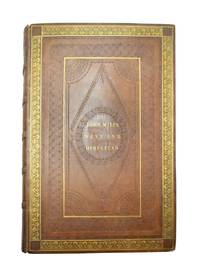
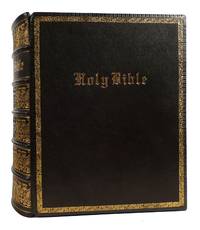
1763réf. 69256Cambridge: Printed by John Baskerville 1763. BIBLE IN ENGLISH; BASKERVILLE John. BASKERVILLE John. The Holy Bible Containing the Old Testament and the New. Translated out of the Original Tongues and with the Former Translations Diligently Compared and Revised by His Majesty's Special Command. Appointed to be Read in Churches. Cambridge: Printed by John Baskerville 1763. Full Description: BIBLE IN ENGLISH. The Holy Bible Containing the Old Testament and the New: Translated out of the Original Tongues and with the Former Translations Diligently Compared and Revised by His Majesty's Special Command. Appointed to be Read in Churches. Cambridge: Printed by John Baskerville 1763. First edition with the list of subscribers in the third state ending with "The Hon. Charles York Esq; Attorney General." Two large folio volumes in one 19 1/8 x 12 1/4 inches; 480 x 311 mm. Complete with 573 leaves. Text ends on leaf 13E1 and is followed by an Index and Tables a-e f1. List of subscribers bound in after title-page and dedication. Text in double columns. Beautifully bound in early 19th-century full diced tan calf. Boards elaborately ruled and tooled in gilt and blind. Spine stamped and lettered in gilt. Front board lettered in gilt reading "John Miles/ West End/ Hampstead." Marbled endpapers. All edges marbled. Gilt dentelles. Back board with some very mild scuffing and a tiny bit of worming to head of board and at top and bottom of outer hinge. Some light foxing to first title-page and preliminary leaves but text is very clean. With the dates of births and deaths of the Miles family in old ink manuscript on the front free endpaper. Overall a very good clean copy. Originally priced four guineas in sheets for subscribers "the edition consisted of 1250 copies of which 556 were remaindered in 1768 and bought by the London bookseller R. Baldwin at 36s. each.Baldwin was offering copies at three guineas in sheets in 1771" Gaskell. "One of the most beautifully printed books in the world" Dibdin. This edition "has always been regarded as Baskerville's magnum opus and is his most magnificent as well as his most characteristic specimen" T.B. Reed A History of the Old English Letter Foundries p. 279. Gaskell declared that the title-page to the New Testament is "a perfect page of fine printing." Although the Baskerville Bible is now recognized as one of the greatest Bibles of all time it was initially a financial failure. Costing £2000 to print the remaining stock about half of the edition was remaindered five years after publication to a London bookseller. It was Baskerville's last great book. "Aesthetically the highest point in English Bible printing so far was John Baskerville's folio printed at Cambridge in 1763. To achieve his ambition to print a folio Bible Baskerville had to become University Printer on not very advantageous terms. The Bible uses his types paper and ink and shows his characteristic 'machine-made' finish: very smooth and even in colour and impression with glossy black ink on smooth paper. The design is traditional but the quality of material and workmanship is so high and the conventions are so delicately modified and consistently applied that the result is extremely impressive" The Cambridge History of the Bible: The West from the Reformation to the Present Day p. 464. Darlow & Moule 857. ESTC T93106. Gaskell Baskerville 26. Herbert 1146. Huntington Library Great Books in Great Editions 6. HBS 69256. $15000. Printed by John Baskerville unknown
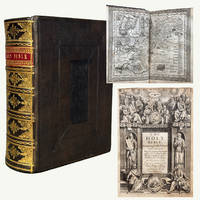
1612réf. V31Summary Size: Quarto 8.5" x 6.5". A complete 1612 quarto King James Bible – the first edition in quarto. Bound with the Genealogies Map and Psalter and with all title pages. An attractive copy that has been beautifully rebound in Cambridge paneled calf. Description The Genealogies with title page n.d. 34pp. ends with a "Description of Canaan" and the double page map. Engraved general title 1612 by Jaspar Isaac after Cornelius Boel's design of the 1611 folio. This title page is unique to the first quarto and folio editions. Text in two column Roman font within printed border and 56 lines to the full column. The text follows the 1611 folio Bible including numerous errors. The reading "and hee went" in Ruth 3:15. Apocrypha included as issued. New Testament title page 1612 engraved within woodcut border comprising twenty-four compartments showing the tents of the twelve tribes as well as the figures of the twelve apostles. Title is enclosed within a heart-shaped frame. Ends on colophon 1612. Bound with The Booke of Psalmes by Sternhold and Hopkins with printed title page 1612 featuring woodcut device. First chapter decorative initials and head- and tailpieces throughout. Collation A8 A-Z8 Aa-Zz8 Aaa-Zzz8 A-M8. Bible text complete with all title pages. Binding Rebound in Cambridge paneled calf. Covers with triple paneled border with corner fleurons around a black rectangular centerpiece featuring drawer-handle tools. Spine with five raised bands elaborately tooled in gilt with a red morocco label and the words "Holy Bible" in gilt. Endpapers renewed. Condition Short closed tear to double-page map and general title page; infrequent stains and light soiling; Psalter lacks all after Psalm 136; a clean and crisp copy of a first edition He Bible. Provenance Seventeenth century genealogical records of John Patrick to front endpaper verso of New Testament title page and death notice to rear endpaper. Scarcity USTC shows 24 copies in holding with eight in North America. References Herbert 313; STC 2219; ESTC S101951; USTC 3005208. Robert Barker hardcover
1763réf. 69256Cambridge: Printed by John Baskerville 1763. BIBLE IN ENGLISH; BASKERVILLE John. BASKERVILLE John. The Holy Bible Containing the Old Testament and the New. Translated out of the Original Tongues and with the Former Translations Diligently Compared and Revised by His Majesty's Special Command. Appointed to be Read in Churches. Cambridge: Printed by John Baskerville 1763. Full Description: BIBLE IN ENGLISH. The Holy Bible Containing the Old Testament and the New: Translated out of the Original Tongues and with the Former Translations Diligently Compared and Revised by His Majesty's Special Command. Appointed to be Read in Churches. Cambridge: Printed by John Baskerville 1763. First edition with the list of subscribers in the third state ending with "The Hon. Charles York Esq; Attorney General." Two large folio volumes in one 19 1/8 x 12 1/4 inches; 480 x 311 mm. Complete with 573 leaves. Text ends on leaf 13E1 and is followed by an Index and Tables a-e f1. List of subscribers bound in after title-page and dedication. Text in double columns. Beautifully bound in early 19th-century full diced tan calf. Boards elaborately ruled and tooled in gilt and blind. Spine stamped and lettered in gilt. Front board lettered in gilt reading "John Miles/ West End/ Hampstead." Marbled endpapers. All edges marbled. Gilt dentelles. Back board with some very mild scuffing and a tiny bit of worming to head of board and at top and bottom of outer hinge. Some light foxing to first title-page and preliminary leaves but text is very clean. With the dates of births and deaths of the Miles family in old ink manuscript on the front free endpaper. Overall a very good clean copy. Originally priced four guineas in sheets for subscribers "the edition consisted of 1250 copies of which 556 were remaindered in 1768 and bought by the London bookseller R. Baldwin at 36s. each.Baldwin was offering copies at three guineas in sheets in 1771" Gaskell. "One of the most beautifully printed books in the world" Dibdin. This edition "has always been regarded as Baskerville's magnum opus and is his most magnificent as well as his most characteristic specimen" T.B. Reed A History of the Old English Letter Foundries p. 279. Gaskell declared that the title-page to the New Testament is "a perfect page of fine printing." Although the Baskerville Bible is now recognized as one of the greatest Bibles of all time it was initially a financial failure. Costing £2000 to print the remaining stock about half of the edition was remaindered five years after publication to a London bookseller. It was Baskerville's last great book. "Aesthetically the highest point in English Bible printing so far was John Baskerville's folio printed at Cambridge in 1763. To achieve his ambition to print a folio Bible Baskerville had to become University Printer on not very advantageous terms. The Bible uses his types paper and ink and shows his characteristic 'machine-made' finish: very smooth and even in colour and impression with glossy black ink on smooth paper. The design is traditional but the quality of material and workmanship is so high and the conventions are so delicately modified and consistently applied that the result is extremely impressive" The Cambridge History of the Bible: The West from the Reformation to the Present Day p. 464. Darlow & Moule 857. ESTC T93106. Gaskell Baskerville 26. Herbert 1146. Huntington Library Great Books in Great Editions 6. HBS 69256. $15000. Printed by John Baskerville unknown books
1612réf. V31Summary Size: Quarto 8.5" x 6.5". A complete 1612 quarto King James Bible – the first edition in quarto. Bound with the Genealogies Map and Psalter and with all title pages. An attractive copy that has been beautifully rebound in Cambridge paneled calf. Description The Genealogies with title page n.d. 34pp. ends with a "Description of Canaan" and the double page map. Engraved general title 1612 by Jaspar Isaac after Cornelius Boel's design of the 1611 folio. This title page is unique to the first quarto and folio editions. Text in two column Roman font within printed border and 56 lines to the full column. The text follows the 1611 folio Bible including numerous errors. The reading "and hee went" in Ruth 3:15. Apocrypha included as issued. New Testament title page 1612 engraved within woodcut border comprising twenty-four compartments showing the tents of the twelve tribes as well as the figures of the twelve apostles. Title is enclosed within a heart-shaped frame. Ends on colophon 1612. Bound with The Booke of Psalmes by Sternhold and Hopkins with printed title page 1612 featuring woodcut device. First chapter decorative initials and head- and tailpieces throughout. Collation A8 A-Z8 Aa-Zz8 Aaa-Zzz8 A-M8. Bible text complete with all title pages. Binding Rebound in Cambridge paneled calf. Covers with triple paneled border with corner fleurons around a black rectangular centerpiece featuring drawer-handle tools. Spine with five raised bands elaborately tooled in gilt with a red morocco label and the words "Holy Bible" in gilt. Endpapers renewed. Condition Short closed tear to double-page map and general title page; infrequent stains and light soiling; Psalter lacks all after Psalm 136; a clean and crisp copy of a first edition He Bible. Provenance Seventeenth century genealogical records of John Patrick to front endpaper verso of New Testament title page and death notice to rear endpaper. Scarcity USTC shows 24 copies in holding with eight in North America. References Herbert 313; STC 2219; ESTC S101951; USTC 3005208. Robert Barker hardcover books
1483réf. D16617Venice: Franz Renner de Heilbronn 1483. Hardcover. Near Fine. 4to 218 x 156mm. Pagination: 3 476 leaves 1. Collation: a12 b8 c12 d8 e12 f-g8 h-k12 l-m8 n-p12 q-r8 s12 s12 t8 v10 x-y12 A-I12 K8 L-P12 Q8 R6 S-X12. Contents include the prefaces of St. Jerome and the Interpretation of Hebrew names at the end. Fol. a1r with an opening 14-line initial F of blue staves and extensive red penwork flourishing of scrolling acanthus similarly decorated initial I on fol. a3v. Double columns of 50 lines of small Gothic type: 6:65G and larger heading type: 7:130G rubricated in red and capitals touched in red large initials alternately painted red and blue over printed guide letters. Original beveled wooden boards backed in a 19th-century calf spine with four raised bands in five compartments edges speckled red contained in custom cloth case; repaired closed tear to l3 corner of Q8 renewed final leaf with repaired closed tear starting from gutter minor marginal dampstaining a few stray spots a few closed marginal tears some of which repaired lacking clasps vellum leaves somewhat darkened; overall very good compact early bible complete and enhanced with dense early modern inscriptions on flyleaves. The four original vellum flyleaves bound three in the front and one at the rear have extensive contemporary and later annotations detailing names of owners in numerous hands written in Latin and French and two whimsical drawings of heraldic shields. At its earliest known location the bible resided in Luxembourg Lutzenberg. One prominent name Hiegaerts seems to be tied to the historic region of Flanders and variously dated in the 17th century. Archival descriptions expertly detail further provenance until about the year 1850 when the bible was likely sold with Thomas Baker bookseller of London. Franz or Franciscus Renner 14501486 a German printer from Heilbronn published this small quarto of the Latin Vulgate in Venice in 1483 it was the fifth and final edition of Renners incunable Bibles from that city. An earlier folio edition of 1475 which he produced with Nicolaus de Frankfordia fl. 14731516 preceded it as did editions in 1476 1478 1480 and 1482. The 1475 edition was notably the first Bible printed in Venice within the burgeoning print industry. By 1483 Renner was printing works independently and had printed more than 40 incunabula five of these Latin Bibles. With this quarto edition the last edition he made in Venice Renner pioneered a more convenient design for people i.e. educated clerics to read the Bible. Although this Bible originated in Venice early inscriptions dating to about 1500 locate the books ownership as far as northern Europe probably first in Luxembourg and in the possession of a cleric. This copy of Renners important biblical production is significant not only for leading the way in format and portability and for being a prime example of early printed biblical commentary from Venice but for the amazing survival of its original vellum wrappers that record over 300 years of ownership marks. The leaves are a veritable treasure-trove of readership evidence throughout the early modern period. ISTC ib00578000. Franz Renner, de Heilbronn hardcover
1483réf. D16617Venice: Franz Renner de Heilbronn 1483. Hardcover. Near Fine. 4to 218 x 156mm. Pagination: 3 476 leaves 1. Collation: a12 b8 c12 d8 e12 f-g8 h-k12 l-m8 n-p12 q-r8 s12 s12 t8 v10 x-y12 A-I12 K8 L-P12 Q8 R6 S-X12. Contents include the prefaces of St. Jerome and the Interpretation of Hebrew names at the end. Fol. a1r with an opening 14-line initial F of blue staves and extensive red penwork flourishing of scrolling acanthus similarly decorated initial I on fol. a3v. Double columns of 50 lines of small Gothic type: 6:65G and larger heading type: 7:130G rubricated in red and capitals touched in red large initials alternately painted red and blue over printed guide letters. Original beveled wooden boards backed in a 19th-century calf spine with four raised bands in five compartments edges speckled red contained in custom cloth case; repaired closed tear to l3 corner of Q8 renewed final leaf with repaired closed tear starting from gutter minor marginal dampstaining a few stray spots a few closed marginal tears some of which repaired lacking clasps vellum leaves somewhat darkened; overall very good compact early bible complete and enhanced with dense early modern inscriptions on flyleaves. The four original vellum flyleaves bound three in the front and one at the rear have extensive contemporary and later annotations detailing names of owners in numerous hands written in Latin and French and two whimsical drawings of heraldic shields. At its earliest known location the bible resided in Luxembourg Lutzenberg. One prominent name Hiegaerts seems to be tied to the historic region of Flanders and variously dated in the 17th century. Archival descriptions expertly detail further provenance until about the year 1850 when the bible was likely sold with Thomas Baker bookseller of London. Franz or Franciscus Renner 14501486 a German printer from Heilbronn published this small quarto of the Latin Vulgate in Venice in 1483 it was the fifth and final edition of Renners incunable Bibles from that city. An earlier folio edition of 1475 which he produced with Nicolaus de Frankfordia fl. 14731516 preceded it as did editions in 1476 1478 1480 and 1482. The 1475 edition was notably the first Bible printed in Venice within the burgeoning print industry. By 1483 Renner was printing works independently and had printed more than 40 incunabula five of these Latin Bibles. With this quarto edition the last edition he made in Venice Renner pioneered a more convenient design for people i.e. educated clerics to read the Bible. Although this Bible originated in Venice early inscriptions dating to about 1500 locate the books ownership as far as northern Europe probably first in Luxembourg and in the possession of a cleric. This copy of Renners important biblical production is significant not only for leading the way in format and portability and for being a prime example of early printed biblical commentary from Venice but for the amazing survival of its original vellum wrappers that record over 300 years of ownership marks. The leaves are a veritable treasure-trove of readership evidence throughout the early modern period. ISTC ib00578000. Franz Renner, de Heilbronn hardcover books
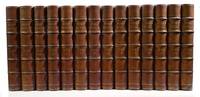
réf. 196892Boston: R. H. Hinkley Company N.D. First Edition; First Printing. Fine binding. All 14 volumes Very Good or better. Number 795 of 1000 limited edition numbered sets. Each volume leatherbound with hubbed spines and gilt filligree surrounding inner pastedown edges. Top text block edge of each volume gilt. Vol. XIV and Vol. I FEP detached. Hinges undergoing various states of starting. R. H. Hinkley Company unknown
1777réf. 182896London: Oxford University Press 1777. First Edition; First Printing. Fine Binding. Very Good in decorative leather boards. Many page edges mended with additional stationary by previous owner. Light foxing throughout text block edges. Light stain on bottom text block edge. Oxford University Press unknown
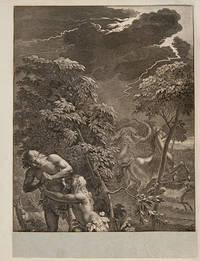
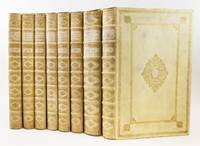
1735réf. ST18632Amsterdam: Petrus Shenk 1735-38. First Edition in Dutch. 415 x 264 mm. 16 3/8 x 10 3/8". Entirely complete with continuous pagination but with a jump in page numbering from the end of book XIII to the beginning of XIV as usual. 15 parts in eight volumes. Translated by Florentius H. J. van Halen. HANDSOME CONTEMPORARY VELLUM covers with large gilt entrelac centerpiece framed with gilt floral rule with bouquet-like cornerpieces gilt floral border raised bands compartments richly gilt titles and volume numbers handwritten in ink on spines all edges gilt. With head- and tailpieces 15 engraved titles printed in red and black with engraved vignettes and complete with frontispiece two engraved portraits of the author and the engraver the latter with shorter margins probably tipped-in and 760 OFTEN STRIKING COPPER ENGRAVINGS on 758 plates one with partial hand coloring a few double-page. Front pastedown of first volume with handwritten note in French on lined paper; with additional black & white title to first work erroneously dated 1728. Nissen ZBI 3661; see also: Faber du Faur "German Baroque Literature" p. 472. Trivial soiling to the vellum the seventh volume with a faint marginal dampstain affecting a few quires but not touching engravings the odd negligible blemish but AN OUTSTANDING SET the very attractive original bindings showing only insignificant wear and THE CONTENTS ESPECIALLY FRESH AND CLEAN THROUGHOUT WITH VERY FINE IMPRESSIONS OF THE PLATES. This is the first Dutch translation of Scheuchzer's "Sacred Nature" one of the most splendid German illustrated books of the 18th century presenting what surely is the most impressive combination of biblical exegesis and scientific illustration to be found in any printed book. First published in 1731-35 as the "Physica Sacra" in Latin and as the "Kupfer-Bibel" in German so-named for the amazing array of copperplate engravings this work is arranged according to the progression of books in the Bible citing passages from those chapters where phenomena from the natural world are mentioned. The typical pattern here includes a textual citation followed by the author's often lengthy remarks on the passage and in many cases a dramatic engraving to illustrate what is said. The plates are identical to the earlier editions retaining the inscriptions in Latin and German and are the work of Johann-Melchior Fuseli of the well-known Zurich family of 18th and 19th century artists. The engraved scenes are always executed with great skill are generally very animated and are often fascinating. Of the 760 images meant to illustrate the text many are strictly or primarily depictions of biblical scenes; several are simply illustrations of specimens of nature; and a large number perhaps half offer a kind of combination. An example of this last type includes a wonderful scene showing the birth of Man as related in Genesis 1:26-27 depicting not only a startled Adam in his fecund paradise but also 10 images of fetuses placentas and the skeletons of children attached like mounted specimens to the architectural frame of the illustration. According to Faber du Faur it is in this work that "the Baroque attains philosophically as well as artistically its high point and its conclusion. It is the last of those elegant works which do not really contain illustrations to a text but which are in effect composed of splendid plates with a text to accompany them." Scheuchzer 1672-1733 was a prolific naturalist who promoted at every opportunity the most modern scientific ideas though without wanting to risk the accusation of being irreverent. He says that the present work represents an attempt at finding a harmony between reason and revelation though it can also be seen as an effort to promulgate progressive theories under the venerable cloak of biblical commentary. The bibliographies disagree about the number of plates that ought to be present in this work and in other editions but ours corresponds to copies previously sold at auction as complete. Copies of the "Physica Sacra" and its translations show up regularly for sale but almost never does one see the work both complete and as here with a clean and fresh text in remarkably well-preserved and attractive contemporary bindings. Petrus Shenk unknown
1735réf. ST18632Amsterdam: Petrus Shenk 1735-38. First Edition in Dutch. 415 x 264 mm. 16 3/8 x 10 3/8". Entirely complete with continuous pagination but with a jump in page numbering from the end of book XIII to the beginning of XIV as usual. 15 parts in eight volumes. Translated by Florentius H. J. van Halen. HANDSOME CONTEMPORARY VELLUM covers with large gilt entrelac centerpiece framed with gilt floral rule with bouquet-like cornerpieces gilt floral border raised bands compartments richly gilt titles and volume numbers handwritten in ink on spines all edges gilt. With head- and tailpieces 15 engraved titles printed in red and black with engraved vignettes and complete with frontispiece two engraved portraits of the author and the engraver the latter with shorter margins probably tipped-in and 760 OFTEN STRIKING COPPER ENGRAVINGS on 758 plates one with partial hand coloring a few double-page. Front pastedown of first volume with handwritten note in French on lined paper; with additional black & white title to first work erroneously dated 1728. Nissen ZBI 3661; see also: Faber du Faur "German Baroque Literature" p. 472. Trivial soiling to the vellum the seventh volume with a faint marginal dampstain affecting a few quires but not touching engravings the odd negligible blemish but AN OUTSTANDING SET the very attractive original bindings showing only insignificant wear and THE CONTENTS ESPECIALLY FRESH AND CLEAN THROUGHOUT WITH VERY FINE IMPRESSIONS OF THE PLATES. This is the first Dutch translation of Scheuchzer's "Sacred Nature" one of the most splendid German illustrated books of the 18th century presenting what surely is the most impressive combination of biblical exegesis and scientific illustration to be found in any printed book. First published in 1731-35 as the "Physica Sacra" in Latin and as the "Kupfer-Bibel" in German so-named for the amazing array of copperplate engravings this work is arranged according to the progression of books in the Bible citing passages from those chapters where phenomena from the natural world are mentioned. The typical pattern here includes a textual citation followed by the author's often lengthy remarks on the passage and in many cases a dramatic engraving to illustrate what is said. The plates are identical to the earlier editions retaining the inscriptions in Latin and German and are the work of Johann-Melchior Fuseli of the well-known Zurich family of 18th and 19th century artists. The engraved scenes are always executed with great skill are generally very animated and are often fascinating. Of the 760 images meant to illustrate the text many are strictly or primarily depictions of biblical scenes; several are simply illustrations of specimens of nature; and a large number perhaps half offer a kind of combination. An example of this last type includes a wonderful scene showing the birth of Man as related in Genesis 1:26-27 depicting not only a startled Adam in his fecund paradise but also 10 images of fetuses placentas and the skeletons of children attached like mounted specimens to the architectural frame of the illustration. According to Faber du Faur it is in this work that "the Baroque attains philosophically as well as artistically its high point and its conclusion. It is the last of those elegant works which do not really contain illustrations to a text but which are in effect composed of splendid plates with a text to accompany them." Scheuchzer 1672-1733 was a prolific naturalist who promoted at every opportunity the most modern scientific ideas though without wanting to risk the accusation of being irreverent. He says that the present work represents an attempt at finding a harmony between reason and revelation though it can also be seen as an effort to promulgate progressive theories under the venerable cloak of biblical commentary. The bibliographies disagree about the number of plates that ought to be present in this work and in other editions but ours corresponds to copies previously sold at auction as complete. Copies of the "Physica Sacra" and its translations show up regularly for sale but almost never does one see the work both complete and as here with a clean and fresh text in remarkably well-preserved and attractive contemporary bindings. Petrus Shenk unknown books