Cats, JacobBiblio.com

55 949 résultats
1714réf. 001702Hamburg: Thomas von Wierings 1714. Full Vellum. Very Good. An emblem book from a Dutch master! 8vo. Abundantly illustrated with 39 engraved plates eight of which are folding and 168 text engravings. The set includes Cats' most famous and beloved works some of which became deeply etched into the national consciousness including "Sinn und Liebes=Bildern" "Josephs Selbst Streit" Der Mannlichen Achtbarkeit" "Heuraht" "Galathea" "Spiegel der alten und neuen Zeit" "Frau=Ring" containing "Der Welt Anfang/Mittel und Ende" "Alterthum/Land und Garten=Leben" "Aspasia" Primarily in German with some Latin. Some soiling to the contemporary vellum which nonetheless is bright and attractive. A few trivial closed tears and minor cracking to the spines. All volumes tight and generally clean. Thomas von Wierings unknown
1775réf. 371623Philadelphia: James Humphreys 1775. First edition. 4 iv 25 1pp. 8vo. Later wrappers. Perforated stamp on title and terminal leaves. First edition. 4 iv 25 1pp. 8vo. Revolutionary-era sermon dedicated to George Washington in which Duché urges the people of Philadelphia to stand fast despite the unnaturalness of being in conflict with their fellow British subjects. "We venerate the Parent Land from whence our progenitors came.But if we are to judge from the late ungenerous and ill-digested plans of policy which have been adopted by those whom she hath entrusted with the powers of Administration we cannot but think that they began to be jealous of our rising glory and from an ill-grounded apprehension of our aiming at independency were desirous of checking our growth." Jacob Duché 1737-98 was born in Philadelphia and educated there before studying at Cambridge University. He returned to Philadelphia and eventually became rector of Christ Church. His early zeal for the revolutionary cause was such that he was appointed chaplain to the Continental Congress. After the Declaration of Independence and the capture of Philadelphia by General Howe Duché had a change of heart and wrote George Washington asking him to urge Congress to recall the Declaration and negotiate a peace. He was branded a traitor by his former followers and went into exile in Great Britain before returning to his beloved Philadelphia in 1792 to live out his final years. Adams American Independence 160a; Evans 140-13; Sabin 21051 James Humphreys unknown
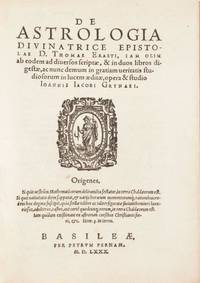
1580réf. LLV2606Basle:: Peter Perna 1580 1572. 1580. Two volumes bound as one. Quarto. Pagination: 8 236 12; 16 267 20 pp. including blanks. Two printer's devices on title pages full-page portrait of Paracelsus on N3r of second work decorated initials; minor stains. Contemporary limp vellum yapp fore-edge covers lightly curled one tie of four. Title in old hand on bottom edge old owner's seven-line ink note on front free end paper on "Diogenes" minor marginal dampstain on two leaves otherwise a fresh clean crisp copy. WRITTEN ON THE BOTTOM EDGE OF THE VOLUME: "De astrolog: divinatrice. Erasti.Disputation. / De medicina Paracelsi.Pars I." VERY RARE. First edition. THOMAS ERASTUS' DISTPUTATIONS CONCERNING ASTROLOGY AND THE NEW MEDICINE OF PARACELSUS. First Editions. bound with: DISPUTATIONUM DE MEDICINA NOVA PHILIPPI PARACELSI PARS PRIMA: IN QUA QUAE DE REMEDIIS SUPERSTITIOSIS & MAGICIS CURATIONIBUS ILLE PRODIDIT PRAECIPUE EXAMINANTUR. . . This is one of two books written by Erastus concerning divining astrology especially directed to certain persons named in the letter of Erastus in this case the primary being Christopher Stathmion whose last letter is dated from 1559. A second part was issued for the DE MEDICINA not present here. Thomas Erastus 1524-1583 Swiss Protestant theologian a physician whose original name was Luber Lieber or Liebler. As a follower of Huldreich Zwingli he supported the Swiss leader's view of the Lord's Supper at the conferences of Heidelberg 1560 and Maulbronn 1564 and in a book 1565. In spite of his vigorous opposition to the Calvinist doctrine Presbyterian Church discipline and government were introduced in Heidelberg in 1570. In 1574 Erastus was excommunicated by the Heidelberg consistory but a year later the edict was removed. . .The term Erastianism has come to represent approval of the dominance of civil authority in all punitive measures and by extension complete dominance of the state over the church though Erastus himself never held such an extreme view. Erastianism achieved its definitive expression in the Leviathan of Thomas Hobbes. / ". . .On his return from Italy to Germany Erastus was shocked at the extent to which men were addicted to vain predictions of astrologers and at the astrological restrictions under which medical practice labored. . .as an antidote to the superstition poisoning Germany he had made a translation from the Italian into German of the book of Savonarola against astrologers. This aroused some opposition among German astrologers and the aforesaid physician of Coburg Chrsitopher Stathmion had contended that Savonarola's work did not apply to divination or astrology which was based on natural causes. . .He adopts the usual theological position that divination is the work of demons. He joins Pico and Savonarola in their wholesale onslaught upon astrology to which he would appear to leave almost no field of activity. . .In the first volume of his Disputations Concerning the New Medicine of Paracelsus . . . Erastus has more to say against astrology. It holds first place in magic of which he utterly disapproves and is the offscouring of all impious arts. . .Erastus denied the possibility of natural magic. Nor would he admit that the Magi of ancient Persia had been priests or sages. Their magic too he regarded as diabolical. He showed himself even more incensed at Pomponnazzi for his favorable attitude toward magic in De incantationibus than at Paracelsus. . . Astrology he condemned as the foundation of all other magic arts. He censured Paracelsus for speaking approvingly of augury prodigies geomancy pyromancy and necromancy and for condoning the receiving from demons' remedies to be employed for good ends." Thorndike V5 pp. 652-660 FURTHER: Regarding the second tract the Disputations "concerning and against the new Paracelsan medicine composed by Erastus illustrate on the one hand his opposition to the medical views of Paracelsus and his followers and on the other hand his opposition to various occult arts and sciences most of which he accuses Paracelsus of countenancing." "Erastus commends Paracelsus for one thing namely his careful preparation of medicines and revival of distillation." p. 657. REFERENCES: Astrologiae: VD 16 E3669; Adams E905 & E910; Cantamessa I1401; DSB IV388; Durling/NLM 1383; Antoine Faivre & Jacob Needleman Modern esoteric spirituality London 1992 p. 181; Houzeau/Lancaster 4932; Herbert Jaumann Bio-bibliographisches Repertorium p.253; Rosenthal Magica 3397; Medicina: VD 16 E3679; Sudhoff 247; Wellcome I 2057; Waller 2778. Peter Perna, 1580, 1572. hardcover
1996réf. 003735Memphis TN: The Cotton Foundation 1996. Hardcover. As New/No Jacket. 6 1/4" X 9 1/4" 1008 pages. List of chapters--#1--Major developments in management of insect and mite pests in cotton #2--Biology and ecology of important insects and mite pests in cotton #3--Biology and ecology of important predators and parasites attacking arthropod pests #4--Short- and long-range movement of insects and mites #5--Biology ecology and epidemiology of microbal organisms infecting arthropod pests #6--Modeling and computerizing decision aids #7--Toward comprehensive economic thresholds for crop management #8--Toxicology of insecticides and acaricides #9--Resistance to pesticides: mechanisms development and management #10--Application technology #11--Pheromones and other behavior - modifying chemicals in cotton pest management #12--Status of rearing technology for cotton insects #13--Chemical control #14--Cultural control #15--Biological control #16--Genetic control #17--Host plant resistance #18--Suppression and management of cotton insect populations on an areawide basis #19--Boll weevil eradication #20--Insect and mite pest management in the southeast #21--Insect and mite pest management in the mid-south #22--Insect and mite pest management in the southwest #23--Insect and mite pest management in the west #24--The economic impact of cotton insects and mites #25--Benefit - cost analysis of integrated pest management programs #26--Economic evaluation of insect eradication: The case of boll weevils in the southest #27--Crop phenology and insect management #28-- Environmental issues #29--Working together: Roles of private consultants industry researches extension and growers #30--Cotton insect management: A look to the future. The Cotton Foundation hardcover
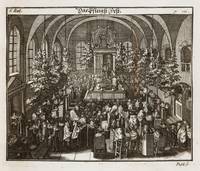
1726réf. 47515Nürnberg: Peter Conrad Monath 1726. New edition. Hardcover. Very good- to very good condition. Octavo. 6 leaves 226 18pp. 28 plates not incl. frontispiece and half-title 2 folding plates with list of engravings. Original calf binding with reverse lettering on label blind-stamped decor and ruling on spine; raised bands. Copperplate engraved frontispiece by Puschner. Title page printed in red and black. Decorative head- and endpieces and initials. Illustrated throughout with twenty-eight copper plate engravings all folding one additional engraved half-title following address to the reader and two printed folding pages containing detailed description of twenty-seven engravings. Plate twenty-eight illustrating an embroidered wimpel is bound in after plate twenty-seven but not described in printed folding plates of descriptive list. Plates thirteen and fourteen are bound in following pages 206 respectively 216 concurrent with the relating text. Nunmehro aber bey dieser neuen Auflage mit accuraten Kupfern versehen New edition with accurate engravings. Enlarged edition with annotations by Sebastian Jacob Jungendres. An important illustrated work documenting ceremonial rituals of European Jews. First published in 1716 without engravings Kirchner's work covers: Labor and Birth Circumcision Marriage Rituals Death Mourning Artifacts Holidays and daily devotional practices. Alfred Reubens a Jewish iconographer dates Kirchner's first illustrated edition as 1724 with a revised copy appearing in 1734. This 1726 edition was unknown to him and is not found in Mayer. The plates Nos. 3 6 7 16 26 and 14 are signed in print Puschner below images plate 10 "P." plate 12 "J. G. Puschner" and plate 18 "Puschner" in lower right corner of image. Many of the plates are based on information from Johannes Buxtorf celebrated Hebraist and compiler of the first Hebrew Bible based on Masoretic text and offer an enlightening look into costuming and day to day preparations for rituals in Jewish life. Table of content and register at rear. Text in German. Binding with some wear light chipping and half an inch tear at bottom of front joint light scuffing and lightly cracked spine. Lower corner lightly bumped top with light scuffing. Covers rubbed. Brief notes on front endpaper front and verso. Inked reference numbers on title page both crossed out with pencil. Some foxing and staining of block. First engraving with very light foxing else all engravings in excellent condition with occasional imperfections in margins. Peter Conrad Monath hardcover
réf. 16-3579Hafniæ i.e. Copenhagen:Typis vidaæ A.H. Godiche per F.C. Godiche 1772-1792. Folio. 38.8 x 23.5 cm 15¼ x 9¼" later half cloth & marbled boards page edges untrimmed. Folio 7 first editions vols. 1-7 and quarto 2 reprint tomes of vols. 8-9. Folio. Bd. I. 16 642 1 s. 7 plansjer. 2 tabeller. Bd. II. 14 644 1 s. 6 plansjer. 2 tabeller. Bd. III. 4 645 1 s. 6 plansjer. 4 tabeller. Bd. IV. 16 633 s. 4 tabeller. Bd. V. 16 644 s. Tab. I. Bd. VI. 4 652 s. 4 plansjer. Tab. I. 16 figurer i teksten våpenskjold. Bd. VII. 30 626 s. 1 figur i teksten. Bd.VIII. 12 568 s. 2 tabeller. Bd- IX. OCLC Number: 1028616103Important compilation on Danish historical subjects. This set has volumes 1-7 of the original edition in folio plus Kraus reprints of volume 8 & the index in quarto. Many of the illustrations seem to be lacking some are supplied in modern facsimile; there are a number of early leaves of volume 1 supplied in facsimile Hafniæ [i.e. Copenhagen]:Typis vidaæ A.H. Godiche, per F.C. Godiche, 1772-1792 hardcover
1865réf. 64770New York: E. S. Dodge & Co 1865. Historical Outline of Lower California. New York: E. S. Dodge & Co. 1865. First edition. Octavo 8 3/4 x 5 3/4 inches; 223 x 146 mm.1-46 2 blank pp. Original grey printed wrappers. Wrappers chipped along lower portion of the spine and slightly chipped along edges. Some light foxing throughout. Overall a very good copy. "Jacob Primer Leese was a Santa Fe trader who settled in San Francisco in 1836 and engaged in the hide and tallow trade with Yankee ships. He married a sister of General Vallejo and became very wealthy. In 1863 Leese and other promoters founded the Mexican Mining and Colonization Company and obtained a land grant from the Mexican government of some 46800 square miles between the 24th and 31st parallels of latitude in Baja California. They failed to meet their obligations however and the grant was transferred to another party in 1866. The outline was written "in the interest of the Mexican Mining and Colonization Company." In addition to details on the grant it provides material on the discovery early settlements missions mineral resources and pearl fisheries of Baja California." Hill 998. Hill 998. Sabin 39834. HBS 64770. $2500. E. S. Dodge & Co unknown
réf. 51-4109Paris: Deterville Librairie économique1805. Folio. New half orange goatskin and marbled boards by Sasha Mosalov; original spine preserved. 28 x 40 cm. 37 of 55 plates. Right part of plate 16 missing. Title page and a few others soiled. Brunet IV col. 325; Cat. Russica 36; Stafleu & Cowan 7224; Wood p. 511; DSB X pp. 283-285. Russie - PALLAS Pierre-Simon. ATLAS des Voyages entrepris dans les gouvernemens méridionaux de l'empire de la Russie dans les années 1793 et 1794 par Mr. le professeur Pallas. Paris Deterville 1805.In-4 oblong demi-veau reliure de l'époque. 37 planches sur 55.partie droite de la carte 16 manquante. Paris: Deterville, Librairie économique1805 hardcover
réf. 16-5007Genève: Jacob Stoer 1603-1604. Folio. 23.6 x 38cm. Contemporary roan with 6 raised bands.16 unnumbered leaves 363 numbered leaves 10 unnumbered leaves 312 numbered leaves 43 unnumbered leaves. Slightly worn along edges and corners; a few pages with worming in upper margin.OCLC Number:865078766.Les oeuvres morales et meslées. Translatees du Grec en François reueues & corigees en plufieurspaffage pa le tranflateur 1604 In-folioComprises en deux tomes et enrichies en cett eédition de préfaces générales de sommaires aucommencementd'un chacun des trités et d'annotations en marge qui montrent l'artifice et la suitedes discours de l'auteurReliure pleine peau double filet dos à nerfs et caissons dorésAccident état d'usage mords fendus coins émoussés et épidermures [Genève]: Jacob Stoer, 1603-1604 hardcover
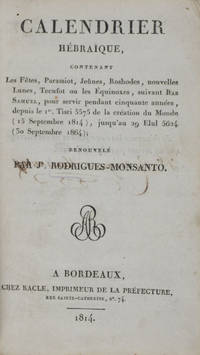
1814réf. 41217Bordeaux: Chez Racle 1814. First edition. Hardcover. g- to g. 12mo. 234pp. 2. Brown leather with gilt tooling and gilt stamped floral design on spine. Signed author's attestation of printing at verso of title page. The publication is considered to be the first work to incorporate Hebrew printing in Bordeaux. The work is a comprehensive annotated fifty year Hebrew Jewish calendar that documents many important aspects of the Jewish year including holidays new moons beginnings of the Hebrew months Rosh Chodesh weekly Torah portions and equinoxes. The final leaf has an approbation from Abraham Andrande Chief Rabbi of Bordeaux. Text in French and Hebrew. Binding with some rubbing abrasions and light staining to the front and back covers. Head & tail of spine and corners of covers with some rubbing and chipping. Interior with some light pencil marking to interior front cover and front free endpapers. Some sporadic light foxing throughout usually to edges of pages with text mostly unaffected. Book block tight. Binding in good- interior in overall good condition. Chez Racle hardcover
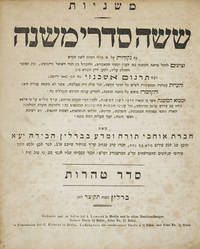
1834réf. 19636Berlin: I. Lewent 1834. Hardcover. g. Six octavo volumes bound in three quarter leather over paper covered boards. Each volume has ties on fore edge of front and rear boards. Vol. 1: "Seder Zeraim" 196 pp. Vol. 2: "Seder Moed" 232 pp. Vol. 3: "Seder Nashim" 212 pp. Vol. 4: "Seder Nezikin" 268 pp. Vol. 5: "Seder Kodshim" 264 pp. Vol. 6: "Seder Tehorot" 212 pp. Book has the original Hebrew of the Mishnah and the translation into Judeo-German in double columns atop the commentary "Melo Kaf Nahat" which is in Hebrew Rashi Script. The author of the commentary was a renowned talmudic scholar and author who lived in the first half of the eighteenth century. This groundbreaking commentary was considered a "funnel of sorts" for previous rabbinic and Medieval commentaries on the Mishnah for it collected explanations from Rashi Maimonides Bertinoro and Tosafot Yom-Tov. It also drew heavily upon Isaac ibn Gabbai's commentary. This work was originally in Amsterdam in the year of 1732. This is the later reprint from Berlin printed between the years 1832-1834. Age wear and scuffing to leather some Hebrew script handwriting on front endpapers but books are in overall good condition. I. Lewent hardcover
réf. 16-4208Prague: Egidius Sadeler 1601-1602. Small folio. 183 x 30.5 cm. 19th Century half calf. 3 vols. bound together with numerous plates.Vol. 1: 3 leaves; 60 engraved leaves lacking nos. 52 and 53; engraved portrait of Octavio de Strada; Vol. 2: 8 184 8pp; Vol. 3: 6pp 51 leaves; 8pp. Small wormholes in first few and last few pages.Very rare. OCLC Number:181875317.TYPOTIUS Jacques. Symbola divina et humana pontificum imperatorum regum. Prague Chez Sadeler 1601; in-folio IV-59 gravures 184 pp. index de 8 pages et 41 pages en chiffre romain index alphabétique de 8 pages reliure demi-veau brun du 19 ème siècle dos lisse orné tranches jaspées. Ouvrage en trois parties avec deux très belles pages de titres imprimées. Notre exemplaire est incomplet des gravures 52 et 53 dans la première partie. Célèbre livre d'emblèmes un des plus beaux et des plus importants de son temps. Les planches ont été gravées par Sadeler. Prague: Egidius Sadeler, 1601-1602 unknown
réf. 3477Signed 'J Van H' lower right. Pencil and watercolour `IV' watermark. A beautiful image of a single Mallow stem with pink flowers. Jacob van Huysum was born in Amsterdam in about 1687 a member of a renowned family of professional flower painters who enjoyed considerable success in Holland. His father was Justus van Huysum 1659-1716 and his brother Jan van Huysum 1682-1749. Jacob painted in much the same manner as his brother and as with his brother's work many of his drawings betray the temperament of an artist rather than that of a botanical illustrator. His 'work especially in England has often been mistaken for his brother's. Van Huysum came to England about 1721 in which year he was living in the house of a patron Mr. Lockyear of the South Sea House. Subsequently he was patronised by Sir Robert Walpole who received him as an intimate of his house at Chelsea and employed him to paint flowerpieces. for the decoration of the great house at Houghton in Norfolk' DNB . He also provided the majority of the drawings for the 50 illustrations to John Martyn's Historia Plantarum Rariorum London: 1728-38 as well all the drawings to another work Catalogus Plantarum. A catalogue of trees shrubs plants and flowers London: 1730. The present drawing shows the painterly approach where the artist whilst not sacrificing botanical accuracy tries to capture the essence of his subject. His work offers a contrast to the more strictly scientific approach of Georg Dionysius Ehret his younger contemporary and sometime colleague. Cf. Henrey II p.213. unknown
1755réf. elala1109np: np 1755. 1755. 12mo. pp. 174. old marbled wrs. new paper spine. First Edition in Duodecimo Format. An attack on the English territorial claims and pretensions against the French in North America including discussion of the terms of the Treaty of Utrecht 1713 the disputed geographical limits of Acadia and the outbreak of hostilities in the Ohio Valley 1754. This is one of a number of polemical pamphlets issued by Moreau during the Seven Years War. Also published in Paris in quarto format.Casey I 164. Dionne II 516. JCB I 1071. Lande 656. Sabin 50563. TPL 6418. 1st Edition. np: np, 1755. unknown
1714réf. 001702Hamburg: Thomas von Wierings 1714. Full Vellum. Very Good. An emblem book from a Dutch master! 8vo. Abundantly illustrated with 39 engraved plates eight of which are folding and 168 text engravings. The set includes Cats' most famous and beloved works some of which became deeply etched into the national consciousness including "Sinn und Liebes=Bildern" "Josephs Selbst Streit" Der Mannlichen Achtbarkeit" "Heuraht" "Galathea" "Spiegel der alten und neuen Zeit" "Frau=Ring" containing "Der Welt Anfang/Mittel und Ende" "Alterthum/Land und Garten=Leben" "Aspasia" Primarily in German with some Latin. Some soiling to the contemporary vellum which nonetheless is bright and attractive. A few trivial closed tears and minor cracking to the spines. All volumes tight and generally clean. Thomas von Wierings unknown books
1775réf. 371623Philadelphia: James Humphreys 1775. First edition. 4 iv 25 1pp. 8vo. Later wrappers. Perforated stamp on title and terminal leaves. First edition. 4 iv 25 1pp. 8vo. Revolutionary-era sermon dedicated to George Washington in which Duché urges the people of Philadelphia to stand fast despite the unnaturalness of being in conflict with their fellow British subjects. "We venerate the Parent Land from whence our progenitors came.But if we are to judge from the late ungenerous and ill-digested plans of policy which have been adopted by those whom she hath entrusted with the powers of Administration we cannot but think that they began to be jealous of our rising glory and from an ill-grounded apprehension of our aiming at independency were desirous of checking our growth." Jacob Duché 1737-98 was born in Philadelphia and educated there before studying at Cambridge University. He returned to Philadelphia and eventually became rector of Christ Church. His early zeal for the revolutionary cause was such that he was appointed chaplain to the Continental Congress. After the Declaration of Independence and the capture of Philadelphia by General Howe Duché had a change of heart and wrote George Washington asking him to urge Congress to recall the Declaration and negotiate a peace. He was branded a traitor by his former followers and went into exile in Great Britain before returning to his beloved Philadelphia in 1792 to live out his final years. Adams American Independence 160a; Evans 140-13; Sabin 21051 James Humphreys unknown books
1580réf. LLV2606Basle:: Peter Perna 1580 1572. 1580. Two volumes bound as one. Quarto. Pagination: 8 236 12; 16 267 20 pp. including blanks. Two printer's devices on title pages full-page portrait of Paracelsus on N3r of second work decorated initials; minor stains. Contemporary limp vellum yapp fore-edge covers lightly curled one tie of four. Title in old hand on bottom edge old owner's seven-line ink note on front free end paper on "Diogenes" minor marginal dampstain on two leaves otherwise a fresh clean crisp copy. WRITTEN ON THE BOTTOM EDGE OF THE VOLUME: "De astrolog: divinatrice. Erasti.Disputation. / De medicina Paracelsi.Pars I." VERY RARE. First edition. THOMAS ERASTUS' DISTPUTATIONS CONCERNING ASTROLOGY AND THE NEW MEDICINE OF PARACELSUS. First Editions. bound with: DISPUTATIONUM DE MEDICINA NOVA PHILIPPI PARACELSI PARS PRIMA: IN QUA QUAE DE REMEDIIS SUPERSTITIOSIS & MAGICIS CURATIONIBUS ILLE PRODIDIT PRAECIPUE EXAMINANTUR. . . This is one of two books written by Erastus concerning divining astrology especially directed to certain persons named in the letter of Erastus in this case the primary being Christopher Stathmion whose last letter is dated from 1559. A second part was issued for the DE MEDICINA not present here. Thomas Erastus 1524-1583 Swiss Protestant theologian a physician whose original name was Luber Lieber or Liebler. As a follower of Huldreich Zwingli he supported the Swiss leader's view of the Lord's Supper at the conferences of Heidelberg 1560 and Maulbronn 1564 and in a book 1565. In spite of his vigorous opposition to the Calvinist doctrine Presbyterian Church discipline and government were introduced in Heidelberg in 1570. In 1574 Erastus was excommunicated by the Heidelberg consistory but a year later the edict was removed. . .The term Erastianism has come to represent approval of the dominance of civil authority in all punitive measures and by extension complete dominance of the state over the church though Erastus himself never held such an extreme view. Erastianism achieved its definitive expression in the Leviathan of Thomas Hobbes. / ". . .On his return from Italy to Germany Erastus was shocked at the extent to which men were addicted to vain predictions of astrologers and at the astrological restrictions under which medical practice labored. . .as an antidote to the superstition poisoning Germany he had made a translation from the Italian into German of the book of Savonarola against astrologers. This aroused some opposition among German astrologers and the aforesaid physician of Coburg Chrsitopher Stathmion had contended that Savonarola's work did not apply to divination or astrology which was based on natural causes. . .He adopts the usual theological position that divination is the work of demons. He joins Pico and Savonarola in their wholesale onslaught upon astrology to which he would appear to leave almost no field of activity. . .In the first volume of his Disputations Concerning the New Medicine of Paracelsus . . . Erastus has more to say against astrology. It holds first place in magic of which he utterly disapproves and is the offscouring of all impious arts. . .Erastus denied the possibility of natural magic. Nor would he admit that the Magi of ancient Persia had been priests or sages. Their magic too he regarded as diabolical. He showed himself even more incensed at Pomponnazzi for his favorable attitude toward magic in De incantationibus than at Paracelsus. . . Astrology he condemned as the foundation of all other magic arts. He censured Paracelsus for speaking approvingly of augury prodigies geomancy pyromancy and necromancy and for condoning the receiving from demons' remedies to be employed for good ends." Thorndike V5 pp. 652-660 FURTHER: Regarding the second tract the Disputations "concerning and against the new Paracelsan medicine composed by Erastus illustrate on the one hand his opposition to the medical views of Paracelsus and his followers and on the other hand his opposition to various occult arts and sciences most of which he accuses Paracelsus of countenancing." "Erastus commends Paracelsus for one thing namely his careful preparation of medicines and revival of distillation." p. 657. REFERENCES: Astrologiae: VD 16 E3669; Adams E905 & E910; Cantamessa I1401; DSB IV388; Durling/NLM 1383; Antoine Faivre & Jacob Needleman Modern esoteric spirituality London 1992 p. 181; Houzeau/Lancaster 4932; Herbert Jaumann Bio-bibliographisches Repertorium p.253; Rosenthal Magica 3397; Medicina: VD 16 E3679; Sudhoff 247; Wellcome I 2057; Waller 2778. Peter Perna, 1580, 1572. hardcover books
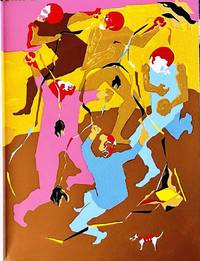
réf. 020815New York: Limited Editions Club 1983. Hardcover. Mild even sunning to the spine. Near Fine in a close to Fine slipcase. Jacob Lawrence. Large octavo 9-1/2" x 12-1/4" bound in full coal-black aniline cowhide leather. With a poem by Robert Penn Warren that serves as the preface. Illustrated with 8 ORIGINAL SILKSCREENS executed in eleven colors by the noted late African-American artist Jacob Lawrence. Copy #27 of 1500 SIGNED by Hersey Warren and Lawrence. A starkly beautiful book richly bound and with three important signatures justly one of the most desirable books issued by this long-lived prestigious press. Monthly Letter laid in. Limited Editions Club hardcover books
1726réf. 47515Nürnberg: Peter Conrad Monath 1726. New edition. Hardcover. Very good- to very good condition. Octavo. 6 leaves 226 18pp. 28 plates not incl. frontispiece and half-title 2 folding plates with list of engravings. Original calf binding with reverse lettering on label blind-stamped decor and ruling on spine; raised bands. Copperplate engraved frontispiece by Puschner. Title page printed in red and black. Decorative head- and endpieces and initials. Illustrated throughout with twenty-eight copper plate engravings all folding one additional engraved half-title following address to the reader and two printed folding pages containing detailed description of twenty-seven engravings. Plate twenty-eight illustrating an embroidered wimpel is bound in after plate twenty-seven but not described in printed folding plates of descriptive list. Plates thirteen and fourteen are bound in following pages 206 respectively 216 concurrent with the relating text. Nunmehro aber bey dieser neuen Auflage mit accuraten Kupfern versehen New edition with accurate engravings. Enlarged edition with annotations by Sebastian Jacob Jungendres. An important illustrated work documenting ceremonial rituals of European Jews. First published in 1716 without engravings Kirchner's work covers: Labor and Birth Circumcision Marriage Rituals Death Mourning Artifacts Holidays and daily devotional practices. Alfred Reubens a Jewish iconographer dates Kirchner's first illustrated edition as 1724 with a revised copy appearing in 1734. This 1726 edition was unknown to him and is not found in Mayer. The plates Nos. 3 6 7 16 26 and 14 are signed in print Puschner below images plate 10 "P." plate 12 "J. G. Puschner" and plate 18 "Puschner" in lower right corner of image. Many of the plates are based on information from Johannes Buxtorf celebrated Hebraist and compiler of the first Hebrew Bible based on Masoretic text and offer an enlightening look into costuming and day to day preparations for rituals in Jewish life. Table of content and register at rear. Text in German. Binding with some wear light chipping and half an inch tear at bottom of front joint light scuffing and lightly cracked spine. Lower corner lightly bumped top with light scuffing. Covers rubbed. Brief notes on front endpaper front and verso. Inked reference numbers on title page both crossed out with pencil. Some foxing and staining of block. First engraving with very light foxing else all engravings in excellent condition with occasional imperfections in margins. Peter Conrad Monath hardcover books
1865réf. 64770New York: E. S. Dodge & Co 1865. Historical Outline of Lower California. New York: E. S. Dodge & Co. 1865. First edition. Octavo 8 3/4 x 5 3/4 inches; 223 x 146 mm.1-46 2 blank pp. Original grey printed wrappers. Wrappers chipped along lower portion of the spine and slightly chipped along edges. Some light foxing throughout. Overall a very good copy. "Jacob Primer Leese was a Santa Fe trader who settled in San Francisco in 1836 and engaged in the hide and tallow trade with Yankee ships. He married a sister of General Vallejo and became very wealthy. In 1863 Leese and other promoters founded the Mexican Mining and Colonization Company and obtained a land grant from the Mexican government of some 46800 square miles between the 24th and 31st parallels of latitude in Baja California. They failed to meet their obligations however and the grant was transferred to another party in 1866. The outline was written "in the interest of the Mexican Mining and Colonization Company." In addition to details on the grant it provides material on the discovery early settlements missions mineral resources and pearl fisheries of Baja California." Hill 998. Hill 998. Sabin 39834. HBS 64770. $2500. E. S. Dodge & Co unknown books
1814réf. 41217Bordeaux: Chez Racle 1814. First edition. Hardcover. g- to g. 12mo. 234pp. 2. Brown leather with gilt tooling and gilt stamped floral design on spine. Signed author's attestation of printing at verso of title page. The publication is considered to be the first work to incorporate Hebrew printing in Bordeaux. The work is a comprehensive annotated fifty year Hebrew Jewish calendar that documents many important aspects of the Jewish year including holidays new moons beginnings of the Hebrew months Rosh Chodesh weekly Torah portions and equinoxes. The final leaf has an approbation from Abraham Andrande Chief Rabbi of Bordeaux. Text in French and Hebrew. Binding with some rubbing abrasions and light staining to the front and back covers. Head & tail of spine and corners of covers with some rubbing and chipping. Interior with some light pencil marking to interior front cover and front free endpapers. Some sporadic light foxing throughout usually to edges of pages with text mostly unaffected. Book block tight. Binding in good- interior in overall good condition. Chez Racle hardcover books
1834réf. 19636Berlin: I. Lewent 1834. Hardcover. g. Six octavo volumes bound in three quarter leather over paper covered boards. Each volume has ties on fore edge of front and rear boards. Vol. 1: "Seder Zeraim" 196 pp. Vol. 2: "Seder Moed" 232 pp. Vol. 3: "Seder Nashim" 212 pp. Vol. 4: "Seder Nezikin" 268 pp. Vol. 5: "Seder Kodshim" 264 pp. Vol. 6: "Seder Tehorot" 212 pp. Book has the original Hebrew of the Mishnah and the translation into Judeo-German in double columns atop the commentary "Melo Kaf Nahat" which is in Hebrew Rashi Script. The author of the commentary was a renowned talmudic scholar and author who lived in the first half of the eighteenth century. This groundbreaking commentary was considered a "funnel of sorts" for previous rabbinic and Medieval commentaries on the Mishnah for it collected explanations from Rashi Maimonides Bertinoro and Tosafot Yom-Tov. It also drew heavily upon Isaac ibn Gabbai's commentary. This work was originally in Amsterdam in the year of 1732. This is the later reprint from Berlin printed between the years 1832-1834. Age wear and scuffing to leather some Hebrew script handwriting on front endpapers but books are in overall good condition. I. Lewent hardcover books
réf. 3477Signed 'J Van H' lower right. Pencil and watercolour `IV' watermark. A beautiful image of a single Mallow stem with pink flowers. Jacob van Huysum was born in Amsterdam in about 1687 a member of a renowned family of professional flower painters who enjoyed considerable success in Holland. His father was Justus van Huysum 1659-1716 and his brother Jan van Huysum 1682-1749. Jacob painted in much the same manner as his brother and as with his brother's work many of his drawings betray the temperament of an artist rather than that of a botanical illustrator. His 'work especially in England has often been mistaken for his brother's. Van Huysum came to England about 1721 in which year he was living in the house of a patron Mr. Lockyear of the South Sea House. Subsequently he was patronised by Sir Robert Walpole who received him as an intimate of his house at Chelsea and employed him to paint flowerpieces. for the decoration of the great house at Houghton in Norfolk' DNB . He also provided the majority of the drawings for the 50 illustrations to John Martyn's Historia Plantarum Rariorum London: 1728-38 as well all the drawings to another work Catalogus Plantarum. A catalogue of trees shrubs plants and flowers London: 1730. The present drawing shows the painterly approach where the artist whilst not sacrificing botanical accuracy tries to capture the essence of his subject. His work offers a contrast to the more strictly scientific approach of Georg Dionysius Ehret his younger contemporary and sometime colleague. Cf. Henrey II p.213. unknown books
1973réf. 2111Boston MA: Little Brown & Co. As New. 1973. Hardcover. 0563104988 . FREE UPGRADE to Courier/Priority Shipping Upon Request - IN STOCK AND IMMEDIATELY AVAILABLE FOR SHIPMENT - Text pristine & unmarked tight to the spine - -- with a bonus offer-- May be either: out of print OOP and extremely rare in this pristine condition; signed by author or contributor; or a first or special edition . Little, Brown & Co hardcover
1737réf. 11025Ulm Daniel Bartholomé 1737 -in-12 argent ciselé sur peau de requin un volume, reliure allemande d'époque en argent sur peau de requin noir avec plats avec encadrement merveilleusement et finement ciselé : thème floral et fermoirs tout aussi finements travaillés en argent (une petite merveille) in-douze (duodecimo), dos à nerfs (spine with raised bands) muet (without title), toutes tranches dorées (all edges gilt) avec dessins à froid réalisés par le relieur sur les tranches, orné d'une gravure en frontispice (frontispiece) et 4 gravures hors-texte (full page engraving) de scènes Bibliques gravées sur cuivre en noir par FRIDRICH Jacob Andreas " le vieux" 1684-1751 ( graveur allemand, Graveur à Nuremberg, mort à Augsbourg, père de Bernhard Gottlieb et de Jacob Andreas le Jeune) , 407 pages, 1737 Ulm Daniel Bartholomé Editeur,