Bigelow, Henry Jacob: = Boott, FrancisBiblio.com
56 074 résultats
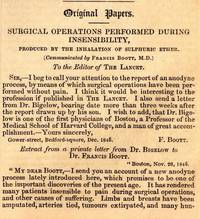
1847réf. 424711847. Lancet 1847/1. - London George Churchill 1847 4° 702 pp. Halbledereinband der Zeit. FIRST EDITION and the first publication on this side of the Atlantic of the first account of ether anaesthesia. The appearance of this paper in the Boston Medical & Surgical Journal some six weeks previously. This was thus the first account published in Europe of an operation performed with the aid of ether anaesthesia. "The original title "Insensibility during surgical operations produced by inhalation" as given in the Boston. Med. & Surg. J. was not given. Jacob Bigelow the father of H.J. Bigelow wrote on 28 November to Francis Boott of London telling him of Morton's discovery and enclosing the text of his son's communication as it had appeared in the Boston Daily Advertiser. Boott forwarded Jacob Bigelow's letter and H. J. Bigelow's paper to The Lancet which published them both in their number for 2 January 1847. Appended to the reprint was a letter from Robert Liston to Dr. Boott dated 21 December 1846 saying that on that day he had successfully used ether during an amputation at the knee thus recording the first operation under ether anaesthesia in Europe. Liston had learned of Bigelow's letter to Boott on Saturday the 19th and carried out his first operation on Monday the 21st!" Fulton & Stanton. The first reference to ether in the British press is a short paragraph in the London Medical Gazette for 18 December 1846 and the second is in The Lancet for 26 December. The two are evidently based on the same source and are statements only reprinted by Fulton & Stanton rather than full accounts. In The Lancet for 9 January 1847 further correspondence pp. 49-51 on Bigelow's patent is included and in the issue for 16 January "a long and well written editorial appears excoriating both Jackson and Morton for attempting the patent" and pp. 77-80 give accounts of operations under anaesthesia including an illustration of "Mr. Hooper's Ether Inhalator constructed according to Dr. Boott and Mr. Robinson's Instructions". John F. Fulton & Madeline E. Stanton The Centennial of Surgical Anesthesia pp.36-39 Following other Milestones of Anesthesia we find in this rare volume: Plomley Francis: Operations upon on the Eye pp.134-135. "John Snow and AE. Guedel are known for assigning stages to anesthesia; the following article by Francis Plomley is an earlier description of these levels. The pretending on the part of the physicians that the already completed operation had not yet been undertaken typified the wonder that was associated with the newness of the invention; conservations like that described in the second paragraph are to be found in many early articles. Plomley's definition of the third stage is accurate. It is now felt however that in the second stage "three exists" as he says "a perfect consciousness of everything said or done." His remarks in the final paragraph relating in this article to the site of action of the ether is interesting" Cole Milestone of Anesthesia Nr. 7 Wells Horace: Fatal Operation under the Influence of Ether pp.340-342. "The world owes much to Horace Wells 185-1848. He conceived the idea of surgical anesthesia experimented on himselfe and others and demonstrated anesthesia publicly for all to see. He succeeded in the sense that the failure of his demonstration was the failure of his audience to appreciate the earth-shaking nature of what they were being shown and in the sense that the final success was an immediate and direct result if his work. He published fefenses in the United States England and France." Cole Milestone of Anesthesia Nr. 8 Snow John: Apparatus for Inhaling the Vapour of Ether pp.120-121 1 Abb.; Observations of the Vapour of Ether and its Application to Prevent Pain in Surgical Operations pp.227-228; Ether Inhalation pp.388-389; A Lecture on the Inhalation of Vapour of Ether in Surgical Operations delivered at the United Service Institution and addressed to the Medical Members of the Institution on May 12th 1847 pp.551-554. ". this is the earliest article on the subject in his own words that I have been able to find" Cole Milestone of Anesthesia Nr. 11 In the index of this valuable volume we find following entries relating ether: Ether-vapour and surgery 392; and oxygen 395 422 Ether insensibility caused by the inhalation of prior to the performance of surgical operations Dr. Boott's notes on 5 8 49 ; Dr. H. J. Bigelow's paper on 6 ; Mr. Liston's note on 8 ; Mr. Dorr's note announcing the process being patented 8 ; editorial remarks on 2 16 74; opinion of counsel against the patent 49 ; Mr. Clendon on the inhalation of prior to operating 50 ; Mr. Squire's apparatus for 73; Mr. Hooper's 77; operations under the influence of 54 77 104 132 158 '. 184 210 237 342 367 499 549 639 ; Mr. Lansdown's operation 79; Dr. Fairbrother on 79 ; Mr. Edwards' operation 79; Dr. Brett's operations on the eye 80 ; Mr. Clen-don's on the teeth 80 ; Mr. Dorr on the patent for the letheon 80; Dr. Chowne on the inhalation of 99; Mr. Parker's operations for strabismus 106 ; Mr. Tracy's on the teeth 106; Dr. J. C. Hall's removal of a tumour 107 134; Dr. Snow's apparatus 120; Dr. Flomley on operations on the eye after the inhalation of 134 ; Dr. Ranking on in tetanus 135 ; Mr. Wintle on 162 ; Dr. Allan on the prevention of coughing while inhaling 163 ; Mr. Dudley on the alleged discovery of the influence of in 1824 163; Mr. Lee on the same forty years ago 164 ; Mr. Robinson on the inhalation of 168 284; experience of the French physicians relative to 176 ; observations on 187 ; action of confined to the cerebral system 214; experiments on 216 ; effects of 227 ; Dr. Snow on 227; Mr. Higginson's apparatus 239 ; Baron P. Dubois on in midwifery 246 ; experiments on by the Society of German Physicians in Paris 259 ; Messrs. Goddard Smith Tarrant Dickenson Leslie and Wraith on 264 265; Dr. Collyer's claims to the invention of 265 ; proposal for a public thanksgiving for 265 ; Mr. Wells' claims to the discovery of; letters from Dr. Bennet Mr. Ellsworth Mr. Wells and Dr. Marcy 265 471; Mr. Ray on the inhalation of 267 ; Dr. Wright's cases illustrative of 280 ; Mr. Dorr on the original discoverer of the inhalation of 289; Dr. Willis on the inhalation of in asthma and hooping-cough 315 ; Dr. Tyler Smith on in obstetric practice 321; Mr. Semple on the inhalation of in rheumatic neuralgia of the head and face 332 ; fatal operation under the influence of 340 ; Dr. Edwards' operations under the influence of 343 ; effects of 345; Dr. Gardner on 349 431; Dr. Marshall Hall on the influence of on the nervous system 368 395; Dr. Radford on the inhalation of in labour 384; as a remedy in spasmodic disease 388; Dr. Snow on ether inhalation 388 : Mr. Wakley's jun. circular note respecting 392; Messrs. Henderson and Cherry's experiments with on the horse 396 604; Dr. R. Chambers on the inhalation of 405; physiological effects of 411 ; effects of on a pregnant female 411; practical application of to medical jurisprudence 411; in midwifery 411 538 ; Dr. C. Ii. Hall on the effects of the inhalation of in reference to mesmerism 434; injection of into the arteries 443 ; used in reducing dislocation of the shoulder 444; Mr. Lansdown on in midwifery 446 ; Dr. P. Smith on 452 ; Dr. Pring on the direct action of on the blood 457; Dr. Brady's case of tetanus treated by the inhalation of 516; Mr. Broughton's case of tetanus treated by 517 ; misuse of in midwifery 521; Dr. Heame on the vapour of and the fatal case of Mrs. Parkinson 533 ; Dr. Dauriol's substitute for 540 ; Mr. Dorr on the discovery of the application of to surgical operations 547 ; Dr. Snow on the inhalation of in surgical operations 552; Mr. Hewett on the inhalation of 561; morphia versus 578 ; Mr.Lansdown on the inhalation of in natural labour 584 ; M. Ducros on the effects of electricity in overcoming the stupor produced by the inhalation of 503; Messrs. Holmes Coote and T. Taylor's experiments on the effects of inhalation of on the lower vertebrate animals 644; inhalation of in laryngismus stridulus 652; Etherization 398; fatal 370; and asphyxia 355 ; Mr. Robinson on resuscitating patients after 371 Further we find following entries about Inhalation: Inhalation patent for 163 ; of ether prior to the performance of surgical operations Dr. Boott's notes on 5 8 49 ; Dr. H. J. Bigelow on 6 ; Mr. Liston on 8; Mr. Dorr's note respecting the patenting of the process of 8 80; editorial remarks on 16 74; opinion of counsel against the patent 49 ; Mr. Clendon on prior to operating 50 ; Mr. Squire's apparatus for 73 ; Mr. Hooper's 77 ; operations under the influence of 54 77 104 132 158 184 210 237 342 367 499 549 639 ; Mr. Lansdown's operation 79 ; Dr. Fairbrother on 79; Mr. Edwards' operation 79; Dr. Brett's operations on the eye 80 ; Mr. Clendon's on the teeth 80 ; Dr. Chowne on the 99 ; Mr. Parker's operations for strabismus 106 ; Mr. Tracy's on the teeth 106 ; Dr. J. C. Hall's removal of a tumour 107134 ; Dr. Snow's apparatus 120 ; Dr. Plomley on operations on the eye after 134; Dr. Ranking on in tetanus 135 ; Mr.Wintle on 162 ; Dr. Allan on the prevention of coughing during 163 ; Mr. Dudley on the alleged discovery of in 1824 163; Mr. Lee on the same forty years ago 164; Mr. Robinson on 168 284; experience of the French physicians relative to 176; observations on 187; action of confined to the cerebral system 214; experiments on 216; effects of 227; Dr. Snow on 227; Mr. Higginson's ether inhaler 239; Baron P. Dubois on in midwifery 246 ; experiments on by the Society of German Physicians at Paris 259; Messrs. Goddard Smith Tarrant Dickenson Leslie and "Wraith on 264 265 ; Dr. Collyer's claims to the invention of 265 ; proposal for a public thanksgiving for 265 ; Mr. Wells' claim3 to the discovery of; letters from Dr. Bennet Mr. Ellsworth Mr. Wells and Dr. Marcy 265 471; Mr. Pay on 261; Dr. Wright's cases illustrative of 280; Mr. Dorr on the original discoverer of 289 ; Dr. Willis on in asthma and hooping-cough 315 ; Dr. Tyler Smith on in obstetric practice 321; Mr. Semple on in rheumatic neuralgia of the head and face 332 ; fatal operation under the influence of 340 ; Dr. Edwards' operations under the influence of 343 ; effects of 345 ; Dr. Gardner on 349 431; Dr. Marshall Hall on the influence of on the nervous system 368 395 ; Dr. Radford on in labour 384; in spasmodic diseases 388 ; Dr. Snow on 38S; Mr. Wakley's jun. circular note respecting 392; Messrs. Henderson and Cherry's experiments with on the horse 396 604 ; Dr. R. Chambers on 405 ; physiological effects of 411; effects of on a pregnant female 411; practical application of to medical jurisprudence 411; in midwifery 411 538; Dr. C. R. Hall on the effects of in reference to mesmerism 434 ; used in reducing dislocation of the shoulder 444; Mr. Lansdown on in midwifery 446; Dr. P. Smith on 452; Dr. Brady's case of tetanus treated by 516 ; Mr. Broughton's case 617; Dr. Hearne on 532 ; Dr. Dauriol's substitute for 540 ; Mr. Dorr on the discovery of the application of to surgical operations 547 ; Dr. Snow on 552 ; Mr. Hewett on 561; morphia versus 578 ; Mr. Lansdown on in natural labour 584; M. Ducros on the effects of electricity in overcoming the stupor produced by 593; Messrs. Holmes Coote and T. Taylor's experiments on the effects of on the lower vertebrate animals 644; in laryngismus stridulus 652 unknown
1901réf. 124011901. Sonderausgabe aus der Deutschen Chirurgie. - Stuttgart Verlag von Ferdinand Enke 1901 Gr.8° 60 528 pp. 108 Abbildungen im Text orig. Broschur; ungeöffnetes frisches Exemplar. FREIE GEWEBSVERPFLANZUNGEN - WUNDHEILUNG ERSTE AUSGABE Rudolf Virchow zum 80. Geburtstag gewidmet. Ein Standardwerk zur Wundheilung und den freien Transplantationen. "Zum ersten Male hat 1901 Marchand das damals Erreichte zusammengefaßt mit scharfer Kritik gesondert und durch eigene Forschung sowohl als durch Arbeiten zahlreicher Schüler bereichert und geklärt so daß sein Werk 'Der Prozess der Wundheilung mit Einschluß der Transplantationen' in der Entwicklung der freien Gewebsverpflanzungen Ruhepunkt und Ausgangspunkt zugleich geworden ist." E.Lexer Vorwort zu seinen "Freien Transplantationen". FIRST EDITION. Dedicated to Virchow's 80th birthday this is an authoritative survey of evolution of medical knowledge concerning healing of wound and free transplantations. Without doubt one of the finest and most exciting books since ZEIS with particular emphasis on the development of modern plastic surgery. Of special interest are the 44 pages of literature in which the historical and modern literature of the subject is described. A reference work of inestimable value in the field of plastic and transplantation surgery. Marchand professor of pathology at Giessen Marburg and finally Leipzig is memorable for his work on inflammation and wound healing. See Garrison 699; Dobson 137; Patterson Index of Plastic Surgery 1864-1920 p.361; Hirsch IV 127-128. Vgl. Joseph Nasenplastik p.40ff. unknown
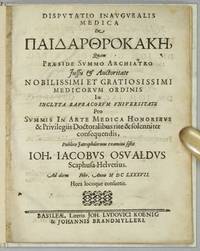
1687réf. 446521687. Basileae Literis Joh. Ludovici Koenig & Johannis Brandmylleri 1687 Kl.4° 20 pp. Pappband. Disputatio inauguralis medica de paidarthrokake / quam praeside summo archiatro jussu et authoritate nobilissimi et gratiosissimi medicorum ordinis in inclyta Rauracorum Universitate pro summis in arte medica honoribus et privilegiis doctoralibus rite et solenniter consequendis publico iatrophilorum examini sistit Joh. Jacobus Osvaldus Scaphusa-Helvetius. ad diem 19 Febr. Anno MDCLXXXVII hora locoque consuetis. Husner: Verzeichnis bas. med. Univ.Schriften Nr.1216 unknown
1882réf. 645651882. Kassel und Berlin Verlag von Theodor Fischer 1882 Folio VI 1 87 pp. 10 lith. Tafeln mit je einem Tafel Erklärungsblatt orig. Broschur; unaufgeschnittenes Expl. Erstdruck! Jakob Stilling 1842-1915 "zu Strassburg im Els. geb. zu Cassel 22. Sept. 1842 als Sohn von Benedict Stilling studierte zu Göttingen Marburg Würzburg Berlin und Paris promovierte 1865 und liess sich 1867 als prakt. Augenarzt in seiner Vaterstadt nieder. 1880 habilitierte er sich an der Univ. Strassburg für Ophthalmologie und wurde 1884 dort zum Prof. e. o. ernannt. Folgende Arbeiten von ihm sind ausser den bereits im ält. Lex. angeführten besonders erwähnenswert: "Über die Heilung der Verengerungen der Thränenwege etc." Cassel 1868 - "Zur Theorie des Glaucoms" Graefe's A. XIV - "Eine Studie über den Bau des Glaskörpers" Ib. XV - "Beiträge zur Lehre von den Farbenempfindungen" Stuttgart 1875 - "Über Farbensinn und Farbenblindheit" Cassel 1877 - "Die Prüfung des Farbensinnes beim Eisenbahn- und Marinepersonal" Ib. 1877 - "Über das Sehen der Farbenblinden" Ib. 1878 - "Untersuchungen über den Bau der optischen Centralorgane" Ib. 1882 - "Untersuchungen über die Entstehung der Kurzsichtigkeit" Wiesb. 1887 - "Schädelbau u. Kurzsichtigkeit" Strassburg 1888 - "Anilinfarbstoffe des Antiseptica" Ib. 1890 91 - "Grundzüge der Augenheilkunde" Wien 1897 und viele kleinere Aufsätze." Pagel Biogr. Lex. 1901 Sp. 1655-1656. unknown
1846réf. 390511846. Wschr. ges. Heilk. 1846/35-38. - Berlin bei August Hirschwald 1846 8° pp.549-612 Rückenbroschur. Erstdruck! Heinrich Jakob Heidenreich 1808-1868 unknown
1815réf. 514561815. Journ. pract. Heilk. 41/4. - Berlin Im Verlag der Realschul-Buchhandlung Oktober 1815 8° 138 4 pp. Broschur. Erstdruck! "In den ersten Tagen des Monats September des Jahres 1814 verbreitete sich bei uns in Cöln das Gerücht daß einige Soldaten den Herrn Pfarrer zu Kentenich einem nicht weit von der Stadt enfernten Dorfe todgeschlagen hätten. ." siehe - Callisen Med. Schrift. IX p.164 unknown
1758réf. 479341758. Disp. morborum 6/207. - Hrsg. v. Albrecht v. Haller. - Lausanne Marc Michael Bousquet & Socior 1758 4° 2 pp.349-374 1 gefalt. Kupferstichtafel Rückenbroschur. Karl Friedrich Hundertmark 1715-1762 Sohn von Heinrich Elias Hundertmark 1664-1739 "am 11. April 1715 in Zeitz geboren. Derselbe studirte nachdem er das Gymnasium seiner Vaterstadt absolvirt hatte sechs Jahre in Leipzig Medicin und promovirte 1740 zum Dr. med. mit der: "Diss. de singidari usu frictionis et unctionis in curatione morborum". Acht Jahre später wurde Hundertmark ausserordentlicher Professor der Medicin dann 1754 ordentlicher Professor der Physiologie Anatomie und Chirurgie an der Universität zu Leipzig wo er am 8. Mai 1762 starb. Hundertmark war auch als Chemiker bedeutend. Er schrieb : "Commentatio de principibus diis artis medicae tutelaribus apud veteres Graecos et Romanos" Leipzig 1735 - "Theses ex omni philosophia decerptae" ib. 1736 - "Diss. de incrementis artis medicae per expositionem aegrotorum apud veteres in vias publicas et templa" ib. 1739 ; 1749 - "Progr. de saccjiari Saturni usu interno salutariin qua simul varia chemiae capita illustranturu" ib. 1741 - "Progr. de sulphuris anodyni specie ex vini vitriolique oleis commixtis oriunda" ib. 1748 - "Diss. de mercurii vivi et cum salibus varie mixti summa in corpus humanum vi atque efficacitate sjusque cum sulphure laxius vel arctius conjuncti virtute in idem nulla" ib. 1754 - "Diss. de enemate uterino" ib. 1755 - "Diss. de osteosteomatis casu rariore" ib. 1757 - "Progr. de ozaena venerea" ib. 1758 - "Diss. de scabie artificiali" ib. 1758 - "Diss. de urina cretacea" ib. 1761." Pagel Hirsch-H. III p.342 siehe Biogr. méd. V p. 314. - Dict. hist. III p. 248. unknown
1819réf. 651011819. Tubingae : Typis Reissianis 1819 kl.-8° 21 1 pp. Broschur d.Zt. Erstdruck! Präses.: Ferdinand Gottlieb Gmelin ab 1823 von Gmelin auch Gottlob; 10. März 1782 in Tübingen Herzogtum Württemberg; 21. Dezember 1848 in Tübingen Königreich Württemberg war ein deutscher Mediziner Naturhistoriker Chemiker und Forschungsreisender. Resp.: Joannes Jacobus Freytag Eberstadtianus. unknown
1843réf. 660591843. Kefvinge bei Stockholm 23.VI.1843. 1 1/2 S. gr.4°. Mit Blindsiegel und Adresse. Jöns Jakob Freiherr von 1779-1848 schwedischer Chemiker; begründete die quantitative Analyse organischer Verbindungen führte die chemischen Symbole ein und entdeckte mehrere Elemente. An den Chemiker Théophile-Jules Pelouze Mitglied der Académie des sciences in Paris wegen der Zusendung einer "collection du Journal de l'Ecole polytécnique". ". Ne connoissant point à quelle personne j'aurois pu m'adresser par une lettre officielle je vous prie de vouloir bien de ma part présenter les remercimens de l'Académie au lieu dû et annoncer que l'envoie est arrivé. Les Numeros 1 9 & 10 y manquèrent. Je suppose que la raison en est que ces numeros ne se trouvent plus. Il y avoit l'Analyse mathématique appliquée de La g r a n g e ." Der Empfänger Théophile-Jules Pelouze 1807-1867 war ein französischer Chemiker er bestimmte mit sehr hoher Genauigkeit das Atomgewicht mehrerer Elemente. Ferner entwickelte er einen Sprengstoff und exprimierte mit der von Christian Friedrich Schönbein entdeckten Schießbaumwolle. Ascanio Sobrero und Alfred Nobel waren seine Schüler. unknown
1741réf. 544841741. Westphalen Monumenta ined. III. - Leipzig Martin 1741 Kupferstichtasfel 288 x 175 auf 358 x 218 mm. Jacob Fabricius eigentlich Faber 1576-1652 Mediziner Astronom und Dichter. Fabricius war zweifacher Rektor der Universität Rostock und Leibarzt des dänischen Königshauses. "Faber: Dr. Jacob F. Fabricius ein Sohn des Bäckermeisters und Mitgliedes des Collegiums der Hundertmänner Heinrich Schmidt wurde zu Rostock am 28. August 1576 geboren besuchte die Schulen dort und zu Lüneburg studirte seit 1595 zu Rostock Medicin später zu Leipzig wo er poëta laureatus wurde und hielt sich dann vier Jahre lang bei Tycho de Brahe WS 1 in Uranienborg auf der Insel Hven auf. Hierauf durchreiste er Holland und England promovirte 1602 zu Jena und ließ sich als praktischer Arzt in Rostock nieder. Am 17. Januar 1607 ernannte ihn die verwittwete Herzogin Sophie von Mecklenburg zum Leibarzt am 10. Juni 1612 der Herzog Adolph Friedrich zum Professor der Medicin und höheren Mathematik an W. Lauremberg's WS 2 Stelle. 1637 wurde er als oberster königl. Leibmedicus nach Kopenhagen berufen welchem Rufe er unter Beibehaltung seiner Professur in Rostock folgte. Dort starb er am 14. August 1652. Von ihm: "Periculum medicum seu juvenilium foeturae priores" 1600. "Uroscopia s. de urinis tractatus" 1605. "Nonnulla de medicinae et philosophiae conjunctione". 1620. "Exerc. de dysenteria privatim et populatim grassante". 1627. "Institutio medici practicam aggredientis" 1639. Seine Disputationen etc. bei Blanck a. u. a. "O. Ludwig Fromm ADB VI 1877 p.492 Siehe - Westphalen Monumenta ined. III. p. 1449 daselbst auch sein Bildniß. A. Blanck Die Mecklenburg. Aerzte. unknown
1856réf. 600361856. Z. Rat. Med. 3 8/1. - Hrsg. v. Henle & Pfeufer. - Leipzig C.F.Winter'sche Verlagshandlung 1856 Kl.8° 264 pp. 6 Verlagsanzeigenblätter 3 lith. Tafeln orig. Broschur. Erstdruck! Philipp Jakob Wilhelm von Henke 1834-1896 studierte an den Universitäten Marburg Göttingen und Berlin und erlangte 1857 die Doktorwürde in Marburg. Zunächst war er Assistent beim Ophthalmophysiologen Franciscus Cornelis Donders in Utrecht dann anatomischer Prosektor in Marburg habilitierte sich dort 1858 als Privatdozent. Ab 1864 war er außerordentlicher und ab 1865 ordentlicher Professor und Direktor der Anatomie in Rostock ab 1872 in Prag und von 1875 bis zu seinem Lebensende in Tübingen. Er musste etwa ein Jahr vor seinem Tode aus Gesundheitsgründen die wissenschaftliche Forschung und Lehrtätigkeit aufgeben. unknown
1844réf. 275661844. Arch. Anat. Phys. 1844. - Hrsg. v. Johannes Müller. - Berlin Veit & Comp. 1844 8° 220 526 pp. 16 Kupfertafeln Interimseinband. Erstdruck! Hermann Stieda: "Ich komme nun zu der bekannten Arbeit von Tschudi welcher als erster darauf hinwies dass derartige Bildungen einem bestimmten Volksstamme besonders eigentümlich seien. Er fand dass an den Schädeln verschiedener alter Peruanerstämme fast immer eine ganze oder teilweise Trennung der Schuppe in zwei Teile vorkommt und zwar in ein oberes Stück das er Os interparietale nennt und in ein unteres Stück. Die Trennungslinie verläuft in Form einer Quernaht etwas oberhalb der Linea semicircularis superior und mündet beiderseitig seitlich in den Vereinigungswinkel des Schläfenbeines mit dem Hinterhauptsbein also in die sogenannte Casser'sche oder seitliche hintere Fontanelle. Diese Trennungslinie soll in. den ersten Monaten nach der Geburt immer vorhanden sein; es tritt dann zuerst in der Mitte eine Verwachsung ein und bei erwachsenen Individuen fand Tschudi oft nur noch einen seitlichen Rest der Naht immer aber eine deutliche Furche an der früheren Nahtstelle. Tschudi schlägt für den oberen Knochenteil den Namen "Os Ingae oder Incae" vor und diese Bezeichnung hat sich noch bis heute teilweise erhalten." Hermann Stieda: Die Anomalien der menschlichen Hinterhauptsschuppe. Anatomische Hefte 2 1892 pp.59-107 pp.70-80. Johann Jakob von Tschudi 1818-1889 bedeutender Schweizer Naturforscher Forschungsreisender Zoologe Linguist und Diplomat der verschiedene Werke zur Quechua-Sprache zur Fauna und Kultur Perus und zu seinen Reisen durch Südamerika verfasste. unknown
1853réf. 628901853. Akad. Wiss. Berlin 1852. - Philologische und historische Abhandlungen - Berlin 1853 4° pp.105-132 Broschur. Erstdruck! unknown
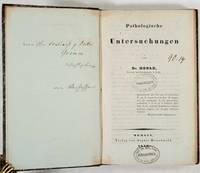
1840réf. 549061840. Berlin Verlag von August Hirschwald 1840 8° VI 274 pp. 2 pp. Verlagsanzeigen Halbledereinband der Zeit mit reichlicher Rückenvergoldung; Rücken neu unterlegt St.a.Tit.; mit eigenhändiger Widmung des Verfassers. Sehr seltene erste Ausgabe mit eigenhändiger Widmung "Herrn Ober Stasbsarzt u. Doctor Grimm . vom Verfasser" auf dem Vorsatzblatt und dem Stempel der "KÖN. PR. MED. CHIR. Frid. Wihl. Institut" auf dem Titelblatt. Jacob Henle 1809-1885 leitet mit seinen "Pathologischen Untersuchungen" eine neue Etappe in der Lehre von den Infektionskrankheiten ein. Der erste Abschnitt dieses Buches enthält die klassische Abhandlung "von den Miasmen und Contagien pp.1-87". Das Kontagium der Ansteckungsstoff muß aus Lebewesen bestehen ähnlich denen der Hefe und der Pilze. Ausgangspunkt dieser Erkenntnis bilden die Forschung auf dem Gebiet der Gärung. -- Henles Arbeit ist ein genialer Entwurf. Seine Reflextionen sind zwingend. Die Theorie des "contagium vivum" wurde später von Robert Koch Henles Schüler glänzend bestätigt. -- Aber Henle konnte 1840 die Lebewesen die er annahm nicht zeigen und man glaubte nur noch was man sah. So blieb diese geistvolle Arbeit seinen Zeitgenossen nur eine Spekulation. "The significance of Henle's book lies in its long opening essay 'Von den Miasmen und Contagien' in which Henle formulated on the basis of deductive reasoning his conviction that living organisms were the cause of contagious and infectious diseases. Drawing upon a wide body of work performed by other researchers on the origin of infectious diseases such as Bassi's recent demonstration of the parasitical nature of muscardine disease of silkworms Henle argued that infectious agents had to be organic in nature since they appeared to multiply from the moment of entering the body a statement supported by the fact that a certain period of incubation usually precedes the outbreak of disease and only organic life has the property of growth. The fact that infectious agents could be destroyed by heat and disinfectants also suggested their animate nature. Henle assumed that each infectious disease had its own etiology but realized that such views would be difficult to prove; he therefore proposed that an agent constantly found in association with a particular disease be isolated and tested in its isolated state to see whether it could produce the disease. 'This approach to the proof of the germ theory Henle communicated to his pupil Robert Koch and was forty years later to become one of the cornerstones of classical bacteriology under the name of "Koch's postulates" ' Foster "He laid down postulates on the aetiological relation of microbes to disease which became fundamentals of bacteriology." Long Foster Medical Bacteriology pp. 8-9; Bulloch History of Bacteriology 163-65; G.Rosen Henle on miasmata and contagia. In Bull. Hist. Med. 1938 907; Howard-Jones Frascatoro & Henle. In Med. Hist. 1977 61-68; Sigerist Große Ärzte 314-320. Brock Milestones in Microbiology pp.76-79; Garrison-Morton 2533; Norman 1051; Waller 4336 unknown
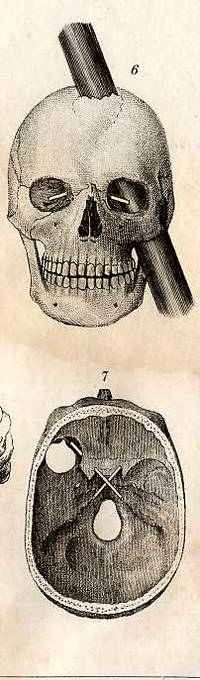
1951réf. 371881951. Notiz. Geb. Nat. Heilk. 4 291. - Abt. Chir. Klinik 1/22. - Frorieps Tagsberichte. - Weimar April 1851 8° pp.233-240 1 lith. Taf. Pappbd. im Stil. d.Zt. First Print! "Seemingly the first German account of the noted neurological case of Phineas P. Gage probably the most famous patient to have survived severe damage to the brain. This present translation is based upon the account published in the July issue of the American Journal of the Medical Sciences in 1850 Dr Harlow's case of recovery from the passage of an Iron Bar through the Head AJMS 20: 13- 22 also published separately by T. K Collins in Philadelphia in 1850. Phineas Gage 1823-1860 was a railroad construction worker who suffered severe cerebral trauma as a result of a blast which forced a tamping iron bar through his head entering point first under his left cheek bone and exiting completely out through the top of his head. Though inflicting severe damage to parts of his frontal brain he reputedly walked away from the accident though his recovery was slow and complicated with Gage reportedly experiencing significant changes in personality and temperament. He was initially treated by John Martyn Harlow before coming under the scrutiny of Henry Bigelow. It soon became a noted case study seemingly providing some of the first evidence that different parts of the brain particularly the frontal lobes might be involved in specific psychological processes dealing with emotion personality and problem solving. Both Harlow and Bigelow as here wrote initial accounts with Harlow publishing a later analysis in 1869. Though clearly an extraordinary case recent studies notably by Malcolm Macmillan throw some doubt on how much can actually be learnt from the case taking into account that we know very little precise information about Gage's temperament before the accident and that much written about him during his remaining years may in fact be the subject of fancy and fabrication. Nevertheless a fascinating account of a still much studied and debated case." Deborah Coltham Cat. Ephemera Pamphlets & Trade Catalogues No. 8 See: Malcolm Macmillan Phineas Gage's contribution to brain surgery. Journal of the History of the Neurosciences 5 1996 pp. 56-77; OCLC: 13493714 for the 1850 Philadelphia account located at Harvard Vermont and South Carolina; Macmillan M. 2002 An odd kind of fame: Stories of Phineas Gage. unknown
1816réf. 550351816. Med.-Chir. Trans. 3. - Second Edition. - London Longman 1816 8° XIII 383 pp. 7 Kupfertafeln Halbledereinand d.Zt; Rücken erneuert. First Print ! Further experimental work on animal fluids was made possible by new analytical techniques introduced by J.J. Berzelius 1779-1848 in Sweden and Justus von Liebig 1803-1873 in Germany. "A need for better information on the chemical composition of animal substances was recognized by Berzelius in Sweden and in 1806-1808 he published a two-volume textbook of animal chemistry in Swedis. Humphry Davy at once realized the importance of the work and resolved to have it translated into English. The project seemed eminently suitable for the newly formed Animal Chemistry Club a special interest group within the Royal Society. Unfortunately mainly for financial reasons no English translation of the work was ever published. Alexander Marcet 1770-1828 later persuaded Berzelius to publish some of his analyses of animal fluids in English which became an important source of data for British animal chemists. In his analysis of the blood Berzelius separated the solid and liquid parts by coagulation and examined each part separately. In the clot he found compounds of carbon phosphorus calcium magnesium and iron. The serum consisted of water containing albumin various salts and some animal matter. His analysis of the serum confirmed results obtained by Marcet. Berzelius also found that bile saliva mucous fluids the humors of the eye and serous fluids contained the same salts in roughly the same proportions as in blood serum. He thought that this result showed that all animal secretions were ultimately derived from the blood. Thus by the second decade of the nineteenth century the new humoralism had already produced useful observations on the properties and constituents of the blood." Coley Early Blood chemistry in Britain and France. Clincal chemistry 47 No. 12 2001 This voloume also contains a "Case of Diseased Appendi Vermiforis. By John Pariknson Surgeon EsQ. Communicated byx James Parkinsin Esq." pp.58-59. The "First case of appendicits vermiformis in English and the first in which perforation was reognized as the cause of death. John William Keys Parkinson 1785-1838 was the son of James Parkinson. Garrison & Morton No. 3560 1st.Ed. 1812 unknown
1889réf. 79761889-1890. Nova Acta 53/3 55/5. - Halle 1889-1890 4° 174 pp. 6 Taf. 2 Broschur. unknown
2003réf. 1-0811834778Chronicle Books Llc 2003. Hardcover. New. 32 pages. 11.25x9.25x0.50 inches. Chronicle Books Llc hardcover
1981réf. BN57410Droemer Knaur 1981. Hardcover/gebunden. Buchdeckel nachgedunkelt Titelblatt mit Leseknick! Droemer Knaur hardcover
réf. BN57464Droemer Knaur. Hardcover/gebunden. mit winziger Kerbe am vorderen Buchdeckel sonst sehr gut erhalten! Droemer Knaur hardcover
2011réf. 229270Gottingen: Steidl 2011. Rilegato hardback. Nuovo New. Testi di John P. Jacobs Alison Nordstrom e Nancy M. West. Ampiamente illustrato con fotografie in bianco e nero immagini pubblicitarie a colori e in b/n. Lista delle immagini. Cm 265x225. pp. 328. Nuovo New. Prima edizione First Edition. Questo libro racconta la straordinaria storia della Kodak Girl una delle campagne di marketing più durature e di successo della storia della pubblicità. Creata da George Eastman inventore della macchina fotografica portatile economica la Kodak Girl traccia l'intersezione tra cultura americana e fotografia che si è evoluta da una pratica legata allo studio a un'ossessione per le masse. L'ampia collezione di materiale Kodak Girl di Martha Cooper spazia dalla pubblicità di Kodak e di altri produttori di macchine fotografiche alle fotografie di tutte le epoche alle incisioni alle carte collezionabili alle scatole di fiammiferi ai francobolli commemorativi e ai biglietti di San Valentino. Questa ricca collezione considera il rapporto tra la Kodak Girl e la nascita dell'istantanea tra la fine del XIX e la metà del XX secolo ed è accompagnata da due saggi sul ruolo fondamentale delle donne - da entrambi i lati della macchina fotografica - nella prima storia della fotografia. Steidl, hardcover
2022réf. x-0755649079Bloomsbury USA Academic 2022. Paperback. New. 248 pages. 9.21x6.14x1.00 inches. Bloomsbury USA Academic paperback
1977réf. 59363Durham: The Friends of Duke University Library 1977. First Edition. One of 300 numbered copies of which 250 are for public sale specially bound and signed by the author and illustrator this being copy no.92. Octavo 23.75cm; red cloth with titling and decorations stamped in gilt on spine and covers; 46pp; illus. A Fine copy with the original prospectus laid in. The Friends of Duke University Library unknown
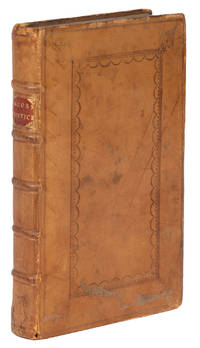
1716réf. 742631716. London 1716. First edition. London 1716. First edition. The First Edition of Jacob's Classic JP Manual Jacob Giles 1686-1744. The Modern Justice: Containing the Business of a Justice of Peace In All its Parts. As an Abridgment of the Common Law And of the Acts of Parliament Relating to Justices of Peace Constables And Other Parish Officers Under Them Compleat Down to this Time And Some Special Cases in Law to Illustrate the Same. With Great Variety of the Best Approved and Authentick Precedents of Precepts Summons Warrants Examinations Commitments &c. Regularly Interspersed Fitting all Occasions for Putting of the Laws in Force. To Which is Added A Particular Account of the Constitution and Government of a Considerable Work-House for Employing and Maintaining of the Poor Within the City of Bristol As Settled by Act of Parliament With Precedents Relating to It. And an Alphabetical Table Shewing What Acts of Parliament do Concern the Business of a Justice. With a Compleat Table to the Whole And Particular Marginal Heads &c. Throughout; In a More Informing Method Than in Any Other Book Extant on This Subject. London: Printed by the Assignee of Edward Sayer Esq; for Bernard Lintott 1716. viii 409 39 pp. Octavo 7-1/2" x 4-1/2". Contemporary paneled calf raised bands blind fillets and lettering piece to spine blind tooling to board edges. Light rubbing and a few small scuffs nicks scratches and stains to boards moderate rubbing to extremities front joint just starting at ends corners bumped front hinge starting early bookplate of Sir Timothy Waldo to front pastedown recent pencil notes and early date 17th June 1719 in ink to front free endpaper. Moderate toning to interior light foxing in a few places small hole to title page with minor loss to text residue from removed bookplate to its verso. An appealing copy. $650. First edition. One of the most interesting features of this important JP manual is its detailed five-page description of the workhouse at Bristol. It forms part of a full chapter devoted to the Poor Law pp. 272-294. Subsequent editions appeared in 1718 and 1720. This copy of the first edition belonged to the British lawyer Sir Timothy Waldo 1711-1780 of Hever Castle. The first edition is scarce. OCLC locates 8 copies in North American law libraries. English Short-Title Catalogue T136996. unknown
2016réf. x-0786497173McFarland Publishing 2016. Paperback. New. 304 pages. 8.75x6.00x0.75 inches. McFarland Publishing paperback