27 519 résultats
réf. 1176Deux volumes in 12 reliés Cuir fauve dos a cinq nerfs 1776 Les érudits et les héritiers des humanistes sont cantonnés à un travail de conservation des archives, tandis que la monarchie charge des historiographes d’écrire l’histoire glorieuse du roi, à travers des modèles narratifs qui n’ont plus rien à voir avec les techniques de l’histoire critique et qui relèvent plutôt de l’éloquence cicéronienne. C’est au plus fort de cette éclipse du tacitisme qu’Amelot de La Houssaie entame sa carrière d’auteur. Après des débuts ratés comme secrétaire d’ambassade à Venise--il est accusé d’avoir volé des documents--il passe deux ans dans les bibliothèques vénitiennes et publie, lors de son retour en France, une histoire du gouvernement de Venise. Il y reprend toutes les techniques historiographiques chères à Paolo Sarpi en les retournant contre la Sérénissime, dont il dénonce la décadence.Le livre, publié en 1676 avec privilège royal, suscite la colère des Vénitiens, et conduit tout droit Amelot à la Bastille, ce qui l’amène à s’interroger sur les conditions d’un discours critique dans la France de Louis XIV. Il va privilégier désormais une nouvelle stratégie d’auteur, en publiant ses idées sous couvert de traductions et d’éditions critiques "(Antoine Lilti.École normale supérieure, Paris in H-France Review)
réf. 1759-12Antwerpen 1573. Altkolor. Kupferkarte. 32 x 50 cm. Bildausschn. Bugfalte. Im Rd. etw. fleckig. In gutem Zustand. Koeman III A 332:01 - Karte des Girolamo Bellarmato 1493-1555 die in den Atlas von Ortelius aufgenommen wurde. Zeigt das gesamte Gebiet der Toskana. Farbig umrankte Textkartusche. Beschreibender Text in deutscher Sprache a. d. Rücks. [Antwerpen 1573]. unknown
réf. 1764-12Antwerpen 1584. Altkolor. Kupferkarte. 32 x 48 5 cm. Bildausschn. Bugfalte. In gutem Zustand. Koeman III 7200H:31A - Zeigt das gesamte Gebiet der antiken Toskana. 3 Textkartuschen. Beschreibender Text in deutscher Sprache a. d. Rücks. [Antwerpen] 1584. unknown
1670réf. 14709Schipper Amsterdam 1670 1 vol. In-4 de 7 ff.n.ch. 371 pp. 2 ff.n.ch. (table); basane brune de l'époque, dos à nerfs orné, pièce de titre, tranches rouges (coiffes usées, deux mors fendus, coins émoussés).
1857réf. 7398Imprimerie de J. Attinger 15 x 22 Neuchâtel 1857 In-8, reliure demi-vélin à la bradel fin XIXe, dos lisse, pièce de titre de cuir rouge encadrée de filets dorés, lettre "H" et chiffre "365" en queue, XXII-[2]-322-[2] pp. Portrait de l'auteur (Lith. Durheim) en frontispice de la première partie. Souvenirs publiés par Rudolph von Steiger à partir du manuscrit de l'auteur. Descendant d'une famille originaire du canton de Berne (Douanne) et de tradition militaire, Abraham Rösselet (1770-1850) s'engagea comme cadet volontaire à 13 ans dans le régiment Schönau (puis Reinach) à Phalsbourg (Lorraine) en 1783. Il est blessé à Paris (1789), puis se met au service de la Hollande. Sergent chez les chasseurs bernois (1796), adjudant-instructeur (1799) dans la 5e, puis la 3e demi-brigade helvétique, Rösselet participa à la première bataille de Zurich. Il servit en Corse dès 1801 dans le 1er régiment suisse (1805), puis fut commandant de place en Calabre (1806-1811). De retour de la campagne de Russie (1813), il fut lieutenant-colonel et chef de bataillon de la garde royale à Paris (1816-1831).(Source DHS). Ces "Souvenirs" constituent une intéressante et vivante contribution à l'histoire des régiments suisses aux services étrangers. Rösselet est resté plus ou moins au service de la France depuis Louis XVI jusqu'à Louis-Philippe, servant les Bourbons en 1789, puis lors de la première Restauration, mais aussi la France révolutionnaire et l'Empire par l'intermédiaire des régiments helvétiques. Provenance: bibliothèque des frères Raoul et Jean Brunon, avec leur ex-libris gravé par Benigni sur le premier contre plat et le tampon "Archives et collections, Raoul et Jean Brunon, 174, rue Consolat, Marseille (4e)", ainsi que l'ex-libris manuscrit de Jean Brunon (1890-1985) qui fut un des grands collectionneurs de la période impériale. Tampon humide "Bibliothèque populaire". Rare.(B49) PHOTOS NUMERIQUES DISPONIBLES PAR EMAIL SUR SIMPLE DEMANDE-DIGITAL PHOTOGRAPS MAY BE AVAILABLE ON REQUEST
réf. R160224010Imprimerie L.Beresniak. non daté. In-8. Broché. Etat d'usage, Couv. légèrement passée, Coiffe en pied abîmée, Papier jauni. 333 pages + paginé de 334 à 619 - ouvrages en hébreu et en yiddish - sens de lecture inversé - texte sur deux colonnes - coiffe en tête absente et dos fendu sur le 1er volume - coiffe en pied abimée sur le 2ème volume.. . . . Classification Dewey : 492.4-Hébreu
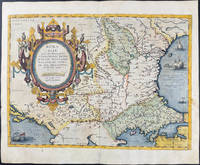
1584réf. 9713Original hand-colored engraving from Abraham Ortelius's Theatrum Orbis Terrarum - Parergon - Nomenclator Ptolemaicus. Features Latin text to verso see image and a large attractive cartouche. The map includes firing vessels a sea monster as well as birds & insects sitting on the cartouche. The image measures approximately 19.5 x 14.25 in 49.5 x 36 cm; page measures 21 x 17.25 in 53.5 x 44 cm. Christoph Plantin Press
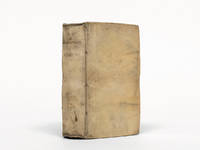
1677réf. 000208Probably a pirated copy of the original edition published by Léonard. Printed without the frontispiece showing St Mark's Square. Description: Contemp. vellum spine lettered in ink. Vigesimo-quarto: 14 × 8 cm; pag.: 211 2. Provenance: Bookplate "Libro Liber. G H". Ref.: BSB: 10882446 10882435 Condition: Covers slightly dusty and with some spotting spine title faded. Joints and endpapers in very good condition. Ink notations in a later hand on the history of this edition to front flyleaf. Pages slightly browned due to age occasional small stains. Top edge a little dusty small stain to fore edge and lower edge. Notes: Around 1669 Amelot de La Houssaye 1634–1706 was appointed legation secretary to the French ambassador in Venice. From this period he drew the information for his "Histoire du gouvernement de Venise" an unsparing description of the political constitution of the city-state published in Paris in 1676. After the publication the outraged protests of the Venetian ambassador led to La Houssaye being imprisoned in the Bastille. The scandal surrounding La Houssaye helped the work to become very popular so that he published a second edition with additions in 1677. The 'Supplément à l'histoire du gouvernement de Venise' provoked further protests from Venice so that the edition was finally banned in France. But even this ban only led to a greater demand for the book so that it was subsequently reprinted in secret. The note "Sur la Copie" on the title page but also the comparison of the types of printing used suggests that the present edition was not printed by Léonard in Paris. Frédéric Léonard hardcover
1685réf. 097239Paris: Paris : 'chez Federic Leonard' 1685 1685. Library label of S. Rosen. Venise on fixed endpaper. Book measures 7 3/4 x 5 1/4 inches. Collation 30 686 8016pp. Bound with Examen de la liberte´ originaire de Venise / traduit de l'Italien ; avec une harangue de Lou¨is He´lian ; traduite du latin.Published A Ratisbonne : Che´s Jean Aubri 1684. Author Bedmar Alfonso de la Cueva marque´s de 1572-1655. Collation 8184pp. Bound in full period or early vellum yapp edges title in manuscript previous owners crest on top board. At some time not recently the binding has been recased with new endpapers. Binding in very good condition. Internally tanning to second title page. Pages in good clean condition throughout. A very nice copy in a very attractive early binding. . Very Good Plus. 8vo. Paris : 'chez Federic Leonard' 1685 hardcover
réf. VS-RN8P-ICGJPrinceton Architectural Press 2015-12-14. hardcover. New. 9x3x15. New in publisher's shrink wrap. Shipped promptly with tracking and signature confirmation. Princeton Architectural Press hardcover
réf. #[71056]Bust-length portrait of the architect Jacob van Campen Haarlem 1596 - 1657 Amersfoort. Jacob van Campen is known for being the architect of the Amsterdam city hall currently the Royal Palace on the Dam square. A Dutch laudatory poem in the lower edge. Engraving on laid paper sheet size 408 x 238 mm. carrier size 413 x 249 mm. Engraving by Abraham Lutma after the painting by Jan Lievens. The poem by L. Meyer. Abraham Lutma Amsterdam 11628-1692 was a Dutch print artist and draughtsperson. Jan Lievens Leiden 1607-1674 Amsterdam was a Dutch painter and draughtsperson. In good condition cropped within platemark attached to a carrier sheet. Some wrinkling in the top edge caused by the mounting. A few small spots in the caption below the image. References: Hollstein p. 108: 1 only state; Muller Portraits p. 55: 899a; Van Someren II p. 176. unknown
1872réf. 003726Privately printed. HAYWARD Abraham. Lady Palmerston. A Biographical Sketch. A signed presentation copy with autograph correspondence of Viscountess Palmerston and Lord Palmerston bound in. London reprinted by permission from The Times of September 15 1869; dated June 1872. Slim 8vo 21 pp. Contemporary full green morocco boards with dense gilt fillet borders and elaborate gilt corner and frame tooling upper cover lettered in gilt; spine gilt ruled. Rubbing to extremities minor wear at corners but a handsome and well-preserved presentation binding. Internally clean with manuscript material neatly bound in at the front. Very good. Presentation copy inscribed by the author to Alfred Montgomery with the inscription leaf bound in at the front: "Alfred Montgomery Esq. with best regards A.H." Bound in with the pamphlet are five autograph letters addressed to Alfred Montgomery: four from Emily Temple Viscountess Palmerston and one from Henry John Temple 3rd Viscount Palmerston dated 1856 and signed "Palmerston". The Palmerston letter was written during his first term as Prime Minister 1855-1858. The Lady Palmerston letters concern social arrangements and engagements. The pamphlet itself was privately issued marked "Not for Sale" and printed shortly after Lady Palmerston's death in 1869. Hayward's sketch is one of the earliest biographical appreciations of her role within Whig political and social life. Alfred Montgomery 1814-1896 was a senior Admiralty clerk private secretary to Lord Wellesley later Commissioner of Stamps and Taxes and of the Inland Revenue and a well-known Victorian society figure. According to contemporary accounts he was a well known dandy that had 'known domestic trouble and been rewarded by non-domestic success'. He was clearly closely associated with the Palmerstons and both wrote to him personally with the letters that have been bound in. A highly unusual Palmerston association volume most likely a commemorative memento put together by Montgomery. The result being a privately printed biographical text authorial presentation inscription and contemporary autograph correspondence of both Lady Palmerston and the Prime Minister himself preserved in a presentation binding. . Very Good. Hardcover. 1st Edition. 1st Printing. 1872. Privately printed hardcover
1995réf. Q-0792394798Springer 1995-07-31. Hardcover. New. In shrink wrap. Looks like an interesting title! Springer hardcover
1579réf. 200024AG1579. Antwerp Ortelius 1579. Original hand-coloured engraving. Plate Size: 49.3 cm x 35.3 cm. Sheet Size: 53.1 cm x 42 cm. Original map. Very good condition with some signs of browning to the outer margins only. Slight creasing to the top right coner of map. Professionally repaired tear to lower centre fold barely noticeable given the quality of the workmanship. Latin text on reverse. Broecke 14ab.2; Koeman III 95299610:31; Wolff America S. 95; Lowery 65. A pair of stunning maps from the late 16th Century Theatrum Orbis Terrarum showing the northwest Pacific coast of Mexico and the Greater Antilles in the Caribbean. All these regions were first explored and settled by the Spanish in the 1490s and still under Madrid's control when Ortelius produced his renowned cartographic work. Among the settlements shown on the Mexican map are Culiacan and the Spanish settlement of Villa S. Michaelis with its cathedral clearly marked. Reliefs are depicted pictorially with mountains and rivers identified and a large forest/grove also shown. A large but narrow island lies just off the coast. Large decorative cartouche with Ortelius's characteristic ornamental straps lies of the coast with explanatory annotations in Latin text. Smaller title cartouche in the top right corner of map also. The map below illustrates the Greater Antilles including the Cayman Magnus and the Caymanes Cuba 'Aity sive Spaniola' Hispaniola Jamaica the Bahamas 'St. Jois Insula' St. Johns Virgin Islands and the Barbados Islands all in fine detail. Havana is clearly identified along with other major settlements throughout the islands. St. Lucia is just about included lying within the map border. The section of South Florida also shows suggestion of the Florida Keys which was uncommon for this era. To the west Yucatan can be seen breaching the map boundary. A decorative title cartouche beautifully adorned with two birds lies at the lower part of the map. Unlike the waters of the Mexican map above it the seas of this map appear choppy for the two ships depicted. Valuably laden Spanish galleons would have traversed these stretches of water bringing the riches of the New World across the Atlantic to Spain. Making use of a knowledge of Greek Mythology two particularly perilous areas are designated: amid the Bahamas a treacherous stretch of water is labelled 'Carybdis Magna' while off to the west of Hispaniola lies the dangerous 'Scyila Magna.' An interesting cartographic error is evident on both maps: the Tropic of Cancer is mislabeled as the southern 'Tropicus Capricorni'. Abraham Ortelius was a Flemish cartographer and geographer conventionally recognized as the creator of the first modern atlas the Theatrum Orbis Terrarum Theatre of the World. He was one of the most notable figures of the Dutch school of cartography during its golden age approximately 1570s-1670s. unknown
1592réf. 200015AG1592. Antwerp Ortelius c.1592. Original hand-coloured engraving. Plate Size: 49.6 cm x 37.6 cm. Sheet Size: 57.8 cm x 45.6 cm. Original map. Very good condition. Clean and crisp impression. Some slight creases along edges. Very minor barely visible tears to lower edges. Hernando Abb. S. 139; Imagens 11; Broecke 25.3; Koeman III 6000:31/b. - 3. Zustand from 4 with "Estrecho de Gibraltar". Border with longitudinal and latitudinal information. A beautifully detailed map of the Kingdom of Spain with the smaller provincial and historical kingdoms - Galitia Asturias Biscaia Navarra Aragonia Catalonia Castilia Nova and Vetus Valencia Murcia Granada and Andaluzia - also delineated as is Portugal. The Balearic Islands are also included. In the top right corner the French cities of Montpellier and Marseille can be seen. The Barbary Coast of North Africa lies to the lower section of the map. Relief shown pictorially with rivers mountains and significant towns and cities depicted. Lower right corner bears Ortelius characteristic strapwork design ornaments the title cartouche. Scale topped with a large pair of dividers in the lower left corner. Two naval ships pictured highlight the maritime importance of the peninsula. Giant mythical sea creatures guard the straits at Gibraltar and at the Balearic Islands. Abraham Ortelius was a Flemish cartographer and geographer conventionally recognized as the creator of the first modern atlas the 'Theatrum Orbis Terrarum' Theatre of the World. He was one of the most notable figures of the Dutch school of cartography during its golden age approximately 1570s-1670s. unknown
1864réf. 23032AB1864. Washington Printed for the Union Congressional Committee 1864. 8°. 14 pages. Softcover / Original Pamphlet. Original brochure. Some foxing. Unopened. Extremely RARE ! "To vote for Lincoln is to vote for Union and for Liberty". This is how this pamphlet ends in which Laboulaye urges the americans to vote for Lincoln instead for McClellan. But Laboulaye was even more important to the american people in his overall favour of this country as a leading role for freedom and future. He suggested the present by France which was later erected as the "Statue of Liberty" "In the summer of 1865 a group of Frenchmen were gathered together one evening at the home of the well-known author Edouard Rene de Laboulaye in the village of Glavingny a suburb of Paris. Among those present were Oscar and Edmond de Lafayette grandsons of the Marquis d' Lafayette Masonic brother of George Washington; Henri Martin the noted historian and French Mason; and a young artist from Colmar in French later German Alsace by the name of Frederic Auguste Bartholdi who at the time was engaged in making a bust of Laboulaye called by one biographer "America's most ardent admirer in France." Laboulaye told the group that it would be a splendid gesture on the part of all liberty-loving Frenchmen to acknowledge their friendship to America by presenting a fitting memorial. Some have speculated that he had a second motive in mind to call attention to the contrast between the American way of life with its freedoms and that of the French under the repressive Second Empire. The 31-year-old Bartholdi became imbued with the idea and also the challenge it presented to his artistic talent. But the proposal lay dormant during the autocratic rule of Napoleon III and throughout the destructive years of the Franco-Prussian War. In 1871 Laboulaye the Brother Lafayette with their cousin the Marquis de Noailles and the Marquis de Rochambeau along with Henri Martin revived the plan for the as yet unnamed memorial. They suggested that Bartholdi visit America and make arrangements for the presentation of the monument on July 4 1876 the Centenary of the Declaration of Independence. Armed with letters of introduction and full of high hopes Bartholdi sailed for America although it is said that he did not have even a rough drawing of the proposed monument. Two weeks later while standing on the deck of the ship Pereire steaming up Lower New York Bay he caught a vision of a magnificent goddess holding aloft a torch in one hand and welcoming all visitors to the land of freedom and opportunity. Quickly obtaining paper and brush Bartholdi sketched in water-color the idea of the Statue of Liberty substantially as it appears today. It was his thought to have this symbolic structure tower over the steeple of Trinity Church then the tallest building on the New York skyline. He wrote to Laboulaye "these outlines may well aim beyond the mere monument at a work of great moral value." MasonicWorld - By R. W. Robert C. Singer Édouard René Lefèbvre de Laboulaye French pronunciation: edwa ne lfv d labul 18 January 1811 25 May 1883 was a French jurist poet author and anti-slavery activist. In 1865 he originated the idea of a monument presented by the French people to the United States that resulted in the Statue of Liberty in New York Harbor. He got the idea thinking that this would help strengthen their relationship with the United States. Laboulaye was received at the bar in 1842 and was chosen professor of comparative law at the Collège de France in 1849. Following the Paris Commune of 1870 he was elected to the national assembly representing the departement of the Seine. As secretary of the committee of thirty on the constitution he was effective in combatting the Monarchists in establishing the Third Republic. In 1875 he was elected a life senator and in 1876 he was appointed administrator of the Collège de France resuming his lectures on comparative legislation in 1877. Laboulaye was also chairman of the French Anti-Slavery Society. Laboulaye was president of the Société d'économie politique. Always a careful observer of the politics of the United States and an admirer of its constitution he wrote a three-volume work on the political history of the United States and published it in Paris during the height of the politically repressed Second Empire. During the American Civil War he was a zealous advocate of the Union cause and the abolition of slavery publishing histories of the cultural connections of the two nations. At the war's conclusion in 1865 he became president of the French Emancipation Committee that aided newly freed slaves in the U.S. The same year he had the idea of presenting a statue representing liberty as a gift to the United States a symbol for ideas suppressed by Napoleon III. The sculptor Frédéric Auguste Bartholdi one of Laboulaye's friends turned the idea into reality. Wikipedia paperback
réf. BN66068Gott sucht den Menschen unknown
réf. 553031 vols. 9 x 6 inches framed to 17 x 14-1/2. Two chips lightly scratched. Glued in wood frame. 1 vols. 9 x 6 inches framed to 17 x 14-1/2. unknown
1866réf. 238120Washington D.C.: John H. Littlefield; Wm. Terry Printer 1866. Photograph by John Goldin of Littlefield's painting on printed mount. 1 vols. Image 11 1/2 x 18 3/4 in.; mounted to 19 x 24 in. Soiling to image vertical crease large chips to bottom of mount not affecting image or legend; good. Photograph by John Goldin of Littlefield's painting on printed mount. 1 vols. Image 11 1/2 x 18 3/4 in.; mounted to 19 x 24 in. A published photograph of Littlefield's hyper-realistic Lincoln death-bed painting each figure meticulously rendered from photographs. Littlefield studied law under Lincoln in 1858 stumped for him in his Presidential bid and was rewarded with a position in the Treasury Department. After Lincoln's death Littlefield invented this tableau of twenty-five people ranged around the death-bed including Vice-President Johnson Surgeon Chalres Leale and Mrs. Lincoln. "The artist used photographs as models for the twenty-five people gathered in the death room but his profile of the dying Lincoln shows a first-hand acquaintance" Ostendorf LINCOLN'S PHOTOGRAPHS p. 279. Provenance: Harper Family John H. Littlefield; Wm. Terry, Printer unknown
1866réf. 238011Washington D.C.: John H. Littlefield; Wm. Terry Printer 1866. Photograph by John Goldin of Littlefield's painting on printed mount. Image 8 1/2 x 13 3/4 in.; mounted to 13 x 17 in. Faint toning to mount; fine. Photograph by John Goldin of Littlefield's painting on printed mount. Image 8 1/2 x 13 3/4 in.; mounted to 13 x 17 in. A published photograph of Littlefield's hyper-realistic Lincoln death-bed painting each figure meticulously rendered from photographs. Littlefield studied law under Lincoln in 1858 stumped for him in his Presidential bid and was rewarded with a position in the Treasury Department. After Lincoln's death Littlefield invented this tableau of twenty-five people ranged around the death-bed including Vice-President Johnson Surgeon Charles Leale and Mrs. Lincoln. "The artist used photographs as models for the twenty-five people gathered in the death room but his profile of the dying Lincoln shows a first-hand acquaintance" Ostendorf LINCOLN'S PHOTOGRAPHS p. 279. John H. Littlefield; Wm. Terry, Printer unknown
1905réf. 327084Chicago: Illinois Central Railroad Company 1905. 200 copies this is one of Fourteen Copies Printer's Edition By Permission #6. illustrated throughout with photogravures of Lincoln documents in the ICRC collection. 4to. Full pebbled limp pebbled black morocco with gilt stamping on upper cover "Compliments of the Illinois Central Railroad Company." Laid into full orange cloth dropbox with gilt stamp "Collection of Foreman M. Lebold. 200 copies this is one of Fourteen Copies Printer's Edition By Permission #6. illustrated throughout with photogravures of Lincoln documents in the ICRC collection. 4to. Provenance: Lou F. English this copy presented by Walter J. Gunthorp to Lou F. English.; Foreman M. Lebold lettering to clamshell box Illinois Central Railroad Company unknown
réf. 553031 vols. 9 x 6 inches framed to 17 x 14-1/2. Two chips lightly scratched. Glued in wood frame. 1 vols. 9 x 6 inches framed to 17 x 14-1/2. unknown books
1905réf. 327084Chicago: Illinois Central Railroad Company 1905. 200 copies this is one of Fourteen Copies Printer's Edition By Permission #6. illustrated throughout with photogravures of Lincoln documents in the ICRC collection. 4to. Full pebbled limp pebbled black morocco with gilt stamping on upper cover "Compliments of the Illinois Central Railroad Company." Laid into full orange cloth dropbox with gilt stamp "Collection of Foreman M. Lebold. 200 copies this is one of Fourteen Copies Printer's Edition By Permission #6. illustrated throughout with photogravures of Lincoln documents in the ICRC collection. 4to. Provenance: Lou F. English this copy presented by Walter J. Gunthorp to Lou F. English.; Foreman M. Lebold lettering to clamshell box Illinois Central Railroad Company unknown books
1866réf. 238120Washington D.C.: John H. Littlefield; Wm. Terry Printer 1866. Photograph by John Goldin of Littlefield's painting on printed mount. 1 vols. Image 11 1/2 x 18 3/4 in.; mounted to 19 x 24 in. Soiling to image vertical crease large chips to bottom of mount not affecting image or legend; good. Photograph by John Goldin of Littlefield's painting on printed mount. 1 vols. Image 11 1/2 x 18 3/4 in.; mounted to 19 x 24 in. A published photograph of Littlefield's hyper-realistic Lincoln death-bed painting each figure meticulously rendered from photographs. Littlefield studied law under Lincoln in 1858 stumped for him in his Presidential bid and was rewarded with a position in the Treasury Department. After Lincoln's death Littlefield invented this tableau of twenty-five people ranged around the death-bed including Vice-President Johnson Surgeon Chalres Leale and Mrs. Lincoln. "The artist used photographs as models for the twenty-five people gathered in the death room but his profile of the dying Lincoln shows a first-hand acquaintance" Ostendorf LINCOLN'S PHOTOGRAPHS p. 279. Provenance: Harper Family John H. Littlefield; Wm. Terry, Printer unknown books