[BOSSE, Abraham (1604-1676)]Livre Rare Book
28 140 résultats
1667réf. 131Paris Par A. Bosse 1667 In-8 - 12x18,5cm. Reliure d'époque en plein veau moucheté, dentelle dorée sur sur les coupes. 5ff, 72pp, 10ff.
1608réf. 64956Ingolstadt, Gedruckt in der Ederischen Truckerey, durch Andream Angermeyer [Andreas Angermaier], 1608. 4°. Mit Holzschn.-Titelvignette. 1 Bl., 30 S., Geheftet (ausgebunden; ohne Einband).
réf. 3059Marseille. Cahiers du Sud. 1953. In-8° broché. 150 pages. E.O. sur papier ordinaire.
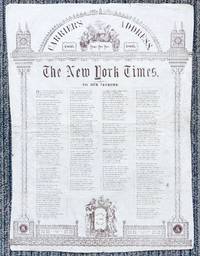
1865réf. 6598New York 1865. Good. Broadside 23 x 17 inches. Printed in brown ink. Old folds. Unevenly trimmed at edges reinforced with later paper in several places on verso. Light soiling foxing and wear. New York Times New Years broadside for 1866 with a lengthy poem commemorating the end of the Civil War and the assassination of President Abraham Lincoln. The text is printed in an elaborate and ornate border with decorative vignettes and the top and bottom center. The poem's couplets greet all readers of the Time from patriotic soldiers to women on the homefront to Wall Street moguls building their mansions. It then turns to address the war: "Twelve little months ago upon this morn / The bosom of the land by warfare torn / Shed tears of blood; while sounding sea to sea / From North to South cried one loud agony. / Twelve months ago and Marching Sherman's host / Struck as he said they should the Atlantic Coast; / While grim in front the rebel capital / King Death stood waiting for his carnival." After a bit the author addresses Lincoln's assassination: "Another tale will old men oft relate / Of how our Lincoln fell 'neath traitor hate; / How he we loved so much with so much pride / Struck by th' assassin's fatal bullet died. / Oh bitter tears fell on that April morn / As o'er our city the sad news was borne." Other battles and heroes are similarly mentioned as well as the mercy of nurses and the newly freed slaves: "O'er snowy cotton fields the people see / The noble spectacle of labor free. / . / And many a school-house open wide its door / To welcome thousands untaught before.". A wonderful exemplar of the genre particularly notable for its content on Lincoln and the end of the Civil War. unknown
réf. b5898First Edition . Soft cover. Near Fine. Near fine in original wrappers with wear at the extremities. Civil War scenes and portraits including the final portrait of Abraham Lincoln in a two-page spread paperback
1863réf. 58199Camp near Brooks Station Saturday April 11 1863. Fine original condition. 15-1/2 x 9-3/4 inches. ".Yesterday I witnessed one of the grandest sights that I ever beheld. Our whole corps was reviewed by the President Generals Hooker McLain Howard Steinway Secretary Seward and an innumerable host of Brigadier Generals and it was a sight that has paid me for coming to war." The spectacle is described in great detail. Private Penfield was soon to be captured at Chancellorsville spending 12 days as a prisoner of war before being exchanged. He survived the war to carry on his father's carriage making business in Monroe Connecticut and later founded a small private academy. unknown
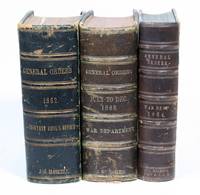
1862réf. 2923Washington D.C.: War Department 1862. Calf marbled boards. Very Good. FIRST OBTAINABLE PRINTING OF THE PRELIMINARY EMANCIPATION PROCLAMATION setting a date for the freedom of more than three million enslaved in the United States and reframing the Civil War as a fight against slavery. Issued by the War Department to regimental commanders in the field during the Civil War in the week after the completion of President Lincoln’s official manuscript version. Contained is a set of three volumes of General Orders covering the full year 1862 July-Dec 1863 and the full year 1864. History of the Emancipation Proclamation: “The proclamation has been called by responsible persons one of the three great documents of world history ranking with Magna Carta and the Declaration of Independence” – Eberstadt “From the first days of the Civil War slaves had acted to secure their own liberty. The Emancipation Proclamation confirmed their insistence that the war for the Union must become a war for freedom. It added moral force to the Union cause and strengthened the Union both militarily and politically. As a milestone along the road to slavery’s final destruction the Emancipation Proclamation has assumed a place among the great documents of human freedom” – National Archives Following the Seven Days Battle and General McClellan’s retreat from the Peninsula at the end of June 1862 President Lincoln realized that there would be no early end to the war and found himself “as inconsolable as it was possible for a human to be and yet live.” Anxious for news from the army and needing to escape the constant interruptions at the White House he frequently visited the telegraph office in the War Department building to await dispatches. It was during one such visit early in July that he asked the chief of the telegraph staff Major Thomas Thompson Eckert for some paper to “write something special” and began the first draft of the Emancipation Proclamation completing it in a few weeks. Lincoln had long hoped to resolve the slavery issue through a congressional act of emancipation compensating slave owners for their loss of “property” but that approach was roundly rejected by representatives from the border states leaving the President who had decided upon the necessity of emancipation with a presidential proclamation as the only option. The extraordinary document he conceived would announce the liberation on January 1 1863 of all slaves in those states still in rebellion against the Union and promised compensation to slave owners in those states that returned to the fold before that time if they adopted “immediate or gradual abolishment of slavery.” This proclamation would be followed by a final proclamation issued on the 1st of January identifying those states still in rebellion and confirming the liberation of all slaves therein. On Tuesday July 22 Lincoln presented his draft to the Cabinet telling them that he had resolved firmly upon the course of action it specified and asking them not for advice but suggestions. The only observation he had not anticipated came from Secretary of State Seward who proposed that it might be best to wait for a military victory before issuing the Proclamation as it could otherwise seem like “the last measure of an exhausted government.” Immediately recognizing the wisdom of the suggestion Lincoln held back. On September 17 after an anxious wait of nearly two months he received the victory he needed at the bloody Battle of Antietam. Completing his final draft Lincoln presented it to his cabinet for refinement on September 22. Following the meeting Seward took the amended draft with him to the State Department where a formal manuscript copy was made then signed by Lincoln and Seward. The formal official “Emancipation Proclamation” was of course issued on January 1 1863 the day it became the law of the land. Printing History: This printing in the War Department’s official “General Orders” is the fourth printing overall but realistically the first obtainable printing. It is preceded by: -The first printing Eberstadt #1 a small three-page circular intended for distribution within the government and to the local press likely printed on September 22. At the time that Charles Eberstadt published his study of the Proclamation 1950 he was able to locate only one copy which he himself owned and as nearly as we have been able to determine no other copies have come to light since then. -The second printing Eberstadt #2 may be a phantom printing. Charles Eberstadt was not able to locate a copy but he inferred its existence from the standard State Department practice of printing a folio edition consisting solely of the text of the proclamation followed by another printing consisting of the text of a letter of transmittal from the Secretary of State as well as the text of the proclamation. While there may be a copy of Eberstadt #2 in the National Archives as he speculated it is not recorded in their online catalogue nor have we been able to find a copy in any other online catalogue including OCLC the Library of Congress and the Abraham Lincoln Library. -Eberstadt’s third printing is of legendary rarity. It consists of Secretary of State Seward’s one-page letter of transmittal addressed “To the Diplomatic and Consular Officers of the United States in foreign countries” and the text of the proclamation. Eberstadt located a total of only five copies in institutions at the Library of Congress the National Archives Yale the Clements Library and Brown. OCLC does not record any additional copies nor is it recorded in Monaghan. There has been one copy at auction $400000 in 2021 and that was described as the only copy in private hands. -The present copy General Orders No. 139 is Eberstadt’s fourth printing of the Preliminary Emancipation Proclamation dated in print on September 24. Eberstadt surmises that this field order printing could have been accomplished as late as September 29 or 30. Although it may have been printed in as many as 15000 copies it is very rare in commerce likely due to the ephemeral nature of the printing and distribution. Additional General Orders and Provenance: The three volumes once belonged to John G. Haskell A.Q.M. Chief Quartermaster and contain the General Orders for the year 1862 July-December only for the year 1863 and for the full year 1864. John Gideon Haskell 1832-1907 was a resident of Kansas and joined the Union Army when the war broke out. He enlisted with the 14th Kansas Volunteer Cavalry Regiment and later served as Assistant Quartermaster General of Kansas as quartermaster of the Third Kansas and the Tenth Kansas Volunteers as Captain and Assistant Quartermaster on the staff of General James G. Blunt and as Chief Quartermaster of the Army of the Frontier. After the war Haskell was named official state architect and worked on the state house the capitol the State University and more. In addition to the preliminary Emancipation Proclamation the three volumes also contain the Acts of Congress on many other subjects including pay discharge recruitment handling of troops etc. Washington D.C.: War Department Adjutant General’s Office 1862-64. Three volumes. Small octavo contemporary three-quarter brown morocco two volumes with cloth boards one with marbled boards. Some rubbing and wear to bindings pencil notations on endpapers with collation and highlighting certain orders and some internal pages. Dampstaining to general title of 1862 volume; internal text and Emancipation Proclamation generally fine. RARE AND IMPORTANT. References: Charles Eberstadt. “Lincoln’s Emancipation Proclamation.” New York: 1950. War Department unknown
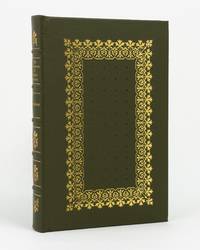
1994réf. 147068New York: Classics of Psychiatry & Behavioral Sciences Library 1994. Hardcover. Fine. New York Classics of Psychiatry & Behavioral Sciences Library 1994 facsimile edition/ 1925. Octavo ii 336 1 colophon pages with numerous diagrams. Gilt-decorated full leather all edges gilt; a fine copy. The pictorial bookplate of Robert Finlay-Jones is mounted on the verso of the front free endpaper. Classics of Psychiatry & Behavioral Sciences Library hardcover
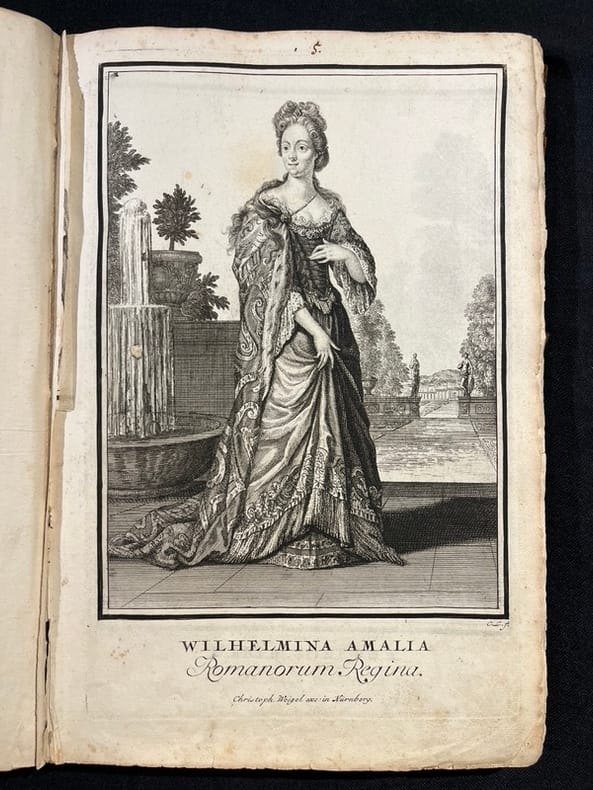
1703réf. 21520Nuremberg, [1703]. In-folio de 83 planches, pleine basane du temps, dos à nerfs.
1957réf. 15099Paris, Les Editeurs français réunis, 1957 1 volume In-8° (13,5 x 21,3 cm) Broché sous couverture au 1er plat orné d'une grande photo. 175p. Bon état.
1958réf. 120644Europe 1958 In-8 broché 21,5 cm sur 13,5. 158 pages. Bon état d’occasion.
1962réf. 120645Europe 1962 In-8 broché 21,5 cm sur 13,5. 314 pages. Illustrations en noir et blanc hors-texte. Bon état d’occasion.
réf. 6690Paris, Centre Georges Pompidou, 1985. In-4, broché, iconographie.
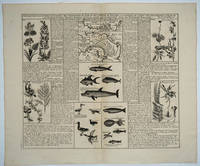
1721réf. 25850Paris 1721. From the Australian point of view most interesting for the illustrations drawn from Dampier's explorations on the West Australian coast particularly the images of fish birds squid & plants the first images of Australian fauna & flora to be seen by the Western world. It includes extensive text describing the natural history found there in French. His account of the expedition was published as "A Voyage to New Holland" in 1703. Dampier is regarded by many as Australia's first natural historian. The three maps at the top of the plate are of the Isthmus of Darien and the Gulf of Panama. Size : 370x433 mm 14.57x17.05 Inches. Many of the maps are based on the work of Guillaume de l'Lisle. Published in Chatelain's "Atlas Historique ou nouvelle introduction a l'histoire a la chronologie & a la geographie ancienne & moderne" in Amsterdam 1721. Many of the maps are based on the work of Guillaume de l'Lisle. Copperplate engraving 14.5 x17". Full impression mark with wide margins. Some slight bends in margin fine overall. unknown
1946réf. 80806Amsterdam: L.J. Veen's Uitgeversmaatschappij N.V. 1946-51. Quarto 29cm. Quarter linen over marbled boards containing 44 consecutive issues with original front and rear wrappers bound in individual issues ranging from 8pp to 24pp. Generally good and sound; a few leaves with tape old tape repairs; later issues have been trimmed with occasional loss to printed cover titles but no loss to text. Photo-illustrated throughout. First three issues without editorial attribution; later issues attribute editorship to Abraham van der Vies Rudolf Eschder Albert Bocai Paula Balma and L. Hornstra. Text primarily in Dutch. Uncommon post-war Dutch dance journal billed on its masthead as "The first magazine in the Netherlands devoted exclusively to the dance." Provides extensive coverage of both classical ballet and modern choreography and performance from a global perspective including numerous articles on American dancers and choreographers such as Ted Shawn Katherine Dunham Maria and Marjorie Tallchief Martha Graham and others. Included in the run is a July 1950 extra number devoted to the Ballets Russes de Monte Carlo production of Stravinsky's Petrouchka. The journal appears to have run until 1958. Quite scarce; OCLC notes about six locations all in the Netherlands. L.J. Veen's Uitgeversmaatschappij N.V. unknown
réf. 54574London: Record Commisioners 1783. EDITIO PRINCEPS. 2 vols. Folio. ff. 382; pp. 450. Without titles as issued. Vol. I first 4 leaves a little creased light toning very faint foxing to some leaves occasional light smudgy marks; vol. II occasional tiny spots and smudges but generally brighter inside than vol. I. Contemporary reddish-brown diced russia neatly rebacked with original spines retained. Spines gilt with green morocco title and volume labels gilt borders marbled endpapers. Vol. I spine a bit crackled ruined a few small marks corners worn and repaired; vol. II head cap split horiztonally with both it and the endband coming loose a little rubbed corners repaired but bumped still very good overall. Recent bookplate of Josceline Grove to ffep verso each volume. Three booksellers' catalogue descriptions tipped onto ffep verso vol. I. The significance of Domesday Book was perceived at an early stage by scholars such as Selden who printed extracts at the end of his edition of Eadmer in 1623. Domesday Book itself was held under lock and key and could only be consulted for a fee with an additional charge of fourpence for each line transcribed. Without a complete printed edition scholar's regard for Domesday was combined with an ignorance of its general contents until 1783 when this edition was printed at the behest of a Royal Comission. It was printed in record type designed for the occasion by J. Nicholls and cut by J. Jackson former apprentice of William Caslon the elder and later destroyed in the Westminster fire of 1834. Douglas in his work English Scholars 1660-1730 expresses the view that Farley's achievement has been 'shamefully neglected' and that 'he produced one of the most accurate and reliable transcripts in the history of English scholarship'. Title-pages to theses volumes were supplied by the Record Commission in 1816 and two subsequent volumes comprising additions and index were provided in 1811 and 1816. ESTC 097297; Upcott p.xiii [London]: [Record Commisioners], [1783.] unknown
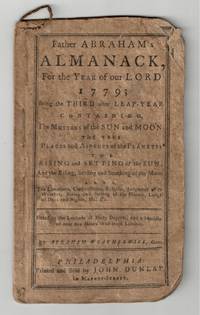
1779réf. 27545Philadelphia: Printed and sold by John Dunlap 1779. A very early issue of a Weatherwise American Almanac. Illustrated with the well-known anatomical woodcut of a man “governed by the twelve constellations” and woodcut page frames. 12mo original printed self wrappers stitched. 15 leaves unnumbered including printed wrappers. A very well preserved little almanac the wrappers somewhat worn at the corners the rear with a little loss at the bottom outside corner some expected toning and mellowing to the paper and some spotting but complete and very usable and with the original stitching still strong and tight. AN EARLY WEATHERWISE ALMANAC and a competitor of Franklin's "Poor Richard". Abraham Weatherwise was of course a pseudonym and one which was likely used by multiple almanac printers. They “ushered in the healthiest and most interesting period of almanac making” Sagendorph 116. Along with the typical astronomical data and weather forecasts this almanac also contains a table valuing the dollar humorous stories and historical tracts a collection of hints and home remedies for the care of horses court dates for Pennsylvania and New Jersey and a schedule for Quaker meetings. Printed and sold by John Dunlap unknown
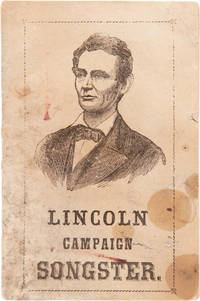
1864réf. 62679Philadelphia: Published by Mason & Co. 1864. Singing for Lincoln in '64 A pocket songster printed to support Lincoln's reelection campaign in 1864 featuring a rather youthful portrait of the president on the front wrapper and twelve spirited pro-Union songs. The titles largely military in theme include such works as "Give us Noble Leaders" "The Veteran Volunteer" "Cast Your Votes for Abraham" "For Lincoln or McClellan you'll be called on to decide/ The one to save the union the other to divide" and "We are Coming Father Abraham 600000 More." The advertisements on the rear wrapper encourage readers to purchase a wide variety of Lincoln campaign badges emblems pins and photographs from the publishers. Despite Lincoln's overwhelming electoral victory in 1864 the race was rather close in Pennsylvania where this was printed – Lincoln took Philadelphia County by a scant few percent and actually failed to secure a majority in neighboring Montgomery and Bucks counties. 16mo. Original pictorial wrappers. Wrappers soiled and stained. Largely clean internally. Advertisements on rear wrapper shaved slightly at outer edge as issued. Good plus. MONAGHAN 323. unknown
réf. 507319Leiden, Brill, 1962. In-8 broché, 111 pp., 24 planches dont 16 pl. photogr..
réf. 592594Leiden, Brill, 1962. In-8 rel. pleine toile d'éd., titre doré, 111 pp., 24 planches dont 16 pl. photogr. (une dépliante).
réf. 4694Europe, n° 141, Paris, Les éditeurs français réunis, septembre 1957. In-8, broché, 176 pages.
1820réf. 45432London:: Reprinted for T. and H. Rodd 1820. First separate edition reprinted from the original in the British Museum; noted in Stow in his additions to Holinshed for the year 1577. original drab unprinted wrappers. Tiny chips to wrappers; light soiling; but very nice. 8vo. Reprinted for T. and H. Rodd, unknown
1879réf. 774951879 Lyon, Brun, 1879, plaquette grand in 8° brochée, 23 pages ; couverture imprimée.
1981réf. 504137Greenwood 1981. Hardcover. FINE. 535pp. Sewn binding in red cloth with gilt stamped spine lettering. Sans DJ as issued. Facsimile of the 1929 Holt edition. Some trivial rubbing to tips otherwise a very clean sharp copy. Greenwood hardcover
1975réf. 80001Np:: Reed Wallcoverings 1975. Publisher's lettered portfolio with snap closure and handle. Fine. 26 x 26 x 3:. Illustrated with large actual samples of reproduction wallpaper including that in the Presidential Box at Ford's Theatre reproduced from a 3 x 5" souvenir sample. There are 3 bifold samples 3 folded samples and 19 full-page samples; each with descriptive text and color photographs. This is a huge and very heavy volume. Additional postage will apply and international shipping will be prohibitive. Reed Wallcoverings, unknown