45 418 résultats
2014réf. 13270New Haven CT: Yale University Press 2014. First Edition. Hardcover. Near Fine in Near Fine Dustjacket. First Edition. Hardcover. Underlined and annotations by Oliver Sacks on p.20: "I too." Dr. Sacks often wrote conversations with the author and reactions in the margins. Posthumously designed book plate by a friend of Oliver's incorporating his longstanding love of cephalopods. From the library of Dr. Oliver Sacks the renowned neurologist author and educator. He was in his life celebrated for his contributions to the understanding of the human brain and his ability to communicate complex scientific concepts to a broader audience. In doing so he highlighted the profound impact of neurological disorders on human identity and experience. His library is a reflection of this remarkable polymath's questing mind. Near fine. Red cloth. 8vo. 178pp.index. Illus. b/w. All underlining emphasis and notations are in the hand of Dr. Oliver Sacks. Yale University Press hardcover books
2024réf. 16788Brooklyn: Pacific Books 2024. Presumed First Edition. Paperback. Very good . Presumed First Edition. Paperback. 9 1/2" X 6 1/2". 105pp. No further printings noted. Very mild shelf wear to covers corners and edges of paper wraps. Pages are clean and unmarked. Binding is firm tight and sound. ABOUT THIS BOOK: "I am that thing that doesn't fit" appears early on in Joyspace architect Adam Rolston's vibrant sharp manifesto on the practice to which he has dedicated his life. Chronicling nearly four decades of a singular creative vision within which a brief history of modern architecture unfurls and is then critiqued Joyspace presents the reader with new definitions of art and value within the built environment. An act of personal and intellectual self-definition-that includes references as diverse as ACT UP Filippo Tommaso Marinetti's futurist manifesto and Rutger Hauer's chilling "tears in the rain" monologue from Blade Runner-Rolston's Joyspace is a transformative force capable of shaping a new interconnected global aesthetic that resists the boundaries of conventional design where nothing fits and everybody belongs. The Pacific Design Series explores design as an act of problem solving and alternative thinking. With contributions from some of today's most visionary thinkers in the mediums of art architecture photography and creative writing the series positions design as a gesture of hope-a belief that if we can imagine another way forward then we can create a better way forward.Publisher. Pacific Books paperback books

1991réf. 11569Duarte CA: Hope Press 1991. First Edition. Original Wraps. Very Good in Wraps. First Edition. Original Wraps. Posthumously designed book plate by a friend of Oliver's incorporating his longstanding love of cephalopods. Inscription on tp. From the library of Dr. Oliver Sacks the renowned neurologist author and educator. He was in his life celebrated for his contributions to the understanding of the human brain and his ability to communicate complex scientific concepts to a broader audience. In doing so he highlighted the profound impact of neurological disorders on human identity and experience. His library is a reflection of this remarkable polymath's questing mind. Minimal shelfwear else tight bright and unmarred. 8vo. 152pp. Mounted bookplate on endpapers. Hope Press unknown books
1992réf. 11544Silver Spring MD: Hope Press 1992. First Edition. Original Wraps. Very Good in Wraps. First Edition. Original Wraps. Foreword by OS. From the library of Dr. Oliver Sacks the renowned neurologist author and educator. He was in his life celebrated for his contributions to the understanding of the human brain and his ability to communicate complex scientific concepts to a broader audience. In doing so he highlighted the profound impact of neurological disorders on human identity and experience. His library is a reflection of this remarkable polymath's questing mind. Minimal shelfwear else tight bright and unmarred. Glossy paper wraps. 8vo. 206pp. Hope Press unknown books
1880réf. 187917Dresden: Gilbers'sche Konigl. Hof-Verlagsbuchhandlung 1880. Hardcover. VG- shelfwear to boards front end paper loose age toning overall chipping to page edges for the last approx 10 pages of plates not affecting plates. Oversized bound in 1/2 red leather and color illustrated paper over boards; spine has gilt lettering and five raised bands; top edge gilt color illustrated end papers; 76 pp with bw illustrations 69 bw plates many are mounted. Text is in German. Bookplate inside front cover belonging to Ogden Codman American architect. Saxon mansions and locksmiths; represented in views floor plans situation plans and an explanatory text. Gilbers'sche Konigl. Hof-Verlagsbuchhandlung hardcover books
1900réf. 188087London: E. Thezard 1900. Hardcover. VG- light shelfwear to boards; a few plates and text are missing as noted above. Light age toning; pages are otherwise clean and clear. Oversized 3/4 red and green portfolio boards with gilt lettering; tan ribbon closures; 6 pp of text missing pages 5-8 followed by 7 plates missing plate IV; 8 pp; 8 plates; 2 pp; 8 plates; 4 pp; 7 plates missing plate V; 4 pp; 6 plates missing plate VI and VII; 6 pp; 8 plates; 1 pp; 8 plates; 1 pp; 8 plates; 1 pp; 8 plates; 8 plates; 3 pp; 25 plates. Dual text in French and English. Vol. 1. pt. 1. The Seat of the Duke of Northumberland at Sion ; pt. 2. The Villa of Earl Mansfield at Kenwood ; pt. 3. The Seat of the Earl of Bute at Luton Park ; pt. 4. Public buildings ; pt. 5. Designs for the King and Queen and the Princess Dowager of Wales. Originally printed for the authors and sold by P. Elmsly 1778-1822. E. Thezard hardcover books
2002réf. 38908London: Tony Butcher 2002. Limited First edition. Hardcover. vg. 1/100. Large quarto. 134pp. Original black cloth with silver lettering on spine. Book housed in its matching publisher's slipcase. An original 9 1/2 x 7 1/2" silver gelatin print resting at pocket on inside of front cover. Half-title blind-stamped and hand-signed by the author. Tony Butcher showcases his photographs of the black male nude in this stunning limited edition book. Butcher's photographs glorify the black male. They are a celebration of texture the smoothness of skin and the warmth of the flesh. The choice of the subject creates images bursting with physical energy. One of 100 numbered copies of which this is No. 20. Slipcase binding interior and original photograph in very good condition. Tony Butcher hardcover books
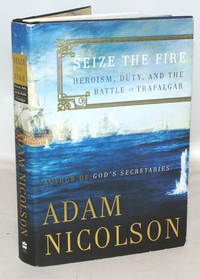
2005réf. TB32080New York: HarperCollins Publishers 2005. First Edition. First Printing Near fine in 1/4 black paper and dark blue paper covered boards with gilt text on the spine. An octavo of 9 by 6 inches with a remainder mark on the lower edge of the text block. In a near fine unclipped unusual wrap-around dust jacket with four folds depicting a major naval battle. There is light rubbing to two of the folds and to the ends of the spine area. 341 pages including an index bibliography and text. Illustrated with a section of color plates from earlier works of art. HarperCollins Publishers hardcover books
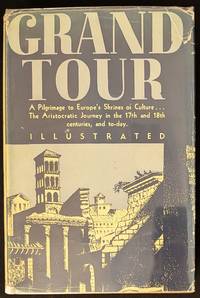
1937réf. 1529New York: E.P. Dutton & Co. Inc 1937. 8vo. 220 x 155 mm. 8 ¾ x 6 inches. 167 pp. with twenty-nine separate leaves containing thirty-seven b&w illustrations. Publishers' dark red cloth over boards with black lettering on the spine; illustrated endpapers with a seventeenth-century map of Europe; fore-edges deckled; top and bottom edges cut smooth; illustrated unclipped dust jacket. Book is Fine: spine is very slightly skewed but otherwise the book itself is in excellent condition with the text block clean. Jacket is Good: chipping at the top and bottom edges; minor fading soiling and shelf wear. Overall a bright copy. First Edition. Richard S. Lambert 1894-1981 was an English biographer historian and broadcaster who wrote on a wide range of subjects throughout his long career from children's novels to studies on propaganda. It was his suggestion to emulate the journeys taken by seventeenth and eighteenth century aristocrats in their grand tours through Europe alongside a host of notable writers. Not least of which were the early female rights advocate Mona Wilson and celebrated war poet Edmund Blunden. Each writer was tasked with describing a section of the voyage beginning and ending in London with stops throughout France Switzerland Germany and the Low Countries. The result is not only a pleasurable travelogue but also a compelling narrative history of the concept of the grand tour itself. . E.P. Dutton & Co., Inc unknown books
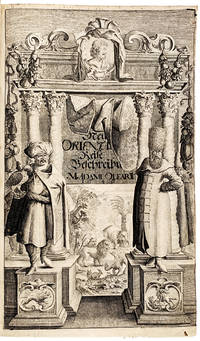
1645réf. MEE1127Schlesswig: Bey Jacob zur Glocken. Jm Jahr 1645-1647. 1645. Large 4to. 13 ff. 546 i.e. 536 pp. 1 f. 42 pp. 6 ff. With full-page engraved half title 10 double-page engraved plates 11 full-pages engraved plates 60 text figures engr. head and tail pieces initial letters. Title with vignette "Allah" in Arabic script. First edition of Offt begehrte Beschreibung der newen orientalischen Reise 1645-7. This is an important and widely-read seventeenth century account of travels through Russia and Persia and into India and the Far East. The maps include the large folding plan of the Volga plus the Baltic regions Muscovy Persia Asia China etc. In addition to the OLEARIUS book this HAND-COLORED DOUBLE-PAGE ENGRAVED MAP depicting Adam Olearius' Olschlager route from the atlas of Willem Janszoon Blaeu 1571-1638. The map is fully hand-colored in a contemporary hand. The map is entitled: Nova et Accurata Wolgae Fluminis olim Rha dicti deline atio Auctore Adamo Oleario. / Illustrissimo Domino Dno. Benedicto Bagge de Berga Sneco haec Geographica fluminis Wolgae descriptio humillime offertur. Amsterdam Apud Janssonio-Waesbergios et Moses Pitt. Double-page 1680. 570x650 mm. Contains 3 cartouches the map was originally issued by Jan Jansson Nieuwen atlas of 1658. "The first edition of Olearius' account of his travels was published in 1647 in Schleswig under the title Offt begehrte Beschreibung der newen orientalischen Rejse so durch Gelegenheit einer Holsteinischen Legation an d. Konig in Persien geschehen. An extended and restructured edition appeared in 1656: Vermehrte Newe Beschreibung der Muscowitischen und Persischen Reyse so durch gelegenheit einer Holsteinischern Gesandschafft an den russischen Zaar und Konig in Persien geschehen reprint with a commentary by D. Lohmeier Tubingen 1971. The Vermehrte Newe Beschreibung is divided into six "books" of which the fourth treats the mission's route up to Isfahan with detailed descriptions of Ardabil Qazvin Qom Kasan and their stay at the Safavid court. Book five is an encyclopedic description of Persia covering aspects such as geography fauna and flora political institutions manners customs and clothing Safavid history education language and script trade and religion. The return journey from Isfahan is the subject of book six. Amongst the numerous ethnographic observations mention should be made of Olearius' depiction of the Asura ceremonies and other Shi'ite rituals including the recitation of a "Machtelnamae" and the celebration of Ali's designation as the Prophet's successor "Chummekater;" p. 435ff. 456ff. Of interest for the history of printing is the regular insertion of Persian and Turkish quotations in the original script serving as a model for the later account by Engelbert Kaempfer. The copper plate illustrations are of particular value especially his detailed city views and the portrait of Shah afi. Modern scholars such as Strack Emerson and Brancaforte have presented different views on the question of Olearius' objectivity and the extent to which he was affected by contemporary assumptions Strack; Brancaforte; Emerson. "Olearius provided the first comprehensive description of Persia since antiquity but his achievements appear less significant when compared with the far broader range and experience of later travelers who wrote after him in the course of the 17 century" Lohmeier p. 59. Still all later travelogues are heavily indebted to him and his work can be studied as a starting point for the genre. His outstanding contribution to the cartography of Persia is his Nova Delineatio Persiae et Confiniorvm veteri longe accurator edita Anno 1655 the first realistic map of Iran that in particular corrects the location and form of the Caspian Sea." – Encyclopedia Iranica. Olearius "Born in 1599 with the German name Ohlschlegel later Olschlager Olearius studied theology mathematics astronomy and geography at the University of Leipzig. After various teaching assignments in 1633 he entered the service of Frederick III 1597-1659 ruler of the Duchy of Schleswig-Holstein-Gottorp. As secretary and counselor he took part in the diplomatic missions to Russia and Persia that were aimed at negotiating a new direct trade route for Persian silk. After the initial consent of the Tsar the embassy set out for Persia in 1635. Taking the route through Moscow and following the Volga to Astrakhan they entered Persia after crossing the Caspian Sea at Sama-i. There the delegation had to wait for three months before they were allowed to proceed. Olearius used the time to acquire a basic knowledge of Persian and Arabic. Their route then took them from Ardabil Qazvin and Kasan to Isfahan the capital. After a stay of several months the mission returned without concrete results by a similar route this time passing through Rast. Olearius continued his service in Gottorp as court mathematician and principal of the extensive court library and collections Kunstkammer. He was deeply engaged in the baroque literary scene of his time and achieved wide international recognition. He died in 1671 and was buried in Schleswig Lohmeier." – Encyclopedia Iranica. REFERENCES: Wing CD-ROM 1996 O269; ESTC RLIN R021580. FULL TITLE: Offt begehrte Beschreibung Der Newen Orientalischen Rejse So durch Gelegenheit einer Holsteinischen Legation an den Konig in Persien geschehen. Worinnen Derer Orter vnd Lander durch welche die Reise gangen als furnemblich Russland Tartarien vnd Persien sampt jhrer Einwohner Natur Leben vnd Wesen fleissig beschrieben vnd mit vielen Kupfferstucken so nach dem Leben gestellet gezieret. Jtem Ein Schreiben des Wol Edeln rc. Johan Albrecht Von Mandelslo worinnen dessen OstIndianische Reise uber den Oceanum enthalten. Zusampt eines kurtzen Berichts von jetzigem Zustand des eussersten Orientalischen Konig Reiches Tzina. Durch M. Adamum Olearium Ascanium Saxonem Furstl: Schlesswig-Holsteinischen Hoff-mathemat. . Mit Rom. Kays. Maj. vnd Churfl. Durchl. zu Sachsen privilegijs auff 10 Jahr bey Verlust Tausend Thlr. nicht nachszudrucken. . Bey Jacob zur Glocken. Jm Jahr [1645]-1647. hardcover books
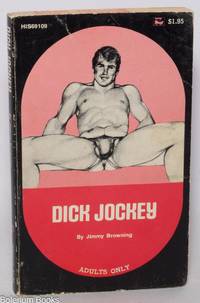
1974réf. 312647San Diego: Surrey House 1974. Paperback. 185p. residue and marks on back cover otherwise very good first printing PBO in camp pictorial wraps. Gay pulp fiction. HIS69109. Republished in 1991 by American Art as MOA-120. Surrey House paperback books
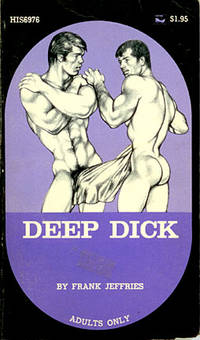
1973réf. 149545San Diego CA: Surrey House 1973. Paperback. 185p. ads minor cock to spine otherwise very good first printing PBO in original camp photo-pictorial wraps. Gay pulp fiction. HIS6976. Surrey House paperback books
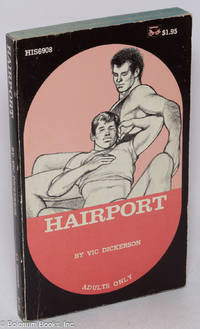
1971réf. 88716San Diego: Surrey House 1971. Paperback. 188p. ads very good first printing PBO in camp pictorial wraps. Gay pulp fiction. HIS6908. Teen hitchhiker on the road to Hollywood. Early HIS69. Surrey House paperback books
2016réf. CNAP107aSan Francisco: The Arion Press 2016. Hardcover. New. Chagoya Enrique. 12 by 8-1/4 inches 152 numbered pages by coincidence the same number of pages as the first edition for the text and ten unnumbered signatures for the prints consisting of a sheet folded at the fore-edge with die-cut windows and a folded tab to tip into the sewing section and an inserted sheet of Japanese handmade paper making three leaves which adds six "pages" for a total of 212 pages. The paper is Italian mouldmade Magnani Ingres laid. The Japanese paper for the prints is handmade Arokaji koso washi. The type printed by letterpress is Kennerley Old Style designed by Frederic W. Goudy composed and cast in Monotype with handset type for display. The binding is Smyth-sewn with handsewn silk endbands with a three-piece cloth cover green on the sides and blue on the spine foil stamped on the sides with roundels designed by Enrique Chagoya and stamped on the spine with titling. The book is presented in a slipcase in an edition of 300 copies for sale. Each book is signed by the artist. Juan Rulfo's "Pedro Páramo" is a monument of Mexican literature and one of the most influential novels of the 20th century. Juan Rulfo was a photographer and a fiction writer known for his two books "El Llano en Llamas" a collection of short stories published in 1953 and the 1955 novel "Pedro Páramo". He was born in Apulco in the Mexican state of Jalisco in 1918 and died in Mexico City in 1986. Gabriel García Márquez said he felt blocked as a novelist after his first four books and that it was only his life-changing discovery of "Pedro Páramo" in 1961 that allowed the composition of his masterpiece "One Hundred Years of Solitude". Marquez noted that all of Rulfo's published writing put together "add up to no more than 300 pages; but that is almost as many and I believe they are as durable as the pages that have come down to us from Sophocles". Enrique Chagoya has made ten color prints for the book. They are highly unusual in that they are printed on both sides of thin translucent handmade Japanese paper of a tan-brown color. On the front recto are portraits of Mexicans from the late nineteenth to early twentieth centuries printed in a dark blue with background imagery printed in green on the other side. As Chagoya has written in his artist statement for the book "The drawings are not an illustration of 'Pedro Páramo' because the story does not need illustrations. It is more like a visual duet and instrument playing a counterpoint parallel to the novel." ___POSTAGE: International customers please note that additional postage may apply as the standard does not always cover costs; please inquire for details. ___Swan's Fine Books is pleased to be a member of the ABAA ILAB and IOBA and we stand behind every book we sell. Please contact us with any questions you may have we are here to help. The Arion Press hardcover books
1774réf. 5385London 1774. Engraving by J. Zucchi. A fine architectural engraving of the interior of Kenwood House in Hampstead London re-modelled in 1761-1773 and now home to the Iveagh Bequest picture collection. Robert and his brother James Adam forever changed the face of British architecture by introducing innovative Classical design ideas. From 1754-57 Robert lived in Italy where he had a long productive friendship with Piranesi which was inspirational for both men. Adam's first book on Diocletian's palace in Dalmatia is clearly very like the archaeological investigations Piranesi was making at the same time of similar ruins. Piranesi's friendship and passion for Roman Classicism were seminal influences on Adam and the greatest single factor other than his own talent in the work Adam produced on his return to England. Upon his return the brothers launched their career by building the Adelphi from the Thames to the Strand in London which although not a commercial success at the time included one of London's most cherished buildings the Adelphi Theatre. Together the Adam brothers designed and built some of the most famous buildings in England including such bastions of English architecture as Kenwood House Keddlestone Manor and Syon House. To the interiors of their English country houses the Adams brought wonderful ornamental elements in niches lunettes festoons and reliefs. Their classically designed buildings were so numerous in London that they changed the prevailing feel of the city and established their brand of neo-Classicism as the model of elegance and importance. It is asserted that the brothers originated the concept of the uniform facade attached to the typical English row house an architectural device that distinguishes London buildings. This monumental contribution is evidenced in the Adams' designs for Portland Place and Fitzroy Square and these were used as architectural models for the whole city. The brothers brought their talents into other areas by designing furniture to complement their beautiful interiors and by creating and publishing a treatise of design entitled 'Works in Architecture'. The work was published in three volumes over an extended span of time beginning in 1773 with the final volume being published posthumously in 1822. Cf. Brunet I.47; cf. Lowndes I p.8; DNB; Wilton-Ely The Mind and Art of Giovanni Battista Piranesi. unknown books
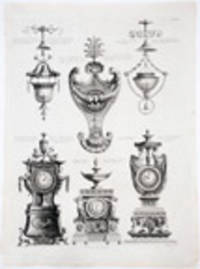
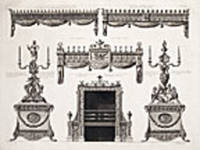
1775réf. 17574London 1775. Engraving by P. Begbie. In excellent condition with the exception of being trimmed just outside the platemark on the left margin. An elegant engraving depicting various furnishings designed by Robert and James Adam including decorative clocks an ornamental knocker and two elaborate hanging lights. Robert and his brother James Adam forever changed the face of British architecture by introducing innovative Classical design ideas. From 1754-57 Robert lived in Italy where he had a long productive friendship with Piranesi which was inspirational for both men. Adam's first book on Diocletian's palace in Dalmatia is clearly very like the archaeological investigations Piranesi was making at the same time of similar ruins. Piranesi's friendship and passion for Roman Classicism were seminal influences on Adam and the greatest single factor other than his own talent in the work Adam produced on his return to England. Upon his return the brothers launched their career by building the Adelphi from the Thames to the Strand in London which although not a commercial success at the time included one of London's most cherished buildings the Adlephi Theatre. Together the Adam brothers designed and built some of the most famous buildings in England including such bastions of English architecture as Kenwood House Keddlestone Manor and Syon House. To the interiors of their English country houses the Adams brought wonderful ornamental elements in niches lunettes festoons and reliefs. Their classically designed buildings were so numerous in London that they changed the prevailing feel of the city and established their brand of neo-Classicism as the model of elegance and importance. It is asserted that the brothers originated the concept of the uniform facade attached to the typical English row house an architectural device that distinguishes London buildings. This monumental contribution is evidenced in the Adams' designs for Portland Place and Fitzroy Square and these were used as architectural models for the whole city. The brothers brought their talents into other areas by designing furniture to complement their beautiful interiors and by creating and publishing a treatise of design entitled 'Works in Architecture'. The work was published in three volumes over an extended span of time beginning in 1773 with the final volume being published posthumously in 1822. Cf. Brunet I.47; cf. Lowndes I p.8; DNB; Wilton-Ely The Mind and Art of Giovanni Battista Piranesi. unknown books
1775réf. 17118London 1775. Engraving by T. Vivares. In excellent condition with the exception of some paper discolouration in the bottom right corner of the sheet. A fine architectural engraving of a part of the vast Adelphi development in London; the largest project undertaken by the Adam brothers. Robert and his brother James Adam forever changed the face of British architecture by introducing innovative Classical design ideas. From 1754-57 Robert lived in Italy where he had a long productive friendship with Piranesi which was inspirational for both men. Adam's first book on Diocletian's palace in Dalmatia is clearly very like the archaeological investigations Piranesi was making at the same time of similar ruins. Piranesi's friendship and passion for Roman Classicism were seminal influences on Adam and the greatest single factor other than his own talent in the work Adam produced on his return to England. Upon his return the brothers launched their career by building the Adelphi from the Thames to the Strand in London which although not a commercial success at the time included one of London's most cherished buildings the Adelphi Theatre. Together the Adam brothers designed and built some of the most famous buildings in England including such bastions of English architecture as Kenwood House Keddlestone Manor and Syon House. To the interiors of their English country houses the Adams brought wonderful ornamental elements in niches lunettes festoons and reliefs. Their classically designed buildings were so numerous in London that they changed the prevailing feel of the city and established their brand of neo-Classicism as the model of elegance and importance. It is asserted that the brothers originated the concept of the uniform facade attached to the typical English row house an architectural device that distinguishes London buildings. This monumental contribution is evidenced in the Adams' designs for Portland Place and Fitzroy Square and these were used as architectural models for the whole city. The brothers brought their talents into other areas by designing furniture to complement their beautiful interiors and by creating and publishing a treatise of design entitled 'Works in Architecture'. The work was published in three volumes over an extended span of time beginning in 1773 with the final volume being published posthumously in 1822. Cf. Brunet I.47; cf. Lowndes I p.8; DNB; Wilton-Ely The Mind and Art of Giovanni Battista Piranesi. unknown books
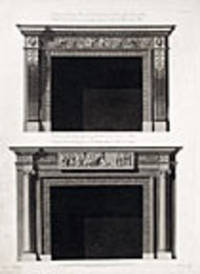
1775réf. 17099London 1775. Engraving by D. Cunego. In excellent condition with the exception of being trimmed just outside the platemark on left margin. Some paper discolouration on left margin and 1" loss lower left corner. A fine engraving of the fireplaces at St. James's Palace and the Queen's House in London. Robert and his brother James Adam forever changed the face of British architecture by introducing innovative Classical design ideas. From 1754-57 Robert lived in Italy where he had a long productive friendship with Piranesi which was inspirational for both men. Adam's first book on Diocletian's palace in Dalmatia is clearly very like the archaeological investigations Piranesi was making at the same time of similar ruins. Piranesi's friendship and passion for Roman Classicism were seminal influences on Adam and the greatest single factor other than his own talent in the work Adam produced on his return to England. Upon his return the brothers launched their career by building the Adelphi from the Thames to the Strand in London which although not a commercial success at the time included one of London's most cherished buildings the Adlephi Theatre. Together the Adam brothers designed and built some of the most famous buildings in England including such bastions of English architecture as Kenwood House Keddlestone Manor and Syon House. To the interiors of their English country houses the Adams brought wonderful ornamental elements in niches lunettes festoons and reliefs. Their classically designed buildings were so numerous in London that they changed the prevailing feel of the city and established their brand of neo-Classicism as the model of elegance and importance. It is asserted that the brothers originated the concept of the uniform facade attached to the typical English row house an architectural device that distinguishes London buildings. This monumental contribution is evidenced in the Adams' designs for Portland Place and Fitzroy Square and these were used as architectural models for the whole city. The brothers brought their talents into other areas by designing furniture to complement their beautiful interiors and by creating and publishing a treatise of design entitled 'Works in Architecture'. The work was published in three volumes over an extended span of time beginning in 1773 with the final volume being published posthumously in 1822. Cf. Brunet I.47; cf. Lowndes I p.8; DNB; Wilton-Ely The Mind and Art of Giovanni Battista Piranesi. unknown books
1775réf. 17116London 1775. Engraving by B. Pastorini. In excellent condition. An elegant engraving showing the decorations of the chimney piece and curtain cornices at Sutton Park House in North Yorkshire. Robert and his brother James Adam forever changed the face of British architecture by introducing innovative Classical design ideas. From 1754-57 Robert lived in Italy where he had a long productive friendship with Piranesi which was inspirational for both men. Adam's first book on Diocletian's palace in Dalmatia is clearly very like the archaeological investigations Piranesi was making at the same time of similar ruins. Piranesi's friendship and passion for Roman Classicism were seminal influences on Adam and the greatest single factor other than his own talent in the work Adam produced on his return to England. Upon his return the brothers launched their career by building the Adelphi from the Thames to the Strand in London which although not a commercial success at the time included one of London's most cherished buildings the Adlephi Theatre. Together the Adam brothers designed and built some of the most famous buildings in England including such bastions of English architecture as Kenwood House Keddlestone Manor and Syon House. To the interiors of their English country houses the Adams brought wonderful ornamental elements in niches lunettes festoons and reliefs. Their classically designed buildings were so numerous in London that they changed the prevailing feel of the city and established their brand of neo-Classicism as the model of elegance and importance. It is asserted that the brothers originated the concept of the uniform facade attached to the typical English row house an architectural device that distinguishes London buildings. This monumental contribution is evidenced in the Adams' designs for Portland Place and Fitzroy Square and these were used as architectural models for the whole city. The brothers brought their talents into other areas by designing furniture to complement their beautiful interiors and by creating and publishing a treatise of design entitled 'Works in Architecture'. The work was published in three volumes over an extended span of time beginning in 1773 with the final volume being published posthumously in 1822. Cf. Brunet I.47; cf. Lowndes I p.8; DNB; Wilton-Ely The Mind and Art of Giovanni Battista Piranesi. unknown books
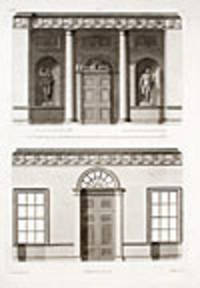
1778réf. 17136London 1778. Copper engraving. Engraved by P. Mazell. In excellent condition. An elegant engraving the Porter's Lodge at Shelburne House in Berkeley Square in London. Robert and his brother James Adam forever changed the face of British architecture by introducing innovative Classical design ideas. From 1754-57 Robert lived in Italy where he had a long productive friendship with Piranesi which was inspirational for both men. Adam's first book on Diocletian's palace in Dalmatia is clearly very like the archaeological investigations Piranesi was making at the same time of similar ruins. Piranesi's friendship and passion for Roman Classicism were seminal influences on Adam and the greatest single factor other than his own talent in the work Adam produced on his return to England. Upon his return the brothers launched their career by building the Adelphi from the Thames to the Strand in London which although not a commercial success at the time included one of London's most cherished buildings the Adlephi Theatre. Together the Adam brothers designed and built some of the most famous buildings in England including such bastions of English architecture as Kenwood House Keddlestone Manor and Syon House. To the interiors of their English country houses the Adams brought wonderful ornamental elements in niches lunettes festoons and reliefs. Their classically designed buildings were so numerous in London that they changed the prevailing feel of the city and established their brand of neo-Classicism as the model of elegance and importance. It is asserted that the brothers originated the concept of the uniform facade attached to the typical English row house an architectural device that distinguishes London buildings. This monumental contribution is evidenced in the Adams' designs for Portland Place and Fitzroy Square and these were used as architectural models for the whole city. The brothers brought their talents into other areas by designing furniture to complement their beautiful interiors and by creating and publishing a treatise of design entitled 'Works in Architecture'. The work was published in three volumes over an extended span of time beginning in 1773 with the final volume being published posthumously in 1822. Cf. Brunet I.47; cf. Lowndes I p.8; DNB; Wilton-Ely The Mind and Art of Giovanni Battista Piranesi. unknown books
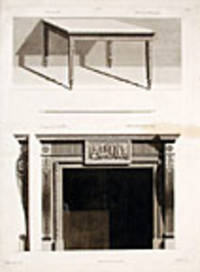
1778réf. 17139London 1778. Copper engraving. Engraved by Caldwell. In excellent condition with the exception of a waterstain in middle of sheet. Left margin is trimmed just outside platemark. An elegant engraving of a fireplace and table at Shelburne House in Berkeley Square in London. Robert and his brother James Adam forever changed the face of British architecture by introducing innovative Classical design ideas. From 1754-57 Robert lived in Italy where he had a long productive friendship with Piranesi which was inspirational for both men. Adam's first book on Diocletian's palace in Dalmatia is clearly very like the archaeological investigations Piranesi was making at the same time of similar ruins. Piranesi's friendship and passion for Roman Classicism were seminal influences on Adam and the greatest single factor other than his own talent in the work Adam produced on his return to England. Upon his return the brothers launched their career by building the Adelphi from the Thames to the Strand in London which although not a commercial success at the time included one of London's most cherished buildings the Adlephi Theatre. Together the Adam brothers designed and built some of the most famous buildings in England including such bastions of English architecture as Kenwood House Keddlestone Manor and Syon House. To the interiors of their English country houses the Adams brought wonderful ornamental elements in niches lunettes festoons and reliefs. Their classically designed buildings were so numerous in London that they changed the prevailing feel of the city and established their brand of neo-Classicism as the model of elegance and importance. It is asserted that the brothers originated the concept of the uniform facade attached to the typical English row house an architectural device that distinguishes London buildings. This monumental contribution is evidenced in the Adams' designs for Portland Place and Fitzroy Square and these were used as architectural models for the whole city. The brothers brought their talents into other areas by designing furniture to complement their beautiful interiors and by creating and publishing a treatise of design entitled 'Works in Architecture'. The work was published in three volumes over an extended span of time beginning in 1773 with the final volume being published posthumously in 1822. Cf. Brunet I.47; cf. Lowndes I p.8; DNB; Wilton-Ely The Mind and Art of Giovanni Battista Piranesi. unknown books
1984réf. 319506North Hollywood: Arena Pubs 1984. Paperback. 184p. price sticker on cover else a very good first printing PBO in camp pictorial wraps. Gay pulp fiction. Manpower MP 115. Arena Pubs paperback books
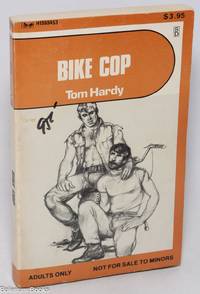
1982réf. 321202New York/Santee: Star Dist./Surey Books 1982. Paperback. 186p. price sticker on cover and remainder mark on bottom textblock otherwise very good first printing PBO in camp pictorial wraps. Gay pulp fiction. HIS69453. Star Dist./Surey Books paperback books
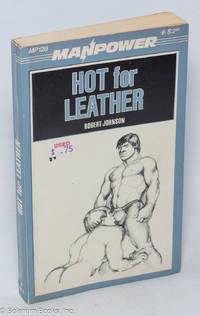
1981réf. 320600North Hollywood: Arena 1981. Paperback. 183p. price sticker on cover and creasing along spine else a very good first printing PBO in camp pictorial wraps. Gay pulp fiction. Manpower MP128. He went down to the crossroads did the author. Arena paperback books
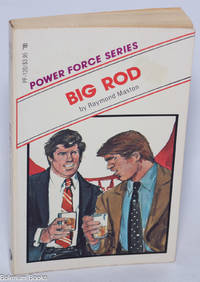
1984réf. 324285North Hollywood: Arena Publications 1984. Paperback. 189p. very good condition first printing PBO in camp pictorial wraps. Gay pulp fiction. Power Force PF-120. Businessmen on the cover but all business at the rodeo within. Arena Publications paperback books