CrimeaBiblio.com
28 risultati
rif. 1021700940.Gpaperback. Good. Access codes and supplements are not guaranteed with used items. May be an ex-library book. paperback
rif. 0282561099.Gpaperback. Good. Access codes and supplements are not guaranteed with used items. May be an ex-library book. paperback
rif. DADAX1241561702New unknown
rif. DADAX0801880300New unknown
1993rif. 1WT-VMA-EC51993. Paperback. Good. 1993 paperback. Average external wear pages yellowed with some minor creases and blemishes binding firm. paperback
rif. DADAX1446030253New unknown
rif. SONG0190644710Used: Good unknown
rif. 102004800X.Ghardcover. Good. Access codes and supplements are not guaranteed with used items. May be an ex-library book. hardcover
rif. DADAX0548333335New unknown
rif. 2245627 April no year; on letterhead of Horringer Bury St Edmunds. 3pp 12mo. Bifolium. In good condition lightly aged with traces of paper from mount adhering to blank reverse of second leaf. Folded twice. From the Cullum papers Simpson being a neighbour of the family. Having 'just come in from a longish walk' he is sorry to have missed Lady Cullum. He wishes he 'knew which of the two ways you name would be most agreeable to you for us to dine with you; but since you kindly leave it to me I say Friday on which Evening we will have the pleasure of being at Hardwick at 7 o'Clock.' He reports that the 'two Miss Lockharts' are 'quite taken' with her and 'loud in their praises of Lady Cullum'. He gives the names of the party he has 'made up' for the following Thursday: 'Herveys 3 Wynches 2 Col. Wollaston and Mr. Barton - You and Miss Bird and ourselves make up the twelve.' He is 'not afraid of a Fox well fed on good poultry worrying Dot!' He does not think Dot can catch the fox 'so believe he and Pater may try their best in great safety'. He ends with the remembrances of his two daughters to Lady Cullum and Miss Bird. 27 April [no year]; on letterhead of Horringer, Bury St Edmunds. unknown
rif. DADAX0548199604New unknown
rif. DADAX0548164584New unknown
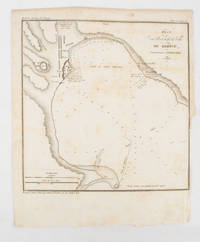
1839rif. 175248Paris.: Librairie de Gide. 1839. Engraved map 21.1 x 20.8 cm 27 x 22 cm sheet original folds trimmed to the inner margin with slight loss to the border only map spotted but otherwise in sound condition. Map of the Port of Kerch in Crimea prepared for the 1839 edition of the French Journal "Nouvelles Annales des Voyages." the editors for this edition amongst others the translator and geographer Jean-Baptiste Benoît Eyriès and Alexander von Humboldt founding members of the world's first geographical society the Société de Géographie. . (Librairie de Gide). unknown
rif. DADAX0548164819New unknown
rif. DADAX036713327XNew unknown
rif. DADAX0141013508New unknown
rif. a78366Stockholm 1854 Bonniers Forlag. 16mo 16.5 x 10 cm original printed wraps. Contents: 1. Special karta af Krim opens to 29 x 23 cm. VG plus. 2. Dito af Svarta Hafvet opens to 16 x 22 cm. Near Fine. 3. Plan af Sebastopol och dess omgifningar opens to 32x 38 cm. Fine. 4. Panorama och Utsigt af Sebastopol opens to 22 x 15 cm. VG plus. 5. Underrattelser om dess orter 19 pages of text describing Krim in detail in Swedish. All maps and panorama views are VG to Fine. Owner signed on front. Rear cover panel present but detached. Book itself is Good a bit worn. . paperback
rif. DADAX0190644710New unknown
1996rif. 291490PN. New. 1996. Soft Cover. Date is original print. This is a reprint edition . PN paperback
rif. 8986724Short description: In Russian. Crimea Veniamin Skievich. Solid Fuel Chemistry. Kharkiv; Kyiv: Scientific and Technical Publishing House of Ukraine 1934. Please feel free to contact us for a detailed description of the copies available. SKU8986724 unknown
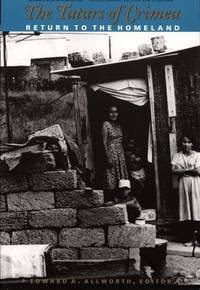
rif. BN704046Durham Duke University Press 1998. Return to the Homeland Return to the Homeland The Tatars of Crimea Durham, Duke University Press 1998. unknown
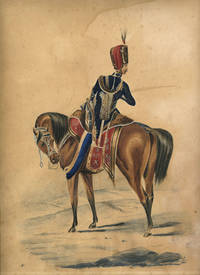
1850rif. 236911850. Very good condition. A wonderful watercolor of a British cavalry officer at the siege of Sevastopol signed "J.H." at the lower right. Perhaps the original study for the finished painting by Richard Simkin stance and details are identical to Simkin's image britishcavalryregiments.com/30-10h/10h5.jpg depicting the officer from the back turning in the saddle to his right his uniform and the horse's tack are painted in lavish and painstaking detail down to the studs on the bridle. This artwork predates Simkin's work. On the outbreak of war in the Crimea 1854-56 the 10th Hussars left India and traveled to the Black Sea but luckily were not part of Cardigan's charge of the Light Brigade avoiding the battle of Balaclava which took place in October of 1854. The regiment was heavily involved in the siege of Sevastopol and the triumphant battles of Eupatoria and Kerch. The Regiment returned to England in 1856 and in 1863 the 10th The Prince of Wales's Own Royal Hussars again had a Prince of Wales as their colonel this was Prince Edward later King Edward VII. The 10th Hussars are credited with introducing polo to England having learned it in India when a captain in the 10th Hussars observed a match and immediately formed a team with his fellow officers. 9 3/4 x 11 3/4". Overall tanned slight water mark in area above the soldier's head. Painted on card stock. unknown
rif. 4206031Short description: In Russian. Crimea Veniamin SKyivich. Mining Quantitative Analysis Manual. Kharkiv: Type. Peaceful Labor 1915. The image is provided for reference only. It may reflect condition of one of the available copies or only help in identifying the edition. Please feel free to contact us for a detailed description of the copies available. SKU4206031 unknown
rif. 2448210 April 1874; from Hill Street Woolwich on letterhead of Hill House Woolwich S.E. An excellent letter casting light on the relationship between the editor of The Times and a senior correspondent. See the two men’s entries in the Oxford DNB. Brackenbury’s states that ‘During the Austro-Prussian War of 1866 Brackenbury was the Times correspondent with the Austrian army and was at the battle of Königgrätz Sadowa — riding with Benedek under fire at Chlum — and reported the naval battle of Lissa. He was the Times correspondent in the Franco-Prussian War accompanying Prince Frederick Charles in the Le Mans campaign; and in the Russo-Turkish War of 1877 when he crossed the Balkans with Count Gourko.’ 4pp 12mo. Bifolium. In very good condition folded twice. Thin strip from windowpane mount adhering to edges in not unpleasing way. Signed ‘C. B. Brackenbury’ and addressed to ‘My dear Delane’. The letter begins: ‘Captain Clarke brought me today the last number of his translation of the German War of 1870-71. He is sending you a copy and I hope you will find some one to review it in my place.’ Brackenbury has himself translated ‘the Report of the Committee on French Army re organization together with the law as proposed and passed’ which the War Office is publishing. ‘You shall have the first copy issued which I will mark myself.’ In his opinion a great deal of the report ‘bears upon much more than French re-organization’. He will be very glad if Delane finds it ‘worth a notice’. He continues: ‘Though I may not write more on military affairs I don’t see why I should not review other books if you can find any for me. Even if you have no space for them at present the reviews might stand over till the interest of the new parliament is over.’ It seems to him ‘unnatural to have no work in hand for you’. The postscript reads: ‘They say that my review of Clarke’s first number started the Intelligence Department.’ 10 April 1874; from Hill Street [Woolwich], on letterhead of Hill House, Woolwich, S.E. unknown
rif. 17022The account of 'Events in 1855 and 1856' dated by Wrench from Park Lodge Baslow Derbyshire 1902. The duplicated letter dated 12 December 1880. The printed advertisement for talk at the School Baslow and dated 14 January 1881. Wrench was the son of a clergyman and well connected being presented to the Prince of Wales and staying at Chatsworth in his old age. His obituary in the British Medical Journal 27 April 1812 describes how he went out to the Crimea in 1854. 'He had been gazetted Assistant Surgeon to the 34th Regiment in November and joined it on its arrival in the Crimea. He served during the terrible winter of that year and was present at the capture of the quarries the successful assault on the Redan of June 18th and the final capture of Sebastopol on September 8th 1855. He was mentioned in despatches and received the Crimean medal and clasp for Sebastopol and the Turkish medal.' Wrench's own account of his experiences in the Crimea Item One below – entirely unpublished – is a personal one vividly-written and full of detail. It does not appear to be present in the collection of his family papers at Nottingham University Library. ONE: Manuscript consisting of 'Events in 1855' 4pp and '1856 12pp making a total of 16pp. 8vo on twelve leaves attached with a stud. In good condition on aged and dogeared paper. The first page of the 1855 manuscript is headed '12 sic Pages in this Year' but comprises four numbered pages. The beginning of account sets the scene and gives an indication of the level of detail: 'The 1st Janry found me doing duty with the 28th Foot or Slashers in the 3rd. Divt of the army before Sebastopol having landed at Balaclava from the Ship "Queen of the South" on the 20th. Nov. 1854. On the 6th July I was ordered to do duty with the 50th. Foot but as I did not wish to move the weather being very bad and my tent being as comfortable or rather as little uncomfortable as it could be made except to join my own Regt. the 34th. to which I had been gazetted on the 1st. of December 1854. I applied to be sent to it and was ordered to join which I did on 9th of Janry.' The account is made up from diary entries and is none the less vivid and interesting for that: 'On the following morning a wounded Russian named Alexo was brought into our Hospital and we amputated his leg he did really well and was eventually exchanged at Odessa. Poor Jordan's death threw a great damp on the Regiment as he was the first Officer we had had killed. On the 9th. of April being Easter Monday the 2nd. Bombardment took place. It was a fearfully wet windy day so that no one was able to go out to see what damage was done. On the 10th. I was on trenches and the noise was terrific but nothing to what I have since heard. I had a very narrow escape from a round shot which hopped over the parapet close to where I was.' In June 'after 68 hours bombardment an assault was made on the Quarries by ourselves . I did not go down till about 8 with Robinson Scott & Peel and 100 men. We were marching about the Trenches half the night and were finally sent to the middle ravine just below Mamelon. The scene there was most horrible the ground being strewn with dead & wounded. English French & Russians. One poor Russian boy was dragged up by two Zouaves but fainted just opposite to where we were lying. I got a light and found he was shot through the belly and that nothing could be done for him. I gave him some water and he lie sic by me some time but died before morning. I got an amulet off his neck & his cap pouch which I sent home'. The 1856 account begins in dramatic style: 'The first entry in this Diary relates to the explosion which took place within the British Lines during the Siege of Sebastopol. Feb 3rd. I was not many hundred yards from this explosion when it took place & will here relate now Janry 1900 my recollection of it. It took place in Novr. or Decr. 1855. I had just come in from a ride & had given my horse to my Batman when I noticed a vast cloud of smoke shoot up from the Right Siege train an open air arsenal about 500 yds from my house - a tremendous noise of explosion followed & knowing that there would be a rain of missiles from above to fall immediately I jumped under my doorway - hoping the strong lintel would protect me . a shower of fragments fell around me rattling on my iron roof - and wounding many men in the Regiment - 70 men were killed by the explosion some over half a mile off. The artillery horses were passing in front of my door to water & stampeded hurting several men in their rush. Both my horse and my dog bolted. I got the horse back in a few hours - but my dog taken sic a few weeks before out of Sebastopol returned to her old home and was found there weeks afterwards I brought her to England My house that I had just finished building myself did not sustain much damage. .' The account continues packed with incident. At one point he writes: 'I had written the above in 1859 and continue it forty one years after November 4 1900. The events & fights of May 1856 being written so legibly in my brain that I can read much of what we did & said. Alas all the actors except myself are passed away. My notice has been called to the excursion by reading an Illustrated article in a magazine named "Travel" in which Dr. Hy. Lansell has been describing a tour taken last year over the same ground - so little altered from what I saw in 1856 that his description would do for mine'. The diary concludes in fine style. On 2 May 1856 he goes to Yalta where he finds 'the daughters of the English Clerk of the Works of Prince W's Palace were keeping the Hotel a very rough primitive structure low stone built rooms with a long rough wooden verandah overlooking the lovely Bay - We enjoyed an excellent dinner of Turbot & Oyster Sauce & a bottle of excellent local wine like Hock - as we returned we went over the Emperor's Villa Orianda . One day when I remember seeing for the first time a Persian horizontal Water Wheel in a very pretty village embosomed in Walnut Trees where also I bought an embroidered linen neck scarf which I still possess - On another occasion I accompanied Best & Chapman to the Alma & where I picked up the Russian Cannon Ball now on top of the Study Clock - I tried hard to get someone to accompany me to Bagshi Serai & Chuphut Kale but I had to go alone - I wonder now how I dare. For it was in the heart of the Enemies Country. I remember the Priest spit when I went near them in the Church in the Rock and I rode home at night through the Russian Camp on the river Balbec. I certainly felt no fear but that was the Ignorance of youth'. A final note more than half a page long records a meeting at Chatsworth in 1902 with Grand Duke Michael and his wife the Countess Torby. TWO: Duplicated letter by Wrench a hectograph in purple ink intended for circulation among his 'dear children'. 4pp. 12mo. Bifolium. In fair condition on aged and lightly-creased paper. Signed 'E. M. Wrench'. At the beginning is a half-page drawing by Wrench captioned 'Russian Soldier - In the Valley of the Shadow of Death. near Sebastopol - 1855 on Black Sea in the distance'. He describes a lecture he gave at Bakewell the previous Monday on the Siege of Sebastopol beginning 'I began by describing the terrible state of the hospital at Balaclava in November 1854. I had a ward full of wounded from Inkerman with bad cases of fever & cholera - All the windows had been blown out by the great storm of November the 14th. The sick had no beds and often nothing to eat until 3 or 4 oclock in the afternoon. The harbour of Balaclava was crowded with steamers while the coast near was strewn with the wrecks of the 21 ships that had gone down in the storm. .' The letter continues with much valuable detail and a drawing of a 'Section of "sunk" tent with fire place' on the third page. In the final paragraph he reports that 'Lord Edward Cavendish M.P. took the chair at my lecture. The room was quite full and some of the audience had come 8 or 10 miles to hear me.' THREE: Printed handbill advertisement with duplicated illustration another purple hectograph by Wrench on reverse joke featuring two soldiers and a horse and cart. 1p. 12mo. In good condition on lightly-aged paper. The printed advertisement is crisply printed and the date '14th' is added in red ink. It reads: 'A Lecture will be delivered in the School Baslow On Friday January 14th. 1881 At 7.30 p.m. By E. M. Wrench F.R.G.S. entitled Personal recollections of the Siege of Sebastopol. Illustrated by Drawings &c. Admission One Penny. No Change given at the Door.' The account of 'Events in 1855 [and 1856]' dated by Wrench from Park Lodge, Baslow [Derbyshire], 1902. The duplicated letter dat unknown