737 résultats
réf. 3459612 pages in8 - En tête: "Ministre d'Etat et de la Maison de l'Empereur" - bon état -
réf. 3459710 pages 1/2 in8 - En tête: "Ministre d'Etat et de la Maison de l'Empereur" - bon état - (cette lettre date de 10 jours avant la Bataille de l'Alma le 20 septembre et de 19 jours avant la mort du Maréchal) -
2004Fine Turkish Original bdg. HC. Demy 8vo. (21 x 14 cm). In Crimean Turkish. 502, [2] p., many b/w ills. Fasizm mahbusleri. Vesikalar, resimler, hatirlavlar. First and Only Edition. Extremely rare. Memories and biographies of the Karaites and Crimean Turks who were killed in Nazi concentration camps in World War II.
2008Very Good Turkish Paperback. Demy 8vo. (21 x 14 cm). In Crimean Turkish (Cyrillic script). 278, [2] p. [H]ayatimin unutilmaz levhalari. Memoirs of a Crimean-Turkish intellectual.
1941Very Good English Paperback. Pbo. Roy. 8vo. (23 x 16 cm). In Turkish. 27 p. Hanlik devrinde Kirim Türk kültürü. Crimean Turkish / Turkic culture in the Khanate Period. First and Only Edition. Rare. CENTRAL ASIA Caucasus Turcology Turkish history Crimea.
1927Very Good Turkish, Ottoman (1500-1928) Modern black cloth, Arabic lettered gilt on spine. Roy. 8vo. (23 x 16 cm). In Ottoman script (Old Turkish with Arabic letters). 207 p. First edition of this extremely rare Turkish book, including Qirimi's first-hand account of the Prut War and Treaty (1711) and the defense of the city he participated in during the Russian invasion of Crimea (1735-36). The book was translated into Ottoman Turkish and edited by Turkish turcologist and soldier Necib Asim Yaziksiz, (1861-1935), with annotations, from the original work titled "Umdet al-Akhbar" [i.e. The principle of the news]. Abdulgaffar Qirimi was a Crimean scholar who lived in the Crimean Khanate in the first half of the 18th century and served in various government positions. Qirimi dedicated his work to Genghis Khan, the Golden Horde, and the Crimean Khanate. He reported many original details and, especially for the 18th century, his information is authentic and based on personal descriptions. The main part of the work is devoted to the Golden Horde (starting from Genghis Khan and his descendants), Crimean Khanate, Gerayids, and murzas. When Abdulgaffar Qirimi wrote a history of the descendants of Jochi Khan, he used in his book more than 20 historical works as sources. He stated the names of these works and indicated where he got this or that information. At the same time, he had access to the archives of the Crimean Khanate and used his family legends as well as popular traditions. Plenty of space in his work occupies his own observations as a participant in military campaigns and court life. His work concerning khans Berke, Tokhta, Uzbek, Tokhtamish, and Ulugh Muhammad reflects the popular version and is based on the oral historiography of the Tatars. The Russo-Ottoman War of 1710-1711, also known as the Prut River Campaign, was a brief military conflict between the Tsardom of Russia and the Ottoman Empire. The main battle took place during 18-22 July 1711 in the basin of the Pruth river near Stanile?ti (Stanilesti) after Tsar Peter I invaded Ottoman Moldavia, following the Ottoman Empire's declaration of war on Russia. The ill-prepared 38,000 Russians with 5,000 Moldavians, found themselves surrounded by 200,000 Turks under Grand Vizier Baltaci Mehmet Pasha. After three days of fighting and heavy casualties, the Tsar and his armies were allowed to withdraw after agreeing to abandon the fortress of Azov and its surrounding territory. The Ottoman victory led to the Treaty of the Prut which was confirmed by the Treaty of Adrianople. Özege 21999.; TBTK 479.; OCLC 281773486.
1912Mm 125x190 Seconda edizione. Brossura editoriale di 324 pagine. Esemplare in buone condizioni, intonso. SPEDIZIONE IN 24 ORE DALLA CONFERMA DELL'ORDINE.
1857A chi legge, Trotti luogoten. Gen. in ritiro 1 21x14 cm., in brossura, sopraccoperta in acetato, pp. 31 (1), bella Tavola formato 60,5x41,5 cm. raffigurante il campo di battaglie con indicazione a colori delle varie truppe dislocate, prima edizione, con testi in italiano e testi in francese, buone condizioni. RARO Quadro Dimostrativo delle Truppe Componenti la 2? Divisione del Corpo di Spedizione in Oriente alla data delli 16 agosto 1855 - Relazione circa alla parte avuta dalla 2? Divisione sarda, nella battaglia di Traktir, delli 16 agosto 1855, diretta al Comandante in Capo del Corpo di Spedizione in Oriente, firmato Trotti. Luogoten. Gen. Comandante, in italiano - Grand Quartier G?n?ral devant S?bastopol le 18 aout 1855, firmato Le G?n?ral Major Protenfeld, in francese - Comando Generale del Corpo di Spedizione in Oriente, Rapporto del Generale Alfonso Lamarmora al Ministro della Guerra, firmato Alfonso Lamarmora, in italiano - Ordini generale di encomio di Lamarmora, in italiano; di P?lissier A: Le general en chef, in francese; di James Simson, Le g?n?ral en chef (Anglais), in francese.
1988Cm. 26 x 17; pp. 217; tavole a colori applicate; carta vergata di Fabriano; legatura editoriale in seta nera con plancetta a colori; titolo in oro; cofanetto serigrafato nero. In ottimo stato. Collana Le Guide Impossibili; prima tiratura di 5000 copie; questo n. 2250.
18562 grandi voll. semestrali in-folio (cm. 37,6x27,6), 2 occhielli + 2 front. semestrali ill., pp. 444 + pp. 424 con 1.600 grandi XILOGRAFIE (tra cui 16 CARTE) n.t. Solidissime legature coeve in forte e bella stoffa lucida blu zigrinata (aloni, macchie e fioriture) e impressa con cornici di filetti a secco, tit. oro ai ds. Indici alfabetico e delle illustrazioni. Ultimi 2 mesi della GUERRA di CRIMEA. Carta degli attacchi e assedio a Sebastopoli, tipi e fisionomie degli eserciti della Guerre d'Orient. Nuova Caledonia (Numea, Wight). Inondazioni al sud d. Francia. Spedizioni coloniali. Algeria, Sudan. Senegal. Indocina.Ferrovie in Svizzera. CAVOUR. Filibustieri americani. Pirati del Riff. Telegrafo transatlantico. Spagna. NAPOLI e Regno delle Due Sicilie e GB. Caccia agli alligatori, al daino. Monaco. pesca delle spugne in Libia. MONTE BIANCO. Feste per Alessandro II in Russia. Carrozze. BRIGANTAGGIO in Lazio. Tauride. Persia. Cabilia. Tribù del Sahara. Boscaioli dei Vosgi. Ecc.
18542 grandi voll. semestrali in-folio (cm. 37,6x27,6), occhielli + front. semestrali ill., pp. 416 + pp. 456 con 1.600 grandi XILOGRAFIE n.t. Solidissime legature coeve in forte e bella stoffa lucida blu zigrinata (aloni, macchie e fioriture) e impressa con cornici di filetti a secco, tit. oro ai ds. Indici alfabetico e delle illustrazioni a ogni vol. Il primo anno della GUERRA di CRIMEA (inziata nel marzo), movimenti di truppe, UNIFORMI varie, armamenti, navi nel Baltico e nel Mar Nero, eventi ecc. Inoltre: Birmania, esercito Persiano, artiglieria Russa, folclore in Perù; bombardamento a Shangai, i Cosacchi, caccia alla pantera, acque minerali, foreste e costumi della CORSICA, condanna d. attentatori a Pellegrino Rossi, emigrazione in America, insurrezione in Grecia, Marengo, caricature di NADAR, MONTE BIANCO, le pulci in Turchia, TURCHIA, RUSSIA meridionale, insurrezione in SPAGNA, SEBASTOPOLI, ferrovia del pacifico, PANAMA (carta del progetto di Garella), Nuova Caledonia, Sudan ecc. L'annata completa
1986In-8° (cm. 26x17), pp. 217, (2) + 16 TAVOLE A COLORI appl. (8 DOPPIE, tra cui 1 CARTA GEOGR.) con gli acquerelli tratti dall'album annesso al libro di viaggi di Peter Simon PALLAS (Lipsia 1799-1801; veraci paesaggi, scene o genuini tipi e costumi). Seta nera e oro edit. con tavola a col. appl. Cofanetto edit. Carta a mano avoriata d. Cartiere di Fabriano. Superba veste, accuratissime riprod. Introd. di Martine BUYSSCHAERT. Brani da 1) Peter Simon PALLAS, Alcune singolarità dei Tartari di Crimea, 1797. 2) Edmund SPENCER "Un romantico in Crimea" 1898". 3) François de MéLY, touriste "La Riviera degli Zar e la steppa dei Calmucchi", 1876.
1856Alla brossura il titolo continua: . . . ed in occasione del Voto di Ringraziamento al Corpo Piemontese di spedizione in Crimea (da pagina 117) con alcuni discorsi pronunziati nel Senato del Regno sugli stessi argomenti. Lievi fioriture ma ottimo esemplare in brossura editoriale. Brossura editoriale a stampa, pp. 152, in 8° piccolo
1994Mm 250x280 Brossura editoriale con alette, pp. 399, amplissimo corredo iconografico in bianco e nero e a colori. Catalogo della Mostra tenutasi a Milano Palazzo Reale, 28 gennaio 8 maggio 1994. Opera in ottime condizioni. Spedizione in 24 ore dalla conferma dell'ordine.
185622x14 cm; (2), 168 pp. Bella brossura editoriale con titolo impresso in nero al piatto anteriore entro cornice editoriale. Prima non comune edizione del testo del trattato di pace di Parigi che sancì la fine della Guerra di Crimea definendo l'indipendenza e l'iviolabilità dell'Impero Ottomano a scapito dell'espansionismo russo. Questo trattato riveste un ruolo centrale nella storia del risorgimento italiano in quanto pose le basi per i futuri accordi di Plonbieres che permisero a Cavour di iniziare la Seconda Guerra d'Indipendenza. OTTIMO ESEMPLARE in prima edizione.
1998Mm 120x210 Brossura editoriale di pp. 128, con illustrazioni in bianco e nero e tavole a colori applicate, introduzione di von Jutta Hercher e peter Urban, in lingua tedesca. In ottimo stato. SPEDIZIONE IN 24 ORE DALLA CONFERMA DELL'ORDINE.
1998Mm 120x210 Brossura editoriale di pp. 126, con illustrazioni in bianco e nero e tavole a colori applicate, introduzione di von Jutta Hercher e Peter Urban. Lingua tedesca - deutsche Sprache. In ottimo stato. SPEDIZIONE IN 24 ORE DALLA CONFERMA DELL'ORDINE.
2005Fine Turkish Paperback. Demy 8vo. (21 x 14 cm). In Crimean Turkish and Russian. 159, [1] p., musical scores. Folklor Krimskih Karaimov. Yirlar, atalar sözleri, ulugata sanavi. Pesni, poslovisi i pogovonki, narodniy kalendar. Anthology of folklore of Karaites (Crimean Turkish Jews).
2011New New English Original bdg. Dust wrapper. Roy. 8vo. (24 x 17 cm). In Turkish. [xvii], 484 p. including bibliography. Boryba Moskovskogo gosudarstva s Tatarami v Pervoy polovine. The struggle of Russia with Tatars in first half of 17th Century. XVII. yüzyilin birinci yarisinda Moskova Devletinin Tatarlarla mücadelesi. [= Boryba Moskovskogo gosudarstva s Tatarami v Pervoy polovine]. Translated by Kemal Ortayli.; Prep. by Erhan Afyoncu, Ilyas Kamalov.
1897réf. 128221897. Paris Éditions Guérin Nicole & Cie 1897 - Relié demi-bradel 13 cm x 22 cm 640 pages - Texte de Aimé Chartier envoi de l'auteur - Page de titre reliée avant la page de faux-titre traces d'humidité en fin de volume état correct
réf. DADAX1241561702New unknown
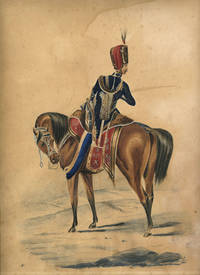
1850réf. 236911850. Very good condition. A wonderful watercolor of a British cavalry officer at the siege of Sevastopol signed "J.H." at the lower right. Perhaps the original study for the finished painting by Richard Simkin stance and details are identical to Simkin's image britishcavalryregiments.com/30-10h/10h5.jpg depicting the officer from the back turning in the saddle to his right his uniform and the horse's tack are painted in lavish and painstaking detail down to the studs on the bridle. This artwork predates Simkin's work. On the outbreak of war in the Crimea 1854-56 the 10th Hussars left India and traveled to the Black Sea but luckily were not part of Cardigan's charge of the Light Brigade avoiding the battle of Balaclava which took place in October of 1854. The regiment was heavily involved in the siege of Sevastopol and the triumphant battles of Eupatoria and Kerch. The Regiment returned to England in 1856 and in 1863 the 10th The Prince of Wales's Own Royal Hussars again had a Prince of Wales as their colonel this was Prince Edward later King Edward VII. The 10th Hussars are credited with introducing polo to England having learned it in India when a captain in the 10th Hussars observed a match and immediately formed a team with his fellow officers. 9 3/4 x 11 3/4". Overall tanned slight water mark in area above the soldier's head. Painted on card stock. unknown
réf. 244442Paris, Imprimerie impériale, novembre 1856 in-8, [2] ff. n. ch., 58 pp., broché sous couverture bleue imprimée.
1849Very Good Turkish, Ottoman (1500-1928) Original autograph manuscript letter sent to Haci Giray family for condolences on Haci Giray's death. 38x21 cm. On a special paper with 'ahar'. Sealed. 1 p. Has six lines. With a legible script and fine calligraphic style. It starts with 'huve'. He was a Turkish statesman, governor and member of state council according to Sicill-i Osmânî by Süreya and Türkischer Biographischer Index. The House of Giray (Crimean Tatar: Geraylar, Turkish: Âl-i Cengiz), also Girays, were the Genghisid/Turkic dynasty that reigned in the Khanate of Crimea from its formation in 1427 until its downfall in 1783. The dynasty also supplied several khans of Kazan and Astrakhan between 1521 and 1550. Apart from the royal Girays, there was also a lateral branch, the Choban Girays (Çoban Geraylar). Before reaching the age of majority, young Girays were brought up in one of the Circassian tribes, where they were instructed in the arts of war. The Giray khans were elected by other Crimean Tatar dynasts, called myrzas (mirzalar). They also elected an heir apparent, called the qalgha sultan (qalga sultan). In later centuries, the Ottoman Sultan obtained the right of installing and deposing the khans at his will. Giray family settled in Adrianople (Edirne) city in 17th century.
réf. 217089Paris, Maradan, Imprimerie de Crapelet, an X - 1802 in-8, VIII-398 pp., un f. n. ch. (table des matières et errata), demi-basane brune, dos lisse (reliure postérieure). Modeste reliure d'amateur, sans pièce de titre. Coiffe abîmée. Petites mouillures marginales sans gravité. Non rogné.