4 049 résultats
1833réf. 115186P., Mme Cardinal, Cherbuliez, 1833, in-8°, xlvii-501 pp, deuxième édition, un portrait gravé sous serpente en frontispice, reliure demi-chagrin carmin, dos lisse avec titres, filets pointillés et caissons dorés (rel. de l'époque), traces d'humidité anciennes, bon état. Exemplaire très bien relié
1838Carta geografica in coloritura coeva. Pieghe editoriali, resturi
1778réf. 36108Colmar Jean-Henri Decker s.d. [1778] in-4 dérelié
réf. 231170Paris, s.d. (1960) in-8, 36 pp., texte inclus dans un réglage imitant celui des cahiers d'écolier, [2] ff. n. ch., broché sous couverture illustrée.
1822réf. 186088Chez Delaunay A Paris, Chez Delaunay, 1822. In-8 relié demi-veau brun, dos à faux-nerfs, titre doré. Faux-titre, frontispcie, titre, VI + 392 pages. Petit manque sur le haut du dos, sans gravité. Peu courant
réf. ORD-14680Sans lieu. Sans date. XVIII°. Vers 1780. Dimensions de la feuille 493 x 328mm de la gravure cuvette comprise: 417 x 292mm. Belle vue aux coloris vifs de l'époque typiques des vues d'optique, présentée sous cache brun bordé de blanc. Très bon état.
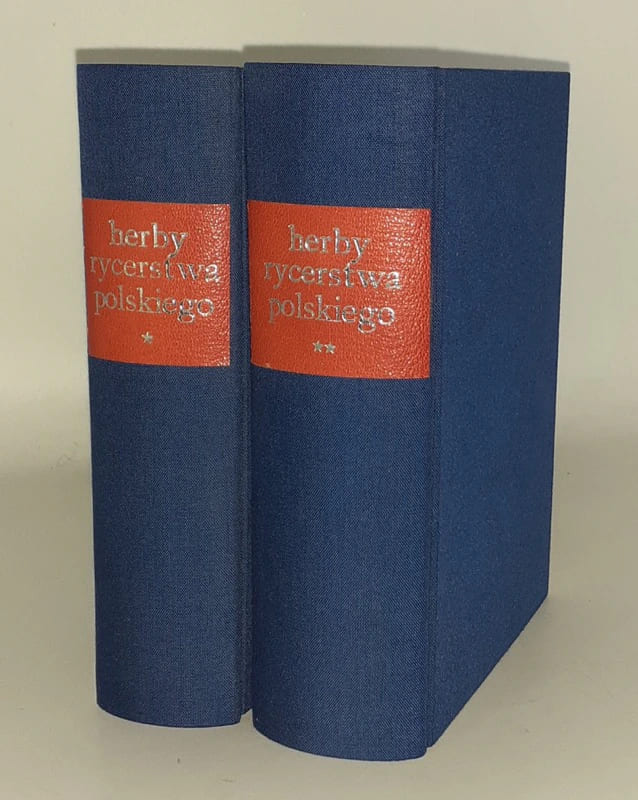
réf. 607836Kornik, Biblioteki Kornieckiej PAN, 1988. 2 tomes en 2 vol in-12, rel. de l'ép. bradel pleine-toile bleue roi, dos lisse, pièce de titre en chagrin rouge, titre doré, in-16, 1136-XVI pp. en continu, armorial à pleine pp. en coul. en tête de chaque famille, lettrines et culs-de-lampe, filet noir en encadrement du texte en polonais, l'introduction a été relié en fin du 2ème volume, bibliographie et table.
1996réf. 292749PN. New. 1996. Soft Cover. Date is original print. This is a reprint edition . PN paperback
2001réf. 1333933PN. New. 2001. Soft Cover. Date is original print. This is a reprint edition . PN paperback
réf. ria9781032052557_inpHardback. New. New Book; Fast Shipping from UK; Not signed; Not First Edition; This book presents the principle of operation materials used and possible applications of third generation solar cells that are under investigation and have been not commercialized on a large scale yet. In this book one will find the d hardcover
réf. 13976902Warszawa: Wydawnictwo Artystyczno-Graficzne RSW "Prasa", 1957 in-4, 190 pages, 234 reproductions d'affiches polonaises dont certaines en couleurs, avec notices biographiques de 31 affichistes. Reliure toile.
réf. 0891308253.Gpaperback. Good. Access codes and supplements are not guaranteed with used items. May be an ex-library book. paperback
1998réf. Atlantic-9780333645765Red Globe 1998. Paperback. New. Red Globe paperback
réf. a53199Wroclaw 1958. Muzeum Historyczne. In Polish. 4to. 699pp. errata slip hardcover. Good shaken endpapers soiled no DJ. . hardcover
19461st edition. Original Color Illustrated Boards, 8v0, 155 pages, 23 cm. In Yiddish. Title translates as, My Destroyed Home: A Jewish Village in Poland Between Both World Wars. Title in Spanish on rear cover and on verso of title page: Main joreve haim: Un hogar en ruinas: historia de un pueblito judio de Polonia, entre las dos guerras mundiales. Remembrance of life in the Polish Jewish village of Mie? Dzyrzec Podlaski. SUBJECT (S) : Jews -- Poland -- History. Mie? Dzyrzec Podlaski (Poland) . OCLC lists 22 copies. Paper brown, but no chipping, touch of edgewear to front board, binding solid, about Very Good- Condition. (YID-26-30)
1946Original paper wrappers. 8vo. 77 pages. 25 cm. In English. Originally published in the Journal of Central European Affairs and reprinted for private circulation in both German and English editions. Written while Europe was still reeling from WWII. Begins with the sentence Perhaps a more fitting title for this study would be Central Europe without Jews. Bernard Weinryb (19001982) was an "economic and social historian. Born in Turobin, Poland, Weinryb studied in Breslau at the Jewish Theological Seminary and at the university, was librarian at the seminary in 193133, and worked on the editorial staff of the Encyclopaedia Judaica in Berlin and Zurich (193334) . In 1934 he emigrated to Palestine, where he lectured at the School of Social Work and School of Economics until 1939, when he moved to the US, where he taught and did research at a number of scholarly and governmental institutions. (EJ) SUBJECTS: Holocaust - European Jewry. OCLC lists 2 copies worldwide (NLI and HUC) . Pages are browning. Small chip to bottom right of cover wrapper. Overall in Good+ Condition. (HOLO2-131-16)
19341st edition. Original paper wrappers, 8vo, 19 pages. Interesting period analysis, in under 20 pages, of the new German Mythology which is being taught to Germanys children. The author includes no fewer than 8 references to Antisemitic references to the Jews or Jewish conspiracy against Germany, as well as the other standard Nazi tropes. "Germany is now making a legend - the legend of the Third Empire. She is giving it saints and heroes and martyrs. Unlike other legends, this legend is new and burning and contemporary. It fans national pride (suffering from a sense of defeat) with ardent fires, and ... It tends to encourage dislike of other nations. The new Germany, based on racial nationalism, is building a story of the great Renaissance of national life since the collapse of 1918; and it is building it on the foundations of exaltation of German blood and depreciation of what is non-German. Being thorough, as well as passionate, the Germans are making the story they have built not only a matter of song and poem, but also a matter of text-books and educational method. The result is school history-books like that which is analysed in the following pages" (from the Foreword) . Friends of Europe publications, no. 11. SUBJECT(S) : History -- Study and teaching (Elementary) -- Germany. National socialism -- Study and teaching. Questions and answers. -- Juvenile literature. Nationalsozialistische Deutsche Arbeiter-Partei. Spine repaired, quality glossy paper has held up well and is solid. Good Condition thus. (Holo2-139-18) xx
19678vo; 154 pages; Inscribed by the author. Researched personal memoir/history of this Polish-Ukranian- Jewish community wiped out in the Holocaust. Jacket has some stains, Very good condition in Very good- jacket. (HOLO2-98-24) xx
1844réf. 1157341Leipzig, O. Wigand, 1844. Zus. etwa 1500 S. Lwdbde d. Zeit (Leihbibl.-Expl., stark braunfl.).
2008réf. 69018ABKöln., Verlag der Buchhandlung Walther König., 2008. 27 x 21,5 cm. 207 S. Illustrierter, glanzkaschierter OKarton., 69018A Erste Auflage. Sehr gutes Exemplar.
1973réf. 469011 vol. in-4 reliure pleine toile, dessin manuscrit au plat sup., La Pologne. Revue Mensuelle, Agence polonaise Interpress, 7, 8, 9, 10, 11, 12 de 1973 et 1, 2, 3, 4, et 5 de 1974
19478vo; 1st edition. Original illustrated red boards, 8vo, 342 pages. In Yiddish. Title translates as, "The destruction of Vilna." Kaczerginski (19081954) was a Yiddish writer and cultural activist. Born in Vilna to a poor family and educated at that citys Talmud Torah, Shmerke (Pol., Szmerke) Kaczerginski lost both his parents during World War I. As a youth, he was involved with outlawed Communist groups and was arrested several times, serving a lengthy prison term. In the 1930s, two of his revolutionary poems became popular in Poland. He wrote short stories with a radical bent and was a correspondent and reporter for literary publications, including the semilegal leftist press in Poland and the New York Communist daily Morgn-frayhayt. Kaczerginski played a key role in shaping the writers and artists group Yung-Vilne; he organized its evening events and was the de facto publisher of its three miscellanies between 1934 and 1936. During the period of Soviet control over Lithuania in 19401941, he was even more active in the field of Yiddish culture, but at the same time experienced his first disappointments with the attitude of the Soviet regime toward Jewish culture. During the first period of Nazi occupation, Kaczerginski wandered through villages and towns posing as a deaf mute; after many difficulties, he ended up in the Vilna ghetto. Kaczerginski was very involved in the ghettos cultural activities. As a leader of its youth club, he wrote its Yugnt-himen (Youth Hymn), a song that immediately became popular. In 1943, he wrote the song Shtiler, shtiler in memory of the mass murders committed at Ponar. Set to music that Aleksander Volkoviski (later known as Aleksander Tamir) had submitted to a contest organized by the ghetto, the song was first heard at an evening performance there and over the years became one of the best-known songs of the Holocaust. With Avrom Sutzkever and others, Kaczerginski became part of a group of forced laborers whom the Germans designated to sort Jewish cultural treasures at YIVO and other locations. Known as the Papir-brigade (Paper Brigade), the groups members risked their lives to hide the most significant items, smuggling them back into the ghetto or entrusting them to non-Jewish acquaintances. Kaczerginski was a member of the Fareynikte Partizaner Organizatsye (United Partisans Organization; FPO), and, since YIVOs building was located outside the ghetto walls, he took part in smuggling weapons into the ghetto. In September 1943, Kaczerginski, along with Avrom and Freydke Sutzkever and other members of the FPO, escaped from the Vilna ghetto as part of an organized group of fighters just before its liquidation. They joined a Soviet partisan unit in the Naroch Forests, where Kaczerginski fought as a partisan until liberation in July 1944. Kaczerginskis books describe the destruction of Vilna, the partisan struggle, and his own experiences during the Holocaust period: Khurbn Vilne (The Destruction of Vilna; 1947), Partizaner geyen (Partisans on the Move; 1947), and Ikh bin geven a partizan (I Was a Partisan; 1952) (YIVO, 2010). Ex-library, spine sunned, otherwise very Good Condition. (HOLO2-89-3A)
19478vo; 1st edition. Original illustrated red boards, 8vo, 342 pages. In Yiddish. Title translates as, "The destruction of Vilna." Kaczerginski (19081954) was a Yiddish writer and cultural activist. Born in Vilna to a poor family and educated at that citys Talmud Torah, Shmerke (Pol., Szmerke) Kaczerginski lost both his parents during World War I. As a youth, he was involved with outlawed Communist groups and was arrested several times, serving a lengthy prison term. In the 1930s, two of his revolutionary poems became popular in Poland. He wrote short stories with a radical bent and was a correspondent and reporter for literary publications, including the semilegal leftist press in Poland and the New York Communist daily Morgn-frayhayt. Kaczerginski played a key role in shaping the writers and artists group Yung-Vilne; he organized its evening events and was the de facto publisher of its three miscellanies between 1934 and 1936. During the period of Soviet control over Lithuania in 19401941, he was even more active in the field of Yiddish culture, but at the same time experienced his first disappointments with the attitude of the Soviet regime toward Jewish culture. During the first period of Nazi occupation, Kaczerginski wandered through villages and towns posing as a deaf mute; after many difficulties, he ended up in the Vilna ghetto. Kaczerginski was very involved in the ghettos cultural activities. As a leader of its youth club, he wrote its Yugnt-himen (Youth Hymn), a song that immediately became popular. In 1943, he wrote the song Shtiler, shtiler in memory of the mass murders committed at Ponar. Set to music that Aleksander Volkoviski (later known as Aleksander Tamir) had submitted to a contest organized by the ghetto, the song was first heard at an evening performance there and over the years became one of the best-known songs of the Holocaust. With Avrom Sutzkever and others, Kaczerginski became part of a group of forced laborers whom the Germans designated to sort Jewish cultural treasures at YIVO and other locations. Known as the Papir-brigade (Paper Brigade), the groups members risked their lives to hide the most significant items, smuggling them back into the ghetto or entrusting them to non-Jewish acquaintances. Kaczerginski was a member of the Fareynikte Partizaner Organizatsye (United Partisans Organization; FPO), and, since YIVOs building was located outside the ghetto walls, he took part in smuggling weapons into the ghetto. In September 1943, Kaczerginski, along with Avrom and Freydke Sutzkever and other members of the FPO, escaped from the Vilna ghetto as part of an organized group of fighters just before its liquidation. They joined a Soviet partisan unit in the Naroch Forests, where Kaczerginski fought as a partisan until liberation in July 1944. Kaczerginskis books describe the destruction of Vilna, the partisan struggle, and his own experiences during the Holocaust period: Khurbn Vilne (The Destruction of Vilna; 1947), Partizaner geyen (Partisans on the Move; 1947), and Ikh bin geven a partizan (I Was a Partisan; 1952) (YIVO, 2010). On title page verso: "Destruction of Jewish Vilna, Khurbn Vilne / Sh. Kaczerginski. New York, N.Y. : United Vilner Relief Committee, c1947." SUBJECT(S): Jews -- Lithuania -- Vilnius. World War, 1939-1945 -- Jews. -- Atrocities. -- Personal narratives, Jewish. OCLC: 19309866. Cover scratched, otherwise very Good Condition. (HOLO2-89-4)
1988Hardcover, 123 pages, illustrated, 26 cm. Series: Winter studies in Yiddish ; ; v. 2. Edition: 1st edition. SUBJECT (S) : Yiddish language -- Dialectology -- Congresses. Yiddish (langue) -- Dialectes -- Congres. Butler, Samuel, 1835-1902. Yiddish language; Dialects. "Published in cooperation with the Oxford Centre for Postgraduate Hebrew Studies. " "Published as a supplement to Language and communication"-Title pages verso. Includes bibliographies. Other Titles: Language and communication; Supplement. Light wear to cover binding. Very good condition. (Sef-16-8)