4 187 résultats
2000réf. Star-9783790812633Springer 2000. Hardcover. New. Springer hardcover
2000réf. Star-9783790812633Springer 2000. Hardcover. New. Springer hardcover
194556 pages. Features: Cover photo of young lady with bike; Nice Ford ad inside front cover with painting of barn raising by W.A. Winter; Colour Ritz Cracker ad; What will follow the peace in Europe?; Photo of Royal Canadian Engineers in Holland locating searching with mine detector for $25,000 in jewels hidden by Dutch family for Jewish couple who escaped from Poland; Photo of a C.W.A.C. in a valo-taxi, the Parisian version of a rickshaw; Great editorial with photo of Miss Francis Langford, whose "pin up" in the wartime issue of this publication was most popular with Canadian troops; Nice colour Orange Crush features young lady holding brown glass bottle; Horation Alger in the White House - photo-illustrated article on Harry S. Truman; The Eternal Balance (short story); The Wife of a Hero (short story); The Knight is Young - photo-illustrated article on Alan Young of New York's Radio City; Too Many Cookies (short story); The East Coast Sardine Industry - photo-illustrated article; Evinrude ad shows military rafts powered by their outboards; The Cop's Horse - interesting article on New York's police horses; The Great Bullion Mystery - James Dye of Pinkerton's is called to the Seattle National Bank when $85k in gold goes missing on a boat named the 'Sarah' steaming from Tanana to Dawson; Children and Sunburn; Family Relations in B.C. - U.B.C. launches course on marriage and family life; Centrefold Frigidaire ad called "3000 Miles of Frigidaire" shows map of Canada; ad in which Schiaparelli interprets new Proud Pink Cutex nail polish; Short article called "War Worker" about Margaret Strachan who worked at Toronto's Royal York Hotel; Great one-page colour GM ad entitled 'Victory Parade' includes 15 illustrations of military products they made to support the war effort; Great photos of newlywed couple Kathleen Cuninghame and Tommy Hull, both of Toronto, in Woodbury soap ad; Colour ads for Canada Dry, Savoy Custard Powder, Clark's Mushroom Soup and Nabisco Shredded Wheat; Arrid ad features nice photo of Ilona Massey; New science developments; World Sayings; Intersting ad inside back cover by the Wartime Prices and Trade Board entitled "What Every Housewife Should Know About Sugar For Canning", with illustration of sugar ration coupons; Lovely colour White Rose ad on back cover encourages post-war readers to 'Look forward to the better things in Life!"; and more. Unmarked with moderate wear. A lovely vintage copy. Book
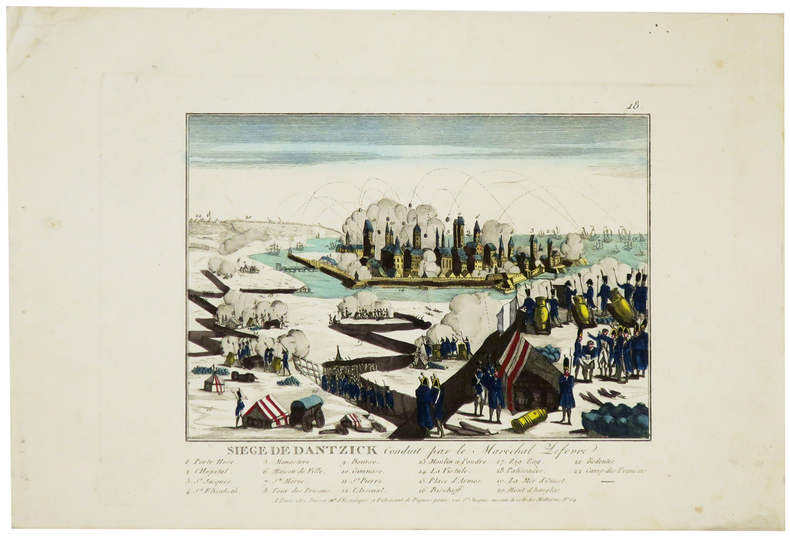
1807réf. LBW-5965Paris, Basset, [1807]. 170 x 197 mm.
Quattro tomi in 16° (cm 9,7 x 16), solide legature piena pelle coeva con titoli su tasselli al dorso, angoli ammaccati, minuscoli radi tarletti ai dorsi e ad un piatto ma suggestive legature; cuffia inferiore del tomo secondo con mancanza ma buon esemplare; pp lviij, 385 per il primo tomo; (4), 584 per il secondo; (4), 517 per il terzo; (4), 443 per il quarto. Radi marginalia e annotazioni ai frontespizi datate 1884; al tomo quarto, da p 437 al fondo, tarletti con minima perdita di testo. Al fondo del volume quarto, "Anecdotes sur la révolution de Russie, en 1762, par le même auteur", con proprio frontespizio. Quest'ultima opera era già apparsa nel 1797; l'"Histoire", invece, circolò a lungo manoscritta, prima di essere impressa postuma in questa prima edizione. Nato nella "banlieue" di Parigi, l'A. (1735-1791), ufficiale, diplomatico, storico, amico di Rousseau e dei "philosophes", A. di opere anonime, membro dell'Académie Française dal 1787, compose una poderosa "Histoire de Russie". La presente opera fu composta per il Delfino, il futuro Luigi XVI, il sovrano ghigliottinato. Ciò gli valse una pensione di 6000 "livres". Rivale di Chamfort et di Rivarol, Rulhière «est un écrivain non seulement spirituel, mais savant et habile, qui, après avoir longtemps disséminé ses finesses et ses élégances sur des sujets de société, a essayé de rassembler finalement ses forces, de les appliquer aux grands sujets de l'histoire, et y a, jusqu'à un certain point, réussi». (Sainte-Beuve, IV). Catalogue Russica, ii, R-1528; cf.: Zaleski, i, 16.
New York, No Publisher (United Hebrew Trades) , 1928. Paper Wrappers, Large 4to, 160 pages. 30 cm. In Yiddish. Includes beautiful cover art and period ads and portrait photos. Feinstone (1878-1945),was born in Warsaw and trained as a woodcarver there. "After completing school he emigrated to England where he became president of a woodcarvers' union in London (1895). Later in Birmingham he was active in the beginnings of the British Labour Party. In 1910 Feinstone emigrated to the U.S. where he found employment in various skilled trades, securing permanent work in the umbrella industry. He soon became an official of the Umbrella Handle and Stick Makers' Union and an important figure in the United Hebrew Trades, an organization which sheltered the smaller and weaker American Jewish trade unions. Feinstone was a close associate of the organization's outstanding leader, Max Pine, whom he succeeded as United Hebrew Trades' secretary in 1928. Feinstone continued Pine's policy of supporting the socialist labor sector in Jewish Palestine through the Histadrut. He also represented the United Hebrew Trades on the executive board of the Central Trades and Labor Council of Greater New York, wrote articles in the New York Call and the Yiddish Jewish Daily Forward endorsing socialism and labor Zionism, and worked for the establishment of an independent labor party. With the advent of the New Deal, Feinstone's socialist teachings were incorporated by the American Labor Party, which satisfied his desire for a working class political organization. Thereafter, until his death he concentrated on obtaining support for Jewish labor in Palestine" (Melvyn Dubofsky in EJ). SUBJECT(S):Jewish labor unions -- United States. Jewish socialists -- United States. OCLC lists 3 copies worldwide (Harvard, Florida, NYPL), none west of New York. Edgewear to covers, otherwise Good Condition. (Y-18)
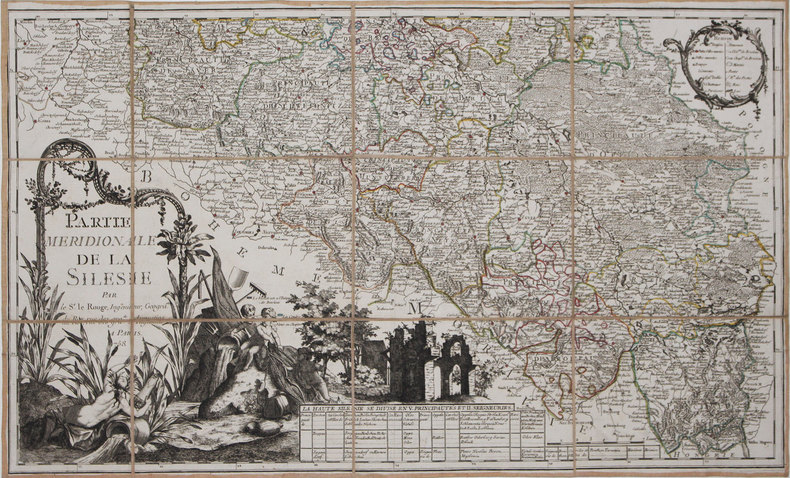
1758réf. LBW-31491758. En 12 sections montées sur toile et pliées, formant une carte de 464 x 764 mm.
1911réf. 27960Paris, Librairie militaire R. Chapelot et Cie, 1911. Un fort vol. au format in-8 (248 x 173 mm) de xviii - 509 pp. + planches dépliantes in fine. Reliure de l'époque de demi-cartonnage marine à l'imitation de chagrin, dos lisse orné de doubles filets dorés, pièce de titre de maroquin carmin titre doré, couvertures conservées.
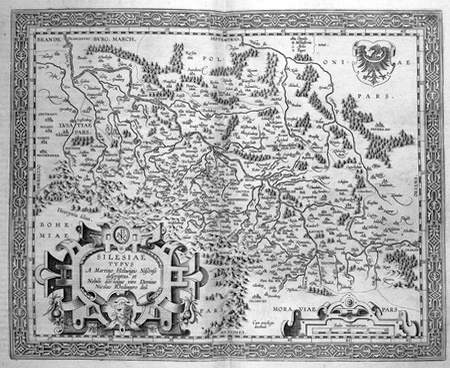
1603réf. LBW02528[Anvers, 1603]. 344 x 420 mm.
1935In 4° piccolo; 175, (1) pp. Brossura editoriale con piccolo restauro al margine basso del piatto anteriore e al dorso. Prima edizione di questa raccolta poetica del celebre poeta, critico, teorico dell'arte e drammaturgo polacco, nato a Cracovia il 3 maggio 1891, morto a Varsavia il 9 novembre 1969. Fondatore della rivista Zwrotnica (Lo scambio) si oppose alla poetica del gruppo Skamander (che pubblicava l’omonima rivista), fu tra i massimi teorici del movimento poetico dell’avanguardia costruttivista polacca influenzando notevolmente l’opera di Julian Przybos, Jan Brzekowski e Jalu Kurek. Nato da una famiglia di avvocati ebrei si convertì in giovane età al cattolicesimo passando diversi anni della sua giovinezza in Spagna. “Muovendo da una visione ottimistica della civiltà moderna, P. ha elaborato una concezione razionalistico-costruttivista della poesia, intesa come rigorosa organizzazione intellettuale del materiale linguistico, in cui occupano un posto chiave la metafora, una funzione nuova del ritmo e della rima”. La sua poesia è incentrata sulle le “3xM” città, masse e macchine (in polacco miasto, masa, maszyna) che divenne, fra l’altro, il motto dei costruttivisti. La sua teoria della poesia respinse la linea melodica, il versetto sillabato ed il verso libero era consentito solo per quelle metafore che potevano essere interpretate in modo chiaro. Peiper, come i futuristi, si allontanò dalla tradizione poetica, perché a suo avviso, l'incontro con la nuova realtà non poteva avvenire usando i vecchi schemi. Difese un difficile linguaggio nella poesia, perché il poeta non può chiamare direttamente stati ed emozioni, come fa la prosa. Quella qui presentata è la prima edizione della raccolta completa dei lavori costruttivisti di Peiper e contiene oltre alle tre opere “Z”, “Zywe linie” e “Raz”, una serie di componimenti apparsi su “Zwrotnica”, “Telegram” e “Almanach Nowej Sztuki”. Di grande importanza è il testo critico che Peiper antepose alla raccolta, qui pubblicato per la prima volta che raccoglie la teoria estetica e poetica di Peiper. Il testo è a volte stampato in orrizontale a volte in verticale. Rif. Bibl.: NuNukat, Katalog zbiorow Polskich Bibliotek Naukowych, n° zz2002920499.
1819P., Ménard et Desenne, 1819. 6 volumes in-8 reliés pleine basane havane racinée (reliure d'époque), dos long, portrait en frontispice au premier volume des Oeuvres posthumes ; de 330 à plus de 500 pp. par volume, pièces de titre et de tomaison noires, caissons soulignés de 4 filets dorés et ornés de fleurons, roulettes d'encadrement sur les plats. quelques coins fragiles et arrondis, une départ de fente à un mors, un petit manque de cuir au bas d'un dos, une coiffe faible, néanmoins bel exemplaire. C. C. de Rulhière, tour à tour officier et diplomate, poète et historien, fut l'ami de J.-J. Rousseau et des philosophes. Il accompagna le baron de Breteuil à Saint-Pétersbourg en 1760 et il retraça plus tard la révolution russe de 1762 (O. Posthumes). Il écrivit pour les Dauphin (Louis XVI) une histoire de la Pologne. Sainte-Beuve le donne comme "écrivain spitrituel, savant et habile". Les Oeuvres contiennent : Eclaircissements historiques sur les causes de la Révocation de l'Edit de Nantes, poèmes et discours en vers, épitres, lettres en vers et en prose, contes, épigrammes, poésies diverses. Les Oeuvres Posthumes : Histoire de l'anarchie en Pologne ; Anecdotes sur la révolution de Russie en l'année 1762
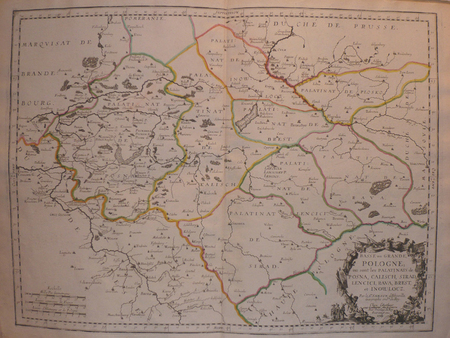
1703réf. LBW02524Paris chez l'autheur 1703 417 x 560 mm.
1961réf. 260801961 Editions Lidis- Imprimerie Nationale, 1964-1965, Paris. 1 volume titré suites (emboîtage de l'éditeur).61/64 lithographies originales de Walter Spitzer sous 5 pochettes dont une incompléte. Le tirage des lithographies originales en couleurs hors le texte et in plano sans serpente volante, composées et gravées par Walter SPITZER, a été assuré par les ateliers MOURLOT Frères.
1841réf. 14710Gaultier-Laguionie Paris 1841 1 vol. In-8 de 4 ff.n.ch. 403 pp. 2 ff.n.ch., demi-percaline de l'époque, dos lisse, titre doré.
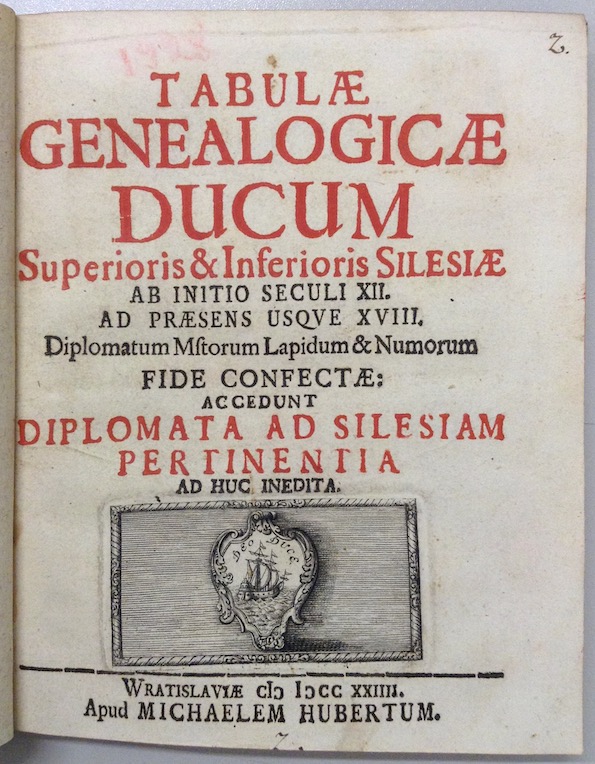
1724réf. 627502Breslau, M. Hubert, 1724. 4to. 5 Bl., 128 S. Mit gestochener Titelvignette u. 27 doppelblattgroßen, teils gefalteten Stammtafeln. Moderner Pappband mit Rückenschild. [2 Warenabbildungen]
1823réf. 1074Sans deux portraits lithographiés (Stanislas et Marie Leckzinska).Reliure demi-chagrin bleu. Dos lisse finement orné de fleurons et de filets dorés. Coiffe supérieure frottée. Intérieur avec rousseurs. On joint Relation d'un voyage A Bruxelles et à Coblentz (1791).
réf. 134805Paris, Delaunay, 1822 in-8, VI-392 pp., frontispice, demi-basane noire, dos lisse orné (rel. de l'époque). Petites rousseurs au front.
1947Small folio, 17, 33pages. First Edition. Inscribed by Vishniac's father, Solomon.With an introductory essay by Abraham Joshua Heschel. A most moving depiction of vibrant Jewish life before the Holocaust. 31 black and white photographs, many now iconic images of Eastern European Jewish life. Original boards, beautiful clean copy in jacket that lacks 3 inches of the spine and has spine label at the bottom but otherwise nice. Inscribed by Vishniac's father, Solomon, in the old Russian style, on the end paper. We had an expert from the Roman Vishniac collection at the Institute for Contemporary Photography take a look at it and this is what they concluded: "Its written in the old Russian language (tsarists times) and says 'In memory to dear Ida Glezer from the devoted friend Solomon Vishnyak (signiture) Roman Vishnyak.' So here we have confirmation. Roman Vishniac's father, Solomon Vishniac, inscribed his son's book to a friend, in the old Russian language of tsarist's times (whereas, Roman Vishniac's Russian was quite modern...So, not signed by Vishniac, but by his father. Confirmed attribution." Very Good Condition in Good Jacket with damaged spine and spine label on jacket only (EE-3-20) xx
1998réf. Star-9783540628620Springer 1998. Hardcover. New. Springer hardcover
1998réf. Star-9783540628620Springer 1998. Hardcover. New. Springer hardcover
1819réf. 445295Cracoviae, typis academicis, 1819/44. Jeweils 12-16 Seiten. Alte Heftung. 4to.
18991st edition. Original pink printed paper wrappers, 8vo, 34 pages ; 23 cm. In Yiddish. SUBJECT (S) : Jews -- Galicia (Poland and Ukraine) -- Fiction. Europe. -- Ethnic relations. OCLC lists only 1 copy worldwide (Cambridge) , but theirs lacks the title page. None listed in the US in any condition. Covers fragile, reinforced, and heavily worn with some loss to rear, with spine rebacked. Internal paper toned but good and solid. Good Condition thus. Rare and interesting! (KH-6-25)