WWI; PolandABAA
4049 risultati
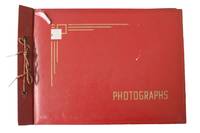
1918rif. 184801918. American Red Cross Poland photo album Warsaw Operations 1918-1920 documents U.S. humanitarian operations in Eastern Europe following World War I recording relief work conducted during the Polish-Soviet War and the broader reconstruction of Polish civil and medical infrastructure. The images identify personnel locations and operational units associated with American Red Cross efforts as they provided transport medical care and material aid in a region destabilized by the collapse of empires and the reestablishment of an independent Polish state in 1918. A caption referencing "the Polish-Russian front ARC 1920 Poland" situates the album within active conflict conditions while additional annotations tied to supply trains and field units establish the material as a contemporaneous record of organized international relief. Photo album measuring approximately 8 x 11.5 inches with 34 photographs mounted across 11 leaves each image approximately 3 x 5 inches. The photographs depict American Red Cross personnel aboard trains and railway platforms including a documented ARC supply train as well as automobile units in transit or undergoing roadside repair captioned "American Red Cross cars 1918 Poland." Several images include handwritten annotations identifying subjects locations and squadron designations. One photograph shows a group of workers assembled on a makeshift structure with a caption identifying "Van Wert in charge of one of the relief trains" indicating named personnel connected to field operations. Produced during the initial phase of internationally coordinated humanitarian intervention in postwar Poland the album aligns with the 1919 recognition of the Polish Red Cross by the International Committee of the Red Cross which facilitated the transfer of hospitals medical trains and logistical infrastructure into Polish administration. The photographs document the integration of American aid within these systems including rail-based medical transport and mobile support units critical to relief distribution in contested and newly reorganized territories. Some photographs detached from leaves and a tear to the front cover; images and structure otherwise intact. Overall very good condition. unknown books
rif. 9781631173028NOVA SCIENCE PUBLISHERS INC
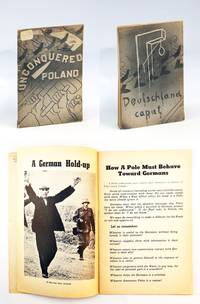
1943rif. 442j1479New York: Poland Fights - Polish Labor Group. Fair with no dust jacket. 1943. First Edition. Paperback. "As German boots marched and German tanks rumbled through the mined streets of Warsaw the workers buried their remaining arms drew closer to one another and silently disappeared to continue the fight with means other than rifles and bullets. Underground Poland was born! And this is its story." - page 2. Topics include: How a Pole Must Behave Toward Germans; List of 15 Strictly Forbidden Activities; Underground Poetry; Invisible Sabotage; Roads To Death; 1.5 Million Slave Laborers; Boycott; Recalcitrant Peasants; Avengers and Guerrillas; The Ghetto Strikes Back; Collective Responsibility of Monuments; Wawer Massacre; Hide It From The Germans!; Our Future. Stapled booklet with 44 glossy unnumbered pages in illustrated covers. Text in English. Profusely illustrated with black and white reproductions of photos document facsimiles illustrations and a map. No indication of any prior printings. Former library copy with related markings to front and back of front cover. Bound by a single staple which is pulling from the tender illustrated covers. One-inch opening at bottom of coverfold. A worthy example of this highly informative WWII-era artifact. Wiener Library Catalogue Series 7 1004. 8.5" x 5.5"; Front Cover; 8vo . Poland Fights - Polish Labor Group paperback
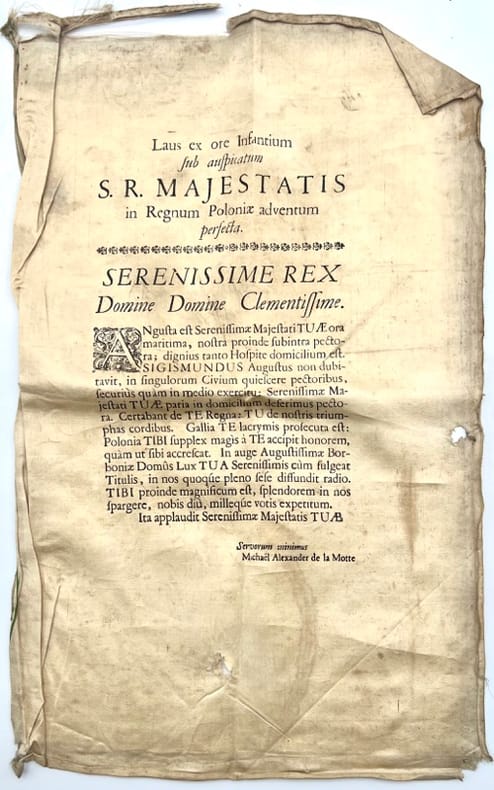
1714rif. 44331S.l.n.d., , 1714-1734. Placard in-quarto sur soie (39 x 25 cm).
1913rif. 3004PARIS. J. LEROY ET CIE, EDITEURS. 1913. GRAND ET FORT IN-4 BROCHE (28,5 X 38,5 X 5,5 CENTIMETRES ENVIRON) DE (8) + III + (1) + 314 ET (2) PAGES, COUVERTURE GRISE REMPLIEE ILLUSTREE D’UNE VIGNETTE EN NOIR, TITRE IMPRIME EN NOIR. SPLENDIDE OUVRAGE ILLUSTRE DE 48 PLANCHES HORS TEXTE D'UNIFORMES EN COULEURS, DE 10 PLANCHES HORS TEXTE, DONT 6 DE PORTRAITS MULTIPLES ET 4 D’ETENDARDS ET FANIONS (2 EN COULEURS) ET DE 24 VIGNETTES DANS LE TEXTE. EDITION ORIGINALE ET PREMIER TIRAGE, LIMITE A 1000 EXEMPLAIRES NUMEROTES, 300 SUR ARCHES ET 700 SUR ALFA, CELUI-CI SUR ALFA, PORTANT LE NUMERO 319. ERREUR DE FACONNAGE DE L’OUVRAGE AU MOMENT DE SA PARUTION, NEAMMOINS BIEN COMPLET ET COLLATIONNE, AVEC DES PAGES SUPPLEMENTAIRES (46-49, 47-52, 45-50 ET 51-48), UN CAHIER VOLANT A REFIXER (PAGES 45-52). QUELQUES TRACES D’HUMIDITE ANCIENNE, PETITS DEFAUTS EXTERIEURS SANS GRAVITE, COMME SOUVENT COMPTE-TENU DU POIDS DU VOLUME, SINON BON EXEMPLAIRE. ON JOINT UN BULLETIN DE COMMANDE ET UN BULLETIN DE SOUSCRIPTION AVEC UNE PLANCHE SPECIMEN SUPPLEMENTAIRE.
1913rif. 3371PARIS. J. LEROY ET CIE, EDITEURS. 1913. GRAND ET FORT IN-4 BROCHE (28,5 X 38,5 X 5,5 CENTIMETRES ENVIRON) DE (8) + III + (1) + 314 ET (2) PAGES, COUVERTURE GRISE REMPLIEE ILLUSTREE D’UNE VIGNETTE EN NOIR, TITRE IMPRIME EN NOIR. SPLENDIDE OUVRAGE ILLUSTRE DE 48 PLANCHES HORS TEXTE D'UNIFORMES EN COULEURS, DE 10 PLANCHES HORS TEXTE, DONT 6 DE PORTRAITS MULTIPLES ET 4 D’ETENDARDS ET FANIONS (2 EN COULEURS) ET DE 24 VIGNETTES DANS LE TEXTE. EDITION ORIGINALE ET PREMIER TIRAGE, LIMITE A 1000 EXEMPLAIRES NUMEROTES, 300 SUR ARCHES ET 700 SUR ALFA, CELUI-CI SUR ARCHES, NON JUSTIFIE. QUELQUES ROUSSEURS, SINON BON EXEMPLAIRE. .
1671In-4°,(8cc), 40pp, 2 illustrazioni calcografiche, legatura in cartonato.
19351st edition. Original Color Wrappers, many photographic or illustrated, bound into publishers cloth, 4to, generally 24-36 pages per issue. In Yiddish, with English section at rear. Loaded with photos and illustrations, some on the Yiddish or English covers, and many of them by William Gropper. Nazi-era Communist monthly in support of Soviet Birobidjan, the Soviet Autonomos Jewish Republic. Much on rising Antisemitism in Germany, as wel asl, of course, the history of antisemitism in pre-Soviet Russia, reports Icor and settlement of Jews into Birobidzhan, why Icor opposes Zionism, photos, literary works, including poetry, fiction, humor, satire and other materials covering virtually all aspects of life in the Jewish Autonomous region. Monthly Periodical of the Association for Jewish Colonization in the Soviet Union. "IKOR: Buletin Fun Der Gezelshaft " was issued on an excellent quality paper in Yiddish and English from 1928 to 1935 under the title Icor, and from 1935 to 1950 as Naylebn. The magazine features articles, photos, literary works, including poetry, fiction, humor, satire and other materials covering virtually all aspects of life in the Jewish Autonomous region of Birobidzhan. "IKOR: Buletin Fun Der Gezelshaft " ran 65 issues (eight volumes) between March 1925 and April 1935. It was Monthly (except usually for Aug.) from Jan. 1930-Apr. 1935; and was irregular from 1925-1929. It was succeeded by Naylebn (New York) in 1935 (see volume below). Subjects: Idishe Kolonizatsie Organizatsie (IKOR). Jews - United States - Periodicals. Jews - Colonization - Soviet Union - Periodicals. Jews - Russia (Federation) - Birobidzhan. Jewish periodicals - United States. Jewish periodicals. OCLC Number: 174120726. OCLC lists 8 holdings. Slight mustiness. Boards, paper, and color paper covers remain bright and strong. Very Good Condition, a beautiful set (Yid-22-25C-elx)
rif. 244825Paris, Leroy, 1913 fort gr. in-4, III-314 pp., index et biblio., toile écrue (reliure moderne).
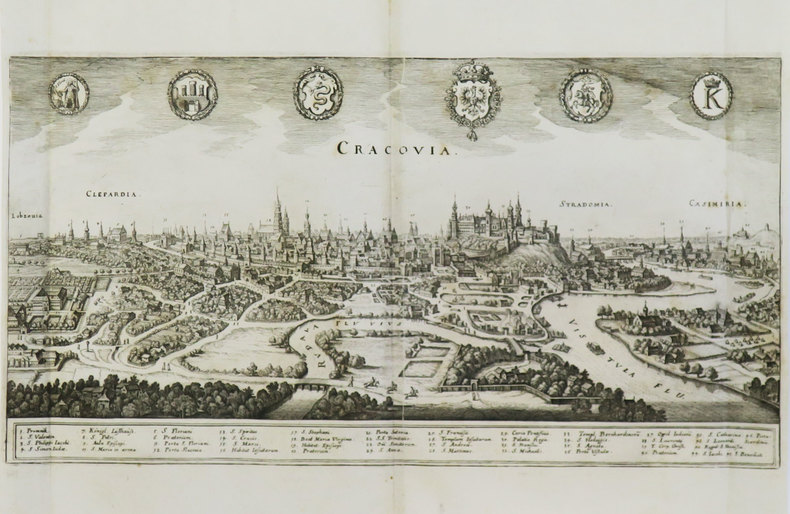
1649rif. LBW-3597[1649]. 203 x 389 mm.
1819rif. 13828Paris, Chez H. Nicolle et Chez Desenne, 1819. 4 vol. in-8 de (4)-CLXVI-342 pp. ; (4)-500 pp. ; (4)-464 pp. et (4)-397-(2) pp., veau blond glacé, dos ornés à nerfs, large plaque romantique poussée à froid sur les plats, guillochis dorés sur les coupes, dentelles dorées sur les chasses tranches marbrées (reliure de l'époque).
1933rif. 173338New York: Edgar Weyhe 1933. Limited to 200 numbered copies. Paperback. VG with minor coiling to orange dustjacket covers otherwise almost like new except for some separation of spine at the very top. Orange printed dustjacket surrounding a white printed glued wrap-around stiff cover. 54 pp. Two color plates including a signed in pencil lithograph portrait of Shore by Jean Charlot 18 bw photographic reproductions after photographs of the artist's work by Edward Weston 5 smaller bw reproductions which may be lithographs at the head of the text articles. The first color plate may also be a color lithograph but it is not signed. One of Armitage's rarest works. A monograph on the art and career of California modernist painter Henrietta Shore.The portrait by Charlot is signed by the artist but hideous. Includes an article by Edward Weston who also photographed the original artworks by Shore. Includes articles by Merle Armitage Edward Weston and an Appraisal by Reginald Poland. Very rare. Forward colophon reads "Two hundred numbered copies of this book designed by Merle Armitage have been printed . by the Will A. Kistler Company . It is set in twelve point Rockwell type and the entire contents of the book is printed by the Artochrome Process. The photographs of the paintings pastels crayons and drawings in this book were made from the originals by Edward Weston. This is copy no. blank"--Colophon./ Descriptive letterpress on versos facing the plates." Edgar Weyhe paperback
1933rif. 173338New York: Edgar Weyhe 1933. Limited to 200 numbered copies. Paperback. VG with minor coiling to orange dustjacket covers otherwise almost like new except for some separation of spine at the very top. Orange printed dustjacket surrounding a white printed glued wrap-around stiff cover. 54 pp. Two color plates including a signed in pencil lithograph portrait of Shore by Jean Charlot 18 bw photographic reproductions after photographs of the artist's work by Edward Weston 5 smaller bw reproductions which may be lithographs at the head of the text articles. The first color plate may also be a color lithograph but it is not signed. One of Armitage's rarest works. A monograph on the art and career of California modernist painter Henrietta Shore.The portrait by Charlot is signed by the artist but hideous. Includes an article by Edward Weston who also photographed the original artworks by Shore. Includes articles by Merle Armitage Edward Weston and an Appraisal by Reginald Poland. Very rare. Forward colophon reads "Two hundred numbered copies of this book designed by Merle Armitage have been printed . by the Will A. Kistler Company . It is set in twelve point Rockwell type and the entire contents of the book is printed by the Artochrome Process. The photographs of the paintings pastels crayons and drawings in this book were made from the originals by Edward Weston. This is copy no. blank"--Colophon./ Descriptive letterpress on versos facing the plates." Edgar Weyhe paperback books
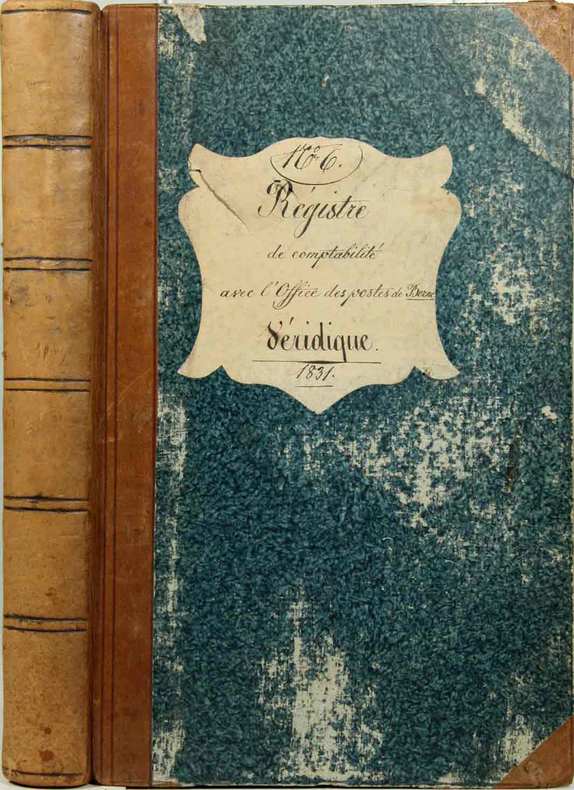
rif. 103316aafFribourg, L.J. Schmid, 1831, gr. in-4°, 4 p., texte sur 2 colonnes par fasc. quelques légères rousseurs, le tout en bon état; 18 ff. + env. 140 ff. vierges, avec feuille volante de décomptes ms. entre les pages (à l’origine collée sur feuille de garde), cartonnage muet original.
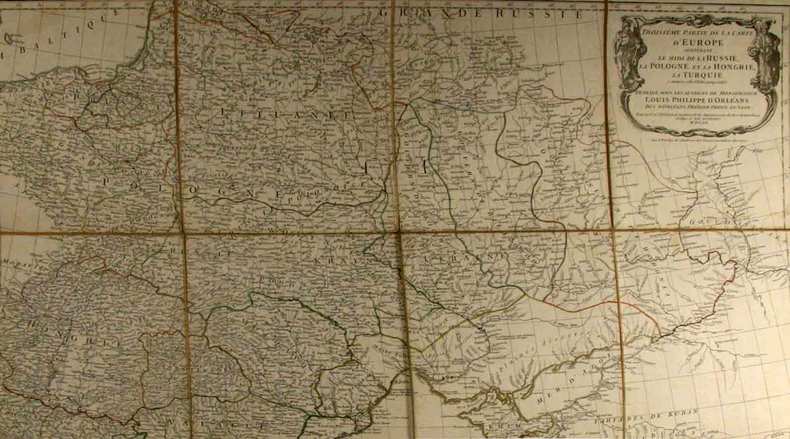
rif. 116334aafPubliée sous les auspices de Monseigneur Louis Philippe dOrléans premier Prince du Sang. MDCCLX, 1760, 84x100 cm, Carte en 16 éléments montés sur toile d’époque, carte pliée 26x21.5 cm. (frontières en couleurs / Map coloured in outline).
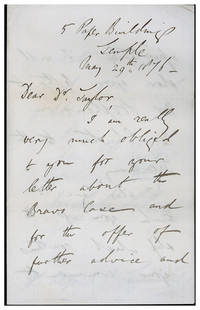
1876rif. 484621876. Taylor Alfred Swaine 1806-80. Archive of material relating to the famous Charles Bravo poisoning case consisting of 1 Autograph letter signed to Taylor from Harry Bodkin Poland 1829-1928. Bifolium. 3pp. Temple London 29 May 1876. 205 x 127 mm. 2 3 autograph letters signed to Taylor from Augustus K. Stephenson 1827-1904. 15pp. total. London 3 June 1876 2 bifolia 8pp.; 5 June 1876 bifolium 4pp.; and 22 July 1876 bifolium 3pp. 184 x 114 mm. 3 Taylor. The Balham mystery. Galley proof corrected in Taylor's hand of the first portion of an unsigned article in The British Medical Journal 20 May 1876: 631-633. 578 x 148 mm. Together 4 letters and one printed proof. Some rodent damage to Stephenson's letters affecting several words mended in several places with clear tape. Small lacuna along one fold in the galley proof affecting a few words. Minor dampstaining but good to very good. From the library of Alfred Swaine Taylor founder of forensic toxicology an archive relating to the notorious and sensational Charles Bravo poisoning a case that is still unsolved. The Bravo mystery has inspired several works of fiction including Shirley Jackson's We Have Always Lived in the Castle 1962 and a three-part BBC serial titled The Poisoning of Charles Bravo 1975. Bravo 1845-76 a 33-year-old barrister died of tartar emetic antimony poisoning on 21 April 1876 less than five months after his marriage to a wealthy widow; the marriage was reportedly an unhappy one. The inquest on Bravo's death held on 25 and 28 April returned an open verdict but the circumstances of the case were so suspicious that Taylor offered his expert advice to Harry Bodkin Poland one of the attorneys for the Crown. Our archive includes the letter Poland sent thanking Taylor for "your letter about the Bravo Case and for the offer of further advice and assistance" and informing Taylor that he "will show your letter to Mr. Augustus K. Stephenson the Solicitor to the Treasury." Stephenson is represented in the archive by three letters asking for Taylor's expert opinion on the case: "You have read the account of the Post-mortem encl. by Dr. Payne . . . That being so does it enable you to form an opinion as to whether the antimony was taken in solid food . . . letter of 3 June. "Assuming small traces of antimony to have been found in the liver of a deceased person-Can you form any opinion as to length of time before death that the antimony was taken" letter of 5 June. "Can you tell me whether antimony in the form of tartar emetic wd. if taken in small doses at intervals during pregnancy induce a miscarriage letter of 22 July. The last item in our archive is a galley proof corrected in Taylor's hand of the first two-thirds of an article on the Bravo case published on 20 May in the British Medical Journal; although the article is unsigned it was most likely written by Taylor. Based on the medical evidence Taylor concluded that Bravo had ingested the fatal dose of antimony during his last meal. He severely criticized the investigators in the case for not testing the remains of the bottle of wine he had drunk with the meal-"the only article of food not shared in common with the three who sat at the dinner-table . . . If tartar emetic had been found in this wine much of the present mystery hanging about the case would be removed . . . In tracing the further history of this bottle we learn that no one now knows what became of it or its contents." . unknown
1876rif. 484621876. Taylor Alfred Swaine 1806-80. Archive of material relating to the famous Charles Bravo poisoning case consisting of 1 Autograph letter signed to Taylor from Harry Bodkin Poland 1829-1928. Bifolium. 3pp. Temple London 29 May 1876. 205 x 127 mm. 2 3 autograph letters signed to Taylor from Augustus K. Stephenson 1827-1904. 15pp. total. London 3 June 1876 2 bifolia 8pp.; 5 June 1876 bifolium 4pp.; and 22 July 1876 bifolium 3pp. 184 x 114 mm. 3 Taylor. The Balham mystery. Galley proof corrected in Taylor's hand of the first portion of an unsigned article in The British Medical Journal 20 May 1876: 631-633. 578 x 148 mm. Together 4 letters and one printed proof. Some rodent damage to Stephenson's letters affecting several words mended in several places with clear tape. Small lacuna along one fold in the galley proof affecting a few words. Minor dampstaining but good to very good. From the library of Alfred Swaine Taylor founder of forensic toxicology an archive relating to the notorious and sensational Charles Bravo poisoning a case that is still unsolved. The Bravo mystery has inspired several works of fiction including Shirley Jackson's We Have Always Lived in the Castle 1962 and a three-part BBC serial titled The Poisoning of Charles Bravo 1975. Bravo 1845-76 a 33-year-old barrister died of tartar emetic antimony poisoning on 21 April 1876 less than five months after his marriage to a wealthy widow; the marriage was reportedly an unhappy one. The inquest on Bravo's death held on 25 and 28 April returned an open verdict but the circumstances of the case were so suspicious that Taylor offered his expert advice to Harry Bodkin Poland one of the attorneys for the Crown. Our archive includes the letter Poland sent thanking Taylor for "your letter about the Bravo Case and for the offer of further advice and assistance" and informing Taylor that he "will show your letter to Mr. Augustus K. Stephenson the Solicitor to the Treasury." Stephenson is represented in the archive by three letters asking for Taylor's expert opinion on the case: "You have read the account of the Post-mortem encl. by Dr. Payne . . . That being so does it enable you to form an opinion as to whether the antimony was taken in solid food . . . letter of 3 June. "Assuming small traces of antimony to have been found in the liver of a deceased person-Can you form any opinion as to length of time before death that the antimony was taken" letter of 5 June. "Can you tell me whether antimony in the form of tartar emetic wd. if taken in small doses at intervals during pregnancy induce a miscarriage letter of 22 July. The last item in our archive is a galley proof corrected in Taylor's hand of the first two-thirds of an article on the Bravo case published on 20 May in the British Medical Journal; although the article is unsigned it was most likely written by Taylor. Based on the medical evidence Taylor concluded that Bravo had ingested the fatal dose of antimony during his last meal. He severely criticized the investigators in the case for not testing the remains of the bottle of wine he had drunk with the meal-"the only article of food not shared in common with the three who sat at the dinner-table . . . If tartar emetic had been found in this wine much of the present mystery hanging about the case would be removed . . . In tracing the further history of this bottle we learn that no one now knows what became of it or its contents." . unknown books
1940Brossura editoriale con risvolti usurata agli angoli, ai margini e al dorso, sia alle estremità che sulla lunghezza. Piatti macchinati; dorso brunito, probabilmente per l'esposizione al sole. Pagine salde alla cerniera, con ampio margine, brunite, così come i tagli. Presenti tavole fuori testo, lievemente ingiallite, con fotografie di Teodoro Susicch, in bianco e nero, con didascalia. Numero pagine 277. USATO
rif. ORD-2643Traduit de l'anglais, enrichi de notes & des éclaircissemens nécessaires, & augmenté d'un Voyage en Norvège. Par M. P. H. MALLET. Ouvrage orné de Cartes géographiques, Portraits, Plans & Figures en taille-douce. Genève. Barde, Manget & Comp. Paris. Buisson. 1786. 4 volumes in-8 (128 x 198mm) plein moucheté de noir, dos à 5 nerfs ornés or, pièces de titre maroquin rouge, de tomaison maroquin noir, tranches rouges, XII, 380; 1f., 404; 1f., 393 et 1f., 303 pages. Bien complet des 19 planches hors texte. Ex-libris Duhamel. 2 coiffes supérieures habilement restaurées, petits accidents aux derniers plats des tomes 1 et 2 sinon très bel exemplaire.
1920rif. 145501920 br. format 30 x 24 cm, Paris s.d. (ca. 1920)
1701rif. 34127S.l. [Cracovie] [Mikolaj Aleksander Schedel] s.d. [1701] in-16 vélin rigide orangé, dos lisse muet [Rel. de l'époque]
19052 gr. voll. in-4, pp. XVIII, 397; 411, bross. edit. Poderosa opera che raccoglie oltre tremila nominativi di italiani che, per diversi motivi, operarono in Polonia. Perfetto esempl. nella veste editoriale originale e in barbe. Raro. [015]
1760rif. 340901760 Paris - Paris - La Compagnie des Libraires - 1742 - 4 volume in8 de 355; 501; 411; 432 pages - Reliures plein veau blond d'époque - coins un peu émoussés - toutes tranches dorées - Dos cinq nerfs - Mors un peu frottés - Triple filet doré d'encadrement et Chiffre couronné sur les plats - Taille de premier volume légérement inférieure à celle des autres -
rif. 977Voyage de deux Français en Allemagne, Danemarck, Suède, Russie et Pologne, fait en 1790-1792. I. Allemagne et Danemarck. - II. Suède. - III. & IV. Russie. - V. Pologne et Autriche. FORTIA DE PILES Alphonse-Toussaint-Joseph de] Description du livre: Paris, Desenne, 1796, 1796. 5 vol. in-8, [4]-VIII-391, VIII-556, VIII-372, [4]-400 et [4]-299 pp., avec 6 tabl. dépl., basane marbrée, dos lisses ornés, encadrement de dent-de-rat dorée sur les plats, tranches jaunes (reliure de l'époque).Edition originale de ce récit d'un voyage lié à l'émigration : en effet, le comte Fortia de Piles (1758-1826), lieutenant des chevau-légers de la Garde du Roi lorsqu'éclata la Révolution, décida de quitter la France, et il entreprit un long voyage à travers l'Europe en compagnie de son ami le chevalier de Boisgelin (c'est lui le second Français du récit). Une fois revenus en France, et la situation politique un peu stabilisée, ils publièrent cette relation, qui se recommande par l'exactitude des détails et l'ampleur des matières abordées.
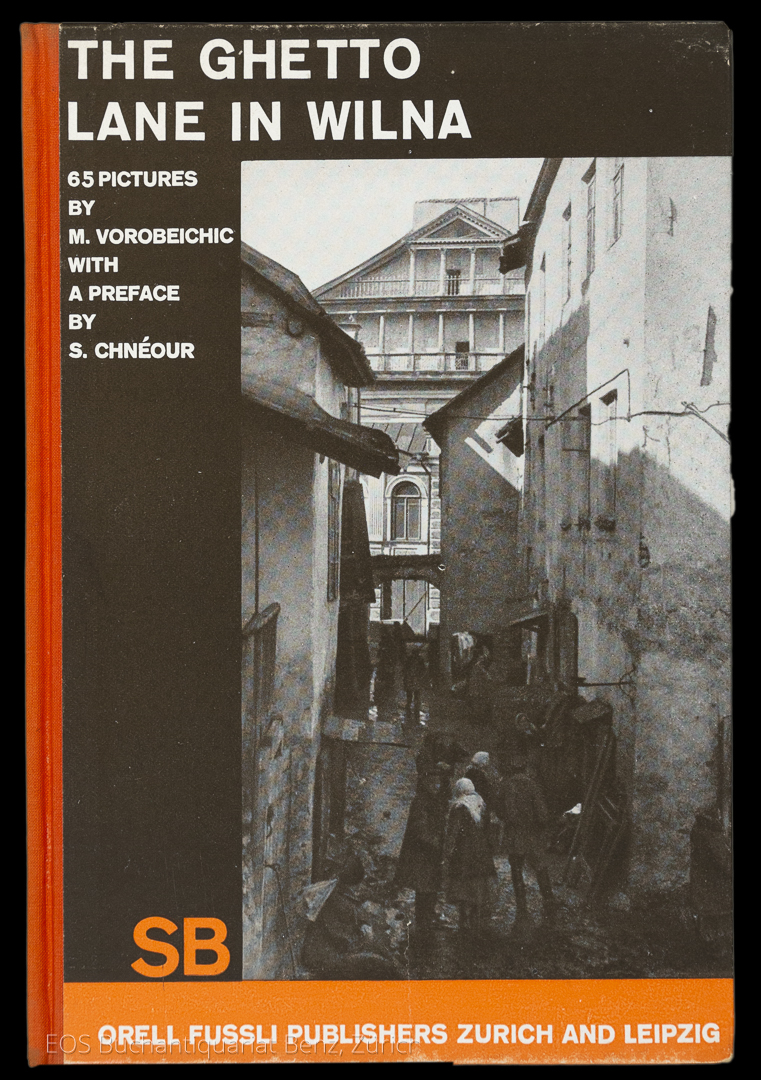
1931rif. 223BBZürich, Leipzig, Orell Füssli Verlag, 1931. 8°. 8 S., (english), 7 S. (hebrew). Mit 65 Abb. nach Photos von M. Vorobeichic. Illustr. Orig.-Halbleinenband + Wichtig: Für unsere Kunden in der EU erfolgt der Versand alle 14 Tage verzollt ab Deutschland / Postbank-Konto in Deutschland vorhanden +, 223BB (berieben und bestossen). = "Schaubücher", Bd. 27.