SOLIGNAC (Pierre-Joseph de LA PIMPIE, Chevalier de ).Livre Rare Book

4051 risultati
rif. 11596Paris, Jean-Thomas Hérissant, 1750 ; 5 vol. in-12 ; 8pp.-LVI-388pp. - XII-403pp. - XII-413pp. - XXIV-430pp. - XXII-493pp.-2ff. Basane marbrée, dos à nerfs ornés, pièces de titre et de tomaison brunes, roulette dorée sur les coupes, tranches mouchetées. Coiffes frottées sur le tome 1, quelques coins émoussés. Bon exemplaire, intérieur frais quasi exempt de rousseurs.
156 leaves. Probably lacks the colophon. A few other leaves are defective, including the title page. Yiddish text in Hebrew lettering. 4to. 220 mm. Original full leather binding, worn and broken; with the boards tooled in a crude, but interesting, geometric pattern. The festival liturgy according to the German-Polish rite, translated into Yiddish by Asher Anshel ben Joseph Mordecai in the 16th century for the use of Ashkenazi Jews living in Germany and Holland. The Mahzor is the prayer book used by Jews on the High Holidays of Rosh Hashanah and Yom Kippur. Many Jews also make use of specialized mahzorim on the three "pilgrimage festivals" of Passover, Shavuot, and Sukkot. The prayer book is a specialized form of the siddur, which is generally intended for use in weekday and Shabbat services. The word mahzor means 'cycle' ("to return"). It is applied to the festival prayer book because the festivals recur /return annually. SAWF. Hardbound. Rare. Apparently only two examples of this edition are held in U.S. Libraries. Roest 706; Mehlman (Ginzei) 327; Vinograd, Amsterdam 1166. SCARCE. CHEST 2 /4 $ 500.00
rif. 39092aafFribourg, L.J. Schmid, 1831, gr. in-4°, 4 p., texte sur 2 colonnes par fasc. quelques légères rousseurs, le tout en bon état. cartonnage muet original.
1746rif. 8516Lausanne & Genève, Marc-Michel Bousquet, 1746. In-4 de X-480 pages (y compris le frontispice), pleine basane marron, dos à nerfs orné de filets et fleurons dorés. Quelques épidermures, coins frottés, un petit choc au centre du second plat, avec un léger manque d'épiderme. Papier un peu sali, quelques taches d'humidité et annotation du temps à l'encre. Ancien nom de propriétaire à la plume sur la page de titre.
rif. 139342aafBerlin, Realschul-Buchhandlung, 1813, in-8vo, (19.5x12 cm), 2 Bl. (Titelbl. (mit Stempeln) + Widmungsbl.) + VI + 2 Bl. (Inhalt) + 91 S. + 1 S. + 1 gr. gef. kol. Karte „Geognostische Skizze von einem Theile des schlesischen, böhmischen, und lausitzer Gebirges (entw. v. Carl von Raumer), Exlibris Peter E. Obergfell, einf. Hlwd.
1972rif. 52067Warsaw: Miejskie Zaklady Komunikacyjne ca. 1972. Oblong 8vo. 10 x 7 in. 4; 2 38 pp. on thick gray paper stock. With 37 tipped-in black & white photographs each w/ clear mylar sheet tissue guard. Red cloth gilt lettering & decoration on front cover rounded corners yapp edges NF copy hand numbered in white ink w/ printed explanatory sheet of all the photographs. First edition of this exceedingly scarce Communist-era photo album detailing Poland’s mass transit system including their electric streetcars buses and the great advances made after World War II. The Municipal Offices Transport was a Communist government public transit agency which was in charge of electric light rail lines tracks bus lines along with the MZK resorts and operated from 1964 to 1994. These photos show the City offices the tremendous damage in Warsaw after liberation rebuilding track in 1945 piles of rubble & debris in 1945 the rebuilt bus & transit systems in 1972 the modern light rail systems and tram stops and the dispatching of buses. In addition the album includes a birds-eye view of the Repair Department facilities and warehouses the bus depot the cavernous repair garages and the technicians repairing and mounting tires washing the buses as well as the machine shops for repairing the light rail cars. In addition there are photos of road construction electric line repair for the trolleys offices medical clinic and the staff holiday resort on the Vistula. No copies located in Worldcat. Miejskie Zaklady Komunikacyjne, hardcover
1980rif. 221631980. Solidarity movement ephemera archive. 1980s-1989. This archive documents opposition organizing and political communication in eastern Poland during the final phase of Communist rule with particular emphasis on labor unrest student activism and the 1989 electoral campaign that led to partial democratic reform. The material records how Solidarność operated through underground print culture and regional coordination including strike reporting candidate promotion and direct appeals to voters. It provides primary evidence of political messaging grassroots mobilization and the emergence of open electoral discourse in the months preceding the June 1989 elections. Archive of over 30 pieces of printed ephemera and underground publications produced in the Lublin and Zamość regions primarily in Polish in varying formats including newspapers broadsheets flyers tickets brochures and a pennant. Key items include Biuletyn Solidarność Nos. 2 and 3 15 and 22 May 1989 issued by the Regional Committee for Lublin-Zamość containing articles such as "Protest płacowy na uczelniach lubelskich" documenting wage protests at Lublin universities and an interview with candidate Adam Kozaczyński titled "Mogę pracować dla ludzi i dla kraju." Additional coverage includes "Wyborcy o kandydatach" presenting voter responses to candidates. Student activism appears in Gazeta Strajkowa Lublin Nr. 3 a hectograph-printed publication of the Independent Students' Association NZS criticizing state education policy with statements including "Nie narusza w żadnym stopniu postulatów studentów" and "Odradza nadal Ministerstwo Oświaty i Wychowania." A 13 May 1989 issue of Przegląd Wiadomości Agencyjnych features a mining strike in Lubin under the headline "STRAJK" accompanied by an image of workers holding a protest banner. Election materials include flyers and cards bearing the slogan "Twoja Szansa Solidarność: Wybory 1989" promoting candidates such as Tadeusz Mańka Adam Stanowski and Henryk Janusz Stępniak along with a facsimile-signed letter from Lech Wałęsa dated May 1989 urging coordinated political participation. These materials were produced during the rapid political transformation of 1989 when negotiations between the Communist government and opposition groups led to partially free elections and the eventual formation of a non-Communist government. Underground and semi-legal print media played a central role in disseminating information coordinating protest and legitimizing opposition candidates particularly in regional centers such as Lublin. Light toning and minor wear consistent with ephemeral use; overall very good. A concentrated archive of Solidarity print culture preserving the language organization and visual strategies of political mobilization at the end of Communist rule in Poland. unknown
1980rif. 221631980. Solidarity movement ephemera archive. 1980s-1989. This archive documents opposition organizing and political communication in eastern Poland during the final phase of Communist rule with particular emphasis on labor unrest student activism and the 1989 electoral campaign that led to partial democratic reform. The material records how Solidarność operated through underground print culture and regional coordination including strike reporting candidate promotion and direct appeals to voters. It provides primary evidence of political messaging grassroots mobilization and the emergence of open electoral discourse in the months preceding the June 1989 elections. Archive of over 30 pieces of printed ephemera and underground publications produced in the Lublin and Zamość regions primarily in Polish in varying formats including newspapers broadsheets flyers tickets brochures and a pennant. Key items include Biuletyn Solidarność Nos. 2 and 3 15 and 22 May 1989 issued by the Regional Committee for Lublin-Zamość containing articles such as "Protest płacowy na uczelniach lubelskich" documenting wage protests at Lublin universities and an interview with candidate Adam Kozaczyński titled "Mogę pracować dla ludzi i dla kraju." Additional coverage includes "Wyborcy o kandydatach" presenting voter responses to candidates. Student activism appears in Gazeta Strajkowa Lublin Nr. 3 a hectograph-printed publication of the Independent Students' Association NZS criticizing state education policy with statements including "Nie narusza w żadnym stopniu postulatów studentów" and "Odradza nadal Ministerstwo Oświaty i Wychowania." A 13 May 1989 issue of Przegląd Wiadomości Agencyjnych features a mining strike in Lubin under the headline "STRAJK" accompanied by an image of workers holding a protest banner. Election materials include flyers and cards bearing the slogan "Twoja Szansa Solidarność: Wybory 1989" promoting candidates such as Tadeusz Mańka Adam Stanowski and Henryk Janusz Stępniak along with a facsimile-signed letter from Lech Wałęsa dated May 1989 urging coordinated political participation. These materials were produced during the rapid political transformation of 1989 when negotiations between the Communist government and opposition groups led to partially free elections and the eventual formation of a non-Communist government. Underground and semi-legal print media played a central role in disseminating information coordinating protest and legitimizing opposition candidates particularly in regional centers such as Lublin. Light toning and minor wear consistent with ephemeral use; overall very good. A concentrated archive of Solidarity print culture preserving the language organization and visual strategies of political mobilization at the end of Communist rule in Poland. unknown books
1989196 pages. Reproductions of dozens of black and white photos. Author documents the dramatic trip which saw her ripped her from her comfortable Polish home on her sixteenth birthday in 1940 and took her thousands of miles, eventually settling in England. Unmarked. Above-average but not excessive wear. Binding intact with some lean to spine. Small address labels inside each cover. A worthy copy of this important and unforgettable true story. Book
1967292 pages. Index. Maps. Map endpapers. "...Presents for the first time in English a history of Galicia (Halychyna) for this part of Ukraine has for centuries had its own history quite distinct from that of the other parts of the country. It has been subjected to other influences, chiefly Western, and it has had to contend for its rights and the rights of its population under conditions very different from those facing the other Ukrainians." - from Introduction. Text divided into the following four parts: The Princely Period (907-1340); Galicia Under Polish Occupation (1349-1772); Galicia Under The Hapsburgs (1772-1918); Galica from 1914 -1945. This detailed treatment will be of great interest to those pursuing historical and genealogical research in the region. Map on back endpaper provides extremely detailed demographic information on the region based on a census of December 31, 1900. Clean, tight and unmarked with light wear. A high quality copy. Book
Varsha [i. E. Warsaw] & Paris: Tsukunft, 1946-49. Paper Wrappers, 4to (tabloid format) , 24 pages each issue. Many issues include photos or illustrations on cover. This Yiddish Socialist bi-monthly newspaper for Young people ran from Dec. 1, 1922 until sometime in 1949, in various formats at different times. Very interesting vision of a postwar world of Jewish Socialism by the surviving rememnant in Poland, clearly expressing the Bund position of Dokeit ("thereness") , remaining to build Jewish life within a socialist framework with other nationalities, rather than Zionism; this even on Polish soil in the immediate of the aftermath of the Shoah. SUBJECT(S) : Jewish socialists -- Poland -- Periodicals. Jewish youth -- Poland -- Periodicals. Jews -- Poland -- Periodicals. OCLC lists only 1 holding (NYPL) . Newsprint, so paper is brown, but for the most part very solid. What wear there is is at the extreme margins, with, no text loss (Y-28A)
1764rif. 0053411764 Varsovie [Paris], Imprimerie de Psombka, Et se vend à la Science [A.-C. Briasson], 1764. In-12 (113 X 167 mm) veau fauve marbré, dos lisse cloisonné et orné, pièce de titre maroquin rouge, coiffes et coupes filetées, tranches rouges (Reliure de l'époque) ; (2) ff. de faux-titre et titre, 240 pages. Mention manuscrite au verso du premier feuillet de garde : « [1?] 4 Briasson ».
1692Carta geografica , in bella coloritura coeva. Inserita in "Mercurio geografico overo Guida Geografica in tutte le parti del Mondo conforme le Tavole Geografiche del Sansone Baudran de Cantelli Data in luce con direttione, e cura di Gio. Giacomo de Rossi nella sua stamperia in Roma alla Pace all'insegna di Parigi con Priu: del S. Pont" edita a Roma alla fine del '600. Al verso testo manoscritto descrittivo con inchiostro bruno inerente la carta
rif. 172685Paris, Guillaumin, novembre 1833 in-8, 29 pp., broché sous couverture imprimée de l'éditeur.
19441st edition. Original printed paper wrappers, 16mo, 47 pages. Stapled tan wrappers with brown and dark blue lettering on the covers. In Polish. Title translates as, "The Camp at Majdanek. " An extremely early Polish-language publication of Soviet novelist and journalist Boris Gorbatovs report on the Majdanek Concentration Camp, and the atrocities committed there and in the area of Lublin, which were first published in Russian in the Soviet newspaper "Pravda" on August 11th and 12th of 1944, shortly after the liberation of the camp by Soviet forces in July. These writings constitute some of the earliest writing on the Holocaust in Eastern Europe. The writing describes the camp and the ongoings there in vivid detail, including interviews with local residents of Lublin. Following Gorbatov's report are two shorter pieces on the the camp, one by by Polish-Soviet Commission on Majdanek, and the other a statement by Hilmar Moser a German lieutenant general. Includes 8 photos of the camp, including images of the crematorium, human remains and victims shoes, as well as reproductions of Moser's written statement. OCLC lists only 2 copies worldwide, (FAU, Polish Union Catalog) . Tiny nick to one corner, otherwise Very Good Condition, an excellent copy. Rare and important (Holo2-139-18)
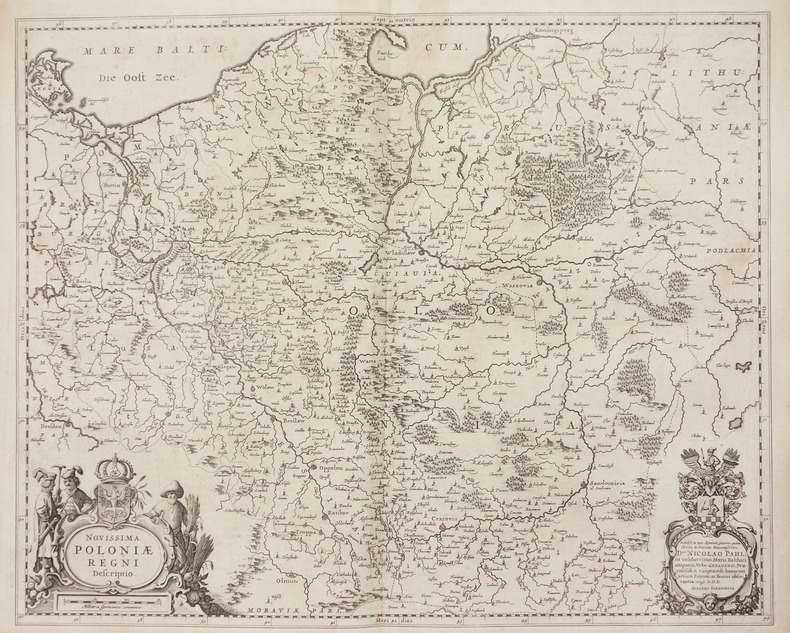
1658rif. LBW-2739[Amsterdam, 1658]. 432 x 539 mm.
1855rif. 13068Lefèvre Rouen 1855-59 1 vol. 2 parties en un vol. in-4 oblong, respectivement de 29 et 33 feuillets non chiffrés, demi-chagrin de l'époque, dos à nerfs orné, titre doré sur le premier plat.
rif. 240951Genève, J.-J. Paschoud, Paris, F. Buisson, 1809 2 vol. in-8, [4]-XXII-[2]-416 et [4]-422 pp., cartonnage papier brun à la Bradel, filets dorés au dos (reliure de l'époque). Ex-libris Roger Budin, Genève. Bon exemplaire.
1989In 8° (20,1×13,5 cm); 278, (2) pp. Brossura editoriale con sopraccoperta illustrata editoriale. Qualche lieve strofinatura ma nel complesso esemplare in buone-ottime condizioni di conservazione. Dedica autografa dell’autore alla prima carta. In allegato una lettera autografa a tema letterario scritta da Milosz stesso su carta intestata “Czeslaw Milosz … Berkeley, California” datata 12.06.1990. La firma autografa dell’autore si trova anche al margine alto del fronte della lettera sopra l’indirizzo prestampato. Seconda edizione dopo la prima del 1986, di questa raccolta di poesie del celebre poeta e saggista polacco, Czeslaw Milosz (Šeteniai, 30 giugno 1911 – Cracovia, 14 agosto 2004). L’autore studiò e si formò a Vilnus all’epoca territorio polacco. Il suo debutto letterario si fa risalire al 1930. Fu uno dei fondatori del gruppo letterario “Zagary”. Durante la Seconda Guerra Mondiale vive a Varsavia dove lavora alla stampa underground. Dopo la guerra diventa addetto culturale presso l’Ambasciata polacca a Washington prima e a Parigi poi. Nel 1951 esprime il suo forte scetticismo contro la prospettiva del socialismo reale rompendo con il partito comunista e chiedendo ed ottenendo l’asilo politico in Francia. Da qui si trasferisce negli Stati Uniti dove si stabilisce a Berkeley in California e dove insegna letteratura polacca. In America porta avanti la sua opera poetica cimentandosi anche con grande successo, nella traduzione delle principali opere polacche in lingua inglese, partecipando in questo modo alla diffusione della letteratura polacca nei paesi di lingua inglese. Nel 1980 gli viene conferito il Premio Nobel per « Who with uncompromising clear-sightedness voices man’s exposed condition in a world of severe conflicts. ».
rif. 201362Paris, Imprimerie et Librairie militaire de Gaultier-Laguionie, 1841 in-8, [4]-403-[4] pp., portrait-frontispice, carte dépliante en couleurs, bradel demi-percaline brique marbrée (reliure postérieure). Dos en partie décoloré, coupes et coins usés. Rousseurs. Fortes mouillures en début et fin d'ouvrage. Ex-libris et cachet Jean-Jacques Pattyn.
194340 p. , paper; first edition, published September 1943. Paperback, 40 pages, 8vo. Published the same year as the uprising, one of the first reports published in the US. Important. What may be the first ever published map of Treblinka, as well as a map of the Warsaw Ghetto on the rear cover. "The ghosts of the heroes of the gehtto battle will forever honor the streets....But persistent reports in the press in spring and summer 1943 indicate that not only their spirit but also their successors survive and carry on the fight there. The curtain may not yet have been rung down" (conclusion). Includes fold-out map with tear at crease. Lacks rear cover, front cover trimmed, stamped, and repaired, spine rebacked, otherwise Good condition. (Holo2-14-11A)
1894rif. LFA00d24Un ouvrage de 343 pages, format 230 x 280 mm, broché, publié en 1894, Librairie Ancienne de Louis Brun (Lyon), bon état
rif. 11630Celle des trois derniers grands seigneurs, de leurs Sultans & principales favorites, avec les plus secrètes intrigues du Sérail, et plusieurs autres particularitez des guerres de Dalmaties, Transilvanie, Hongrie, Candie, & Pologne, avec l’histoire du Grand SOBIESKY Roy de Pologne et le plan de bataille de Cotzchin.: Tome premier(?) : in 12 plein cuir fauve raciné à nerfs, pièce de titre cuir, fers, roulette doré, titre, IX-303 pages-7 pages. Tranches mouchetées. A Paris et à la boutique de G. Quinet 1679. Bien complet plan du camp de la bataille de COTZCHIN, gravure de format 385x255mm,contrecollée sur vergé mince (gravure attribuée à Romeyn de Hoogh) ouvrage d'anecdotes et de guerres contre les turcs où s'illustrèrent Jean SOBIESKI et Charles V de Lorraine
1741In folio; (24), 287, (1) pp. e 3 c. di tav. a piena pagina fuori testo. Legatura in mezza pergamena di recupero con piatti foderati con bella carta marmorizzata ottocentesca. Titolo impresso in oro su fascetta in pelle al dorso. Un leggero alone al margine esterno del volume con qualche piccola fioritura. Tagli spruzzati in azzurro. Alcune pagine con leggermente ingiallite. Una leggera macchiolina al margine basso bianco delle ultime 20 carte, non fastidioso od intenso ma per il resto esemplare in discrete-buone condizioni di conservazione. Antip. calcogr. incisa da Marc’Antonio Dal Re su disegno di Francesco Monti. Ritr. del dedicatario disegnato da Felicita Sartori da un dipinto di Rosalba Carriera e inciso da Carlo Orsolini. Ritr. dell’aut. inciso da Francesco Zucchi. Testatine ed iniziali incise. In particolare la testatina presenta lo stemma del Regno di Polonia con l’aquila incoronata ed il cavaliere lituano. Frontespizio stampato in rosso e nero con bellissima vignetta animata calcogr. siglata: “Petrus Salvini inv. et del. Brixiae Daudet sculp. Lug d.”. Prima ed unica edizione di quest’importante opera medica del celebre medico e poeta bresciano il Conte Francesco Roncalli (Brescia, 1692 – 1763 o 1769), noto anche come Francesco Roncalli Parolino, Francesco Parolino Roncalli e Francesco Roncalli Parolini. L’autore, allievo a Padova del Valisnieri, si distinse per varie opere a carattere medico fra le quali, oltre a quella qui presentata, “Medicina Europae” e “Nosocomium locupletatum”. Ampiamente apprezzato come medico e studioso venne chiamato alla corte di Spagna diventando il medico personale del Re di Spagna e per i suoi meriti medici venne anche insignito del titolo di Conte di Polonia dal Principe di Sassonia Federicus Christianus, Re di Polonia e Grande Elettore. Appassionato di botanica scrisse anche una celebre opera dedicata alla flora bresciana “Plantarum in agro brixiano situs, et vires”. Il De Renzi (vol V, pp. 148 e 554) così scrive del Roncalli: “…fu medico dotto ed operosissimo, ed acquistò molta fama per aver concepito e menato a termine un disegno utilissimo in quel tempo: quello cioè di raccogliere le relazioni de’ principali medici di Europa sulla medicina de’ propri paesi, indicando le condizioni topografiche, le malattie endemiche o più frequenti ed i metodi più in uso nel medicare”. L’opera qui presentata tratta in forma di epistole latine, numerose affezioni, tra le quali gli aneurismi, malattie cutanee, l’epilessia, la melanconia, l’ipocondria, l’apoplessia, la scrofola, la miopia, la sifilide, l’asma, i tumori, la lombaggine, la nefrite, varie malattie ginecologiche, etc. ed è considerata un sunto del pensiero medico dell’epoca. Fra gli autori corrispondenti delle “Epistole” si trovano i grandi medici dell’epoca come Paolo Valcarenghi, Carlo Francesco Cogrossi, Andrea Pasta, Giovanni Battista Morgagni, Giovanni Battista Mazzini, Antonio Leprotti ed altri. Rif. Bibl.: Hirsch-H, IV, 511; Wellcome, IV, 554; Rappaport 387 che descrive l’opera come molto importante; Blake, 387; Non in Garrison-Morton e in Waller; Osler, 3830: “I know no work of exactly the same lines”. Sull’A. voce “Roncalli-Parolino” in Michaud, “Biogr. Universelle”, XXXVIII, 544-45.
rif. 142323aafBreslau u. Leipzig, M. Hubert, 1736, kl. in-8vo, 9 Bll. + 176 S. mit 5 (2 dplblgr.) Kupfertafeln, Exlibris Peter E. Obergfell, Halb-Pergament d. Zeit.