1677Grande pianta della città, stampata su due fogli reali, copia di quella realizzata da Giovan Battista Falda nel 1667 per papa Alessandro VII. Pianta a proiezione mista, orientata con il nord a sinistra. Topograficamente la carta del Sandrart è fedele a quella del Falda; le modifiche sostanziali sono nei cartigli, con le scritte in tedesco, e nella dedica a papa Innocenzo XI. Il cartiglio di destra raffigura gli stemmi dei Rioni, mentre in basso al centro sono incise delle piccole vedute delle sette chiese giubilari. Incisa a quattro mani con Johannes Meyer, questa pianta risulta per l’eleganza del segno, più raffinata rispetto al Falda, intagliata dal francese Lhuiler. "Copia della pianta piccola del Falda incisa dal Meyer che si firma in basso a sinistra Iohann Meyer fecit Tiguri. IN alto a sinistra, in luogo della dedica fatta dal Falda ad Alessandro VII, compare quella ad Innocenzo XI (1676-89) con la data 1677 e più in basso il nome di Ioachini Sandrart. La pianta è probabilmente anche contenuta nell'opera del Sandrart Der Alten und neue, pubblicata a Norimberga nel 1768" (cfr. Marigliani p. 219). Acquaforte, con margini, in eccellente stato di conservazione. Rara. Large plan of the city, printed on two real sheets, copy of the one made by Giovan Battista Falda in 1667 for Pope Alexander VII. Mixed projection map, oriented with north on the left. Topographically, Sandrart's map is faithful to Falda's; the substantial changes are in the cartouches, with the German inscriptions, and in the dedication to Pope Innocezo XI. The right-hand cartouche depicts the coats of arms of the Rioni, while small views of the seven Jubilee churches are engraved in the bottom centre. Engraved by four hands with Johannes Meyer, this plan is more refined in the elegance of its sign than the Falda, carved by the Frenchman Lhuiler. "Copy of Falda's small plan engraved by Meyer, signed at lower left Iohann Meyer fecit Tiguri. In the upper left corner, instead of the dedication made by Falda to Alexander VII, the dedication to Innocent XI (1676-89) appears with the date 1677 and lower down the name of Ioachini Sandrart. The plan is probably also contained in Sandrart's work Der Alten und neue, published in Nuremberg in 1768' (cf. Marigliani p. 219). Sandrart carved this plan together with Johannes Meyer; the result is a far more refained work compared to that of Falda, carved by Lhuiler. Etching, with margins, in excellent condition. Rare. Huelsen (1915): n. 119; Scaccia Scarafoni (1939): n. 200; A. P. Frutaz, "Le piante di Roma", CLVI ; TIB p. 317, 281 C1. C. Marigliani, "Le Piante di Roma delle collezioni private", tav. 126.
réf. 69069Roma,, Excudebat Mascardus / Vitale Mascardi., 1642 Bound in half contemprary vellum, blue marbled paper over boards, 1 volume, folio (480 x 380 mm). Pages (4), 3, (1), 7-221, (1)pp. 15ff. (lacking final blank) + 1 engraved frontispiece (engraved by Camillo Congio) and 14 folding plates, **(lacking plates 10 & 11)**, 12 full-pages engraved plates, 4 engraved potraits and numerous vignettes and initials in the text.
1864In-4 gr. (mm. 366x290), 6 volumi (3 di testo e 3 di tavole), mz. pergam. coeva. Il “testo”, di pp. (8),351,85; (8),XLIII,391,134,(2); XXIV,751; con numerose riproduz. di iscrizioni lapidarie, anche a piena pag. Le “tavole” (descritte nel testo): Vol. 1° - con 40 tavv. numerate /// Vol. 2° - con 67 tavv. di cui 62 numerate + la I con bis + 4 non num. in fine /// Vol. 3° - con 50 (su 52) tavv.: mancano la I e la II. Estremamente interessante è l’apparato iconografico, tutto litografato in b.n., in tinta e a colori. L’opera comprende: “Storia degli antichi cimiteri cristiani dalle origini fino al tempo dell'autore, seguita dall'analisi degli antichi documenti topografici e dalla descrizione della prima parte del cimitero di Callisto” “Continuazione della descrizione del cimitero di Callisto” “Il cimitero di Santa Sotere, le altre sotterranee regioni e la necropoli sopra terra incorporate al cimitero di Callisto tra l'Appia e l'Ardeatina - Il cimitero di Generosa, presso il bosco degli Arvali”. In Appendice a ciascun volume una cospicua “Analisi geologica ed architettonica, di Michele Stefano De Rossi”. "Prima edizione" di questa monumentale e importante opera dell’archeologo ed epigrafista romano De Rossi (1822-1894), la più completa apparsa all’epoca sulle catacombe romane. Cfr. Choix de Olschki,XI,17986: “Ouvrage fondamental pour l’archéologie chrétienne, et qui restera longtemps encore ce que la science moderne a produit de plus mmonumental dans cette matière. Les exemplaires complets sont rares, le II volume ayant été en partie accidentellement détruit”. Testo ben conservato; le tavole con fiorit. per lo più solo marginali e alcune anche con alone (sempre margin.), ma complessivam. un buon esemplare.
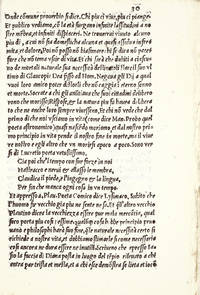
1543réf. 888° mm 151x104; cc. 32. Marca tipografica al frontespizio. Margine superiore un poco rifilato. Pergamena posteriore. Seconda edizione del dialogo albertiano - meglio conosciuto sotto il titolo di Theogenius - dopo quella che priva di dati tipografici ISTC cataloga come: "Florence 1500" cfr. L.B. Alberti Opere volgari II Rime e trattati morali a cura di C. Grayson Bari 1966 p. 409. Il Theogenius rappresenta un capitolo poco noto della fortuna e dell'influsso dell'epicureismo nel Quattrocento. In questo dialogo infatti l'Alberti illustra diversi temi dell'etica epicurea e traduce alcuni versi del De rerum natura di Lucrezio S. Gambino Alberti lettore di Lucrezio: motivi lucreziani nel "Theogenius" "Albertiana" IV 2001 pp. 69-84. Leon Battista Alberti's Theogenius revived and revised the ancient view developed in the Hellenistic age according to which philosophy aims to form rather than inform people showing them how to cultivate a specific attitude towards existence through a rational comprehension of the nature of humanity and its place in the cosmos. This view of philosophy as a way of life was challenged by the development of scholastic philosophy seen as a body of speculative doctrines and professional skills ancillary to the superior wisdom of theology. Nevertheless it survived thanks to Renaissance humanists like Petrarch Alberti Erasmus and Montaigne. On the influence of Lucretius on Italian Humanism after Poggio Bracciolini's discovery of the only surviving manuscript of De rerum natura 1417 cf. A. Brown The Return of Lucretius to Renaissance Florence Harvard University Press 2010 and S. Greenblatt The Swerve: How the Renaissance Began London 2011. Appresso Paulo Girardo, [colophon:] per Venturino Rosinello
1765réf. 22329Roma, Roisecco, 1765. Frontispiz, 40 gestochene ausfaltbare Tafeln (darunter ein ausfaltbares gest. Schema und eine mehrf. ausfaltbare Ansicht der Stadt aus der Vogelperspektive), sowie sehr zahlreiche Textkupfer, oft fast seitengroß. XVI, 678 SS. / 670 SS. / 581 (1) SS. 8°, Pergament der Zeit, goldgeprägte Rückenschildchen, marmorierer Schnitt. Einbände etwas fleckig und angegraut.
réf. 793Couverture rigide Alinari & Cook Rome 25x34 cm
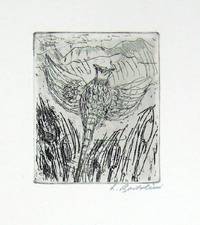
1954réf. 89152Firenze: Vallecchi 1954. Brossura custodia wrappers slip-case. Ottimo Fine. Una delle 200 copie con 7 acqueforti tirate a mano dai rami originali numerate e firmate a matita cm 126x232; 74x6; 95x7; 13x92; 124x7; 53x9; 115x94. cm 35x25. pp. 50 incisioni. Ottimo Fine. Prima edizione di 800 200 es. mumerati. Prima edizione di 800 200 es. mumerati. Vallecchi, unknown
1816In-4° oblungo; frontespizio inciso e 50 tavole incise all’acquaforte da Pinelli (1781-1835), raffiguranti scene di costume ambientate nella campagna romana; i personaggi sono dediti a giochi, lavori, attività varie della vita quotidiana, anche a Roma e nel regno di Napoli; le ambientazioni sono in Ciociaria, Cerbara, Tivoli, Albano, Fracati, Pietra Terrazzana, Roma. L’indicazione di responsabilità presente su quasi tutti i rami è “Pinelli Fece 1815 Roma”. Buona copia.
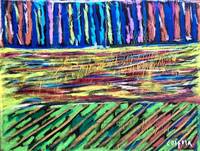
réf. 206305. Ottimo Fine. Pastello originale a olio su carta velluto nera firmato al recto e autenticato e datato Roma 1993 al verso dall'Artista. L'opera proviene direttamente dalla Galleria Bonino di New York. La Galleria dopo la morte del fondatore Alfredo Bonino chiuse la sua sede storica di Manhattan 7 West 57th Street trasferendosi al 48 Great Jones Street<!--TgQPHd-->di Downtown. Qui la moglie del fondatore Fernanda Bonino nata Pogliani con un Ufficio di intermediazione privata ha gestito la commercializzazione delle opere della galleria. Agli inzi degli anni 2000 la Bonino trasferì in Italia presso la cognata Agnese De Donato moglie di Serio Pogliani una parte delle opere della sua Gelleria. In quella occasione il nostro Studio Bibliografico acquisto un certo numero di opere di Corpora Calder ed altri artisti. In occasione dell'acquisto fu rilasciato un Certificato di autenticità dalla Galleria Bonino di New York in data il 29 dicembre del 2005. Cm 50x65. Ottimo Fine. . , unknown
1649Pianta archeologica di Roma incisa da Giacomo Lauro e pubblicata dalla tipografia de Rossi.In alto al centro il titolo e l’imprint editoriale ROMA ANTIQUA TRIUMPHATRIX AB ANTIQUIS MONUMENTIS ET RERUM GESTARUM MEMORIIS ERUTA HICA IACOBO LAURO ROMANO AUCTORE ET SCULPTORE GRAPHICE EXPRESSA. Io. Iacobus de Rubeis formis Romae ad Templu[m] Pacis cu[m] Priv. S. Pont. In basso al centro Romae Cum Privilegio Summi Pontificis. A destra e sinistra della carta una lunga legenda numerica di 279 rimandi a luoghi e monumenti notabili e due piccole mappe. La carta è circondata da un testo inciso e da venti vignette che simboleggiano momenti significativi nella storia antica della città. Carta priva di orientazione. Acquaforte e bulino, mm 482x736.La carta è circondata da un testo inciso e da venti vignette che simboleggiano momenti significativi nella storia antica della città, mentre due piccole mappe raffigurano i sette colli sui quali sorge Roma. Incerta è la datazione della stessa, che il Frutaz colloca tra il 1612 e prima del 1650. Cartograficamente ispirata a quella realizzata da Etienne Duperac nel 1574, la pianta venne pubblicata da Giacomo de Rossi tra il 1649 e il 1677, anno in cui viene elencata nel celebre Indice della stamperia De Rossi.Acquaforte e bulino, impressa su carta vergata coeva, con margini, colori coevi, lieve restauro con parziale perdita di testo in basso al centro, nel complesso in eccellente stato di conservazione.BibliografiaArrigoni-Bertarelli (1930): p. 10, n. 77; Christie’s (1998): n. 1034; Frutaz (1962): p. 72, n. XXVII, Tavv. 59-61; Hülsen (1915): XXIII, p. 86, n. 107; Iusco. Indice delle stampe de' Rossi, p. 379 (p.16 c.2); Scaccia Scarafoni (1939): pp. 32-33, n. 32. The bird's-eye view of ancient Rome by Giacomo Lauro was derived from Etienne du Pérac's large view of Rome.Printed from two separate plates on two sheets subsequently joined at vertical edges. List of buildings and sites numbered 1-279, keyed to view. At outer margin is a band of 16 engraved scenes from Roman history interspersed with 20 numbered explanatory texts. Heads of the 7 kings of Rome appear at upper left, heads of the 12 Caesars at upper right. Title and imprint at top center. Oriented with east at top.In marginal text, Lauro refers to his Antiquae urbis splendor (published 1612), so the view must have been engraved between that date and his death in 1650. This span is narrowed by the probability that the present view is that signed by Lauro in 1635. It must have been published by Giovanni Giacomo de Rossi between the beginning of his publishing activity in 1649 and the 1677 index of his publications whichincludes this view.Etching with engraving, printed on contemporary laid paper, with margins, contemporary colour, light repair with the loss of part of the text on lower part, otherwise in excellent condition.LiteratureArrigoni-Bertarelli (1930): p. 10, n. 77; Christie’s (1998): n. 1034; Frutaz (1962): p. 72, n. XXVII, Tavv. 59-61; Hülsen (1915): XXIII, p. 86, n. 107; Iusco. Indice delle stampe de' Rossi, p. 379 (p.16 c.2); Scaccia Scarafoni (1939): pp. 32-33, n. 32.
1835Serie completa di frontespizio e 8 incisioni all’aquaforte, 1835 circa, finemente colorate a mano, che raffigurano il carnevale di Roma tra via del Corso, Piazza del Popolo e Piazza Venezia. Stampato a Roma dall’editore Alessandro Depoletti. Opera rarissima in magnifica coloritura coeva; legata in oblungo. Sconosciuta al Colas. Dimensioni 165x120. A complete series of eight etchings plus the front page, 1835 approximately, fine hand colour. It depicts the Carnival of Rome winding along via del Corso, Piazza del Popolo and Piazza Venezia. This work was printed in Rome by the publisher Alessandro Depoletti. A very rare work, with contemporary colours, oblong bookbinding. This plate was unknown to Colas.
1751- SECONDO STATO DI CINQUE -Acquaforte e bulino, 1751, con indirizzo e prezzo; esemplare della contemporanea tiratura romana. Magnifica prova, impressa su carta vergata coeva con filigrana "doppio cerchio e giglio", con pieni margini, in perfetto stato di conservazione. Della serie Vedute di Roma. L’opera consiste in 135 lastre prodotte individualmente dal Piranesi per almeno 30 anni, da circa il 1745, fino alla data della sua morte. All’opera sono aggiunte poi due vedute realizzate dal figlio Francesco. Per la prima volta furono edite dall’editore Giovanni Bouchard nel 1751 (34 lastre), successivamente dallo stesso Piranesi editore a Strada Felice prima e Palazzo Tomati poi (indirizzi che appaiono su molte tavole), fino alla stesura definitiva composta da 137 lastre. Successivamente alla morte dell’autore le matrici furono ereditate dal figlio Francesco, che ne curò la pubblicazione prima nella capitale - le cosiddette tirature “postume romane” - e successivamente a Parigi, dove furono stampate tre edizioni – la cosiddetta “prima di Parigi”, una intermedia (entrambe su carta vergata) e quella curata dall’editore Firmin Didot, la prima su carta senza vergelle, dove le tavole presentano l’aggiunta di un numero arabo ordinale. Tutte le tirature parigine sono piuttosto modeste in qualità, lontane da come il Piranesi le aveva pensate e concepite. Le lastre furono poi acquisite dalla Calcografia Camerale, poi Calcografia Nazionale, oggi Istituto Centrale per la Grafica, dove sono tuttora conservate. - THE SECOND STATE OF FIVE -Etching and engraving, 1751, signed on plate.Example from the contemporary Roman Edition. A very good impression, printed on contemporary strong laid paper with "double encircled flur-de-lys" watermark, with margins, very good condition. Taken from Vedute di Roma. The whole work consists of 135 plates which have been individually produced by Piranesi along 30 years, from 1745 circa until his death. Two more works have been subsequently added, two plates by his son Francesco. They have been printed for the first time in 1751 (34 plates) by the editor Giovanni Bouchard, afterwards by Piranesi himself, publisher first in Strada Felice an the in Palazzo Tomati, imprint that can be found in mostly of the plates), until the final edition of 137 plates. After Piranesi's death, his son Francesco inherited the plates, editing them first in Rome and then in Paris, where three editions were printed - the so-called "first Paris edition", an intermediate one (both on laid paper) and the one edited by the publisher Firmin Didot, the first on wowe paper, where the plates have an Arabic ordinal number added. All Parisi issues are rather modest in quality, far from how Piranesi had thought and conceived them. The plates were then acquired by the Calcografia Camerale, then Calcografia Nazionale, today Istituto Centrale per la Grafica, where they are still kept. Hind 21, II/V; Focillon 736.
1760- PRIMO STATO DI SEI -Acquaforte e bulino, 1760. Esemplare della contemporanea tiratura romana di Bouchard e Gravier, sconosciuto ad Hind. Che descrive come primo stato (di cinque) quello con indirizzo e prezzo. Magnifica prova, impressa su carta vergata coeva con filigrana "cerchio e giglio", con pieni margini, in perfetto stato di conservazione. Della serie Vedute di Roma. L’opera consiste in 135 lastre prodotte individualmente dal Piranesi per almeno 30 anni, da circa il 1745, fino alla data della sua morte. All’opera sono aggiunte poi due vedute realizzate dal figlio Francesco. Per la prima volta furono edite dall’editore Giovanni Bouchard nel 1751 (34 lastre), successivamente dallo stesso Piranesi editore a Strada Felice prima e Palazzo Tomati poi (indirizzi che appaiono su molte tavole), fino alla stesura definitiva composta da 137 lastre. Successivamente alla morte dell’autore le matrici furono ereditate dal figlio Francesco, che ne curò la pubblicazione prima nella capitale - le cosiddette tirature “postume romane” - e successivamente a Parigi, dove furono stampate tre edizioni – la cosiddetta “prima di Parigi”, una intermedia (entrambe su carta vergata) e quella curata dall’editore Firmin Didot, la prima su carta senza vergelle, dove le tavole presentano l’aggiunta di un numero arabo ordinale. Tutte le tirature parigine sono piuttosto modeste in qualità, lontane da come il Piranesi le aveva pensate e concepite. Le lastre furono poi acquisite dalla Calcografia Camerale, poi Calcografia Nazionale, oggi Istituto Centrale per la Grafica, dove sono tuttora conservate. - THE FIRST STATE OF SIX -Etching and engraving, 1760. An early state, not described by Hind, with the Bouchard & Gravier address. The first state (of five) described by Hind id with the addrss and price.Example from the contemporary Roman Edition. A very good impression, printed on contemporary strong laid paper with "encircled flur-de-lys" watermark, with margins, very good condition. Taken from Vedute di Roma. The whole work consists of 135 plates which have been individually produced by Piranesi along 30 years, from 1745 circa until his death. Two more works have been subsequently added, two plates by his son Francesco. They have been printed for the first time in 1751 (34 plates) by the editor Giovanni Bouchard, afterwards by Piranesi himself, publisher first in Strada Felice an the in Palazzo Tomati, imprint that can be found in mostly of the plates), until the final edition of 137 plates. After Piranesi's death, his son Francesco inherited the plates, editing them first in Rome and then in Paris, where three editions were printed - the so-called "first Paris edition", an intermediate one (both on laid paper) and the one edited by the publisher Firmin Didot, the first on wowe paper, where the plates have an Arabic ordinal number added. All Parisi issues are rather modest in quality, far from how Piranesi had thought and conceived them. The plates were then acquired by the Calcografia Camerale, then Calcografia Nazionale, today Istituto Centrale per la Grafica, where they are still kept. Hind 55, prova di stampa, non descritta; Focillon 756.
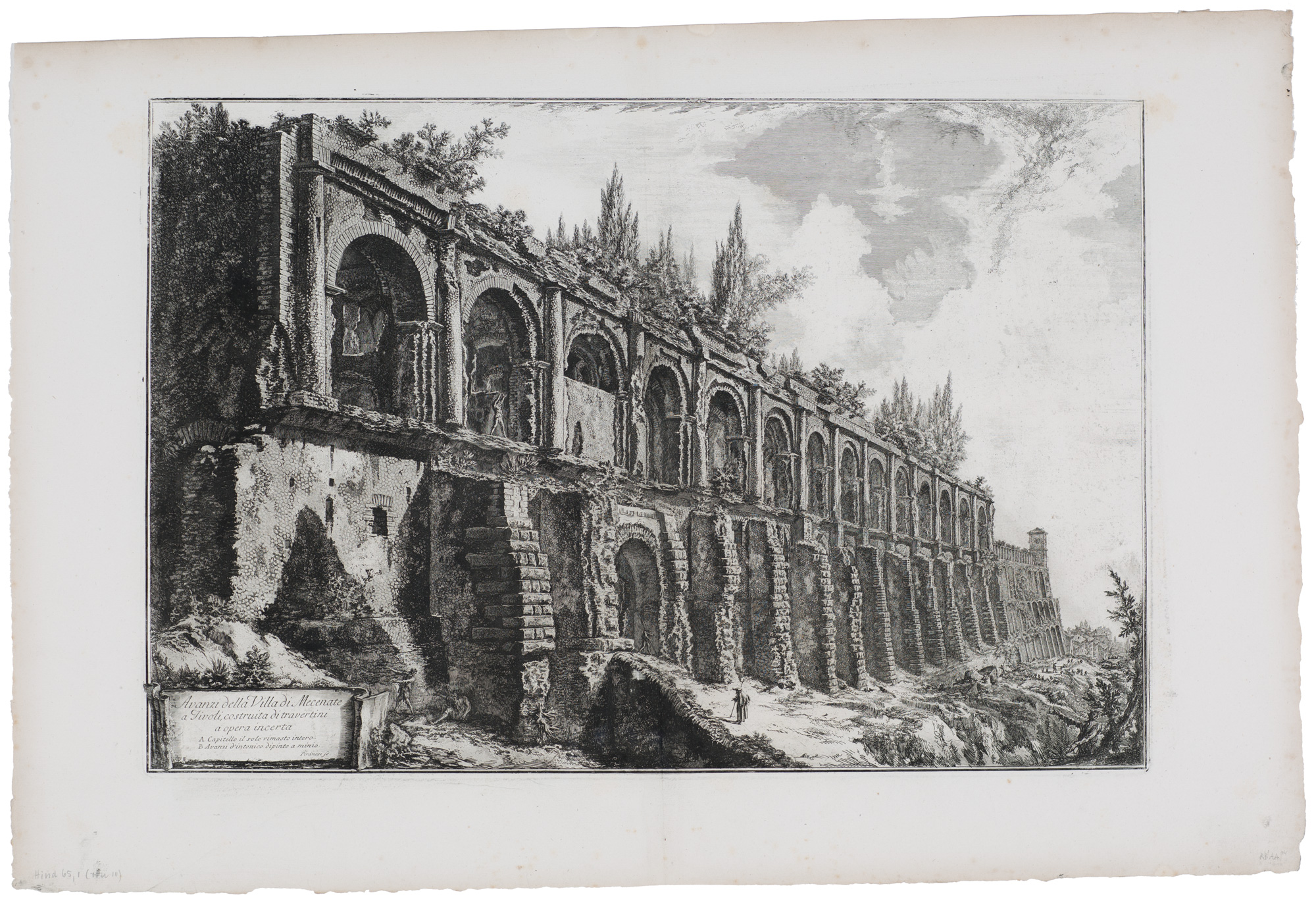
réf. 0822-Bo.J. Radierung, 1763, auf Bütten. 45,5:67,3 cm, Blattgröße 57,8:86,2 cm.- Unten links auf einer Kartusche bezeichnet und signiert ?Piranesi sc.?. Literatur: Focillon 768; Hind 65, I (v.III); Ficacci 936; Wilton-Ely 198. ? Kräftiger Abdruck mit dem vollen Rand, die Ränder mit Stockflecken.
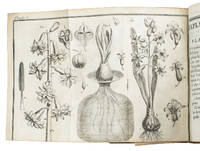
1765réf. L3IEIGJIR4NJ1765. 252 4; 156 pp. Convolute containing the rare second editions of two botanical books one on tulips and the other on hyacinths written by the French priest and botanist Jean Paul Rome dArdène 1689-1769 famous for his studies of flowers which demonstrate his vast erudition as well as providing practical advice. His work is therefore full of information addressed not only to florists and gardeners but to scientists flower lovers and cultivated persons generally and infused with the authors profound love for his subject Oak Spring Flora. The same printer-publisher published the first editions in 1760 and 1759 respectively.Ad 1: Traité des tulipes is an extensive work exclusively devoted to tulips discussing their origin name different varieties cultivation and beauty in 12 chapters. It ends with two folding plates illustrating tulips with an explanation for each plate.Ad 2: Traité sur la connoissance et la culture des jacintes similarly discusses .different aspects of the hyacinth once again in twelve chapters. It covers etymology the right conditions for cultivation and common diseases that affect hyacinths. Like the tulips it ends with two folding plates illustrating hyacinths with an explanation for each plate. It was translated into Italian in 1763. Both first editions are very rare: WorldCat records two copies of each but also only three and four copies of the present second editions of 1765.With a small crease in the first folding engraved plate of Traité des tulipes and a small tear in one text leaf but overall in very good condition.l Ad 1: Hunt 587; Oak Spring flora 76 note p. 294; WorldCat 3 copies; cf. Cat. Lindley libr. p. 10 1760 ed. Ad 2: Oak Spring flora 76 note p. 294; WorldCat 4 copies; cf. Cat. Lindley libr. p. 10 1759 ed.; Hunt 526 note 1759 ed.; neither in: BMC NH; Nissen BBI; Bradley. unknown
LEGATURA IN PIENA PELLE COEVA CON TITOLI ANCHE AL PIATTO, 85 TAVOLE COMPLESSIVE( COMPRESI I FRONTESPIZI ) LE TAVOLE MISURANO CENTIMETRI 44X30.5, LA PARTE INCISA 23X17. OPERA MOLTO RARA formato: ALBUM 46X31.5 stato conservazione: BUONO, ABRASIONI E PICCOLE USURE E MANCANZE ALLA COPERTINA
1773Acquaforte e bulino, 1773, firmata in lastra in basso a sinistra. Esemplare del primo stato di tre. Magnifica prova, impressa su carta vergata coeva, con margini, in ottimo stato di conservazione. Della serie Vedute di Roma. L’opera consiste in 135 lastre prodotte individualmente dal Piranesi per almeno 30 anni, da circa il 1745, fino alla data della sua morte. All’opera sono aggiunte poi due vedute realizzate dal figlio Francesco. Per la prima volta furono edite dall’editore Giovanni Bouchard nel 1751 (34 lastre), successivamente dallo stesso Piranesi editore a Strada Felice prima e Palazzo Tomati poi (indirizzi che appaiono su molte tavole), fino alla stesura definitiva composta da 137 lastre. Successivamente alla morte dell’autore le matrici furono ereditate dal figlio Francesco, che ne curò la pubblicazione prima nella capitale - le cosiddette tirature “postume romane” - e successivamente a Parigi, dove furono stampate tre edizioni – la cosiddetta “prima di Parigi”, una intermedia (entrambe su carta vergata) e quella curata dall’editore Firmin Didot, la prima su carta senza vergelle, dove le tavole presentano l’aggiunta di un numero arabo ordinale. Tutte le tirature parigine sono piuttosto modeste in qualità, lontane da come il Piranesi le aveva pensate e concepite. Le lastre furono poi acquisite dalla Calcografia Camerale, poi Calcografia Nazionale, oggi Istituto Centrale per la Grafica, dove sono tuttora conservate. Etching and engraving, signed at lower left. Example of the first state of three described by Hind. A fine impression, printed on contemporary laid paper, with margins, very good condition. Taken from Vedute di Roma. The whole work consists of 135 plates which have been individually produced by Piranesi along 30 years, from 1745 circa until his death. Two more works have been subsequently added, two plates by his son Francesco. They have been printed for the first time in 1751 (34 plates) by the editor Giovanni Bouchard, afterwards by Piranesi himself, publisher first in Strada Felice an the in Palazzo Tomati, imprint that can be found in mostly of the plates), until the final edition of 137 plates. After Piranesi's death, his son Francesco inherited the plates, editing them first in Rome and then in Paris, where three editions were printed - the so-called "first Paris edition", an intermediate one (both on laid paper) and the one edited by the publisher Firmin Didot, the first on wowe paper, where the plates have an Arabic ordinal number added. All Parisi issues are rather modest in quality, far from how Piranesi had thought and conceived them. The plates were then acquired by the Calcografia Camerale, then Calcografia Nazionale, today Istituto Centrale per la Grafica, where they are still kept. Wilton Ely 240; Focillon 828; Hind 107 I/III.
1612réf. 4992Rome: Nicoli van Aelst Roma formis "1560" but ca. 1585- 1612. THIRD STATE of FOUR. The first state had no explanatory text. The second with the text and "Formis Antoni Lafrerij Sequani MDLX". In this third state the Lafréry address has been erased though the date "MDLX" has been preserved and Nicolas van Aeslt's publishing information has been engraved at the lower left. A fourth state described by Rubach n. 376 has Gio. Battista de Rossi's address in place of van Aelst's. Hardcover. Fine. A fine example of a late impression the sheet untrimmed. Light marginal soiling. Early fold visible on verso but no crease visible on the recto. Watermark "fleur-de-lis in a circle" A view of the cortile of Palazzo Farnese. Construction of the palazzo designed by Antonio da Sangallo the Younger 1484-1536 with modifications and additions by Michelangelo began in 1517. By the time of its completion in 1589 Jacopo Vignola and Giacomo Della Porta had also worked on the project. The courtyard is partly the work of Sangallo who designed the ground floor and first floor while the second floor was built according to the designs of Michelangelo who took over the project upon Sangallo's death in 1546. Of the two ancient statues of Hercules shown in the cortile the one on the right is the famed Farnese Hercules now in Naples which caused a sensation upon its discover in 1546. The inscription reads: "Palatij Farnesij Romae non procul a reliquiis Theatri Pompei olim e solidissimo Tiburtino lapide non minore architecturae commendatione ab Antonio Sangallo inchoati quam stupendo artificio per Michaelem Angelum omnibus numeris consumati quantum artificio diligentia assequi potuit interioris partis expressio atque in intimo eius ambulacro duarum Herculis statuarum icones." Translation: "An image of the interior part with two statues of Hercules in its lower portico of Palazzo Farnese in Rome located not far from the remains of what was in the past the theater of Pompey; begun -in very solid travertine stone- by Antonio Sangallo with no less architectural art than when finished with astonishing craft and all possible diligence by Michelangelo." The publisher Nicolas van Aelst emigrated to Rome from his native Brussels in the mid 1580s. He "established his home and workshop in a house situated between the now vanished church of San Biagio della Fossa and the church of Santa Maria della Pace near Piazza Navona. The building was the property of the church of Santa Maria dell'Anima to whom the printed paid an annual rent of 30 scudi." Van Aelst died at Rome on 19 July 1613. For more see Lorizzo "Nicolas van Aelst's Will and a List of his Plates" Print Quarterly March 2014 Vol. 31 No. 1 March 2014 pp. 3-20. In 1585 Claudio Duchetti produced a copy of this plate. That version was subsequently printed by Orlandi 1602 and Van Schoel. Nicoli van Aelst, Roma formis, "1560", but ca. 1585- hardcover
1612réf. 4992Rome: Nicoli van Aelst Roma formis "1560" but ca. 1585- 1612. THIRD STATE of FOUR. The first state had no explanatory text. The second with the text and "Formis Antoni Lafrerij Sequani MDLX". In this third state the Lafréry address has been erased though the date "MDLX" has been preserved and Nicolas van Aeslt's publishing information has been engraved at the lower left. A fourth state described by Rubach n. 376 has Gio. Battista de Rossi's address in place of van Aelst's. Hardcover. Fine. A fine example of a late impression the sheet untrimmed. Light marginal soiling. Early fold visible on verso but no crease visible on the recto. Watermark "fleur-de-lis in a circle" A view of the cortile of Palazzo Farnese. Construction of the palazzo designed by Antonio da Sangallo the Younger 1484-1536 with modifications and additions by Michelangelo began in 1517. By the time of its completion in 1589 Jacopo Vignola and Giacomo Della Porta had also worked on the project. The courtyard is partly the work of Sangallo who designed the ground floor and first floor while the second floor was built according to the designs of Michelangelo who took over the project upon Sangallo's death in 1546. Of the two ancient statues of Hercules shown in the cortile the one on the right is the famed Farnese Hercules now in Naples which caused a sensation upon its discover in 1546. The inscription reads: "Palatij Farnesij Romae non procul a reliquiis Theatri Pompei olim e solidissimo Tiburtino lapide non minore architecturae commendatione ab Antonio Sangallo inchoati quam stupendo artificio per Michaelem Angelum omnibus numeris consumati quantum artificio diligentia assequi potuit interioris partis expressio atque in intimo eius ambulacro duarum Herculis statuarum icones." Translation: "An image of the interior part with two statues of Hercules in its lower portico of Palazzo Farnese in Rome located not far from the remains of what was in the past the theater of Pompey; begun -in very solid travertine stone- by Antonio Sangallo with no less architectural art than when finished with astonishing craft and all possible diligence by Michelangelo." The publisher Nicolas van Aelst emigrated to Rome from his native Brussels in the mid 1580s. He "established his home and workshop in a house situated between the now vanished church of San Biagio della Fossa and the church of Santa Maria della Pace near Piazza Navona. The building was the property of the church of Santa Maria dell'Anima to whom the printed paid an annual rent of 30 scudi." Van Aelst died at Rome on 19 July 1613. For more see Lorizzo "Nicolas van Aelst's Will and a List of his Plates" Print Quarterly March 2014 Vol. 31 No. 1 March 2014 pp. 3-20. In 1585 Claudio Duchetti produced a copy of this plate. That version was subsequently printed by Orlandi 1602 and Van Schoel. Nicoli van Aelst, Roma formis, "1560", but ca. 1585- hardcover books
1809[Figurato costumi-Roma] (cm. 30,2x44) solida mz. pelle antica ben restaurata, piatti in carta marmorizzata antica, angoli in pelle. Sguardie antiche. Copertine originali in carta azzurrina conservate. Frontis inciso e 50 tavole numerate incise all' acquaforte. Rara prima edizione della prima raccolta di costumi pittoreschi dell' agro romano, assai celebre e ricercata così definita da Cicognara 1762: "Questi sono tolti la più parte dalle abitudini del popolo romano, e sono espressi con una verità e fedeltà insuperabile". L' ultima tavola rappresenta il riposo dell' autore tra le rovine con il motto scolpito sulla lapide: "Tutto finisce". Bell' esemplare a pieni margini con minime tracce di polvere angolari e rare lievi fioriture al margine. Le incisioni sono in ottima tiratura e molto fresche. * Colas 2370; * Hiler 712; * Lipperheide Ja12; * Rossetti III n° 8195; * Choix 17.803; * Vinet 2294; * Nuc 459; * Benezit x 951; * Nagler XII 480.[f47] Libro
1944réf. 89156Roma: Documento 1944. Ottimo Fine. Dieci acqueforti originali numerate e firmate dall'Artista cm da 145x195 a 30x195. Foglio cm 355x27. Ogni incisione reca a matita anche un proverbio di Gentilini. Edizione curata dalla Libreria La Margherita. 4to cm 37x285. Ottimo Fine. Prima edizione di 45 esemplari numerati. Prima cartella di incisioni di Franco Gentilini. Documento, unknown
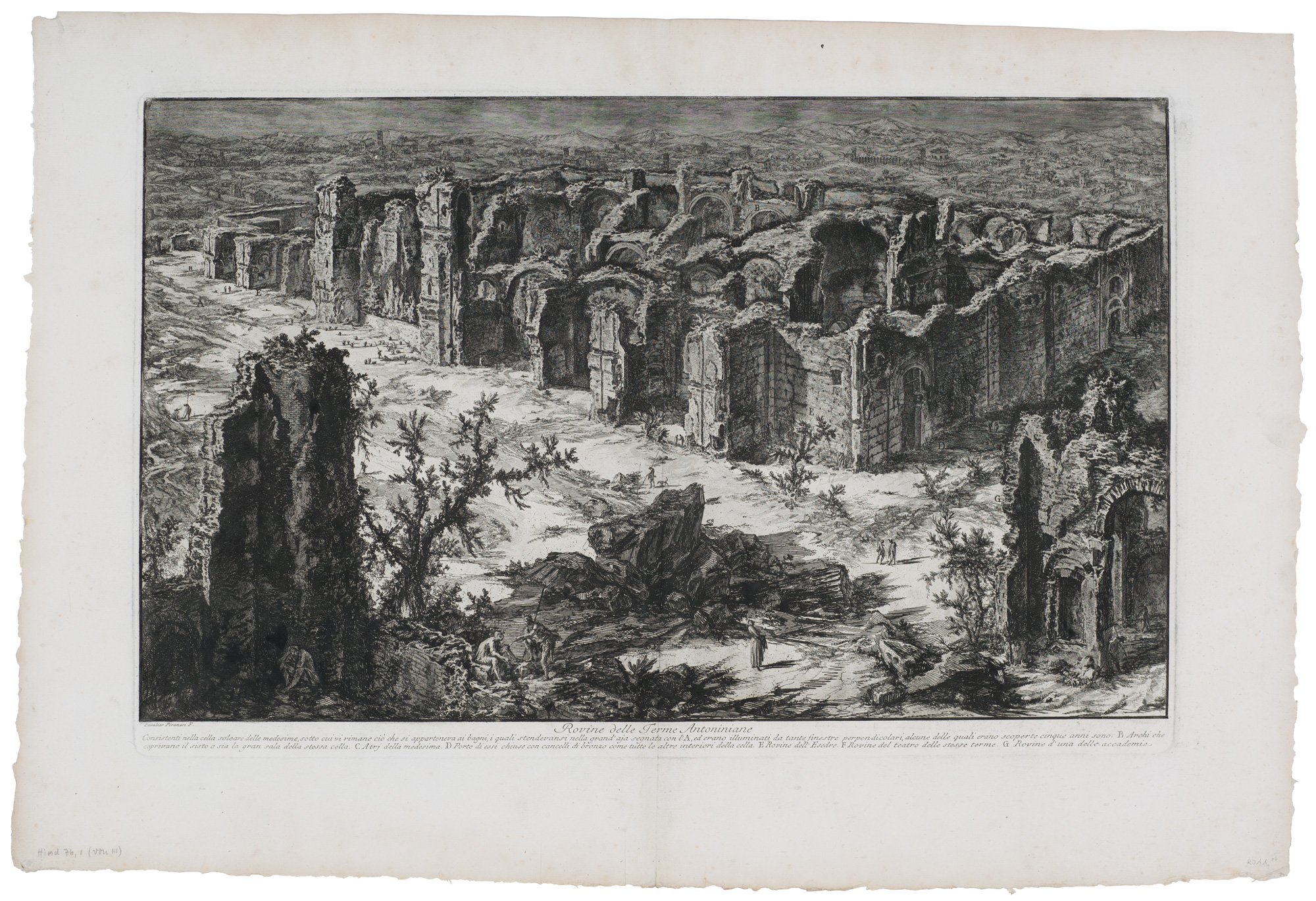
réf. 0826-Bo.J. Radierung, 1765, auf Bütten. 44,5:69,5 cm, Blattgröße 58:86 cm. Im Unterrand bezeichnet, links unten signiert ?Cavalier Piranesi F.?. Literatur: Hind 76, I (von III); Focillon 852; Ficacci 947; Wilton-Ely 202. Kräftiger Abdruck mit dem vollen Rand, die Ränder nach außen leicht gebräunt.
1634réf. 3483Lugduni Batavorum, ex officina Elzeviriana. 1634. in-12 (13 x 7,7 cm), 8 ff., 310 pp., 17 ff., maroquin rouge, dos à cinq nerfs orné, triple filet encadrant les plats, roulette sur les coupes, dentelle intérieure, tranches dorées sur marbrures (reliure ancienne) titre-frontispice et portrait de l'auteur, bandeaux, cul-de-lampe, lettres ornées. Notes bibliophiques manuscrites en début d'ouvrage. Exemplaire aux armes sur les plats de Nicolas Lambert de Thorigny, Président du Parlement. Ex-Libris Mortimer L. Schiff.
15802 parti in un vol. in-folio (290x200), pp. (20), 210 (6, ult. 2 bb.); 88; leg. coeva p. perg. molle, tit. ms. al dorso. Stemma di Roma sul titolo, iniz. silogr., testo in car. tondo. Prima edizione degli Statuti riformati da Papa Gregorio XIII, il cui testo rimarrà in vigore fino al XVIII secolo. Dalla bolla papale, che precede, si viene a sapere che i sei libri degli antichi statuti furono ridotti a tre ed il testo fu corretto, riformato e adattato ai nuovi tempi dal giureconsulto Luca Peto. La seconda parte, che trovasi anche stampata a sé, contiene le ''Gratiae Immunitates and facultates per summos Romanos Pontifices Almae Urbi Romae Populoque Romano concessae'', cioè lettere apostoliche in favore di Roma, da quella di Bonifacio VIII (1303) a quella di Gregorio XIII (1574). Ottimo esempl., ben completo dell'errata corrige e del privilegio, con interessanti postille di mano coeva nei margini. (qualche lieve ingiallitura e aloni più marcati nell'angolo alto esterno).. Cat. Senato VI, 131. Manzoni I, 420. Choix d'Olchki 18078..
1770réf. CLL-235Paris, Desprez, 1770 In-folio de (4) ff., XXXVII, 934 pp., (1) f., demi-maroquin vert à coins, dos lisse orné de palettes, filets et motifs dorés, tranches mouchetées (reliure de l'époque).