Multiple ContributorsBiblio.com
22 433 résultats
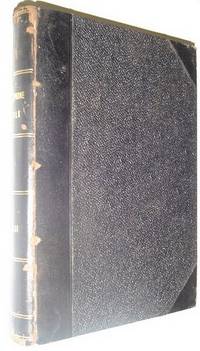
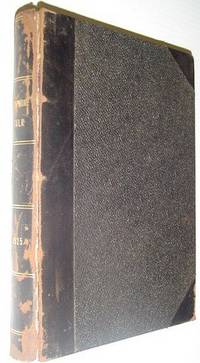
1944réf. 73aa1968British Columbia: British Columbia Telephone Company. Fair. 1944. First Edition. Hardcover. Half-leather binding. Telephone Talk was the glossy bimonthly publication of the British Columbia Telephone Company. It was written by employees for employees to present information of interest to those engaged in the plant traffic commercial operating accounting and other departments of the service. Each issue is replete with black and white photos and information on topics such as: company industry and technological news traffic levels expansion plans personnel announcements publicity and social events deaths weddings lists of exchanges and more. As such these issues serve as a vital preserve of rare and fascinating British Columbia history. This volume covers topics including: "All circuits are busy; I will call you" - the phrase of operators dealing with heavy traffic; Good-bye to the Seymour and Trinity manual offices - photos; Photo of the ladies of the Nelson small bore rifle club; adding switching equipment in Victoria; Gas masks helmets and more in Alma operating room - photo; Action photo of the First Vancouver Cadet Training Corps; Record load of telephone calls handled in B.C. in 1942 - article and photos; George Friend - Alma plant man - article and photos; Second birthday of the Van-Tel Credit Union; A few lines from the front lines - parts of letters from phone men on active service; John Jessop dies - photo and article; Back cover wartime announcement "Be Careful What You Say"; Photos of females filling in for males in the Vancouver Engineering department; Victory Bond ad.; Wire Shortage - here's why; "Behind the Lines!" - by George Matthew Adams; Wartime Problems of Telephone Business set forth in Annual Report; Great Cheque mystery solved by new payroll machine - 2 pages of photos and text; Popular traffic official dies - Robert A Henderson; Honour Roll World War II; Honour Roll World War I; Credit Union article; Letter by operator Elsie Forman; variety of photos emphasizing wartime parts shortages and recycling; Victory Bond ad.; E.E. Slim Sinden wire chief at Chilliwack; Operator's form association; Roland Arthur Chute former Kamloops Manager retires; John Sowerby - survived fire and earthquake to become a phone man - article and photos; P.J. Pete McCormick retires; Illustrated letter from G.R. Peakes Major-General G.O.C.-in-C. Pacific Command saluting the telephone industry; Many additional war photos/content; Using phones to report forest fires; Article on operator 'Quiz Kids' - information operators; honour roll of employees who have joined the war effort; Oliver Plant man Reuben Echlis retires; article from Reader's Digest arguing for wartime wage and price controls; James D. Baker passes away; William Henry Cooke retires; Update from Pipe-Major Edmund Esson in Sicily; Ex-operators rally to aid of telephone company including newspaper ad.; Miss Leonie Michaud retires; Hockey star and telephone man Leslie Steel dies in Vancouver; many wonderful Victory Garden photos; war bond ad; Victory Loan depends on the Phone; Introducing Jack Veitch; Ads showing the wartime contributions of operators; in memory of Henry G. E. Goult; Victoria construction gang at work in photos; Photo of Victoria's operators at work; Farewell to Ernest F. Helliwell; Cranbrook operator Minnie Egan retires; Edward Dawson dies suddenly; Sergeant James Clark R.C.A.F. reported a missing; Ernest S. Harris bids farewell; Cover photo of Pilot Officer Gordon Heselton the first B.C. man to win a decoration in WWII with story inside; photo of '25 club' war savings stamp booklet; 40 miles of phone bills - many photos; Record long distance load in 1943 but local calls show decline; John D. Johnston general commercial manager; Full page instructions with the heading "Strict Conservation of Paper now a Necessity"; Jim Baigent and Arthur Pop Harness retire; "Lick Stamps to Lick Hitler" on back cover of one issue; Telephone Talk is shrunk to conserve paper; Net Revenue decrease in 1943; Full-page article o; 8vo - over 7¾" - 9¾" tall; Telus History British Columbia Telephone Company Telephony Telephone Talk Internal House Magazine Periodical and technological news traffic levels expansion plans personnel announcements publicity and social events deaths weddings lists of exc . British Columbia Telephone Company hardcover
1931réf. 73aa1974British Columbia: British Columbia Telephone Company. Good. 1931. First Edition. Hardcover. Half-leather binding. Telephone Talk was the glossy bimonthly publication of the British Columbia Telephone Company. It was written by employees for employees to present information of interest to those engaged in the plant traffic commercial operating accounting and other departments of the service. Each issue is replete with black and white photos and information on topics such as: company industry and technological news traffic levels expansion plans personnel announcements publicity and social events deaths weddings lists of exchanges and more. As such these issues serve as a vital preserve of rare and fascinating British Columbia history. This volume covers topics including: Cover photo of the Victoria Exchange; Company launches employee sales plan; feature on Leo Griggs with photos; Ladner forges to the front as a farming district - with photos; Important changes in Prince George; Mission and Revelstoke; Remodelling Victoria Exchange; Our Trans-Canada Link is growing; - 3 pages with photos; Record holiday load handled by Vancouver toll office; Vancouver-Victoria Cable line severed by Dredge; Engineeers walking all over the province - 4 pages with photos and text; Proper posture; Statement of Development - a table listing the number of operating phones in towns across the province; Campbell River - Cape Lazo Cable is big job for this month - 2 pages; Keeping pace with Schedule on Trans-Canada Line; Philip Creagh - Nanaimo wire chief; Centralized billing system now in effect; Breaking of insulators may have serious consequences; Ocean Falls joins our system and receives first toll service - great photo; Powell River - Cape Lazo Cable successfully laid - 3 pages with photos; Harvey Sauder; A P.A.B.X. is now serving the B.C. Electric Railway Co.; Cover photo of the Victoria exchange; Victoria traffic and commercial staffs now under same roof - text and great art deco photos; One-Fourth of Work on Trans-Canada line completed; C. Whitmore Halford; new phone system in Powell river - 2 pages with photos; All Canadian route from Vancouver to Winnipeg; Trans-Canada construction photos; Vancouver talks with Berlin; Coal Harbour Regatta broadcast from radiotelephone ship; A telephone man in Turkey; Thrilling events preceded opening of Ocean Falls service - with photos; The Huntingdon System is Acquired; The Municipality of Maple Ridge; N.J. Dunlop; A telephone man in South America; Telephone Co-operators; Cover photo of Vancouver fire alarm switchboard; Telephone to the rescue when fire threatens; Great photos of laying cables across Victoria Harbour; Selling Telephone Service; A telephone man in India; Three Nanaimo phone men attempt to save three children in Nanaimo River; Gerald C. Clarke; Two-Thirds of Trans-Canada line complete; Prince George visits plant where our dial equipment was made in Lancashire; Successful picnic; Princeton to be important link in Trans-Canada line; Wiring plans; The Modern Mouse must have a Telephone House mouse moves into pay phone; Bigger phone directory - 2 pages with interesting photos; Phone poles go over mountains - several photos; Ervin J. Davis; Trans-Atlantic service growing; Herman A. Nicholson; and more. Average wear. Ink stamp of company executive E.P. LaBelle upon top edge of text else unmarked. Binding intact.; 8vo - over 7¾" - 9¾" tall; Telus History British Columbia Telephone Company Telephony Telephone Talk Internal House Magazine Periodical and technological news traffic levels expansion plans personnel announcements publicity and social events deaths weddings lists of exc . British Columbia Telephone Company hardcover
1925réf. 73aa1979British Columbia: British Columbia Telephone Company. Fair. 1925. First Edition. Hardcover. Telephone Talk was the glossy bimonthly publication of the British Columbia Telephone Company. It was written by employees for employees to present information of interest to those engaged in the plant traffic commercial operating accounting and other departments of the service. Each issue is replete with black and white photos and information on topics such as: company industry and technological news traffic levels expansion plans personnel announcements publicity and social events deaths weddings lists of exchanges and more. As such these issues serve as a vital preserve of rare and fascinating British Columbia history. This volume covers topics including: Some of the troubles repairmen encounter - 6 pages with photos; Uses of the ringing macine - text and photo; Rope for many purposes made at Sapperton factory - 5 pages with great photos; Repairs made to San Juan Cable; Test calls made to eastern centers; Misues of toll circuits is costly Statement of Development - chart of # of telephones in service in towns throughout the province; Great full-page photo plus article on the "Aorangi" - largest motorship in the world arriving in Vancouver; Increasing importance of Australasia; How much power is required to operate a phone - 6 page article with photos; San Juan Cable pulled out of place; Central Information Office - 3 pages; New Douglas exchange relieves pressure on Seymour office; Accounting department story; The ladies take up ice hockey - 2 pages; Crude carbonic acid is wooden conduit's elixir of youth - with photo; Fred Meloche; Great cover photo of a trainload of coal leaving the Extension Mine on Vancouver Island; Revenue Accounting group photo plus office shots; 5-page mining industry feature with great photos; Change to Stub system successful; Traffic Fundamentals - 3 pages; fantastic Victoria Harbour photo including the new Princess Marguerite and the Princess Kathleen; 4 page article with photo - 'diplomats' at the adjustment counter; 5 page feature on the cement industry with photos and operating details of the Bamberton plant; Cable laid across Saanich Inlet - photos; 9 page Fraser River feature with many photos; Company's underground program largest in years - 4 pages with photos; Six page feature of Victoria's Crystal Garden - many great photos; Supplies Department - 3 pages with photos; How the phone was brought to far off lands; Qualifications and duties of a Chief Operator; wonderful interior photos of the new Princess Marguerite and Princess Kathleen; Mount Benson Forestry lookout served by telephone - 2 photos including view of Gulf of Georgia Strait; CNRV photos and article; Toll dispatch system adopted; Six passenger steamers added to coastal fleets of B.C.; Company again using clay conduit; An Agent's responsibilities; New Collingwood exchange; Operation of building department explained; Company cafeteria system; Cuba talks to Vancouver; Bent Plugs system; Gymnasium class for company men; The Longest Cable in the World - New York to Chicago; George McCartney goes touring again; Photos by phone opens a vast field; Six-page features on Kerrisdale with many great photos plus additional sensational 2 page centerfold of great Kerrisdale homes; Common battery system installed in Trail; New toll testing equipment provided at Vancouver; New test used in cutting over working lines in cables; Advice on thrift; North Shore prospects enhanced by the New Lion's Gate Bridge - 9 page article with fantastic photos and illustrations; The Old Toll Desk recalls some telephone history - 5 pages; Phone stories from abroad; Excellent 11 page article on the Telephone Toll Trails of Vancouver Island - with many great photos; Electric drills and rats are enemies of cables; Safeguarding the career of the microwatt; and more. Half-leather binding. Average wear overall with the exception of backstrip which shows significant wear and is almost entirely loose. Ink stamp of company executive E.P. LaBelle up; 8vo - over 7¾" - 9¾" tall; Telus History British Columbia Telephone Company Telephony Telephone Talk Internal House Magazine Periodical and technological news traffic levels expansion plans personnel announcements publicity and social events deaths weddings lists of exc . British Columbia Telephone Company hardcover
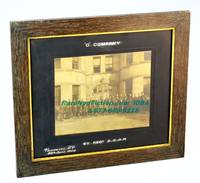
1908réf. 618j2654Vancouver British Columbia: The Duke of Connaught's Own Rifles 6th Regiment. Very Good. 1908. First Edition. Photograph. Vintage framed photograph of "G" Company of the 6th Regiment D.C.O.R dated 25 April 1908. Taken in front of the Beatty Street Armoury now Drill Hall in Vancouver the photo includes thirty-two men about half of whom hold rifles. Formed in 1883 the Regiment is Vancouver's oldest military unit. The image itself is 19.5 x 24cm and its contemporary wooden frame is 38.5 x 43.3 cm. A magnificent graphic artifact of Vancouver's early military history. Please note: watermark which appears in our photo is not present on the physical item. ; Folio . The Duke of Connaught's Own Rifles, 6th Regiment unknown
1987réf. 422a7852Canada: Seal Books/McClelland-Bantam Inc. Fine in Fine dust jacket. 1987. First Printing. Hardcover. 0770421962 . Signed and briefly inscribed by Jimmy Pattison. "No other Canadian has 'gone for it' with more impressive results. Jimmy did it all himself." - Peter C. Newman. The autobiography of legendary Canadian businessman Jimmy Pattison. 300 pages. Clean bright and unmarked with very light wear. Dust jacket now preserved in archival-grade Brodart. An excellent copy.; 8vo - over 7¾" - 9¾" tall; Jummy - An Autobiography Canadian Business Leaders British Columbia Neon Sign Overwaitea Save-on Foods Metro Toyota; Signed by Authors . Seal Books/McClelland-Bantam Inc. hardcover
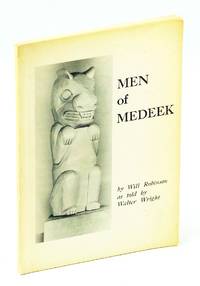
1962réf. 732h6045Kitimat BC: Northern Sentinel Press. Very Good. 1962. First Edition. Paperback. "Will Robinson first met Chief Walter Wright of the Kitselas Band in Terrace B.C. in 1928. They developed a friendship over the years during which Chief Wright gradually shared more and more insight into the life and history of his people. In 1935 or 1936 Chief Wright said he planned to tell Robinson his 'Story' so it could be written down. By late 1936 Robinson had typed 40000 words and the history of Medeek from its beginnings in the dim ages of mythology had been written down to some ninety years ago. The history is in two parts. Close questioning led to a reasonable assumption that the first part ended some 600 to 700 years ago. This book contains the first part. It deals with the basic myths with life in the legendary city of Tum- L. - Hama with a westerly migration that ended on the rocky cliffs of the Kitselas Canyon some 100 miles up the Skeena River from Prince Rupert. 'Men of Medeek' looks to the east; back to the land of the ancestors. Only once - the raid down the Pacific coast does the narrative deal with the peoples of the sea-board. 'Wars of Medeek' still remains to be written." - paraphrased from Preface. 93 pages. Black and white photo of each author. Map of Skeena River and central B.C. coast inside back cover. Clean and unmarked with light wear. Binding intact. A quality copy of this precious history. Edwards & Lort 4105; 8vo - over 7¾" - 9¾" tall; Men of Medeek Native Peoples Northwest Coast British Columbia Kitselas Canyon Skeena River Prince Rupert Tum - L - Hama Kitimaat . Northern Sentinel Press paperback
réf. Z1-X-027-01921Hornbeam Press Incorporated. Used - Good. Ships from UK in 48 hours or less usually same day. Your purchase helps support Sri Lankan Children's Charity 'The Rainbow Centre'. Ex-library so some stamps and wear but in good overall condition. 100% money back guarantee. We are a world class secondhand bookstore based in Hertfordshire United Kingdom and specialize in high quality textbooks across an enormous variety of subjects. We aim to provide a vast range of textbooks rare and collectible books at a great price. Our donations to The Rainbow Centre have helped provide an education and a safe haven to hundreds of children who live in appalling conditions. We provide a 100% money back guarantee and are dedicated to providing our customers with the highest standards of service in the bookselling industry. Hornbeam Press, Incorporated unknown
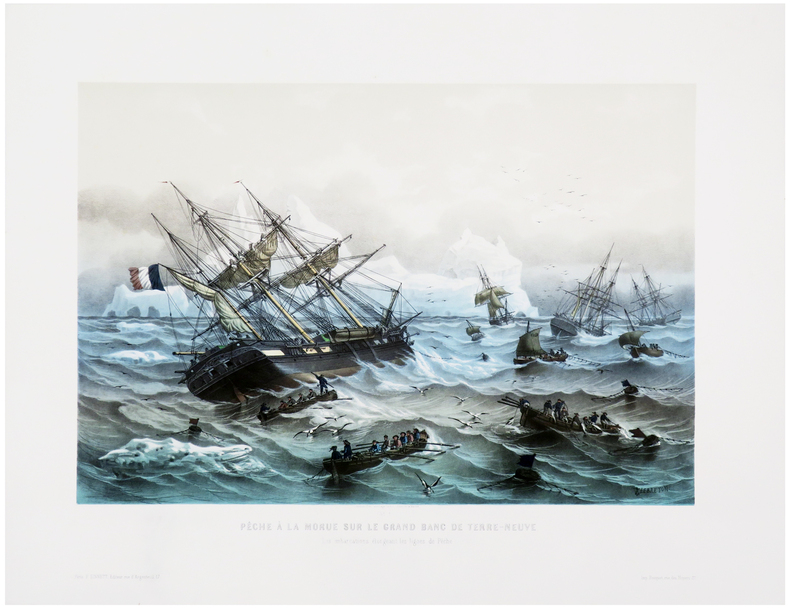
1845réf. LBW-8047Paris, F. Sinnett, [circa 1845]. 370 x 501 mm.
1936réf. 73aa1972British Columbia: British Columbia Telephone Company. Fair. 1936. First Edition. Hardcover. Telephone Talk was the glossy bimonthly publication of the British Columbia Telephone Company. It was written by employees for employees to present information of interest to those engaged in the plant traffic commercial operating accounting and other departments of the service. Each issue is replete with black and white photos and information on topics such as: company industry and technological news traffic levels expansion plans personnel announcements publicity and social events deaths weddings lists of exchanges and more. As such these issues serve as a vital preserve of rare and fascinating British Columbia history. This volume covers topics including: Service to Japan Hawaii and the Philippines now available; Anchors foul cable 4 times within 10 days - Burrard Inlet; Classified system will be extended to remainder of territory - includes full-page rate sheet; Company gains telephones in 1934 after 3 year decline presumably due to the Great Depression; Company architect Hugh D. Simpson; Our overseas service kept growing last year; Employee Sales Team Results; Statement of Development 1 January 1935 - show # of phones per community; System suffers heaviest storm damage in history - January 1935 - 8 pages with photos; New exchange for the Albernis; John C. Miles succeeds John Johnston as Building Head; World Telephone network now includes 60 countries; Billy Palliser - champion salesman for Victoria Plant; Sechelt Company picnic; New phone system for thriving Alberni area - 4 pages with photos; Record 19000 mile call from Vancouver to Perth Australia; Dog's bark in Vancouver heard in Scotland; Round the world telephone talk sets record; Telephony's part in Canada's Jubilee celebration - 2 pages with photos; Parksville Exchange has Dial Unit at Qualicum Beach; Arthur R. Harness - garden awards; New switchboard handled by sightless operator - article with photos; PNE float details and photo; 2-page bio. with photo of Eugene P. LaBelle the company's General Superintendant of Plant MR. LABELLE'S NAME IS STAMPED ON THIS COPY; Carrier circuits established between Vancouver and Calgary; Number of phones increased last year; Miss Elizabeth Murray Vancouver's first chief operator dies; New radio stations established; Fraser telephone building remodelled; Conference calls link Canadian cities by long distance !; Operator school reopened; George E. Pittendrigh of Cloverdale BC - installed Vancouver's first telephones; Telephone folks to the rescue; New Long Distance developments embrace Howe Sound Points; Key to Safety on the Job; New radio link serves Quesnel and adjacent mining area; Vancouver's first emergency phone calls; Newcastle Island Picnic; C.A. Charlie Price - Queer theories prove that people read the 'Yellow Pages"; James Welsh - our first formen; Article on the challenges of information operators; Seymour operating room photo; Mr. W.F. Salsbury - helped pave the way for our present telephone system; CARICATURE OF E.P. LABELLE and other company executives; Vancouver Arena fire damage quickly repaired; PNE float photo and details; Long Distance developments this year; Dominion Telephone organization meets in Victoria; Ex-policeman Ernest A. Harris recalls use of telephone in 1891; Monte Butler wins more rowing laurels; and more. Average wear. Ink stamp of company executive E.P. LaBelle upon fore- and top edges and inside front board else unmarked. Half-leather binding intact. Backstrip loose along front edge.; 8vo - over 7¾" - 9¾" tall; Telus History British Columbia Telephone Company Telephony Telephone Talk Internal House Magazine Periodical and technological news traffic levels expansion plans personnel announcements publicity and social events deaths weddings lists of exc . British Columbia Telephone Company hardcover
1945réf. ZB2633191945-1958. Price HAS BEEN REDUCED by 10% until Monday Oct. 26 weekend SALE item volumes 18-25 28-33 bound ex library good PRICE IS FOR THE LOT. - If you are reading this this item is actually physically in our stock and ready for shipment once ordered. We are not bookjackers. Buyer is responsible for any additional duties taxes or fees required by recipient's country. Photos available upon request. unknown
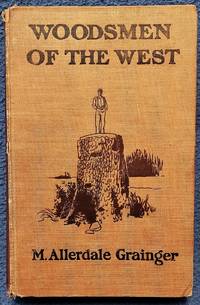
1908réf. 2411016London: Edward Arnold 1908. First Edition. Hardcover. Good. 1st printing. Pictorial cloth. 206pp. Illustrated with real photos presumably taken by the author. The last page has the imprint " Victoria / B. C./ July 1908" but beside it in ink and pen in an unknown hand the following was added "January 1 - 1916 / sleet & rain." Presumably that was the weather in Victoria on that date. A very old bookplate has been partially removed by a previous owner from the front paste down. Some fraying to top and bottom of spine. Light general soiling to covers. A good copy. This is a fictionalized account that is recognized as strongly autobiographical about the life and dangers of logging on the coast of British Columbia--a life filled with strong personalities that come through in the writing. Reprinted now this is the rare first edition that only comes on the market once in a generation or two. No dust jacket if in fact one was issued. Not in Whale and perhaps wouldn't be due to the fictional genre as written. Edward Arnold hardcover
réf. 27218Nouvelle-Orléans, Imprimé par Magne & Weisse, 1846-1847. Two volumes bound in one. [4], xi, [1], 377, [3, blank] pp.; vii, [1], 427, [1] pp. Large 8vo. Nineteenth-century red half hard-grained morocco, marbled boards, spine richly gilt with raised bands and gilt lettering, marbled egdes. Leclerc 629; Sabin 26792; Howes G85. First edition, covering the French period of Louisiana history up to 1769, with much material on early exploration, settlement and commerce. The work contains numerous extracts of official documents pertaining to Louisiana history. "Une des bonnes histoires de notre ancienne colonie, composée sur des documents extraits des cartons du ministère de la marine" (Leclerc.)Excellent history of Lousiana from the discovery of America and the first European settlements up to the departure of d'Aubry and d'Oreilly, discussing among others the expeditions of De Soto, Marquette and Joliet, the exploration of the Mississippi by De La Salle, etc. etc.Charles-Étienne Arthur Gayarré (January 9, 1805 - February 11, 1895) was an American historian, attorney, slave owner and politician, born to a Spanish and French Creole planter family in New Orleans, Louisiana. He grew up on a plantation before attending law school in Pennsylvania, he was a Confederate sympathizer and lost his fortune by supporting them, later earning his money by writing and as a court reporter. He was president of the Louisiana Historical Society for nearly thirty years. As a writer of plays, essays, and novels, Gayarré is chiefly remembered for his histories of Louisiana, a state he served in various capacities during his life. He is considered one of New Orleans's first great historians.- The first twenty quires are browned (160 pages). Copy with signed dedication to the Comte de Maupassant, dated Paris, August 1, 1874, by Edmond Bermudez: Edmond or Edouard Bermudez (January 19, 1832 - August 22, 1892) was a Louisiana attorney who served as Chief Justice of the Louisiana Supreme Court from April 5, 1880 to April 5, 1892. He married Elizabeth Amanda Maupassant with whom he had nine children, five of whom died young. Amanda de Maupassant belonged to a family of great renown in France and was related to the comte de Maupassant.
1909réf. 17157ABOttawa - Akron (Ohio) - Chicago, 1909 - 1928. 4 : 5 - 8 : 13,5 cm. Photographs mounted on stiff cardboard. Oriinal cloth folder with title-label Ottawa.
réf. 18765A Londres et se trouve à Paris, Chez Buisson, juin 1789. 2 works bound in 1 volume. xxiv, xlviii, 344 pp.; (4), 69, (1), (8), 151 pp. 8vo. Contemporary half calf, spine gilt in compartments, gilt lettering, green paper covered boards, a bit shaved. First work: Sabin 13516; Fay 23; JFBL B542 (under Brissot); Echeverria & Wilkie 787/3; Monaghan, 303; not in Muller; not in Leclerc; Kress B.1169; Goldsmiths 13307; Einaudi 1121; INED 809 & 1123. First edition, quite scarce. Probably printed in Paris. In January 1787 Brissot, St. Jean de Crèvecoeur, Clavière and Bergasse founded in Paris the Société Gallo-Américaine with the purpose of advancing mutual understanding and trade between France and the U.S. This survey of the actual situation in the United States deals with: De la guerre contre les sauvages. - Des troubles de l'État de Massasuchets. - etc. At the end: 'pièces justificatives'.'Économique et démographique. Principes généraux qui doivent diriger le commerce extérieur des nations, et des rapports commerciaux pouvant unir la France et les États-Unis .... (INED).Dedicated to the American Congress, this work is a systematical treatise on the mutual advantages that the new American republic and France will gain from their commercial relations. It further contains an argument in favour of the American political system where there is anarchy nor slavery.Second work: Stourm 183; Kress B.1564; Goldsmiths 13874; Einaudi 1119; INED 1126.In this work Clavière refutes the opinions of the day concerning the French finances and suggests measures to improve the situation. The first 69 pages contain 'réflexions préliminaires'.
réf. 18775A Colle, et se trouve à Paris, Chez Froullé, 1788. 4 volumes. (4), xvi, 383, (1) pp.; (4), 259 pp.; (4), 292 pp.; (4), 366 pp. 8vo. Contemporary catspaw calf, gilt triple fillets on sides, spines richly gilt in compartments, a very nice copy. Sabin 47206; Leclerc 957; Howes M.456; Monaghan 1052; Muller 1612; Fay 24; Echeverria & Wilkie 788/65; Echeverria, p. 124; Einaudi 3807; not in Kress; not in Goldsmiths; not in JFBL. First edition. 'This work was conceived as a corrective reply to Raynal's Histoire Philosophique et Politique and Mably's Observations. It was suggested by William Short, Jefferson's secretary, and was written with Jefferson's assistance and approval.' Contains among others: Reflexions rédigées à l'occasion du Mémoire sur la manière dont la France & l'Espagne doivent envisager les suites de la querelle entre la Grande-Bretagne & ses Colonies (volume 3, pages 217-282), by A.R.J. Turgot, dated April 6, 1776 and published here for the first time, concerning a memoir by Vergennes written at the request of Louis XVI to assist the Conseil d'État in formulating a policy for France and Spain in regard to the American Revolution. Turgot explored the various possible outcomes with their probable consequences for France and predicted that the eventual independence of the U.S. would lead to the independence of other European colonies in America. He recommended arms sales to the U.S. but favored continued official neutrality and opposed direct military intervention' (Echeverria & Wilkie). Mazzei was an Italian physician who practised medicine in Smyrna and later, from 1755 to 1773, engaged in commerce in London. With several other Italians he came to the United States in December, 1773, to introduce the cultivation of the grape and the olive. He became a neighbor and friend of Thomas Jefferson. He actively supported the movement for independence and from 1779 to 1783 he was an agent for Virginia to obtain supplies in Italy. His Memorie della vita (Lugano, 2 volumes, 1845-1846) contains a lengthy account of his activities in Italy on behalf of Virginia (Monaghan, op.cit.) In the above work he was assisted by Condorcet who is the 'Bourgeois de New-Haven.' 'Compilation très exacte, qui réfute les théories de Mably et de Raynal et constitute un répertoire précieux de renseignements de tous ordres sur les États-Unis' (Fay). - Very good and attractive copy.
réf. ORD-20371Dressée au Depost des Cartes et Plans de la Marine Pour le Service des Vaisseaux du Roy par Ordre de M. de Machault Garde des Sceaux de France Ministre et Secrétaire d'Etat ayant le Département de la Marine. Paris. 1757. Titre dans un cartouche. Grande et belle carte à pleines marges (ca 900 x 620 mm), contenant dans l'angle inférieur droit un 2ème cartouche montrant le Plan du Havre de Baston (Boston?). Bord de marge inférieure un peu poussiéreux, pli vertical, sinon excellent état.
1802réf. PHO-1648Paris, F. Buisson, et Giguen, an X – 1802. 2 volumes de texte in-8° (210x130mm), relié pleine toile époque, dos lisse. XXIV-385pp ; 417pp. et un Atlas In-4, broché, titre sur le plat contenant 14 planches gravées (vues, costumes) et une carte dépliante du détroit qui sépare l'Asie de l'Amérique. Bon exemplaire.
1783Paris, Dezauche succ. De l'Isle et Buache, 1783. (Parte incisa mm. 480 x 630). Bella carta geografica, in coloritura coeva, proveniente da Atlas géographique des quatre parties du monde par Guillaume De L'Isle et P. Buache.
réf. 14035[London]: Publish'd ... by I. F. W. Des Barres [in 'The Atlantic Neptune', November 1st 1780. Etching, with engraving and roulette work, on three joined sheets. 33 1/4 x 64 1/4 inches overall. A large format sea chart: the greatest coastal map of Nova Scotia, originally issued in Des Barres' 'The Atlantic Neptune' ,exemplaire entoilé et roulé vus les dimensions 167 x 80 cm environ
réf. 18786A Rouen, De l'Imprimerie de Dame Besongue, 1789. With 16 tables, some folding, one covering 7 separate pages, and one covering 24 pages. vi, (7)-238 pp. 4to. Modern half morocco, marbled boards, spine gilt in compartments, gilt lettering. Sabin 32638 (incomplete copy); not in Leclerc; Fay 25; not in Howes; Kress B.1719 (incomplete copy); Goldsmiths 13832; not in Einaudi. The first French edition, the rare Quarto edition, translation was due to De Rumare, a magistrate in Rouen. There was another 4to edition printed in 1789, "A Londres, aux dépens de la Compagnie, which did not have the "Table des Matières" (and had 230 pages as a consequence). A detailed exposition and statistical comparison of the imports and exports of Great Britain and the United States, from 1700 to 1783. With each edition, Sheffield substantially revised and enlarged the text. Written in opposition to the bill introduced by Pitt in 1783, proposing to relax the navigation laws in favour of the States, the work was influential in determining the abandonment of the motion. Sheffield points up the weak position of America and continually stresses the growing commercial importance and potential of the West Indies and Canada (especially Newfoundland and Nova Scotia, particularly with regard to fisheries, lumber, and ship-building). Howes writes that the work was very influential in shaping England's trade policy from 1783 to 1789, so detrimental to American commerce and shipping interests as to contribute greatly to the formation of a Federal union, better able, than were the separate federated states, to retaliate against British maritime might.The tables provide extensive statistical information, giving a comparative export and import survey of the trade between the United States and other countries. This translation from the English original was due to De Rumare, magistrate at Rouen. The later Mirabeau translation did not include the statistical tables. - Nice copy with marginal annotations and good margins.
1829réf. elala1084np: 1829. 1829. 8vo. pp. 1 p.l. 3index 4-255. modern calf covers bit discoloured. The majority of the grievances were directed at the authoritarian regime of Lord Dalhousie as governor of Lower Canada and Governor-in-Chief of British North America 1820-28 when he was recalled. Included are grievances relating to Dalhousies establishment of a new Quebec Gazette his censure of Sir Francis Burton for having sanctioned a Bill of Supply his dismissal of militia officers and exercise of intimidation during elections his dismissal of justices of the peace and the unfair manner of jury selection. "Among other things the Montreal petitioners complained that contrary to the laws of England juries both grand and petty and both King's Bench and Quarter Sessions were being drawn exclusively from the town of Montreal rather than from the district at large. The committee chaired by Denis-Benjamin Viger concluded that this practice of jurors being "selected or as it were packed - summoned exclusively from among the inhabitants of a particular place or from a particular class - cannot be more compatible with liberty than it is with the rules of impartial justice. It is repugnant to every principle of our government and can only tend to the overthrow of the constitution of the country .The executive's control over the process of selecting juries became for the Patriotes yet another symbol of despotism and of the attempted exclusion of canadiens from their democratic rights given that they predominated in the countryside; a number of highly political jury trials for libel and sedition did nothing to help matters. The controversy only began to die down from 1830 when James Kempt ordered that jurors be drawn from the body of the district; the denouement came in 1832 when the legislature adopted a law regulating the qualification and selection of jurors " Donald Fyson Grand Juries Political Power And Citizenship In Quebec And Lower Canada 1764-1830 a paper for the 77th annual meeting of the Canadian Historical Association Ottawa May 1998TPL 1549. Sabin 10568. cfCasey I 1279. Not in Dionne Gagnon or Lande. np: 1829. unknown
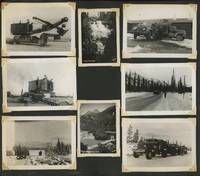
1943réf. Cat317Canada and the United States 1943. Photo album measuring 11 x 14 inches containing approximately 400 original photos with an additional 24 commercially produced photos. Photos attached with corner mounts. Original photos mainly measure 3 ½ x 4 ½ inches and smaller. Album pages delicate with wear especially to edges; photos generally excellent with some wear to corners. Overall very good to excellent. Between March and October of 1942 the Alaska-Canadian or ALCAN Highway was built by the US Army Corps of Engineers running from Dawson Creek British Columbia through Whitehorse Yukon to Delta Junction Alaska. The US had long seen a need for such a highway for defense purposes and Canada finally agreed to its construction in February of 1942 shortly after the Pearl Harbor attack on the conditions that the US would both pay for it and turn the Canadian portion over to Canada after the conflict. Over 10000 men worked to construct it including about 3000 African Americans in segregated regiments. Though officially completed in October 1942 work on the highway continued and it did not open to the public until 1948 due to issues with grading surfacing and other safety measures. Offered here is an album of photographs by an unknown photographer involved in the highway's construction. Signage in the photos places them around Whitehorse Yukon a bit more than halfway from Dawson Creek to Delta Junction. Besides the imposing Yukon landscape shots show men and their vehicles: military trucks earthmovers tractors trains ships seaplanes and tanks. Vehicles like tractors and construction plows are often fitted with tank treads; they pull wagons down steep hills and over creeks and are often pictured driving via rivers-perhaps this was easier than going overland on the soft delicate tundra. A man who is pictured in one of the photographs appears to be African American possibly part of one of the segregated regiments; the insignia on his jacket matches that on others' so he is likely part of the construction efforts. In many shots the materials and vehicles look more abandoned than in use and some appear to show junkyards. During its construction the ALCAN came to be known as the "oil can highway" for the quantity of discarded oil cans that the construction left behind; oil cans are omnipresent in these photos but they also suggest that more than just oil cans were left as debris. Two shots show an unidentified structure fire and what appears to be a head-on collision of two trucks one carrying numerous oil cans. Several show massive areas of erosion including one that has taken out a large portion of a paved road. One shows a bear standing by the rubble and trash left on the side of the road captioned on the verso "This Bear Weighs about 1400 lb. he is a dandy". These photos record the environmental impact of the highway's construction. Some shots document the men's recreation: fishing lunching in a field posing with what looks to be a wolf that was killed feeding a squirrel and even playing with bear cubs. Several are of puppies and dogsled teams. Others show wildlife in more natural habitats: bears from afar bighorn sheep in a rocky field and a moose splashing in a river. Small towns tent cities and quonset huts-including the TITA This Is The Army movie theater-dot the formidable landscape of pines and snowy peaks. Of interest to historians of highway infrastructure especially in harsh circumpolar climates and its environmental impacts.
1943réf. Cat317Canada and the United States 1943. Photo album measuring 11 x 14 inches containing approximately 400 original photos with an additional 24 commercially produced photos. Photos attached with corner mounts. Original photos mainly measure 3 ½ x 4 ½ inches and smaller. Album pages delicate with wear especially to edges; photos generally excellent with some wear to corners. Overall very good to excellent. Between March and October of 1942 the Alaska-Canadian or ALCAN Highway was built by the US Army Corps of Engineers running from Dawson Creek British Columbia through Whitehorse Yukon to Delta Junction Alaska. The US had long seen a need for such a highway for defense purposes and Canada finally agreed to its construction in February of 1942 shortly after the Pearl Harbor attack on the conditions that the US would both pay for it and turn the Canadian portion over to Canada after the conflict. Over 10000 men worked to construct it including about 3000 African Americans in segregated regiments. Though officially completed in October 1942 work on the highway continued and it did not open to the public until 1948 due to issues with grading surfacing and other safety measures. Offered here is an album of photographs by an unknown photographer involved in the highway's construction. Signage in the photos places them around Whitehorse Yukon a bit more than halfway from Dawson Creek to Delta Junction. Besides the imposing Yukon landscape shots show men and their vehicles: military trucks earthmovers tractors trains ships seaplanes and tanks. Vehicles like tractors and construction plows are often fitted with tank treads; they pull wagons down steep hills and over creeks and are often pictured driving via rivers-perhaps this was easier than going overland on the soft delicate tundra. A man who is pictured in one of the photographs appears to be African American possibly part of one of the segregated regiments; the insignia on his jacket matches that on others' so he is likely part of the construction efforts. In many shots the materials and vehicles look more abandoned than in use and some appear to show junkyards. During its construction the ALCAN came to be known as the "oil can highway" for the quantity of discarded oil cans that the construction left behind; oil cans are omnipresent in these photos but they also suggest that more than just oil cans were left as debris. Two shots show an unidentified structure fire and what appears to be a head-on collision of two trucks one carrying numerous oil cans. Several show massive areas of erosion including one that has taken out a large portion of a paved road. One shows a bear standing by the rubble and trash left on the side of the road captioned on the verso "This Bear Weighs about 1400 lb. he is a dandy". These photos record the environmental impact of the highway's construction. Some shots document the men's recreation: fishing lunching in a field posing with what looks to be a wolf that was killed feeding a squirrel and even playing with bear cubs. Several are of puppies and dogsled teams. Others show wildlife in more natural habitats: bears from afar bighorn sheep in a rocky field and a moose splashing in a river. Small towns tent cities and quonset huts-including the TITA This Is The Army movie theater-dot the formidable landscape of pines and snowy peaks. Of interest to historians of highway infrastructure especially in harsh circumpolar climates and its environmental impacts. books
1958réf. 59583Calgary ALB & Geraldton ONT Canada: Trans-Canada Corporation Fisher’s Studio Box 370 1958. Oblong 4to. 11.25 x 7.25 in. 78 pp unpaginated. on thick black paper stock. With 69 tipped-in silver gelatin photographs 57 sized 5 x 7 in. & 12 sized 3.5 x 5 in. all tipped-in w/ silver corners first third of the album featuring white ink manuscript annotations in drafting hand occasional offsetting at upper fore-edges from old tape. Contemporary red boards post-binder gilt lettering stamped on front cover punch-sewn at gutter margin w/ black silk braid small label for Fisher’s Studio Geraldton ONT on front pastedown slight scuffing shelfwear still VG bright exemplar. This exceptional souvenir construction album illustrates the efforts of the Majestic Construction Co. building the Trans-Canada pipeline originally conceived following World War II by the Trans-Canada Pipe Lines Ltd. subsidiary of Texas oil magnate Clint Murchison’s Canadian Dehli. Majestic Construction specialized in building pipelines as well as power generation and transmission projects across Canada the United States India Malaysia and the Middle East. This album opens with photos of the Trans-Canada inspection crew engineering department and Majestic personnel followed by photos of caterpillar excavators digging ditches building right-of-ways drilling through rock and blasting. Also included are photographs of back hoes digging the pipeline ditch road boring machines giant bending machines and pipe gangs welding and x-raying the finished pipes. Also depcited are spooling machines for laying cables cranes laying pipe into position as well as pouring and placing the concrete sleeves and more. The Sturgeon River Crossing construction is also shown in the album which runs through the Sturgeon Lake Cree Nation Reserve Land. Smaller photos show some of the labor crews which managed to complete the pipeline by Oct. 1958. Fisher’s Studio often produced commercial souvenir albums including a similar album depicting the construction of King’s Highway 11 for the Ontario Ministry of Transportation and also issued souvenir Real Photo Postcards. We could find no similar albums in Worldcat or private holdings; See: Deborah Sawyer & Nathan Baker TC Energy formerly TransCanada Canadian Encyclopedia 2021. Trans-Canada Corporation], Fisher’s Studio, Box 370, hardcover
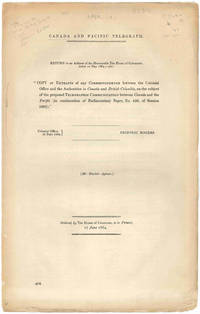
1864réf. 47423London. 1864. Founding the Canadian Pacific Telegraph: The Streeter Copy The Thomas W. Streeter copy with his pencil notes on the titlepage. This House of Commons working paper is a continuation of their return dated July 10 1863 on the subject of constructing a telegraph line to British Columbia and the Pacific. The Hudson's Bay Company unsurprisingly was intimately involved in the machinations for the building of the line. They had made an agreement with the Canadian government to build the telegraph line from the Red River to the Pacific themselves but when they failed to do so a group of English bankers proposed to step in and do the job. The papers included herein provide much information on the qualities of the land between Lake Superior and British Columbia and the need for swift communication throughout and across the vast region. Also included is a memorial from the people of the Red River Settlement discussing their urgent need for the telegraph. The Streeter copy sold to Nebenzahl for $30 in 1969 and was still in his stock when the Reese Company bought the last of it in 2013; here it is. Folio. String-tied as issued. A bit tanned some small chips at the edges. Very good. STREETER SALE 3436 this copy. SOLIDAY I:1207. LOWTHER 228. unknown